I was staying in a small 10-room
family-run joint called Hotel Thira. Thira, or Fira, is the name of the main
city on Santorini. (Well, ΘΙΡΑ is the main city on
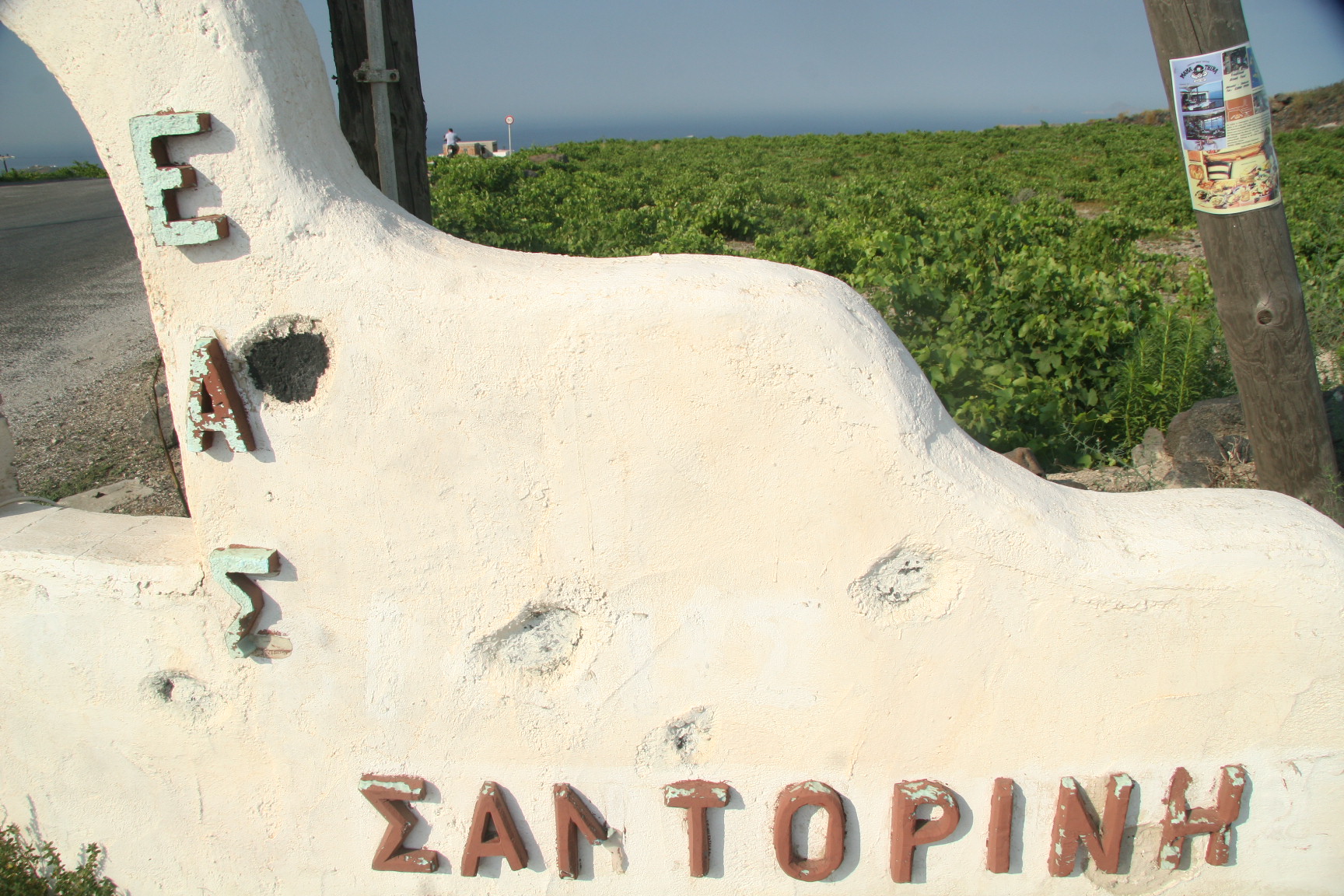
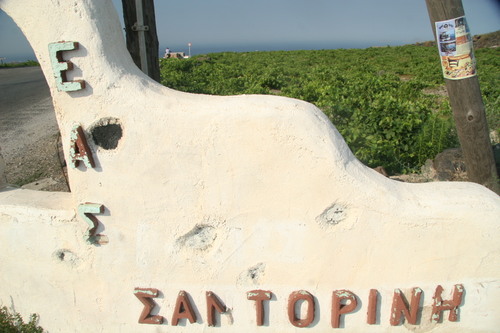
Σαντορινη, that is.) The island is
C-shaped and is the rim of a volcano. Not an ancient one -- the most recent
eruption was in 1955, which produced Europe's newest land mass. (Iceland may
disagree, but this is what the Greeks claim.) Homer and the Bible both referred
to a `ring-shaped island' which was probably Santorini -- apparently a great
place to build a port, since there's a ton of sheltered space. Unfortunately
for the Minoans and numerous civilizations afterwards, the same volcano that
makes a pleasant port island has other byproducts. The eruption alleged to
have buried Atlantis in 1640 BC is the largest one the Earth has seen in 10,000 years
-- far bigger than Pompeii. No buried dogs and people here though -- they
must've had time to run. Lots of artifacts and buildings, though.
I spent most of my time at the conference, but I biked around the island on
a couple of mornings, and took a full-day boat trip to the caldera on the
last day.
As far as natural drama goes, Santorini's got it made more than just about
anywhere else on the planet. The island appears to be not naturally
habitable: little fresh water, no trees, and a long hike from the sheltered
ports to the cliffs. This begs the question of what the Atlantians were doing
there. Extremophiles in action, I suppose.
Return to thumbnails
Run slideshow (big images)
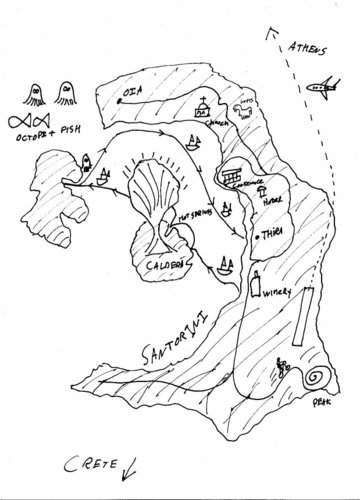 | General map of the place. Santorini is one of the medium-sized Greek islands,
about 100 km south of Athens. There are slow ferries (9 hours), fast ferries (4
hours), and planes (0.5 hours, plus a 5 hour delay -- which I took). A
couple of key highlights from the photos are marked. |
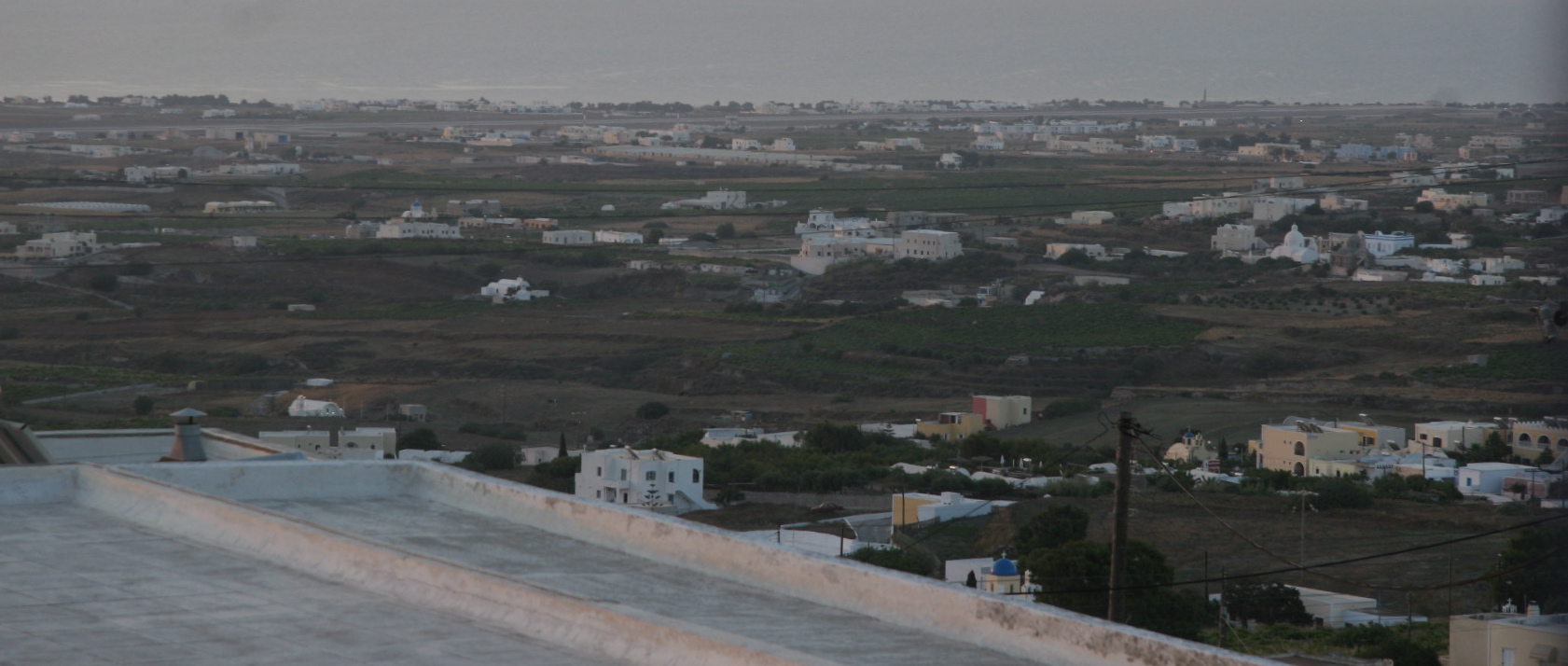
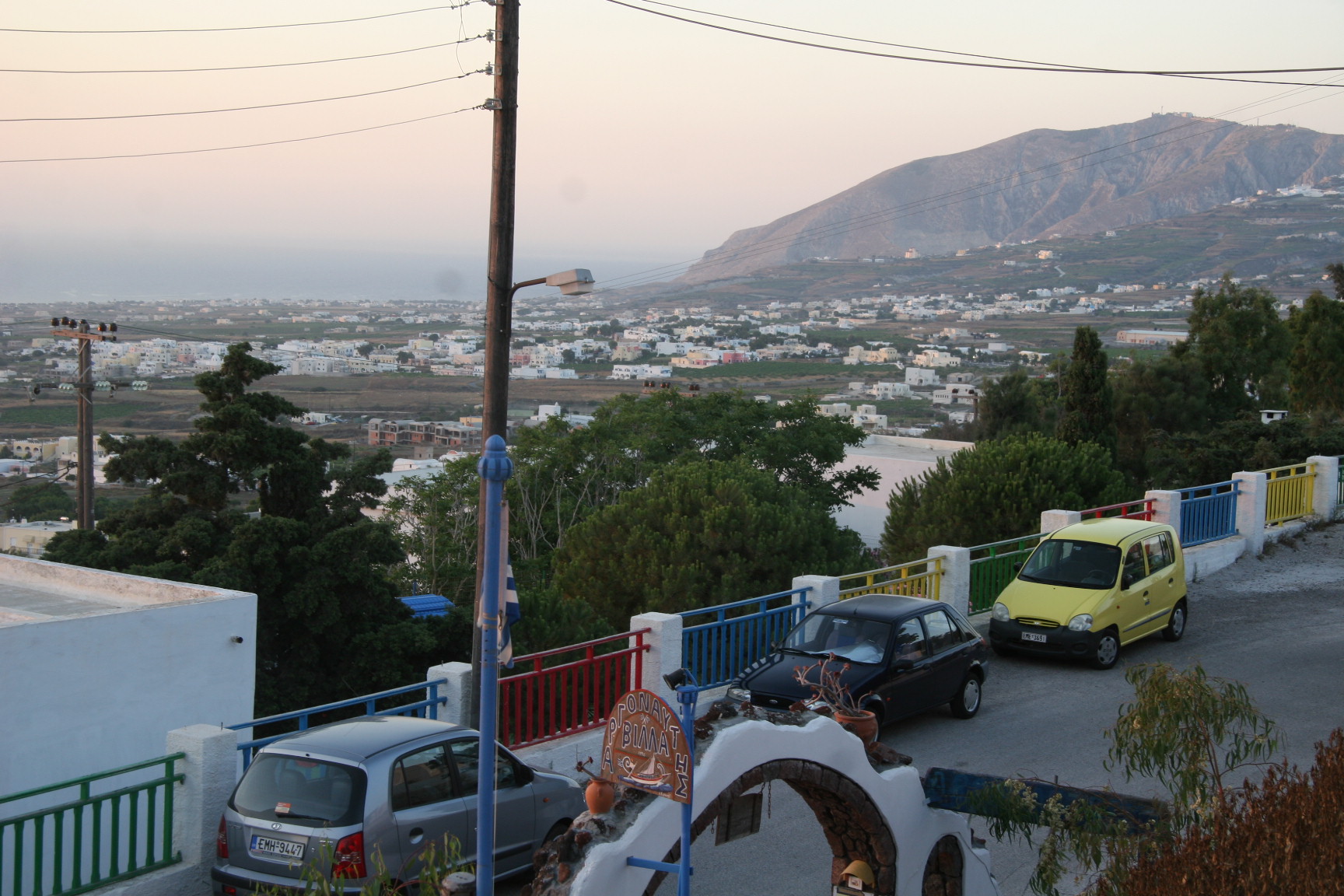
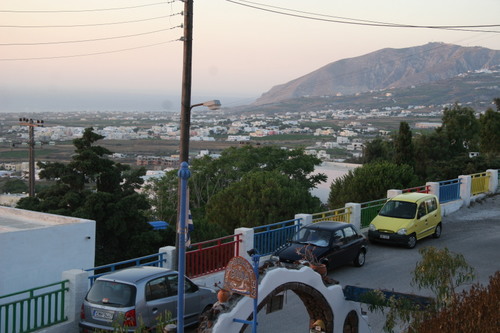
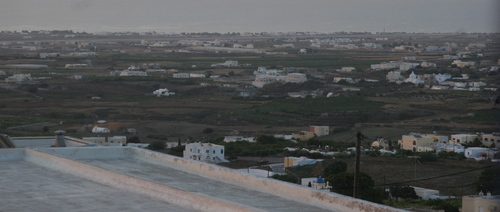 | I arrived around 1 AM the morning the conference started. This was the view
out my window... |
 | |
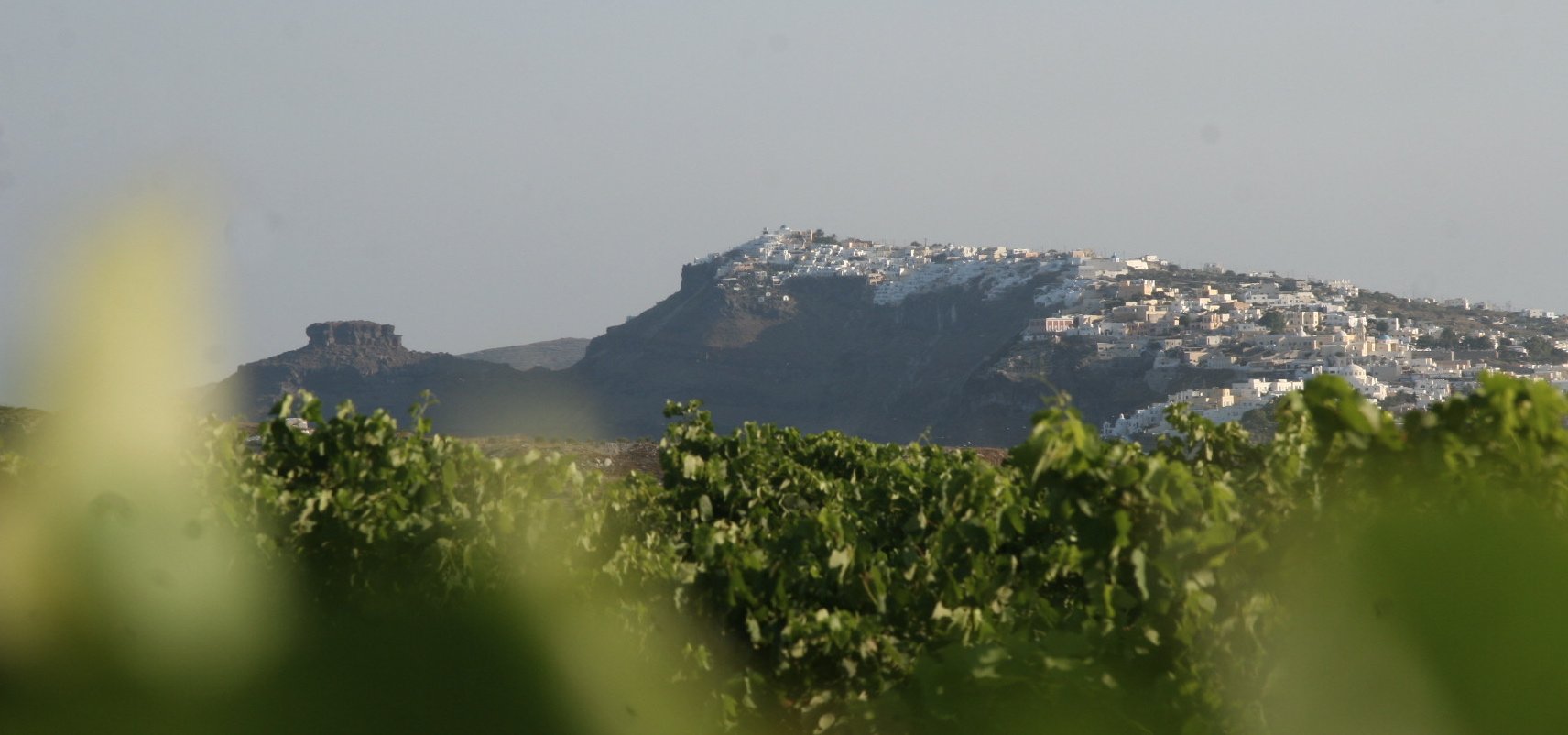
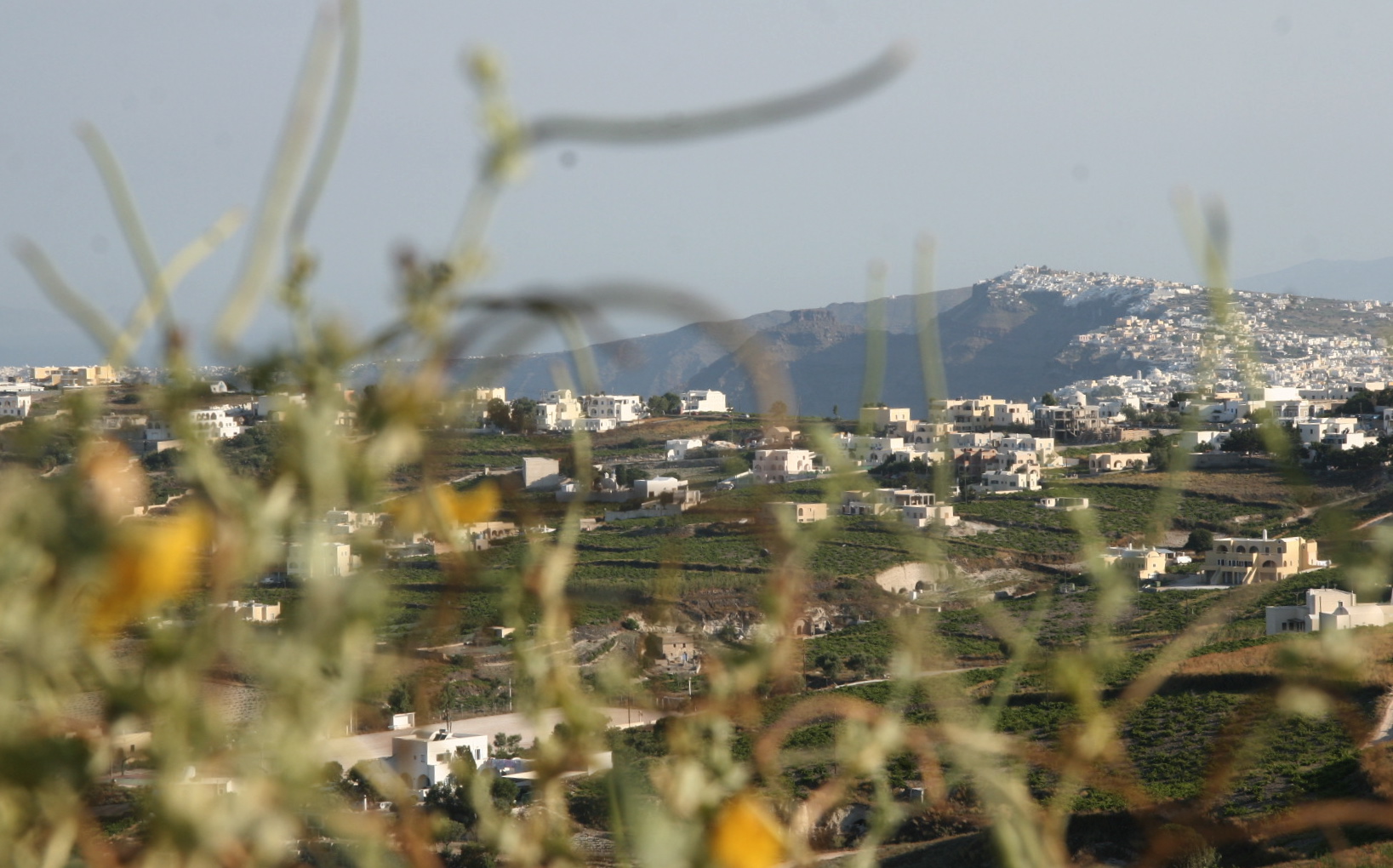
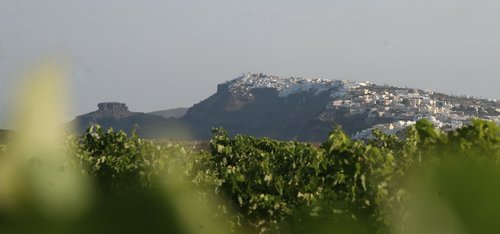 | Looking through the vineyards up to the tallest peak on the island, about
1800'. I headed up there on my bike. Interestingly, this part is limestone
that has popped out of the ocean -- it's the only part of the island that's not
volcanic. |
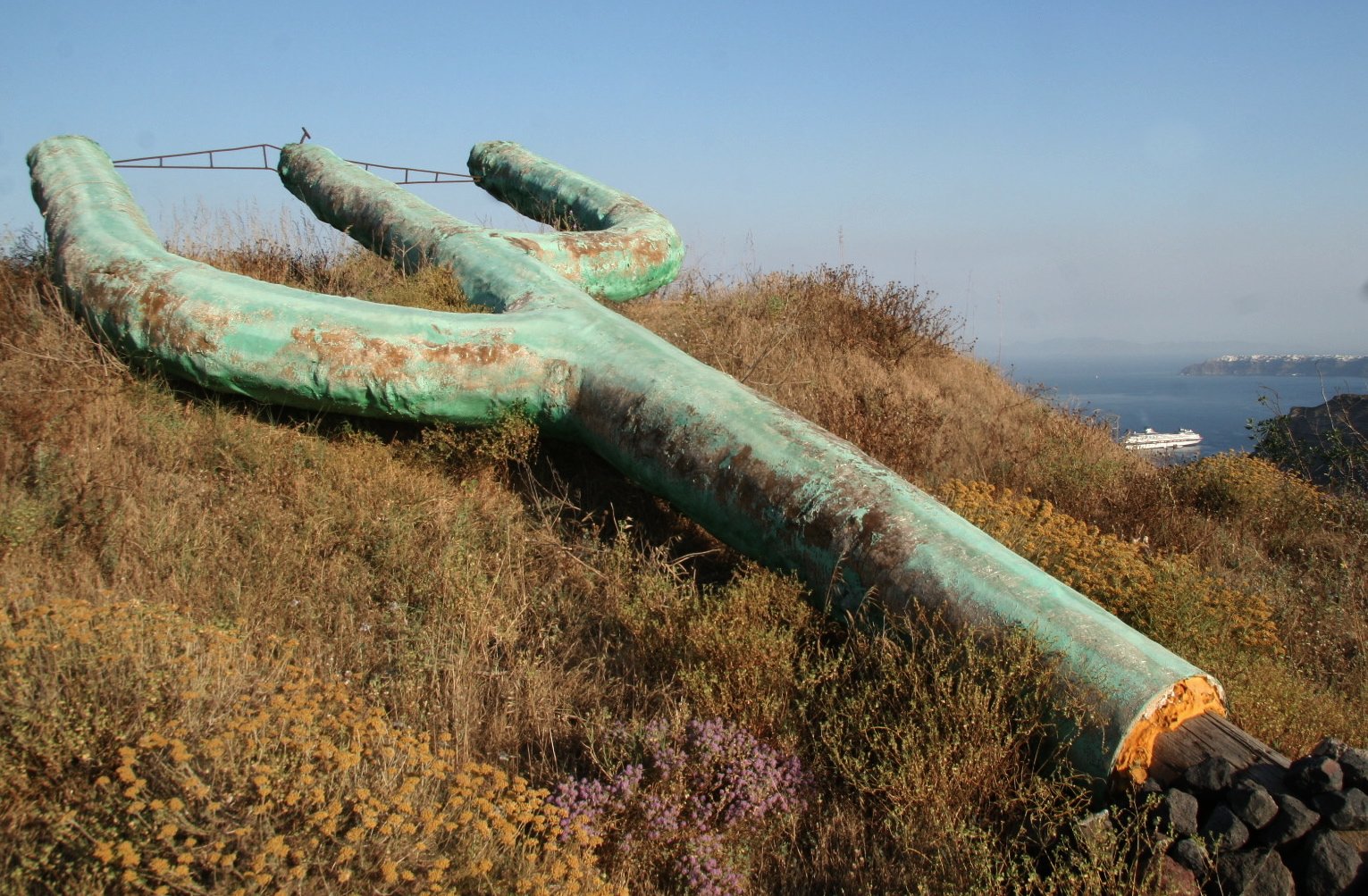
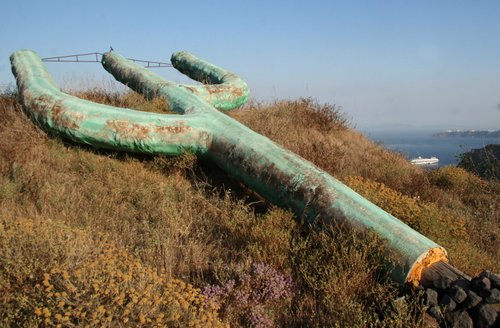 | One of the island's few native saguaros has fallen over, a victim to the
volcanic eruption of 1882. |
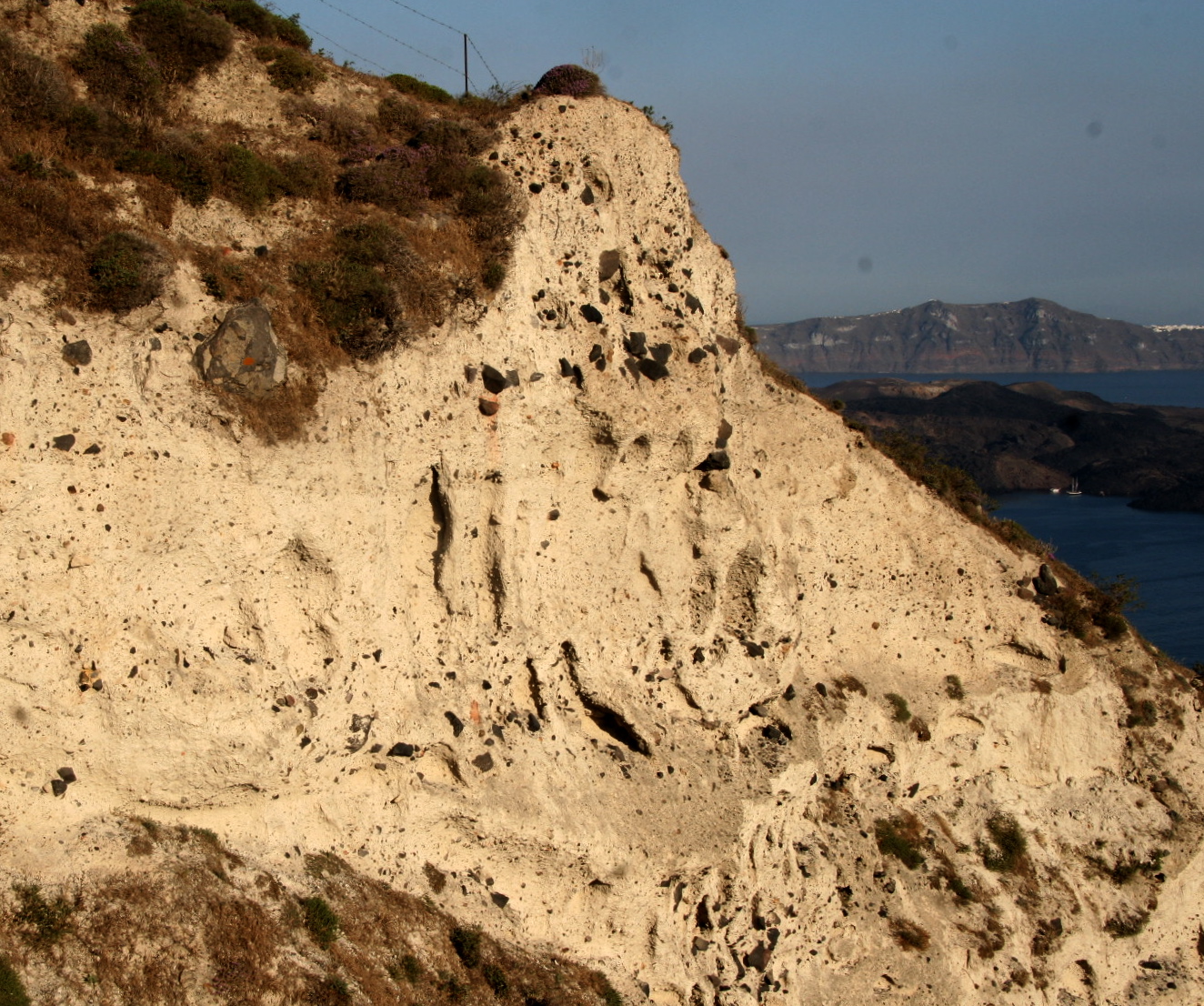
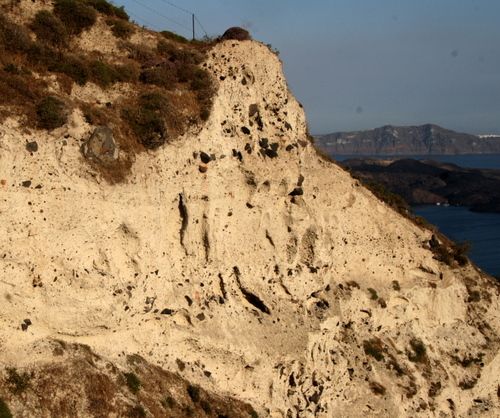 | Check out those layering patterns! |
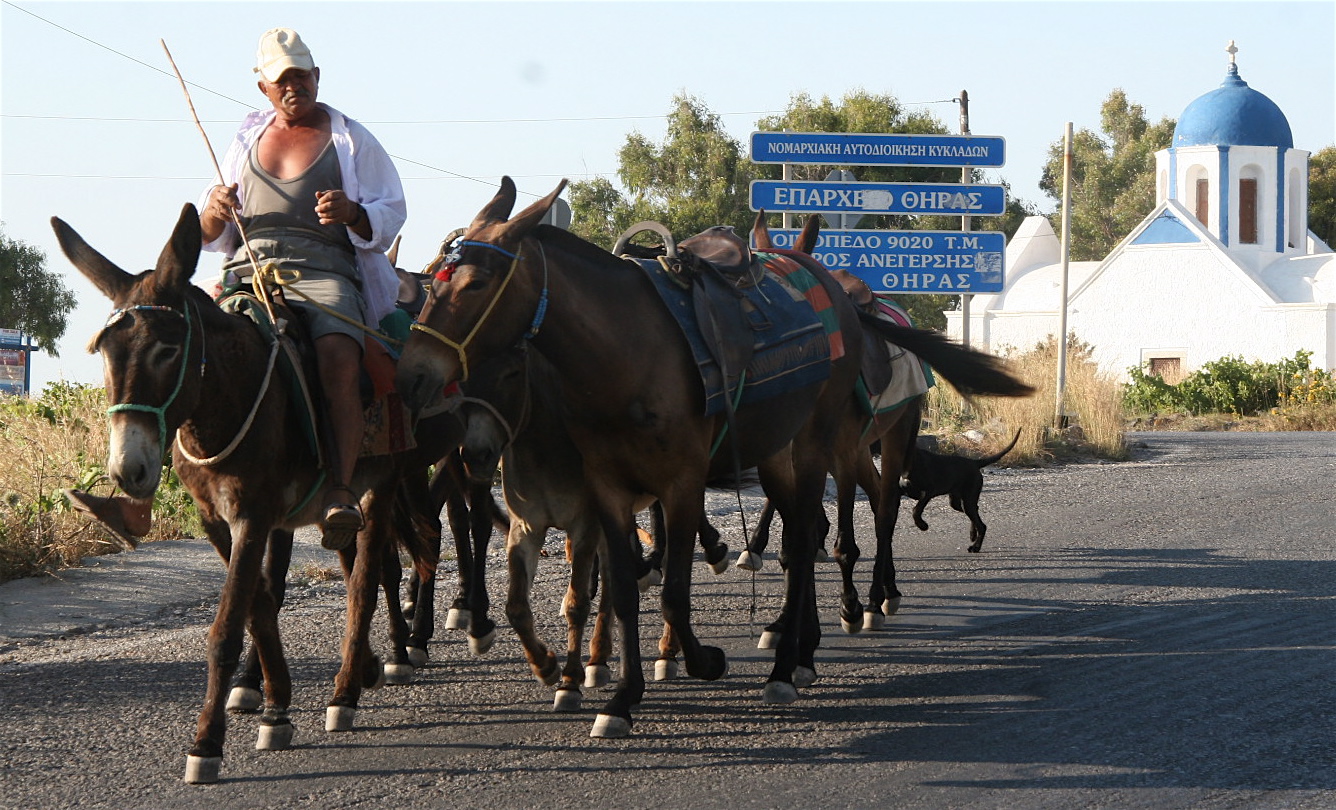
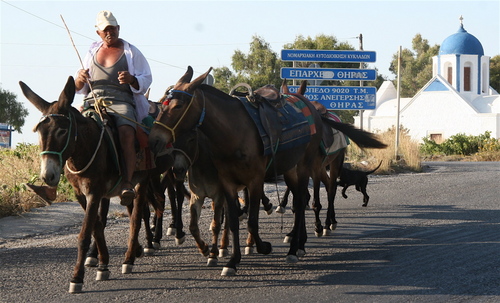 | (Donkeys are used to ferry ferry-boat passengers to the city, from the port.) |
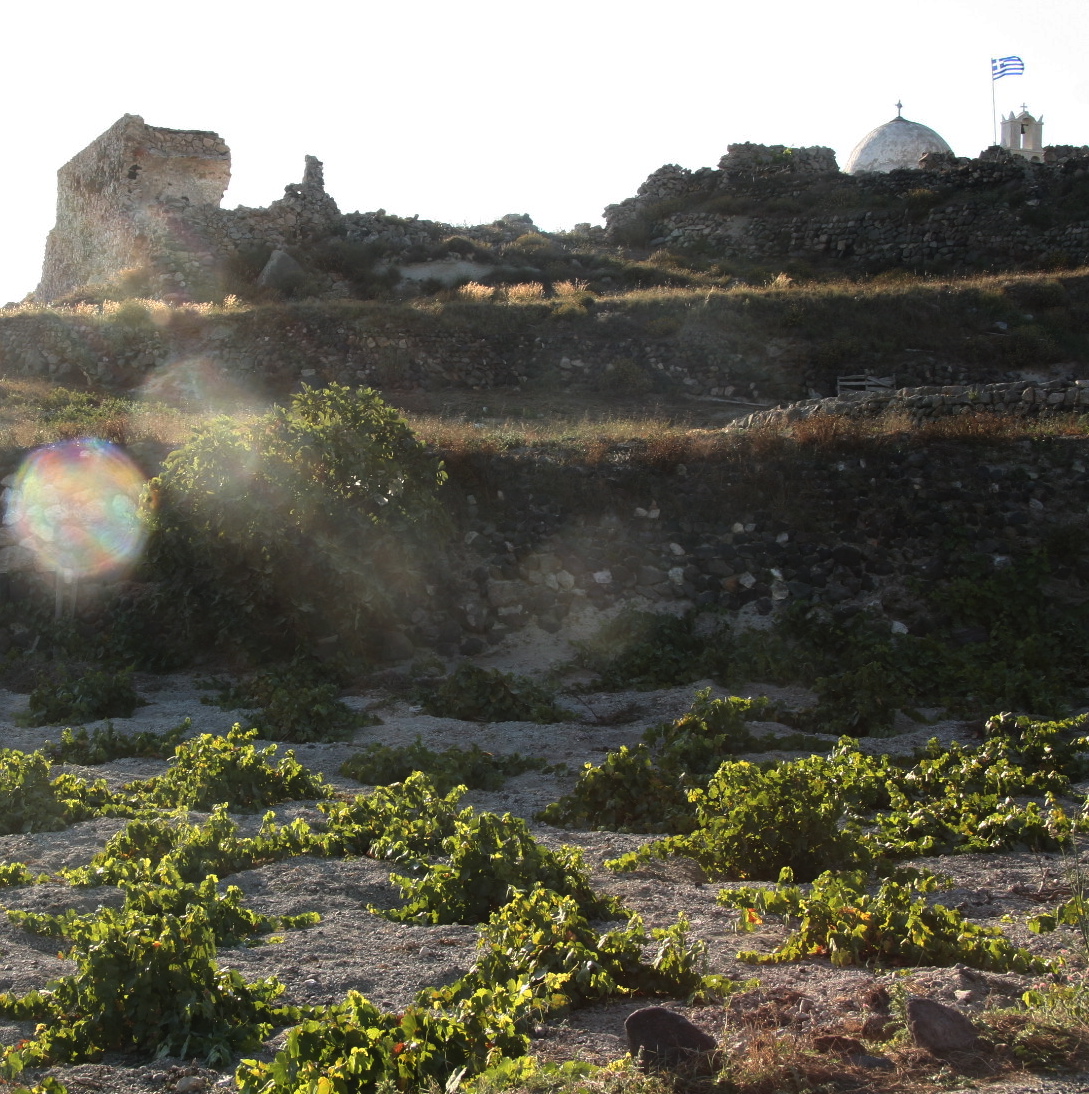
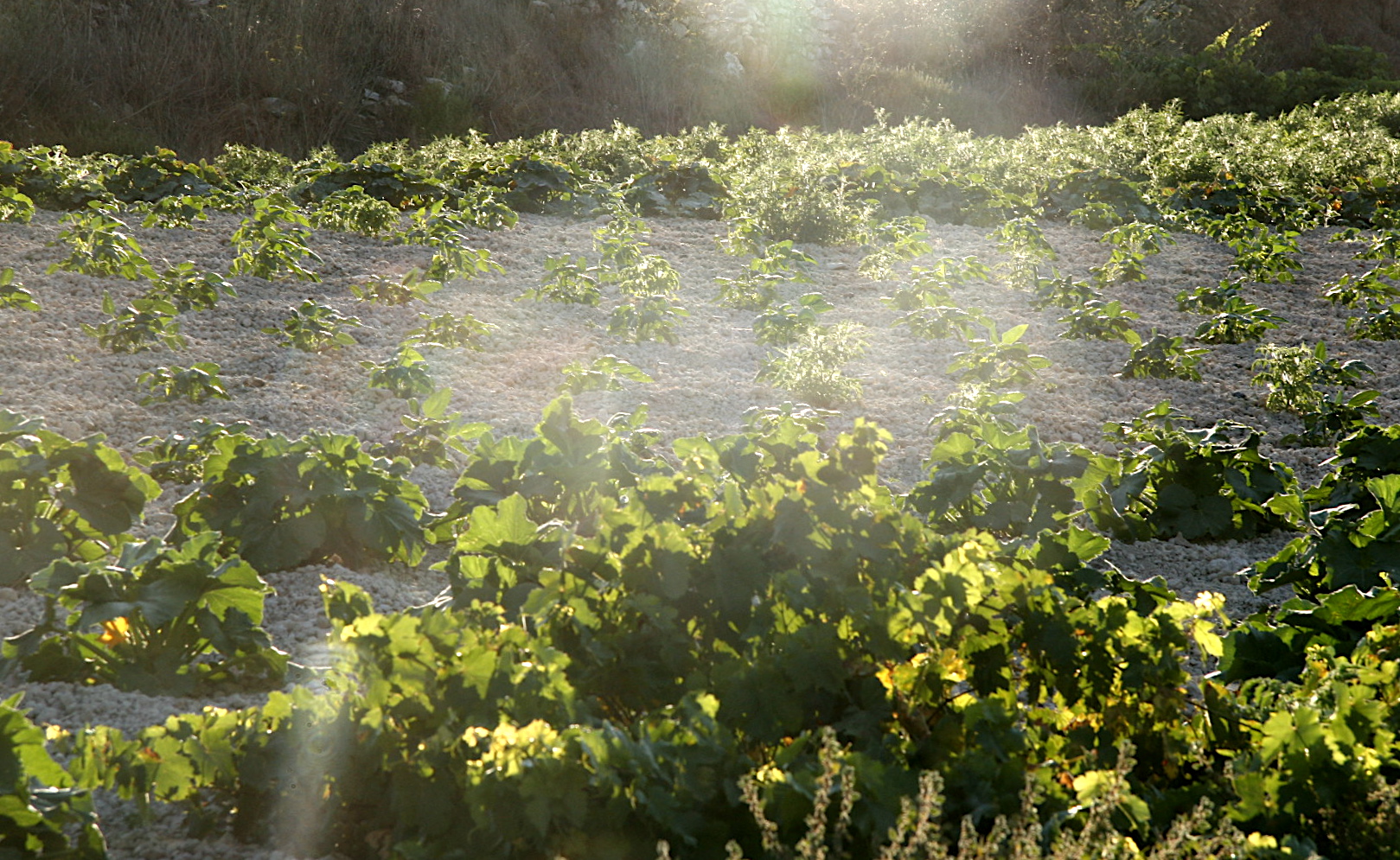
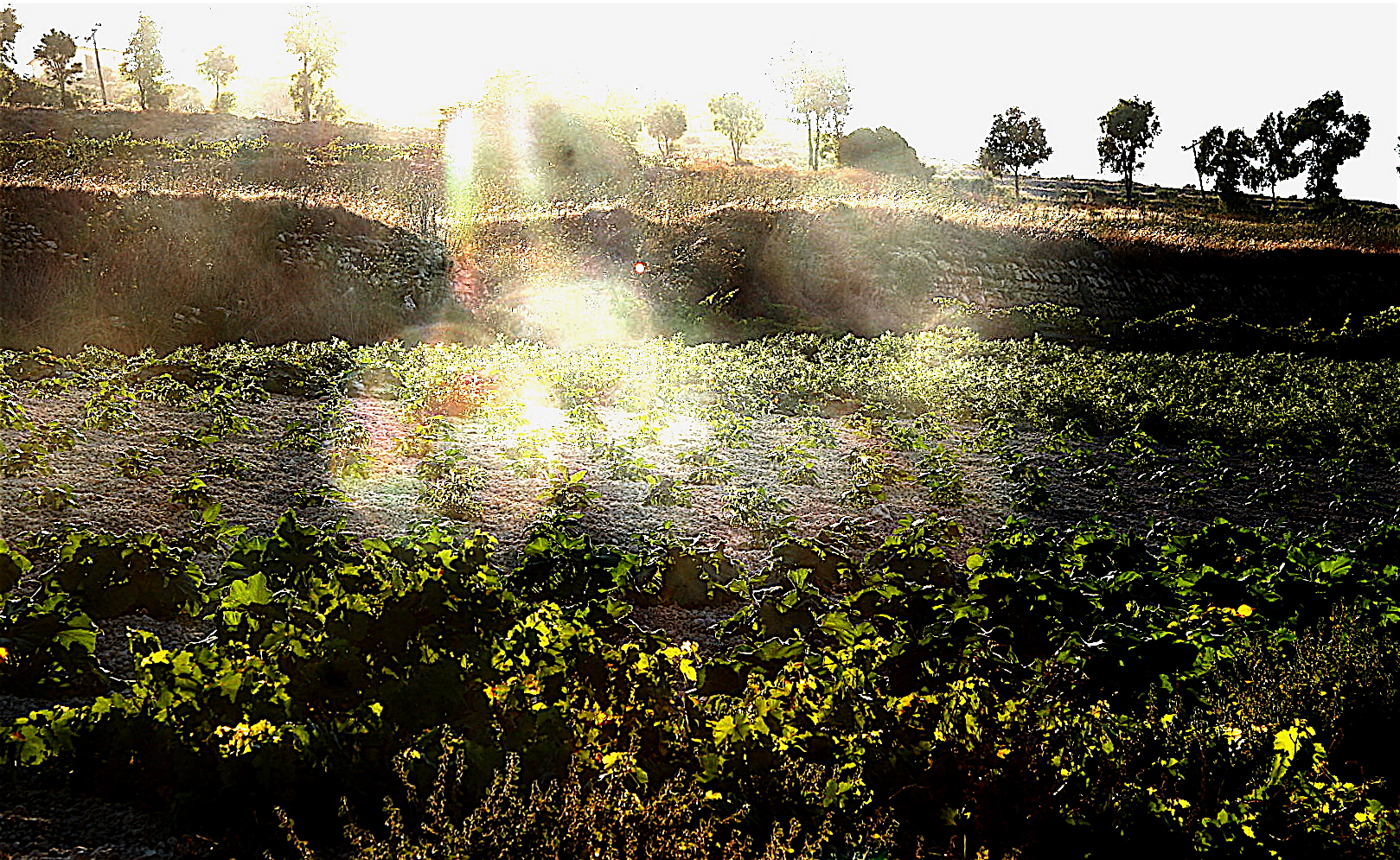
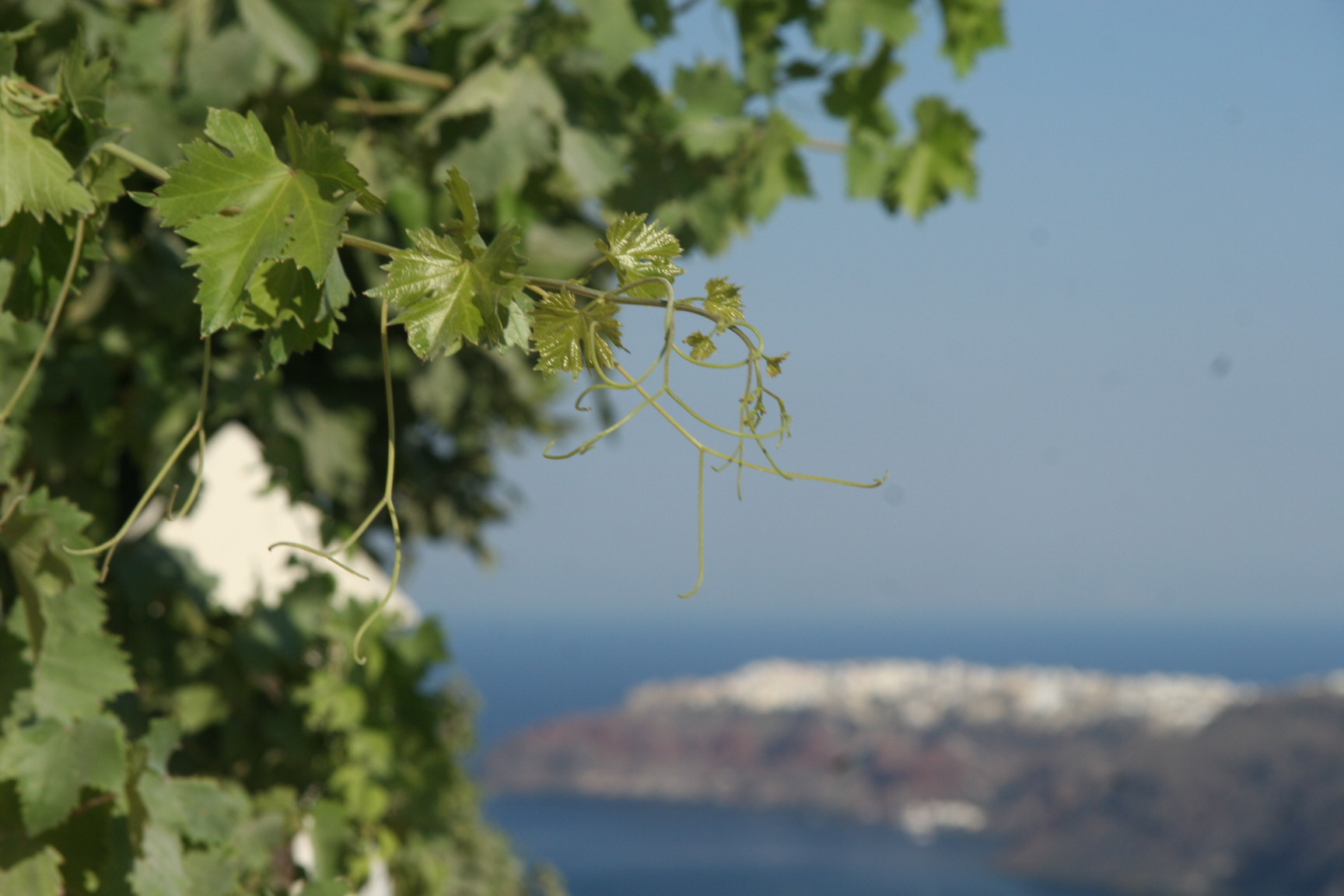
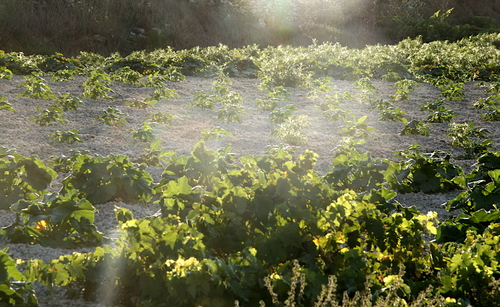
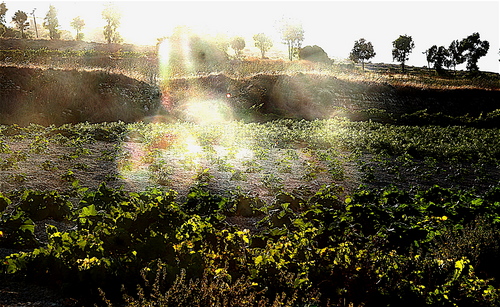
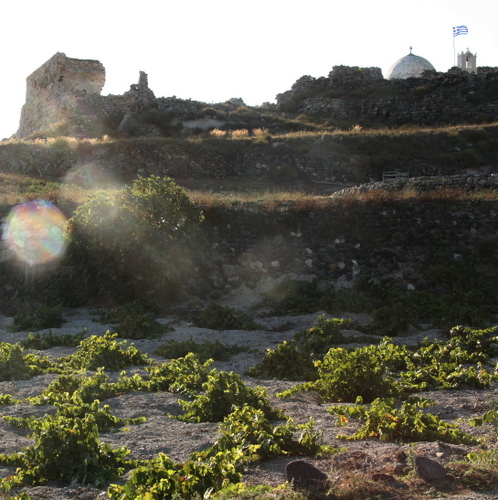 | Whoa. OK, so the vineyards all look like this. They are essentially planar --
no trellising, etc. Also, they are not watered (`dry farming'), and the vines are planted
directly into the volcanic ash. Grapes are almost all white, assyrtiko. |
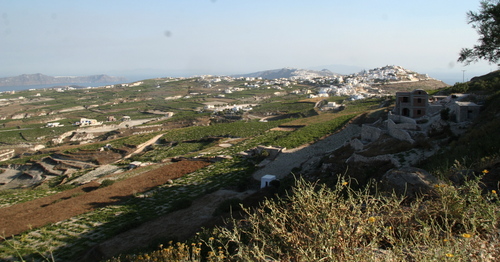 | Looking down as I cruise up the hill. |
 | |
 | |
 | |
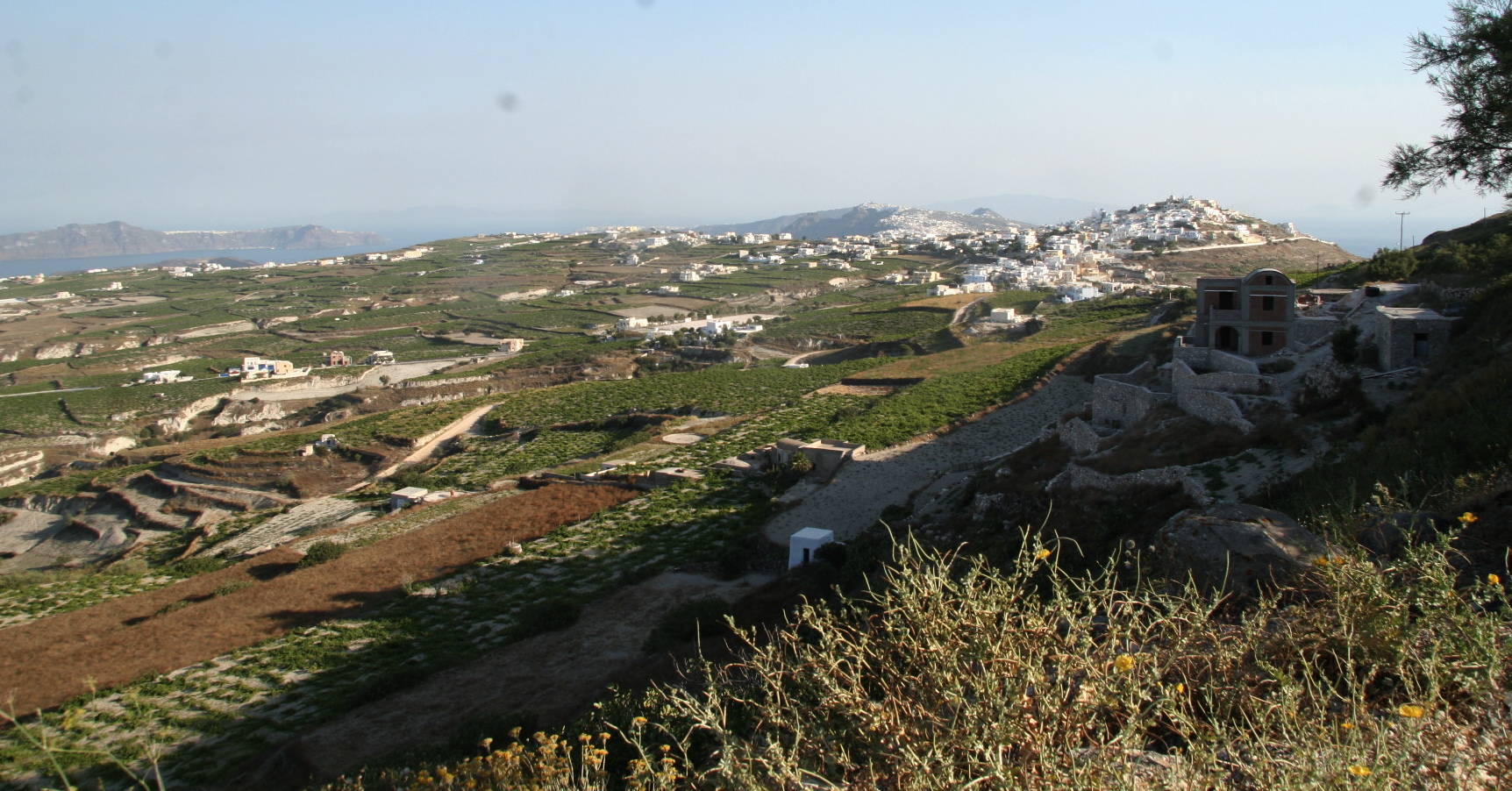
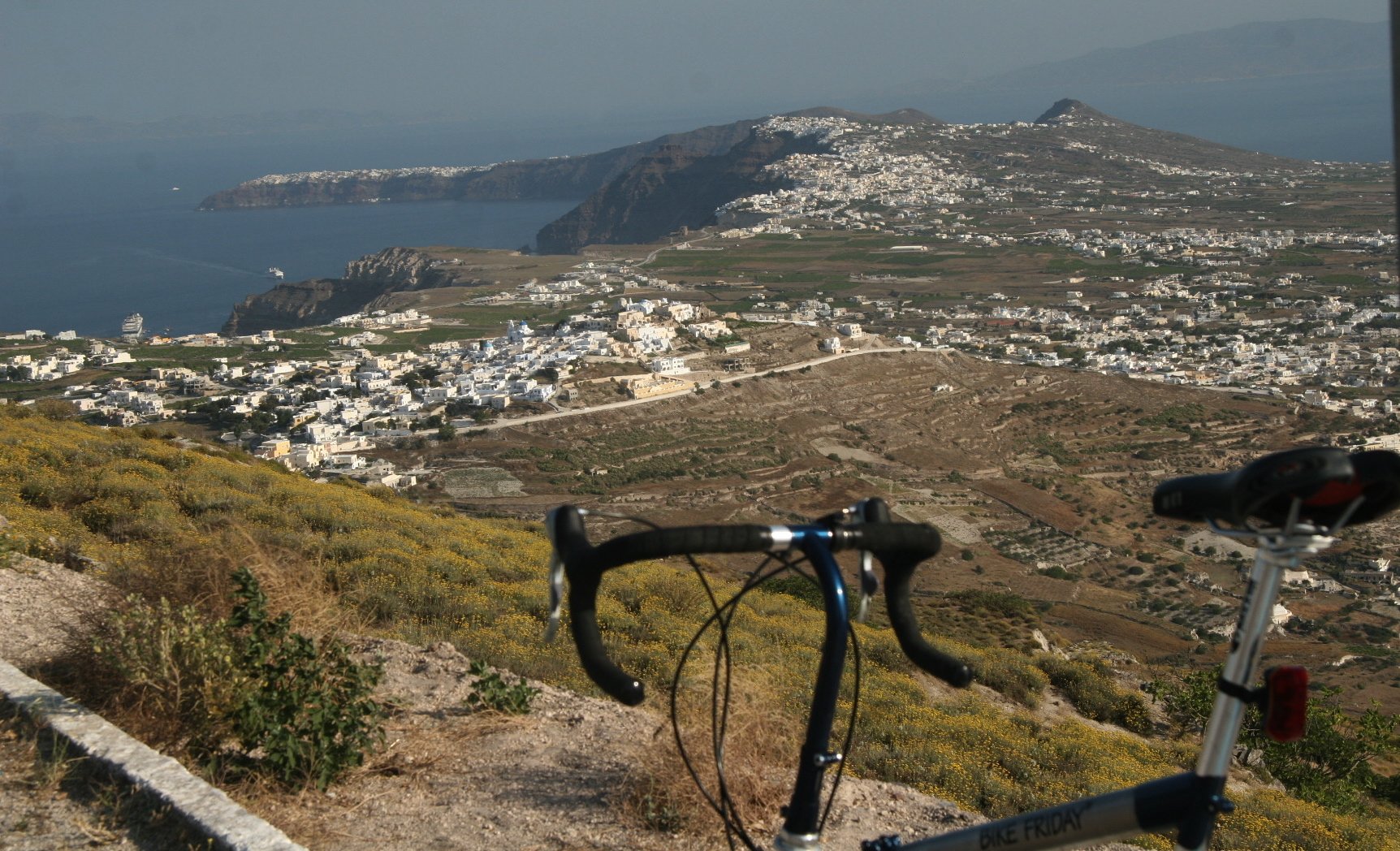
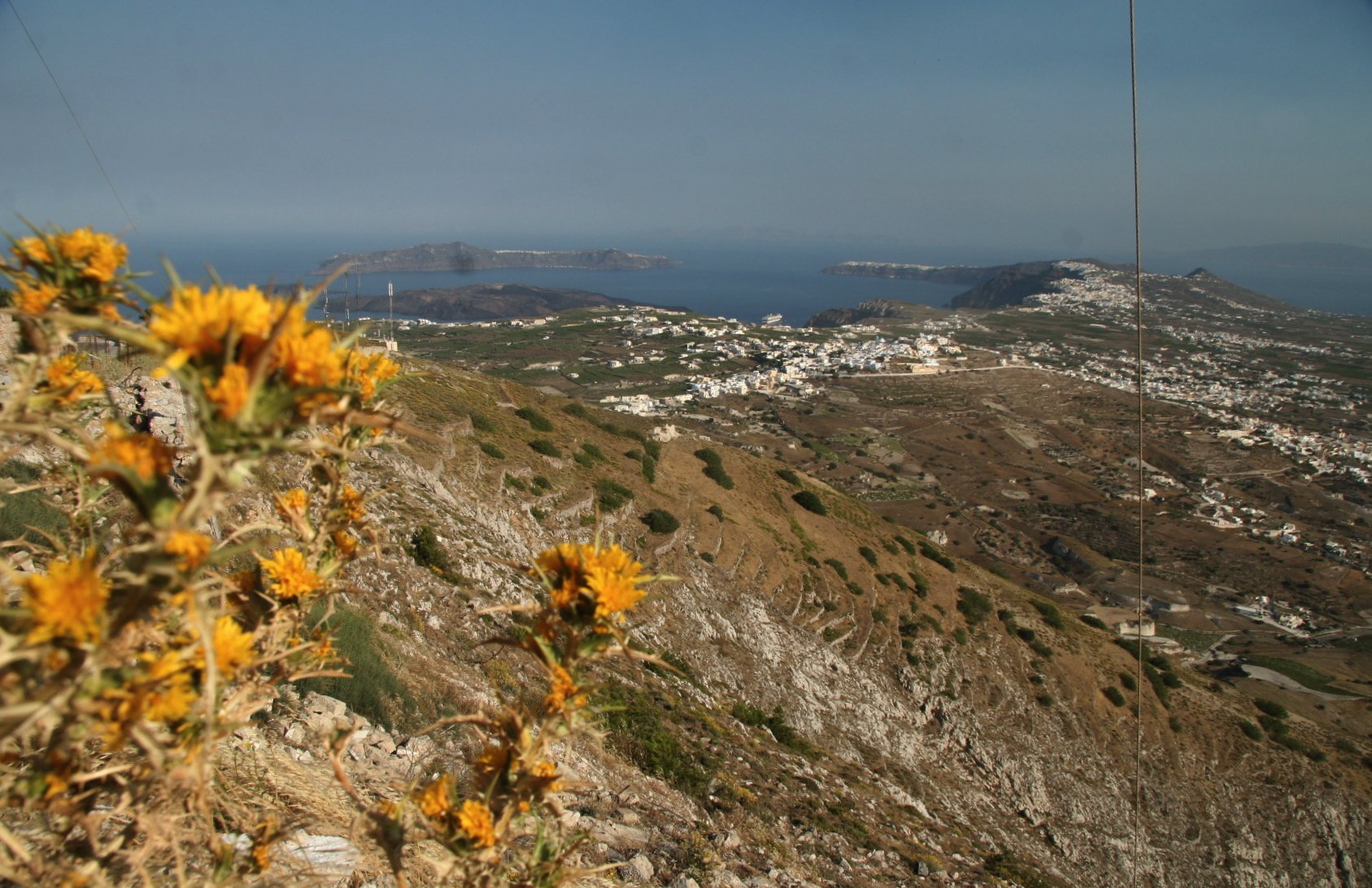
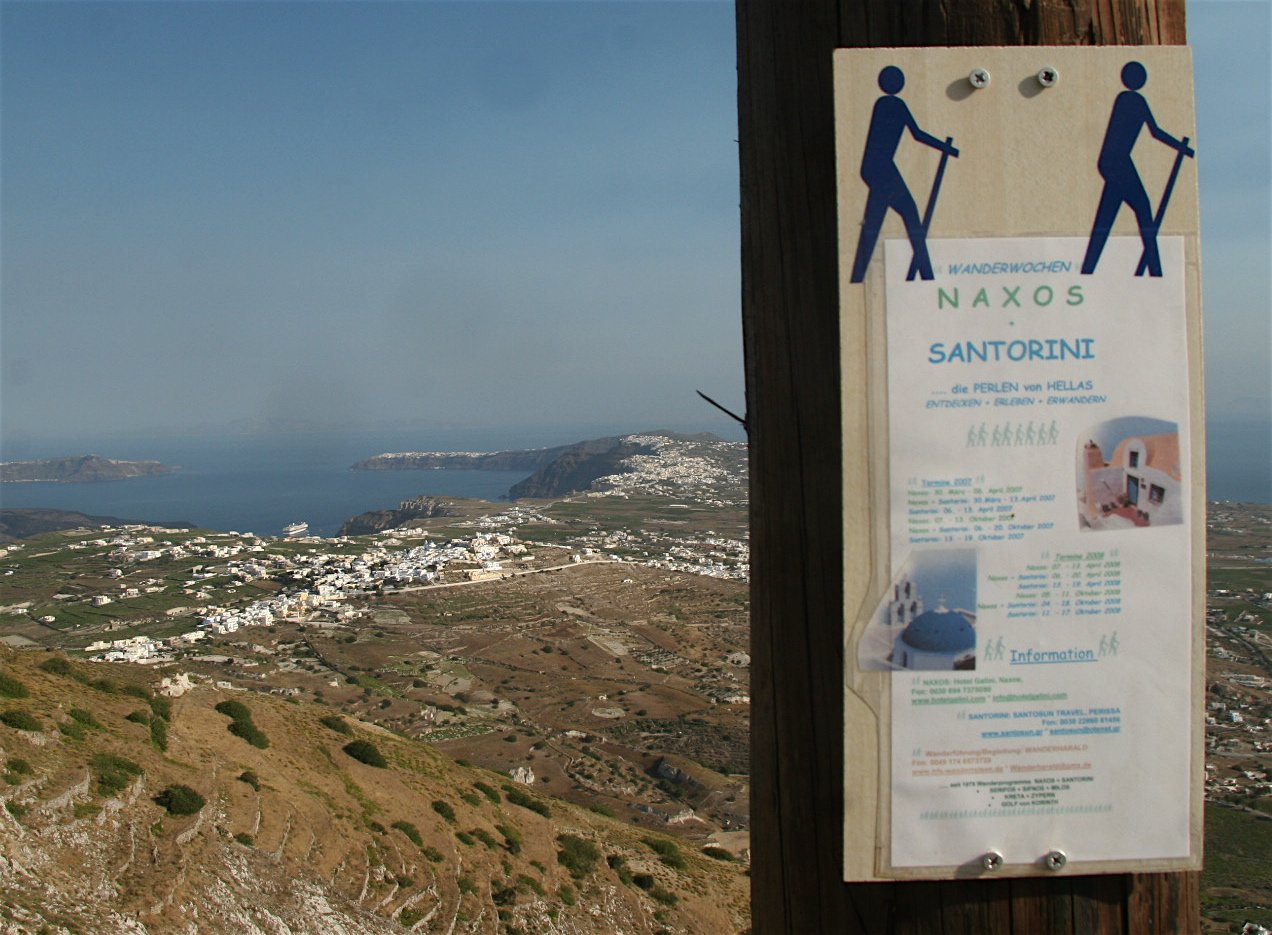
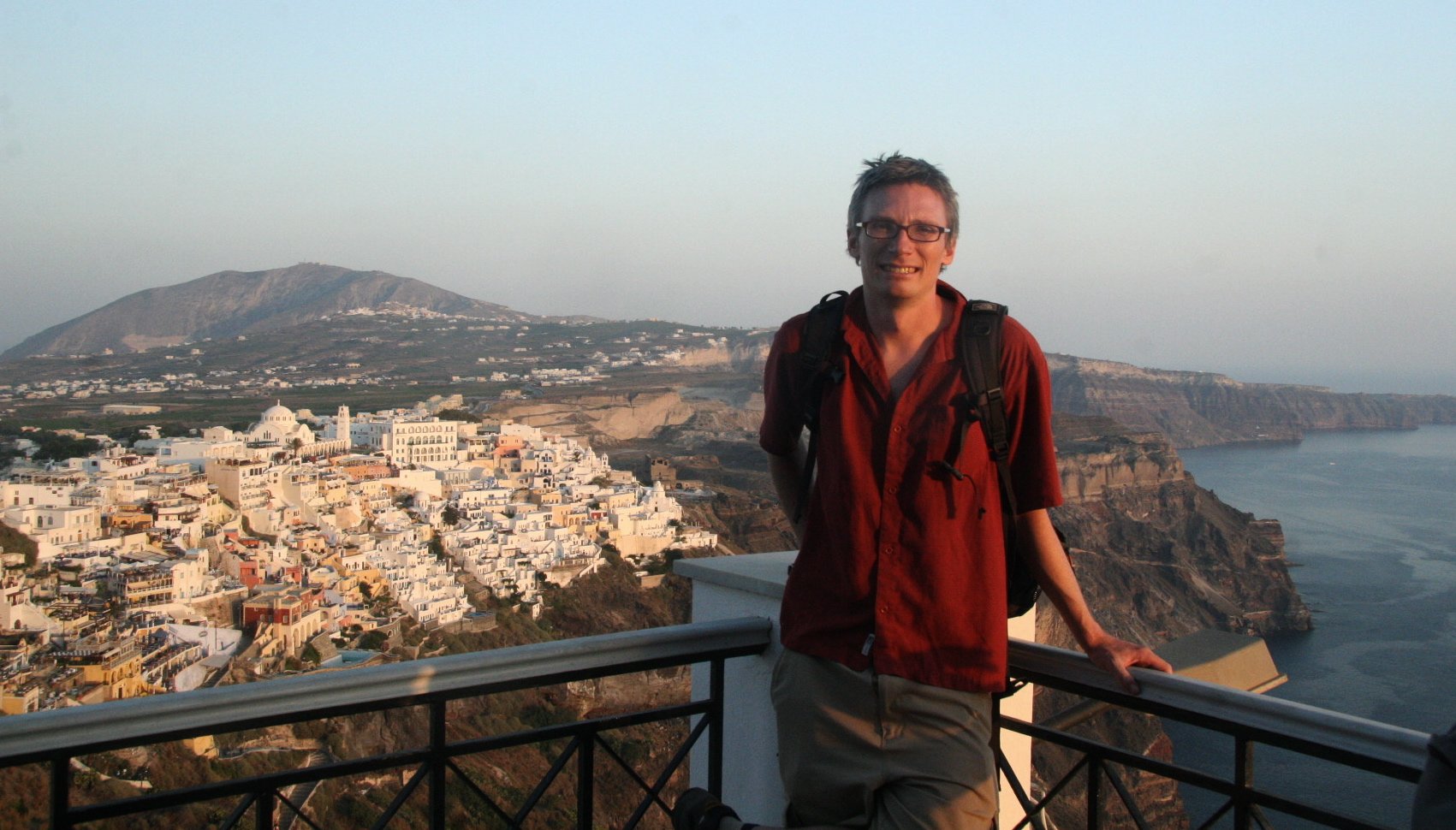
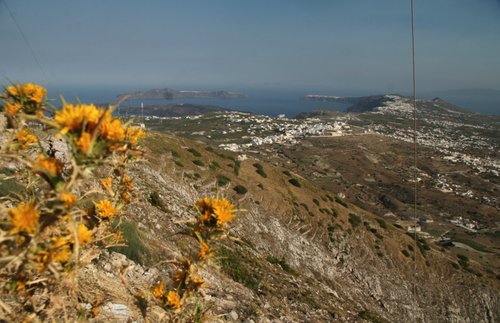
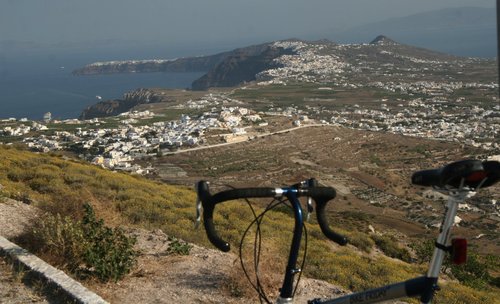 | It was an hour or so to the peak. Thira is the large city at the center (pop.
3000 or so). Oia is the town along the ridgeline at the distant left. There
are some other islands visible in the far distance. You can see pretty
much all of Santorini here; the islad itself might be 15 miles tip-to-tip. |
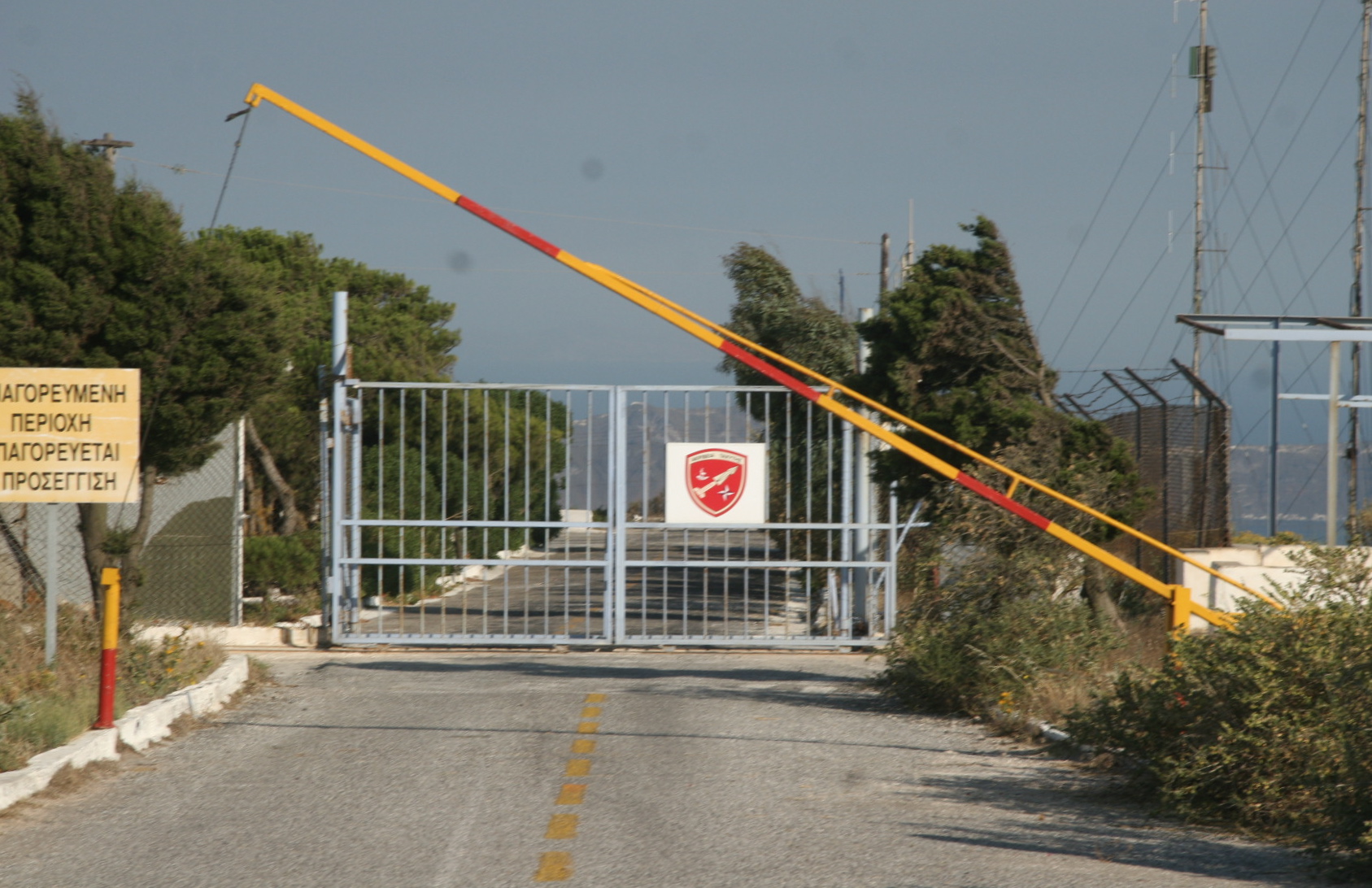
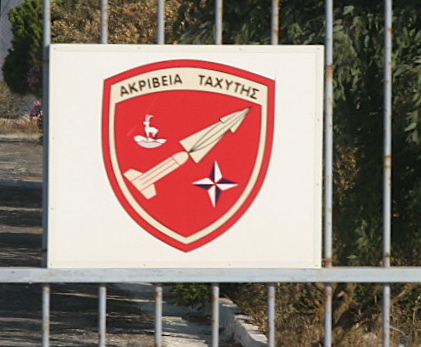
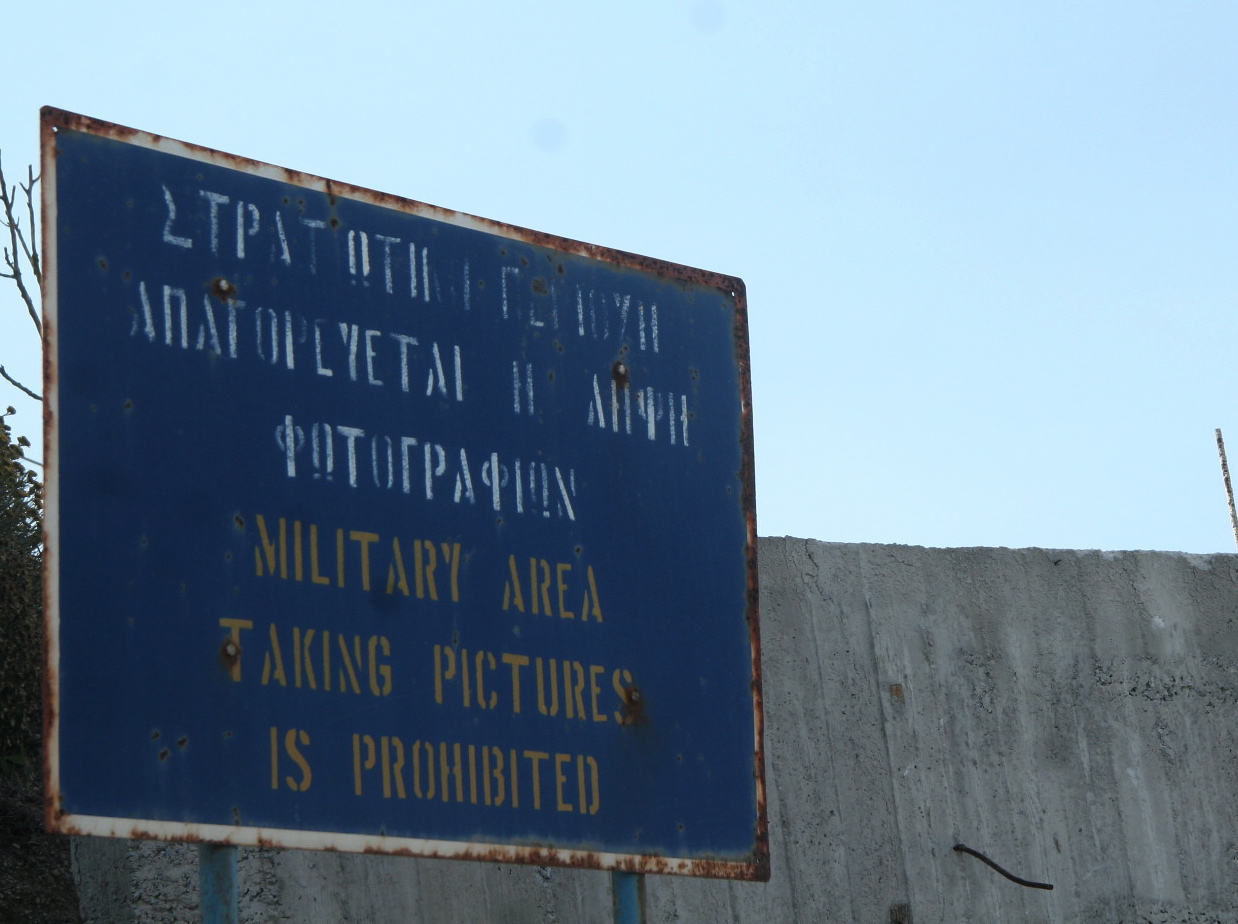
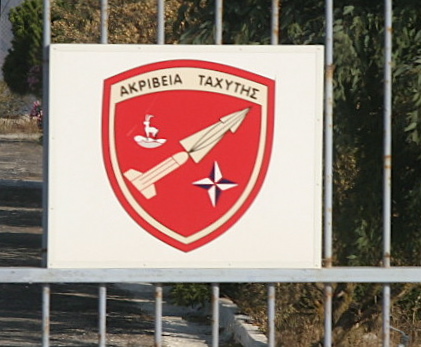
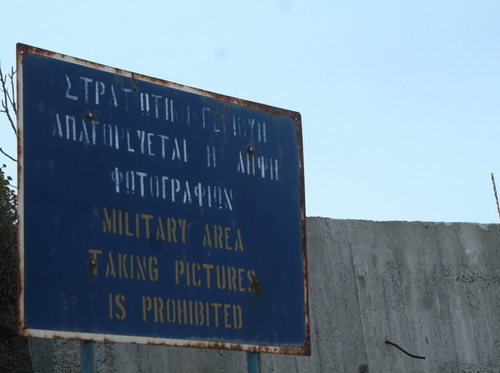
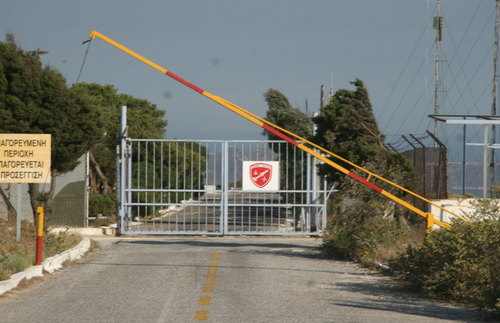 | Up top is a military installation of some sort. I suppose to keep the Turks
out. |
 | |
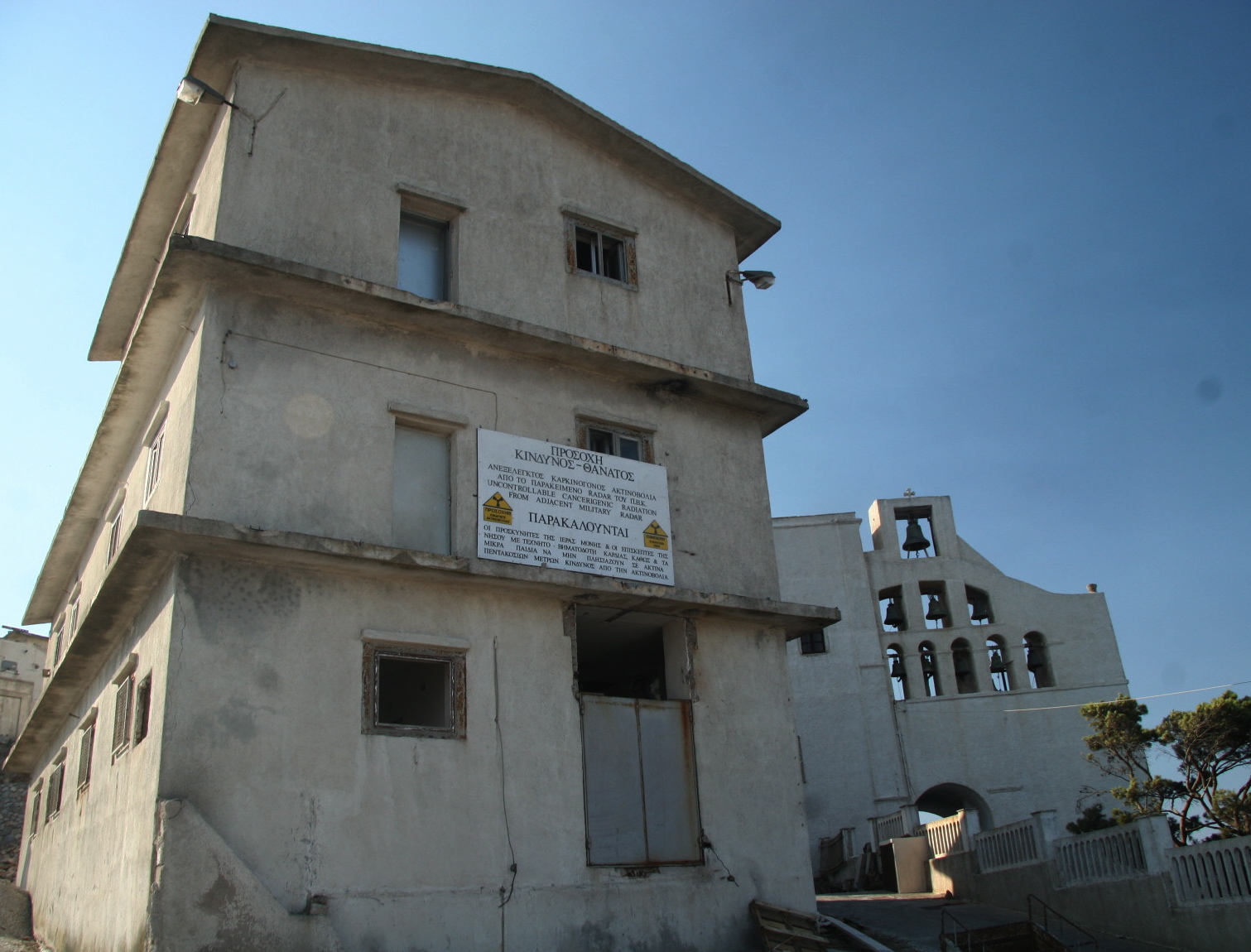
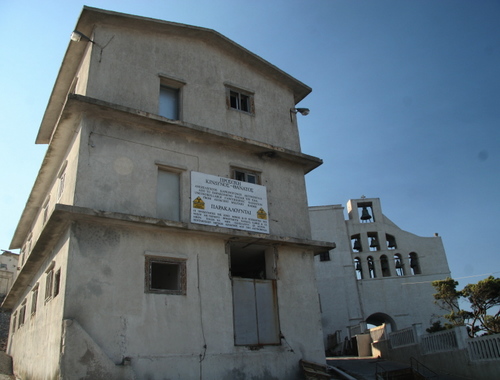 | Bunkers (?) and bells on the peak. |
 | |
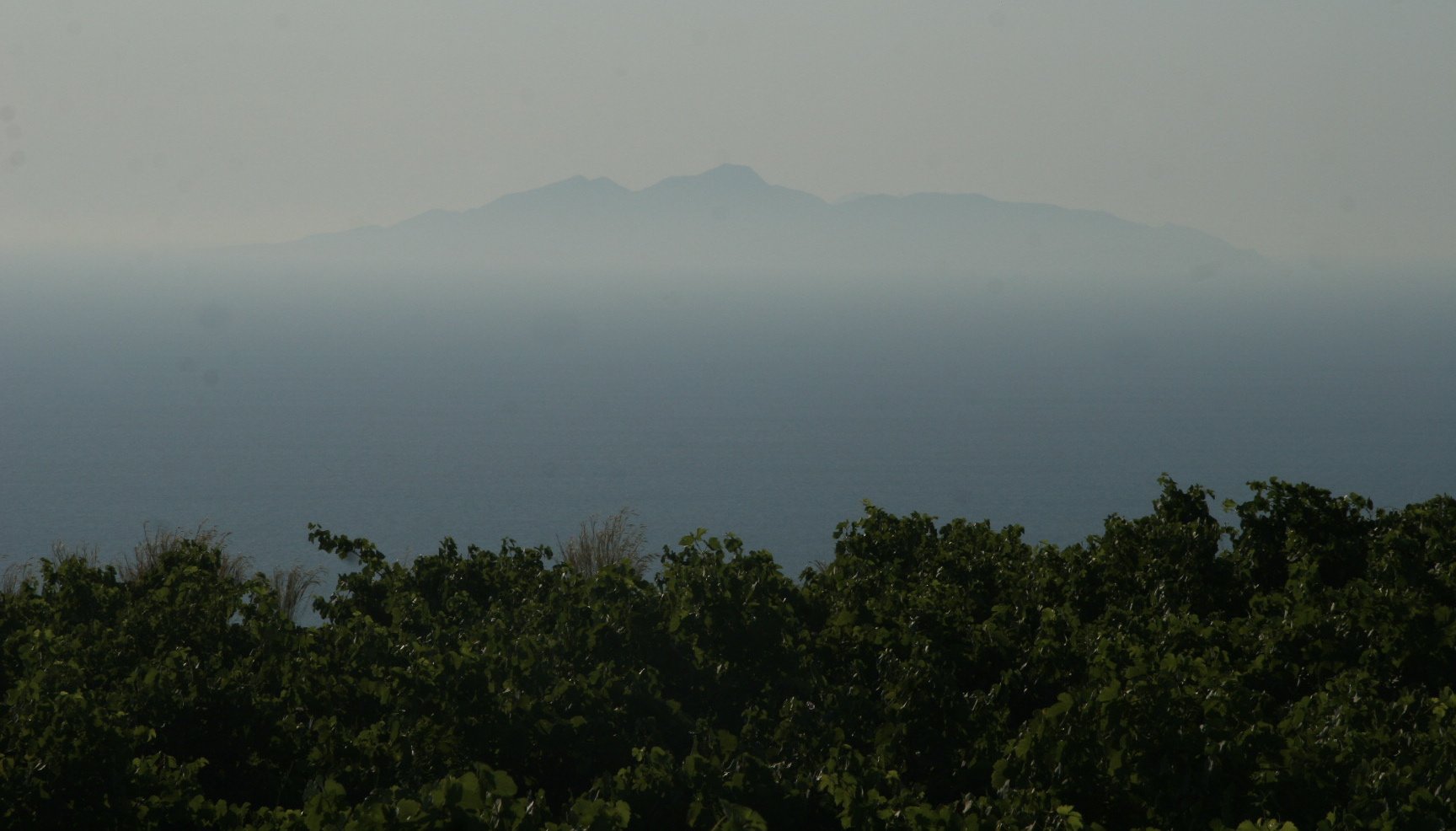
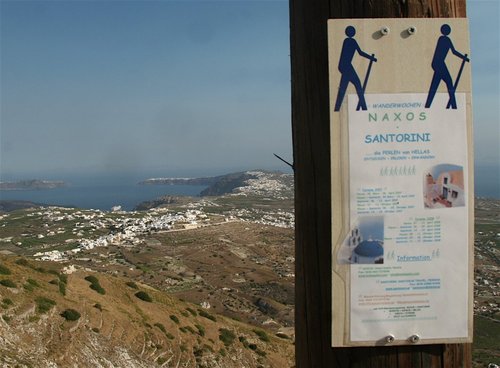 | Apparently if one is talented enough, one can walk to the island of Naxos from
here. |
 | |
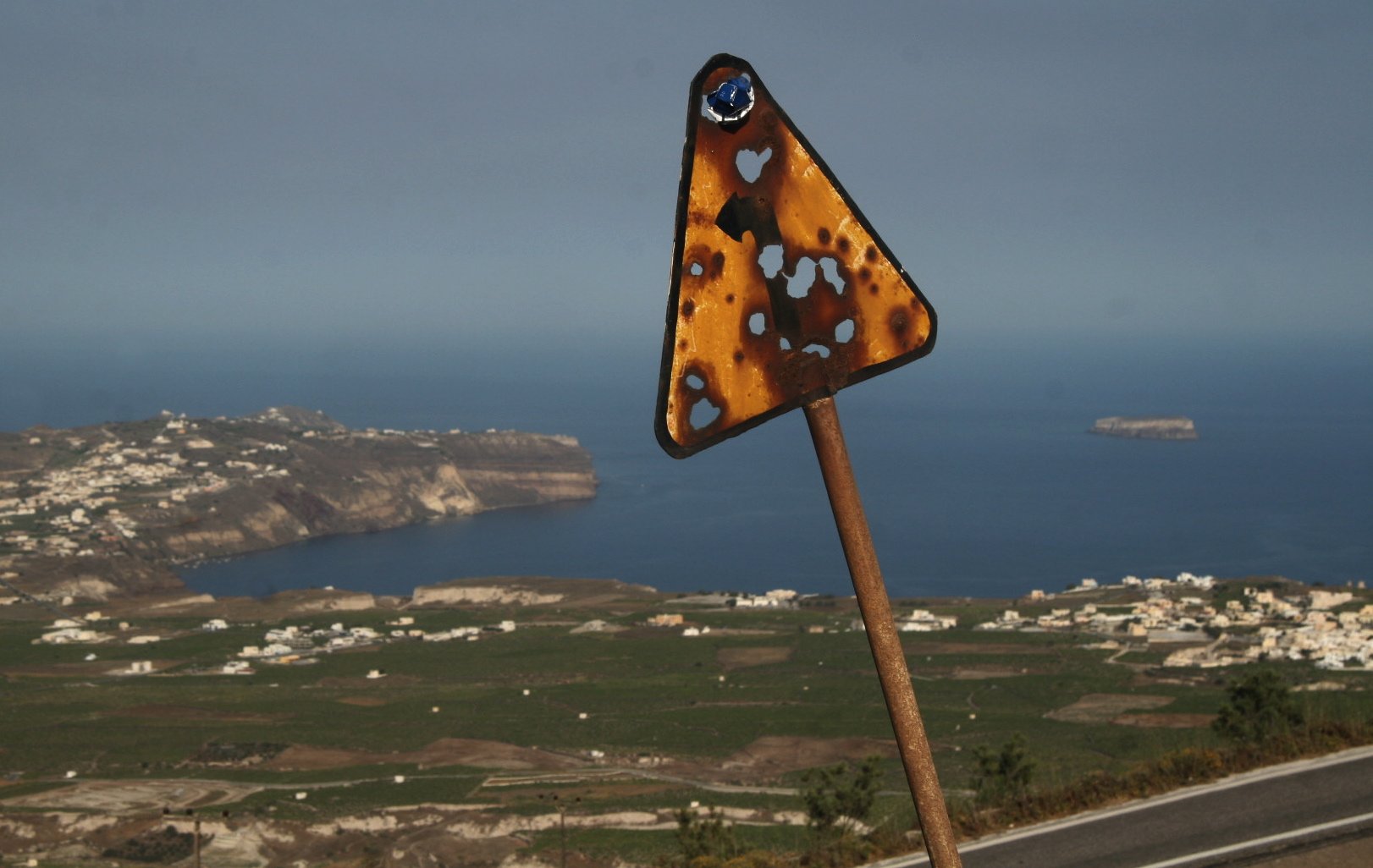
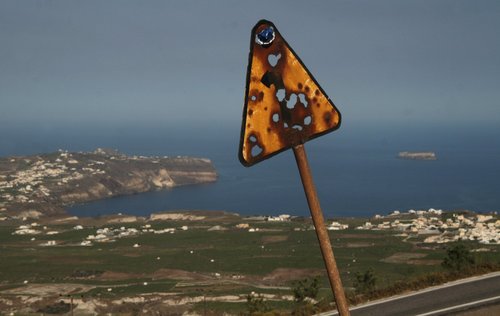 | Without enough recent invaders, the military installation people must find
other targets. |
 | |
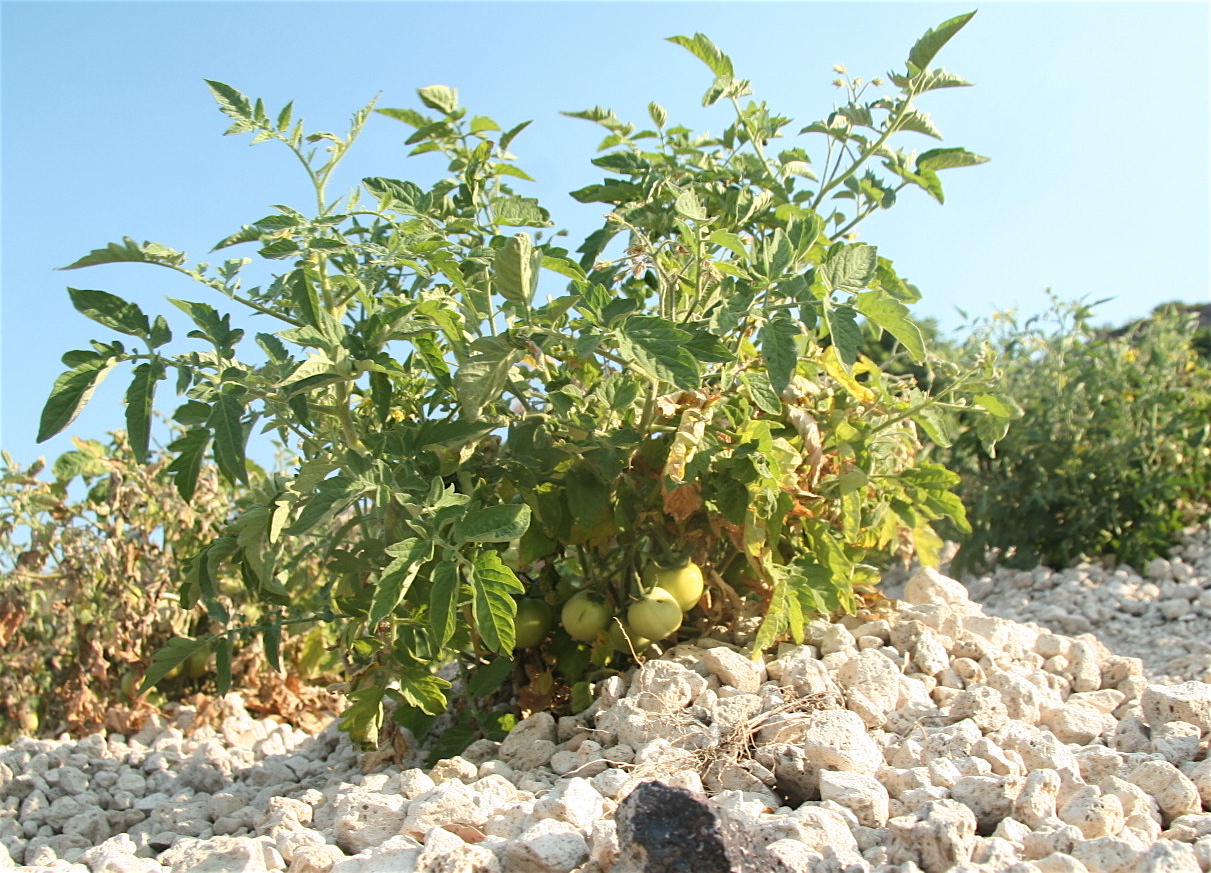
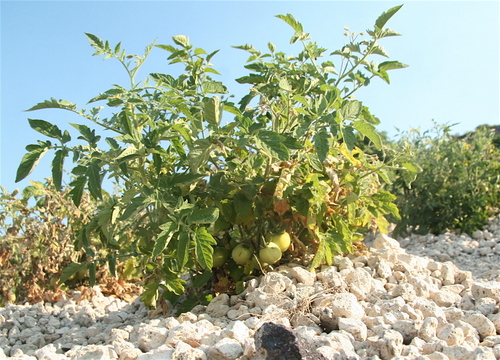 | OK! The Famous Santorini Tomato. Just like the grapes, they're all
`dry-farmed,' and never watered, since there is no water around to do so with.
You get kind of hard and pasty (but very flavorful!) tomatoes by the end, and
use them in salads. Apparently they're hip in Bay Area farmers' markets these
days, too. |
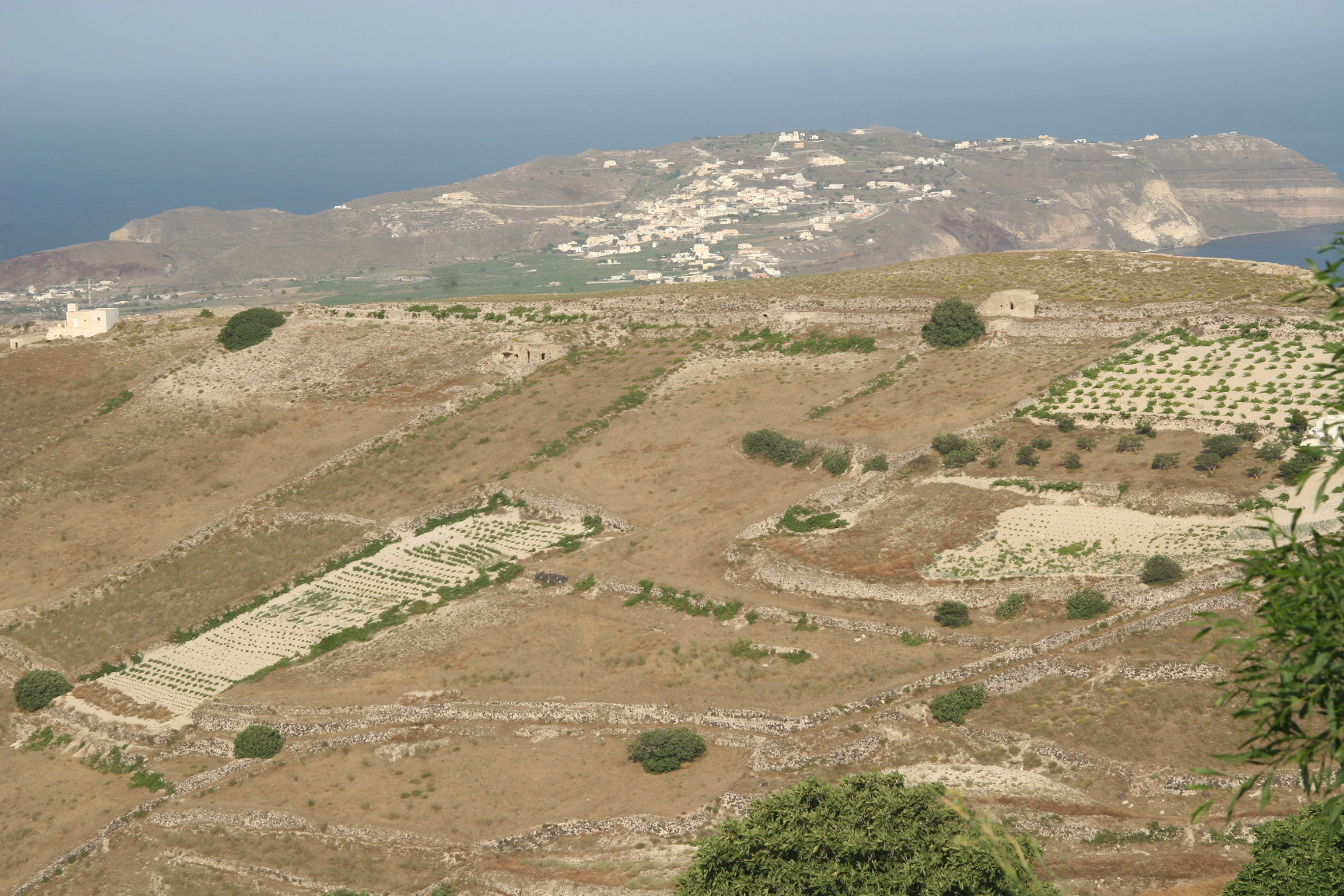
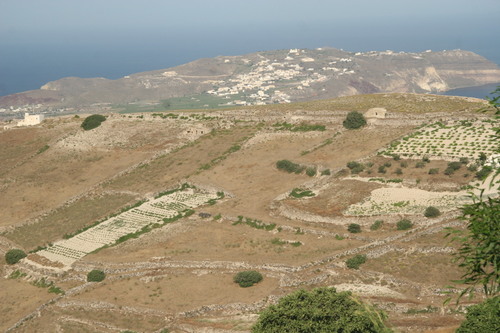 | Some plots looking down on the other side of the island. Buried below the
surface on this `arm' is where the ancient Minoans lived (in Atlantis,
perhaps) until the volcano made one of its semi-periodoc eruptions. |
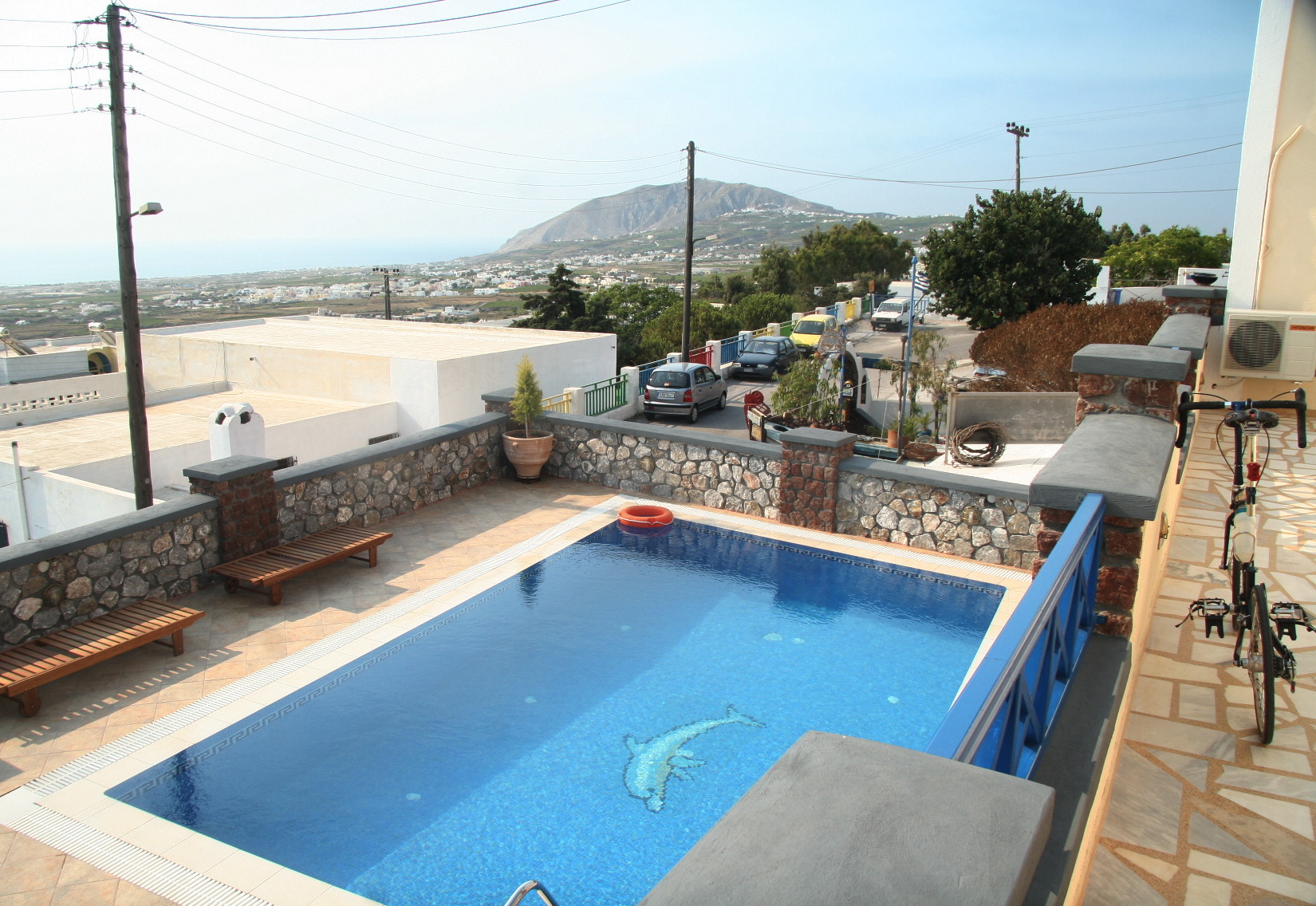
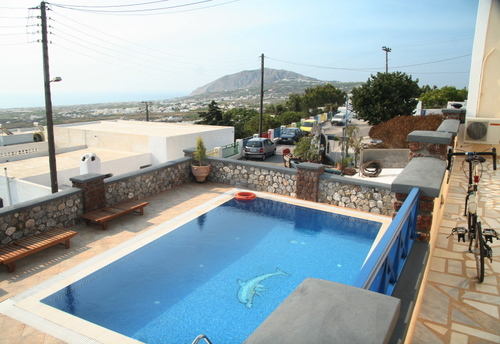 | Δολφινο! My room is just to the
right. I swam in the pool every night. |
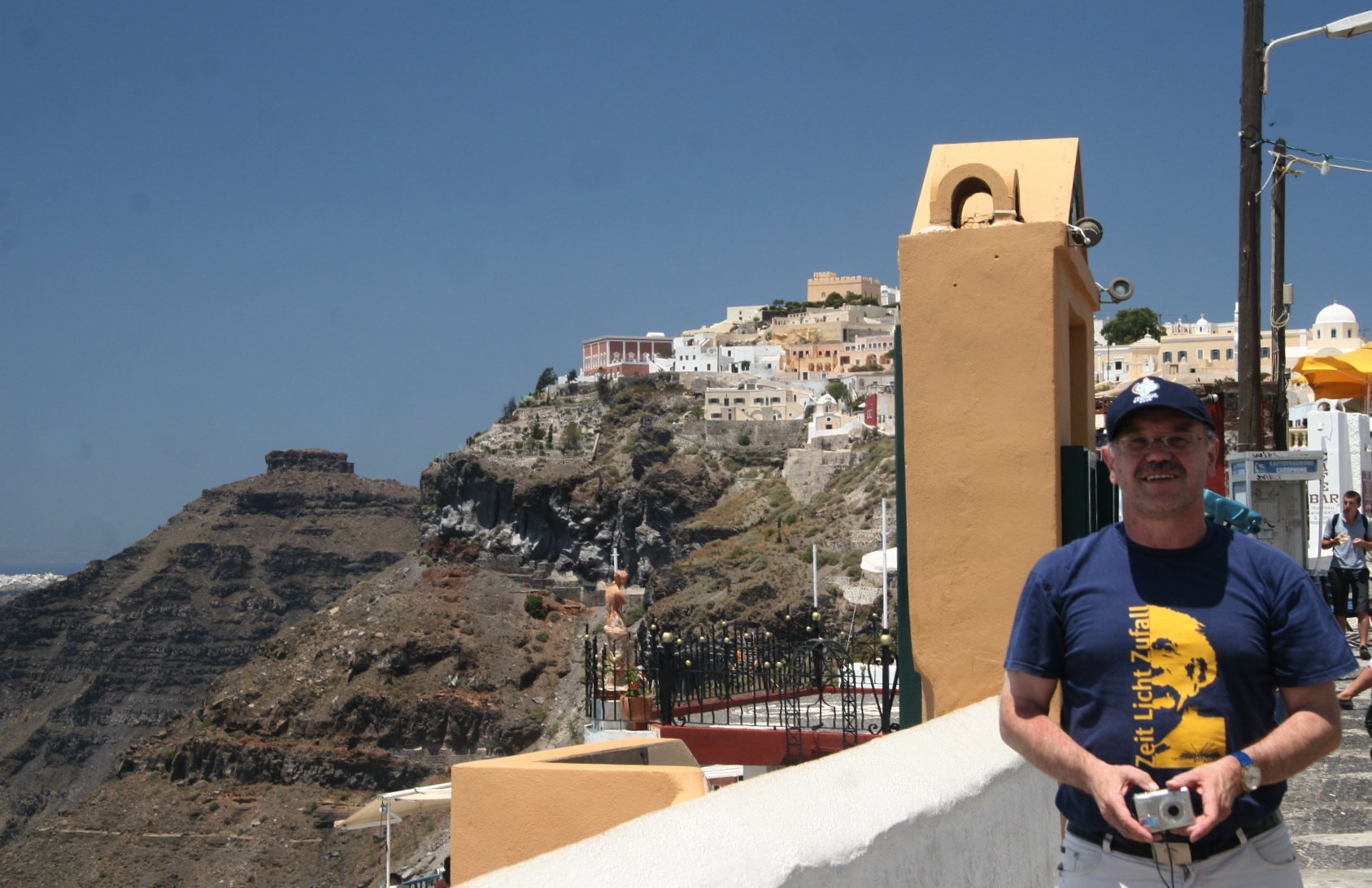
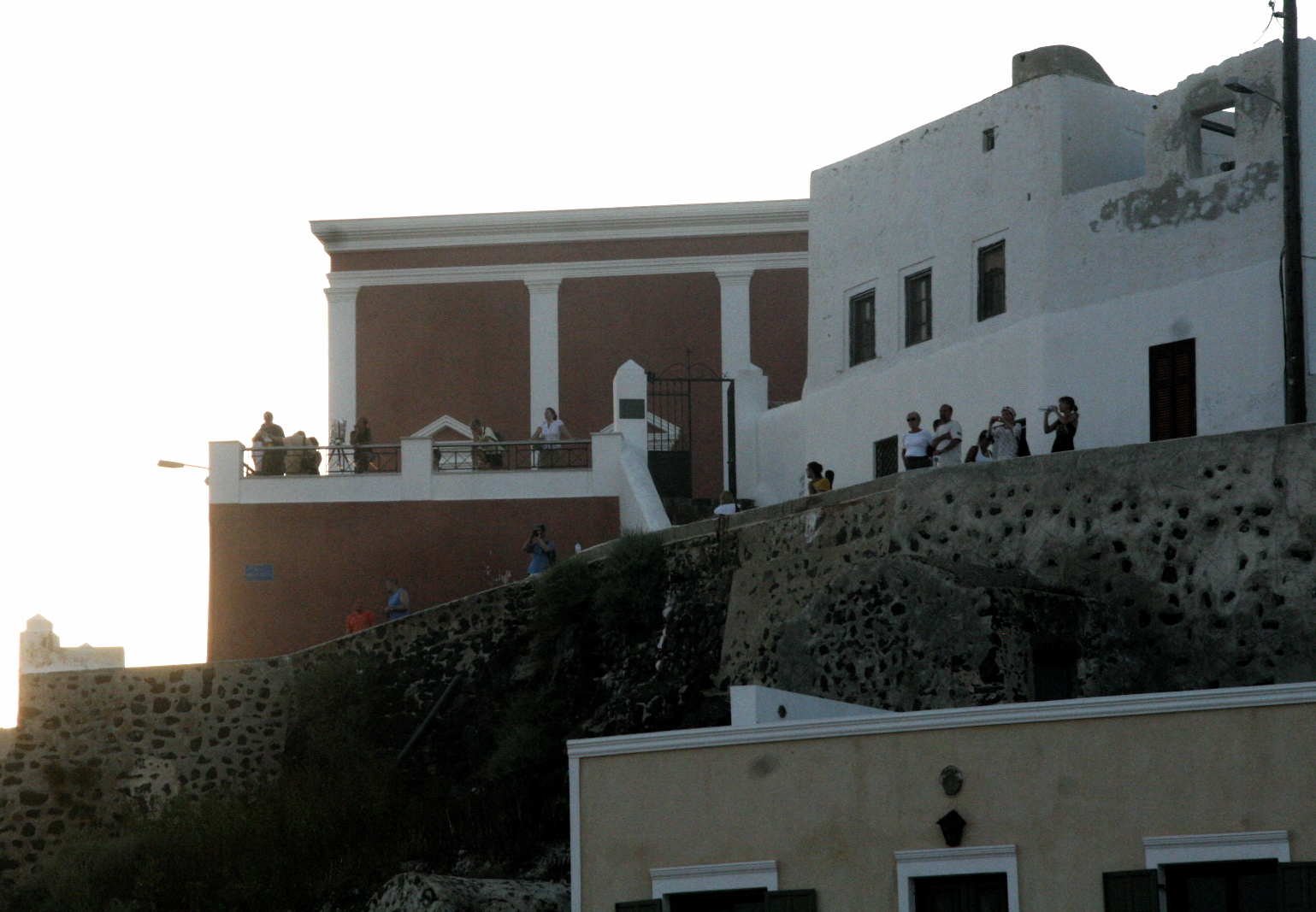
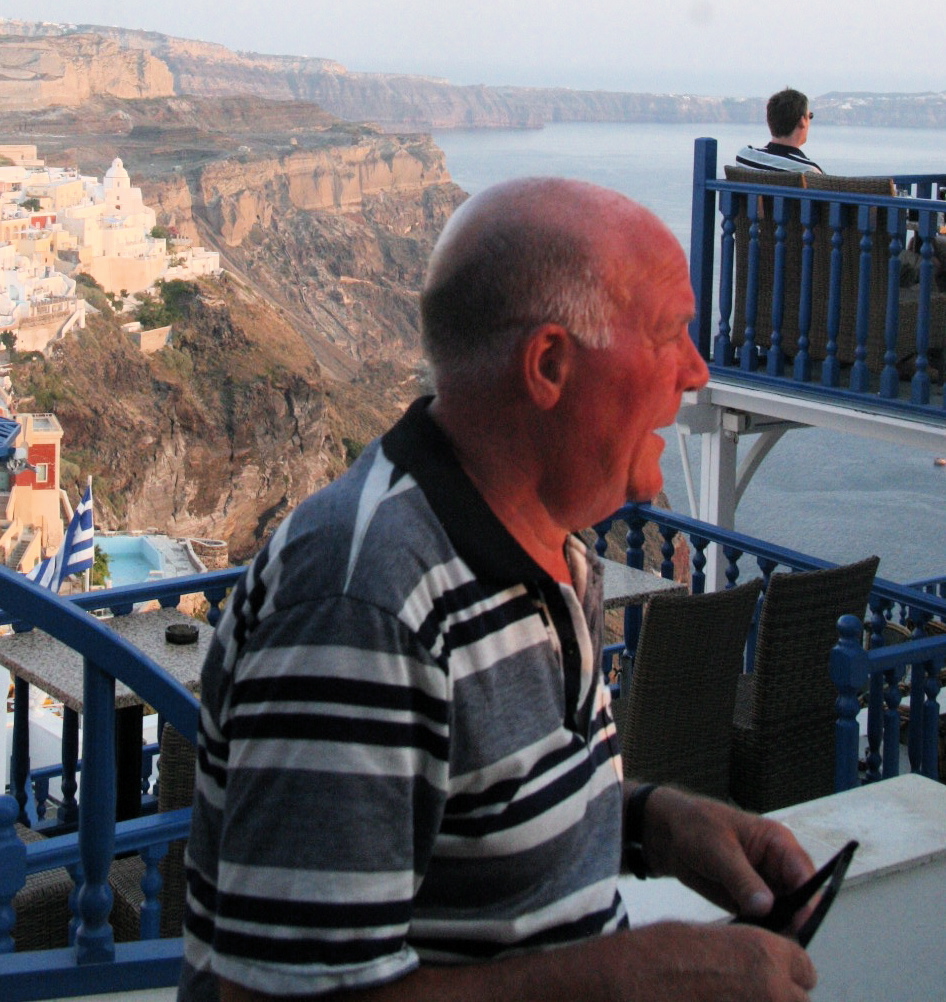
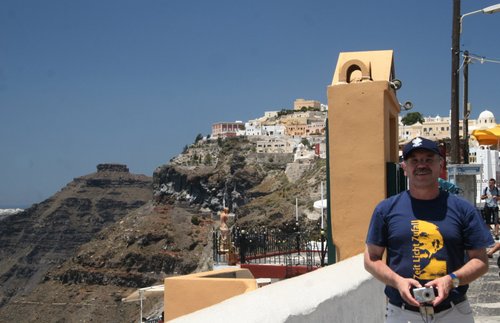 | Hans Zinnecker and I head to lunch and the artifact museum. Conference center
is the red-pink building to the far upper-left. (A historic building, which
has been restored recently.) |
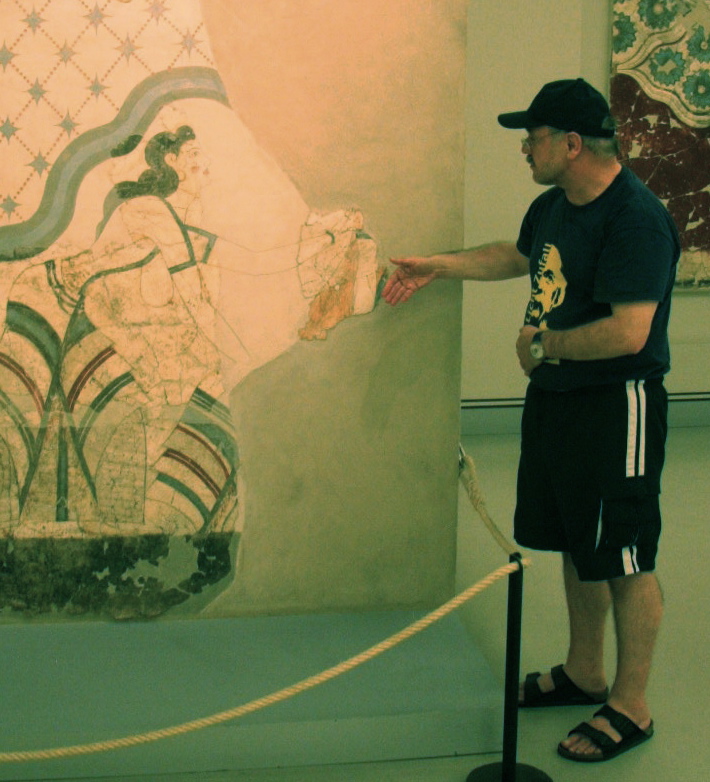
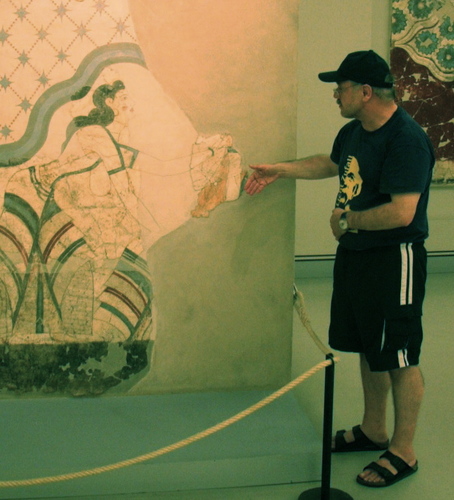 | The conference center itself has quite a collection of wall-paintings with
dolphins, octopi, griffins, etc. This one here is in another museum.
Unfortunately the main archeological site is down for repairs, after a roof
collapse which killed someone recently. No word if it was an issue of
micro-volcanism or not. |
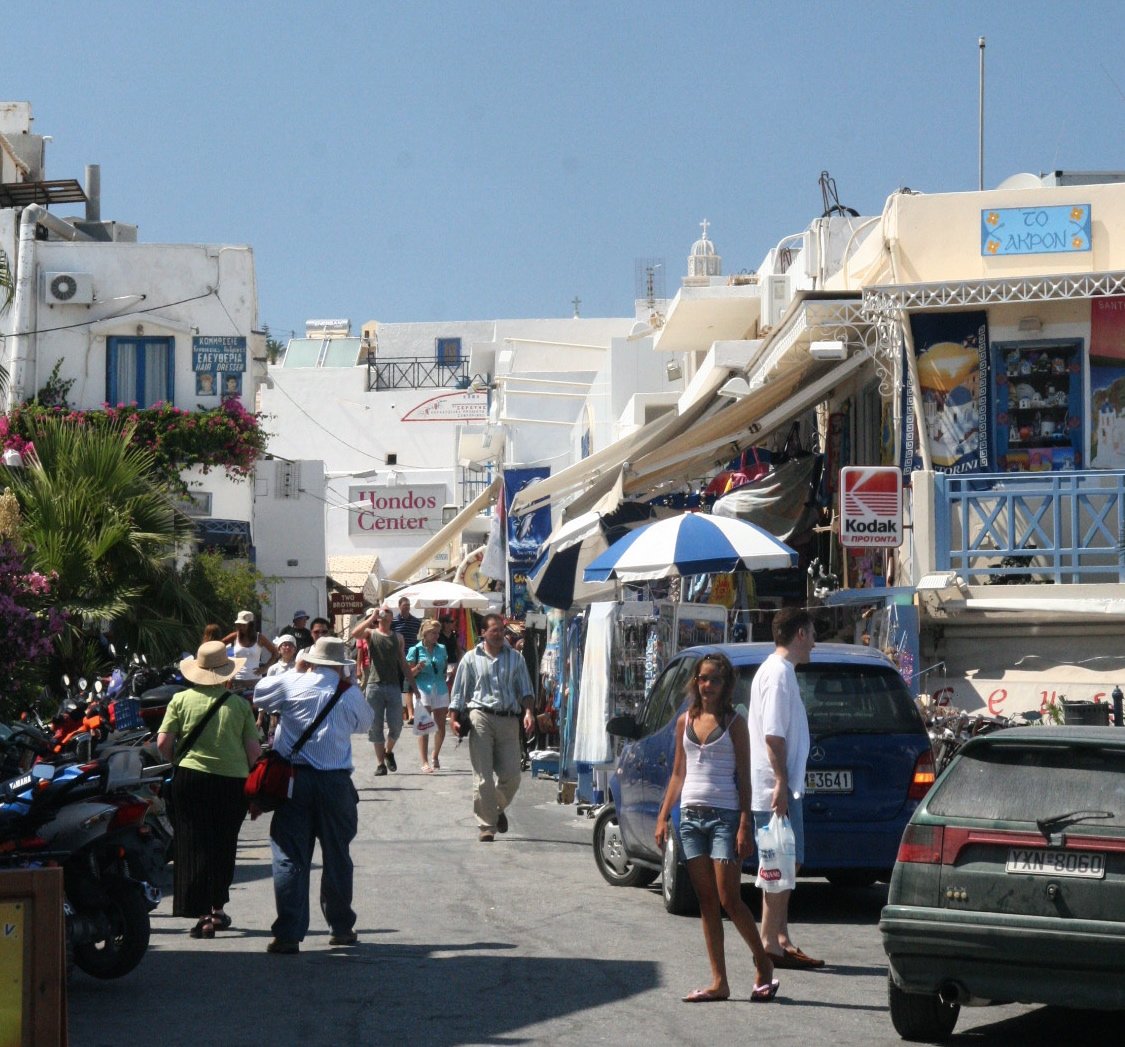
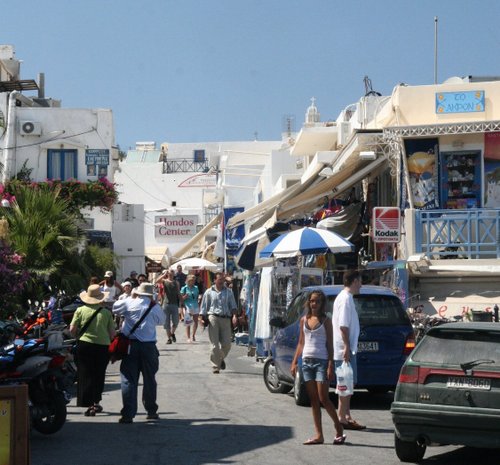 | Walking through the downtown area. |
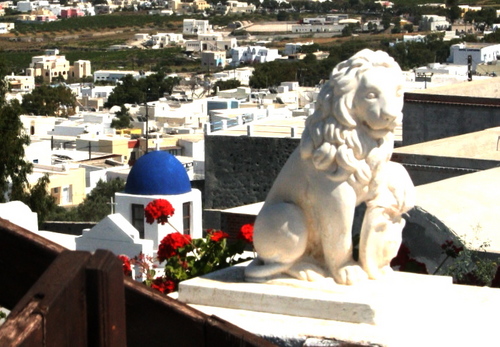 | Going back to my hotel. |
 | |
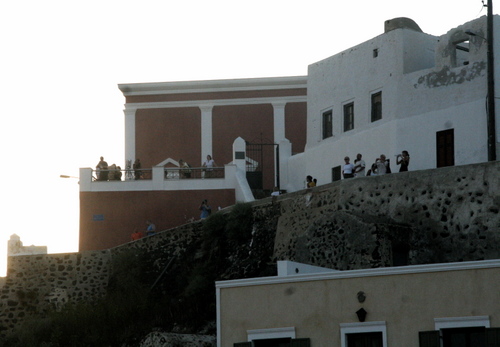 | Conference center. |
 | |
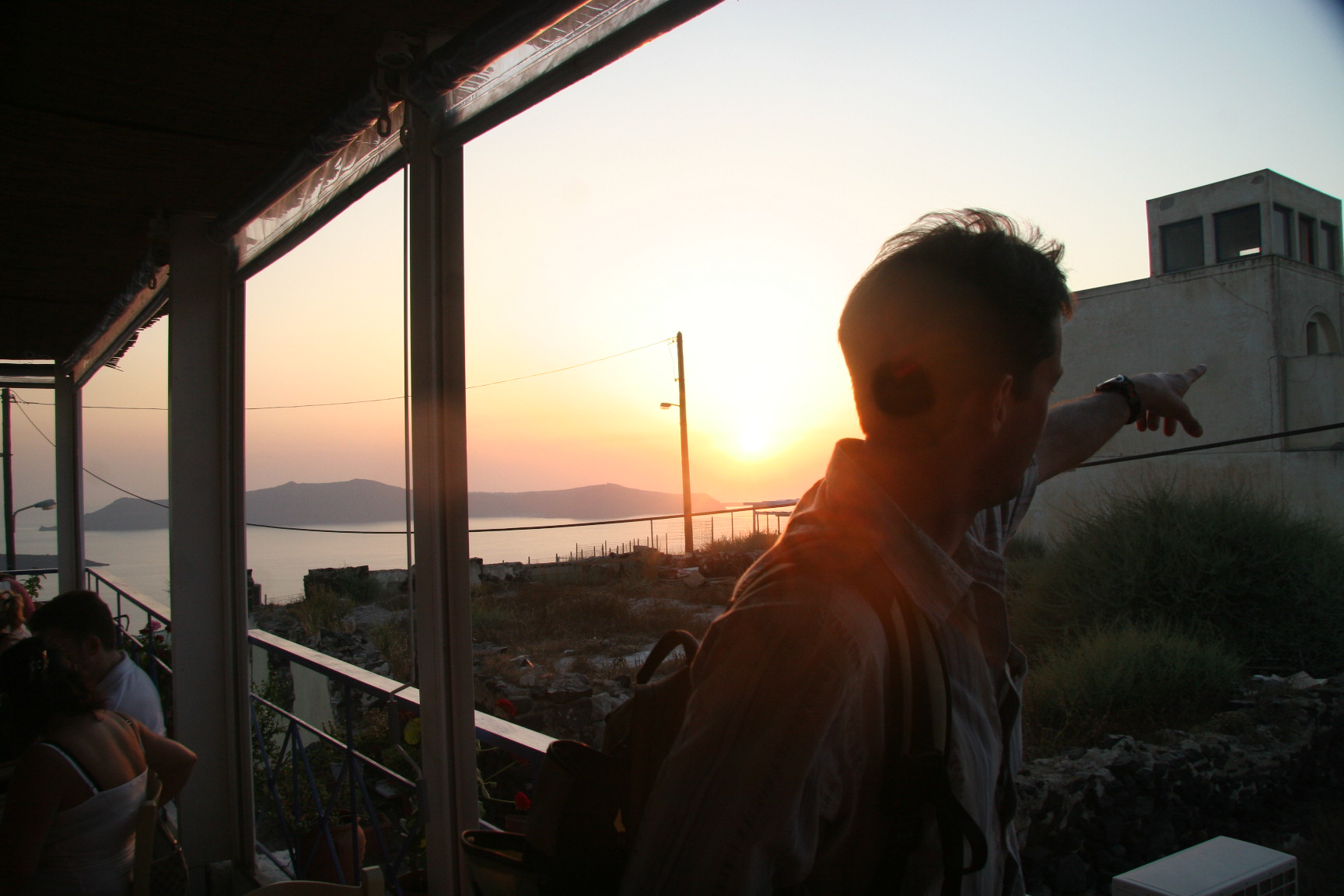
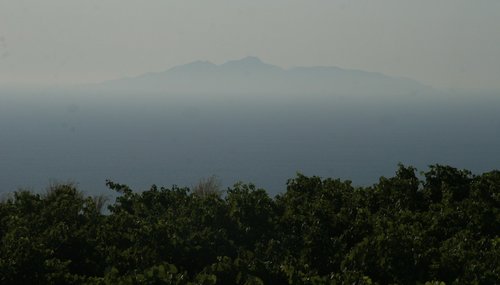
 | Andrew Youdin points something out. The land mass in the ocean is the new
volcano. |
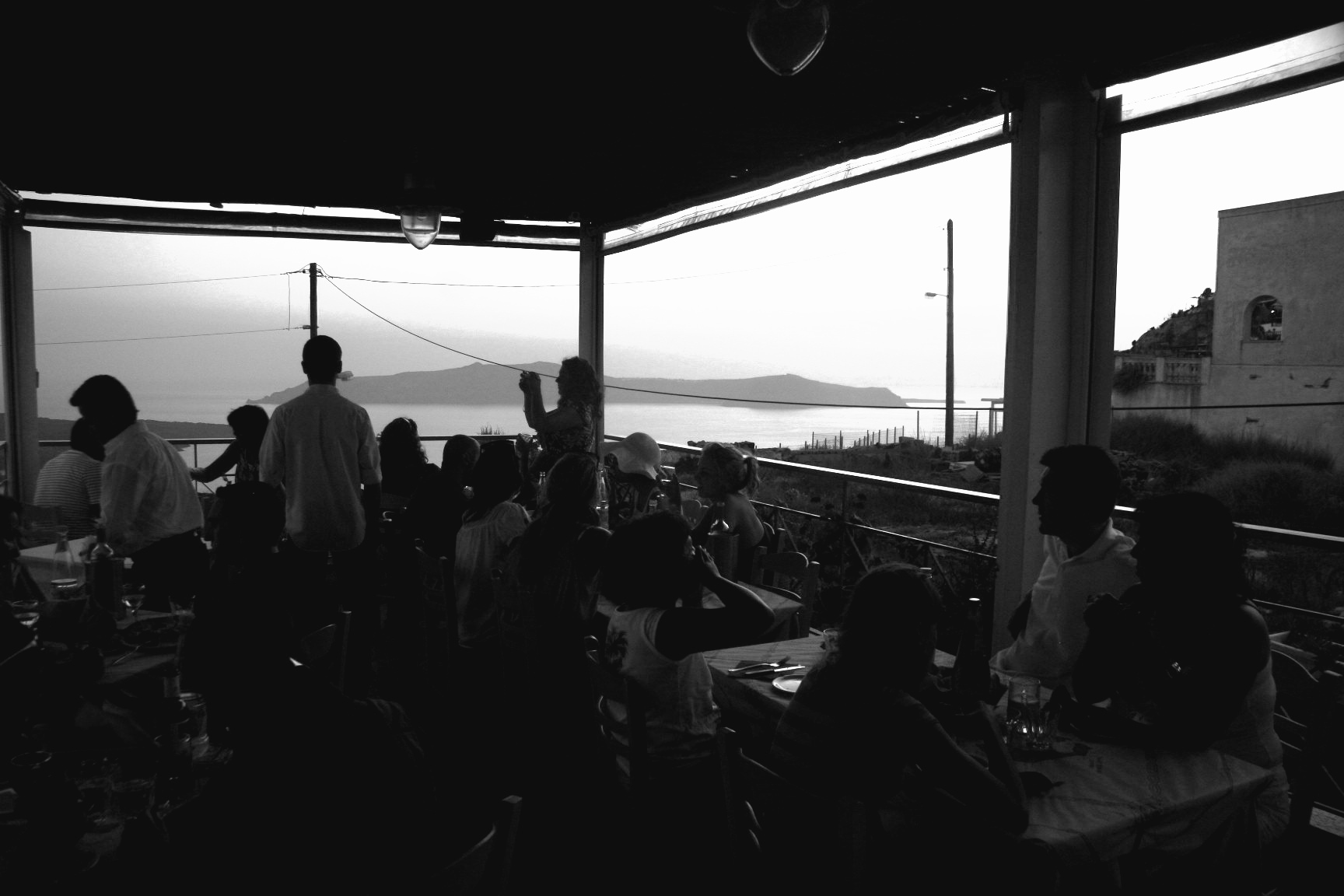
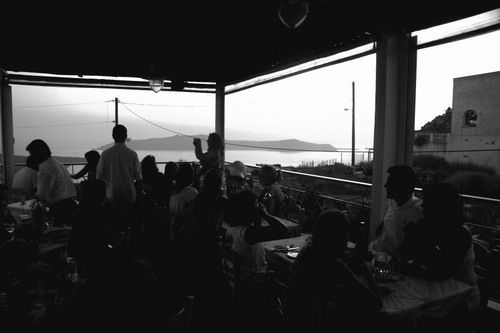
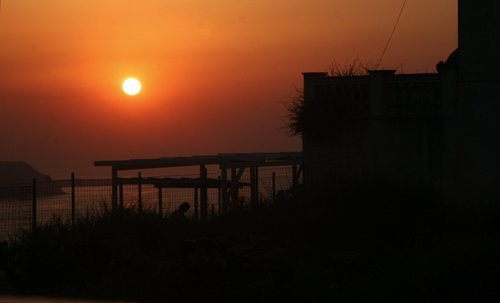 | Sunset during dinner, overlooking the caldera. |
 | |
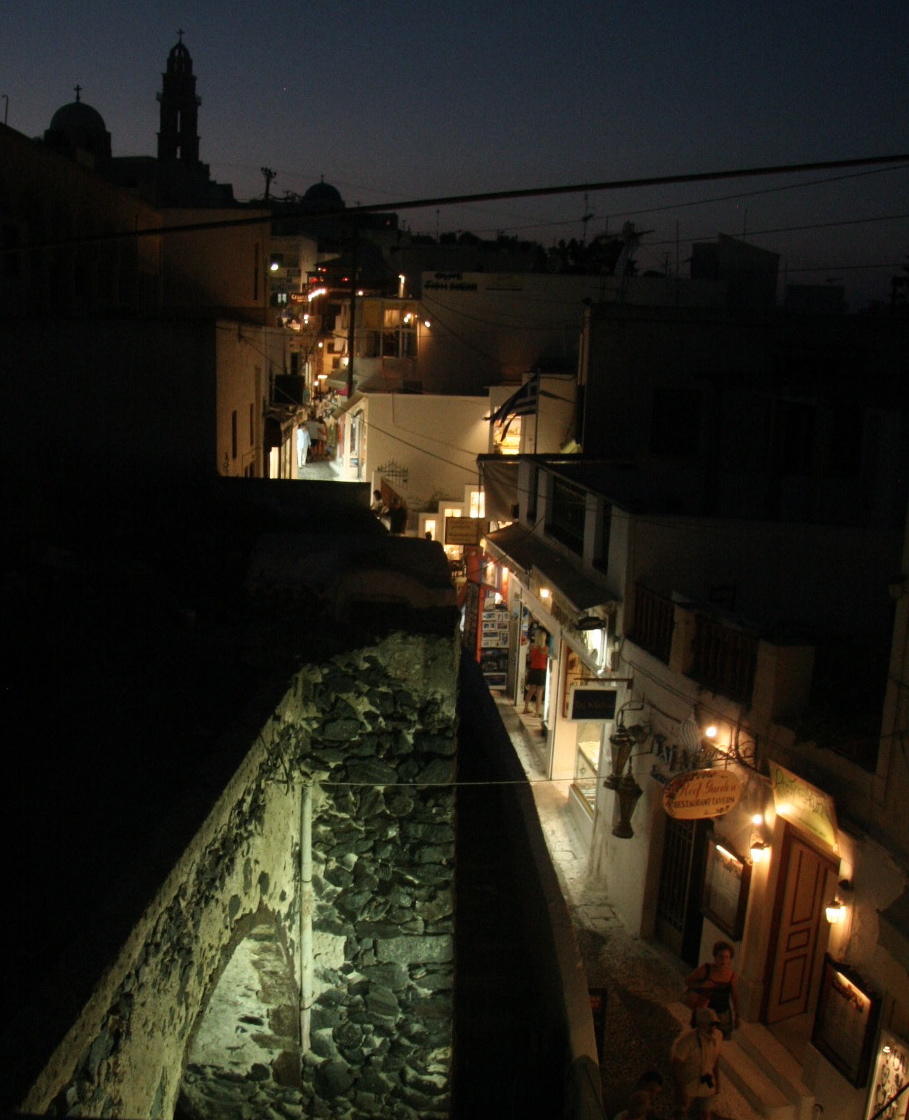
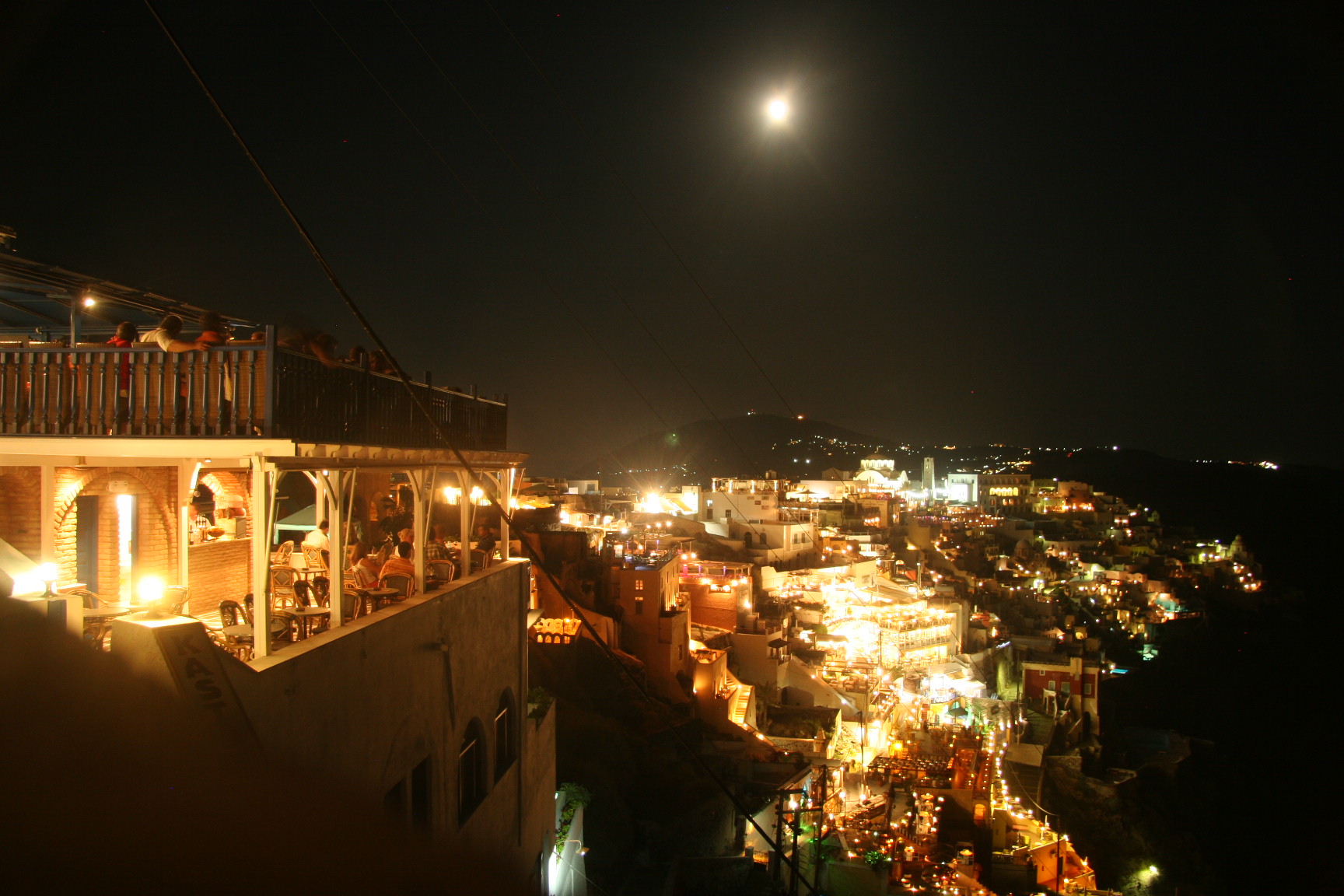
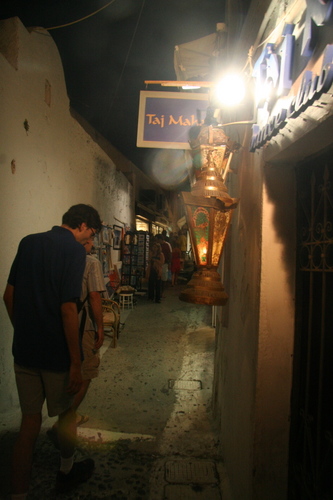
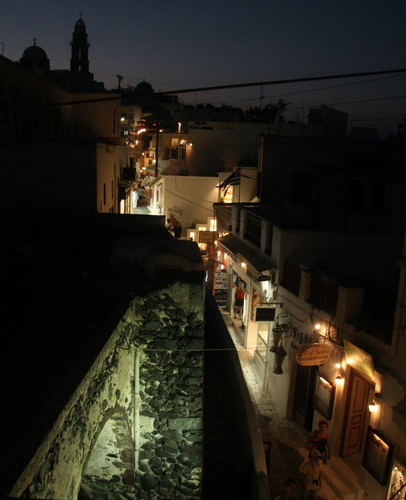 | Also from our dinner spot, looking down on one of the streets. |
 | |
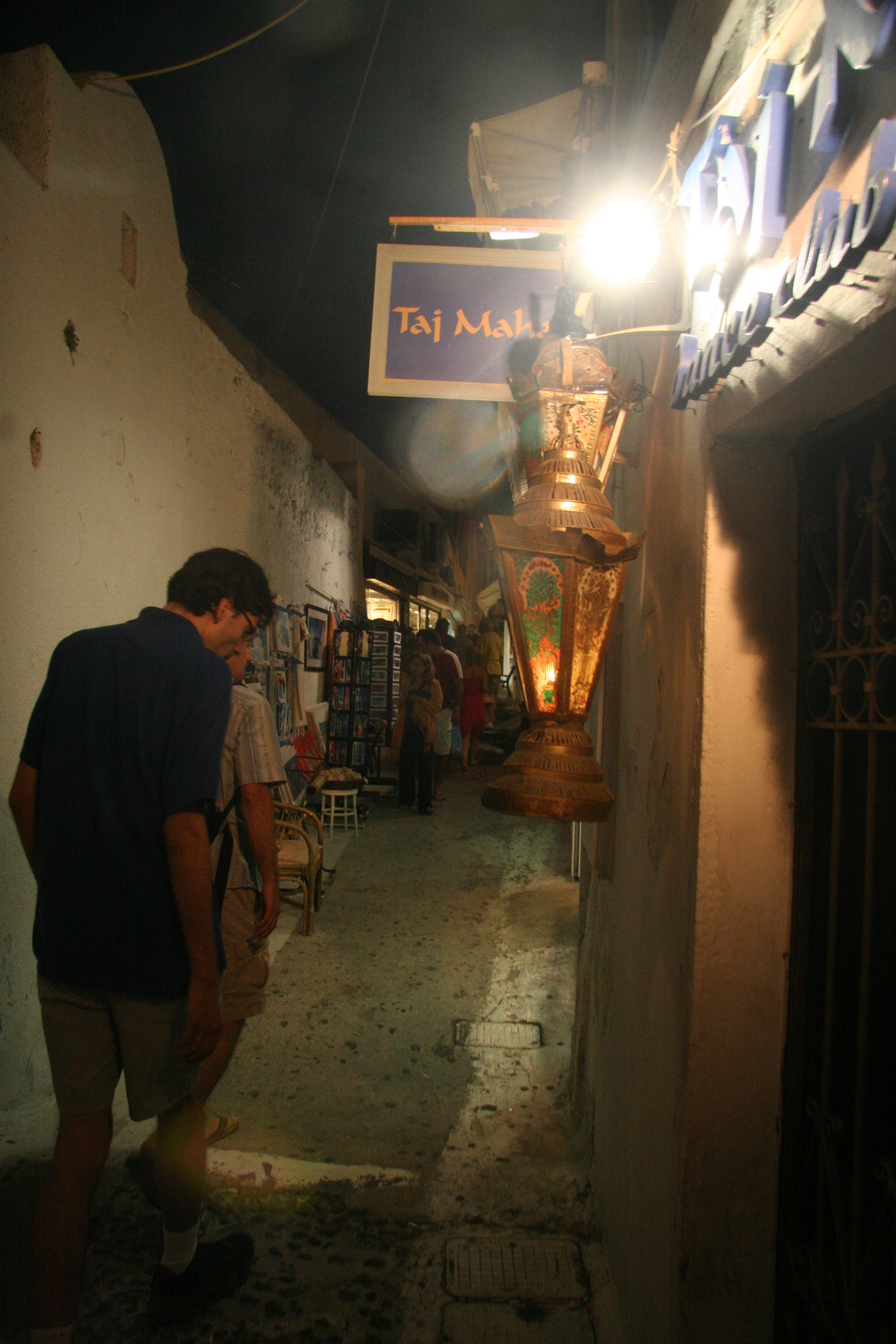
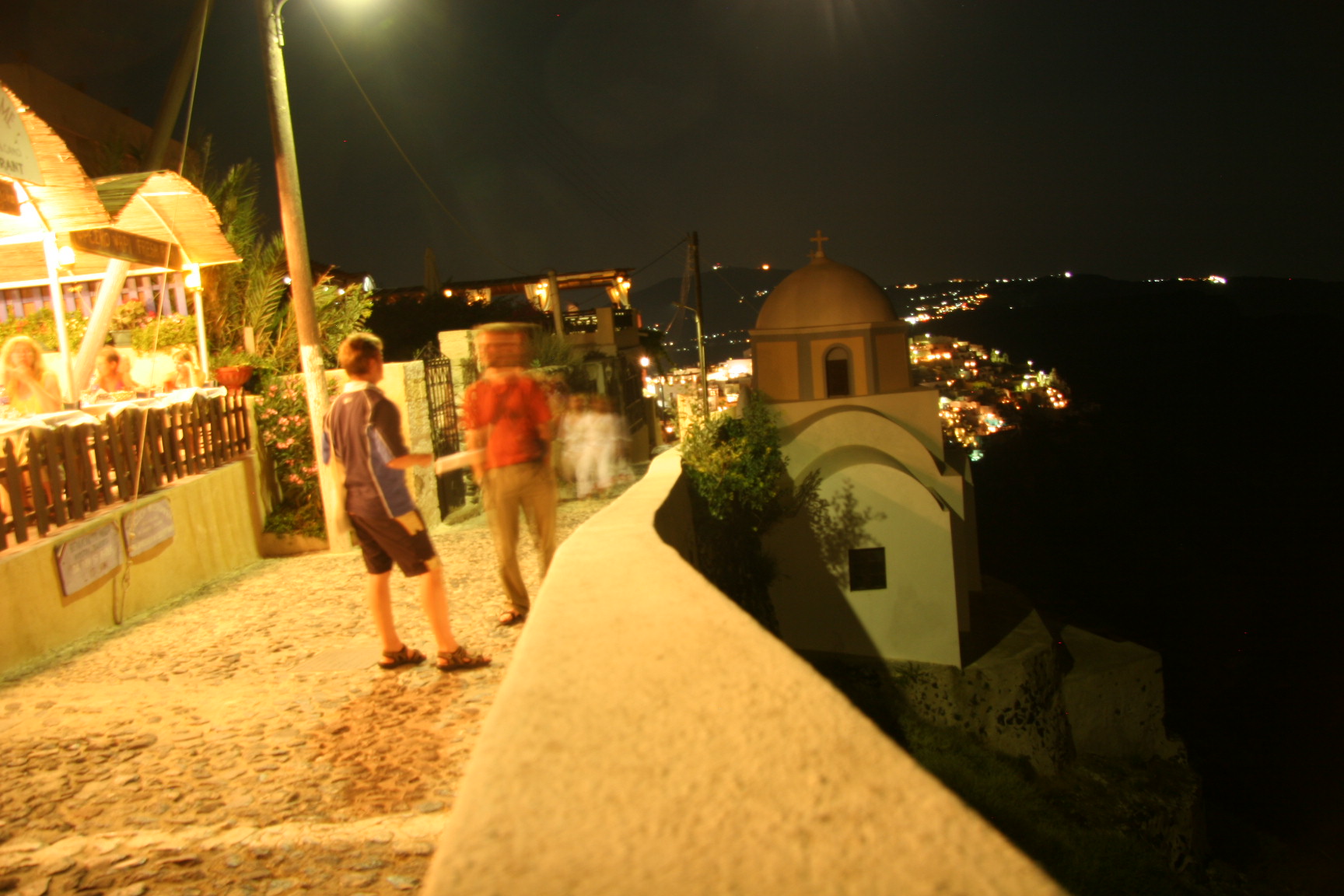
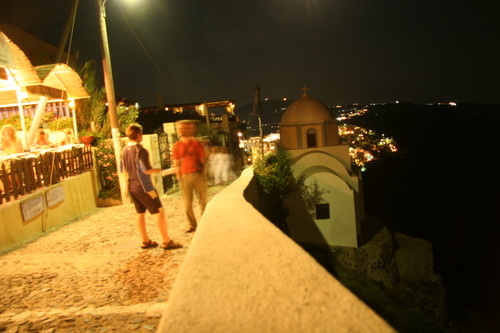
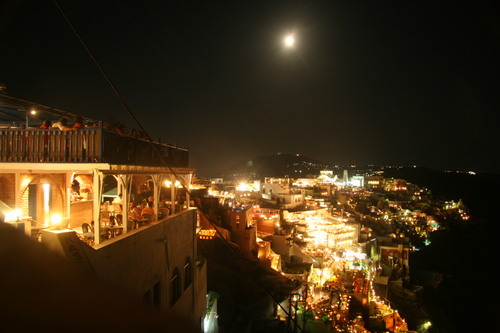 | Along the 'caldera walk' at night. |
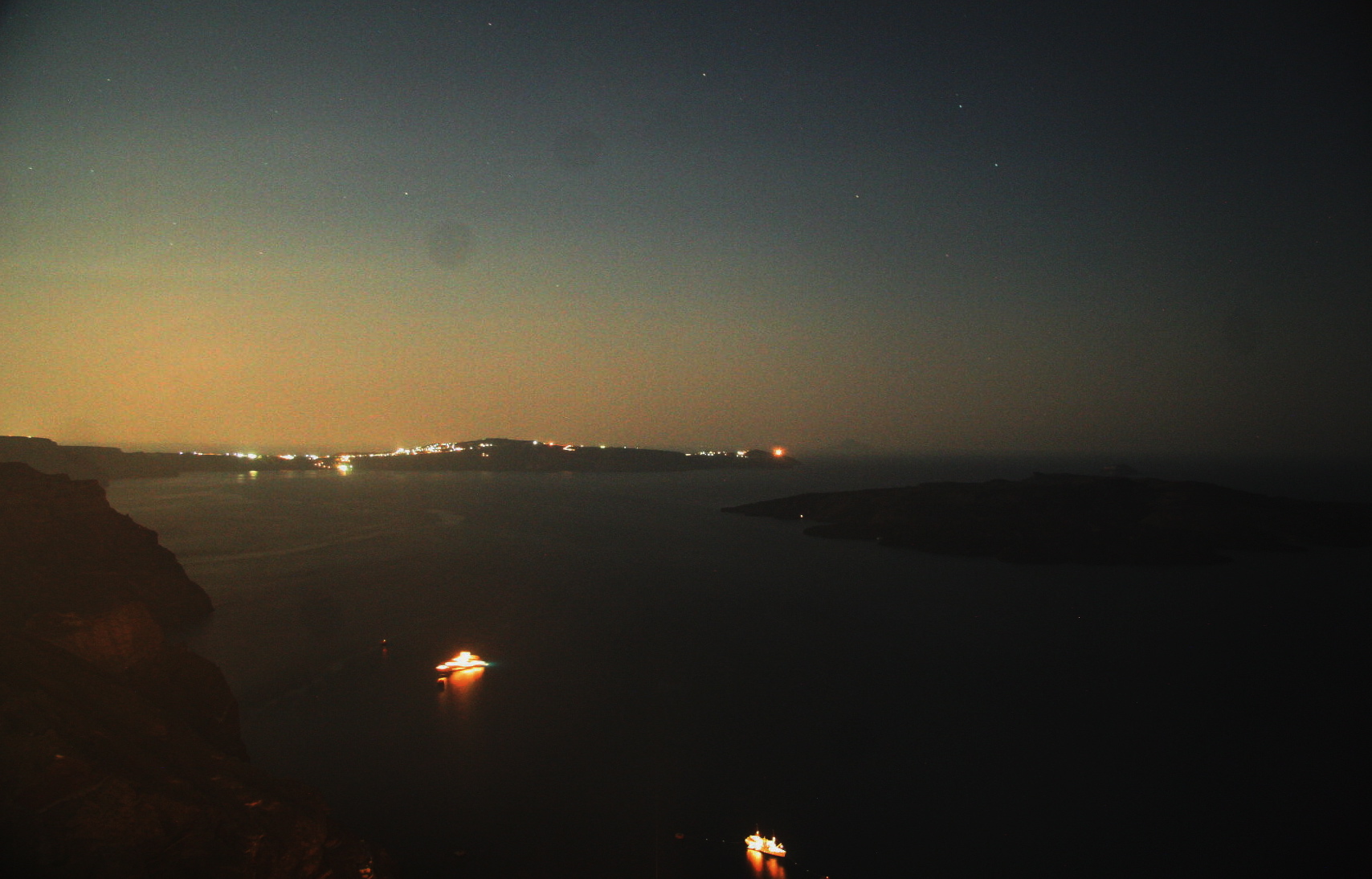
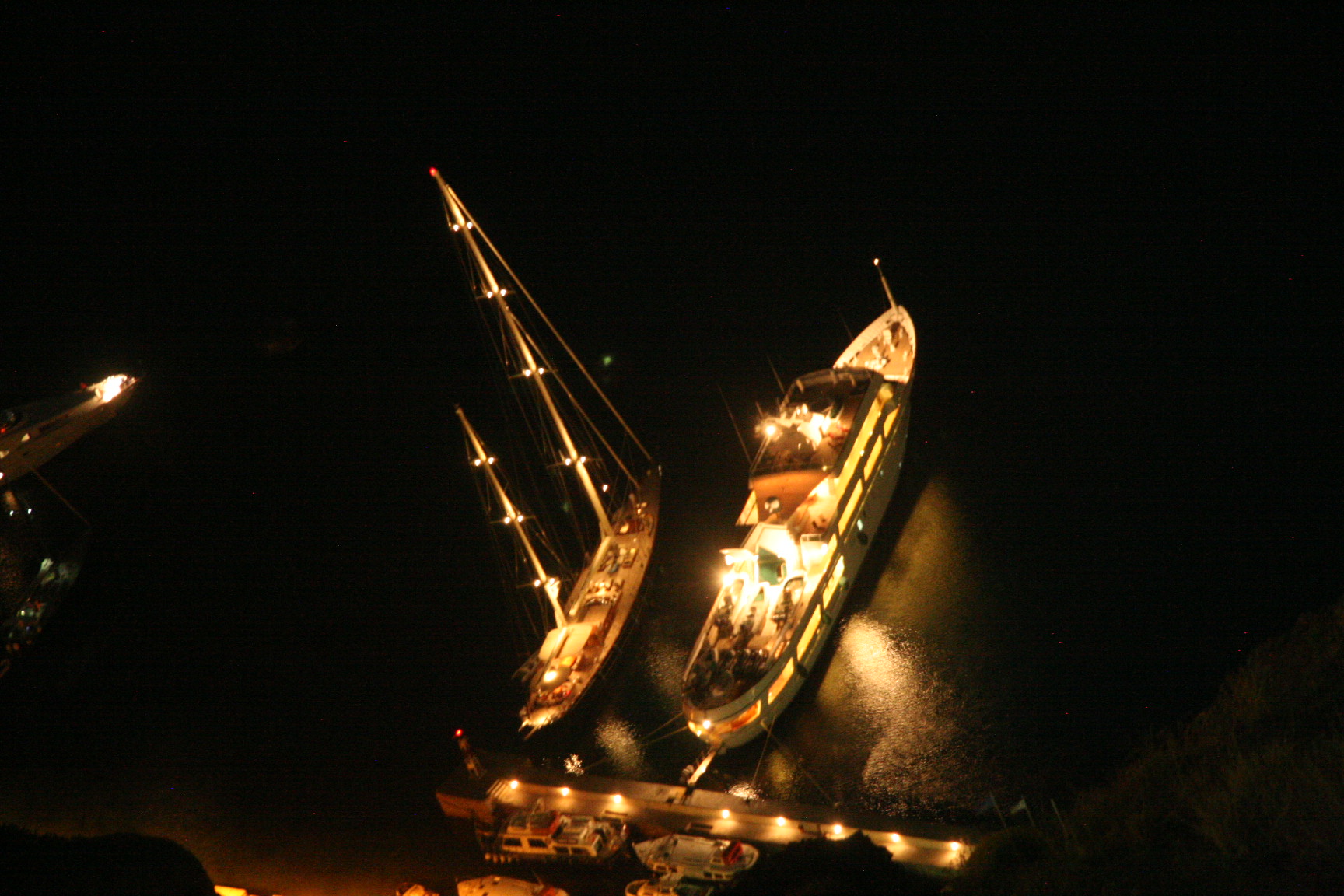
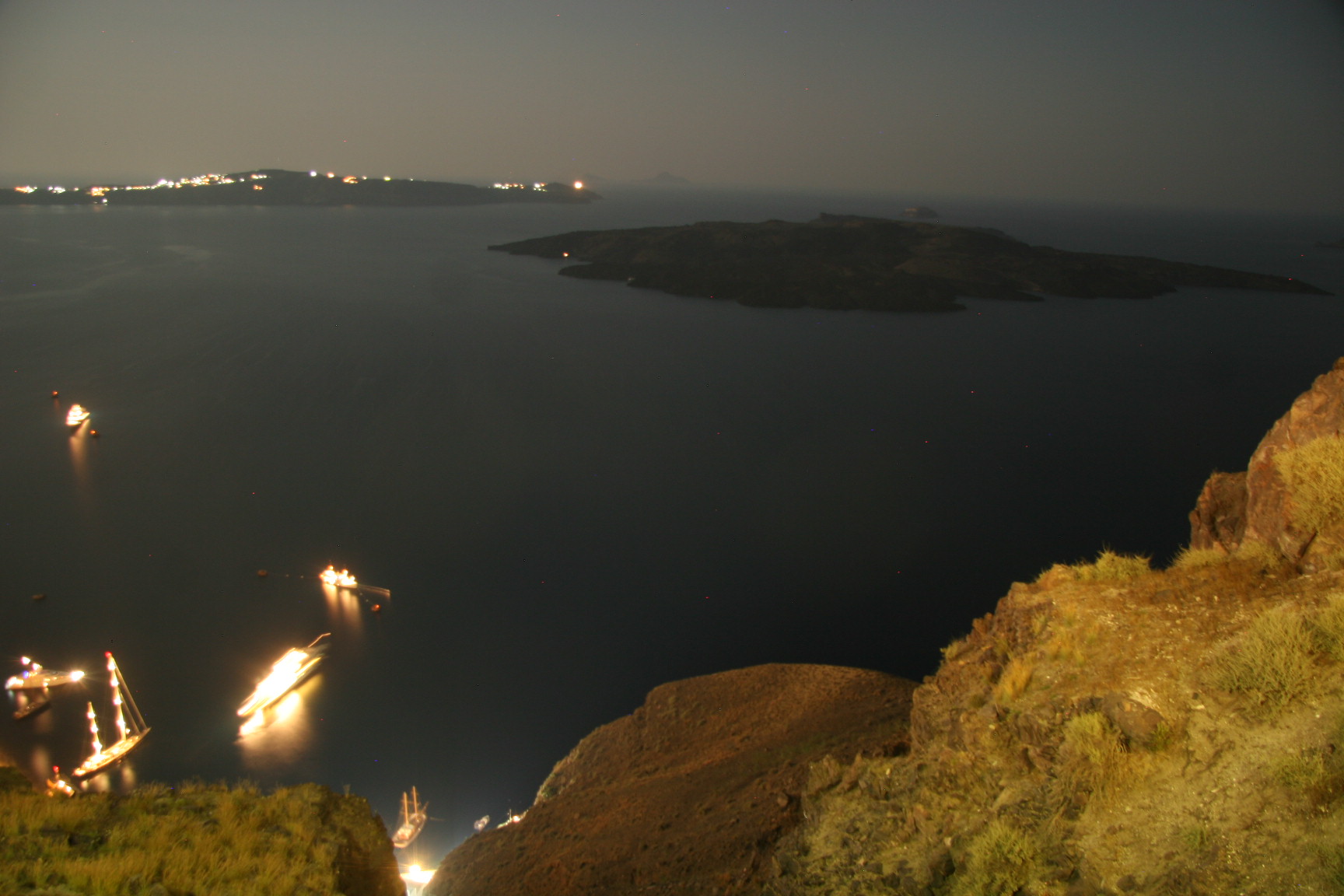
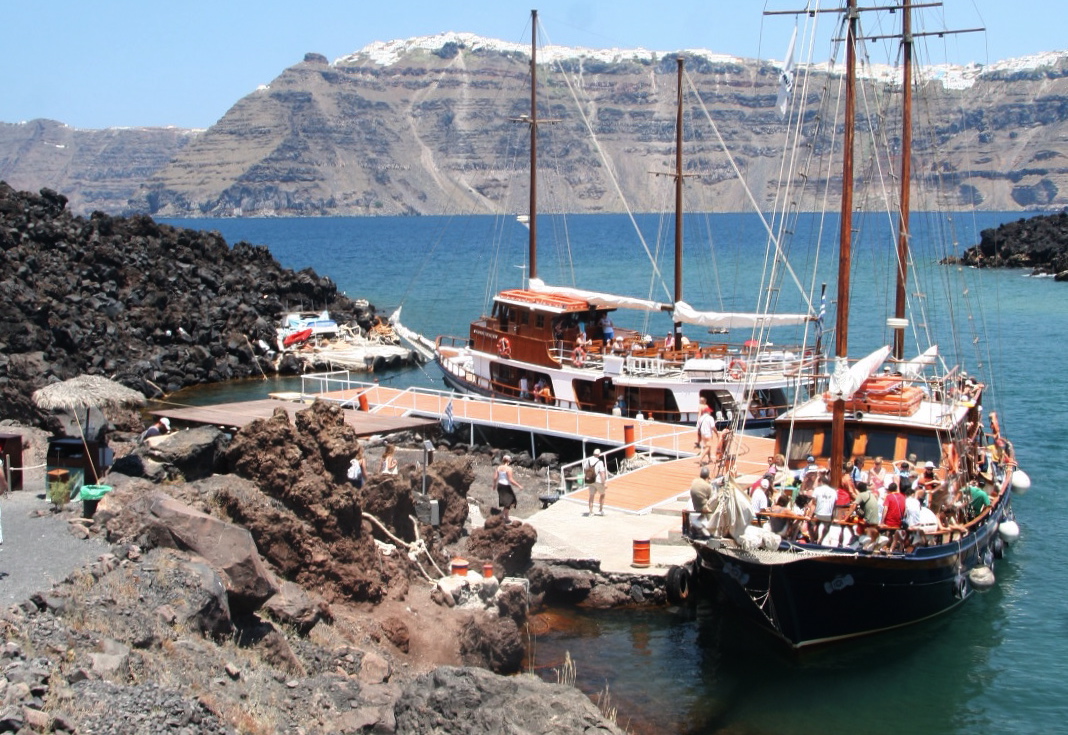
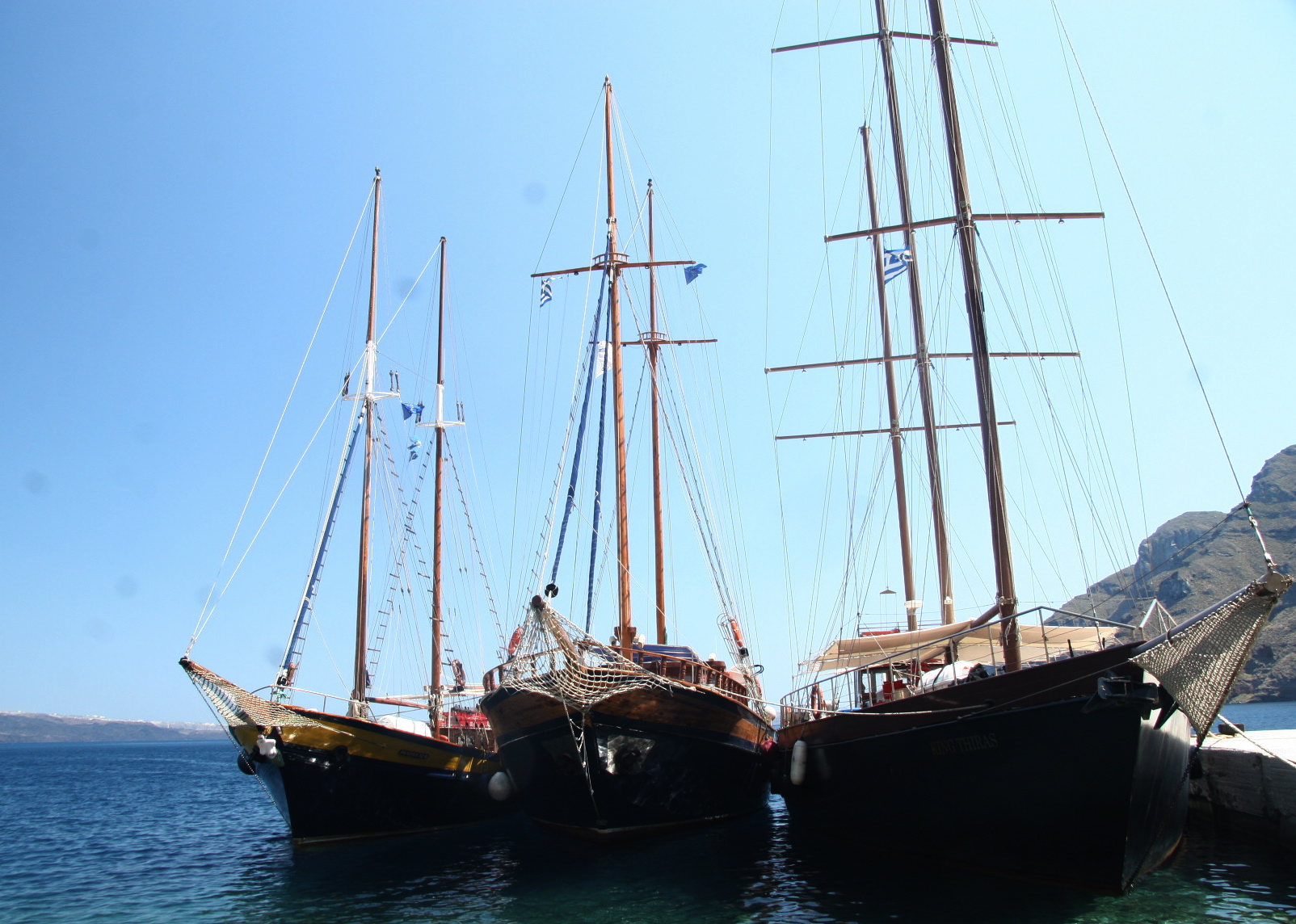
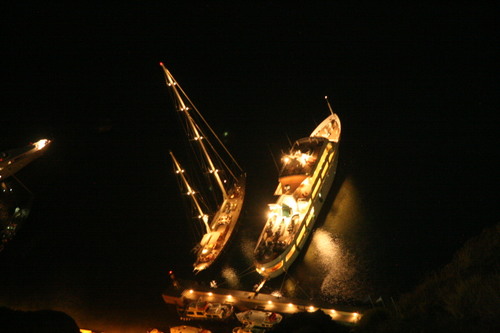
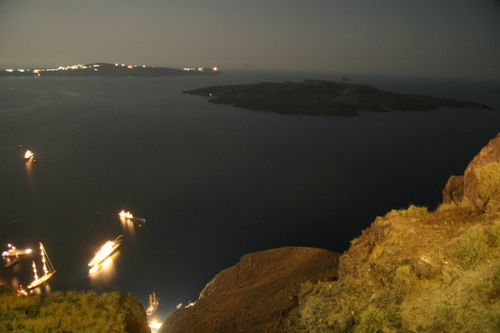
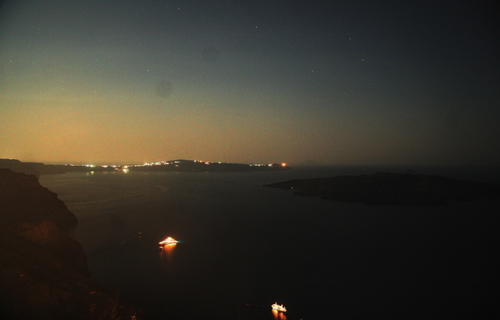 | Looking down on the caldera, etc. at night. The volcano is at the center; the
boats are of the same type that I went out on later in the week. Points if you can name the
constellation! |
 | |
 | |
 | |
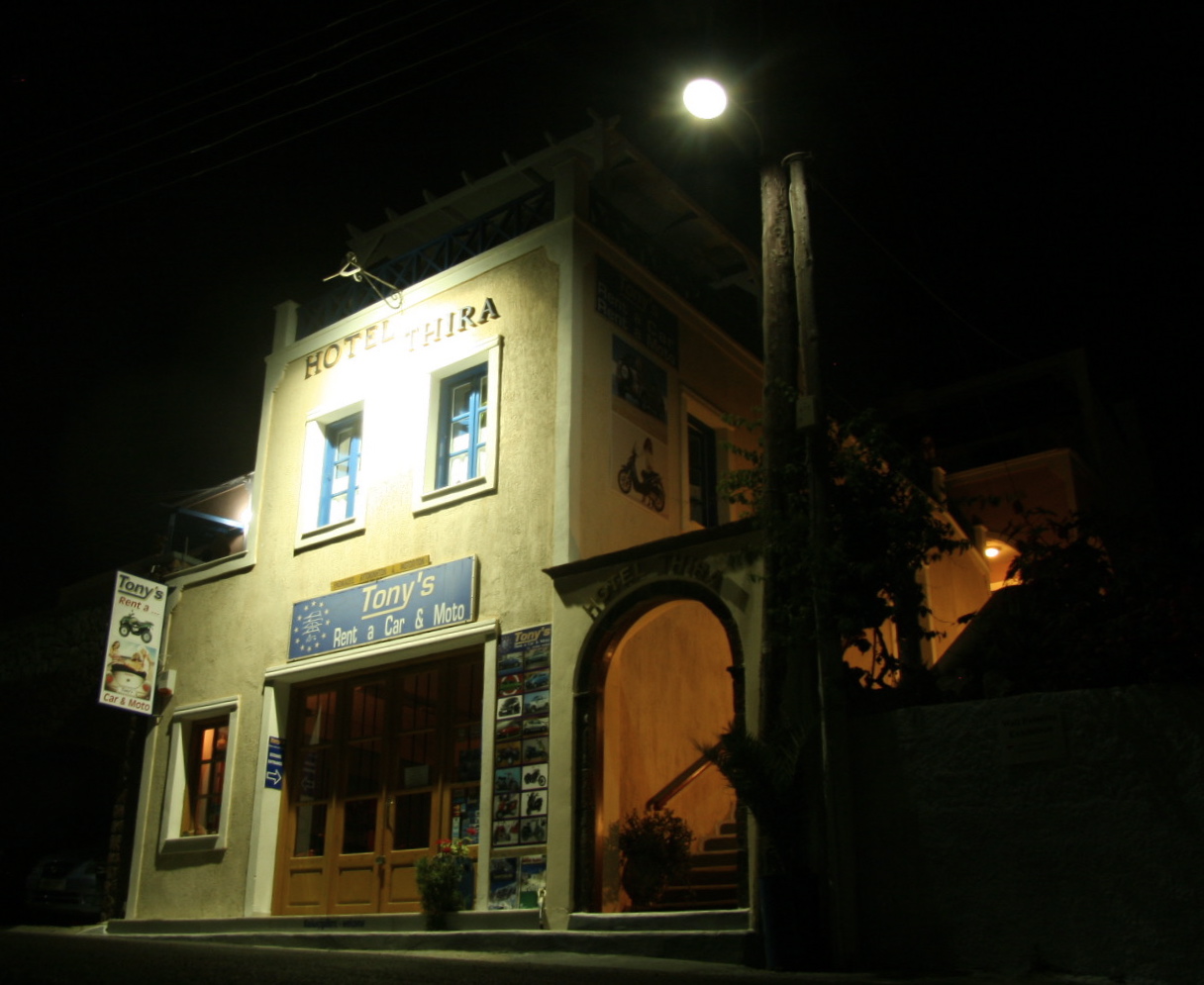
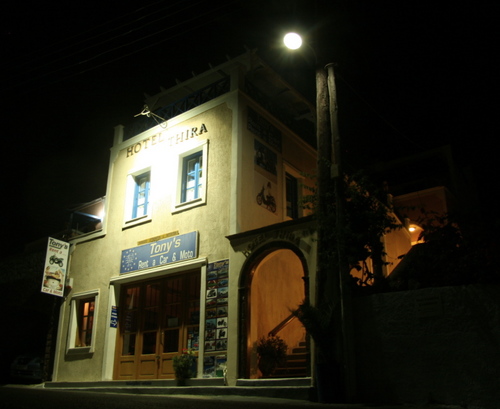 | My hotel (which also serves as a Moto Rental office.) |
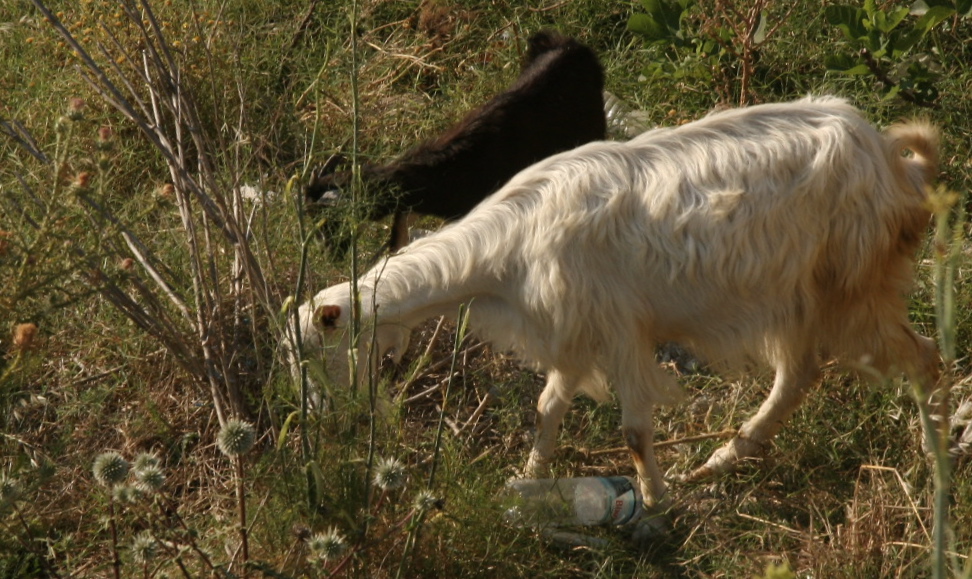
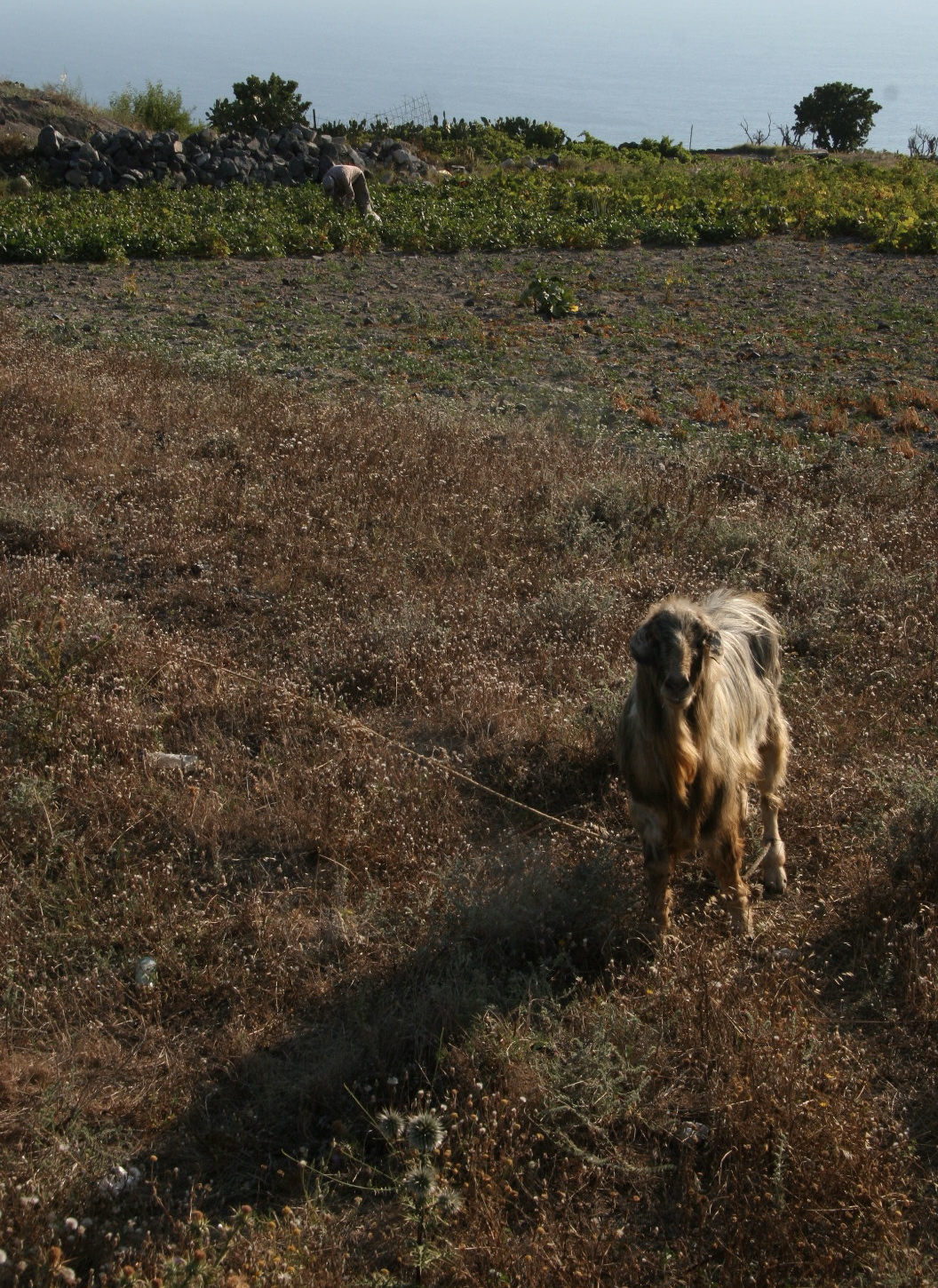
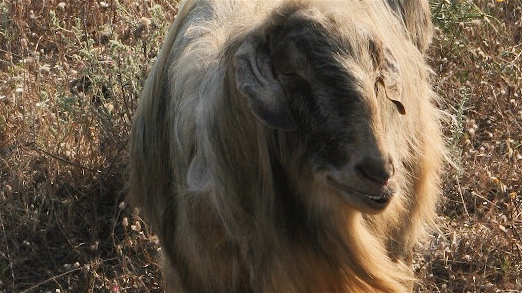
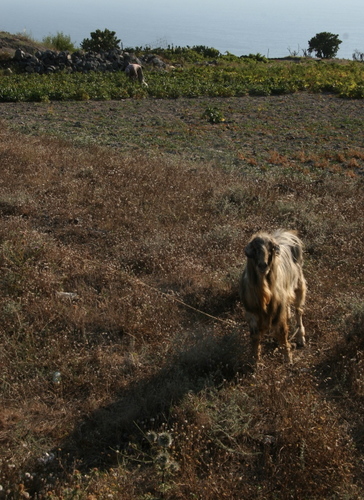
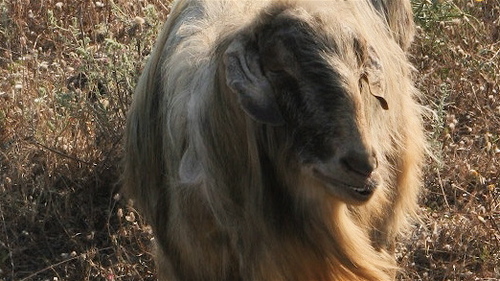
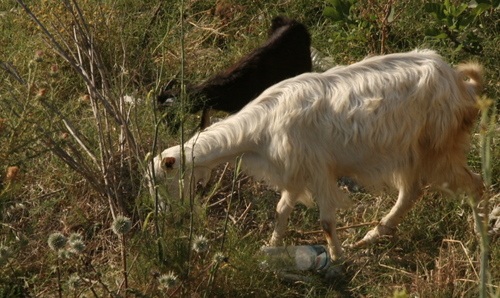 | On the last morning I was there (after the conference), I went out biking and
saw some friendly goats. |
 | |
 | |
 | |
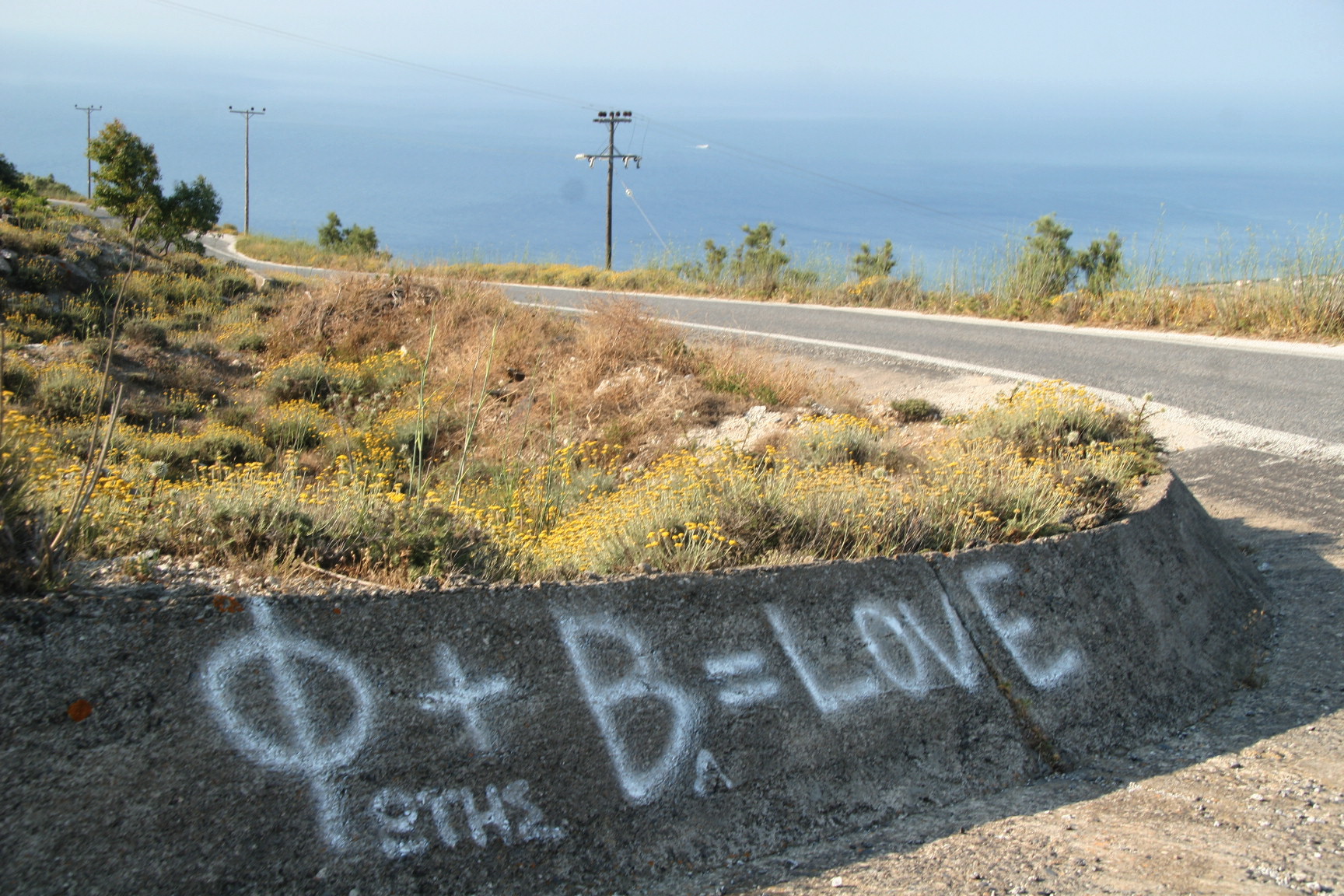
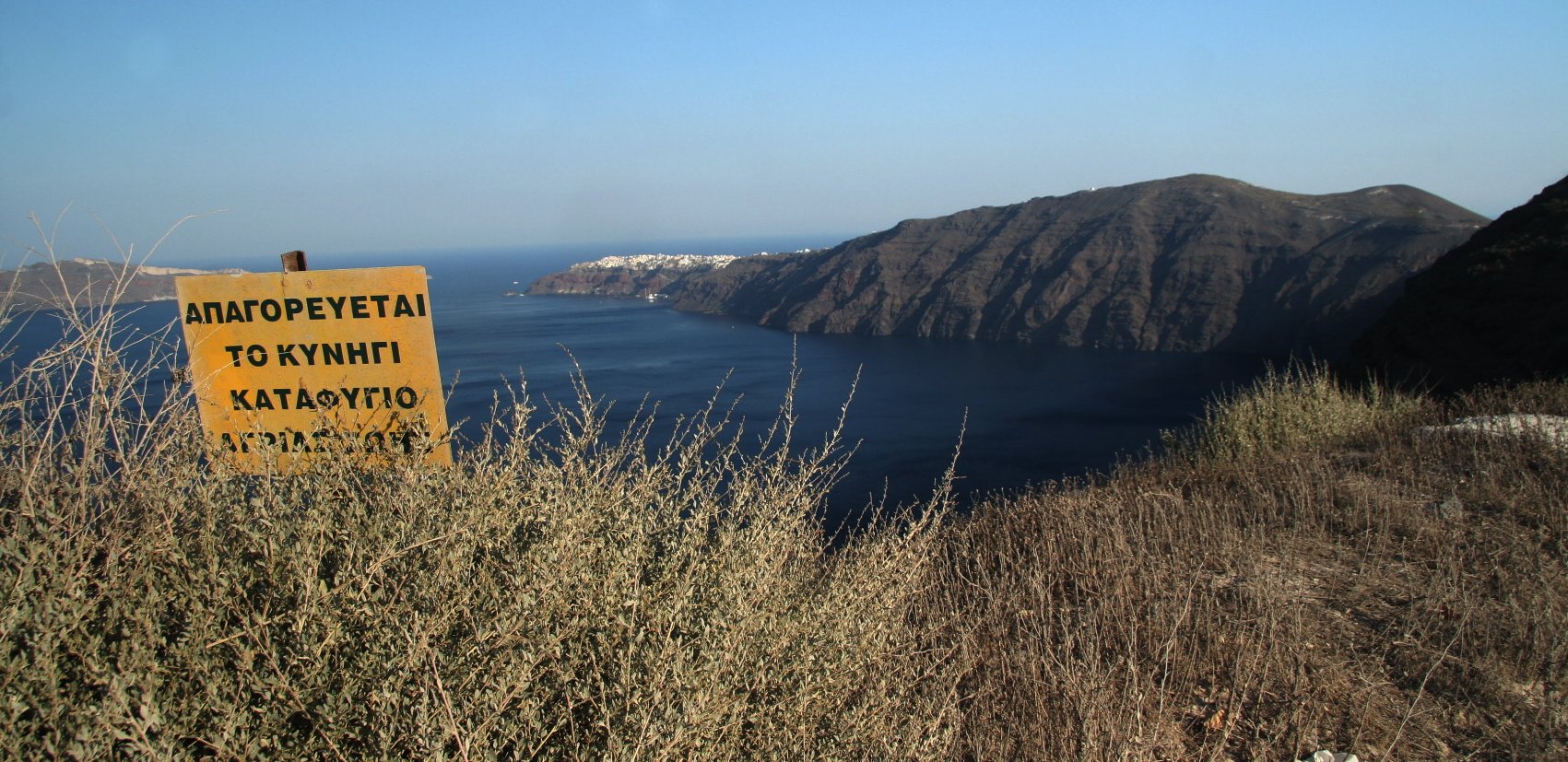
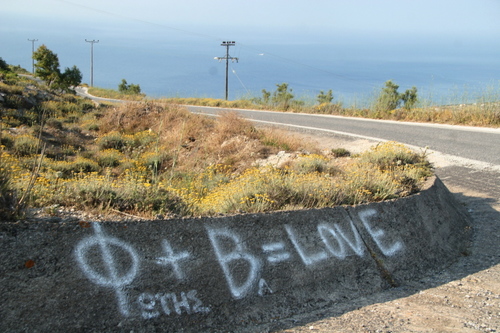
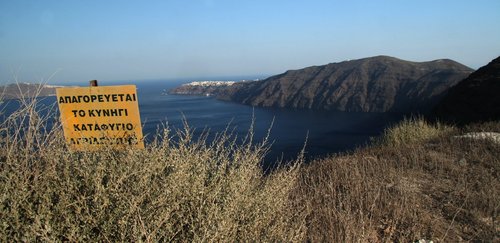 | Greek signs can be quite entertaining to piece together -- it's like a little
rebus / cipher game! This one I didn't figure out, though. |
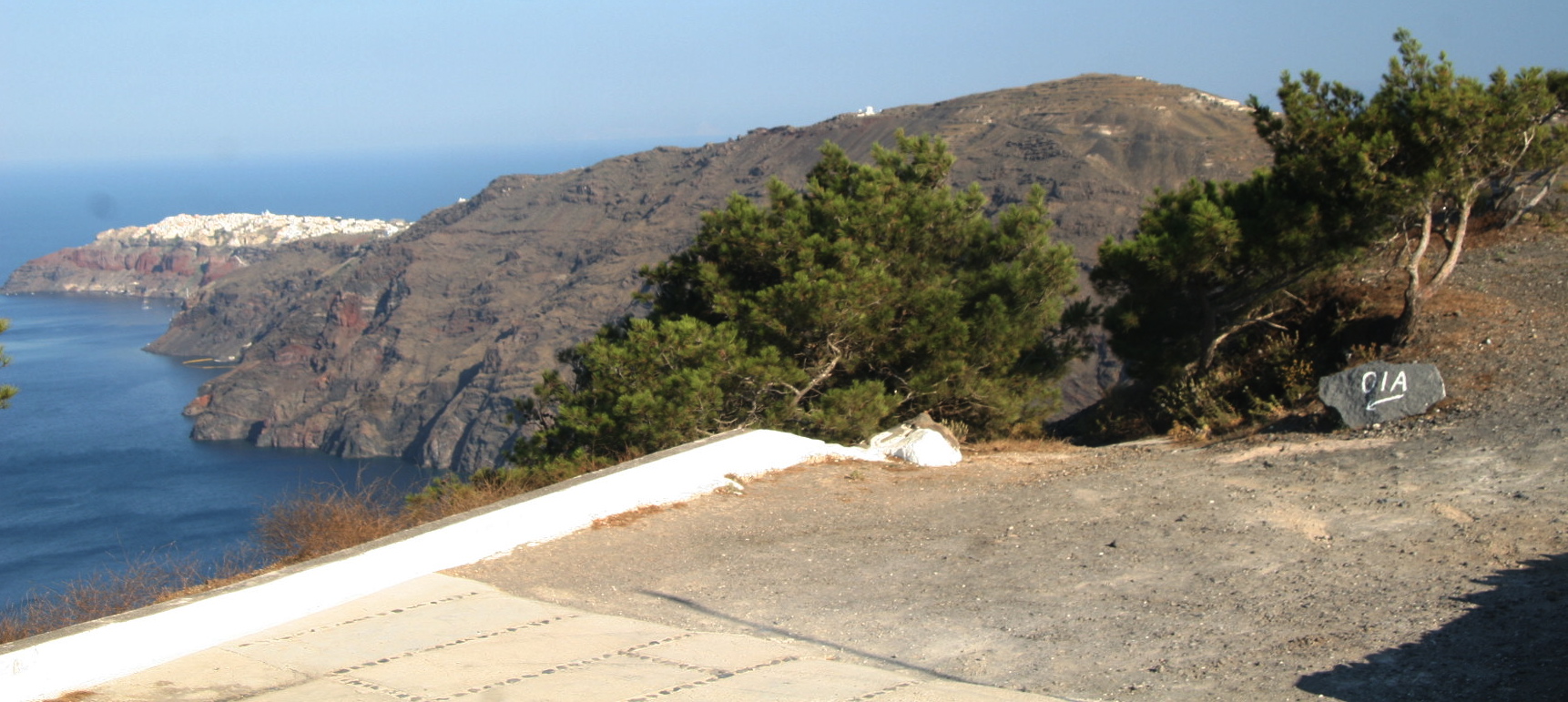
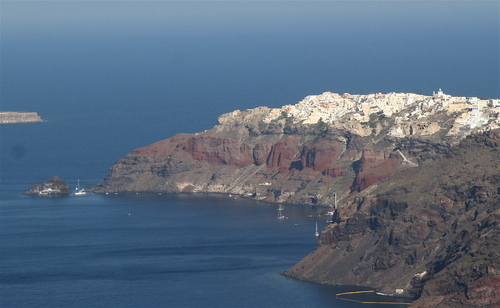 | I biked along the ridgeline toward Oia, the city on the far north
end of the island. You can see the top portion of the pathway snaking down to
the port. |
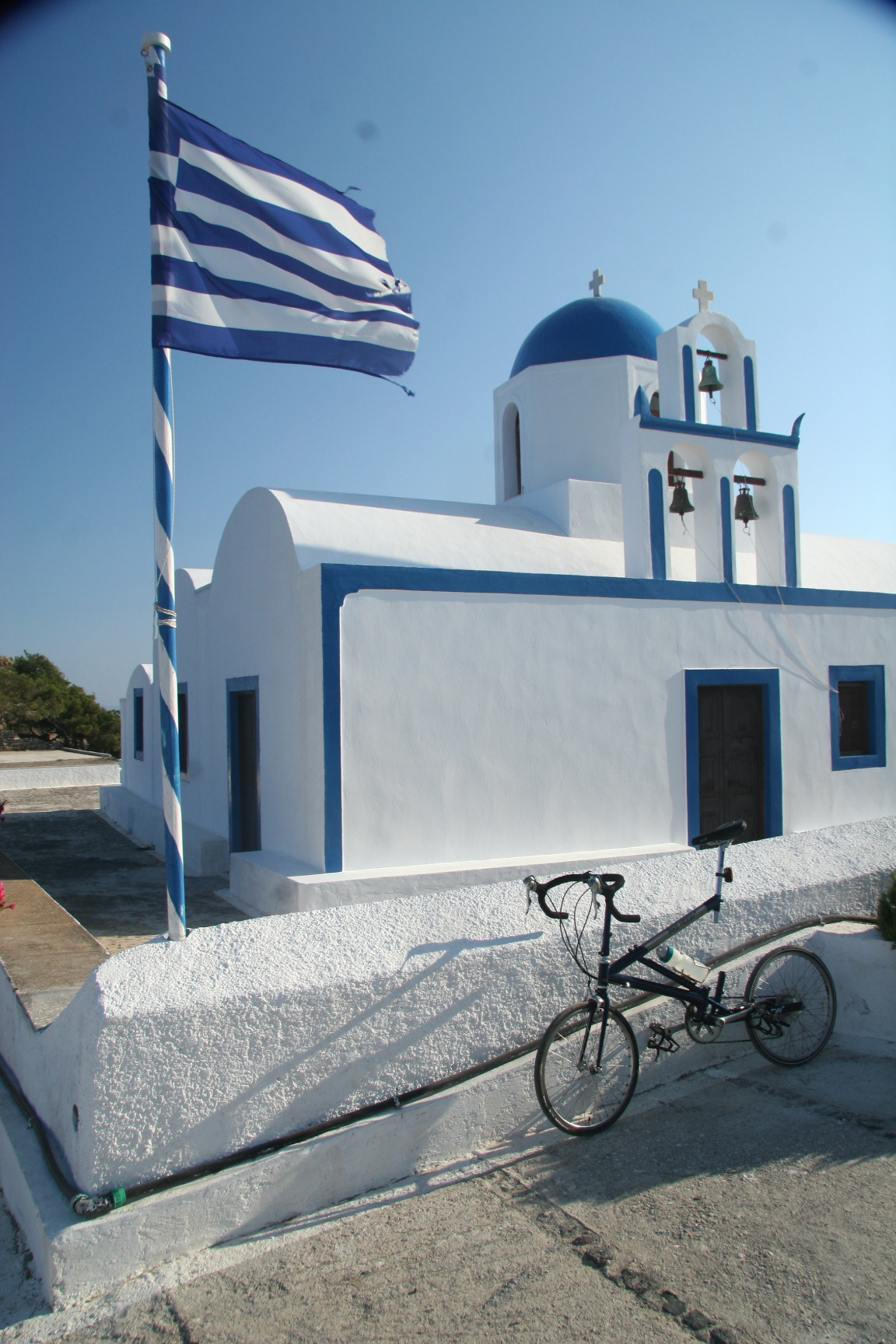
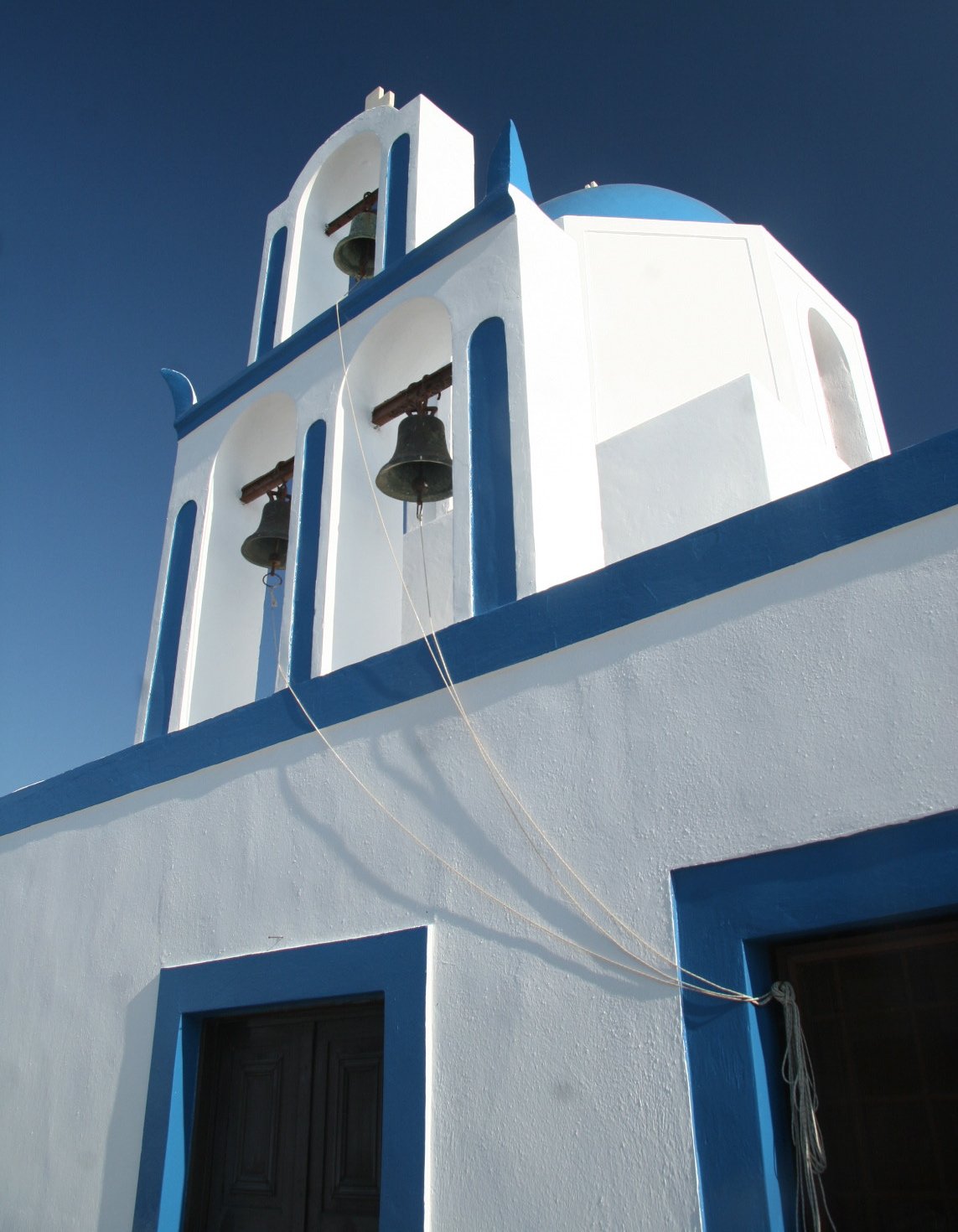
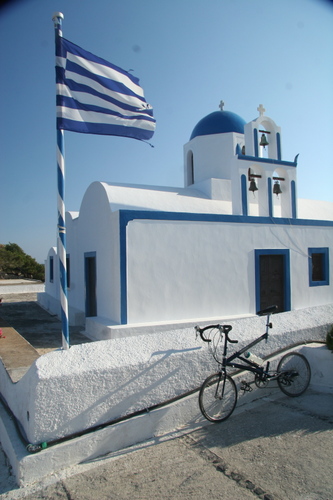
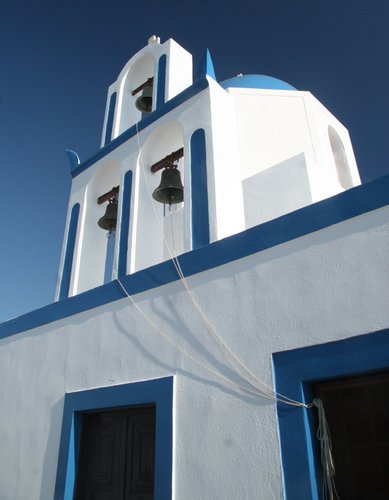
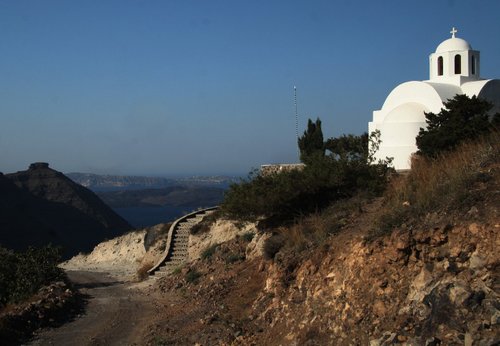 | Church along the path I was on... |
 | |
 | |
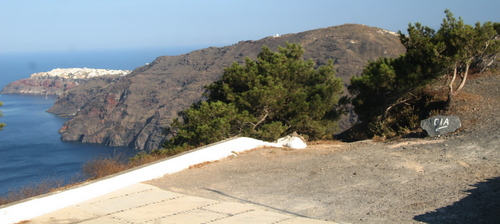 | Path to Oia, and Oia. |
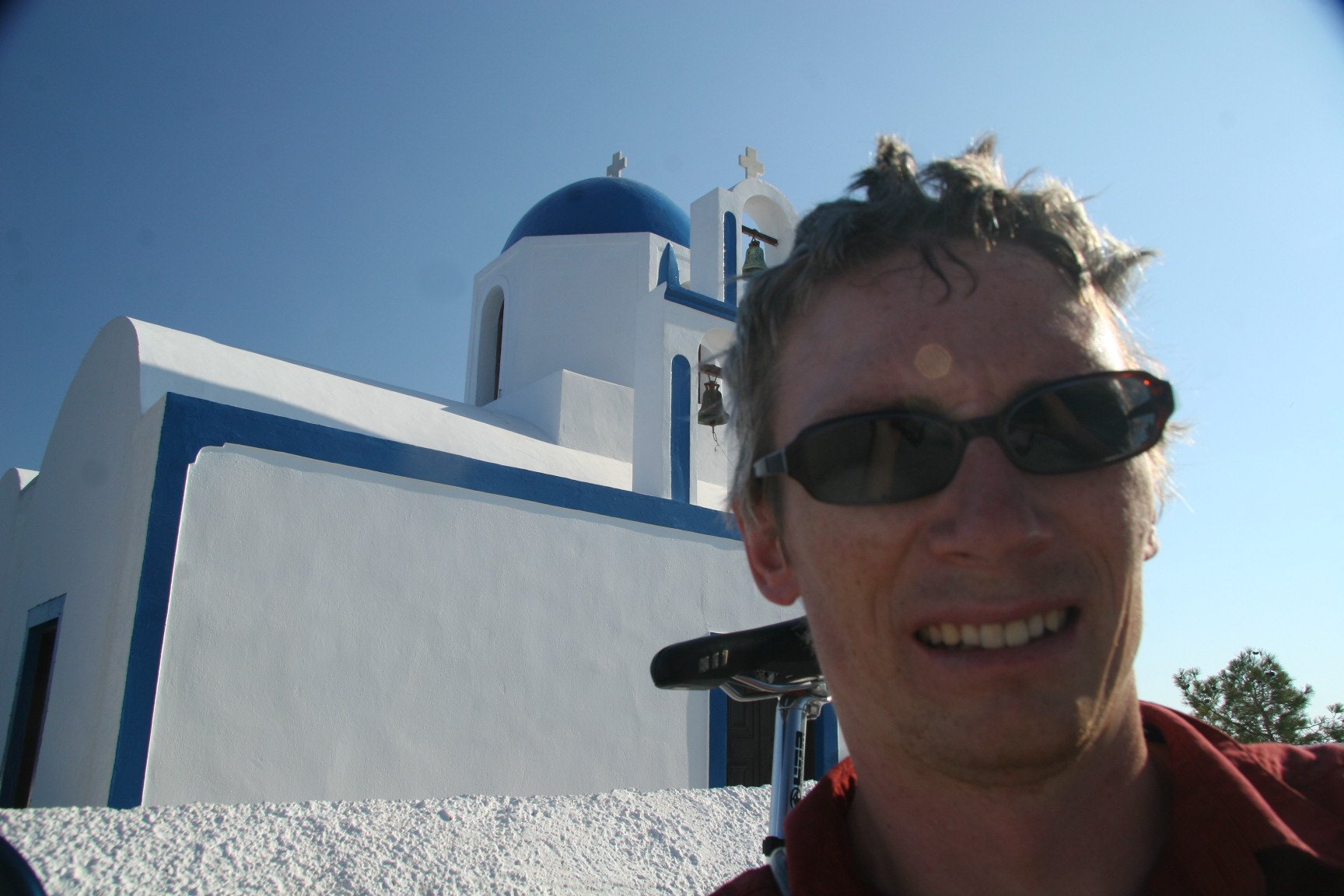
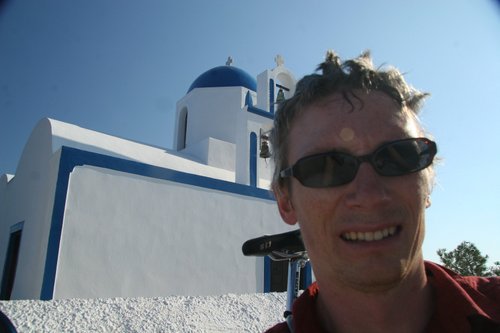 | Nice stegosaurus-hair... |
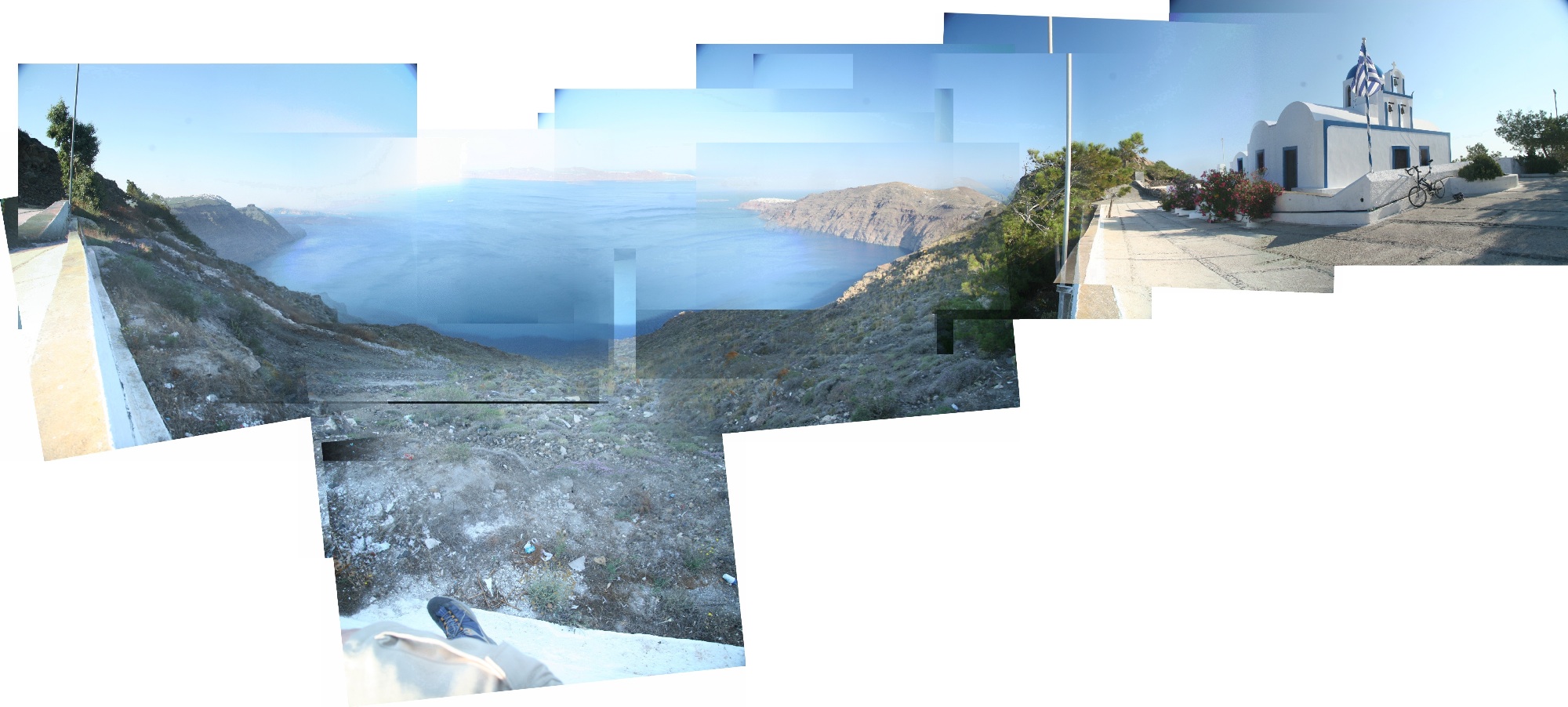
 | View from the church. You can see both ends of the island's C-shape here. |
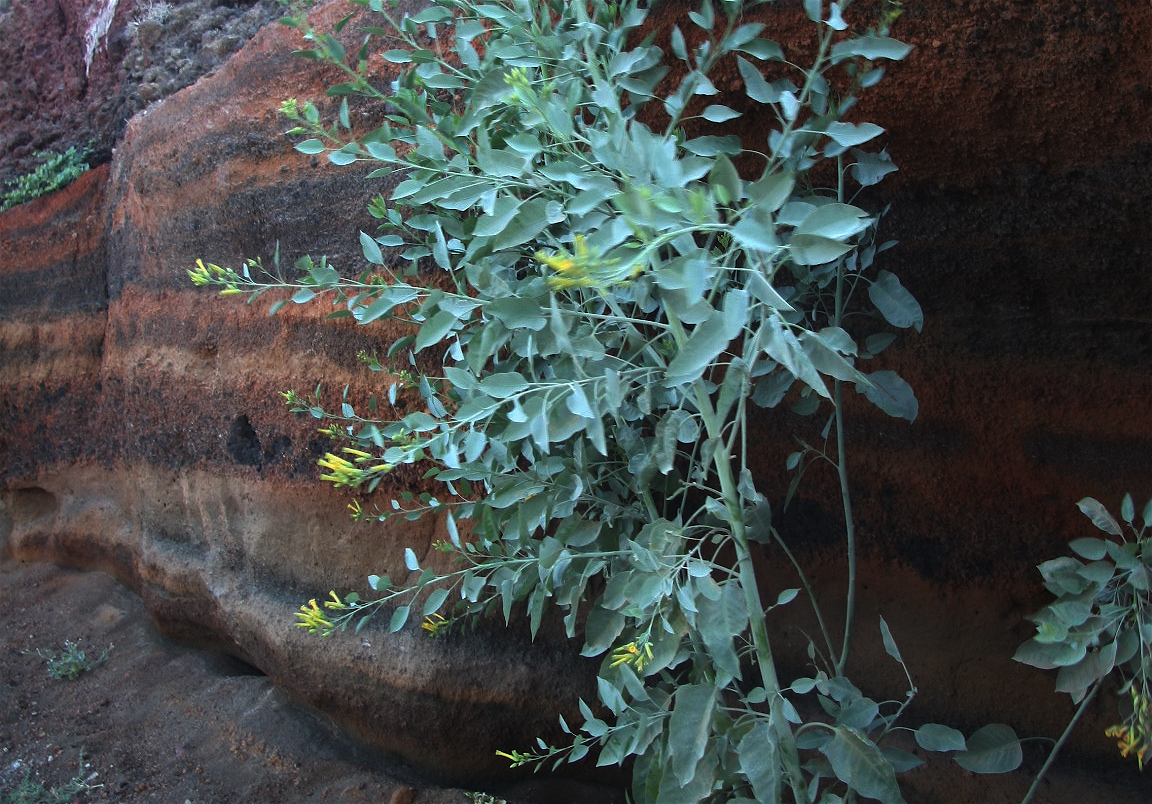
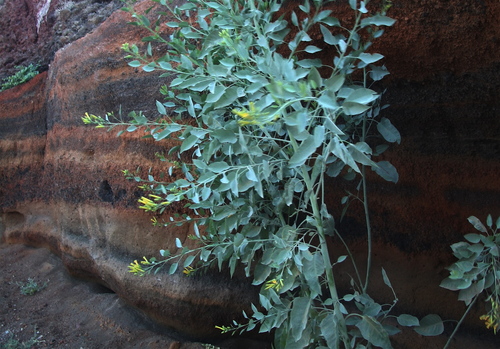 | Check out all those volcanic layers! |
 | |
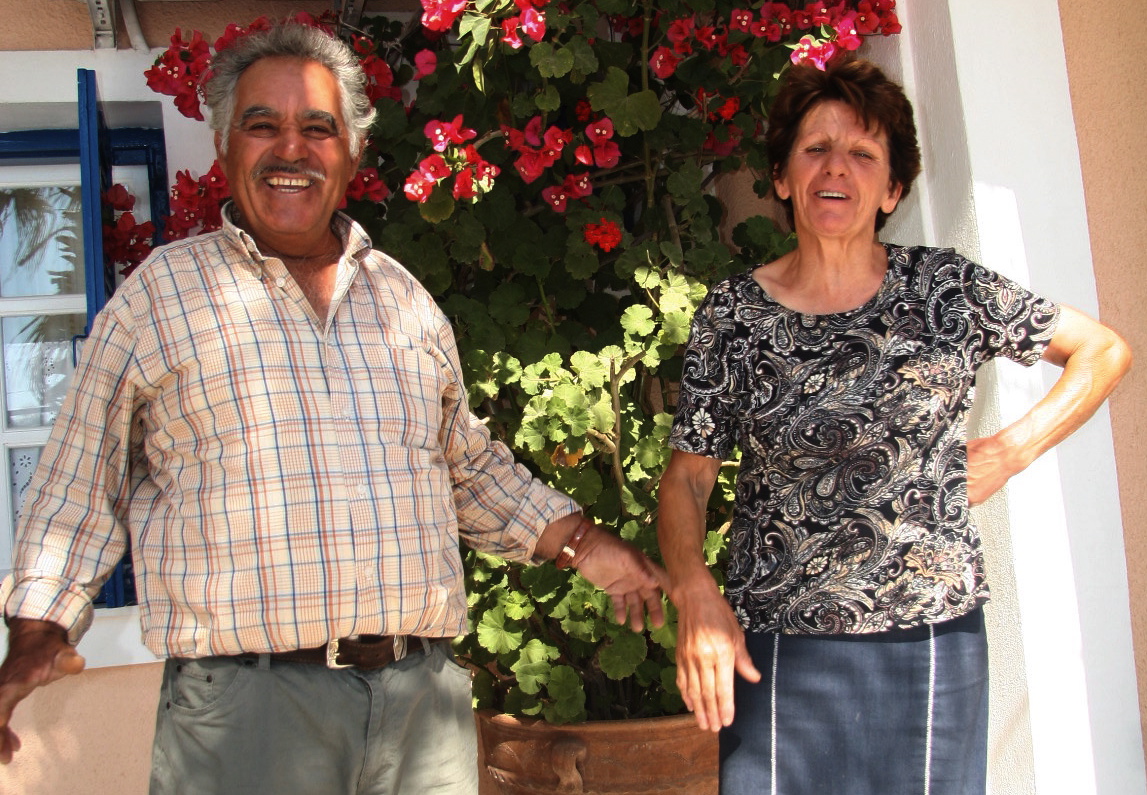
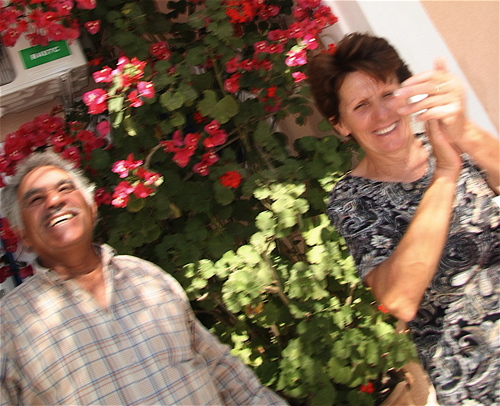
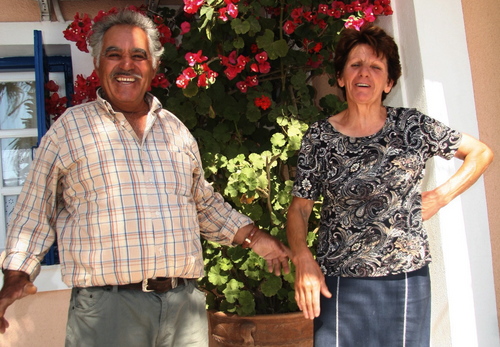 | Vangelis and Maria ran the hotel. Between English and Greek, we had about 6
words in common. But I did figure out that their son Tony runs the Moto Rental
downstairs, and their grandkids who happen to also be named Vangelis and
Maria are cute and work there too. |
 | |
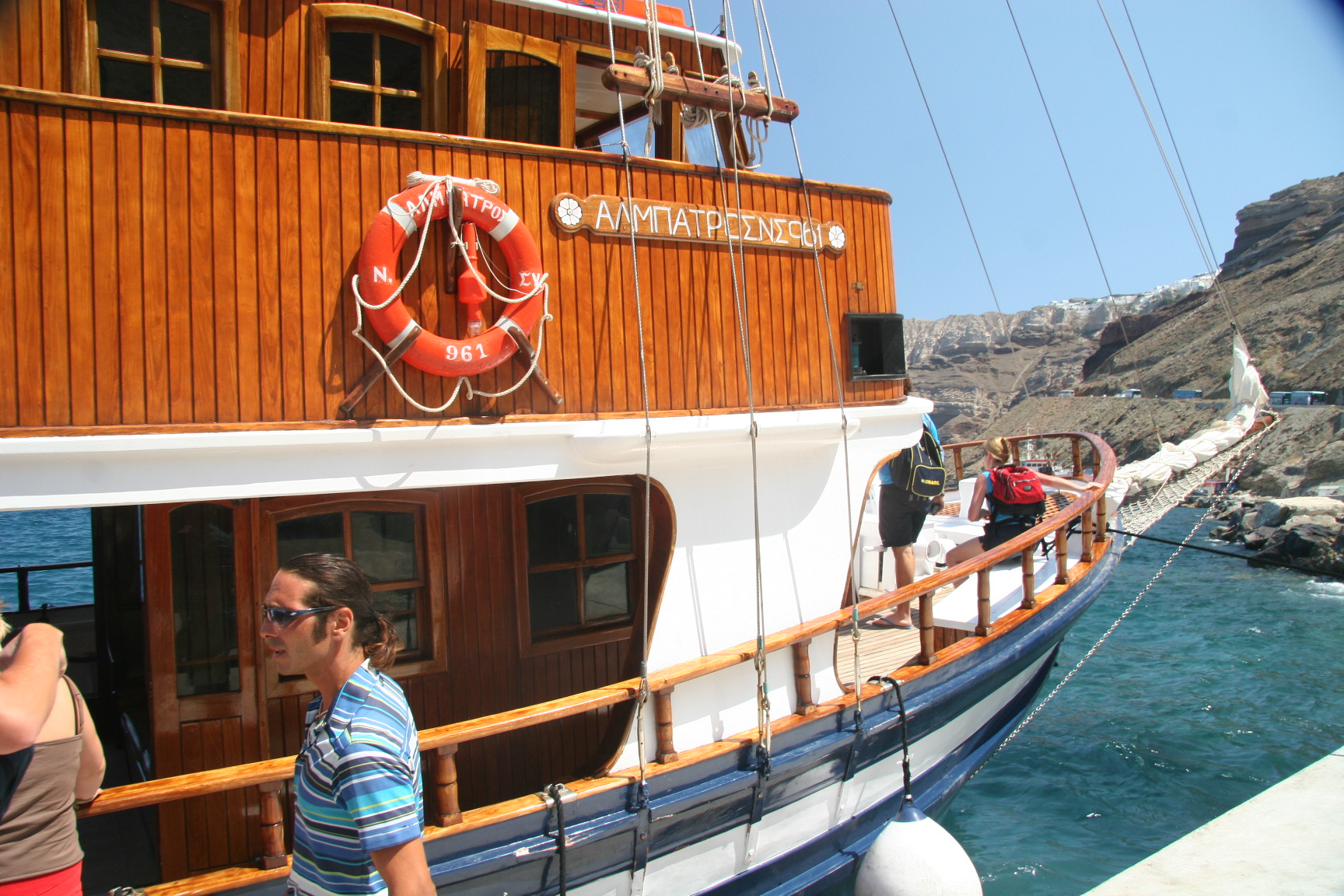
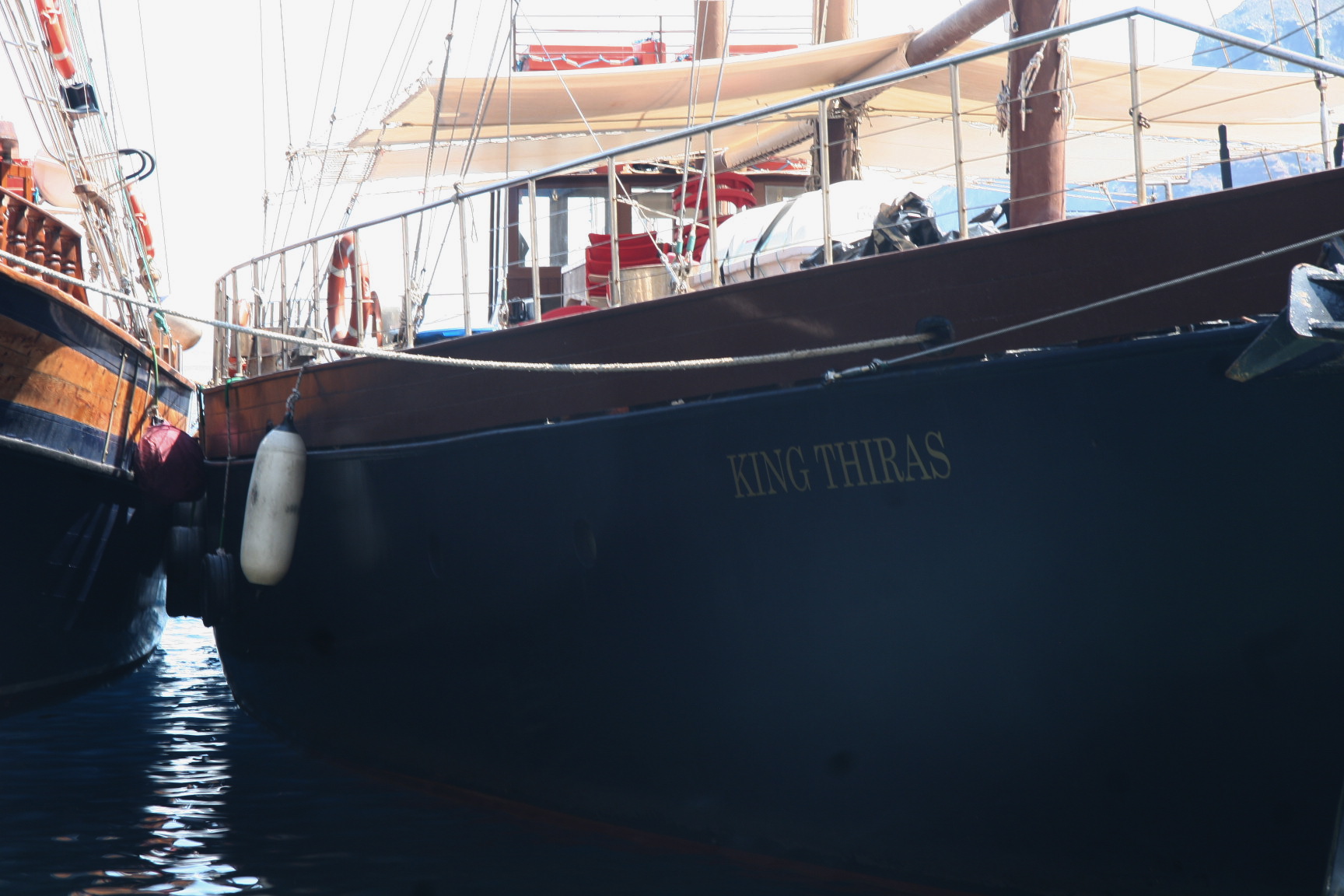
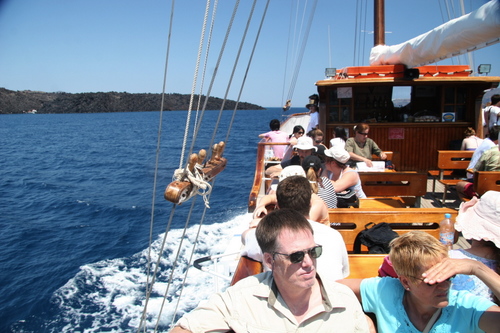
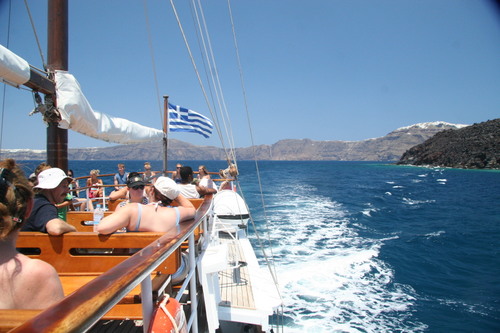
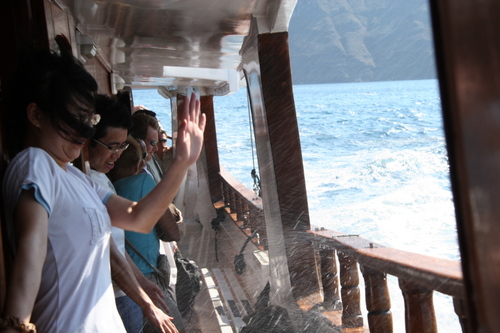
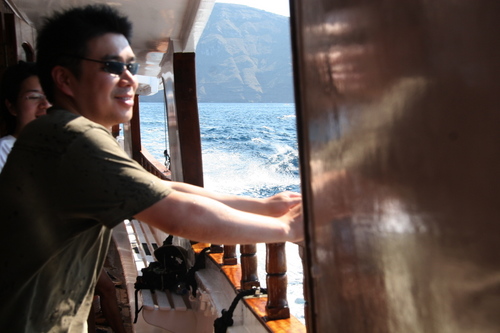
 | I got on a boat (the ΑΛΜΑΤΡΟΣ = ALBATROSS,
if you spell it out...). That's our guide Yannis there. We cruised out to the
volcano at the center. |
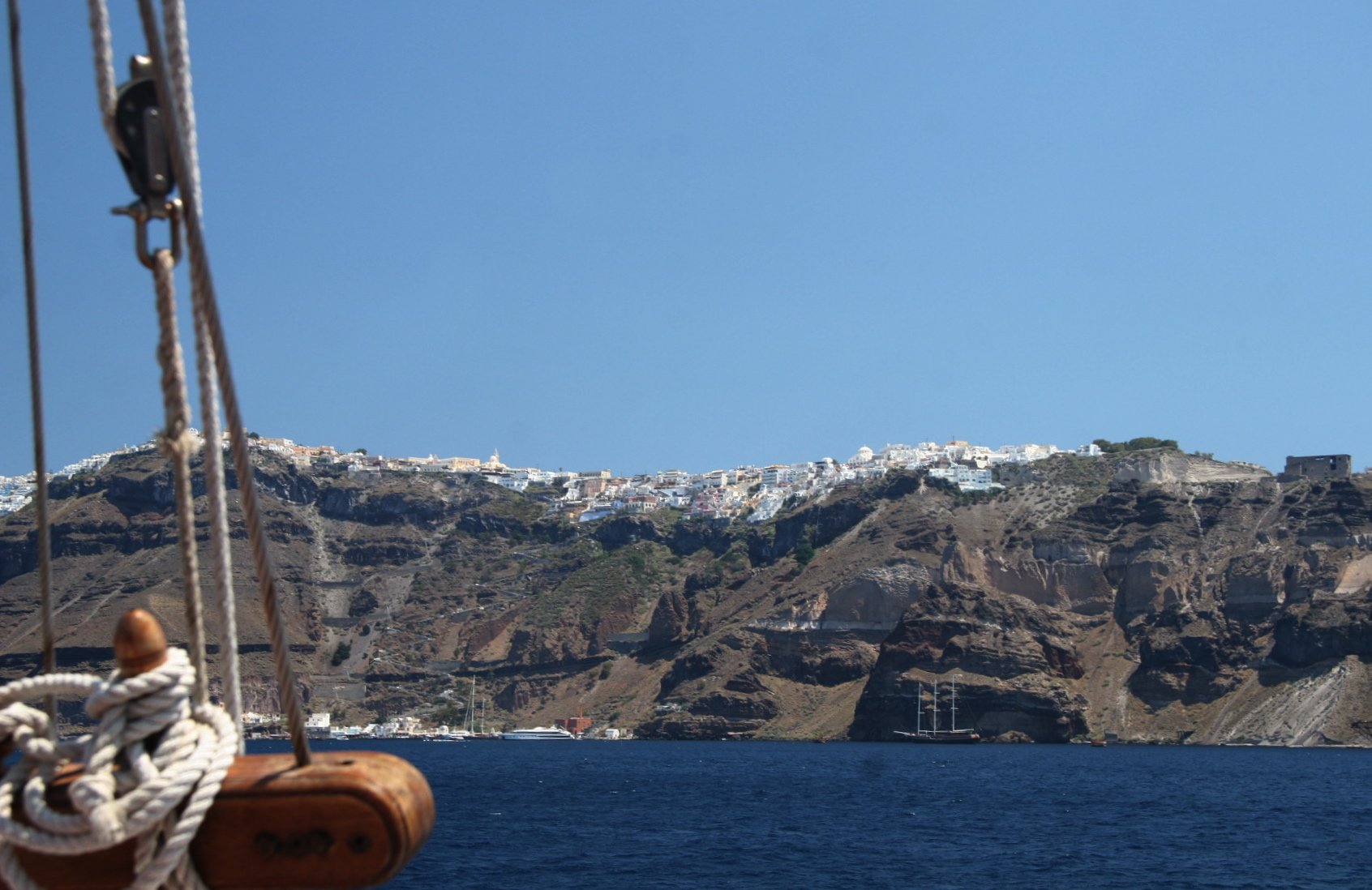
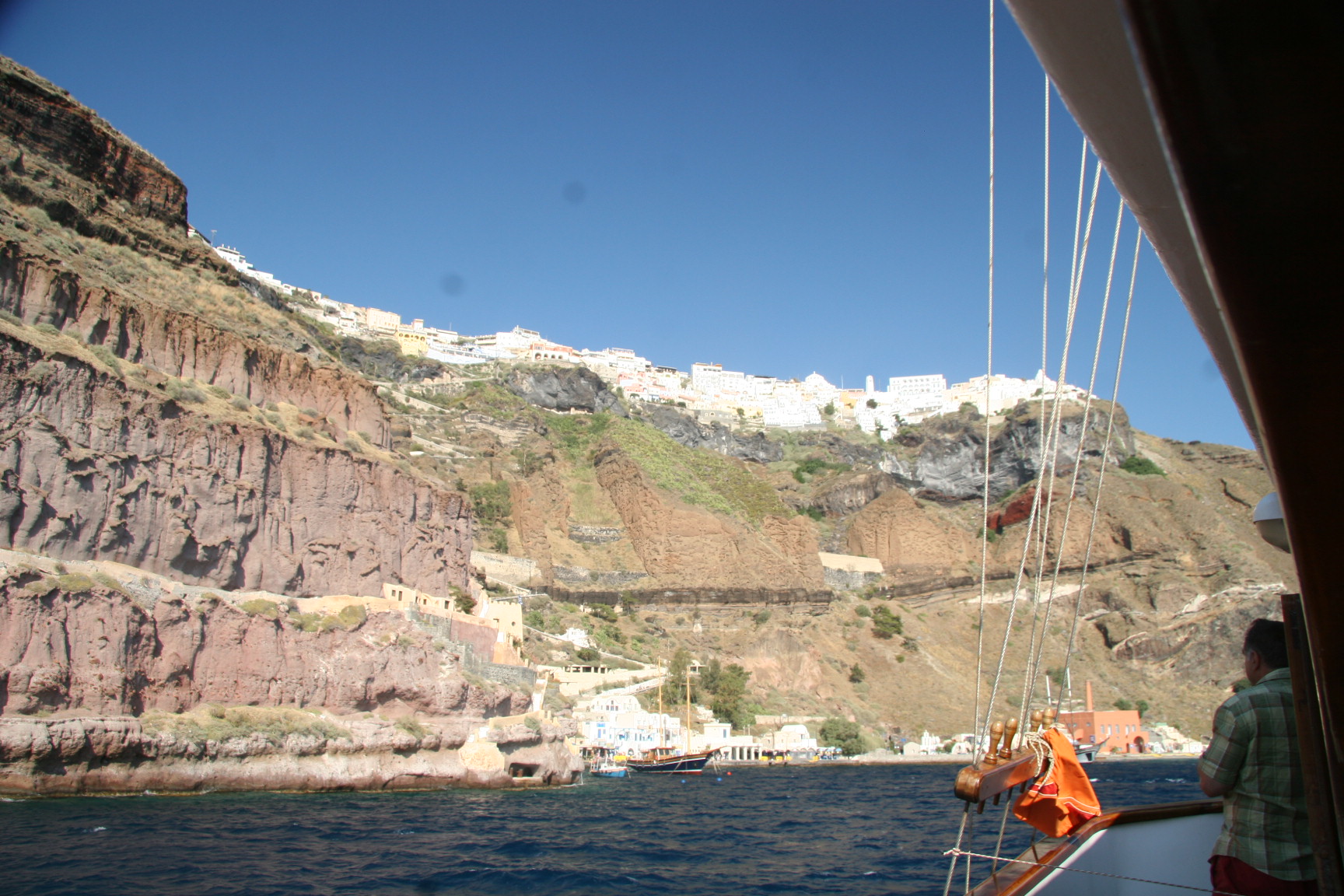
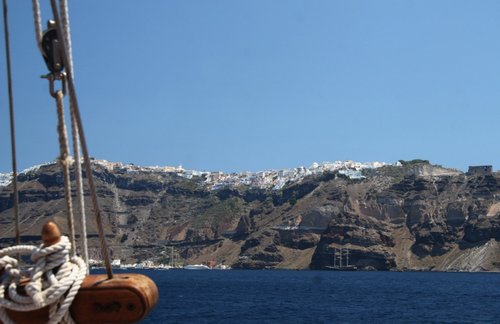 | Looking back on Thira... |
 | |
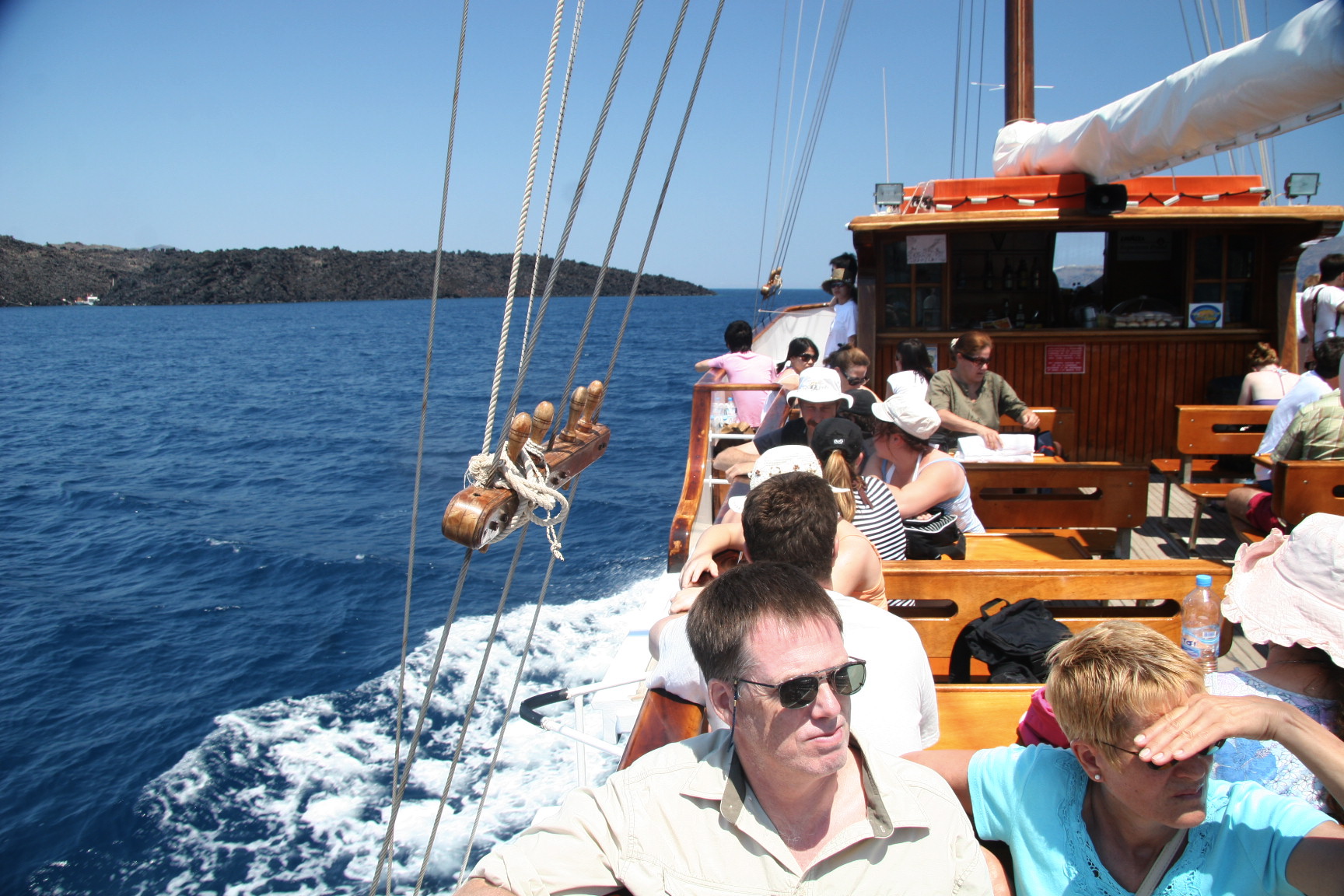
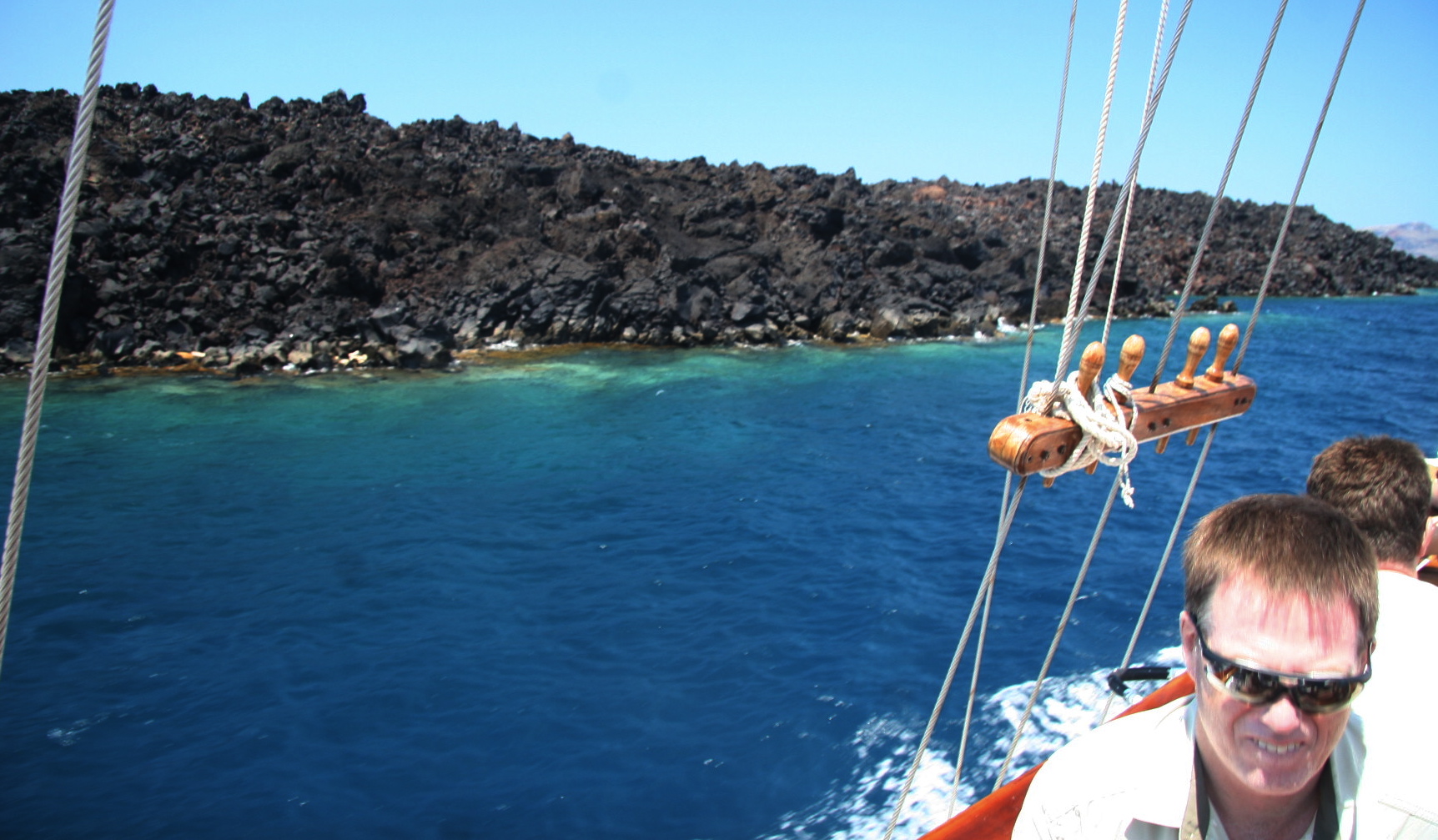
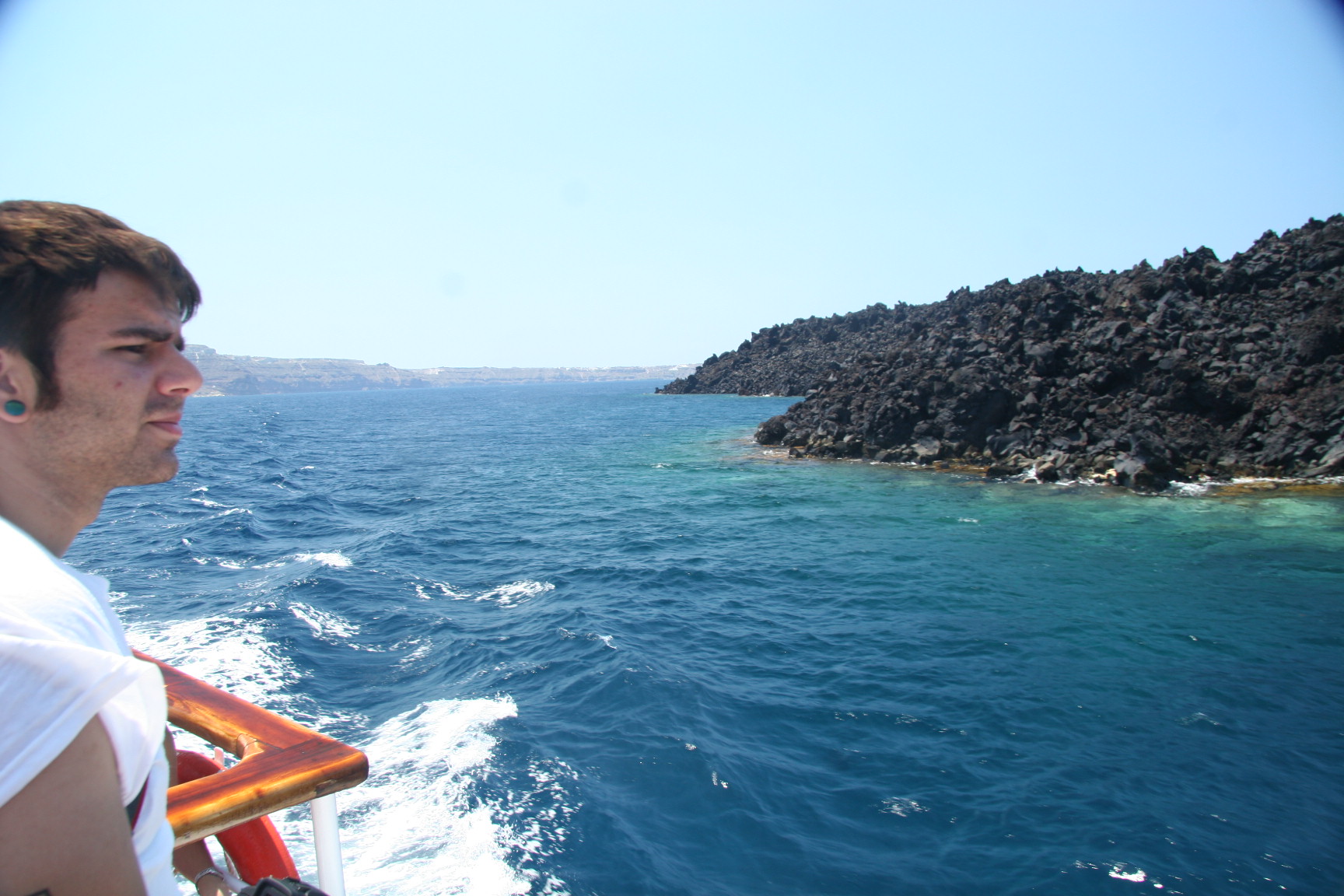
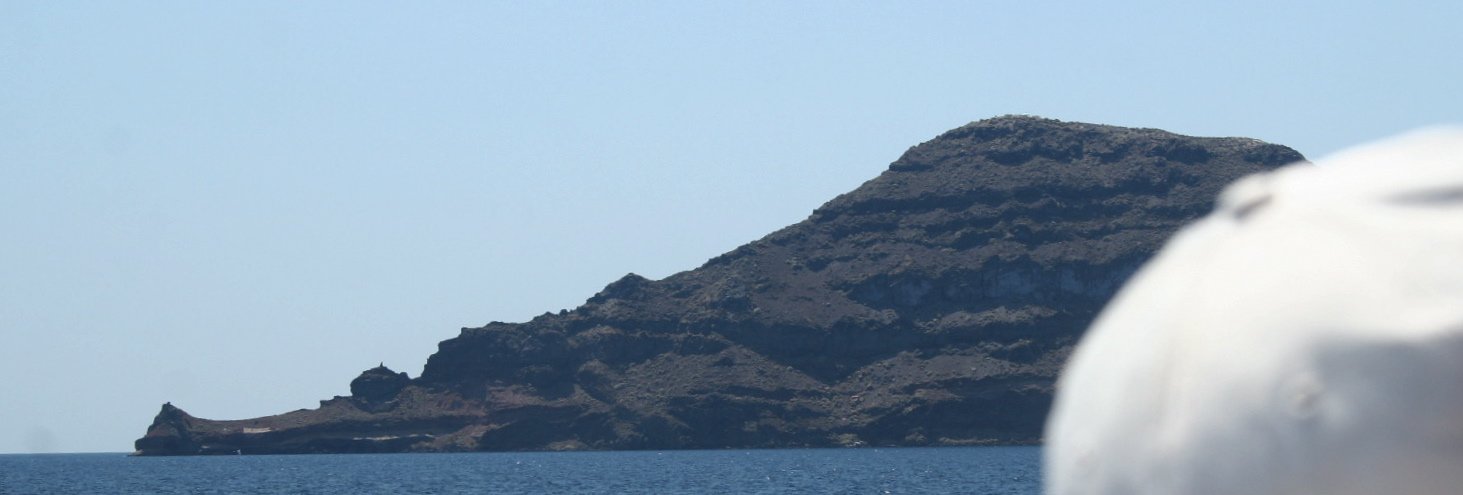
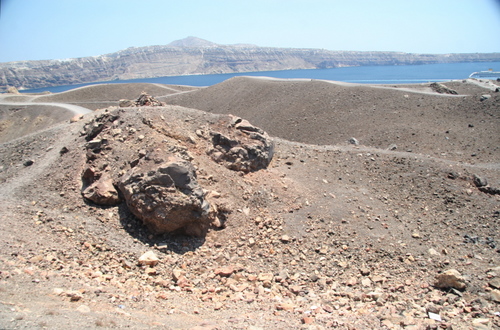
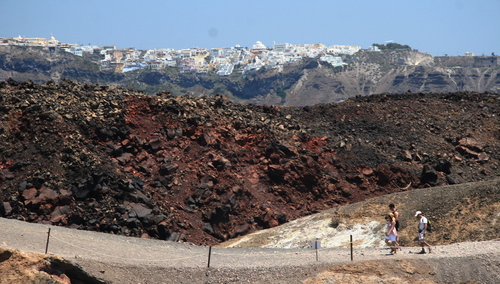
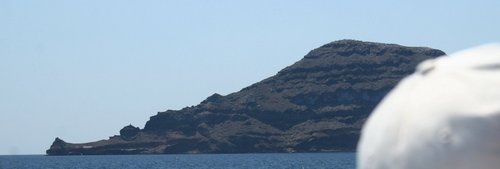
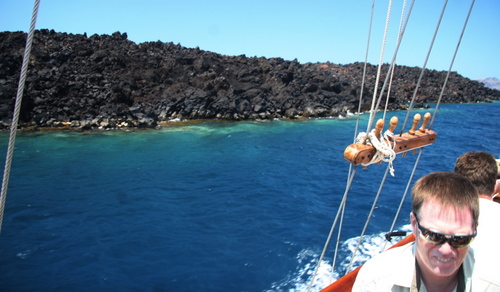 | Heading toward the caldera. All of this is (obviously) very young rock, <
500 years. |
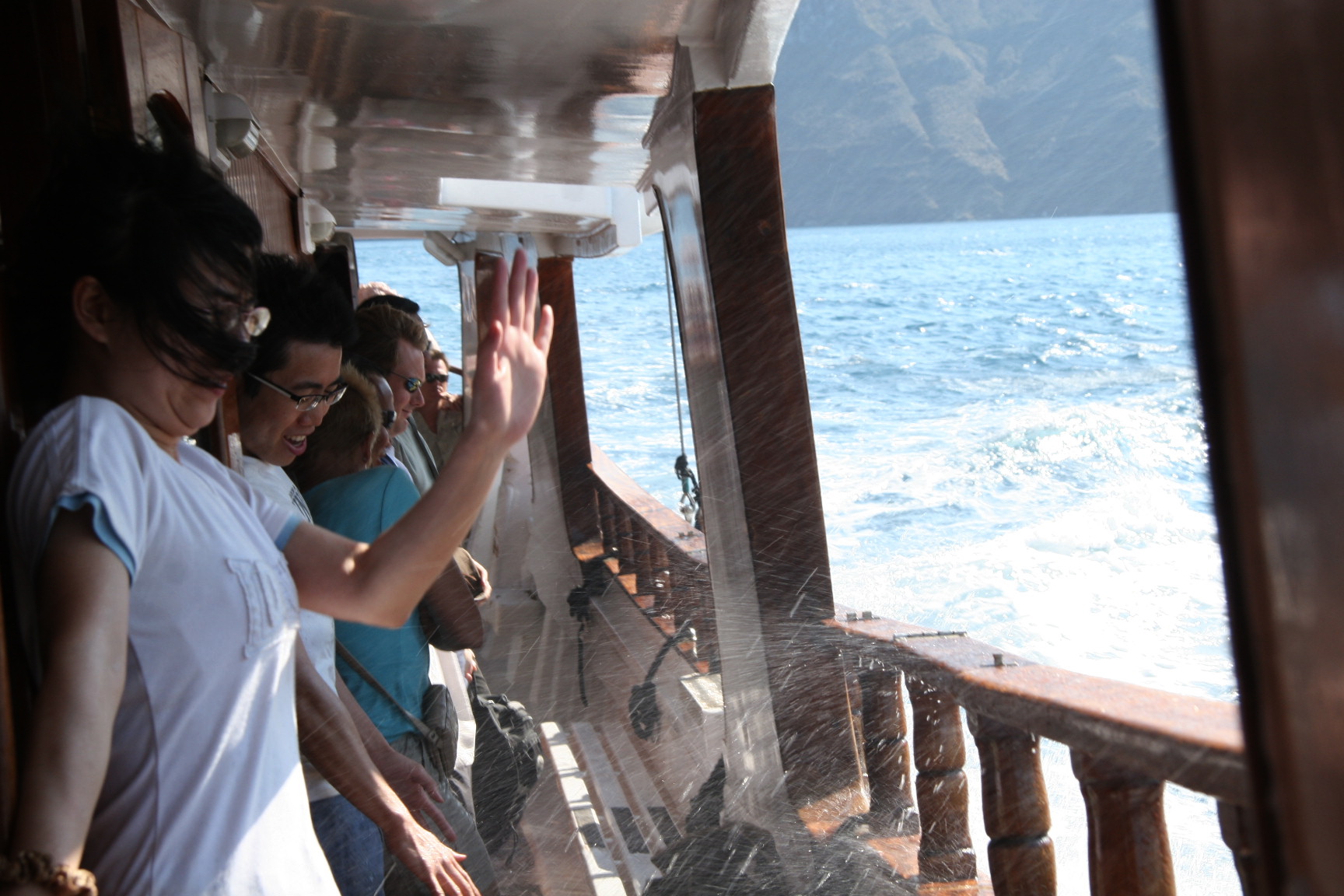
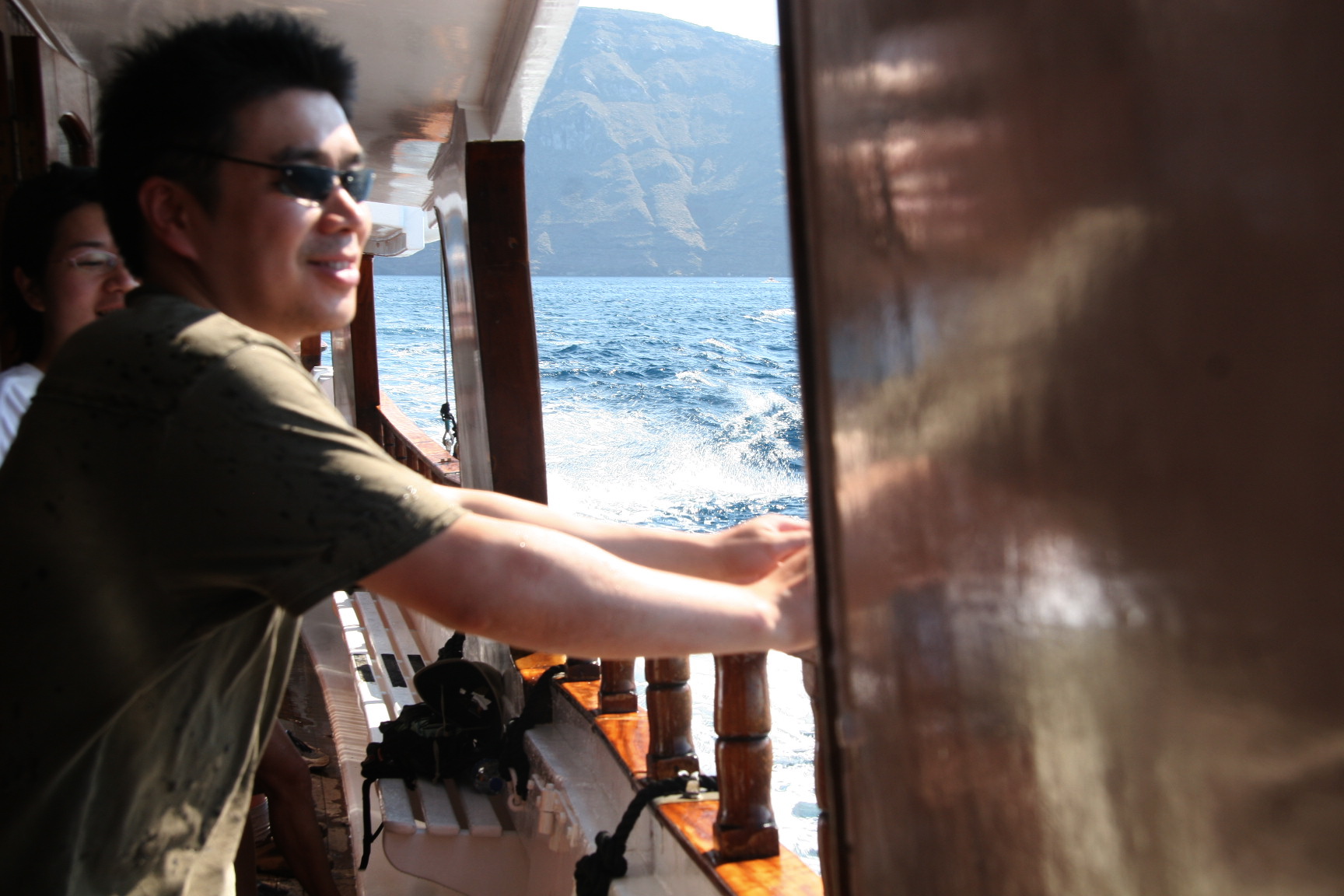
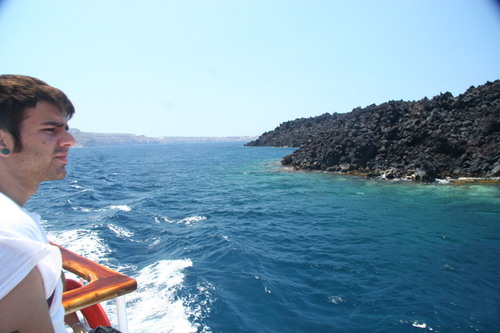 | There was a group of a dozen or more somewhat ditzy
American college students on the boat, and this here was the one guy amongst
them, who definitely reveled in his role. |
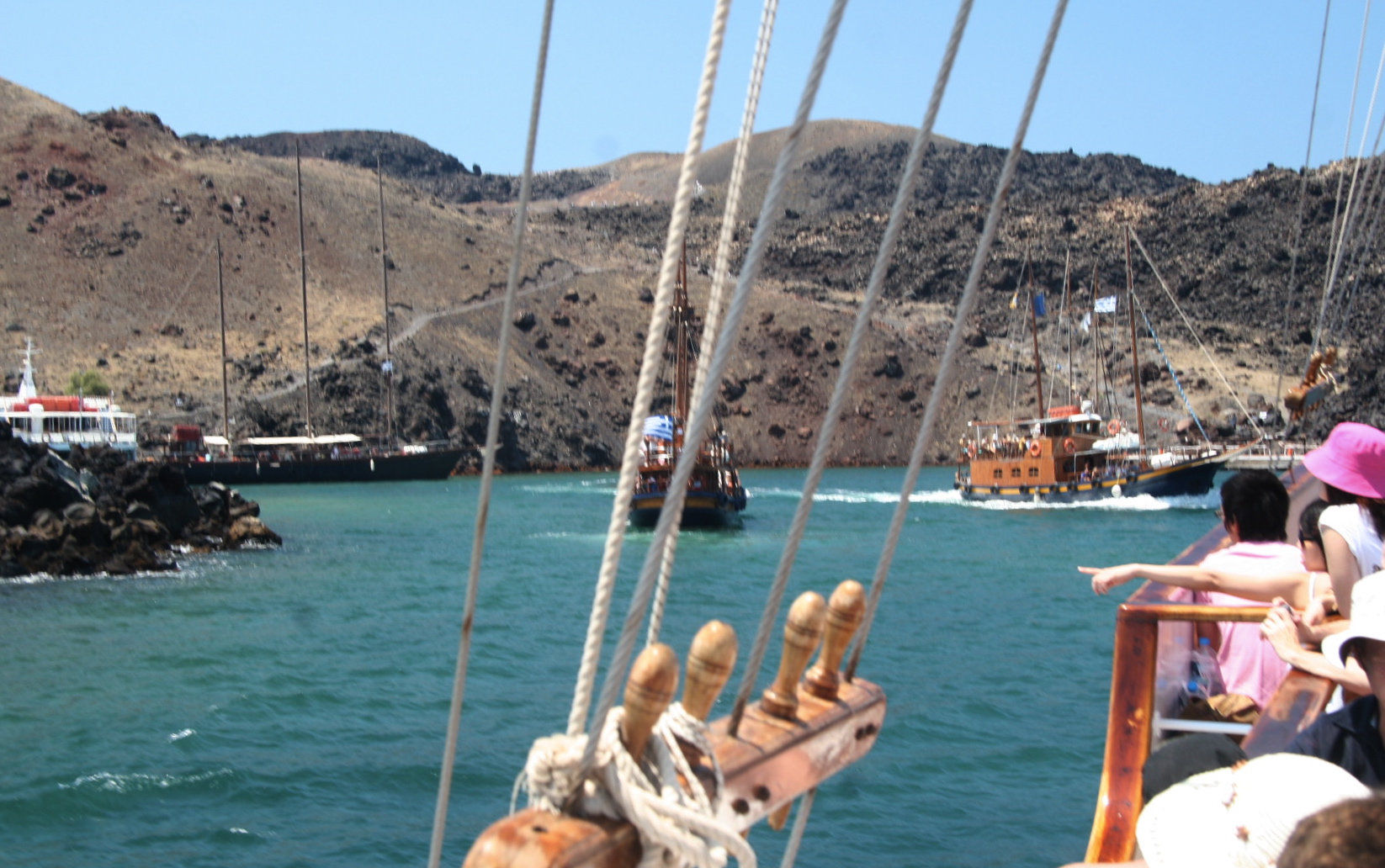
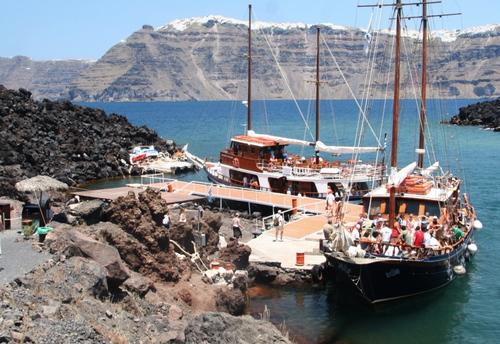
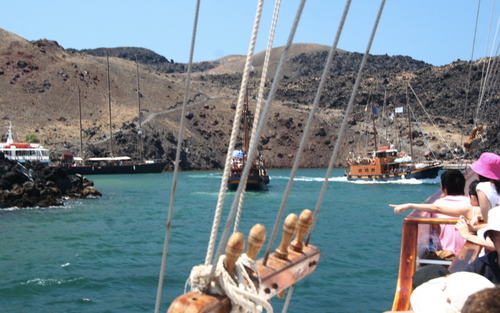 | Parking jam at the caldera stop. |
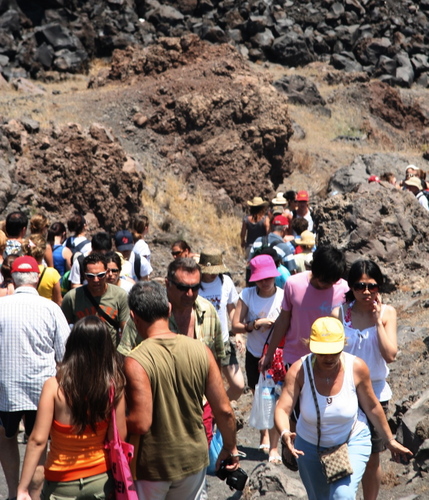 | |
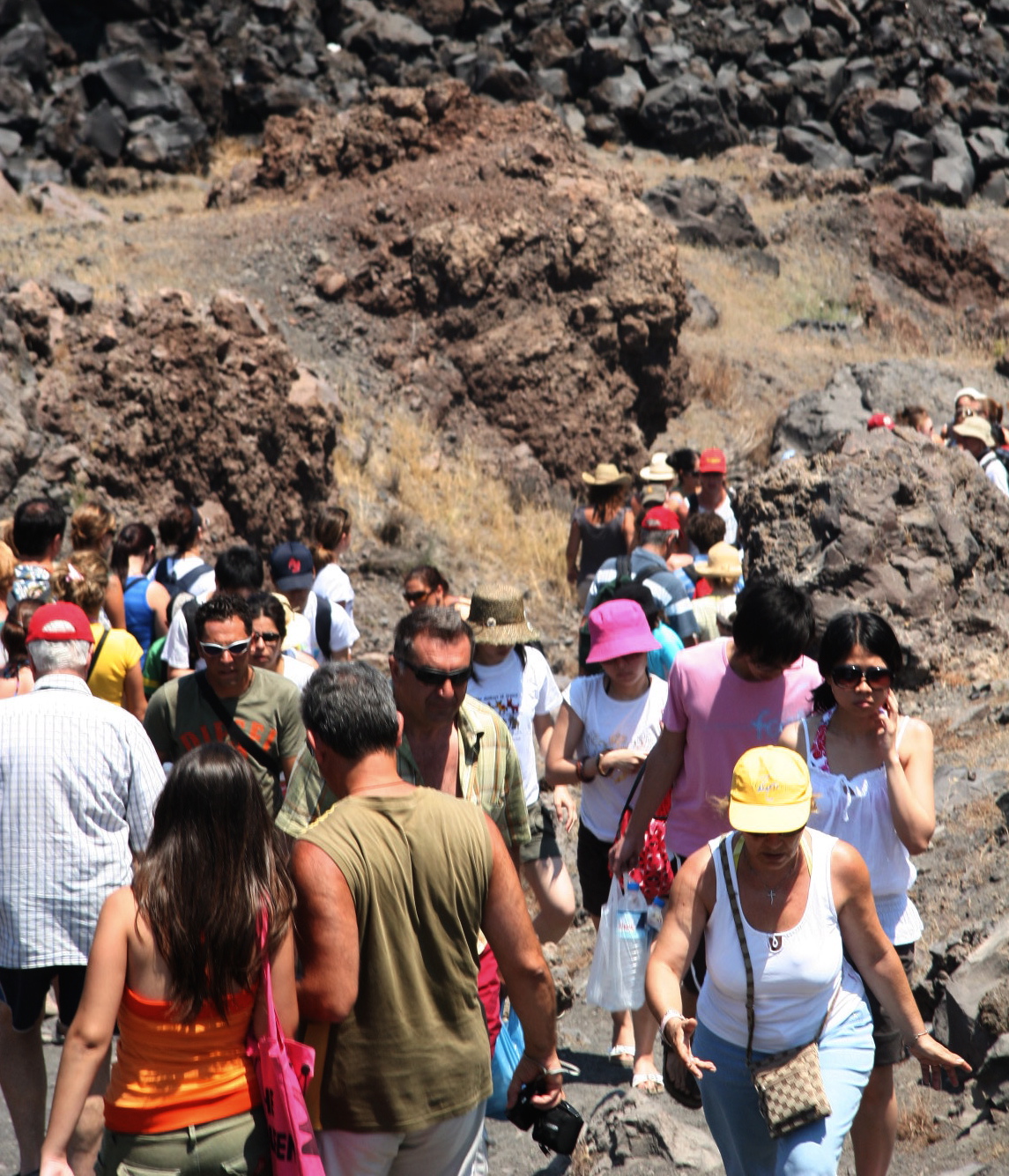
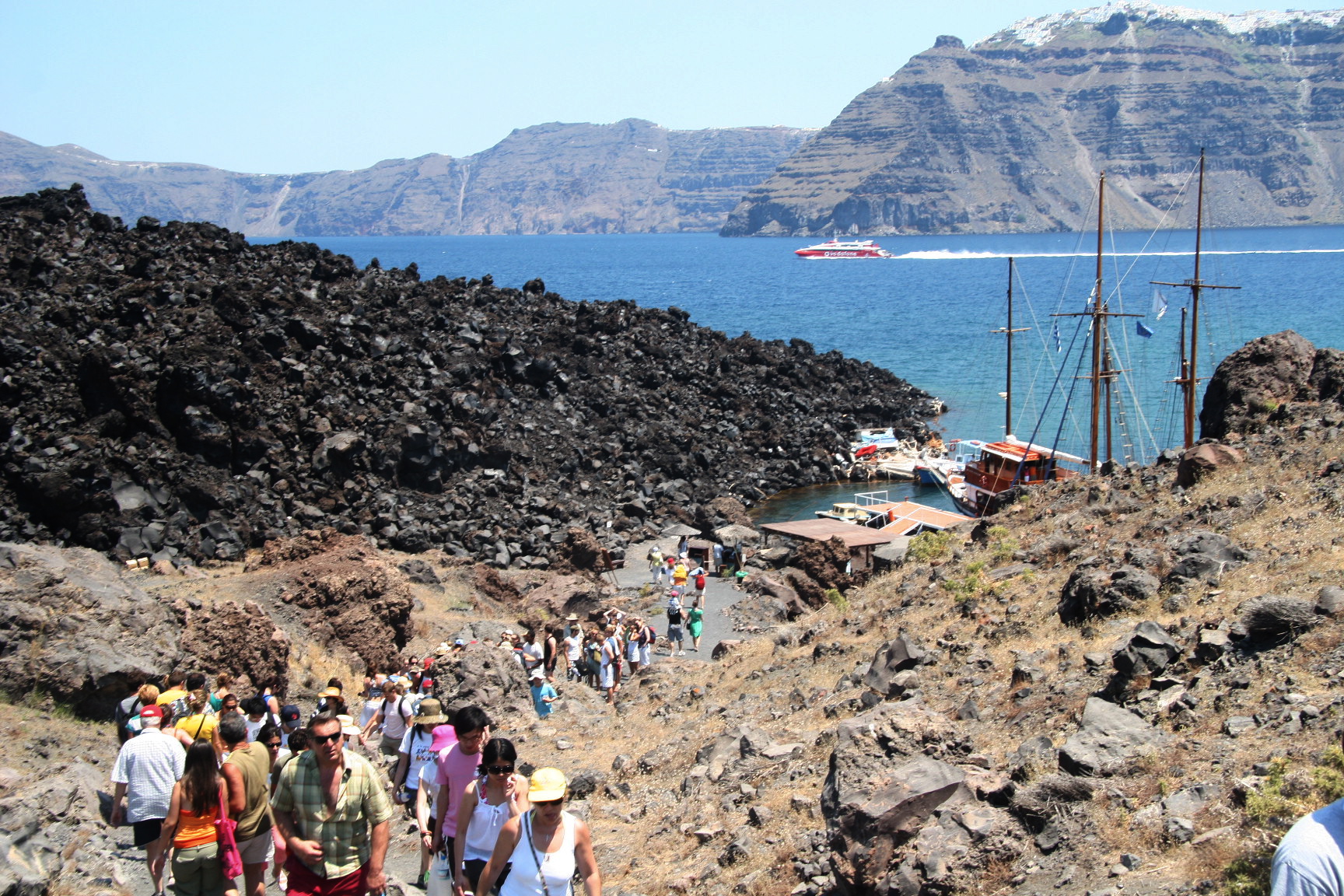
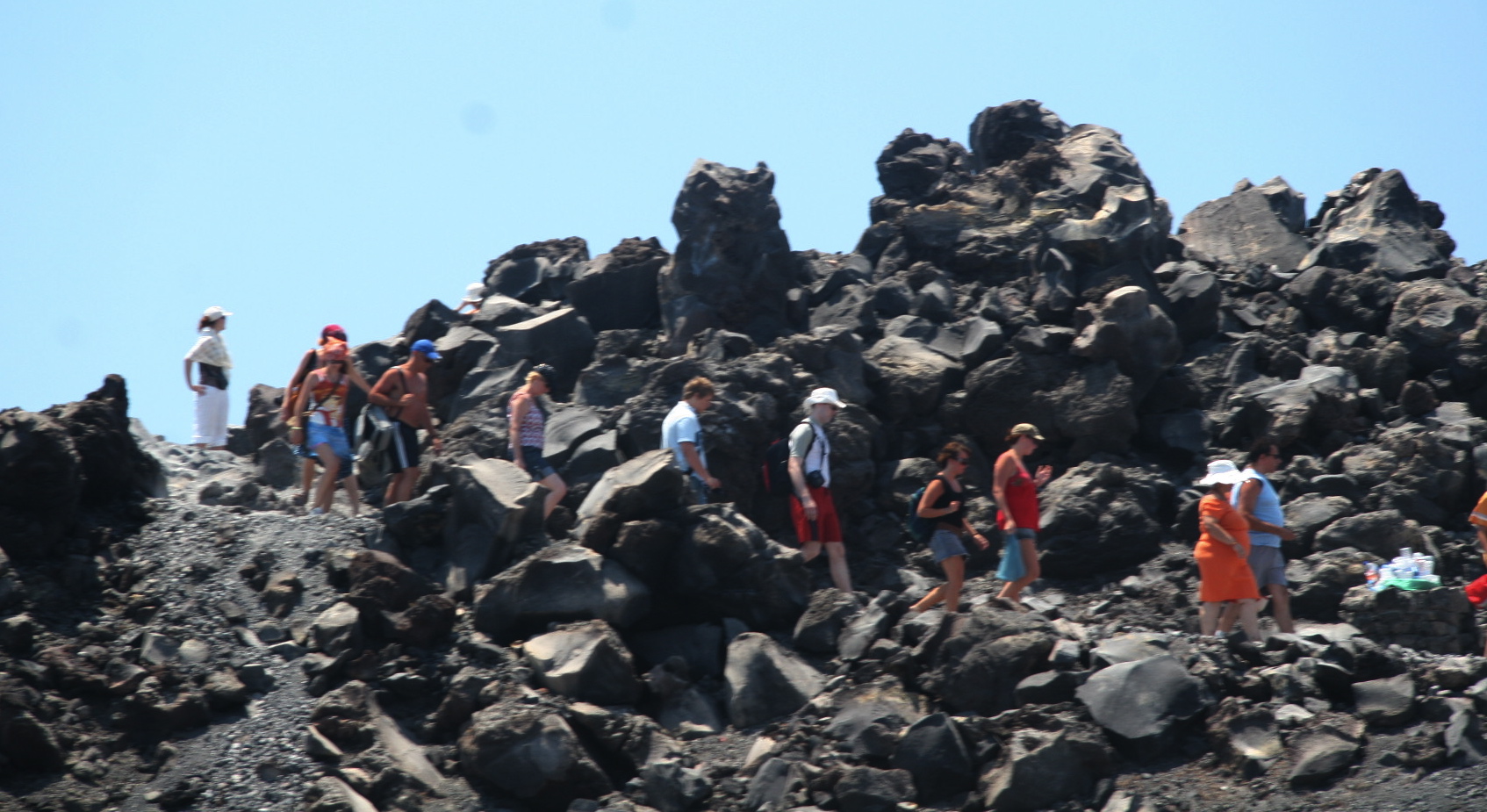
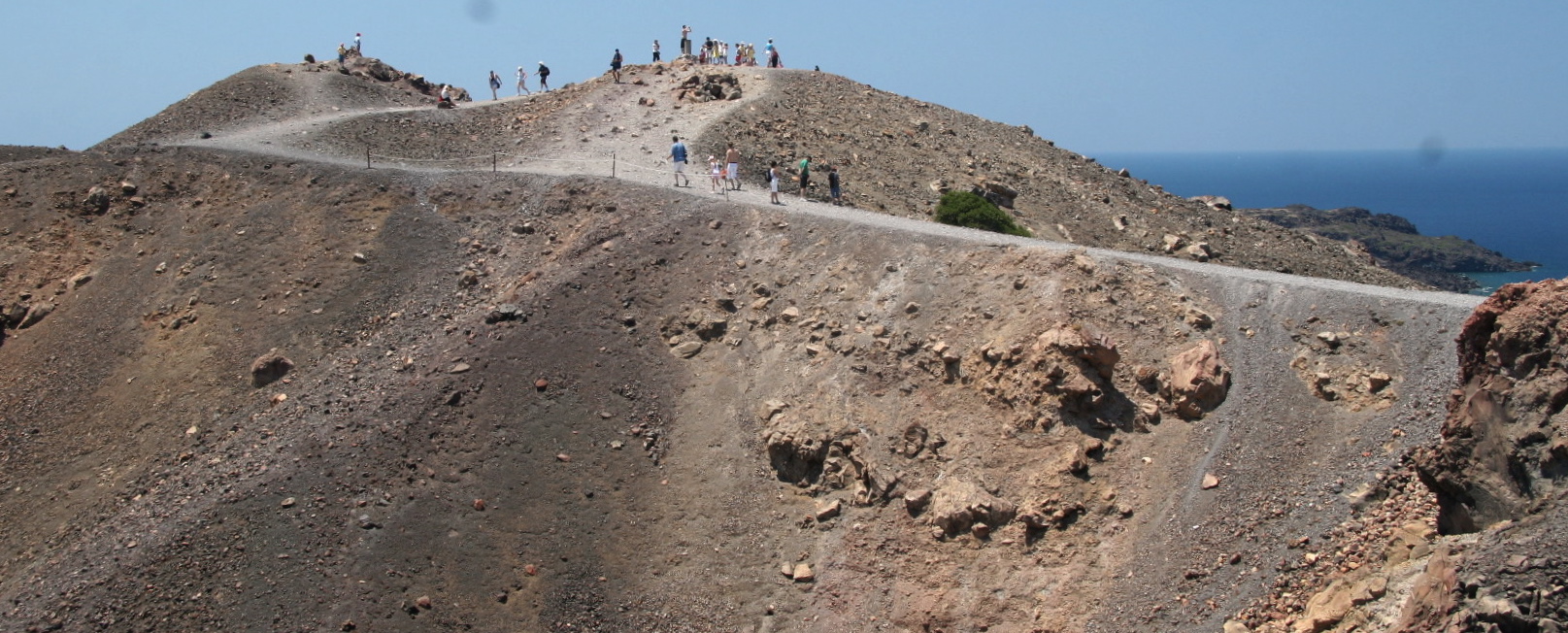
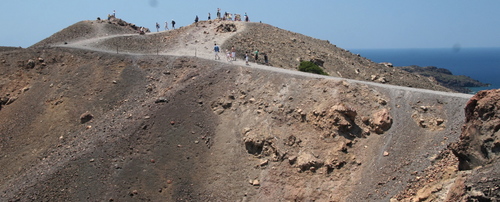
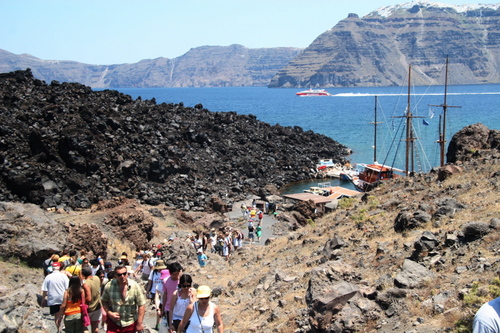 | Hiking up the caldera. There's a high-speed ferry (which runs to Athens) in
the background. |
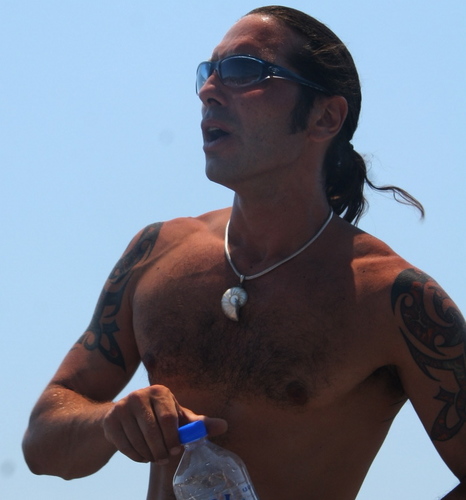 | |
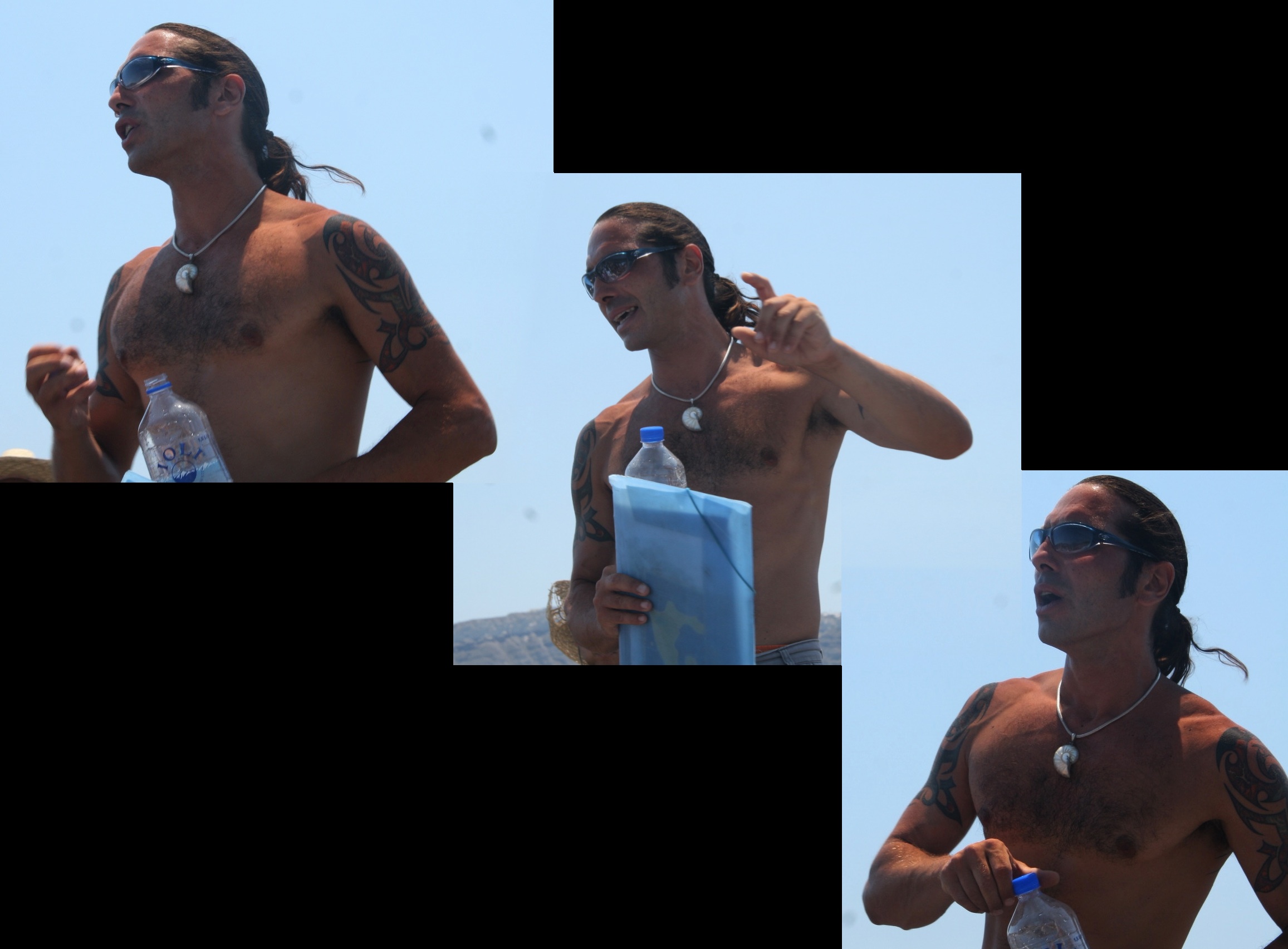
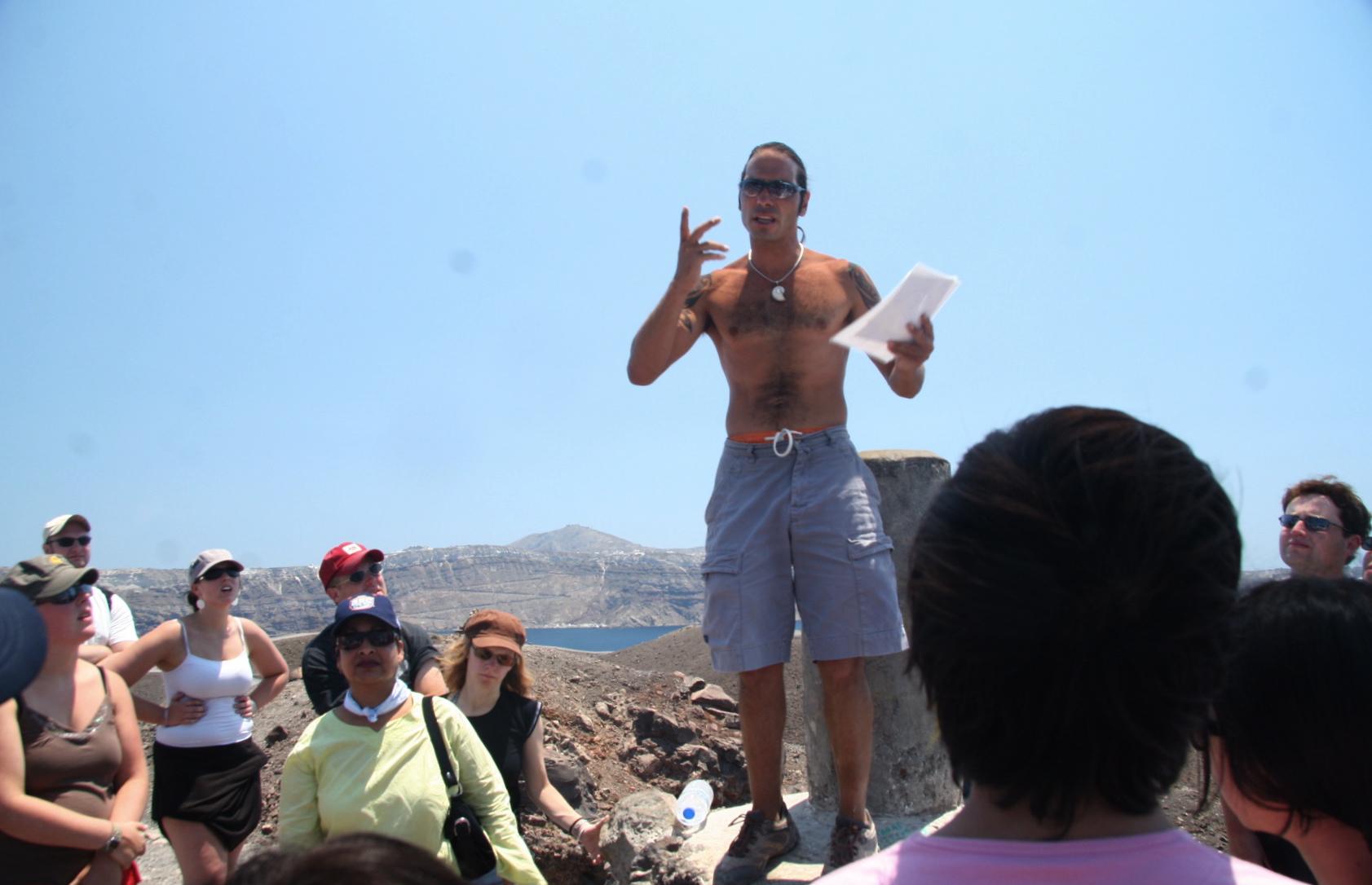
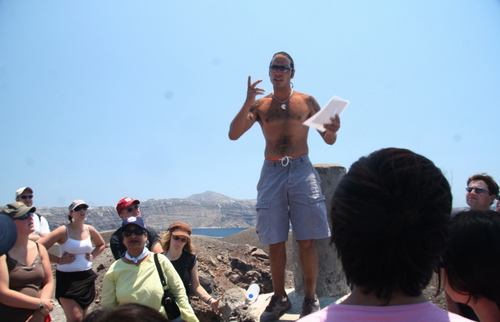
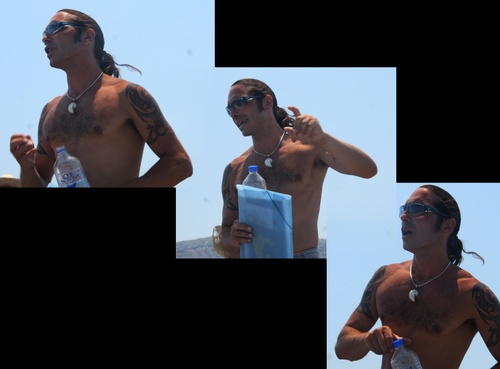 | Besdes speaking seven languages, Yannis actually knew a ton of geology. He
started off as a tour guide several years ago, but got into the geology, and is
planning on studying it in school. (Except he doesn't want to leave Greece to
do so.) |
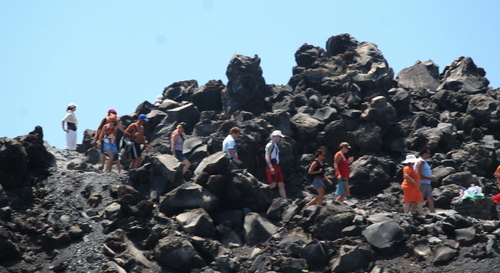 | |
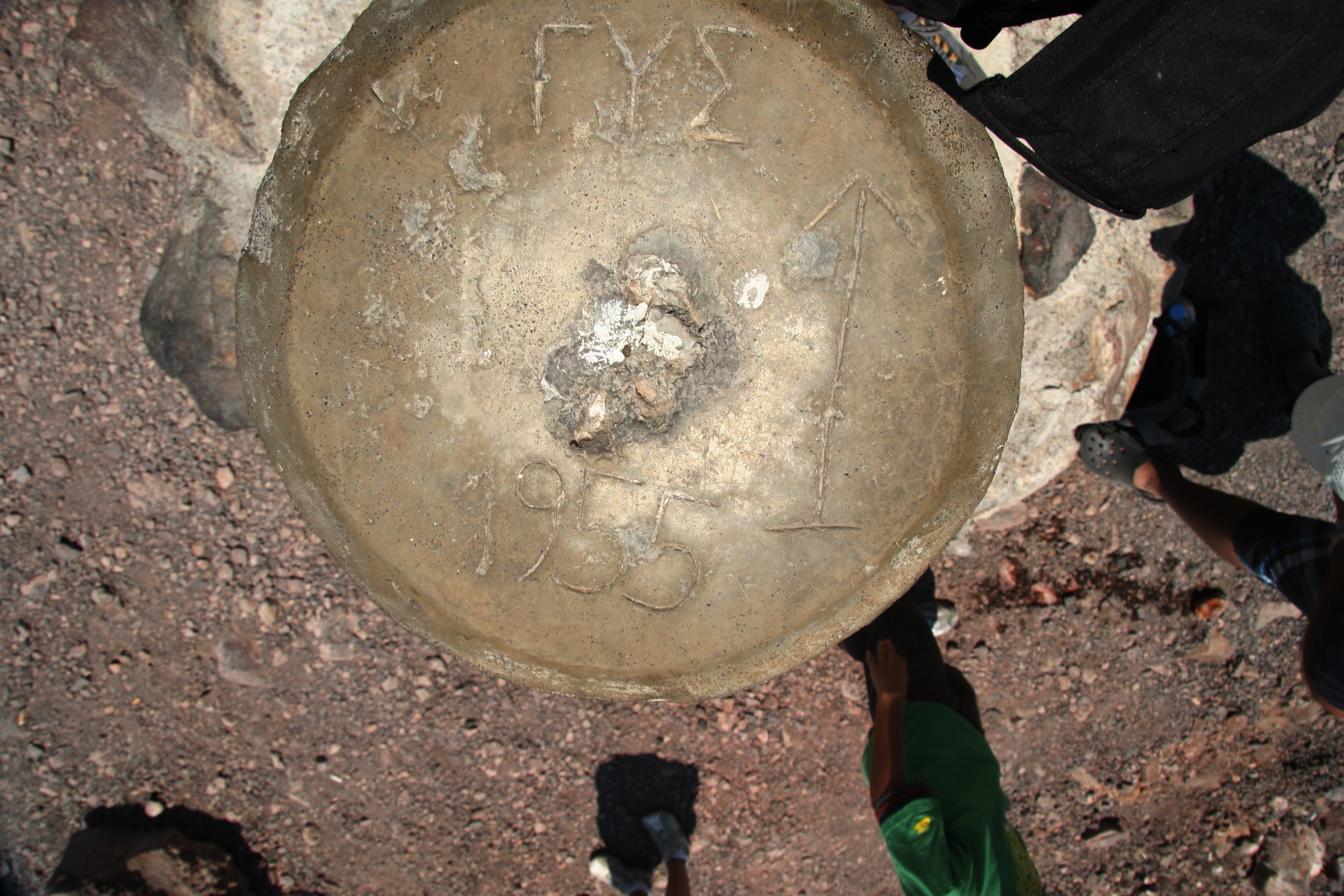
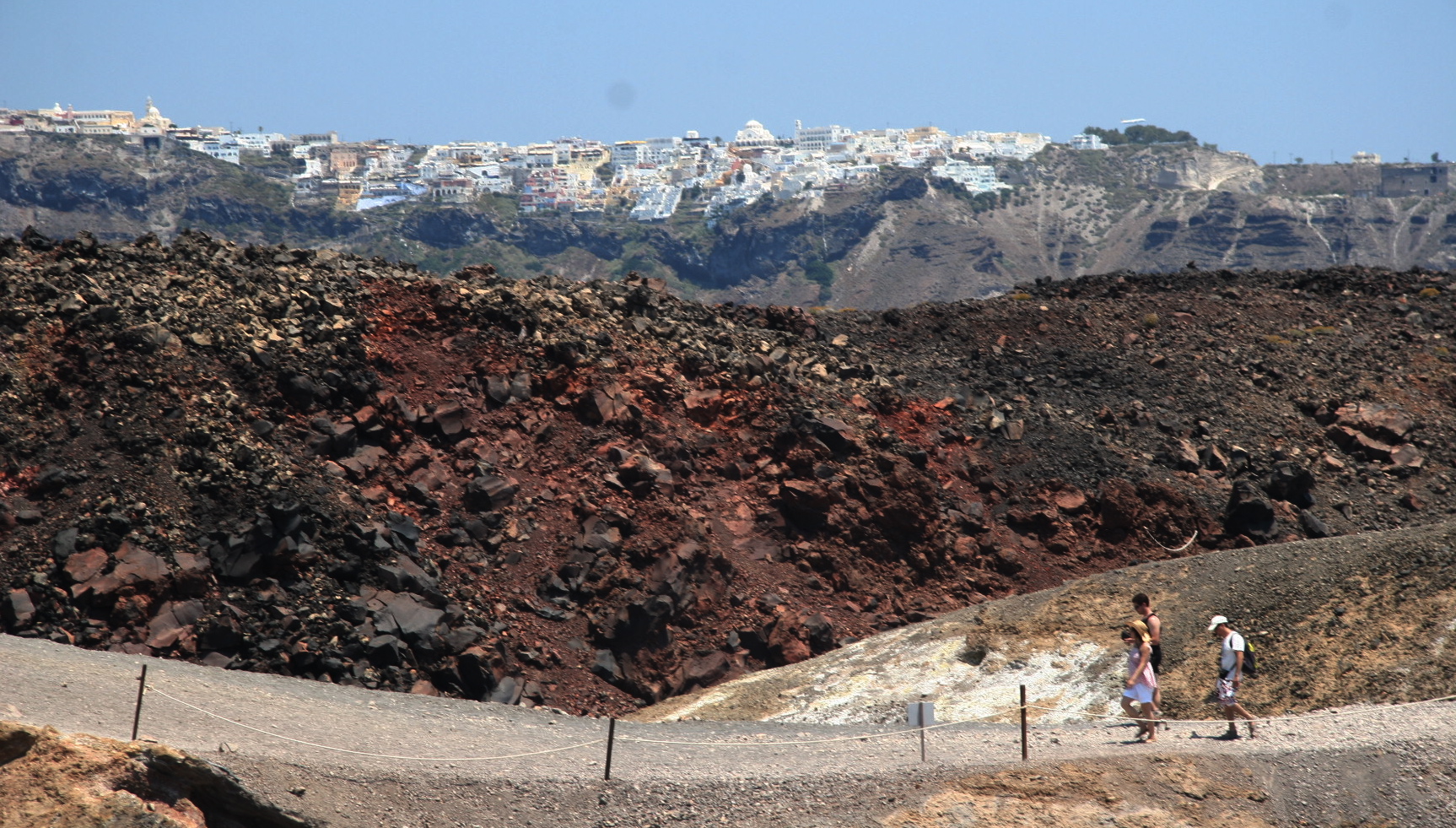
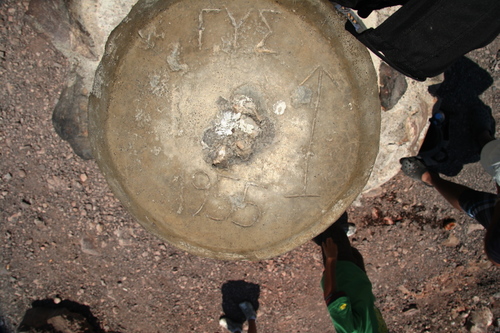
 | Toward the top of the volcano. The whole volcano is 500 years old. I think
this material here is a bit newer than that, but not much. Dig down a foot or
two and the rocks are all smokin' hot, though. Very nice. |
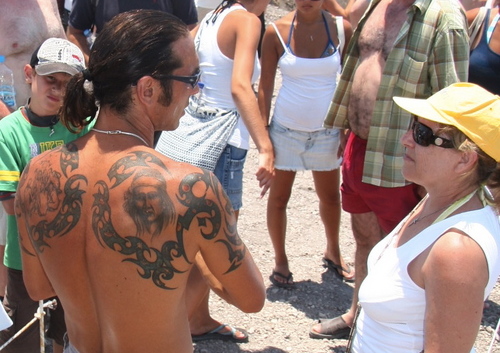 | |
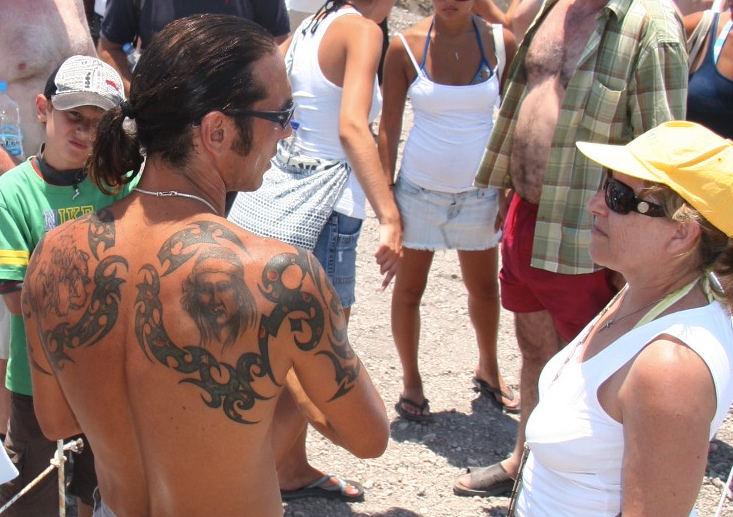
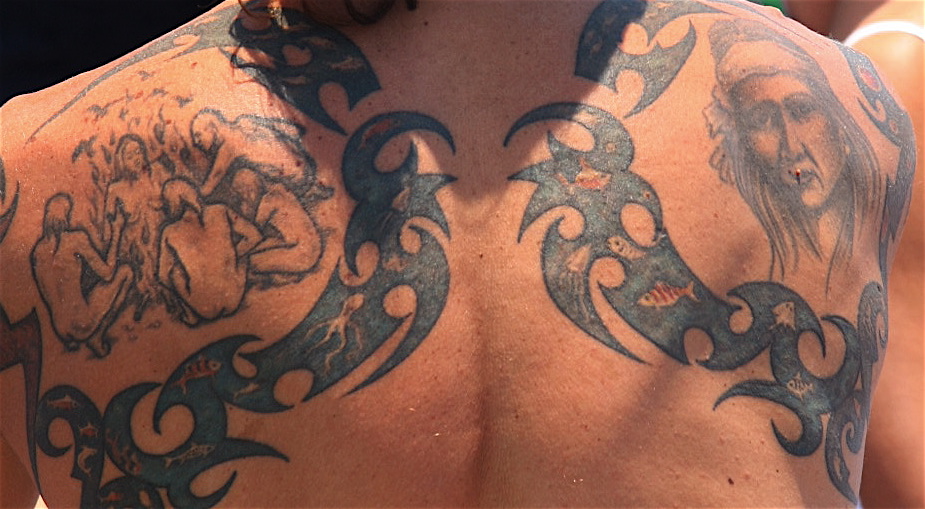
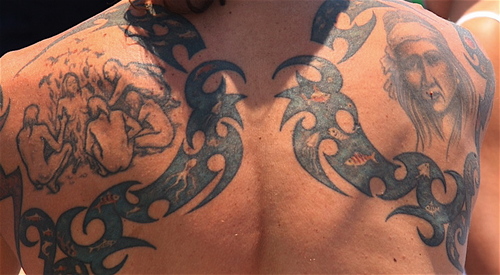 | I was quite enamored with Yannis' tattoos. Check out those squid, octopi,
striped fish... |
 | |
 | |
 | Summit pan. The large group of loquacious 19-y.o.'s was a group of off-campus
students from NY. |
 | |
 | |
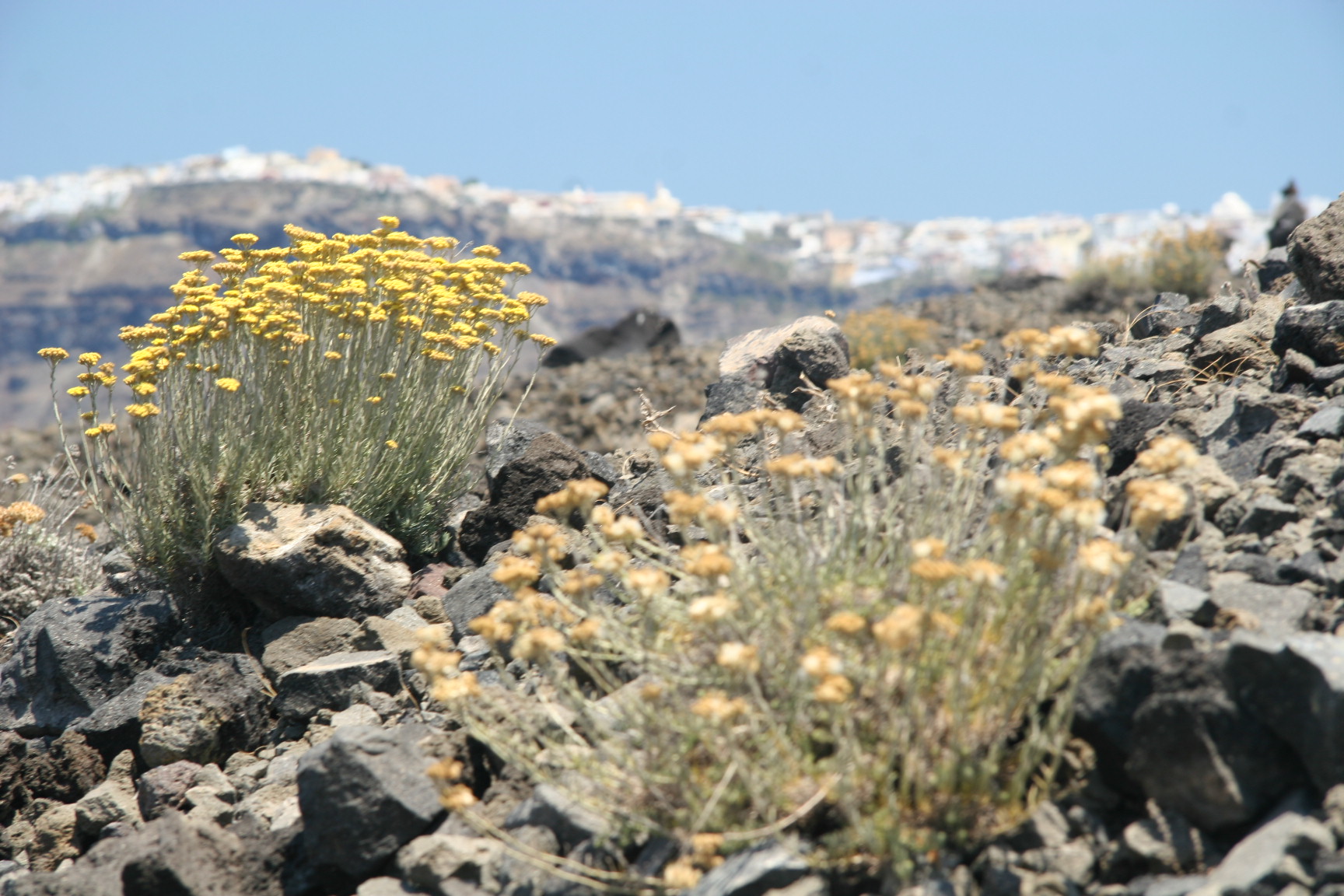
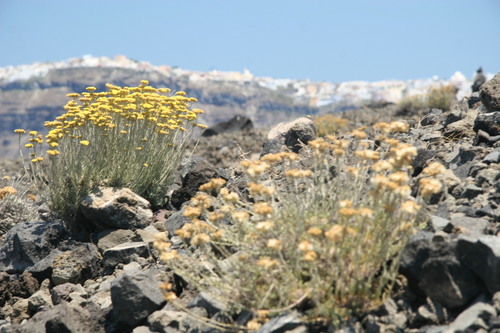 | One of the few vegetables on the island. |
 | |
 | |
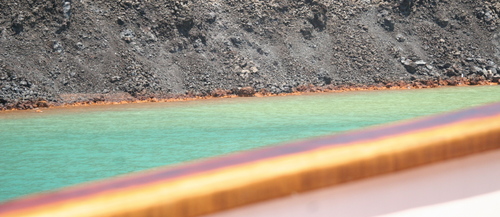 | |
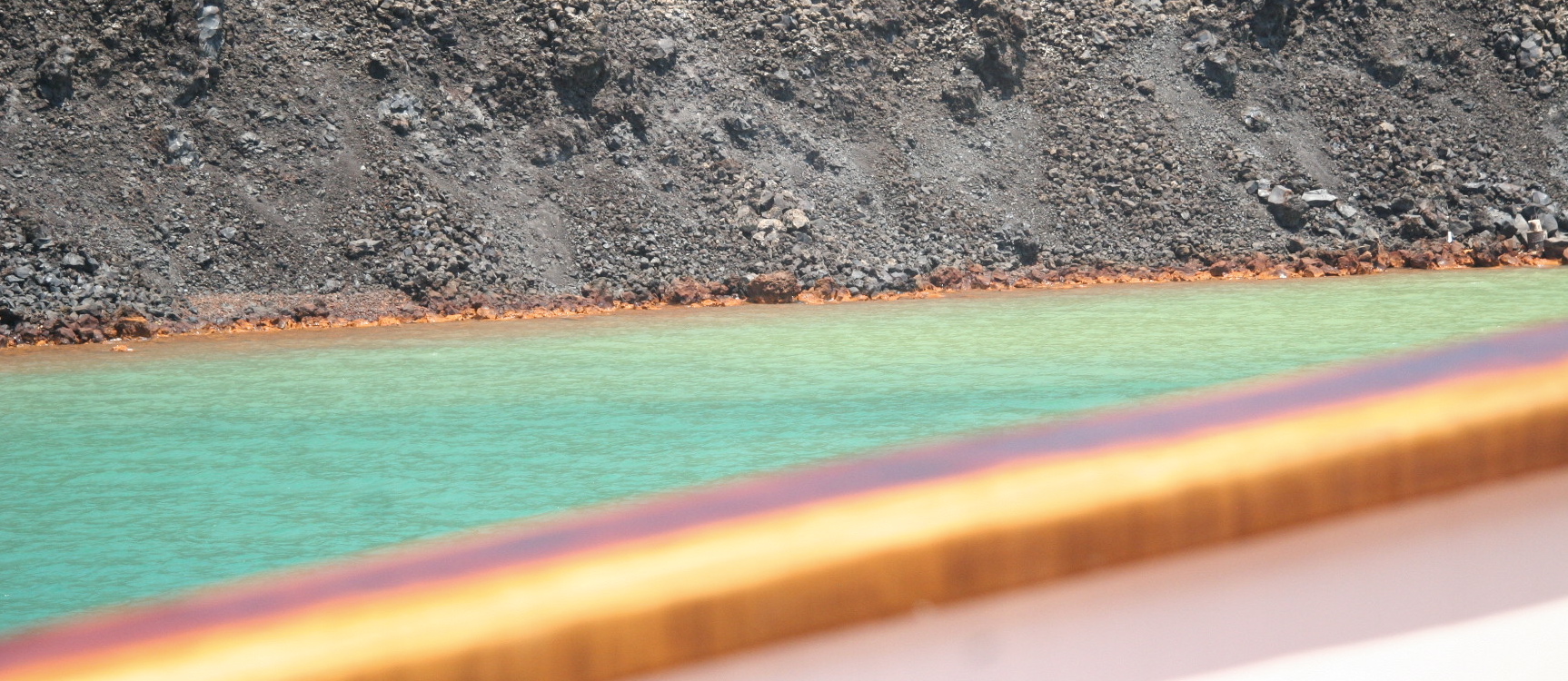
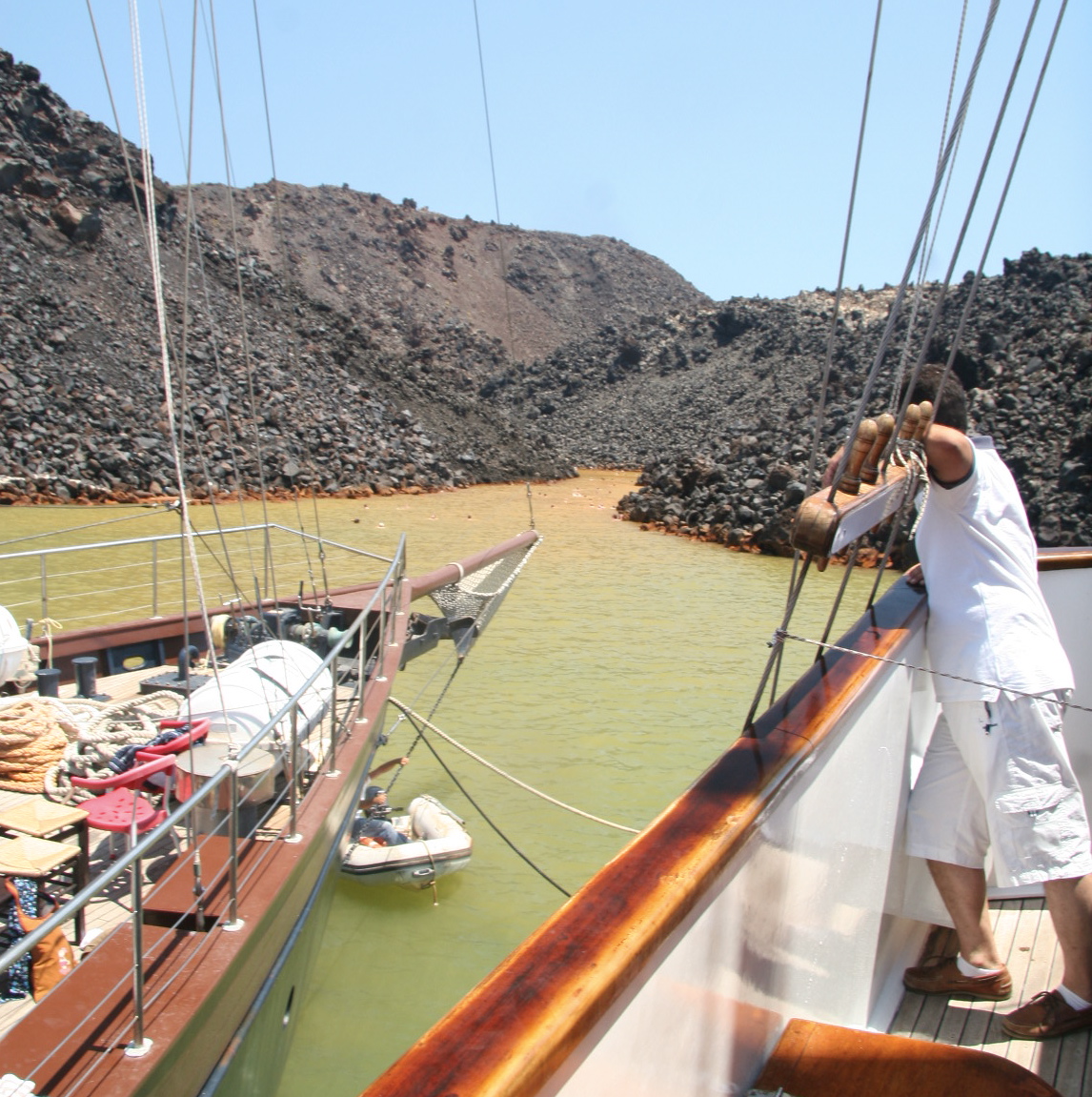
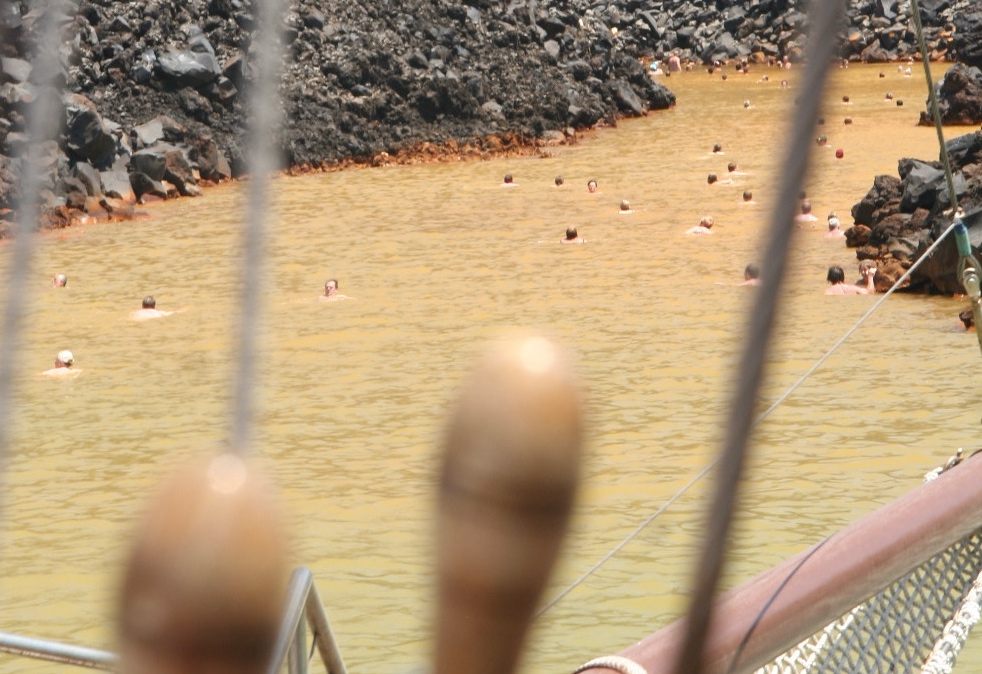
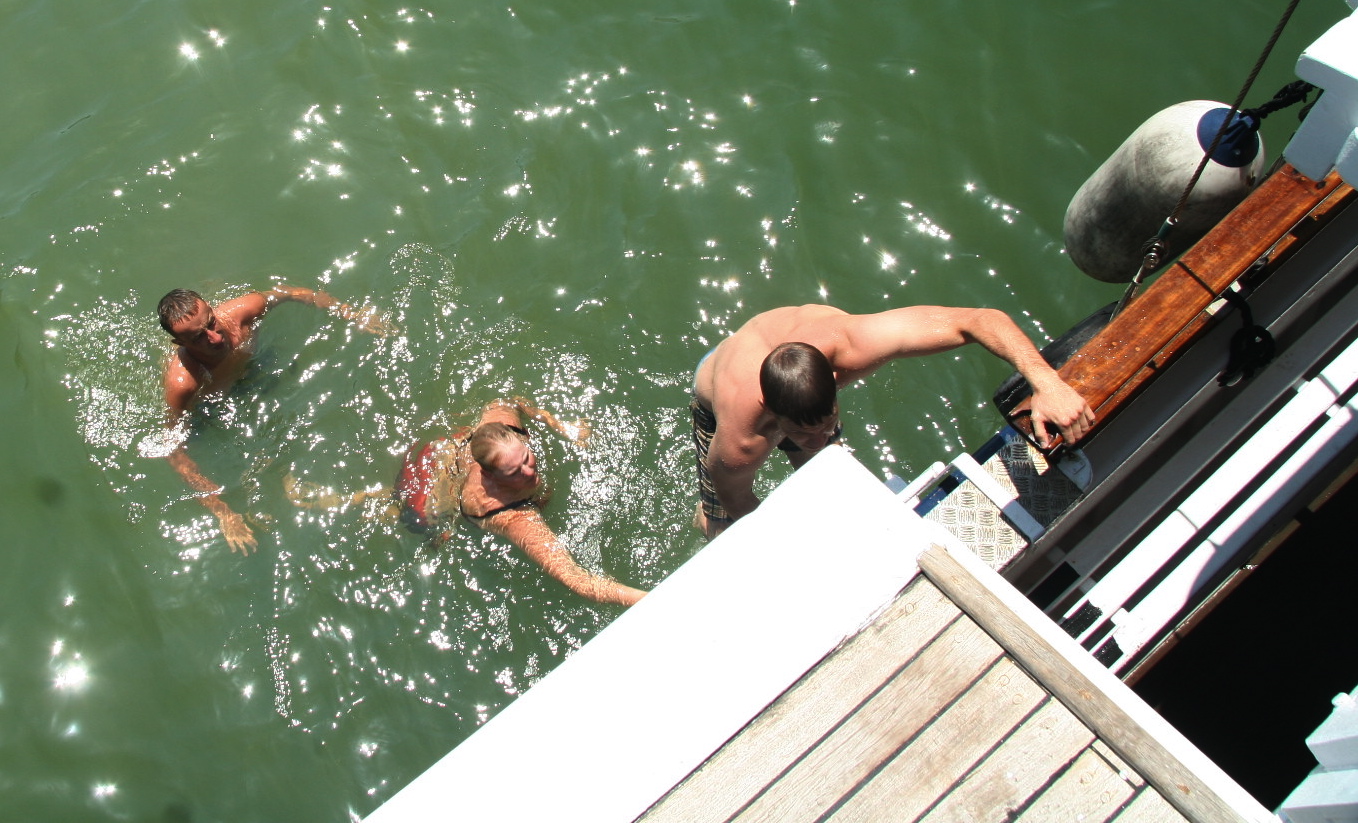
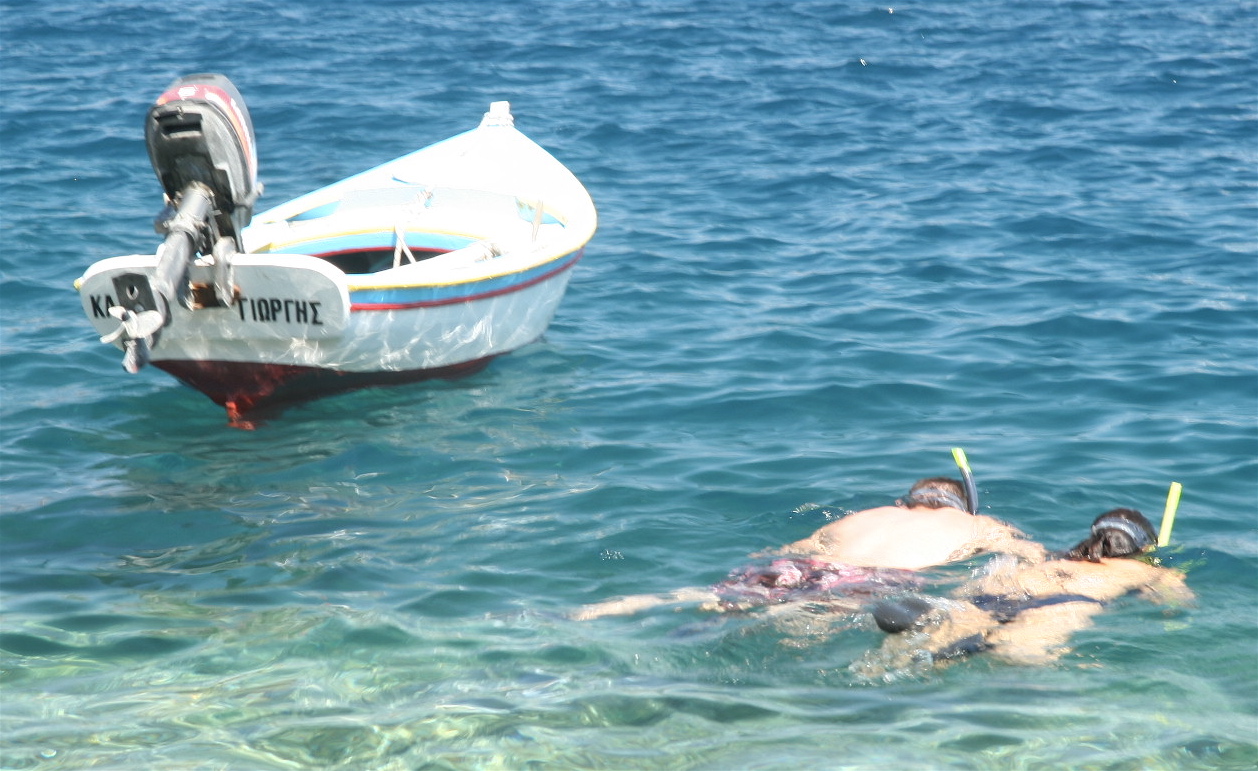
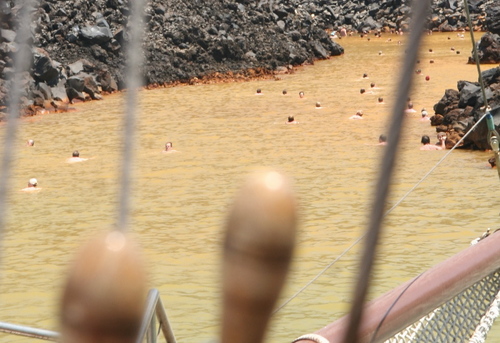
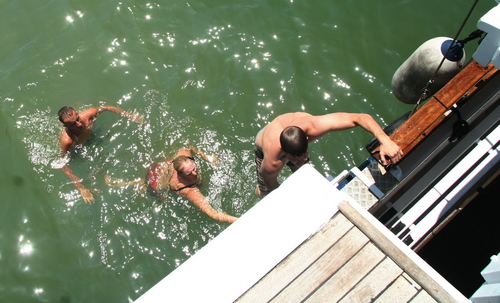
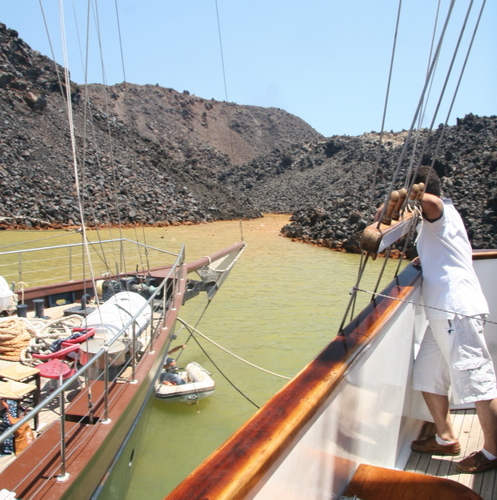 | OK, this is cool. Wow. We cruised around the island, and ended up on the far
side near hot `springs.' The idea was to jump into the water and swim toward
the island, into the little channel. I had a fabulous, 2nd-story jump in from
the Albatross, and swam upriver as the water got hotter and hotter. They're
hot `springs,' but they are out in the ocean. The red is a mix of iron and
mud. |
 | |
 | |
 | Beware of the famous Santorini Crocodile. |
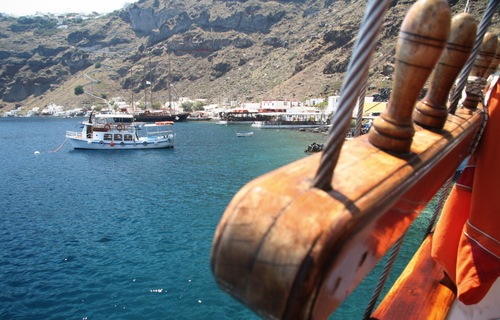 | |
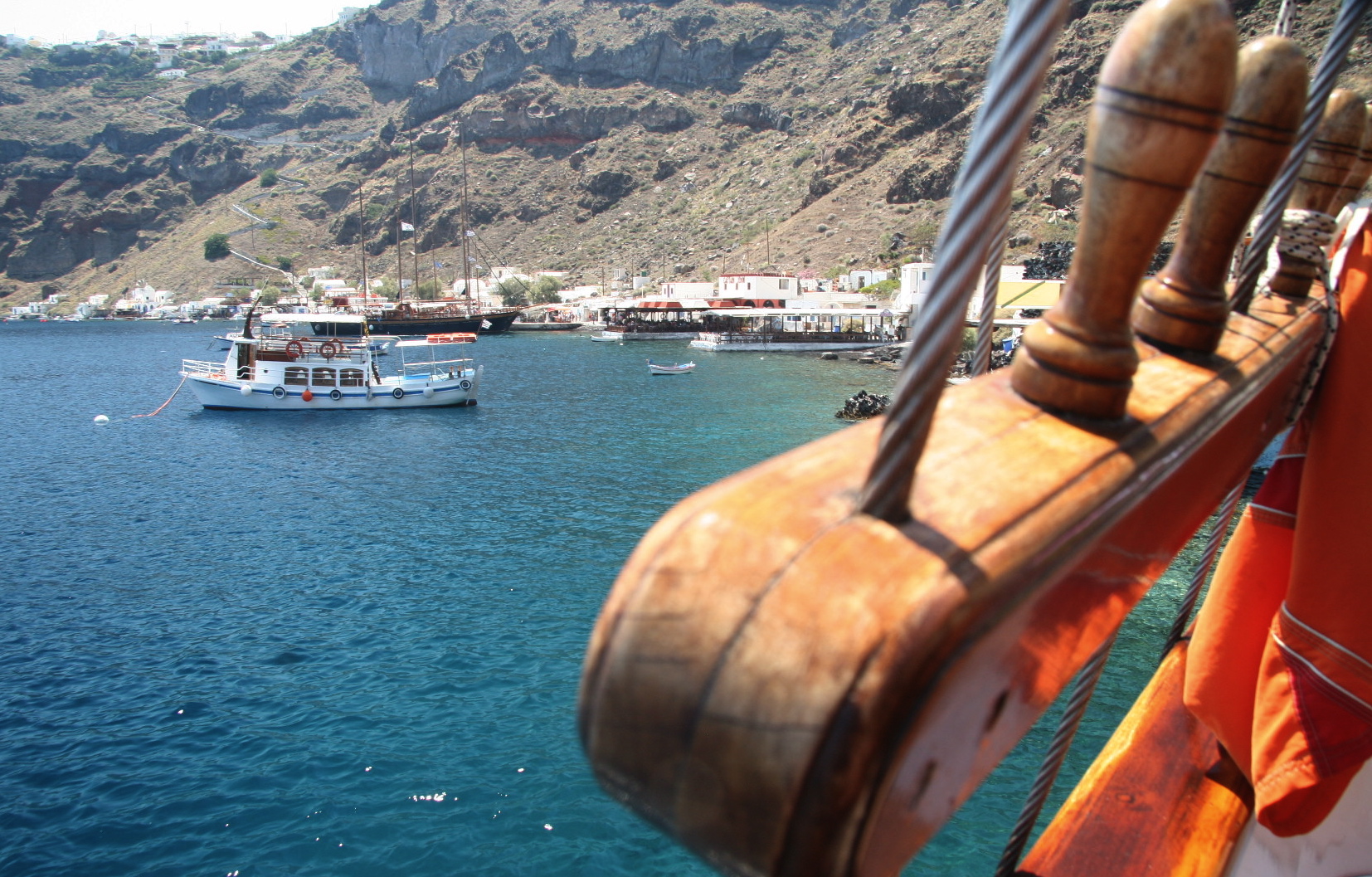
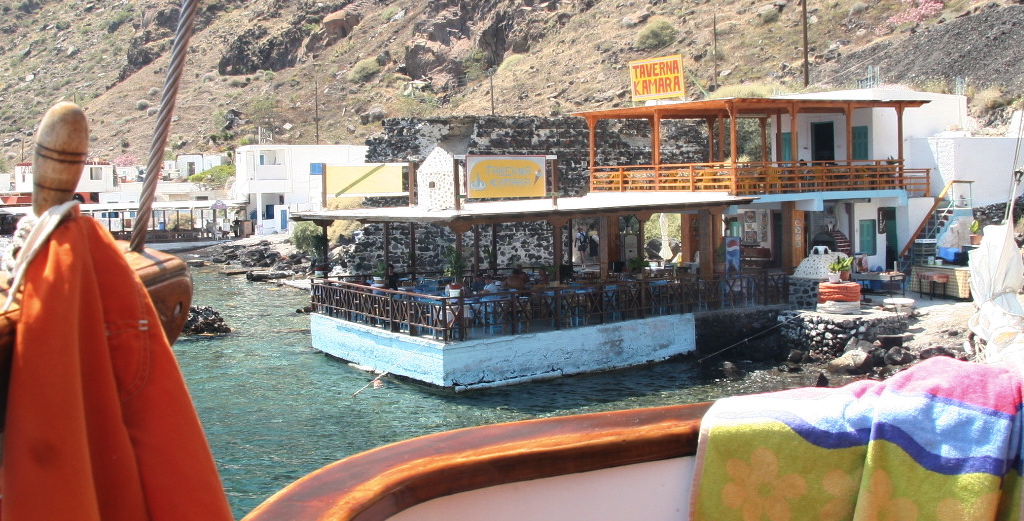
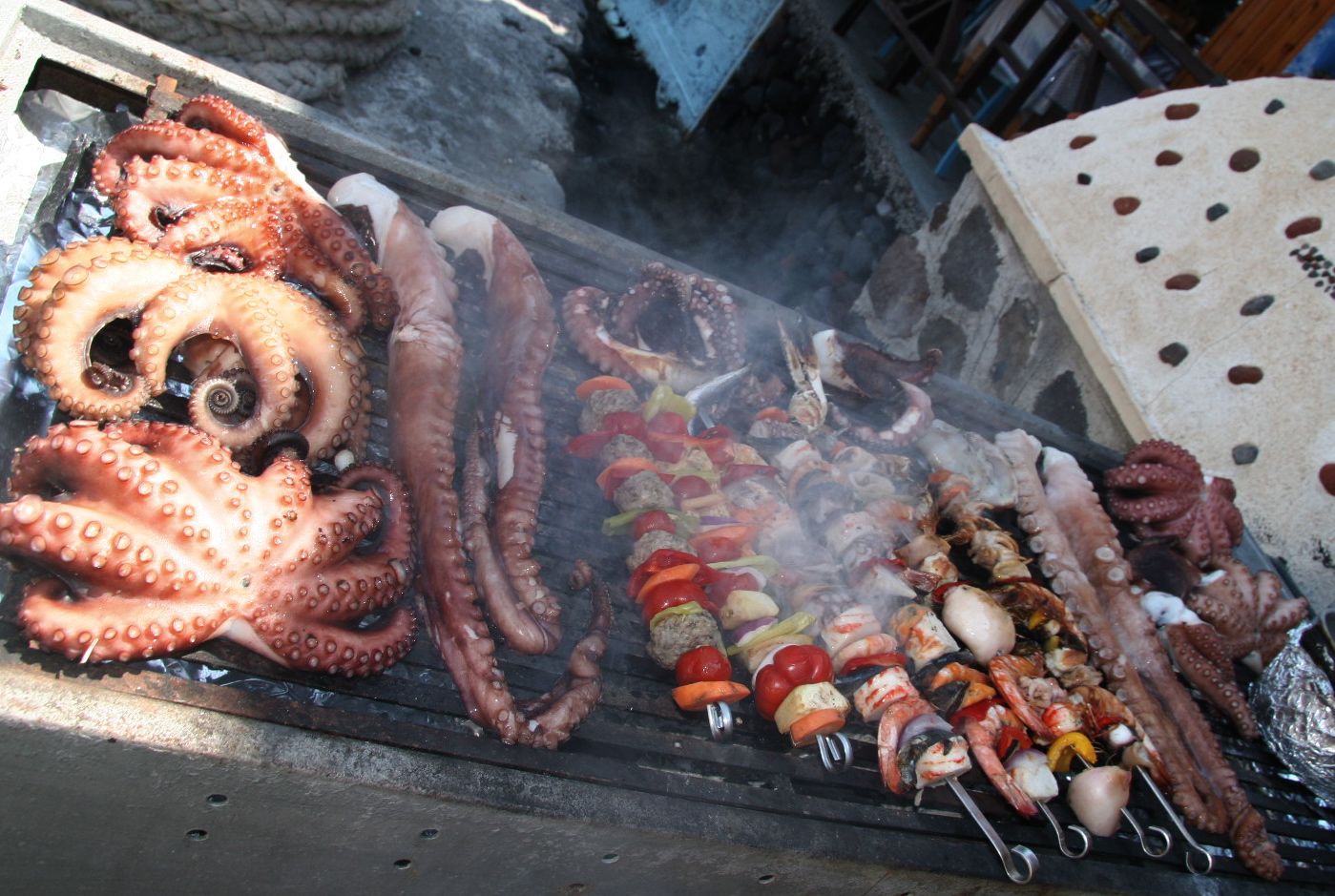
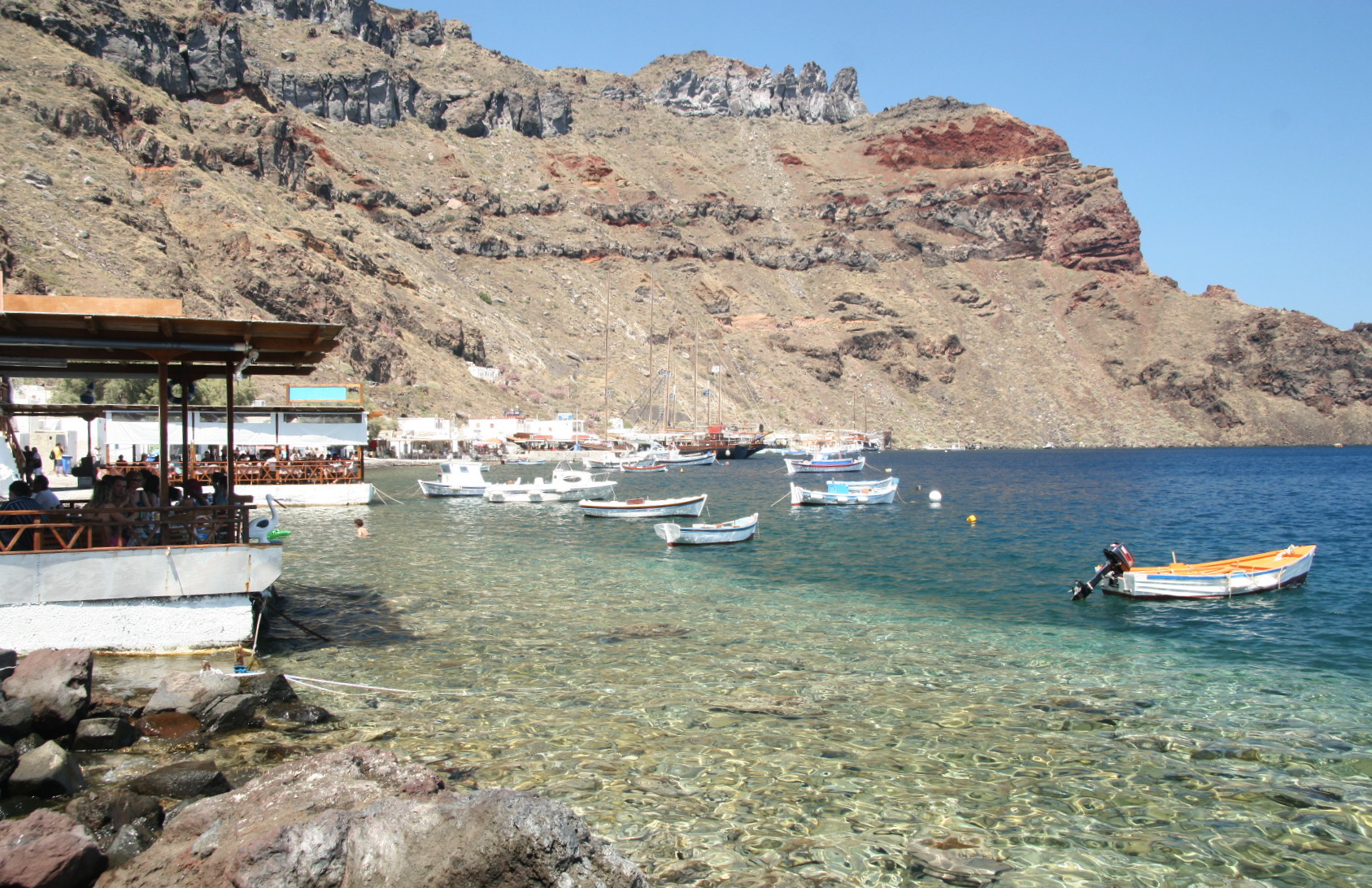
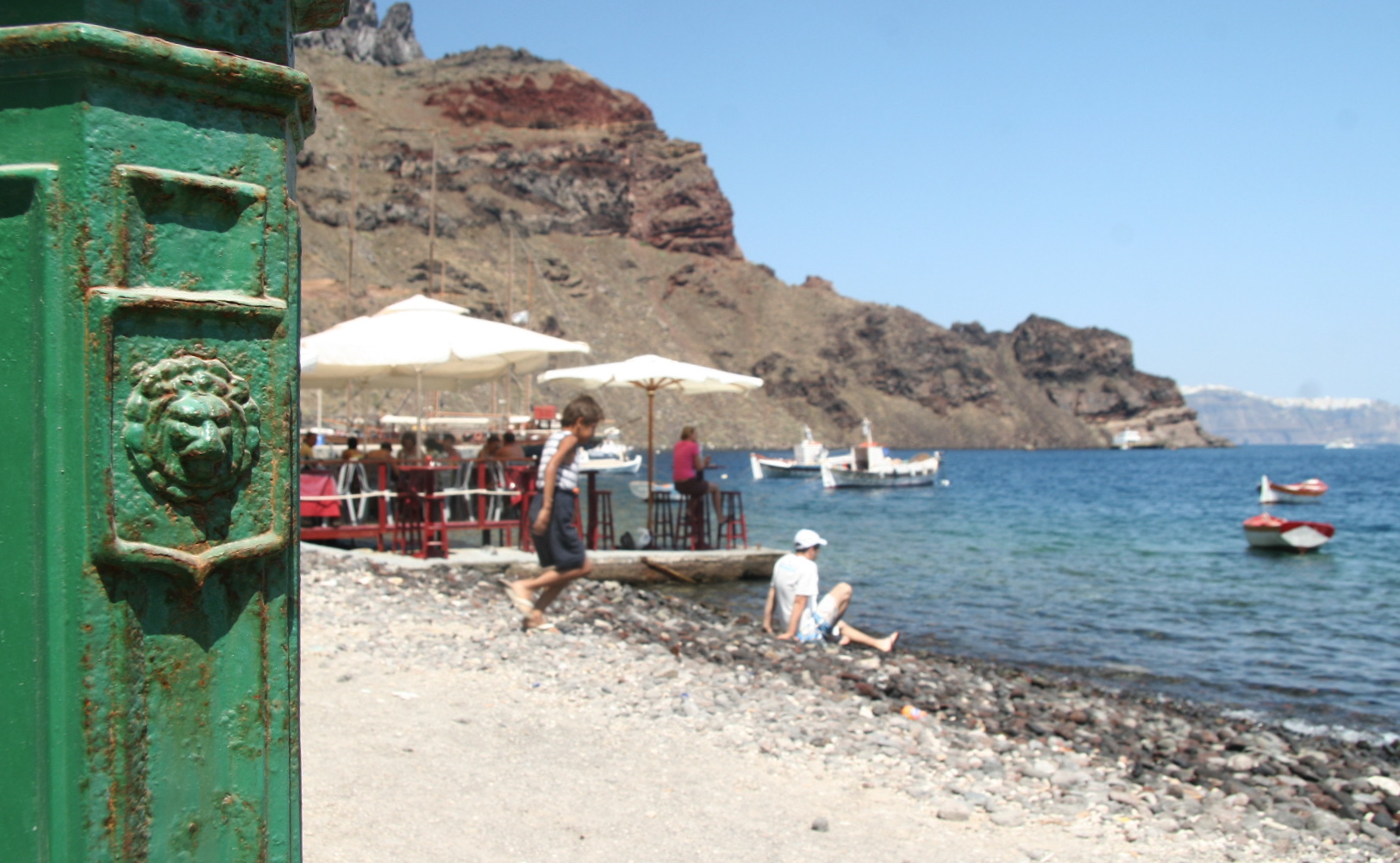
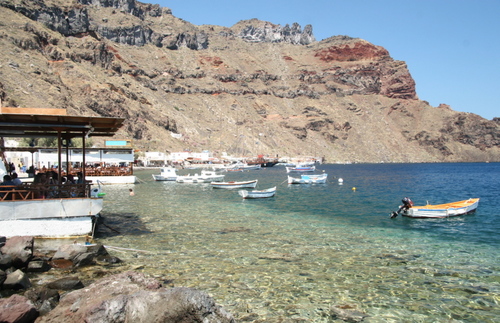
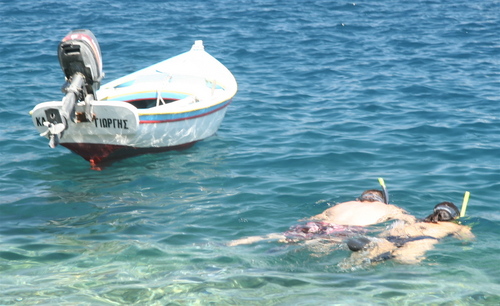
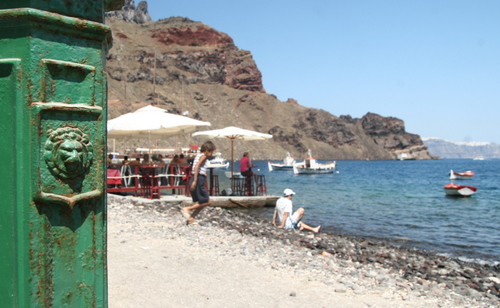
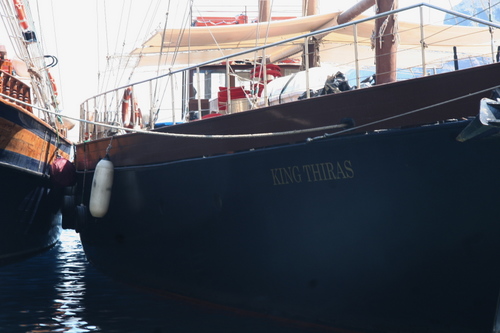
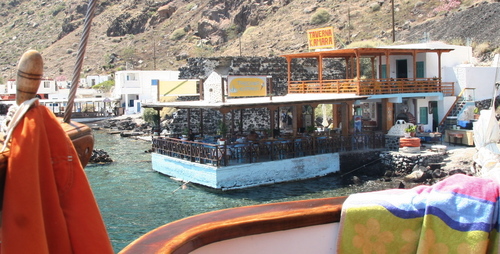 | Another boat stop, this time for lunch. There's a dozen or more fish-grill
joints here set up on the beach. I spent some of my time looking for a guy
named Σοφοκλησ (Sophocles) who
was a guide on another boat I was meeting up with, before getting the fish
grill myself. I've found out post-facto that octopus is the quality local
dish, but I couldn't quite bring myself to do that. |
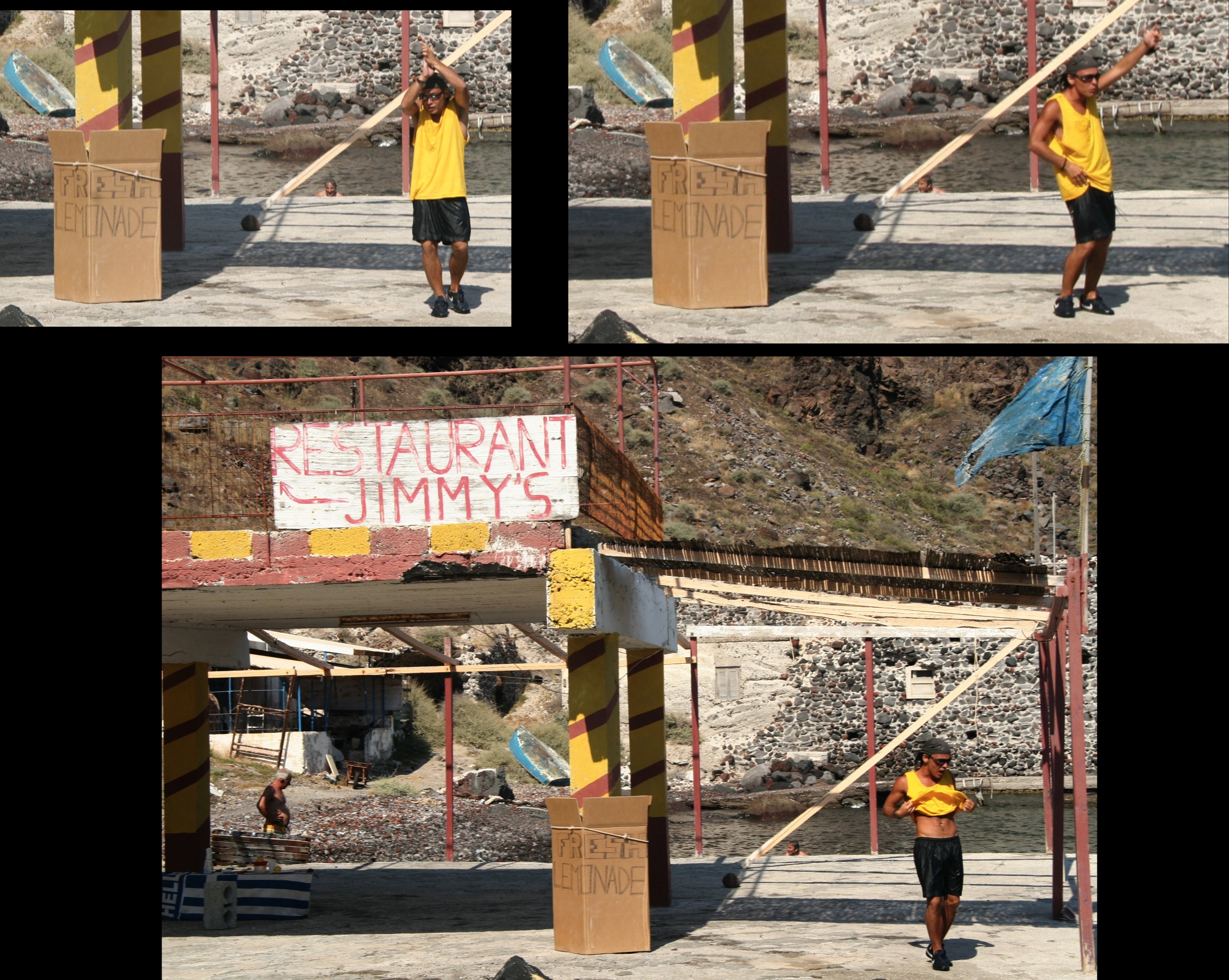
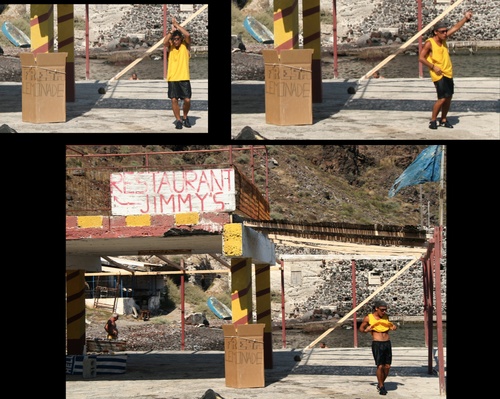 | Dancing lemonade salesman catching people from the boat. |
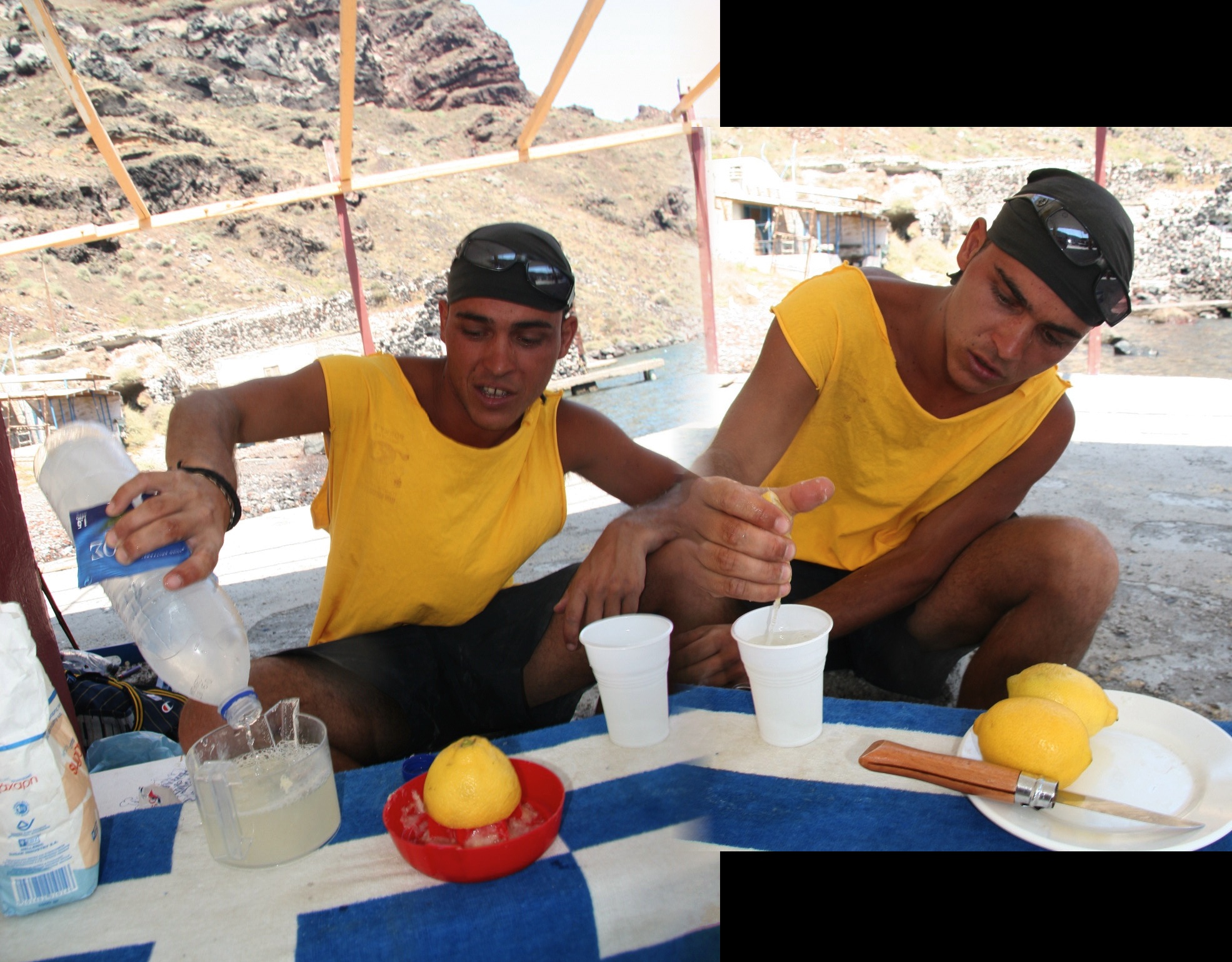
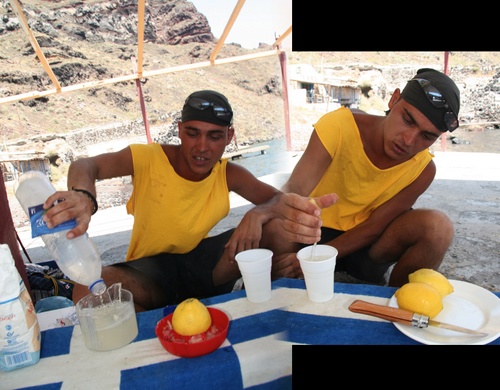 | Half a Euro per glass... |
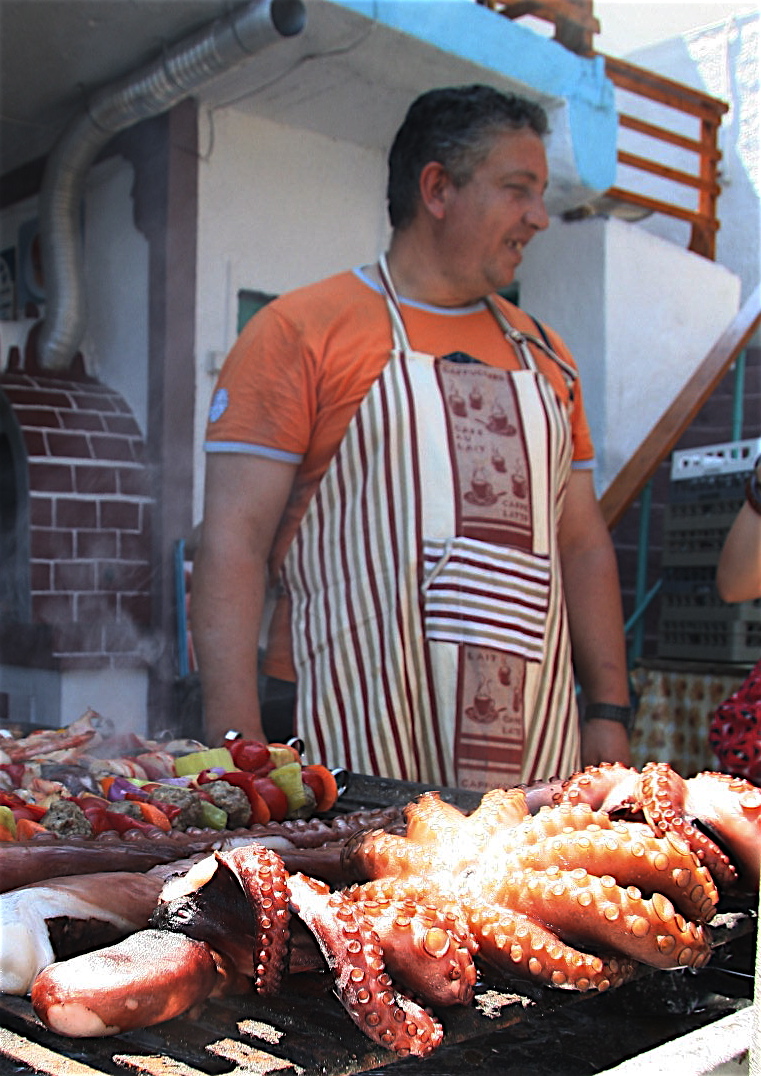
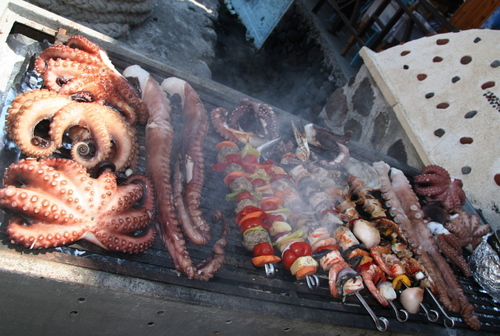
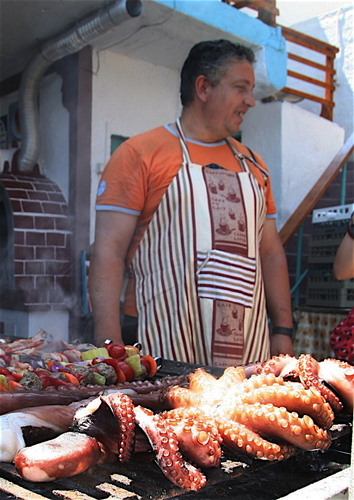 | There's those Οχτοπι... |
 | |
 | |
 | |
 | |
 | |
 | |
 | |
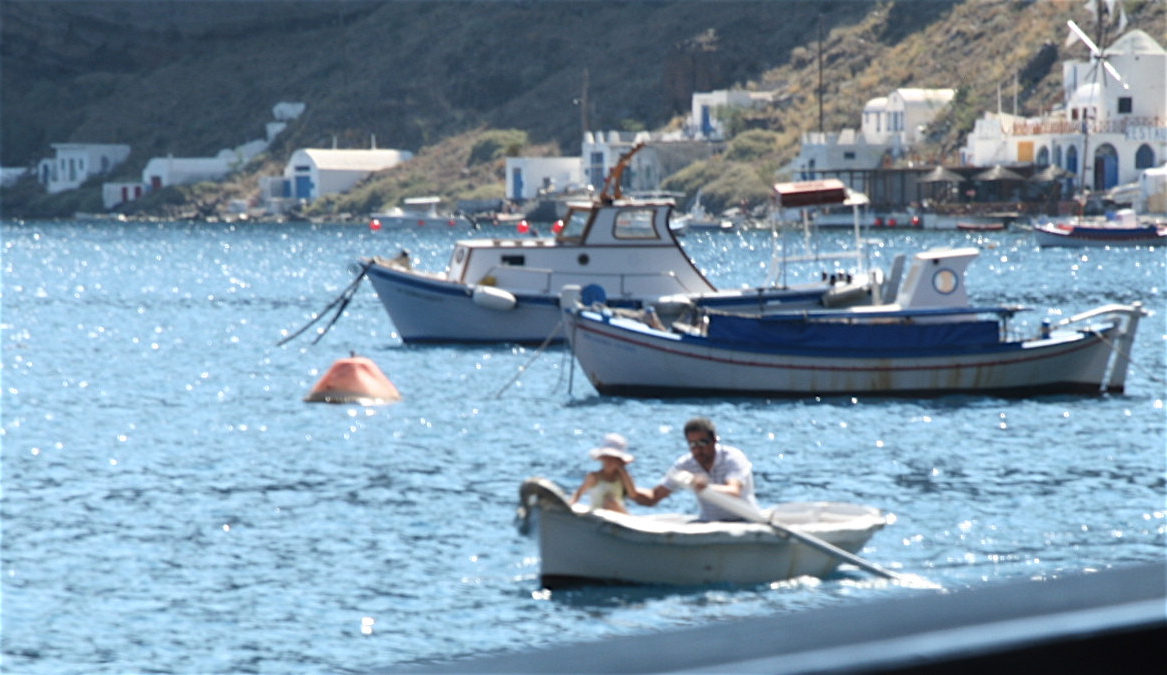
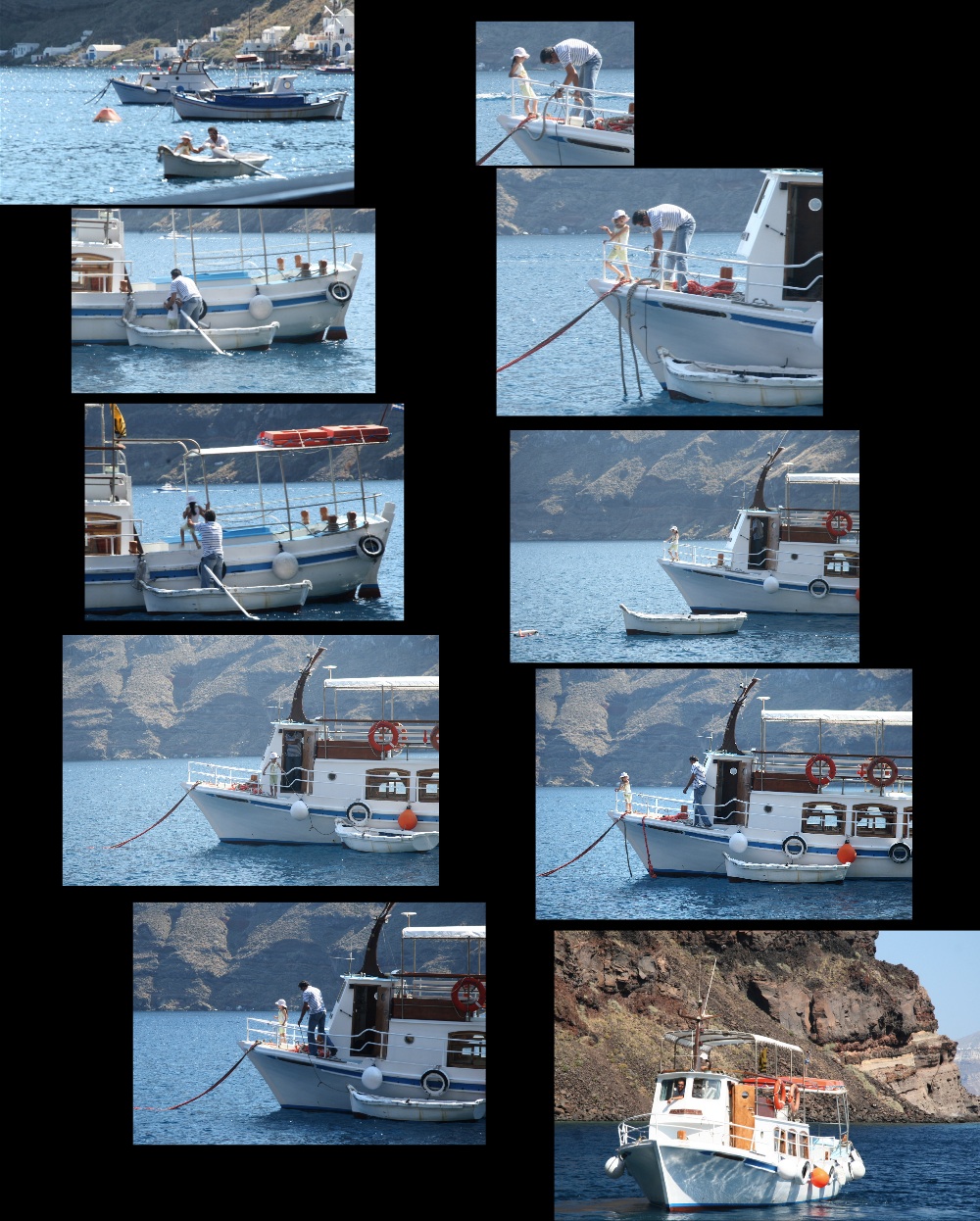
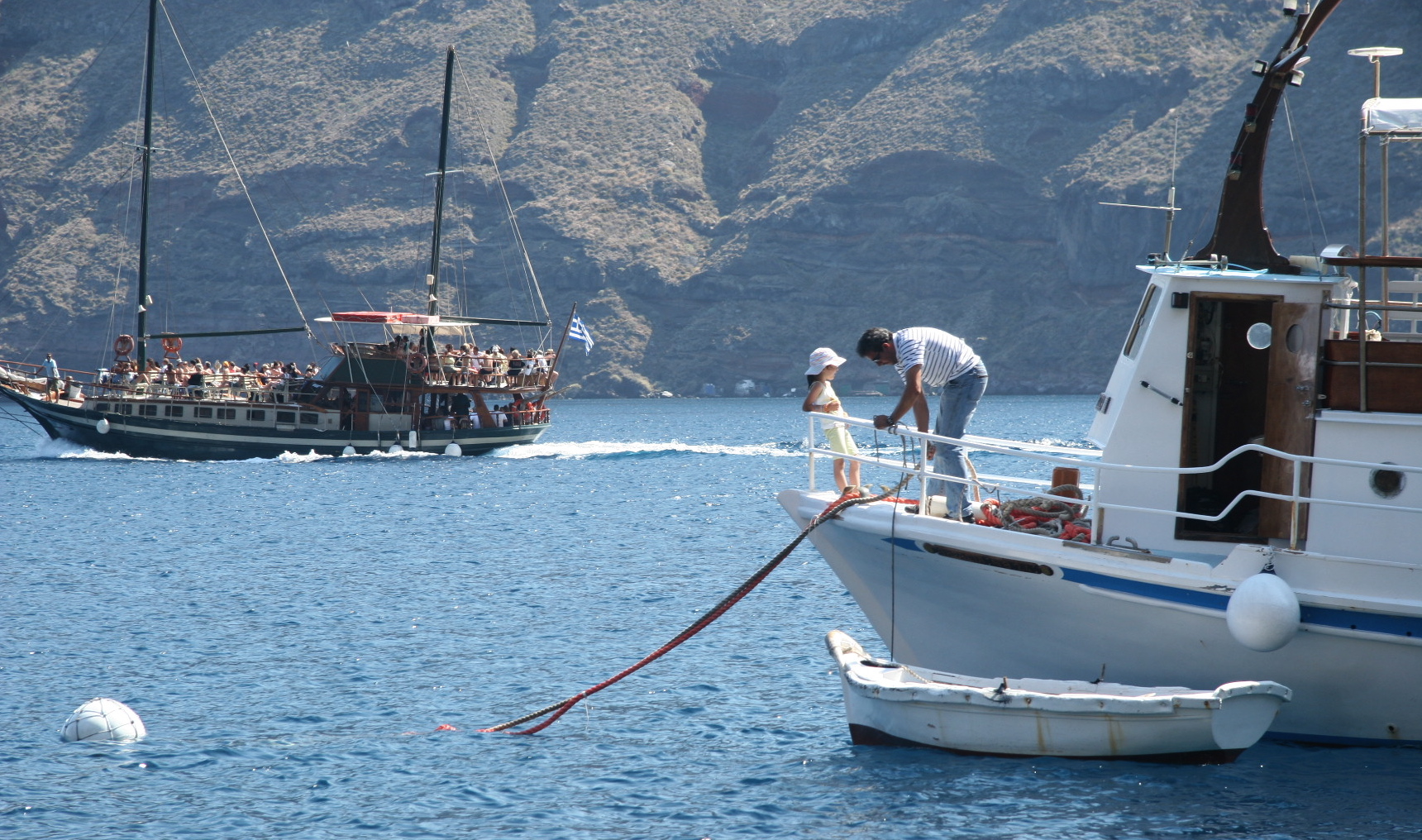
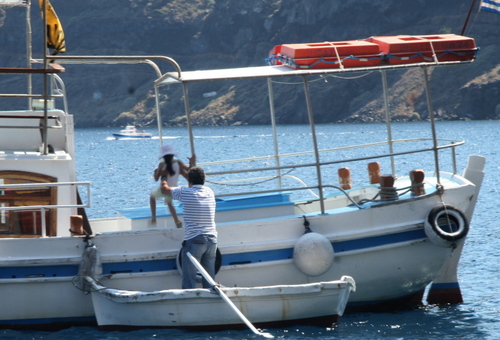
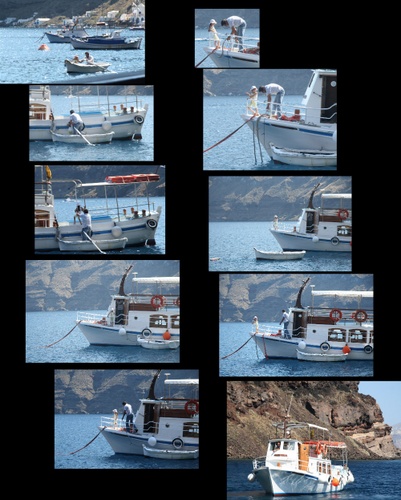
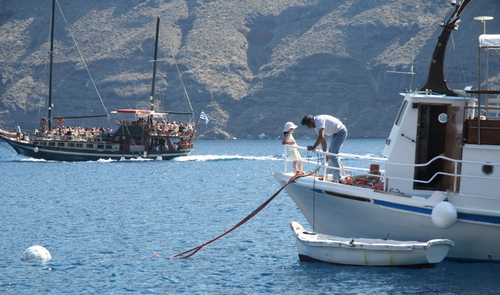
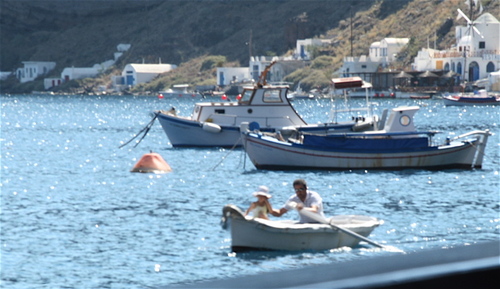 | I watched the guy row his ~7-y.o. daughter out to their boat. He lifted her
up; she walked around the boat and then stood up front and told him where to
go. Very cool. |
 | |
 | |
 | |
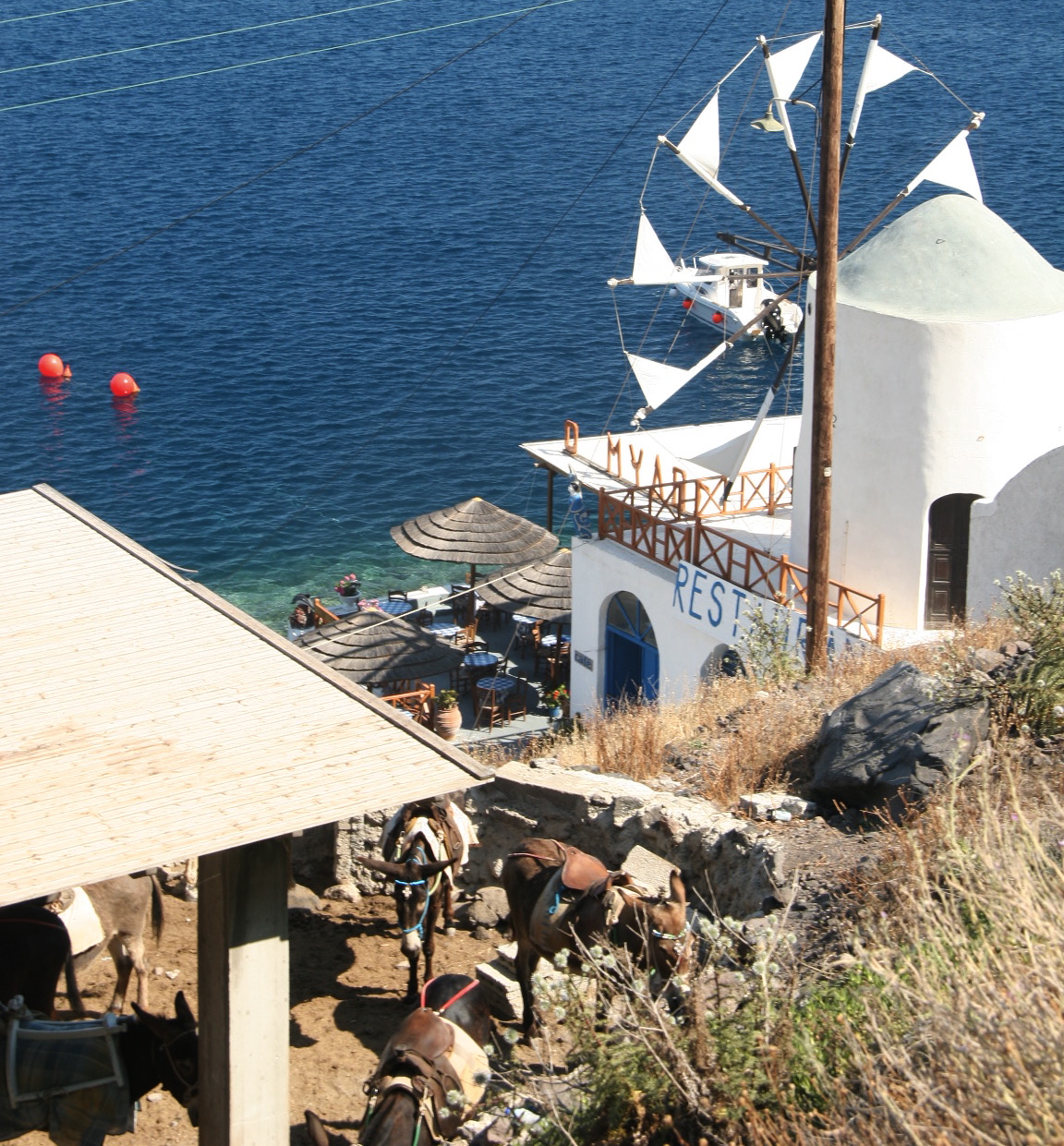
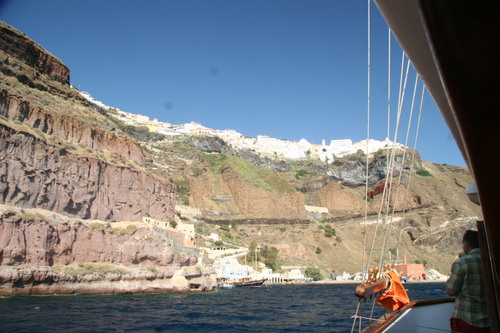
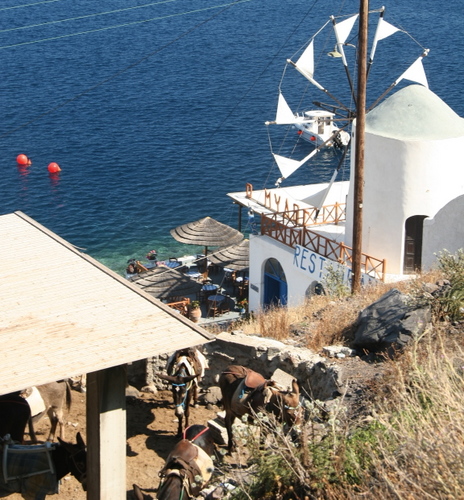 | Donkeys to head up the cliff to the city. |
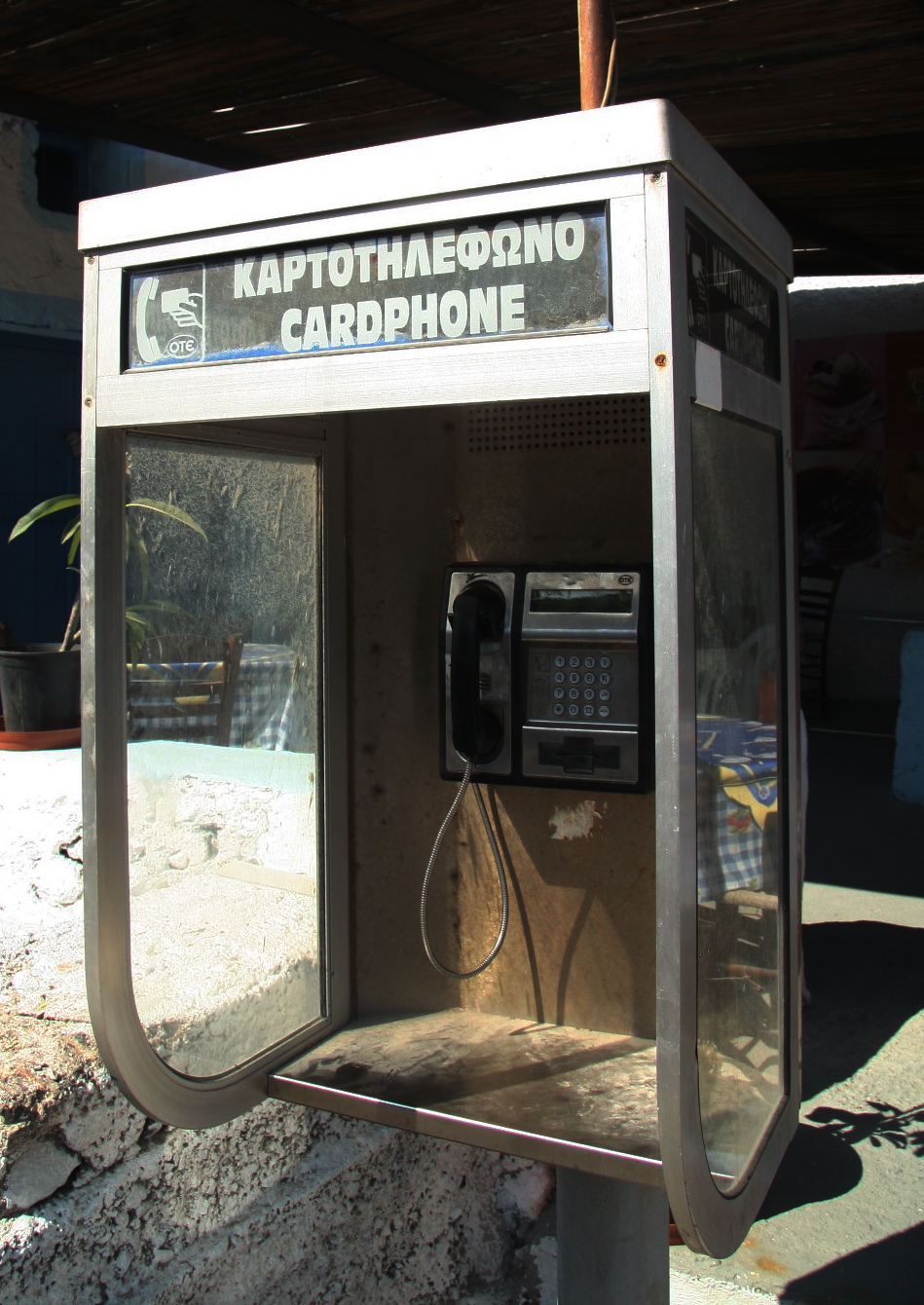
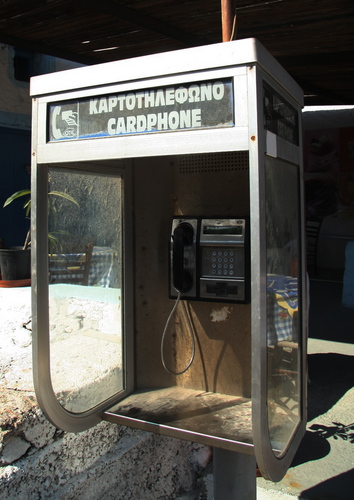 | More Greek code-words |
 | |
 | |
 | |
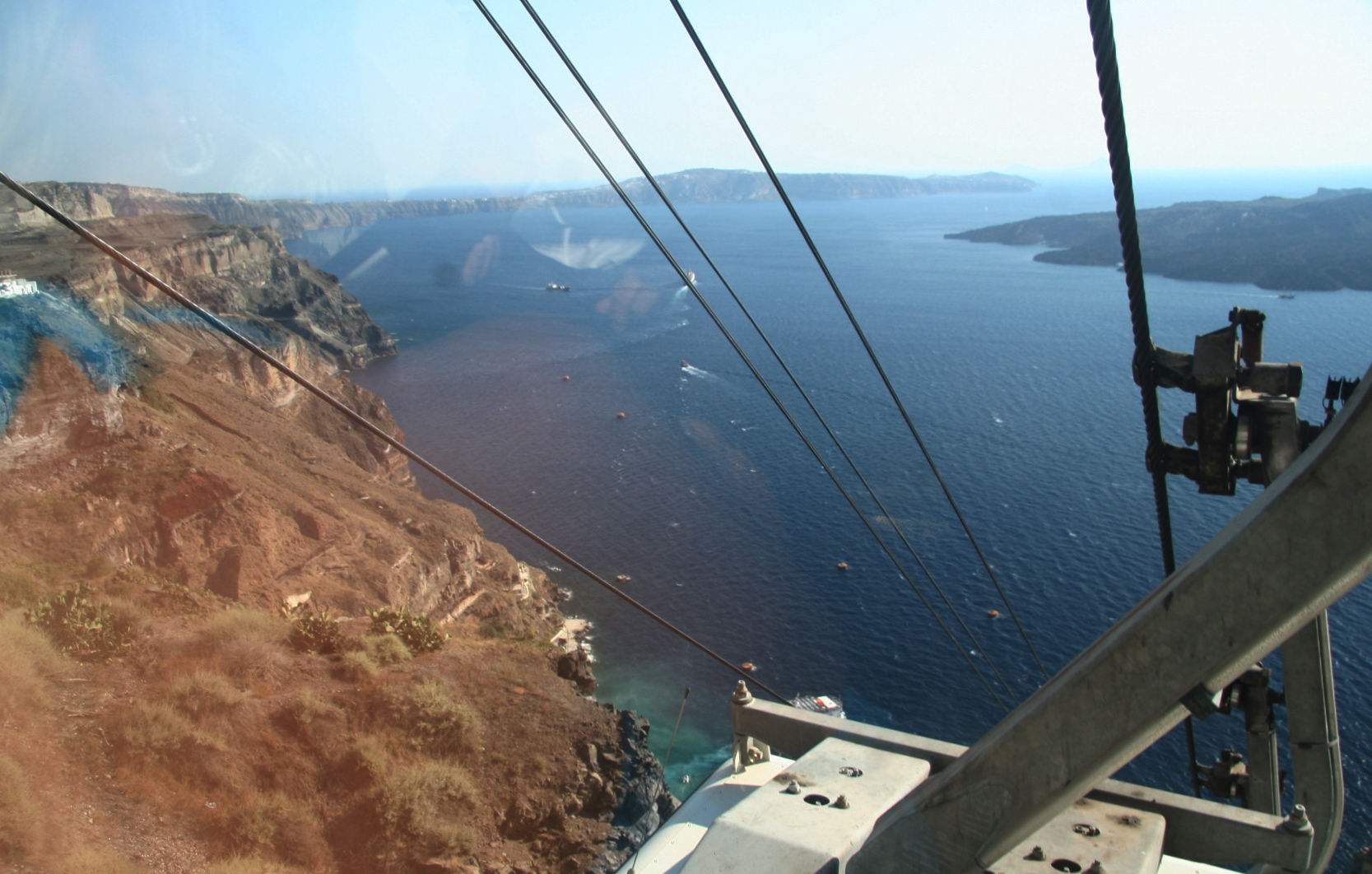
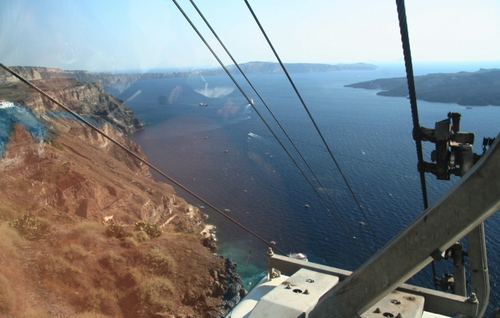 | Riding the device back up the hill to Thira, as the boat departs... |
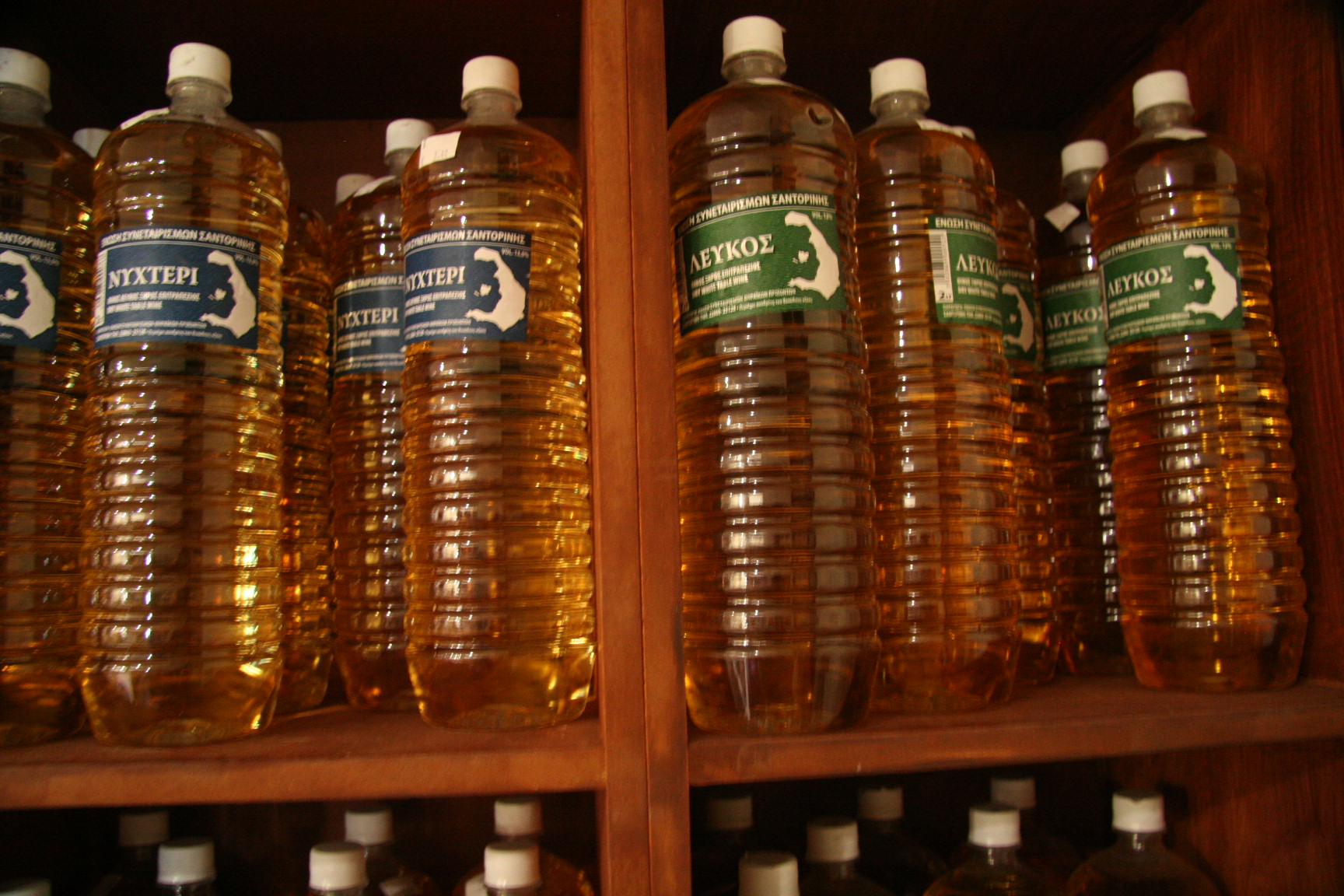
 | Before flying out that evening, I biked over to the island's main winery. It
turned out to be open, but I missed the tours. |
 | |
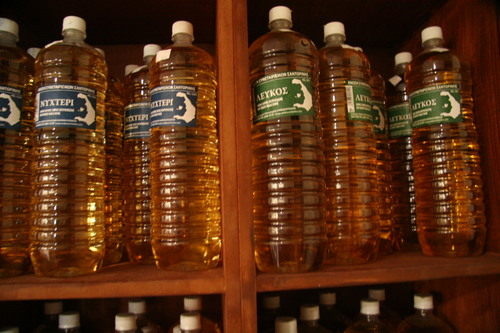 | Nevertheless, they had good deals on fancy bottles of wine, for sure. |
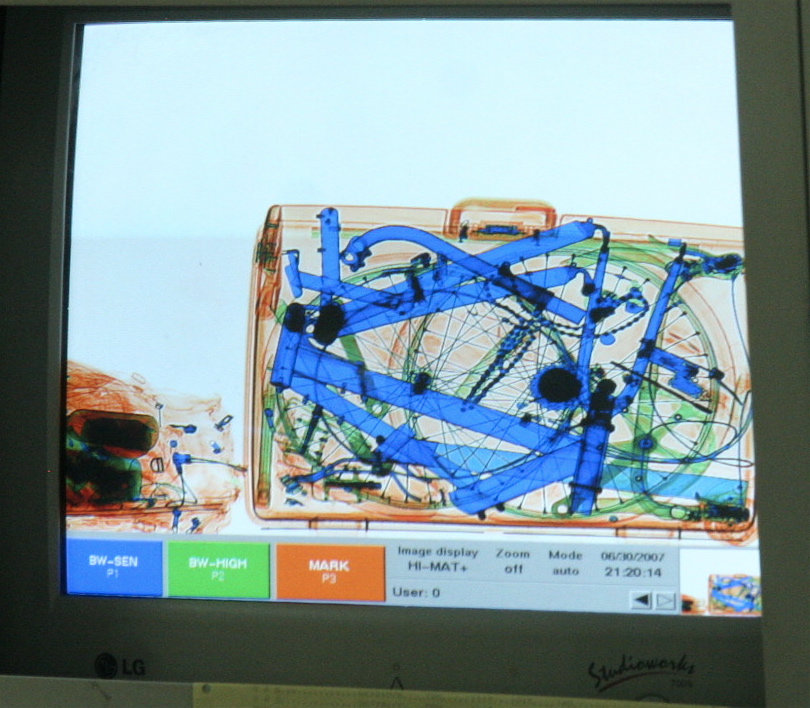
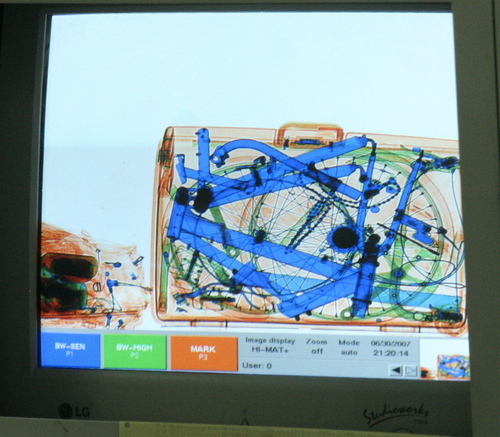 | Check out that Santorini (code JTR) x-ray machine!
An exchange at security as I had a water bottle with me:
Security: Sir! No water is through the security! Please drink your water.
Me: Could I pour it out? I can't drink it now.
Security: Sir! It is OK. You may bring with you. Is not a problem. |
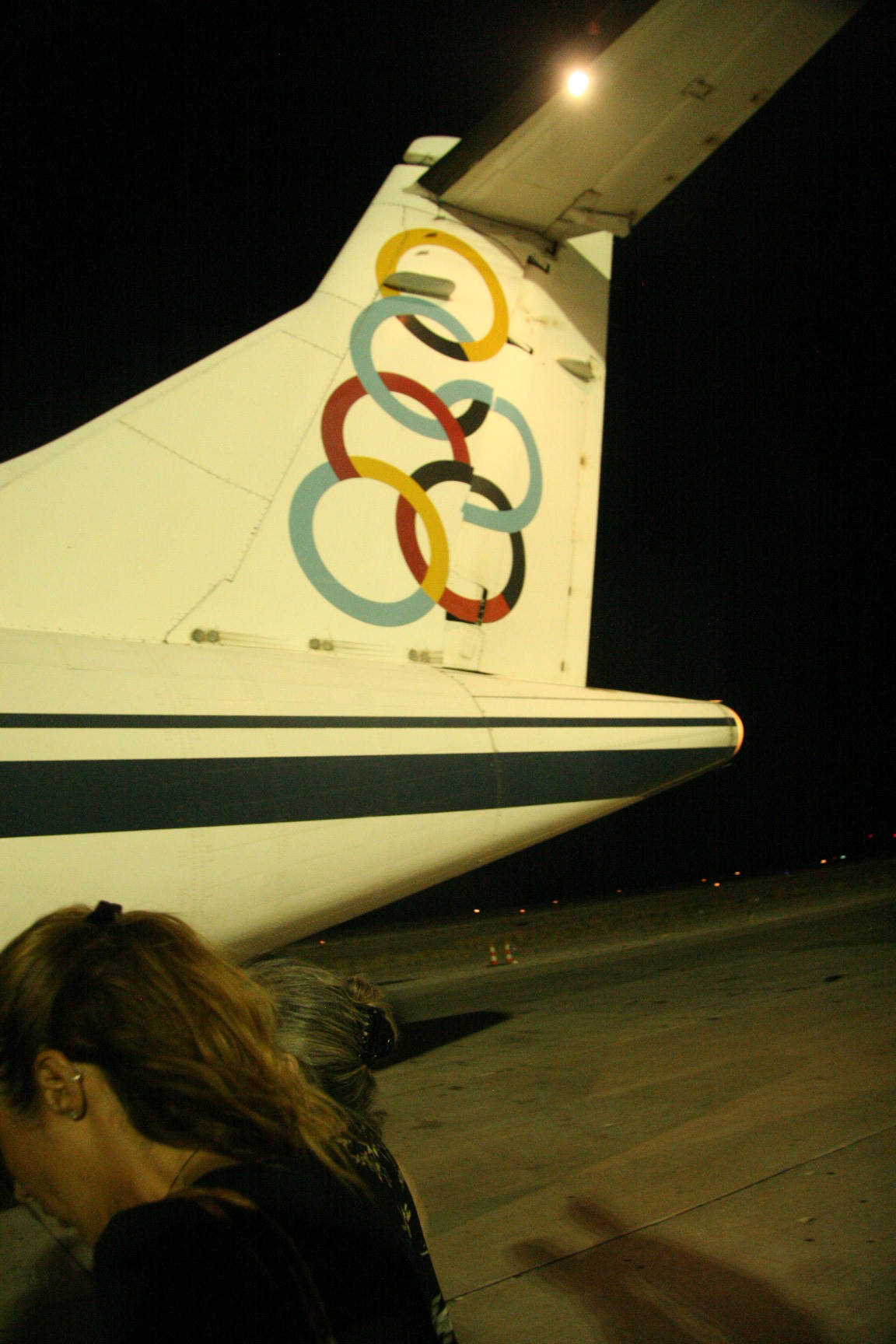
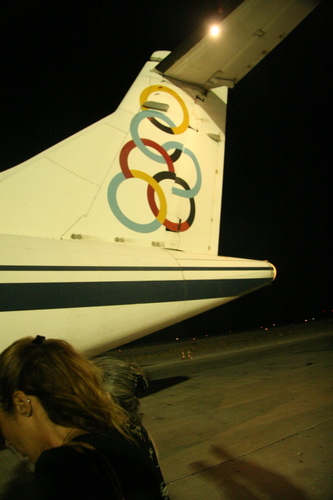 | Interestingly, the symbol for Olympic Airlines is not the Olympic rings,
at least not those of the IOOC. Well, not quite. |
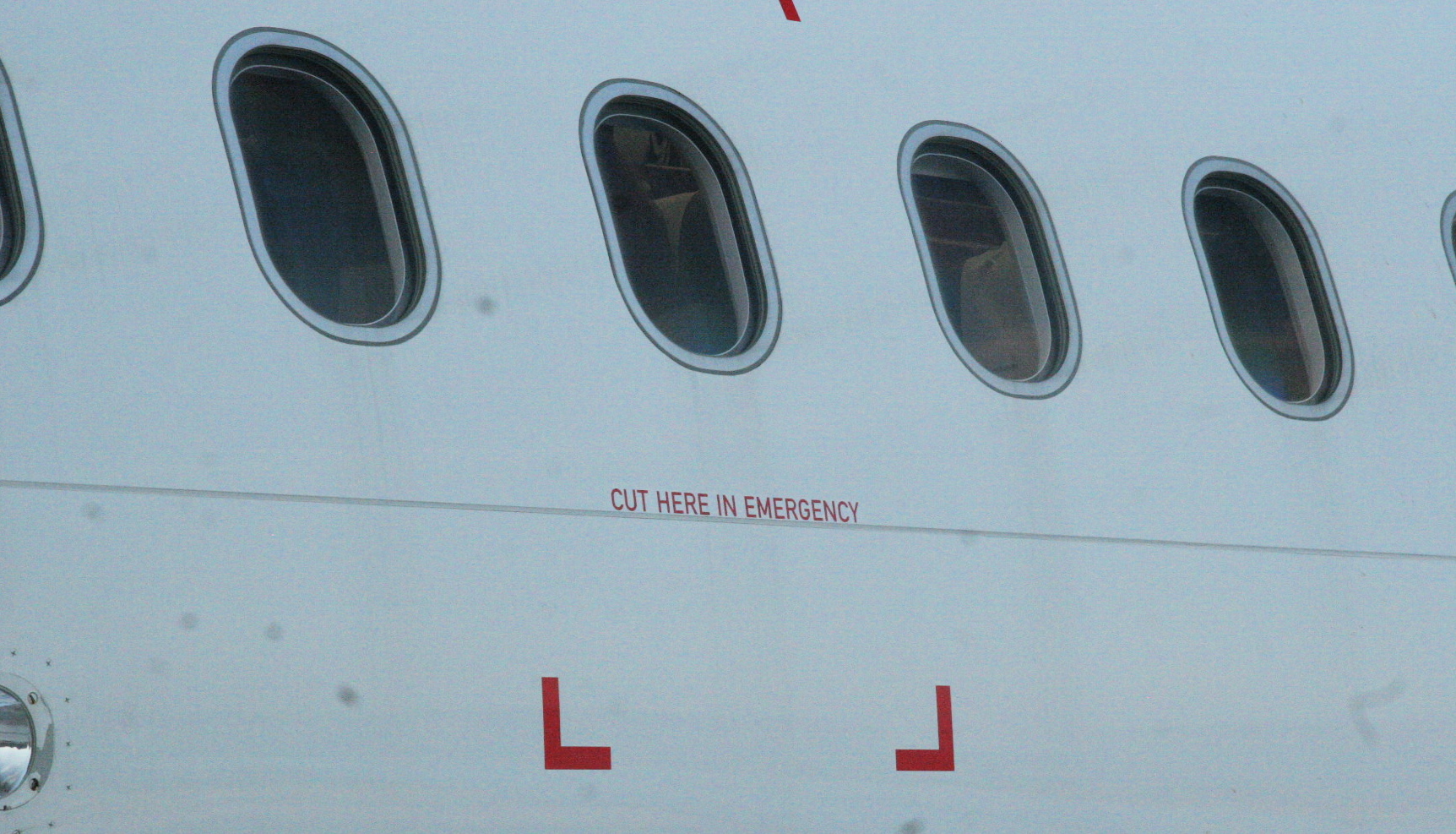
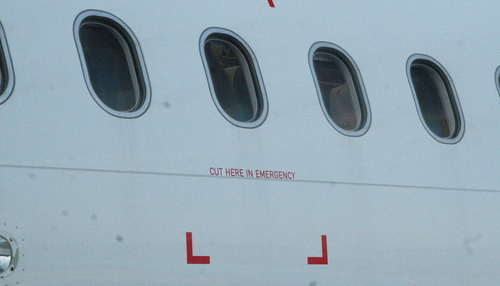 | Just in case. |
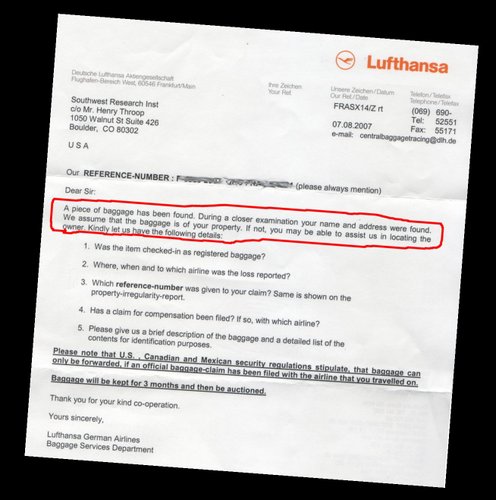 | A couple weeks after I returned, I got a nice note from Lufthansa telling me
they'd found (apparently) my poster tube. Woo-hoo! Well, by now it's a
moot point, so if they'd like to auction it off to recover their costs as they
are planning, I won't stop them.
|