Jump to section:
- Agency Night
- Press Conference
- Prize Talks
- Sagan Lecture + Star Party
- Invited Plenaries
- Poster Sessions + Hallways
- Open Mic Night!
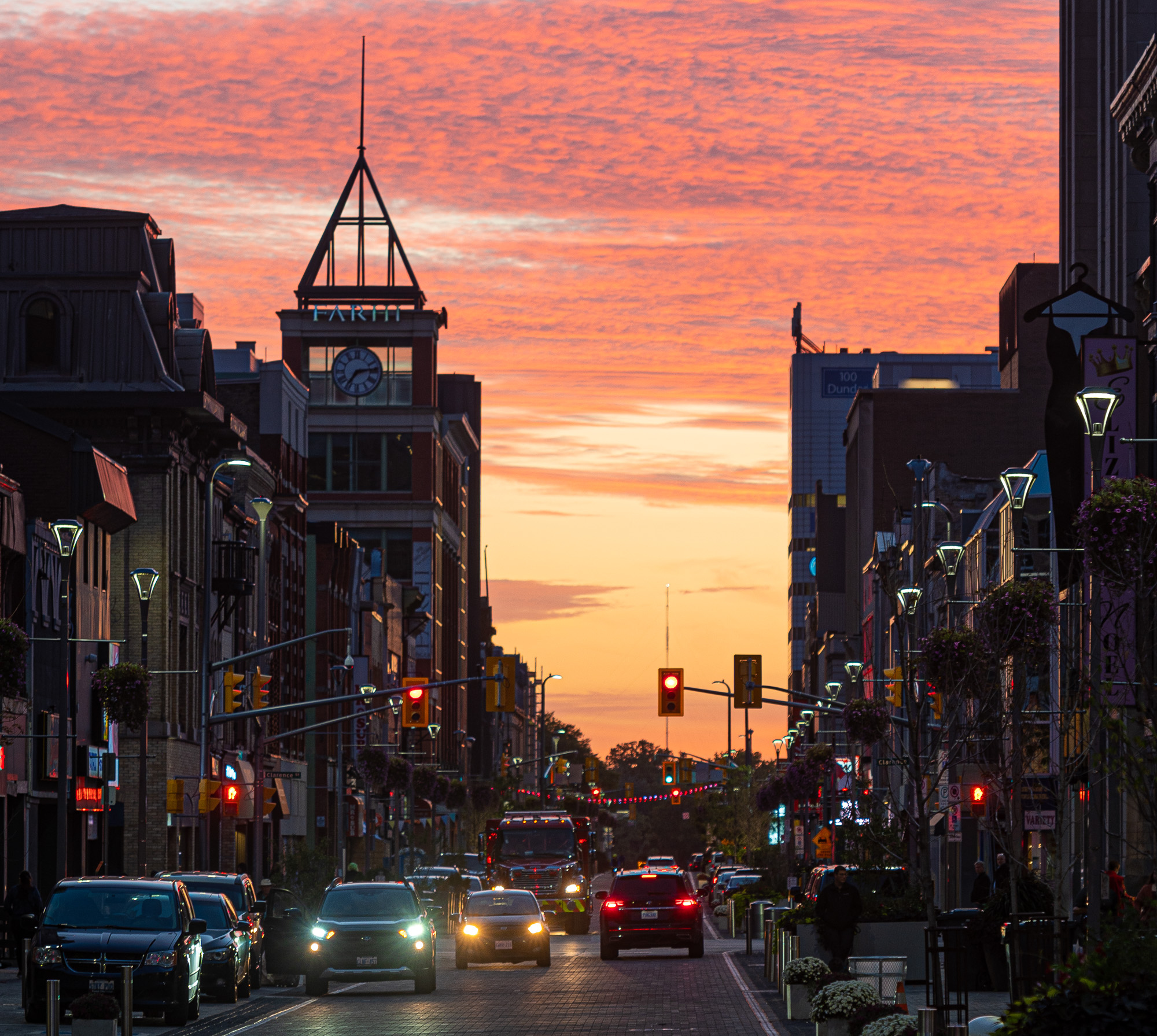
| The 54th DPS meeting was held in London, Ontario, Canada, home of University of Western Ontario. To the occasional confusion of institutional travel offices, this is a very different location than the original London, after which this one was named. |
Agency Night
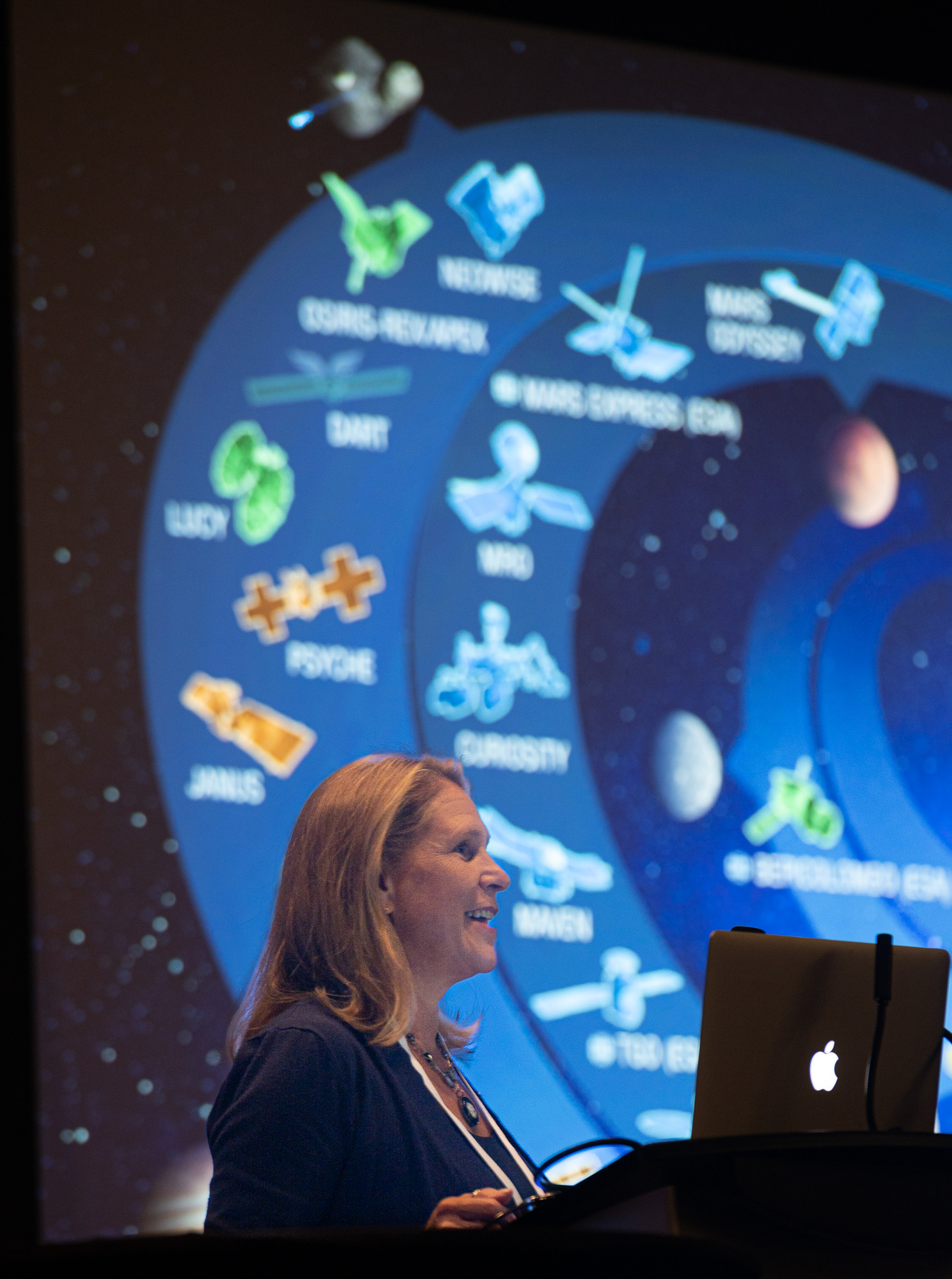
| Lori Glaze (NASA HQ) with that incredible fleet chart! At last count NASA had upward ot 30 active missions in the solar system listed. |
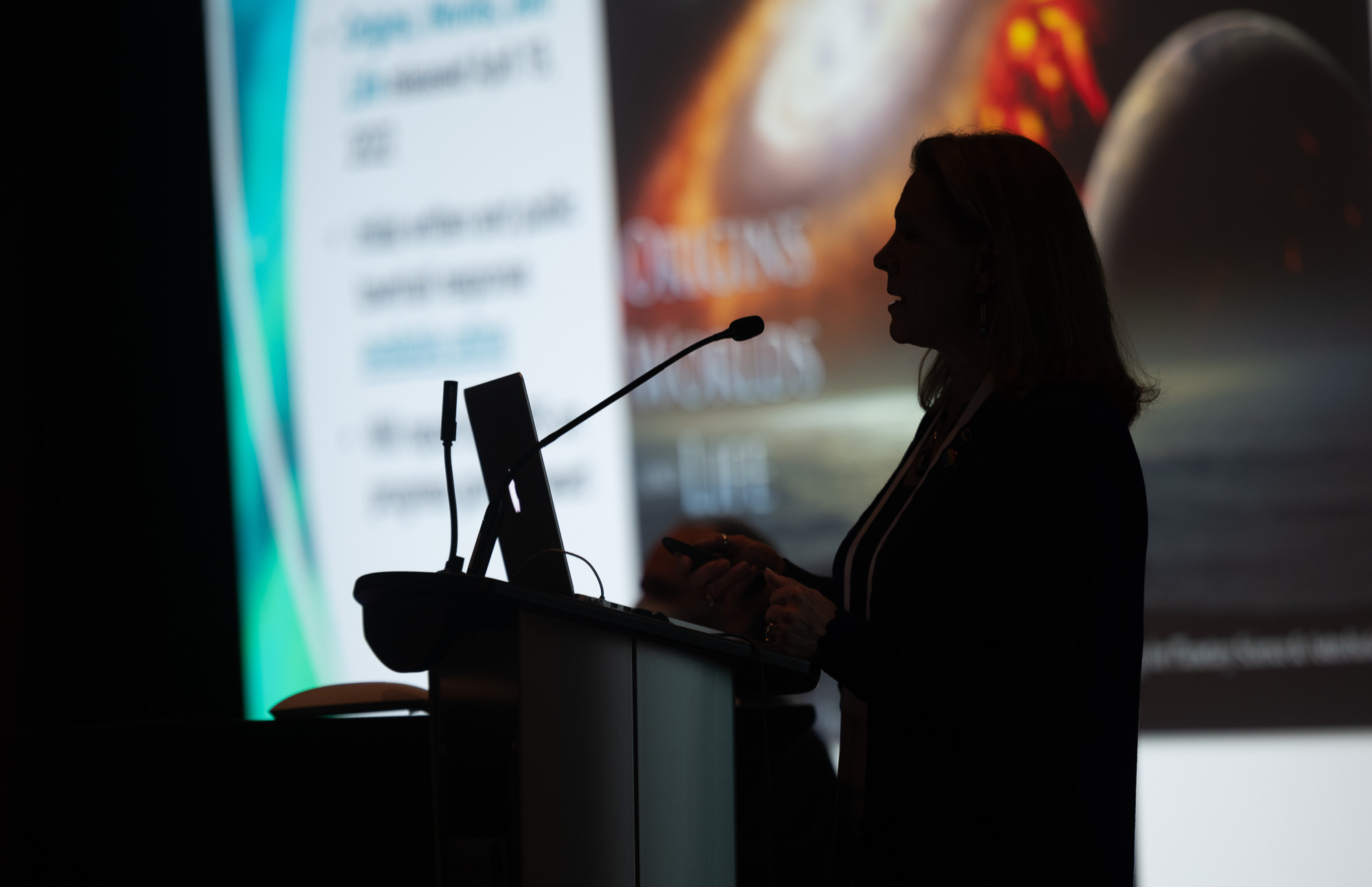
| Lori talks about the new Decadal Survey ('Origins, Worlds, and Life'), which gives input from the community to NASA for the next 10 years. |
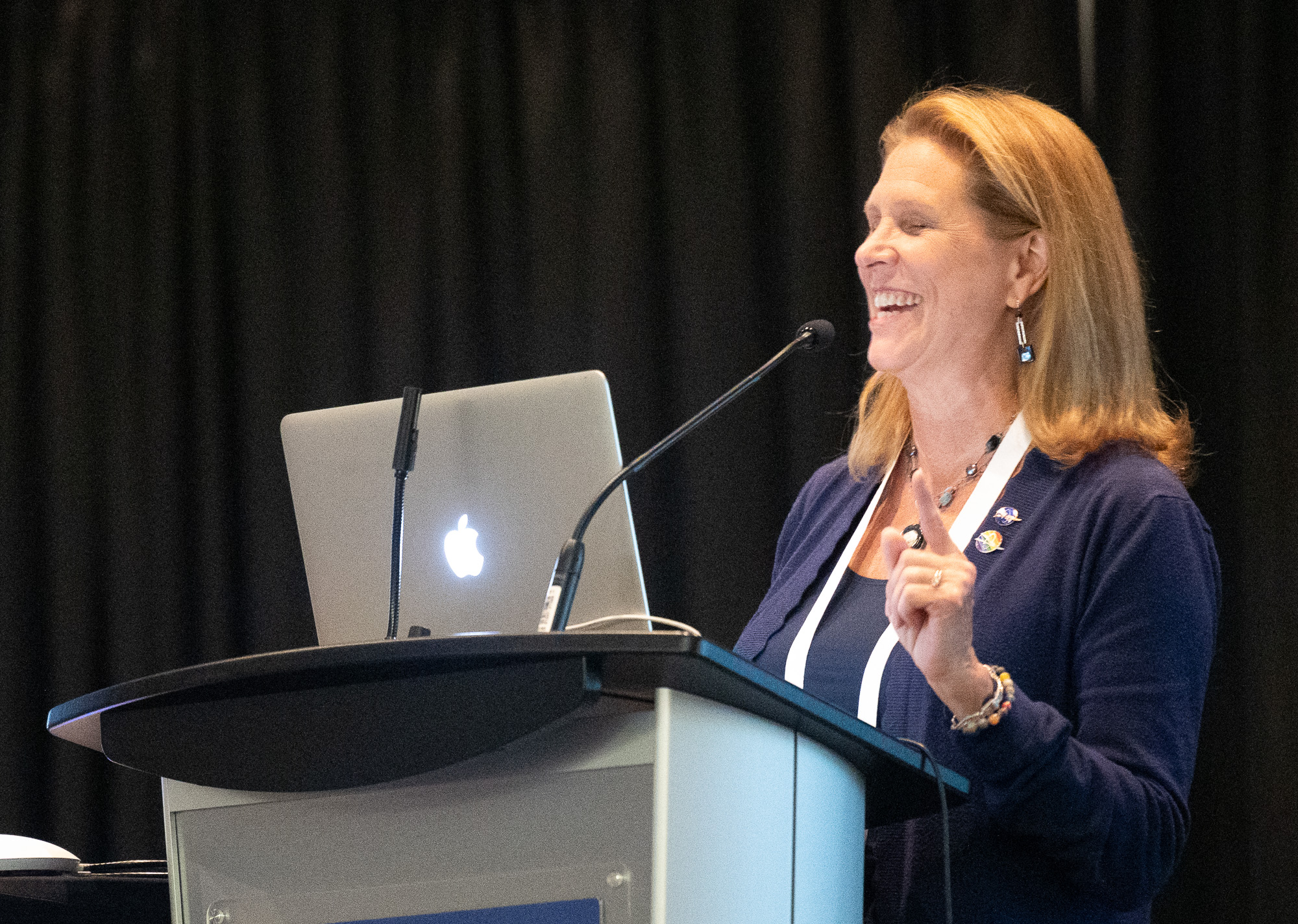
| Lori Glaze (NASA HQ). |
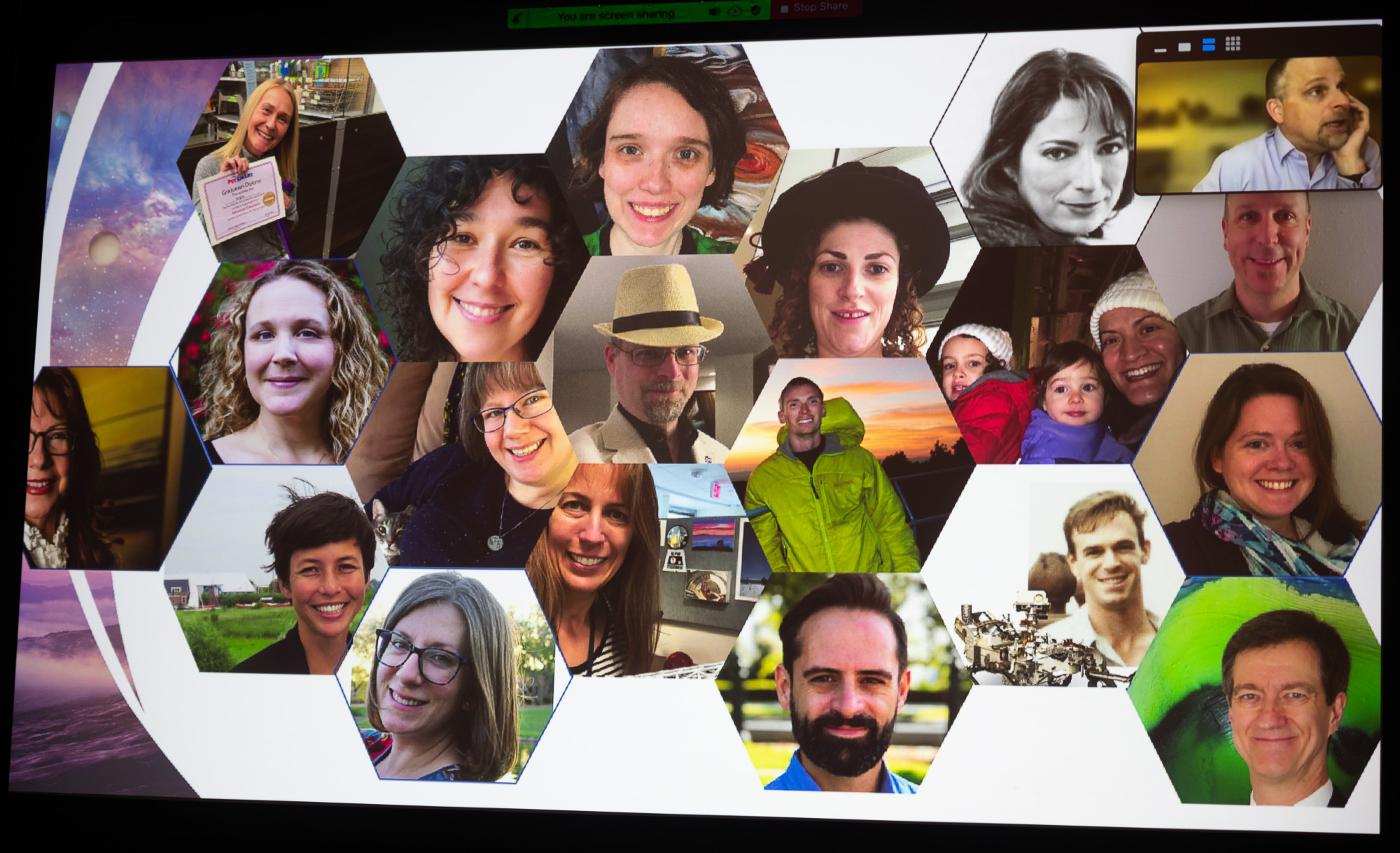
| OK, self-promotion time. Stephen Rinehart (NASA HQ) is giving a presentation on the Planetary Science Division's Research & Analysis group, including all of my amazing colleages. From left, to lower-right: Adriana Ocampo, Melissa Morris, Lindsay Hays, Megan Ansdell, Meagan Thompson, Sarah Noble (w/ cat), Amanda Nahm, Becky McCauley-Rench, Stephen Rinehart (in hat), Kelly Fast, Shoshana Weider (black hat), Henry Throop, Lucas Paganini, Doris Daou, Delia Santiago-Materese (w/ kids), Adrian Brown (w/ rover), Stephen Rinehart (inset), Aaron Burton, Kathleen Vander Kaaden, and Tom Statler. Together we run NASA's planetary grants programs, which fund the majority of research in the DPS community. |
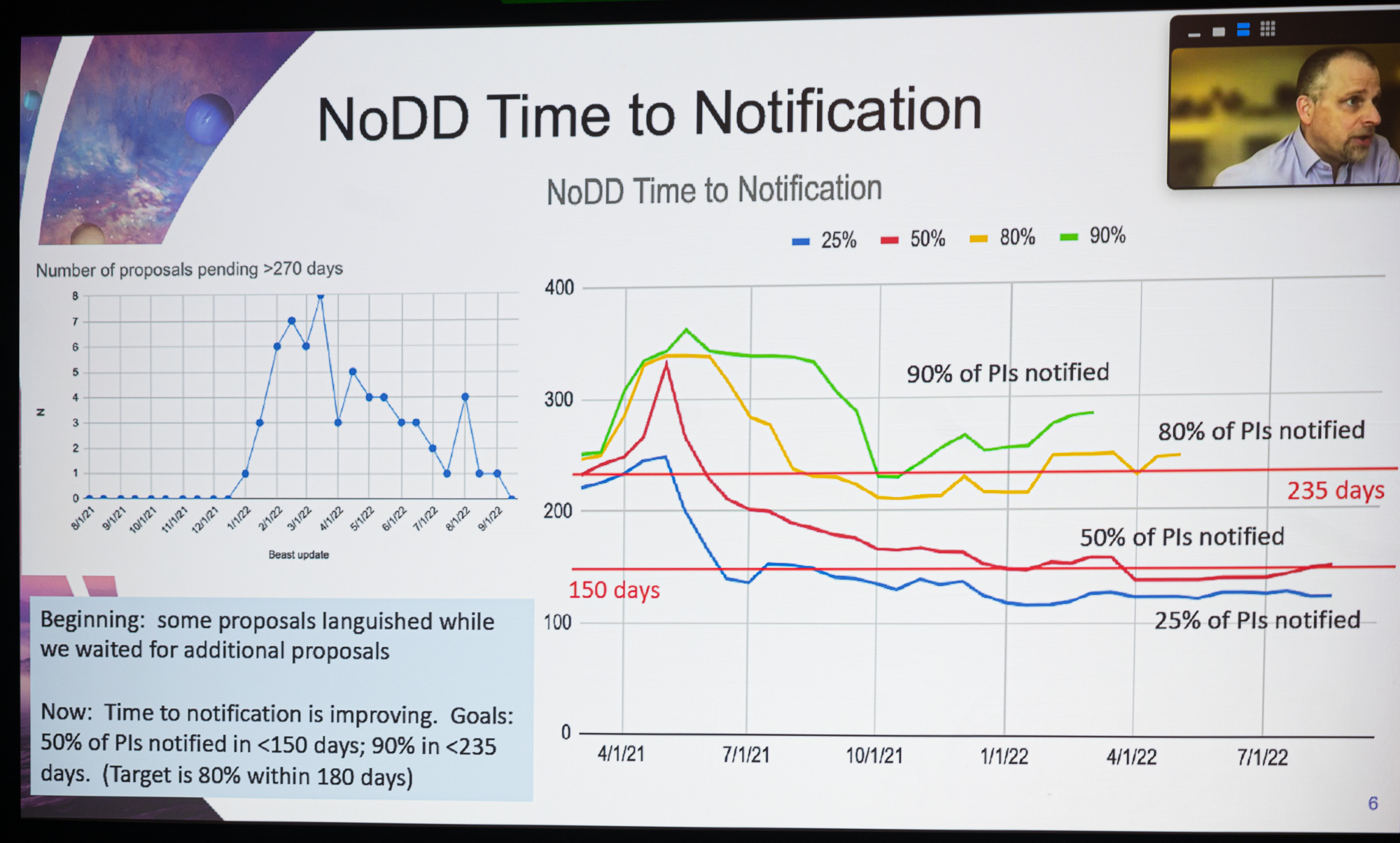
| Stephen Rinehart (NASA HQ R&A Lead) talks about the 'No Due Date' (NoDD) program that we've been implementing. |
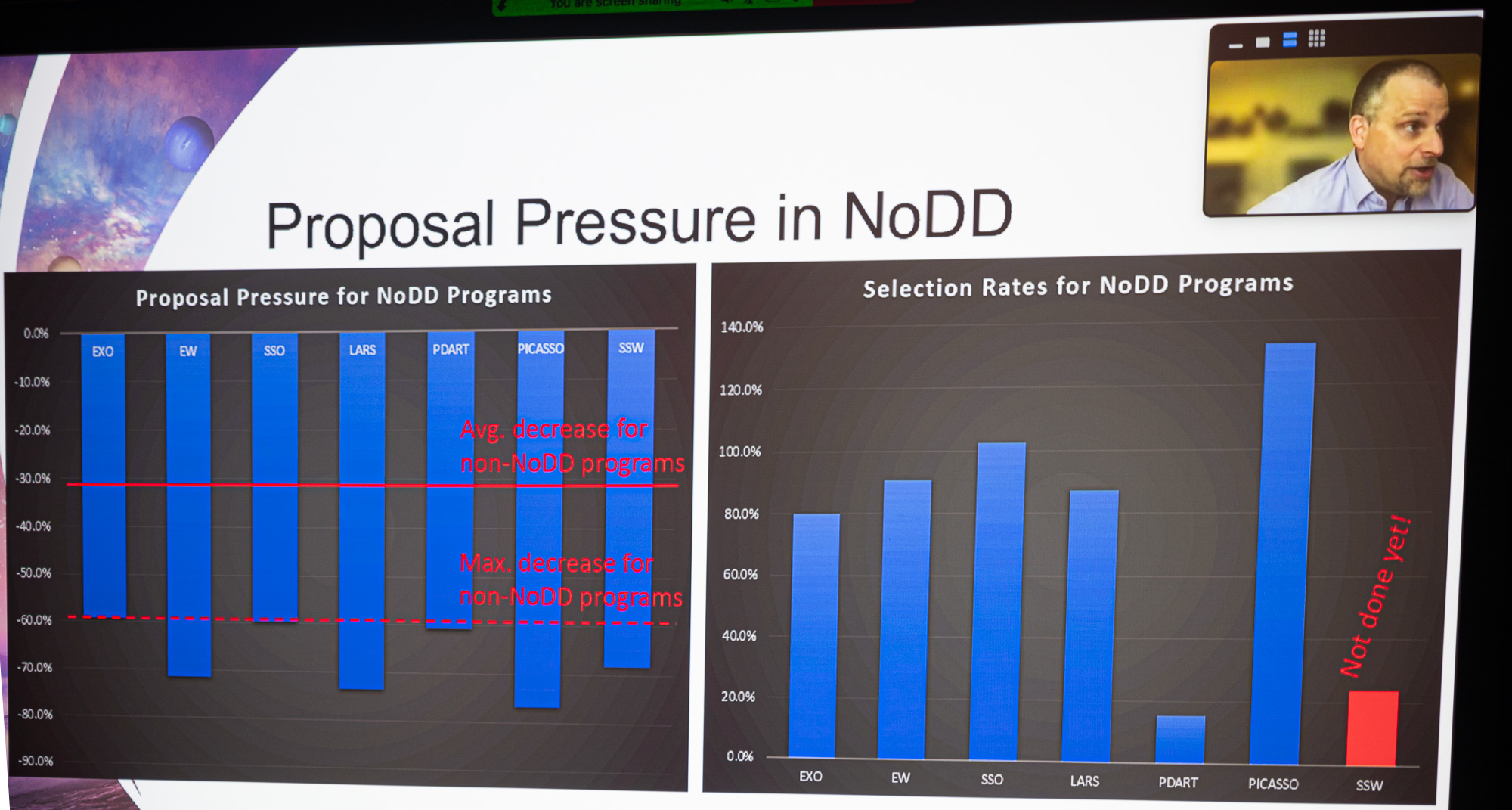
| Community take note: for reasons that we don't understand, proposal pressure is substantially down from what it was several years ago. We see this in nearly all programs, and even more in the NoDD programs. On the right, the plot shows that selection rates have increased (the percent is a fractional change, not the actual selection rate). |
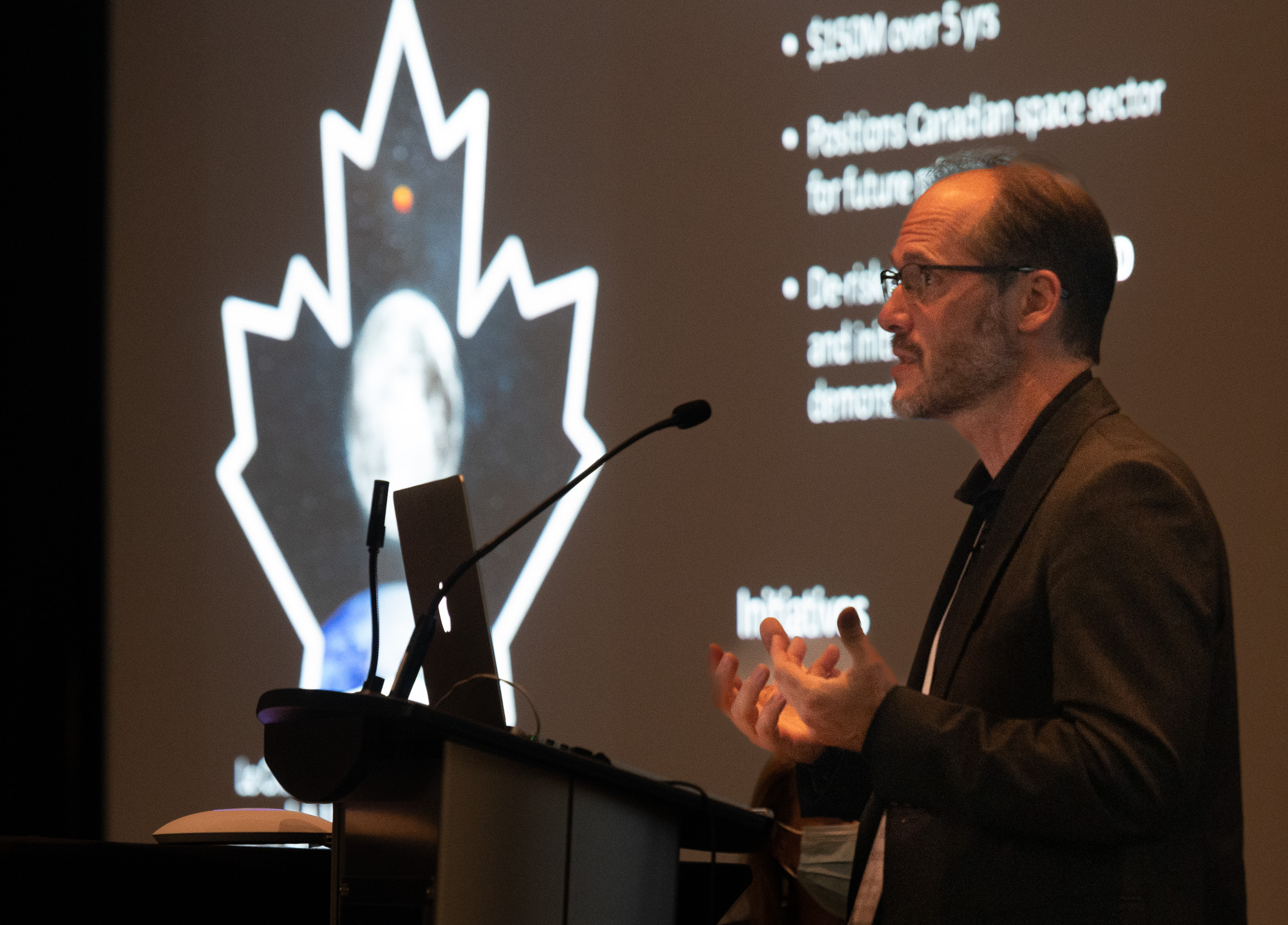
| Martin Bergeron (Canadian Space Agency), is the Director of Space Exploration Development. Canada has done a ton of collaboration with NASA and other agencies on space projects, and is a member of the European Space Agency (ESA). |
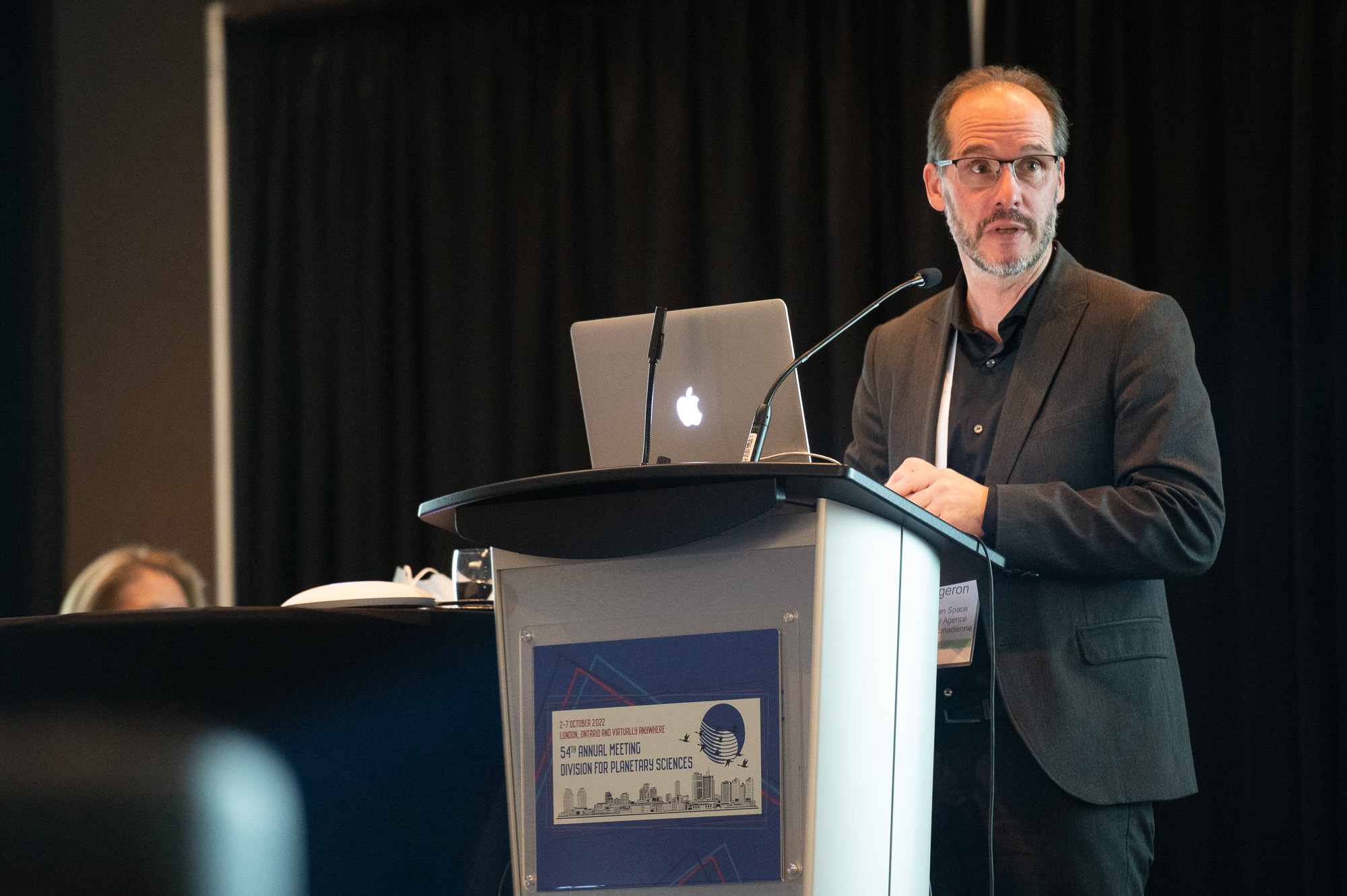
| Martin Bergeron (Canadian Space Agency). |
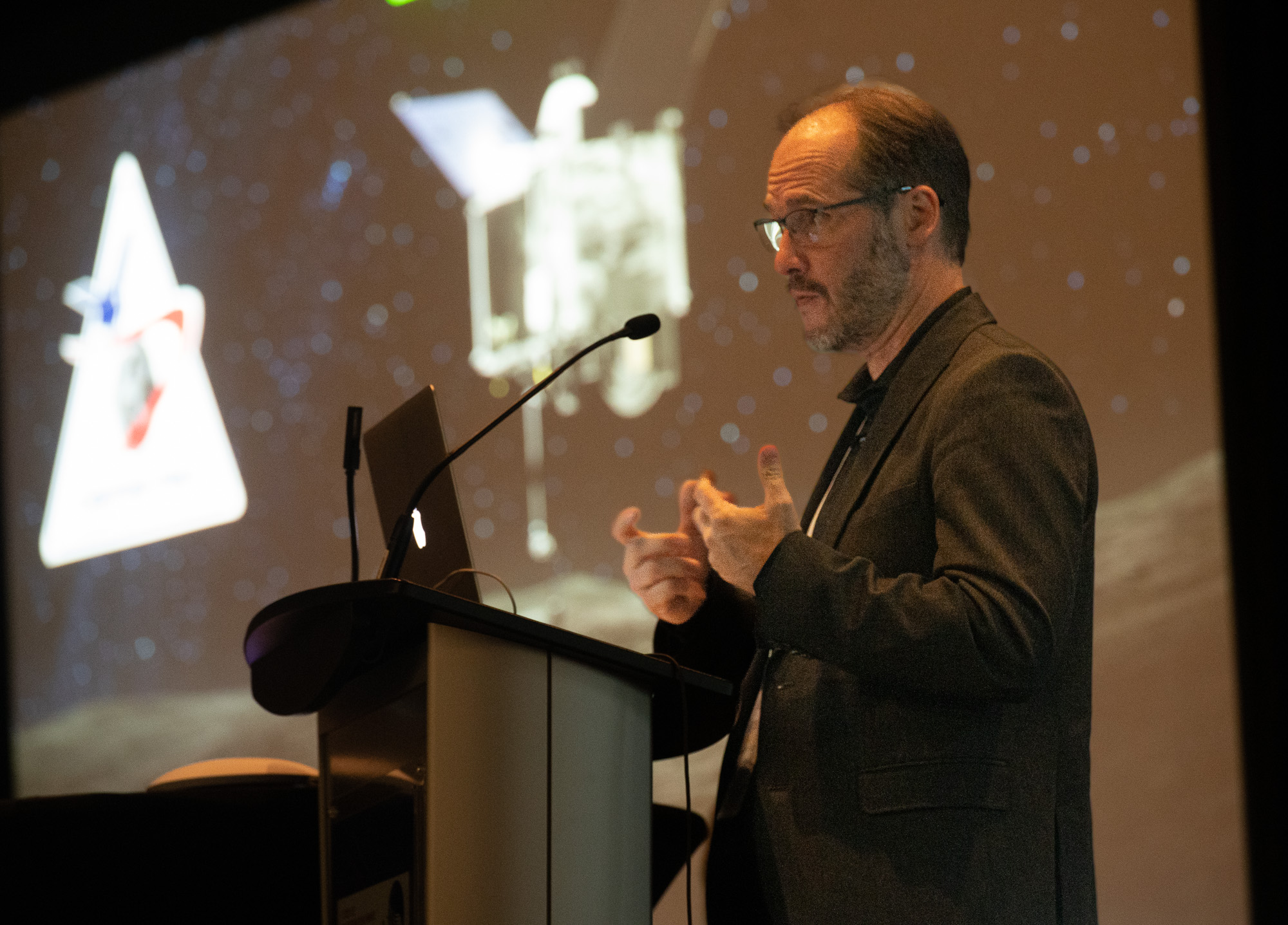
| Martin Bergeron (Canadian Space Agency) describes how Canada built the OLA = OSIRIS-REx Laser Altimeter. |
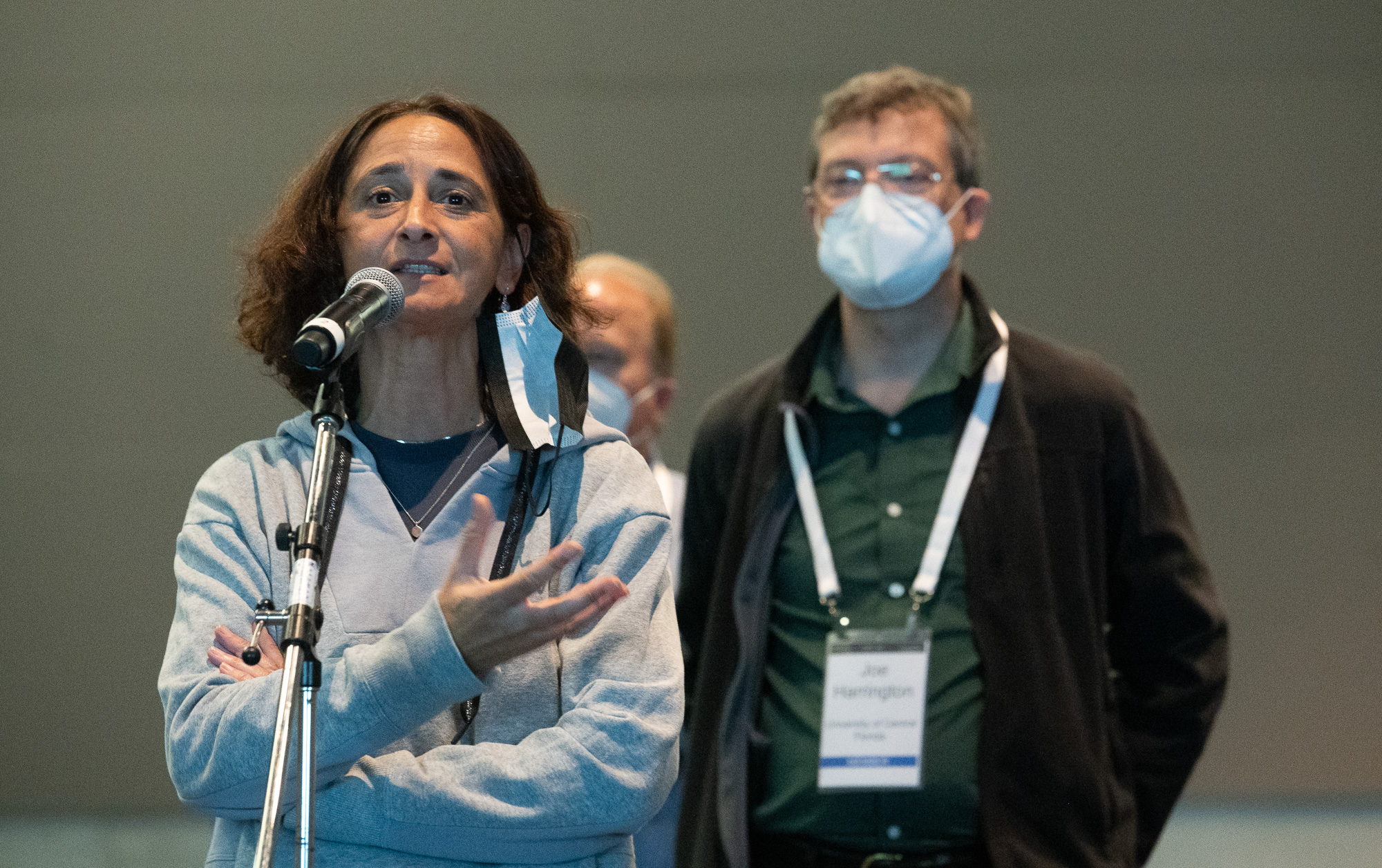
| Noemi Pinilla-Alonso (UCF) asks a question, followed by Joe Harrington (also UCF). |
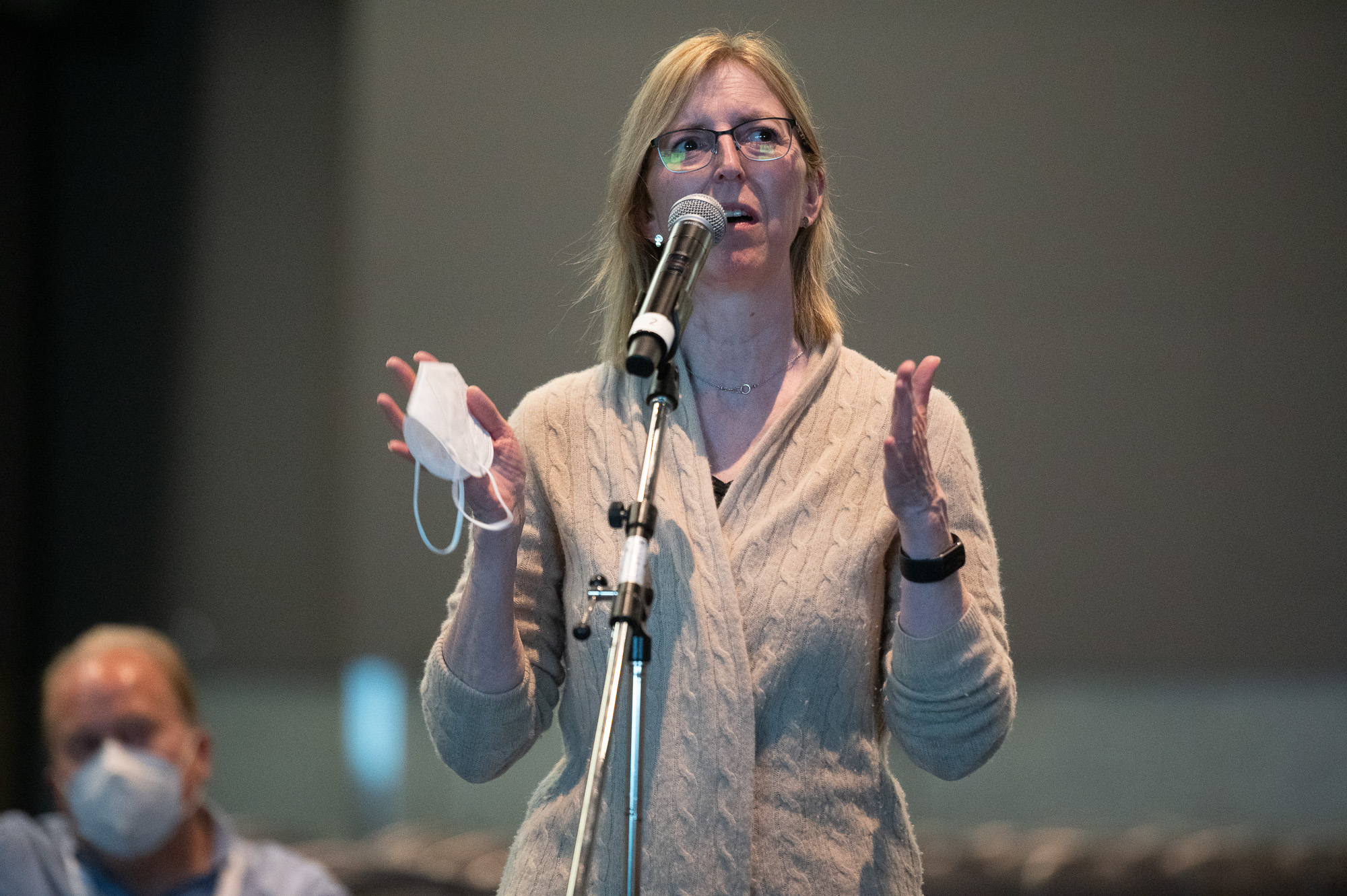
| Louise Prockter (LPI). |
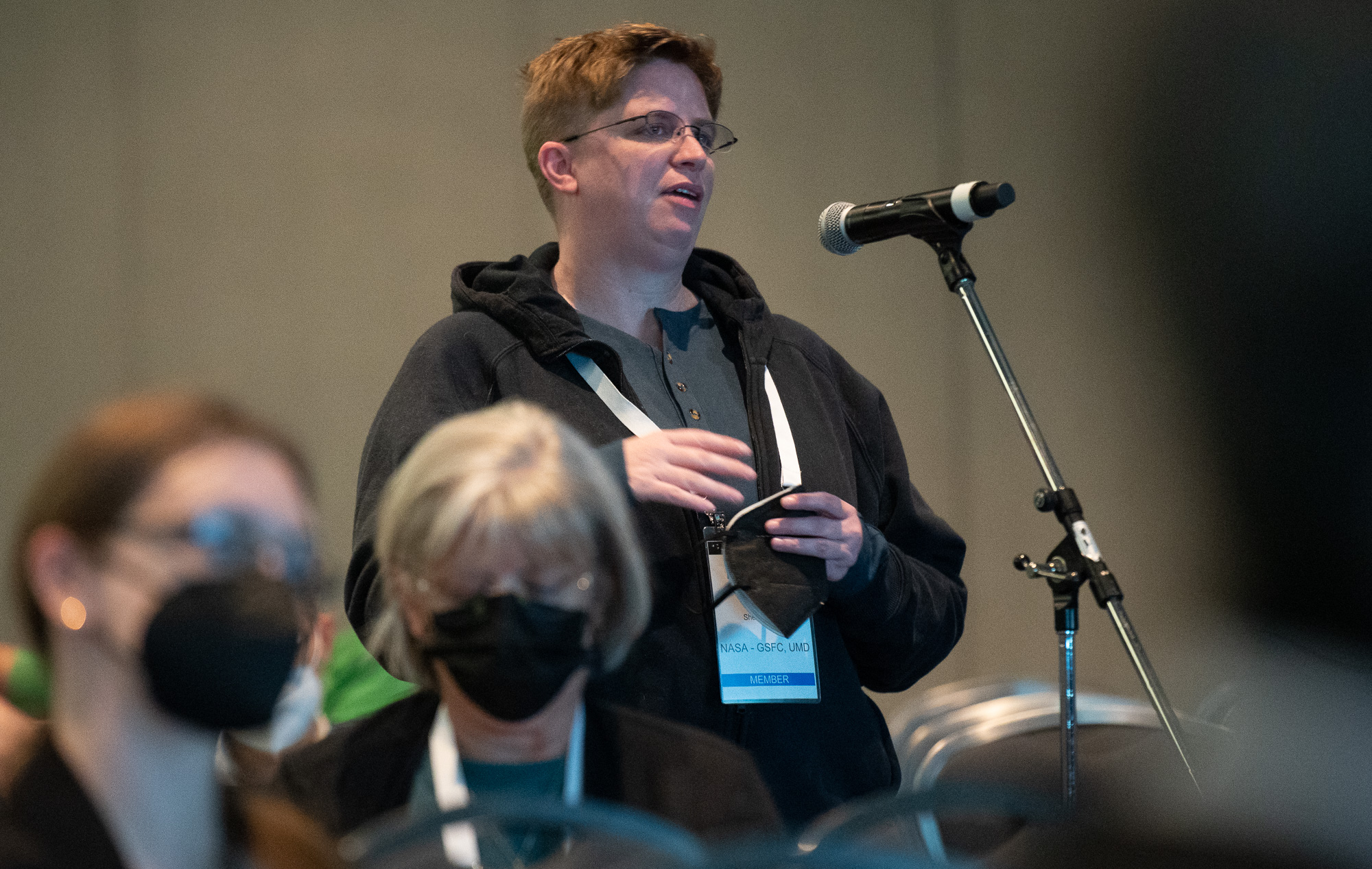
| Meredith Elrod (GSFC) at the mic. |
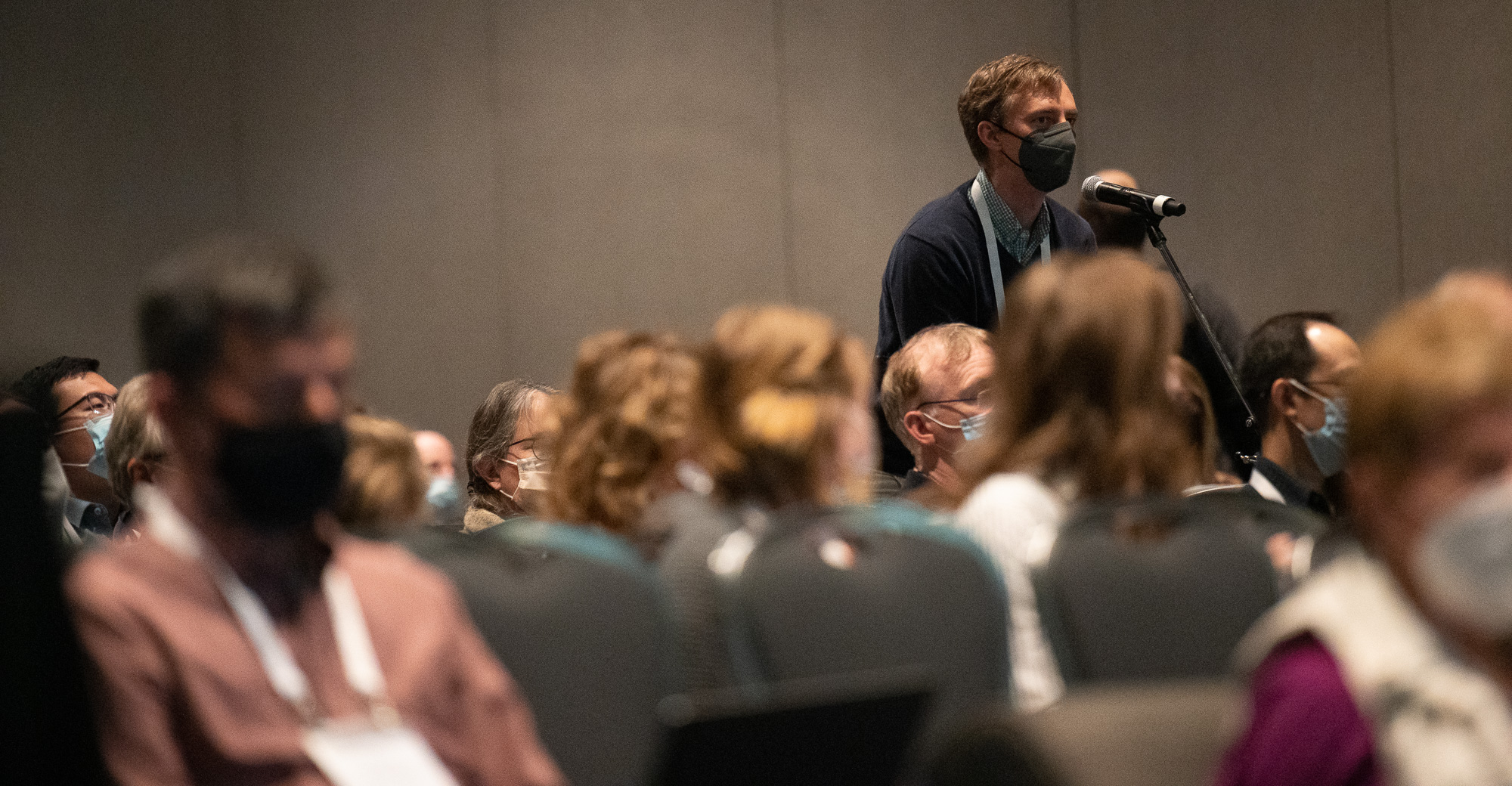
| David Minton (Purdue) asks a question. |
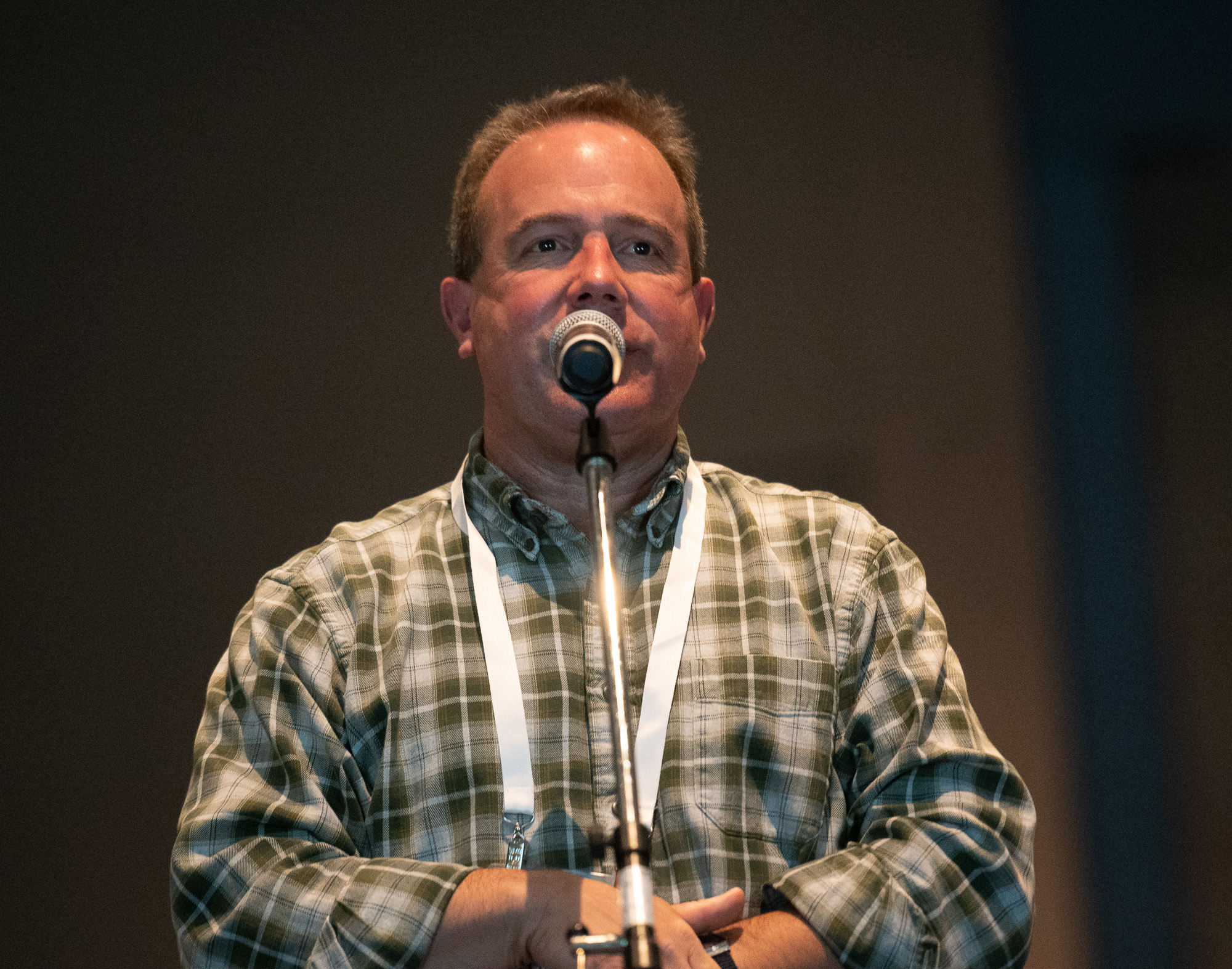
| Eliot Young (SwRI) asks a fascinating question. |
Press Conference
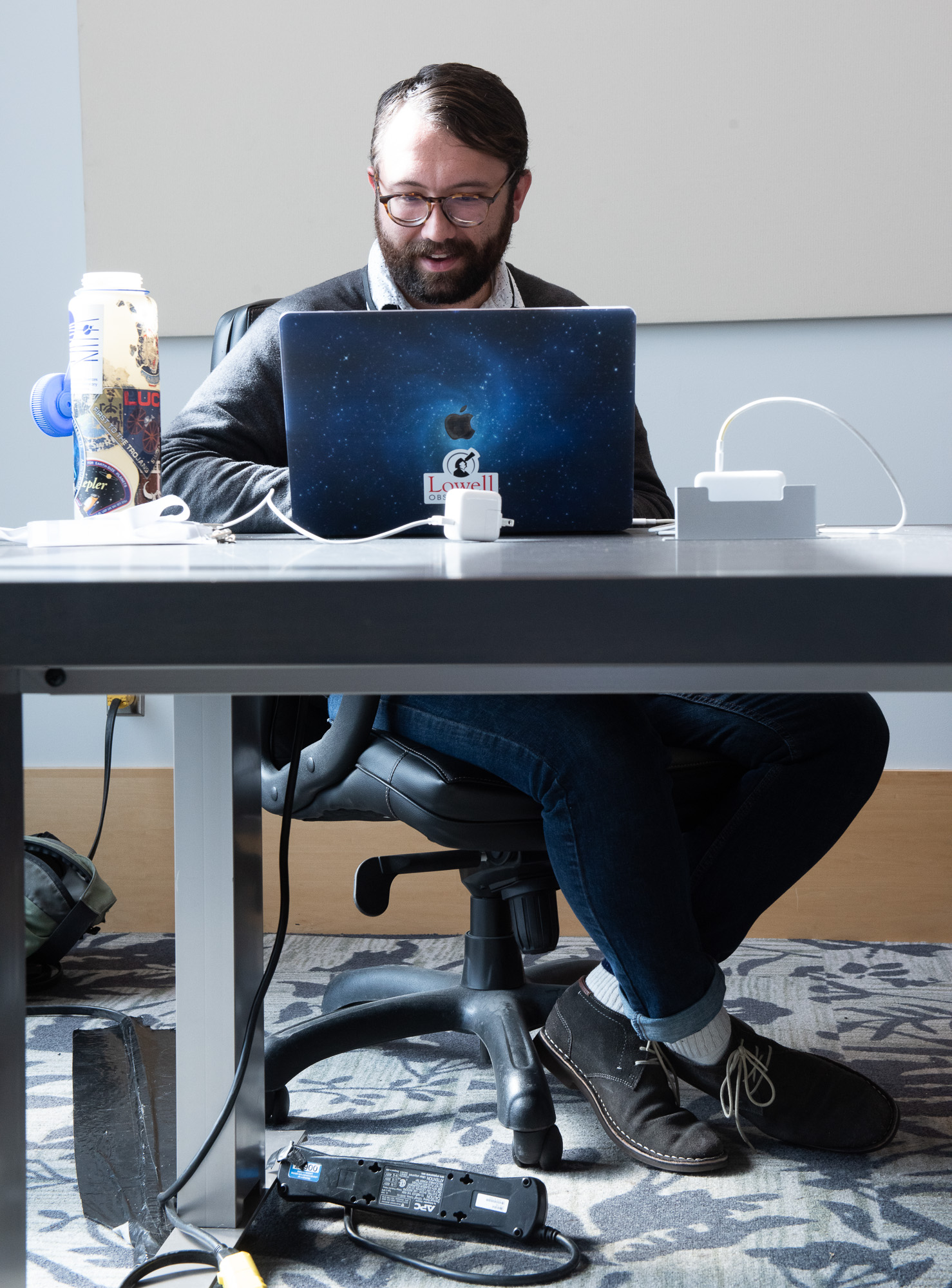
| Teddy Kareta (Lowell) is the DPS's press secretary. The DPS had two press conferences this year, both virtual. |
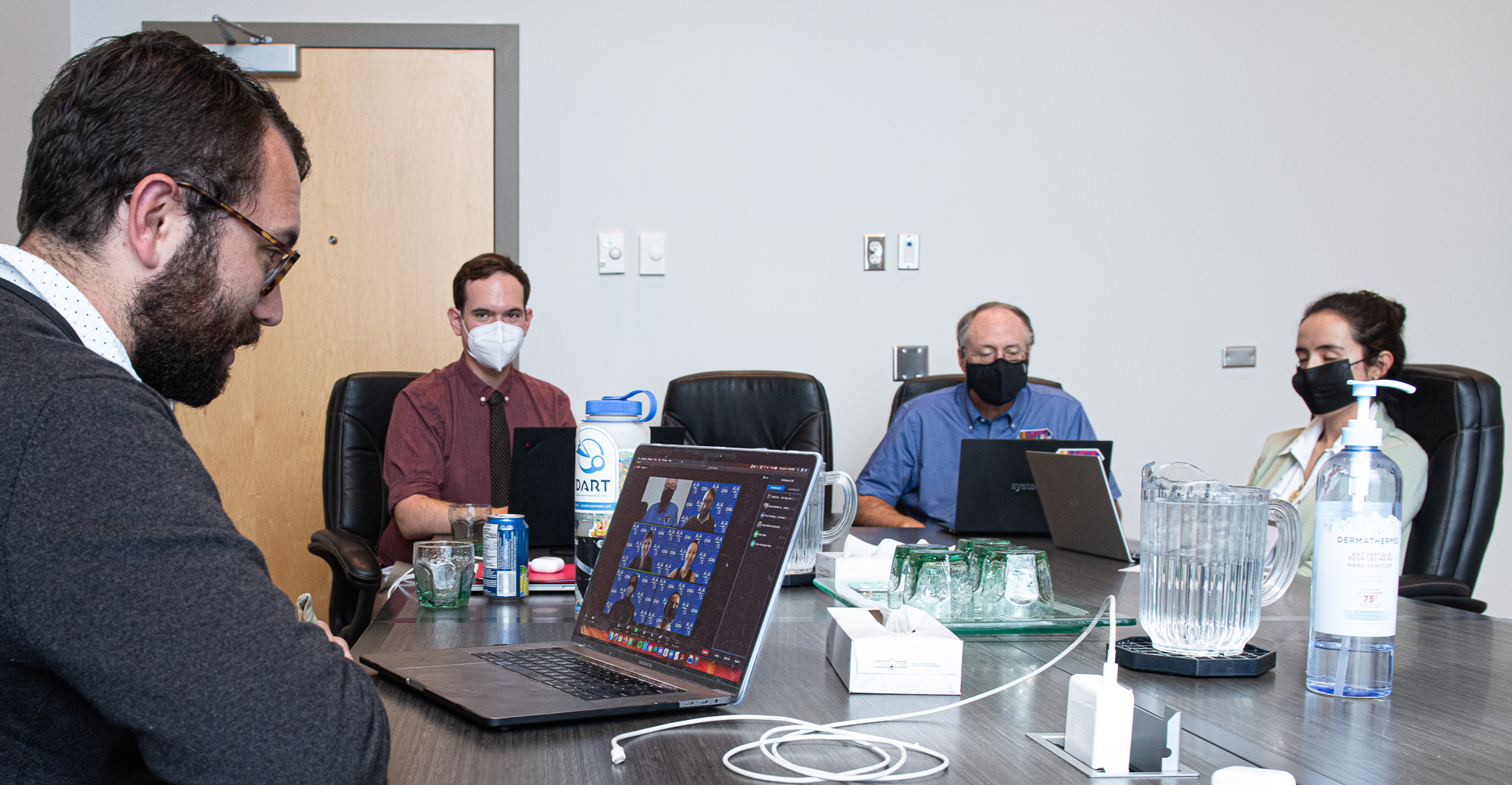
| The DPS press conference is underway! With Teddy Kareta, Adam Battle, Marc Buie, and Olga Harrington Pinto. |
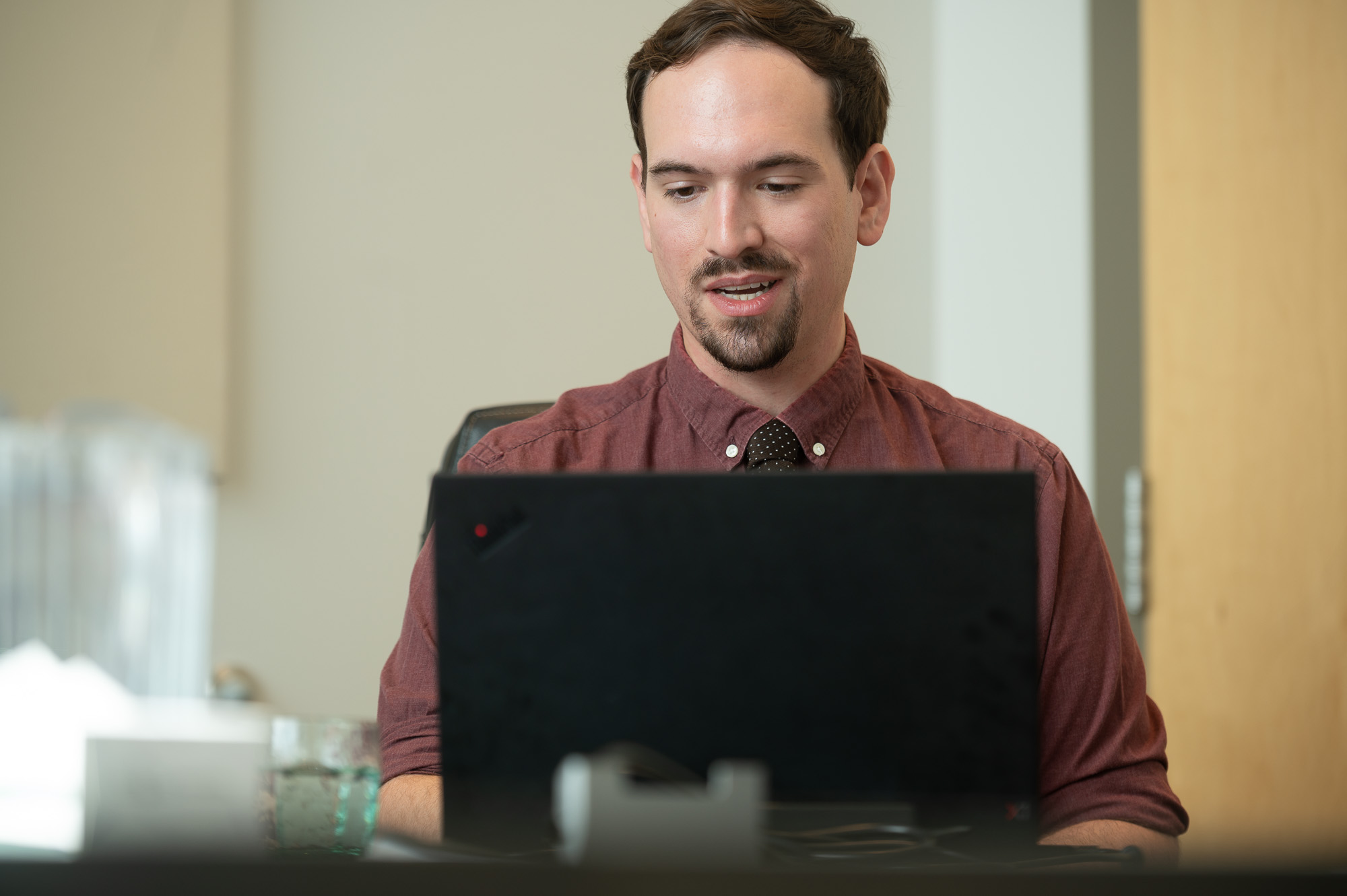
| Adam Battle (Arizona) talk at the press conference about shock-darkening of asteroids (press release), as observed from LPL's roof-top observatory in the middle of Tucson. |
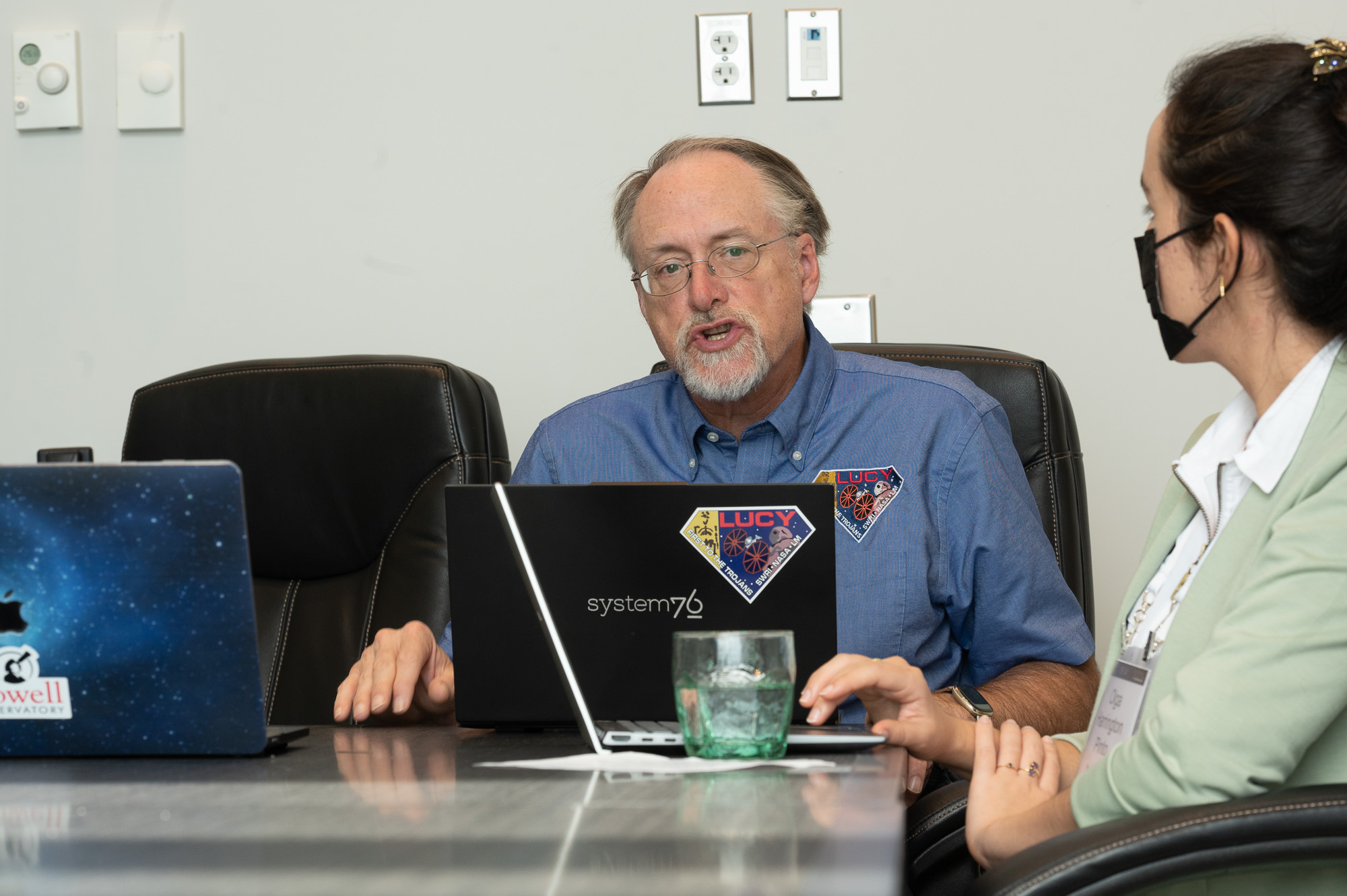
| Marc Buie (SwRI) talks about stellar occultations of Lucy target Polymele, at the DPS press conference. |
|
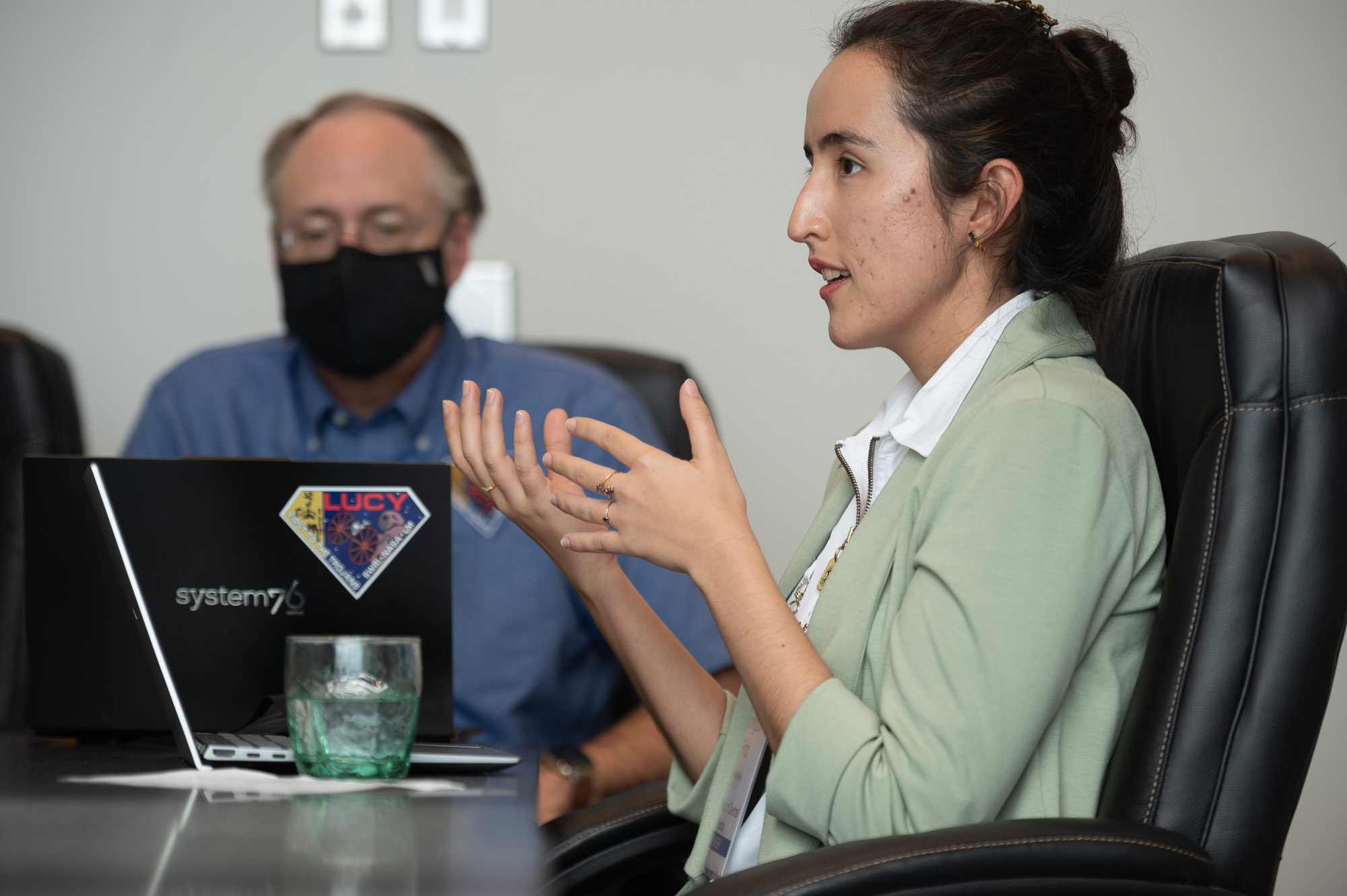
| Olga Harrington Pinto (UCF) talks about gas production in comets, and measurements of CO vs CO2 vs H2O, at the DPS press conference. |
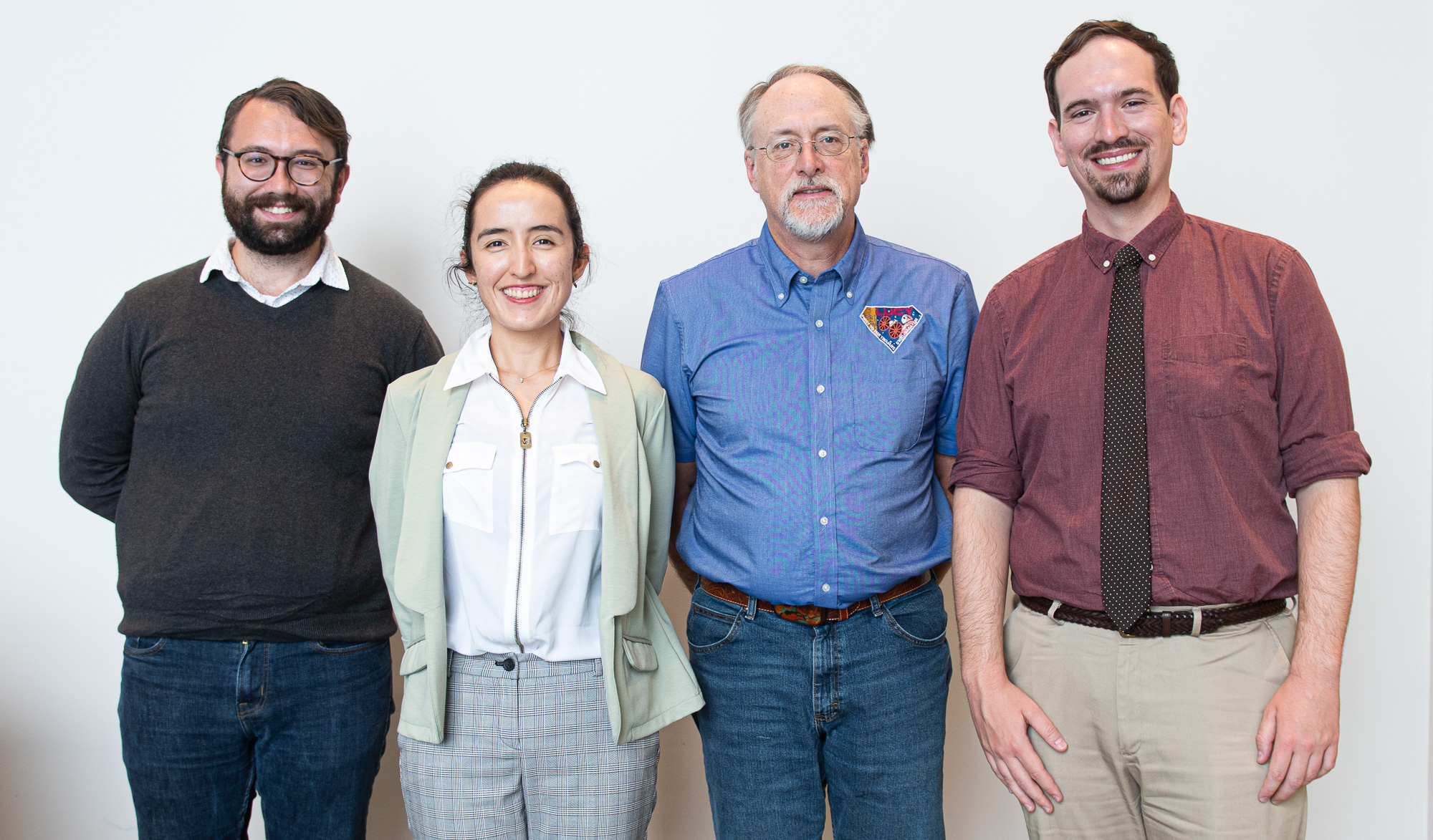
| DPS Press Secretary Teddy Kareta (Lowell), with press conference presenters Olga Harrington Pinto (UCF), Marc Buie (SwRI), and Adam Battle (Arizona). |
Prize Talks
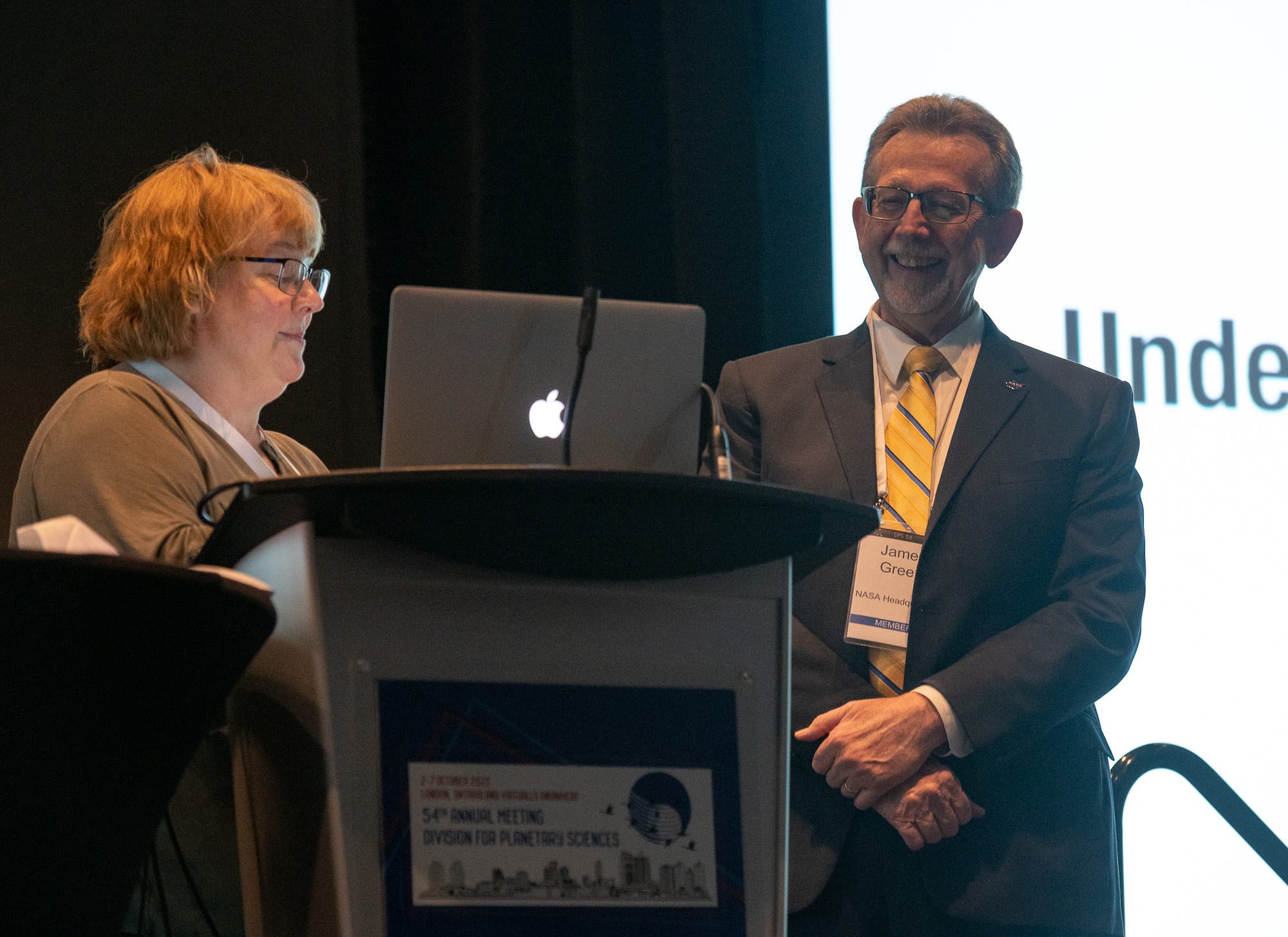
| Jim Green (retired, NASA HQ, Chief Scientist and former director of the Planetary Science Division) gets the Harold Masursky Award for Meritorious Service to Planetary Science. Yay!! DPS Chair Diana Blaney (JPL) presents. |

| Jim Green (NASA HQ, Chief Scientist and former director of the Planetary Science Division) gets the Harold Masursky Award for Meritorious Service to Planetary Science. Yay!! DPS Chair Diana Blaney (JPL) presents. |
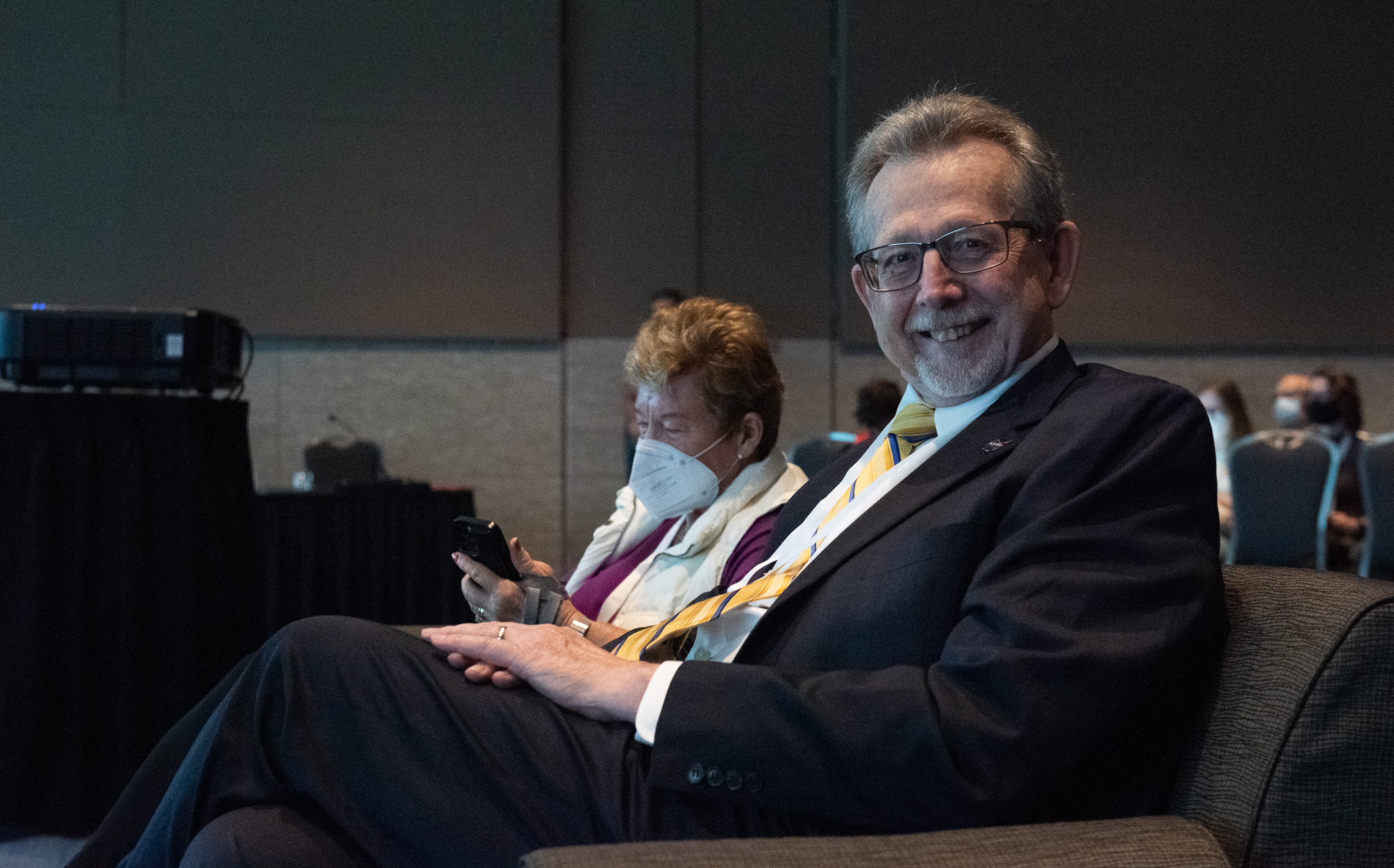
| Jim Green (retired, NASA HQ) with Pat Beauchamp (JPL). Jim: "So did I tell you about this paper I'm writing? It's a new way to terraform Mars. So the main thing you gotta do is prevent atmospheric loss. And on Mars, you can actually do that by inducing a current at four key locations. That gonna create a magnetosphere, and it's gonna prevent the solar wind from getting down to the surface entirely. And it will totally stop atmospheric loss! And for how to actually generate the field... that's gonna be the second paper." |

| Pat Beauchamp (JPL) and Jim Green (retired, NASA HQ). |
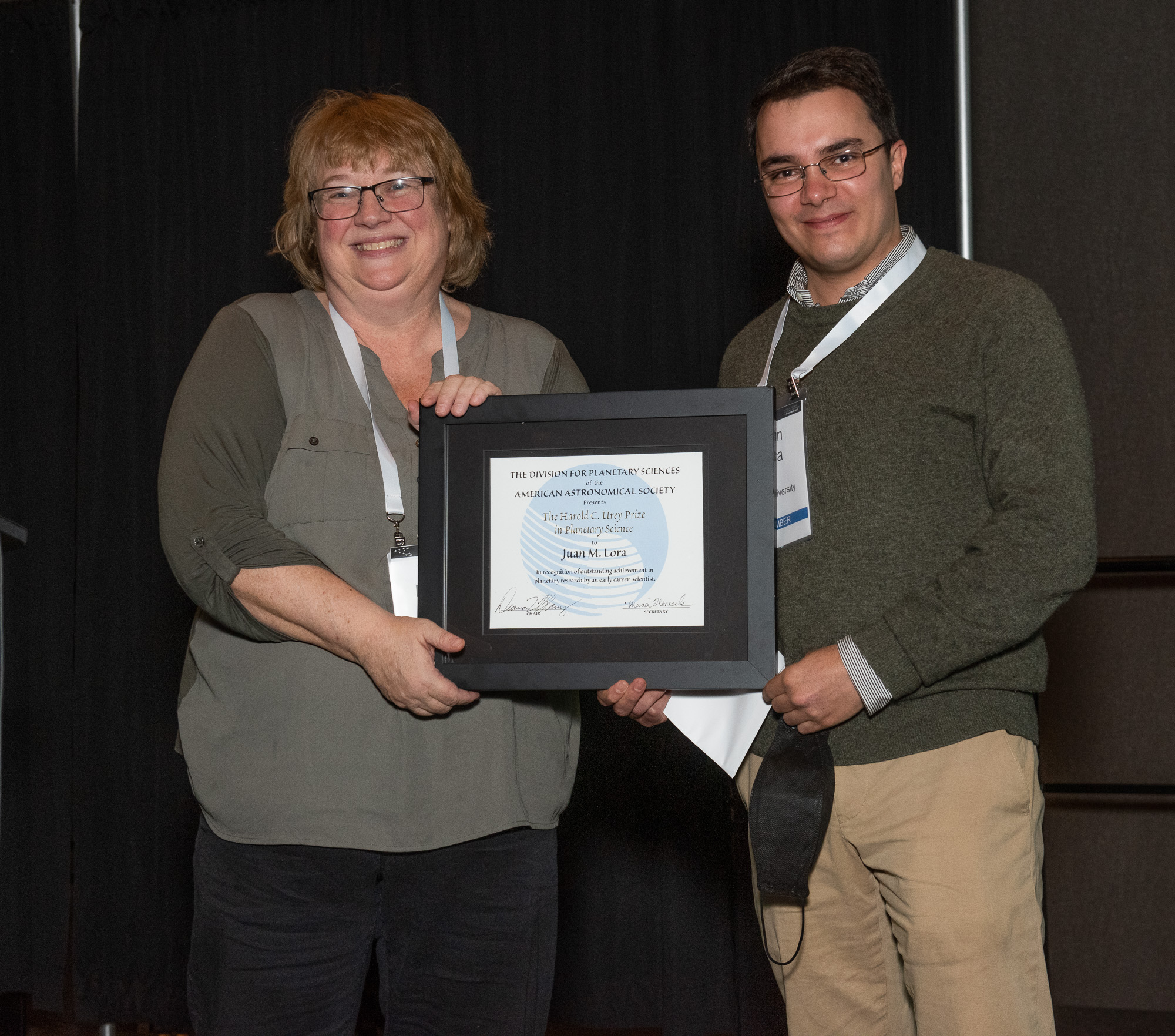
| Juan Lora (Yale) receives the Urey Prize from DPS Chair Diane Blaney (JPL). Juan's work focuses on the use of Titan global climate models (GCMs), in addressing questions about rivers, hazes, and sub-surface reservoirs on Titan. |
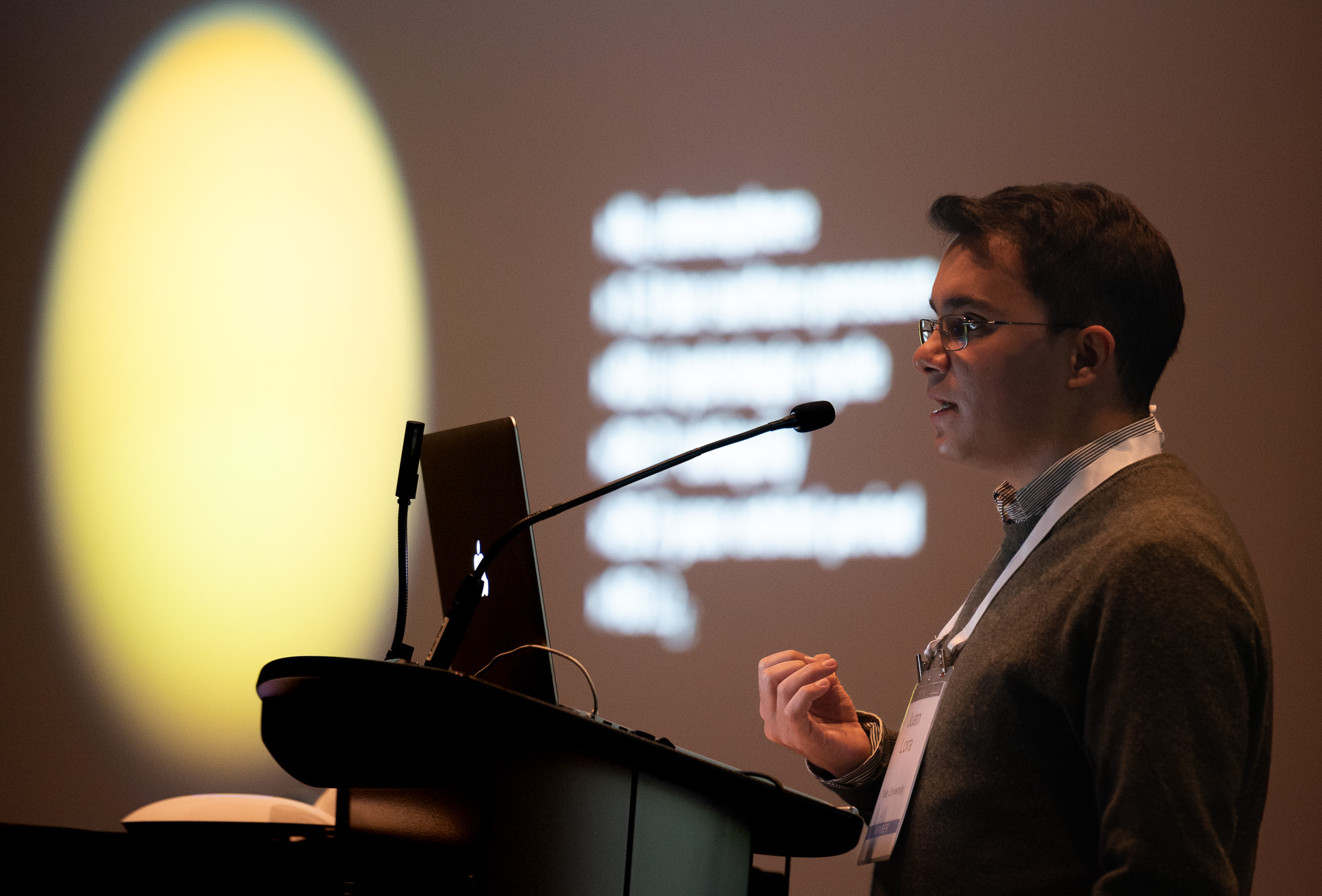
| Juan Lora (Yale) gives the Urey lecture, in front of a giant Titan. |
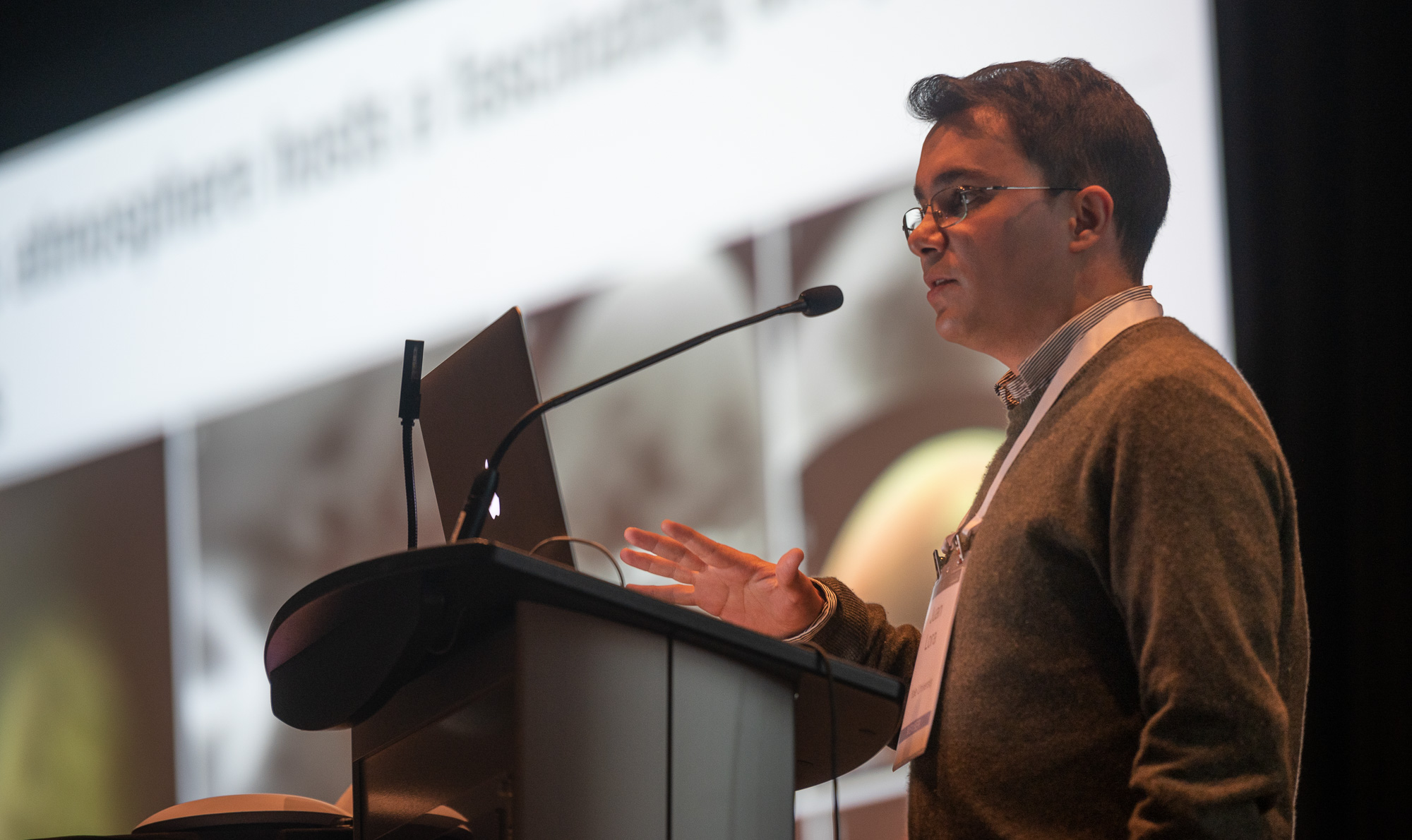
| Juan Lora (Yale) gives the Urey lecture about Titan circulation. |
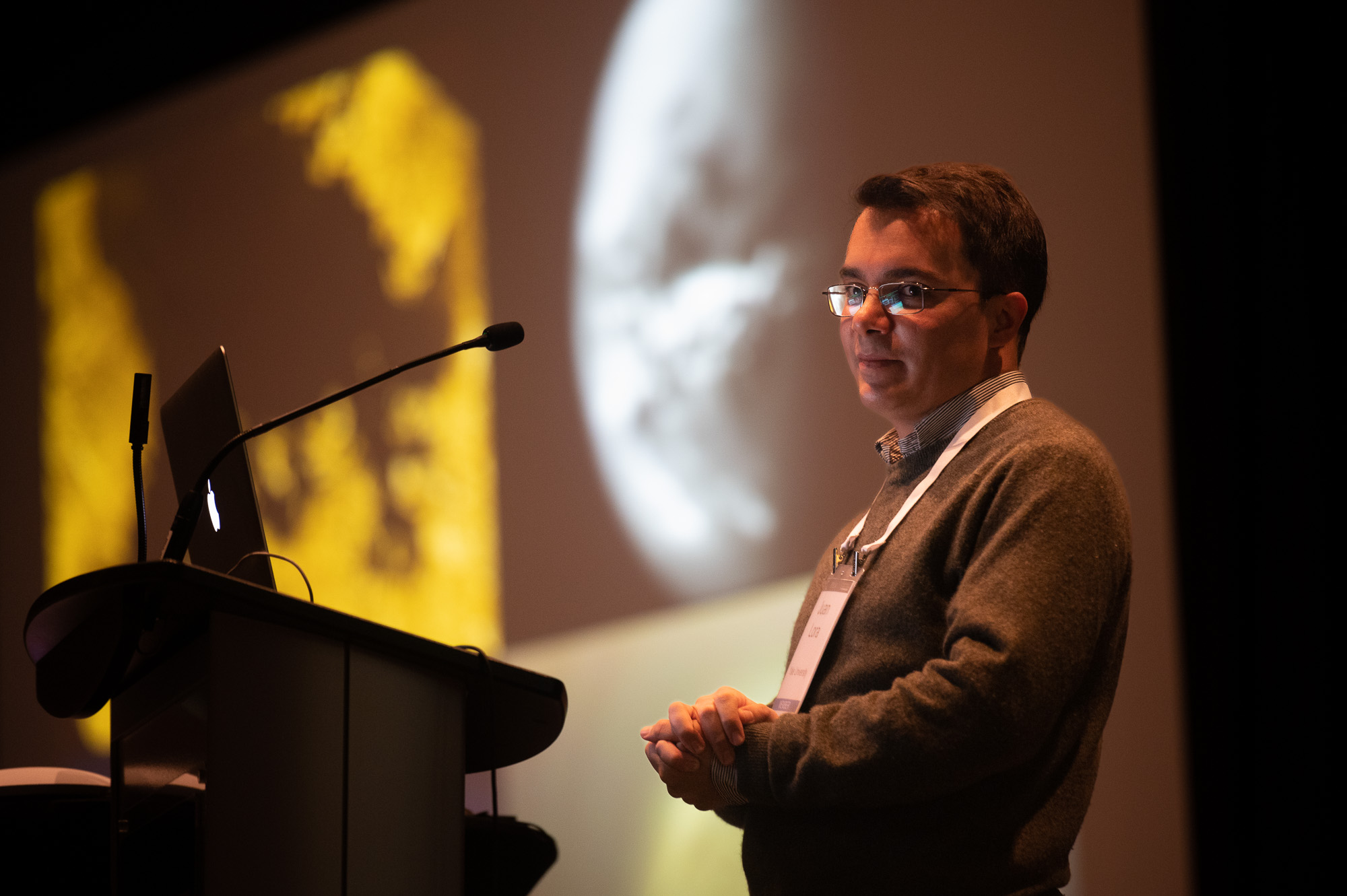
| Juan Lora (Yale) gives the Urey lecture. |
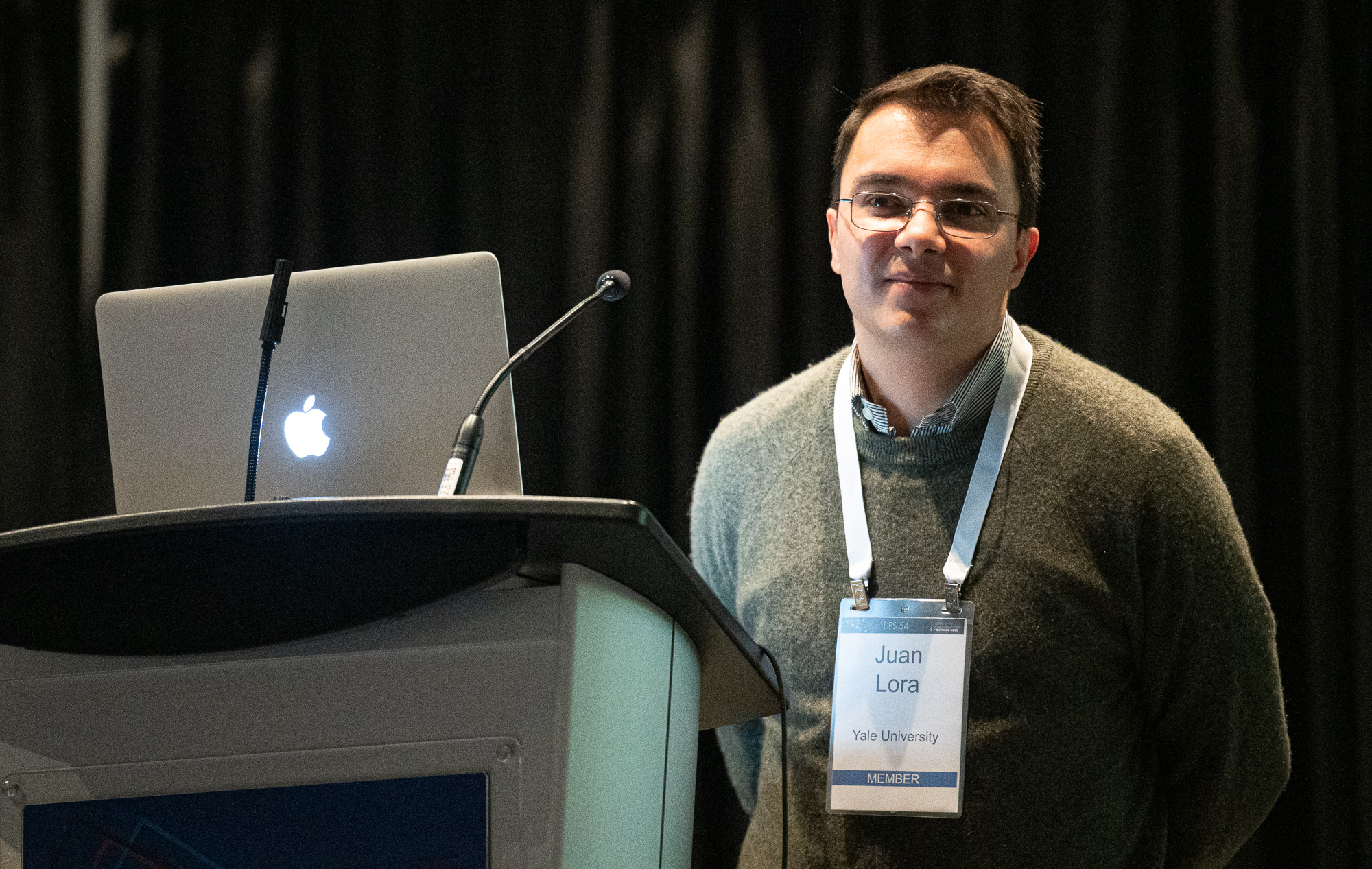
| Juan Lora (Yale) answers some questions about Titan after his Urey Prize lecture. |
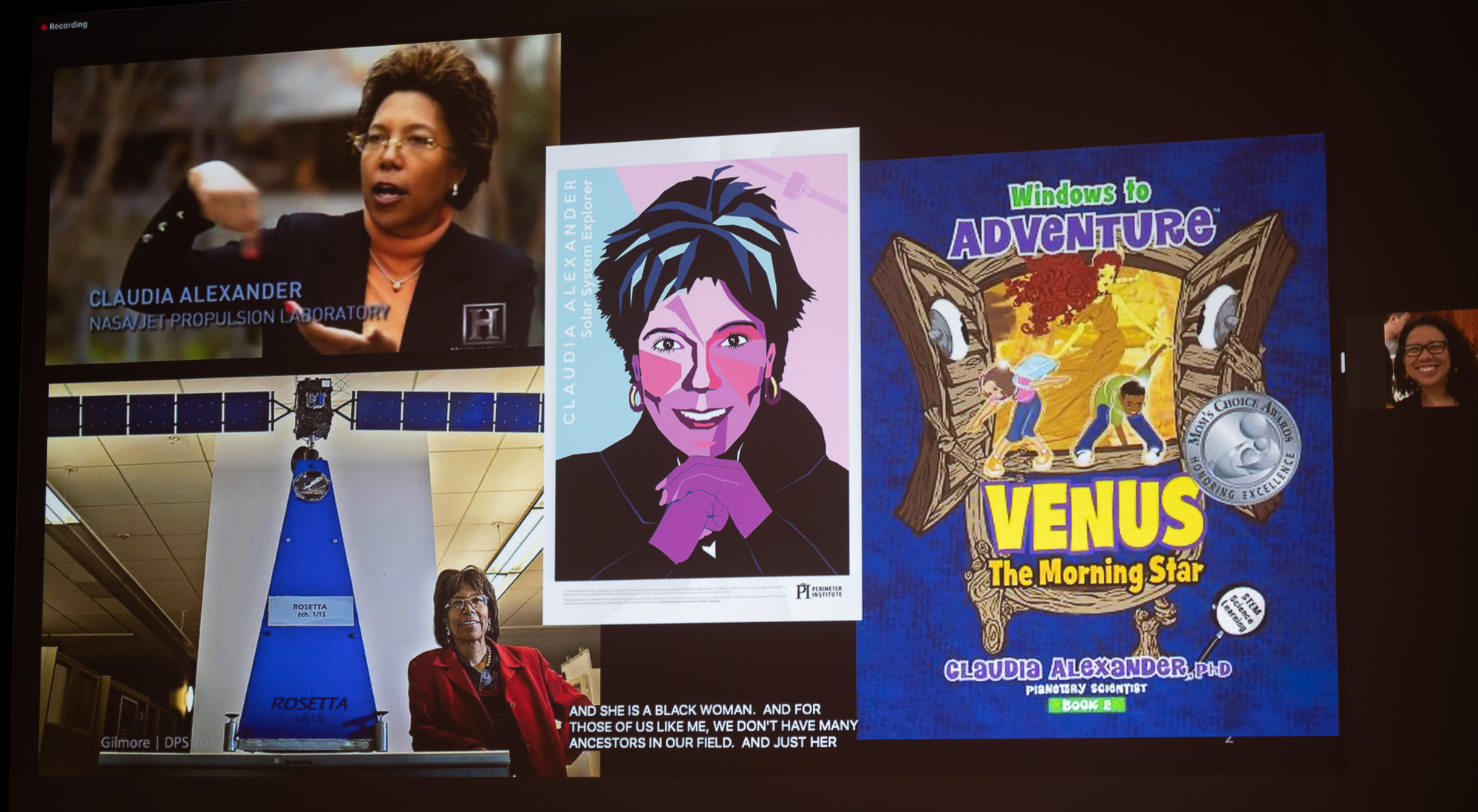
| Martha Gilmore (Wesleyan -- presenting remotely) gives the Claudia Alexander prize lecture, given to a mid-career scientist "who has made and continues to make outstanding contributions that have significantly advanced our knowledge of planetary systems, including our solar system." Claudia Alexander was the project mananger for the Galileo mission, and had big roles on Cassini and Rosetta, before passing away in 2015. She was one of the first 20 African American women with a PhD in astronomy / physics. Marty's work focuses on Venus geology, and the composition, age, and weathering of different surface features, and how they relate to volcanic activity. |
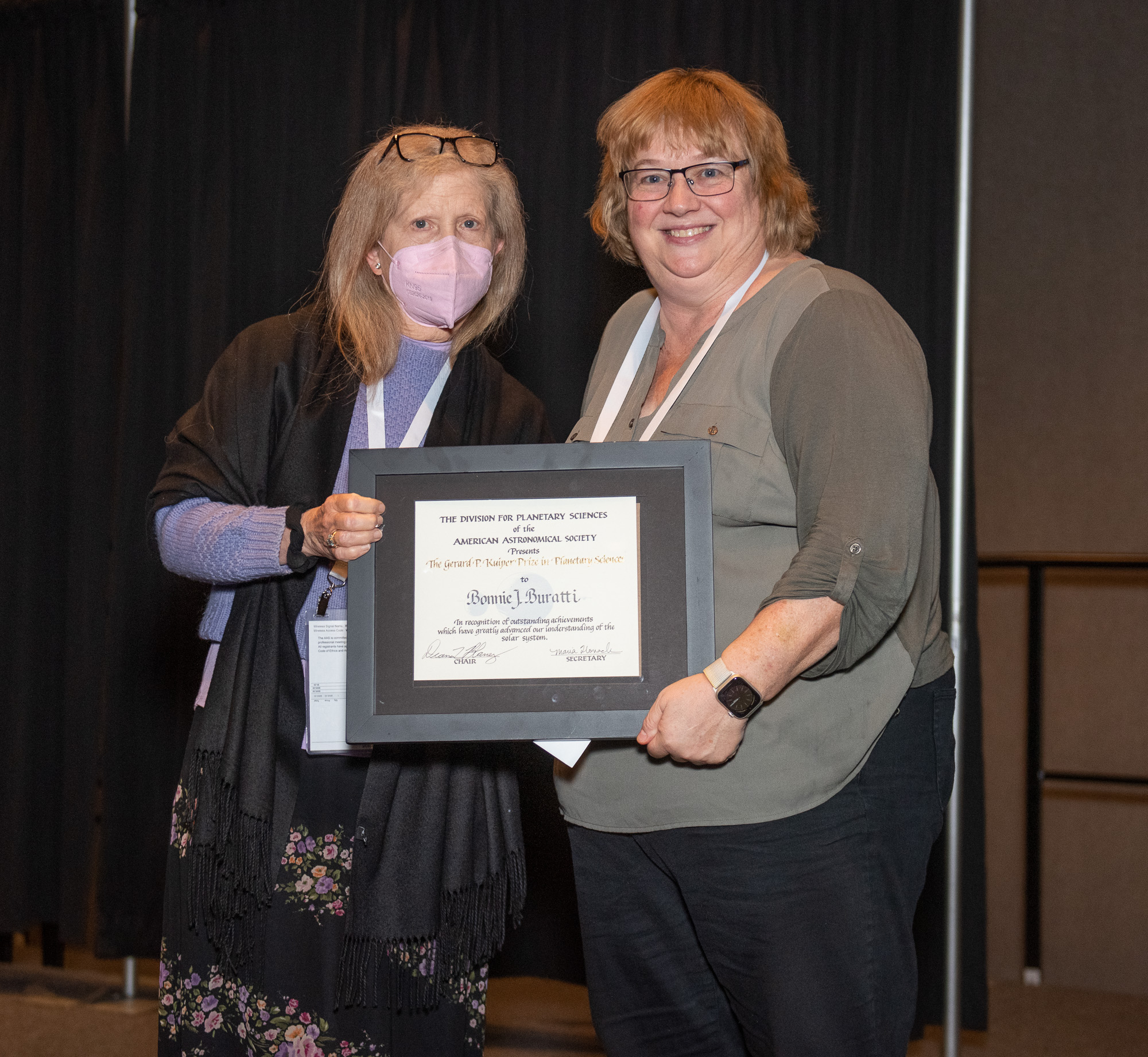
| Bonnie Buratti (JPL) receives the Kuiper Prize from DPS chair Diana Blaney (JPL). Bonnie has focused her career on light-scattering from surfaces, and what that can tell us about their physical properties. |
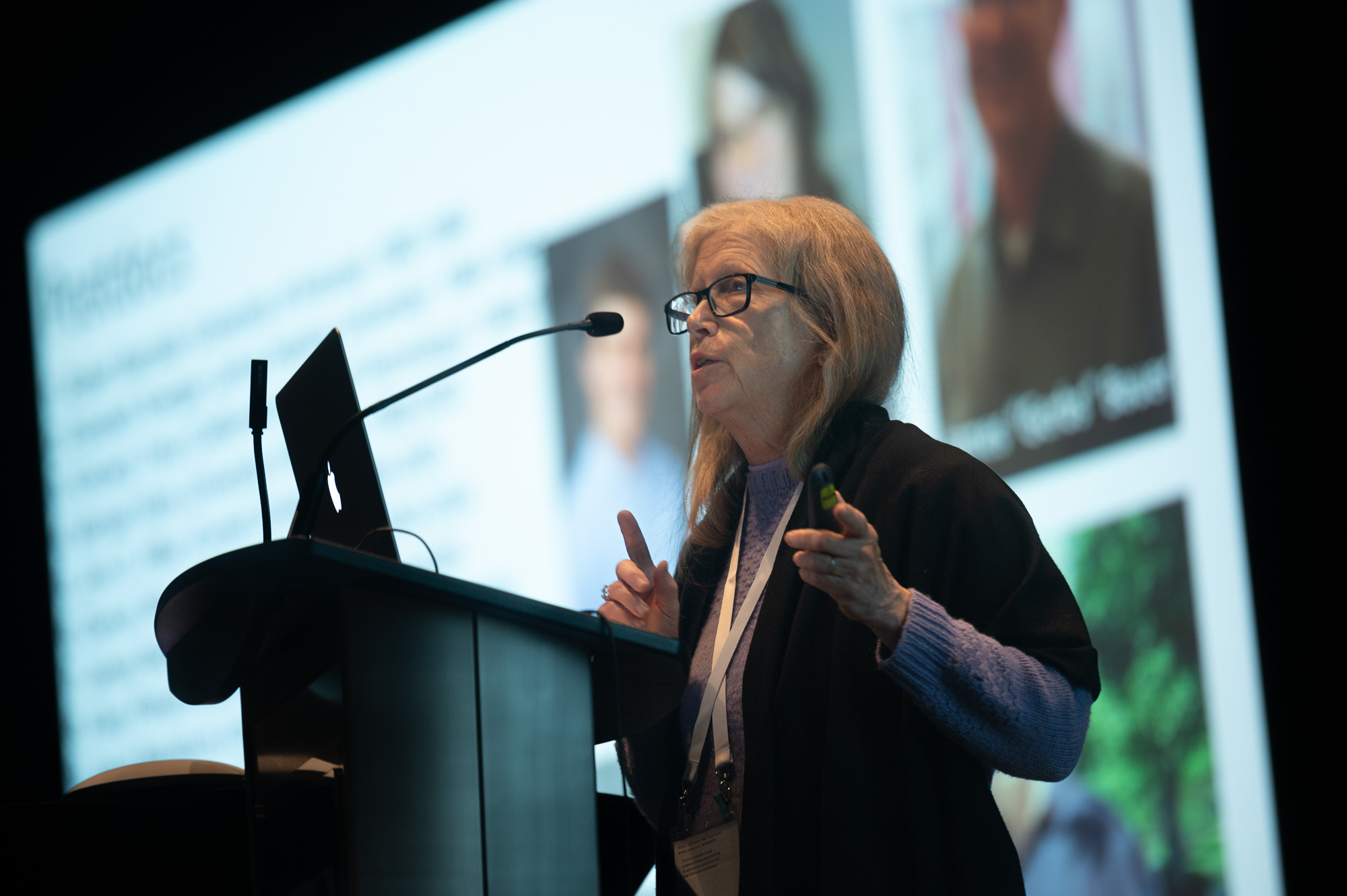
| Bonnie Buratti (JPL) gives thanks at her Kuiper prize lecture. |
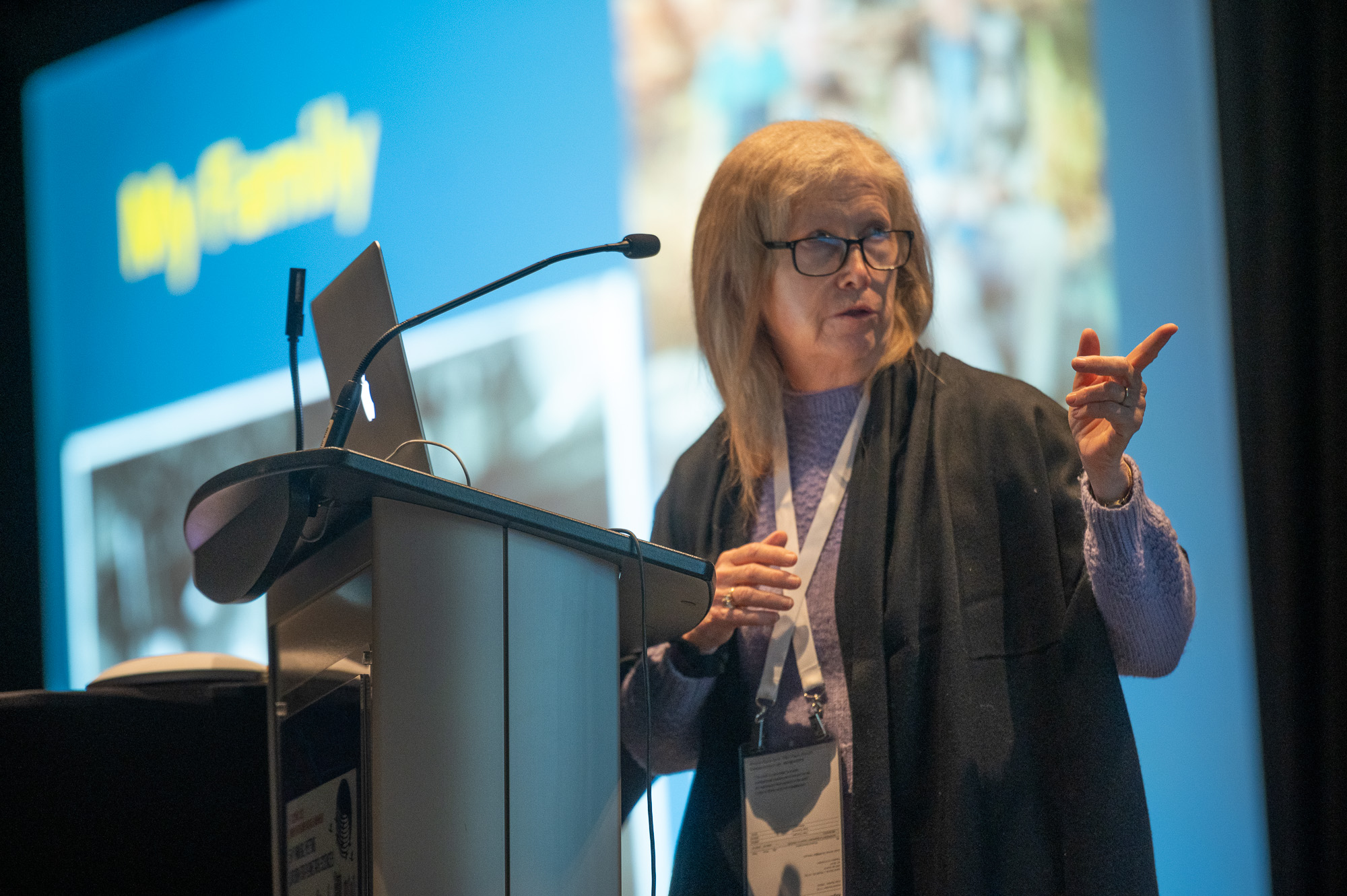
| Bonnie Buratti (JPL) gives thanks at her Kuiper prize lecture. |
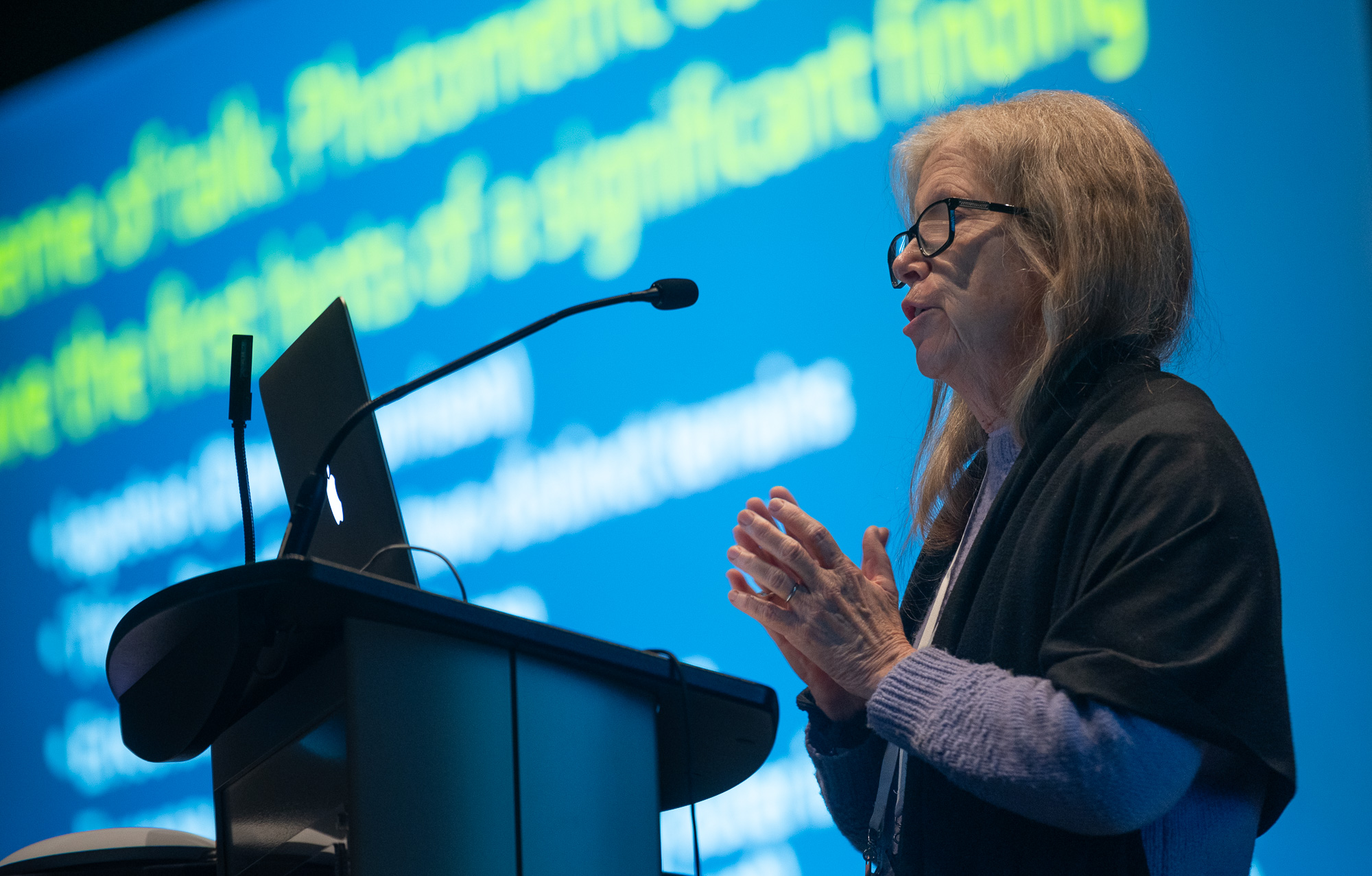
| Bonnie Buratti (JPL) gives a great Kuiper lecture on surface scattering. I mean, I've looked at a lot of phase curves, and occasionally wonder why we're taking one more. But there was so much science here that Bonnie has been able to extract. Super impressive. |
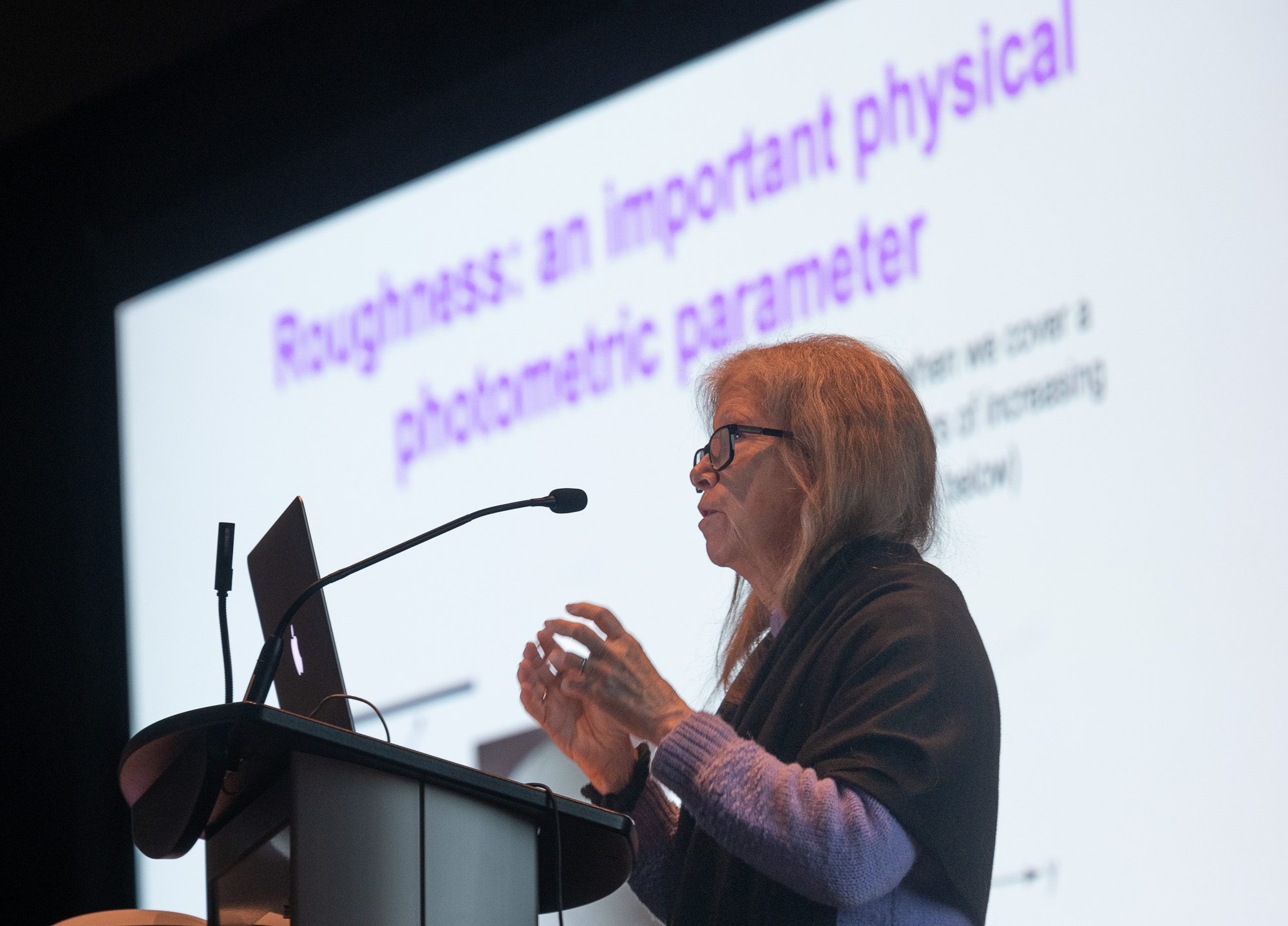
| Bonnie Buratti (JPL) gives the Kuiper lecture. |
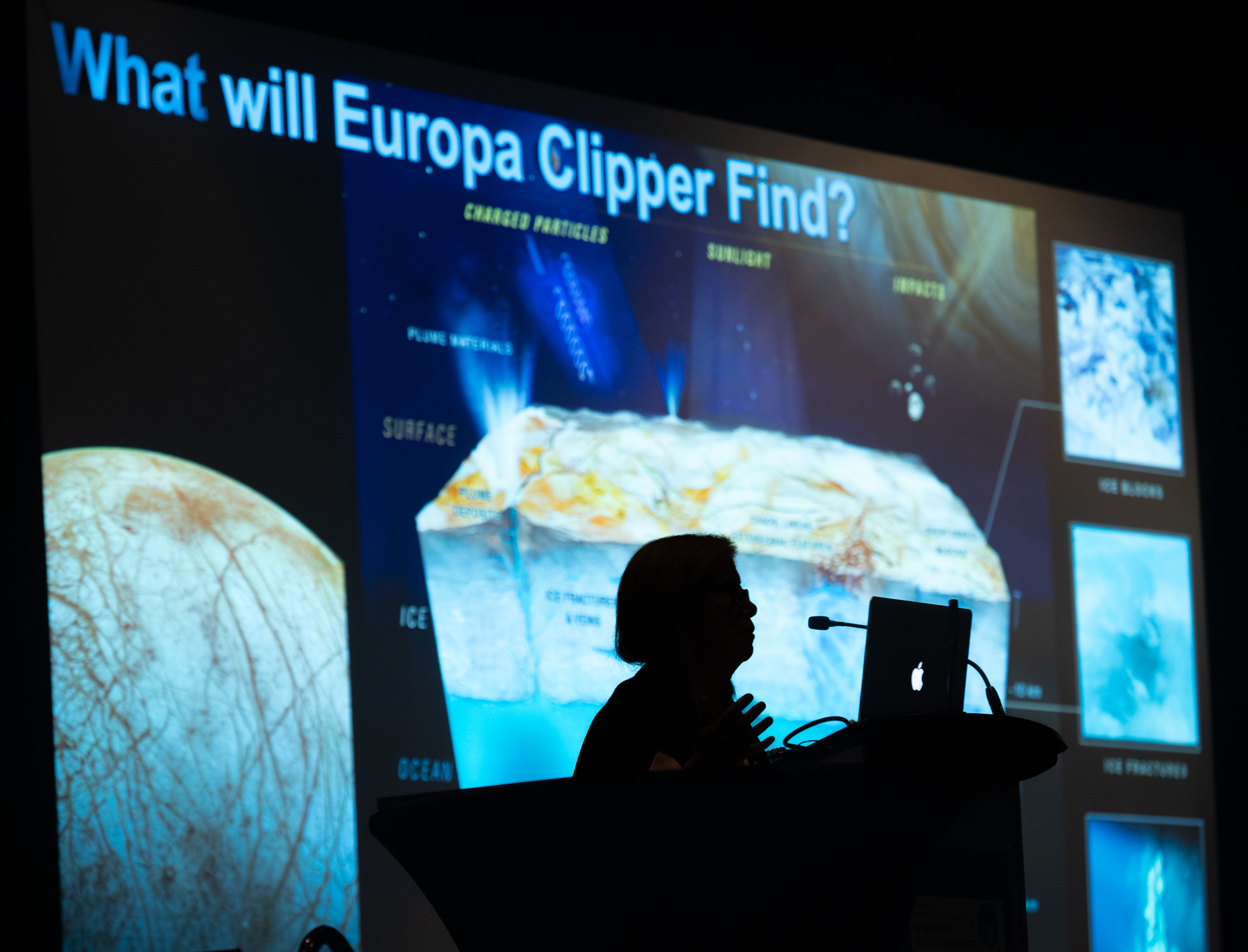
| Bonnie Buratti (JPL) gives the Kuiper lecture. |
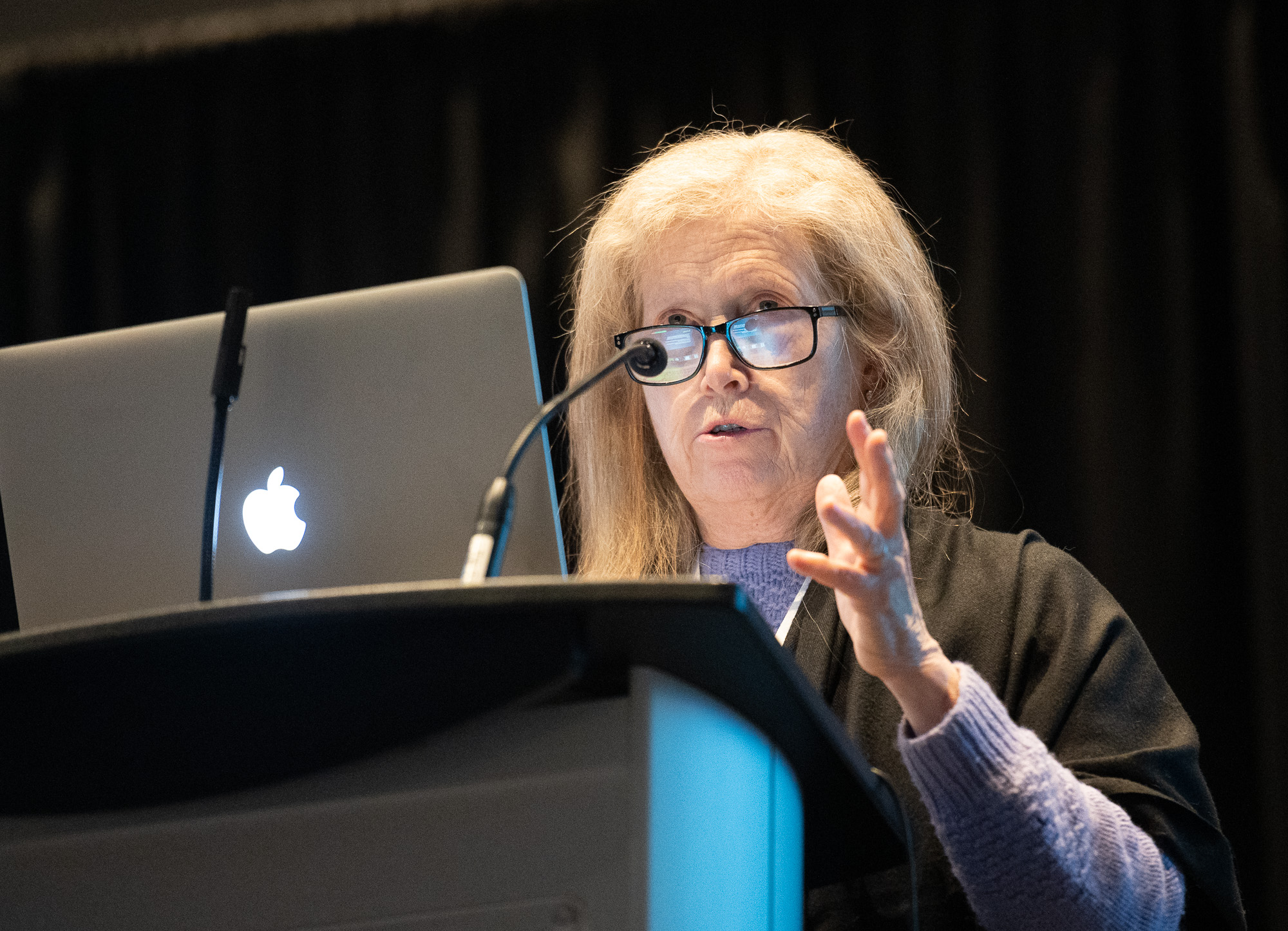
| Bonnie Buratti (JPL) gives the Kuiper lecture. |
Sagan Lecture + Star Party
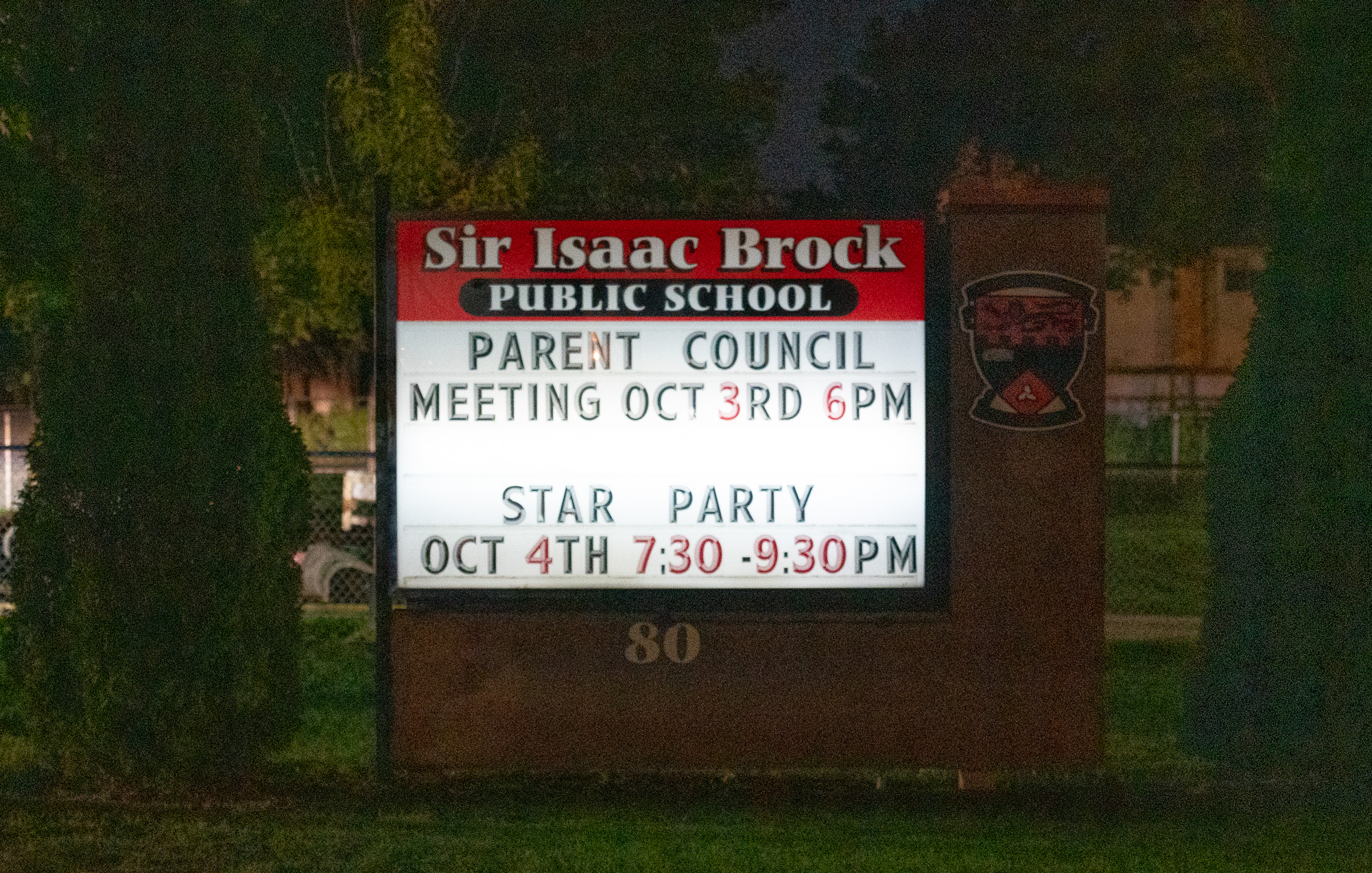
| Change of venue! In conjunction with the London chapter of the Royal Astronomical Society of Canada, and the PDS Small Bodies node, and Sir Isaac Brock Public School, the DPS has organized a Public Night in London, ON. Before the stars come out, there's a slew of asteroid activities, then two talks (including the Sagan medal lecture), and then the star party! |
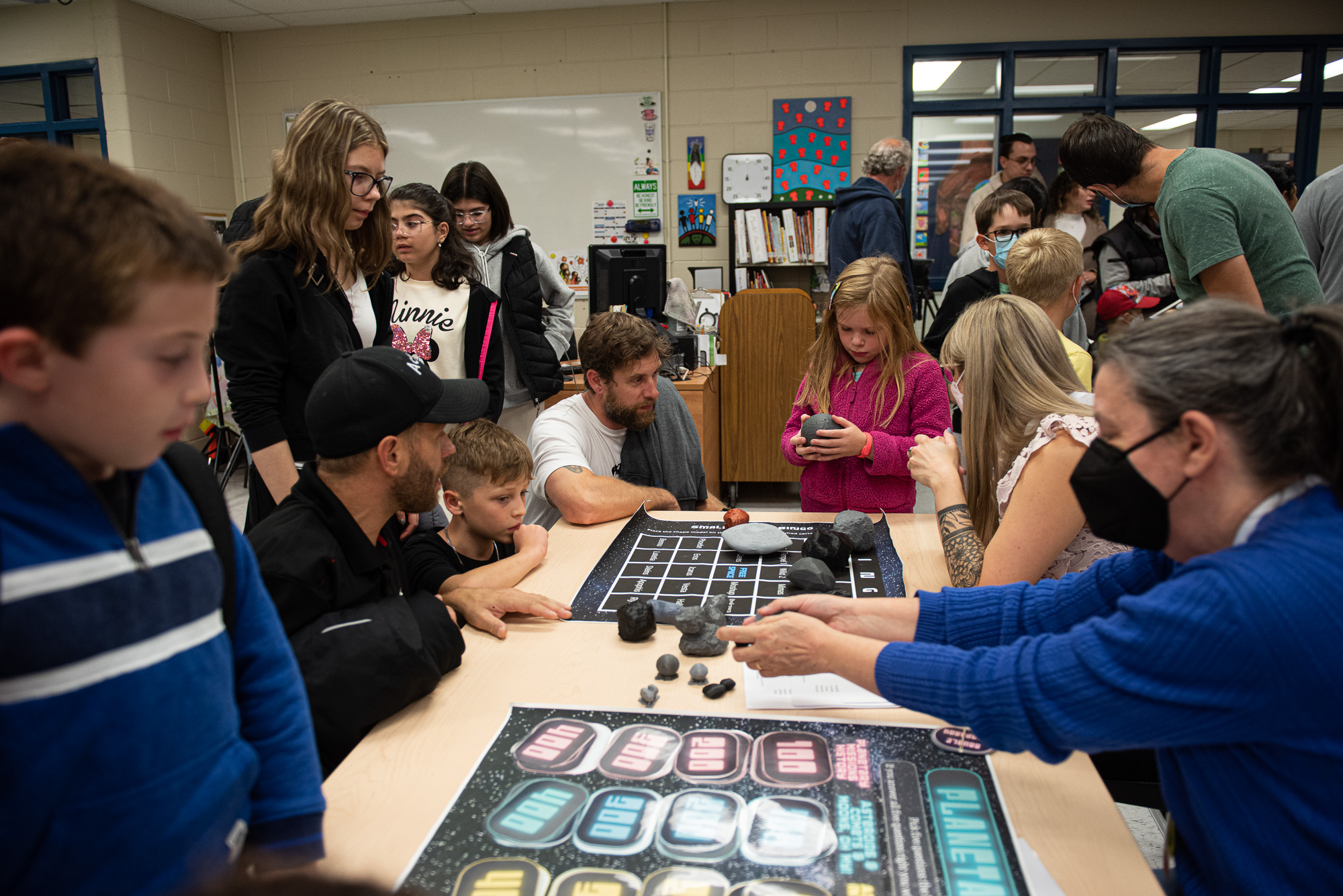
| And before the talks, we have a ton of hands-on activities! The PDS Small Bodies Node has organized Planetary Bingo, Jeopardy, and a lot of 3D-printed asteroids, comets, and KBOs. |
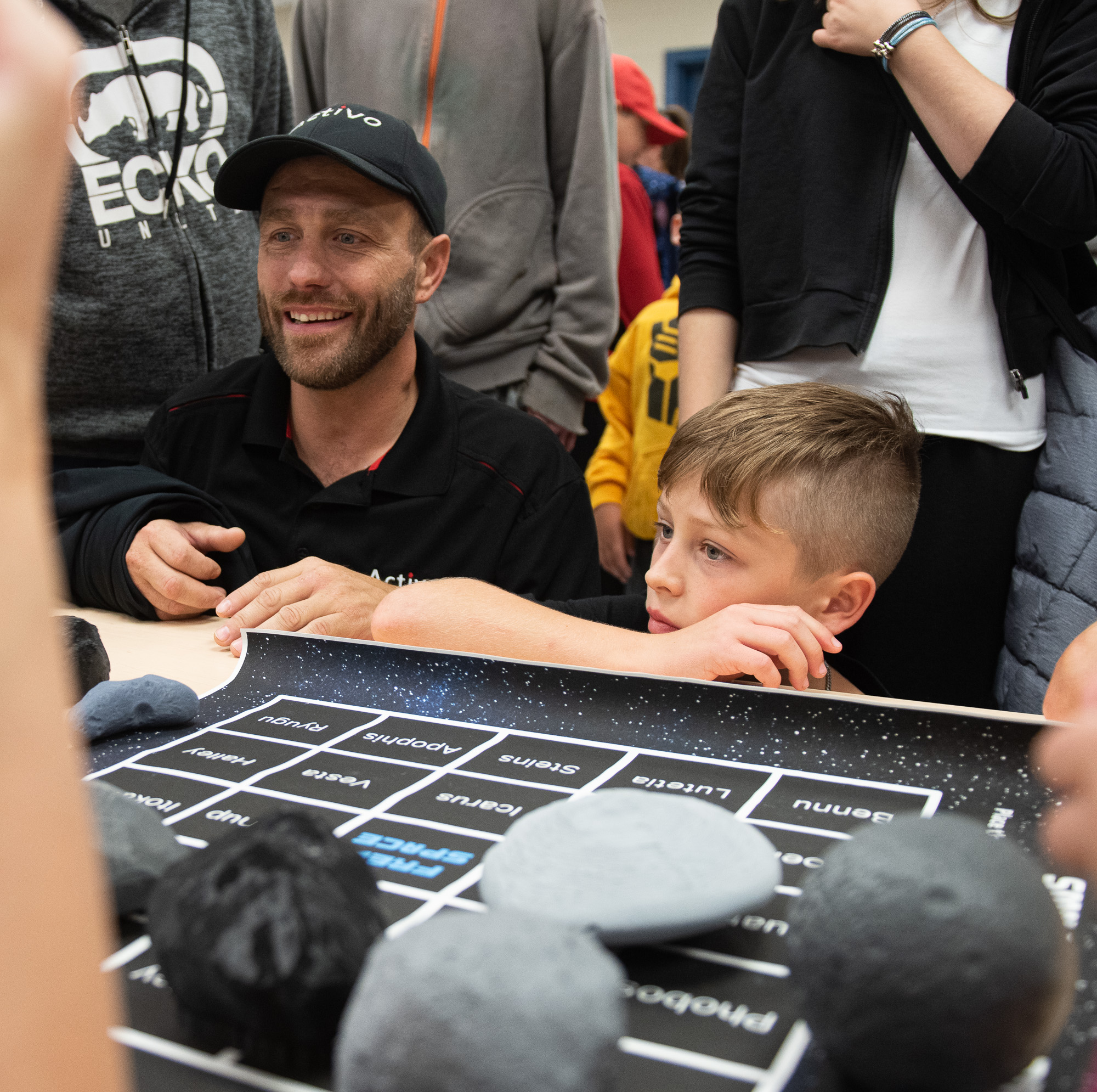
| Small-Body Bingo with your favorite asteroids, courtesy of the PDS node! I'm rooting for Apophis myself. |
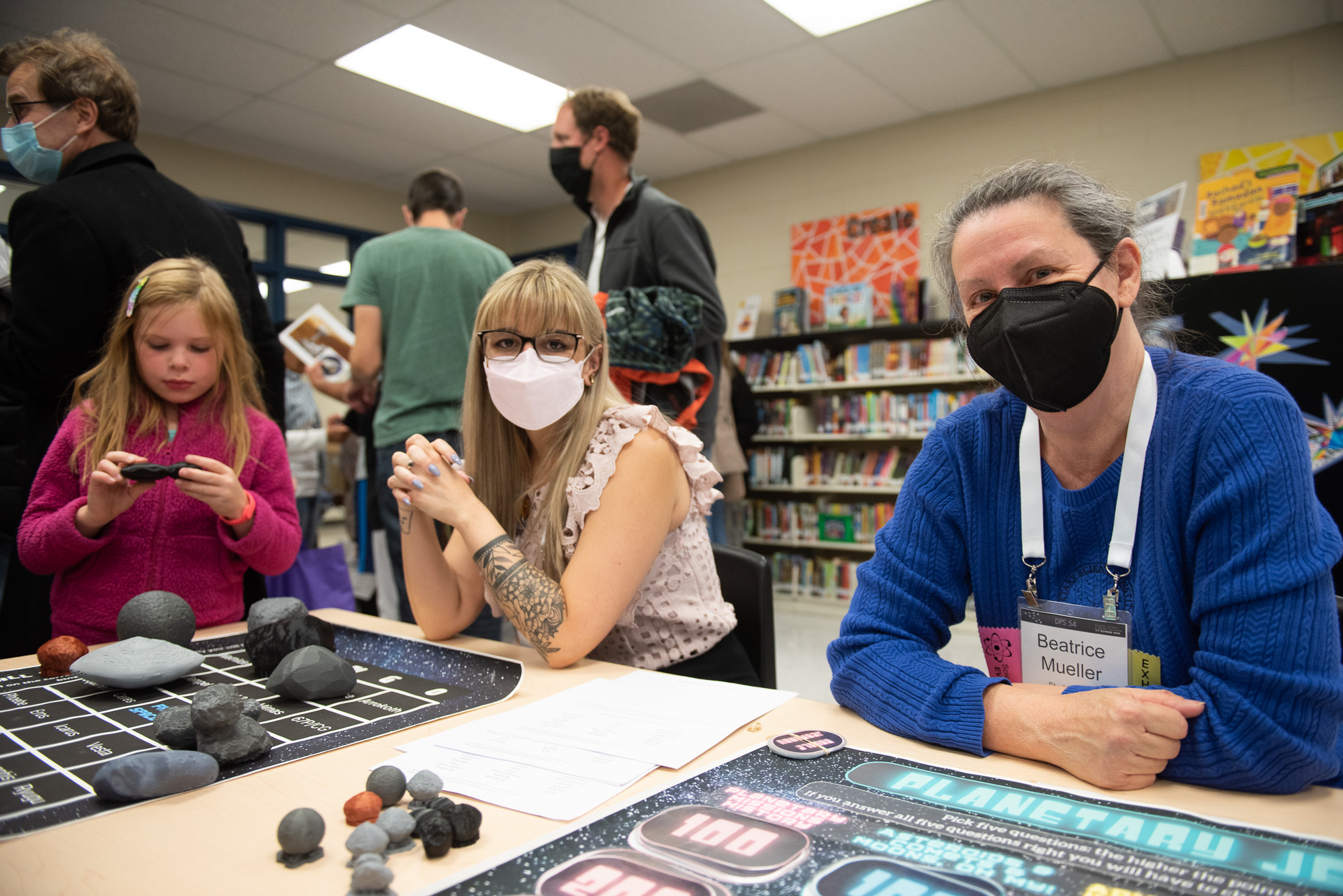
| Kristina Lopez (PSI) and Bea Mueller (PSI) present Planetary Jeopardy at the Public Night. |
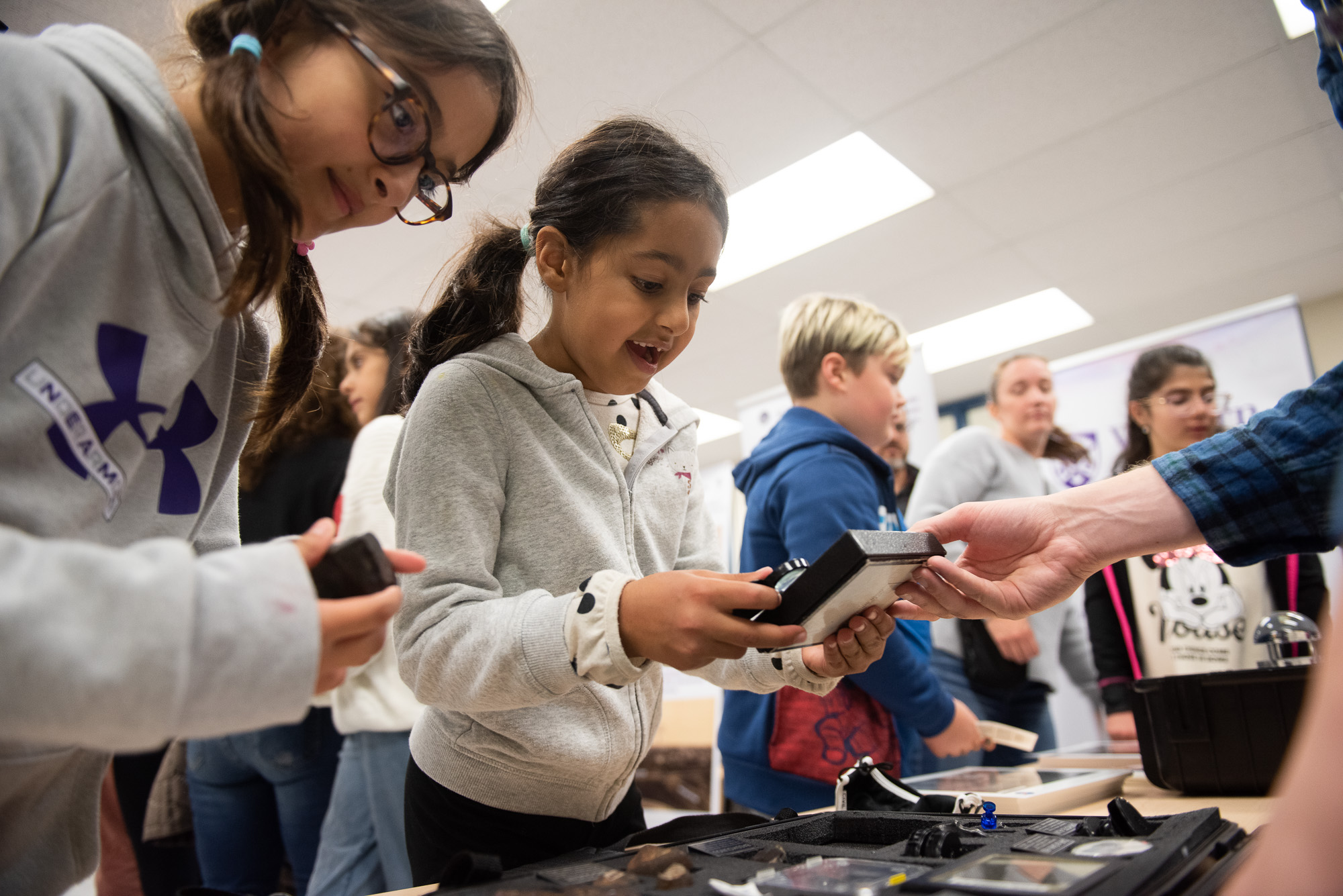
| Checking out a meteorite at Public Night! |
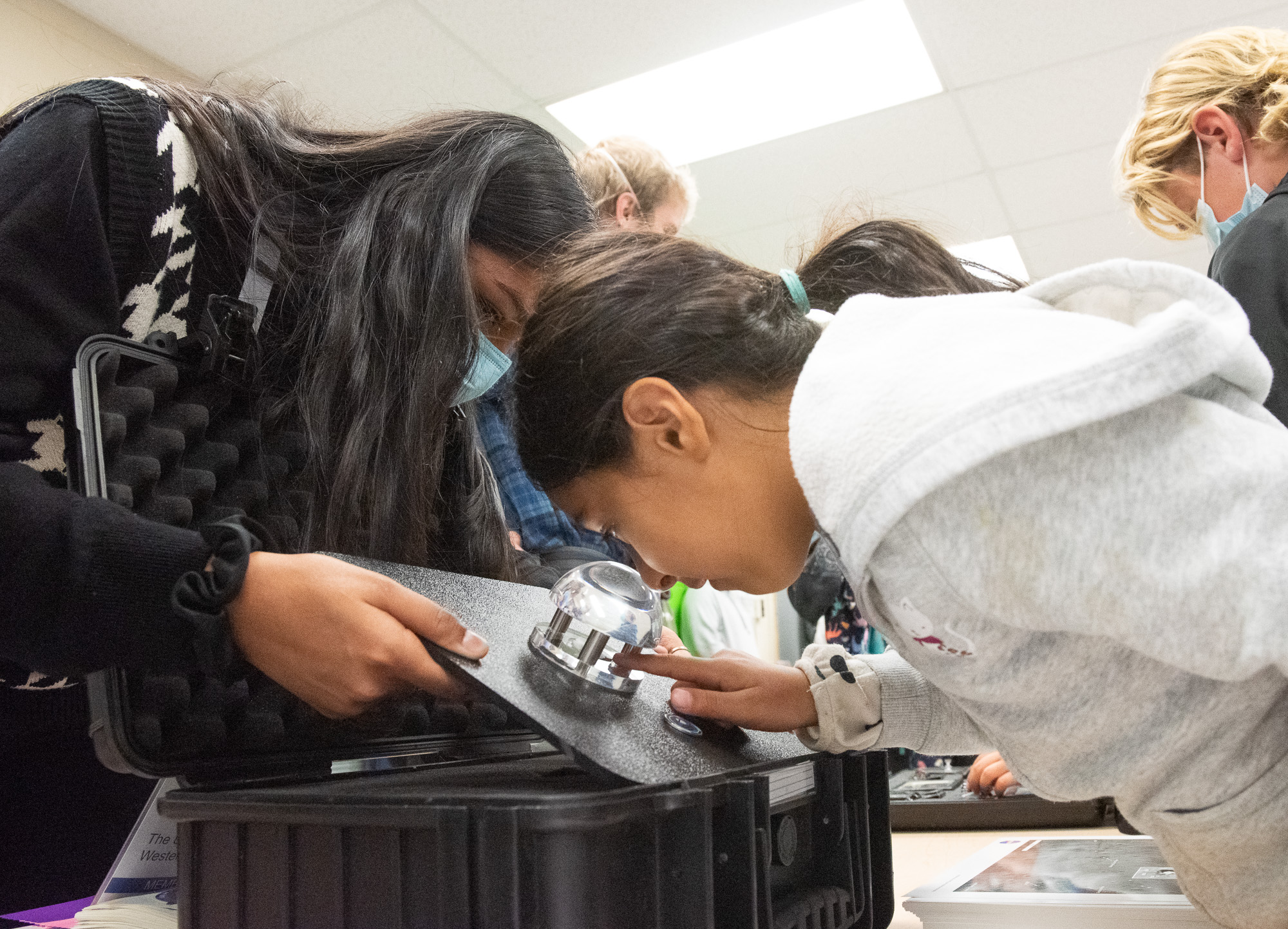
| Touching the Moon! It's an actual NASA moon rock, brought up in that Pelican box for this event. With Ashka Thaker (UWO). |
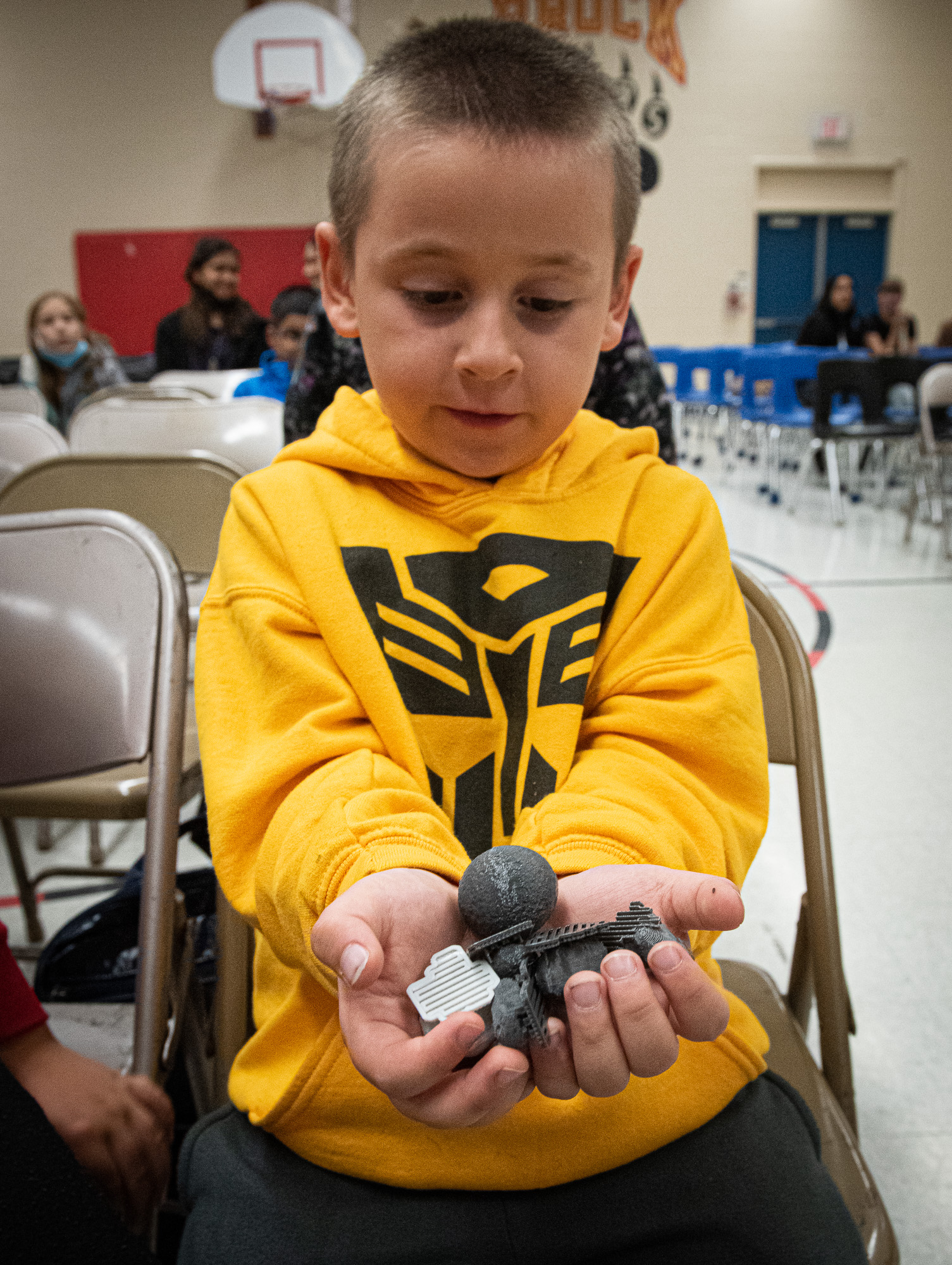
| Someone's got a whole Lucy-mission worth of small body targets here. |
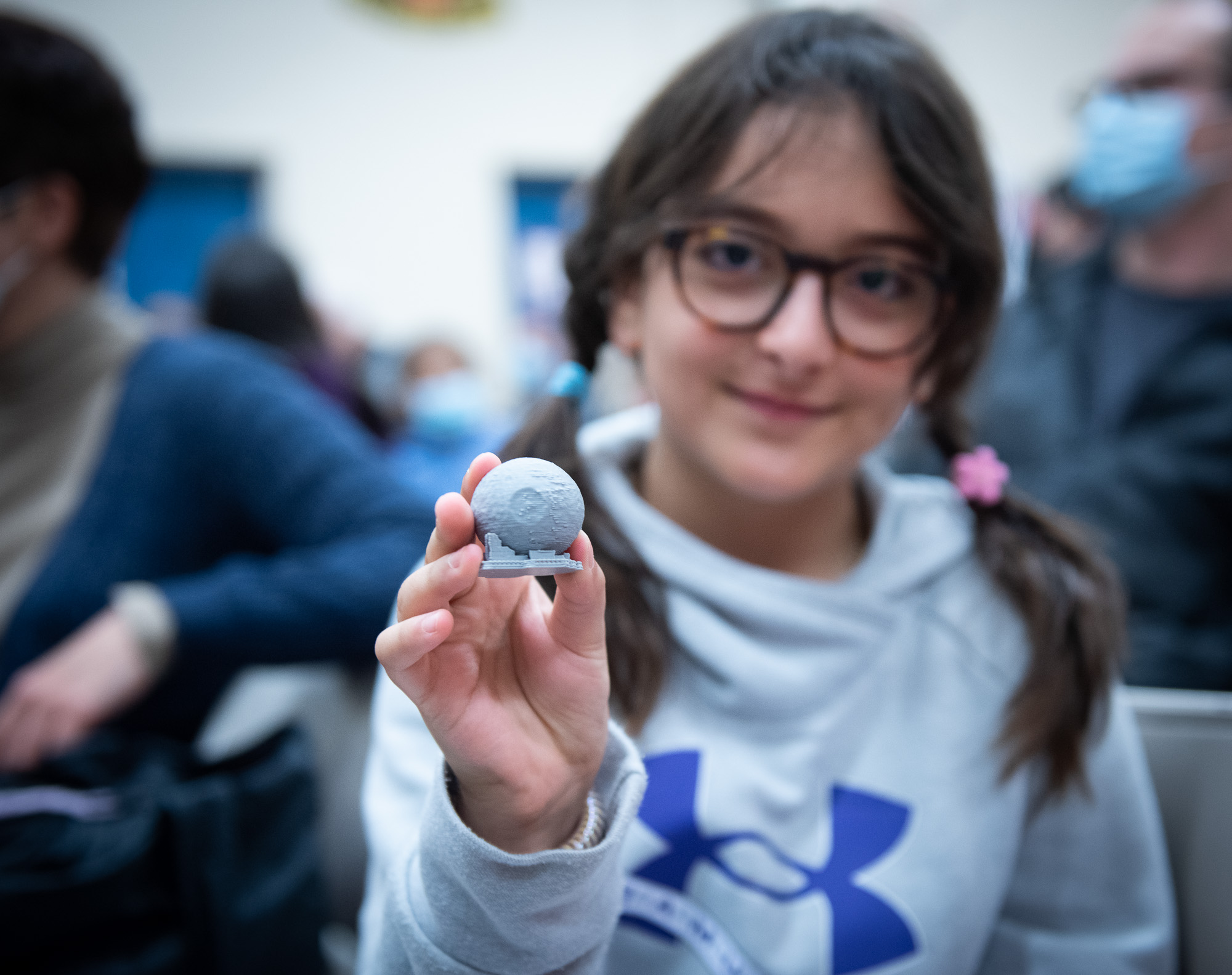
| "Take a picture of me!" -- she says, holding with a 3D printed Iapetus, courtesy of the PDS Small Bodies node. |
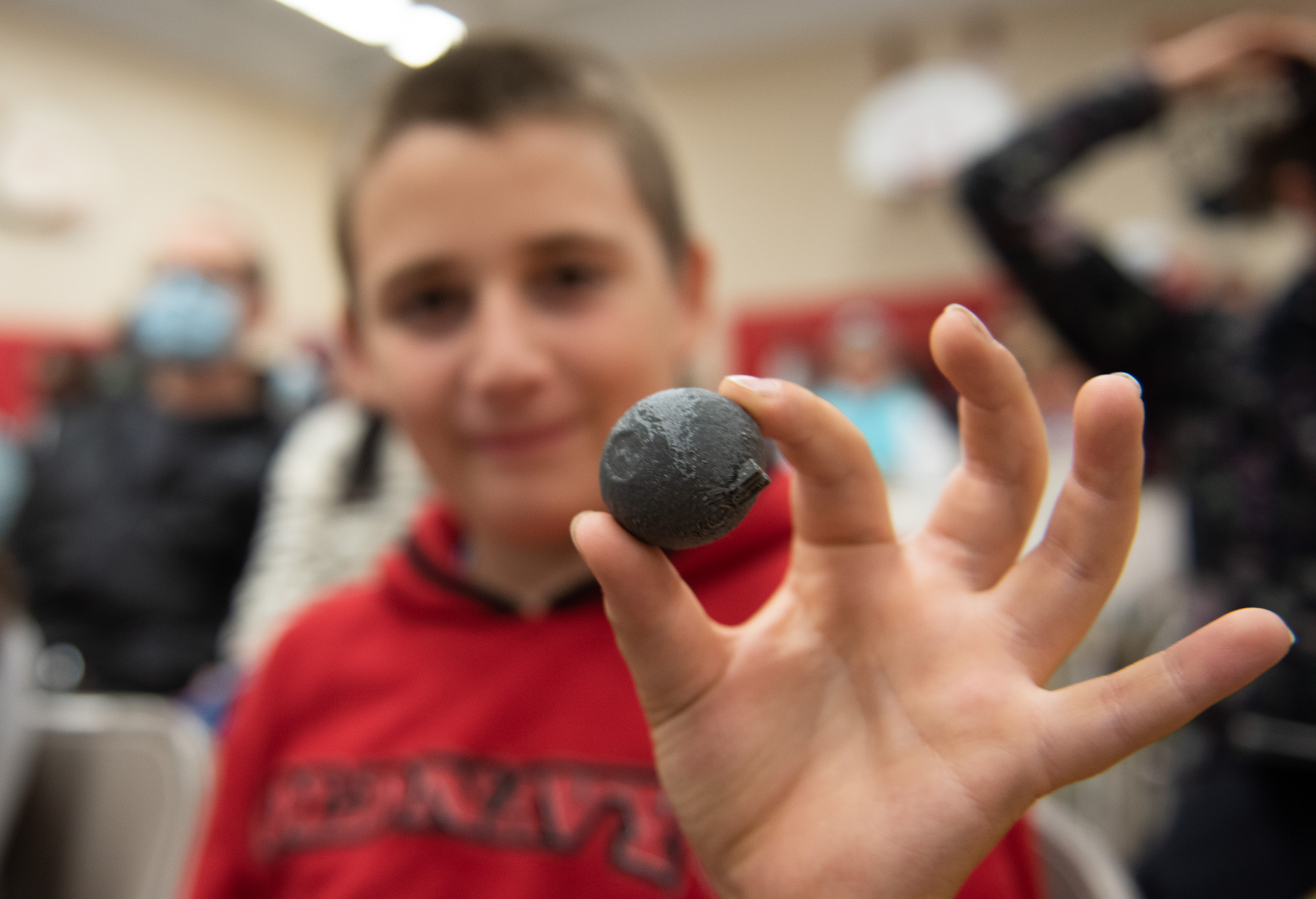
| "No, take a picture of me!!", he says, with another 3D-printed Iapetus. |
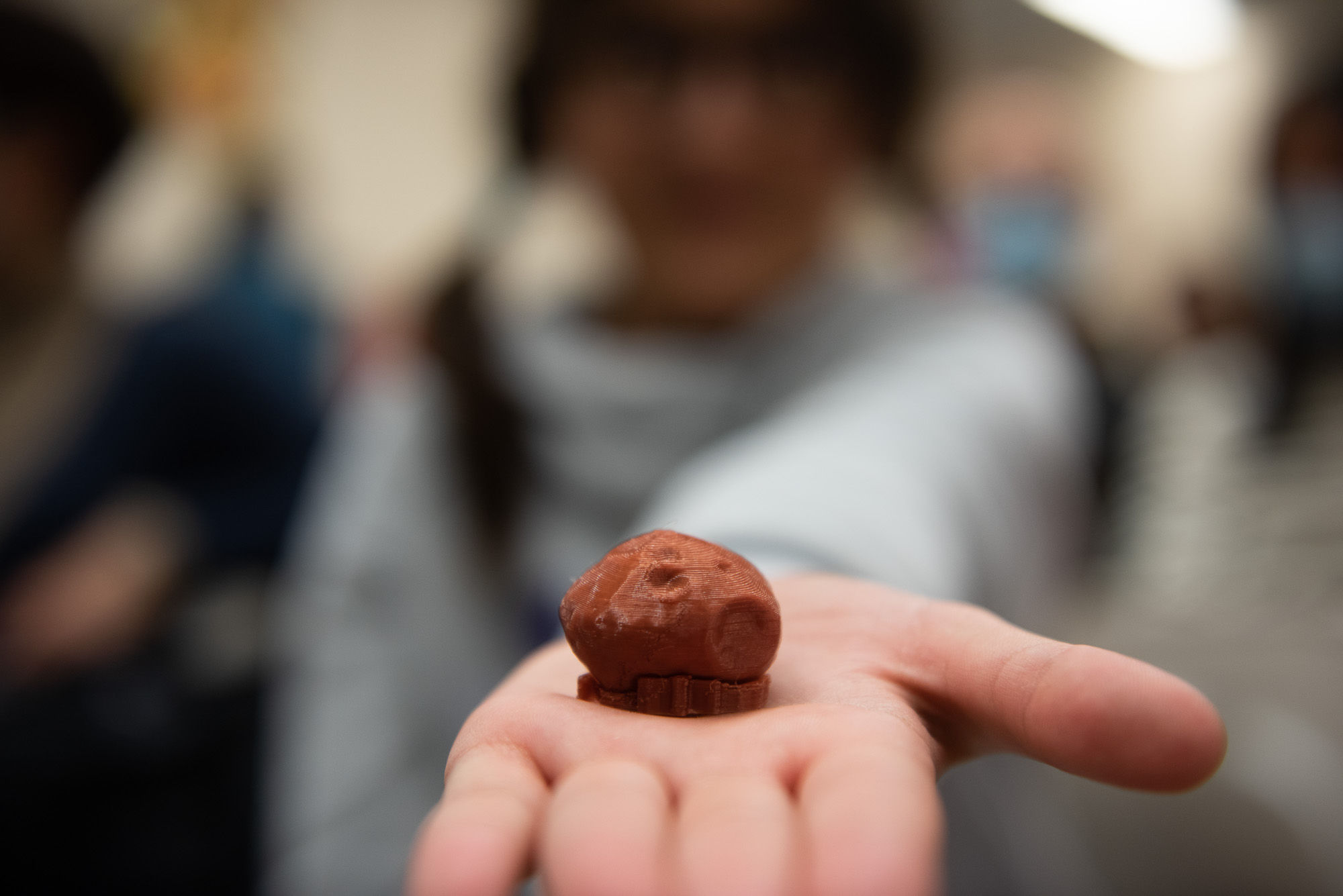
| "I want a picture!! Can I see it?? Cool...." -- I think this one is Phobos, with the big Stickney impact on the side, but I hope someone who was paying attention to the PDS presentation will tell me if I'm wrong. |
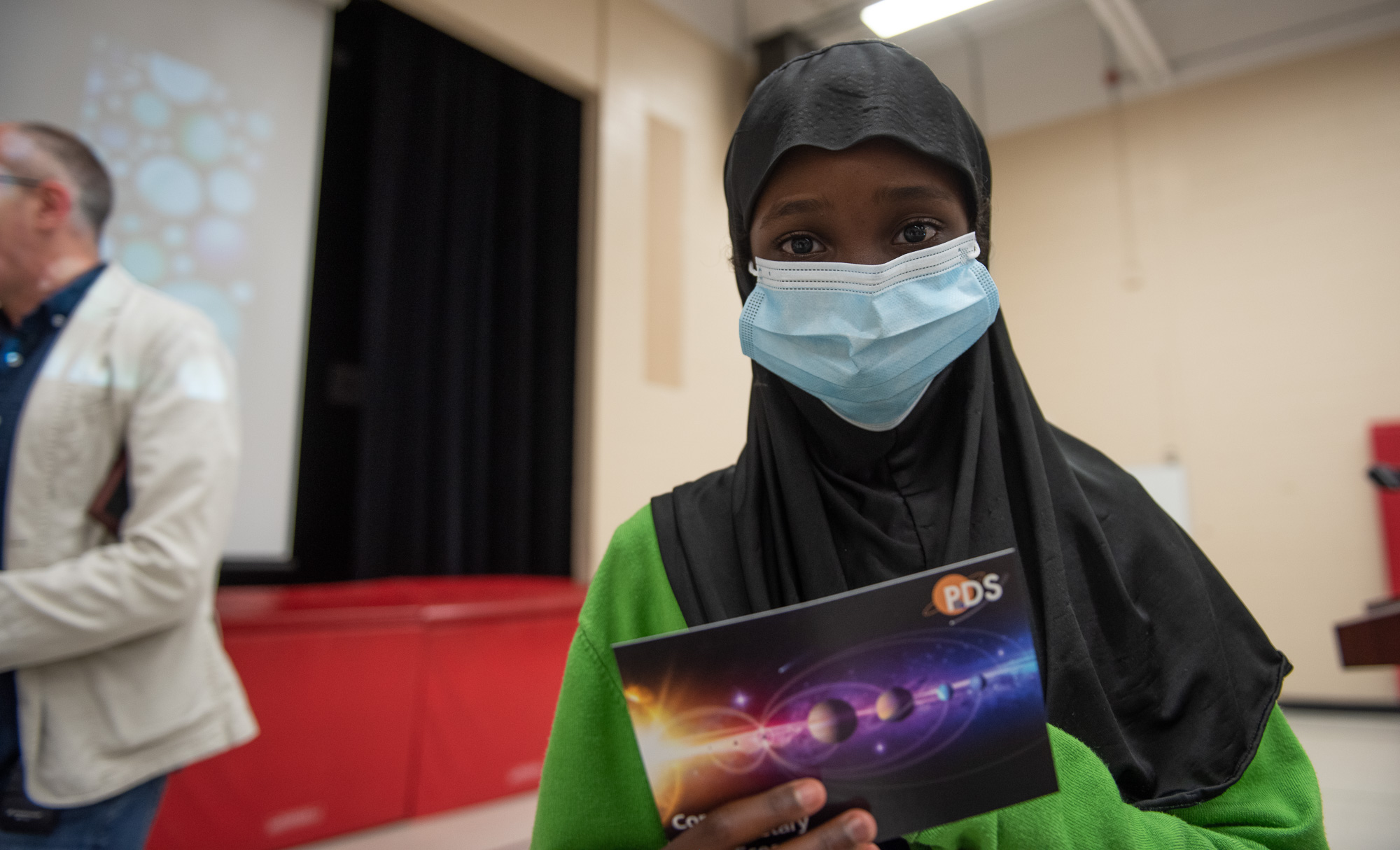
| Lots of free giveaways from the PDS node. |
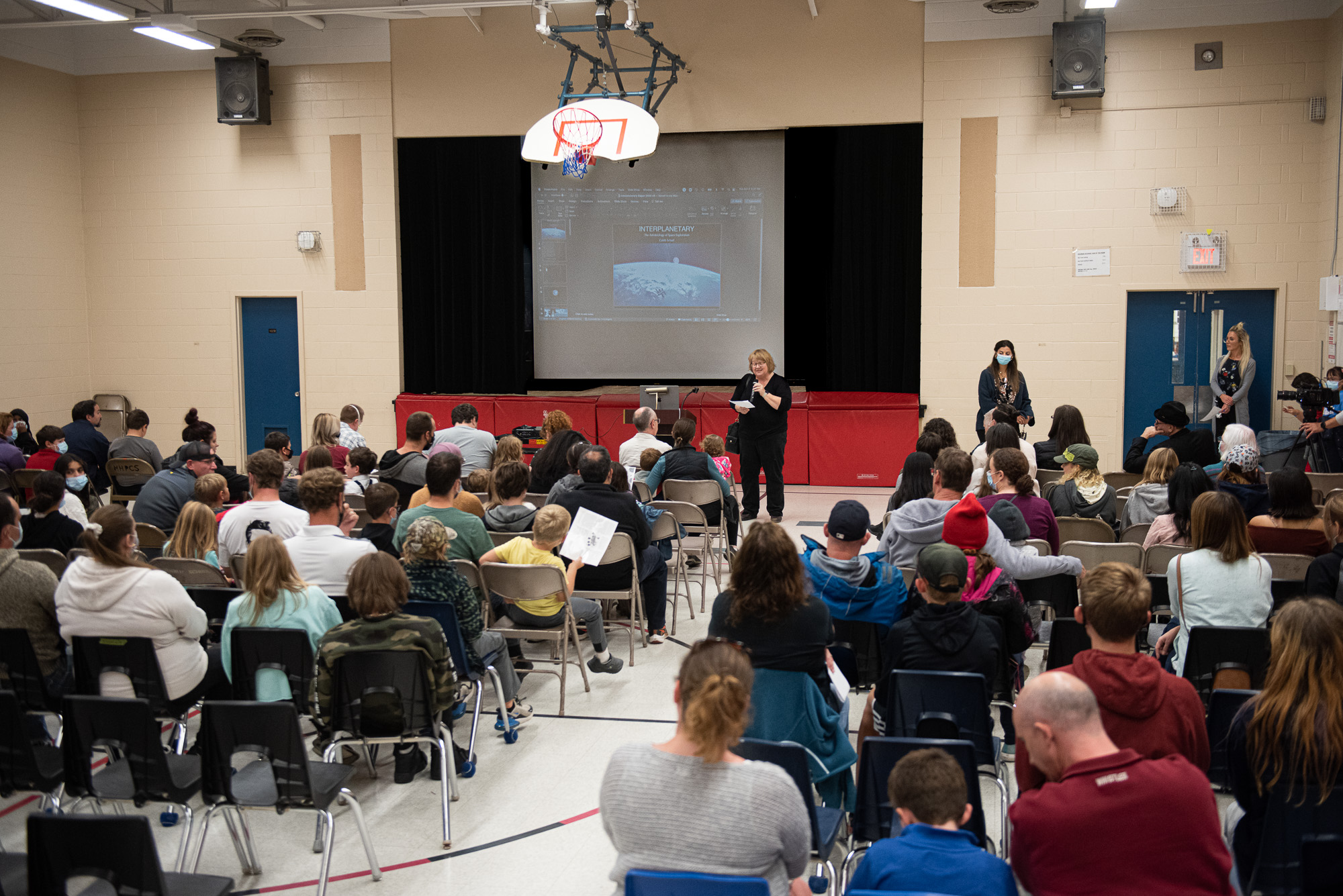
| DPS Chair Diana Blaney (JPL) introduces the Sagan Medal winner, Caleb Scharf (Columbia). Caleb's talk is entitled "Interplanetary: The Astrobiology of Space Exploration." |
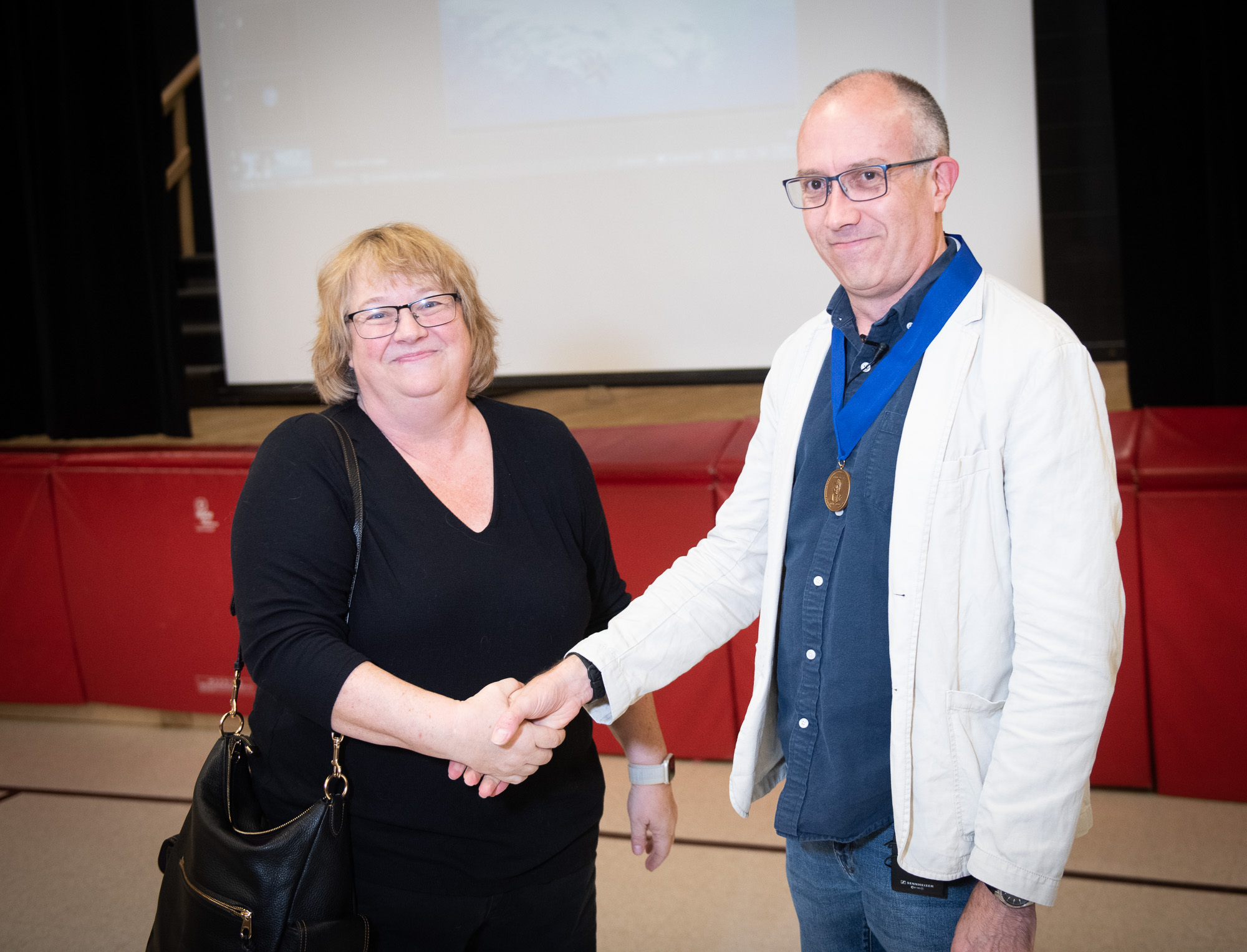
| DPS Chair Diana Blaney (JPL) with Sagan Medal winner Caleb Scharf (Columbia). |
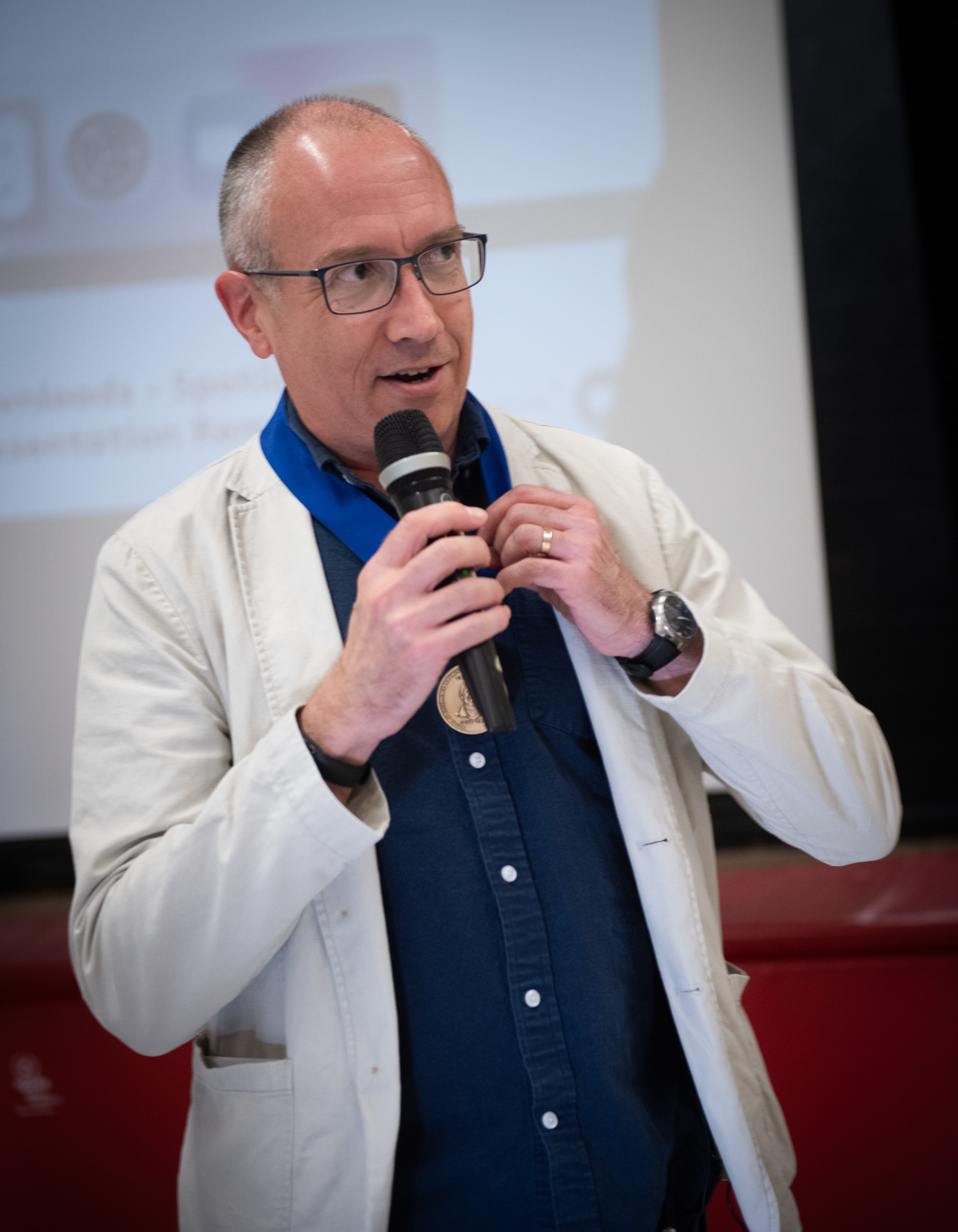
| Sagan Medal winner Caleb Scharf (Columbia). This is the Carl Sagan Medal for Excellence in Public Communication in Planetary Science. |
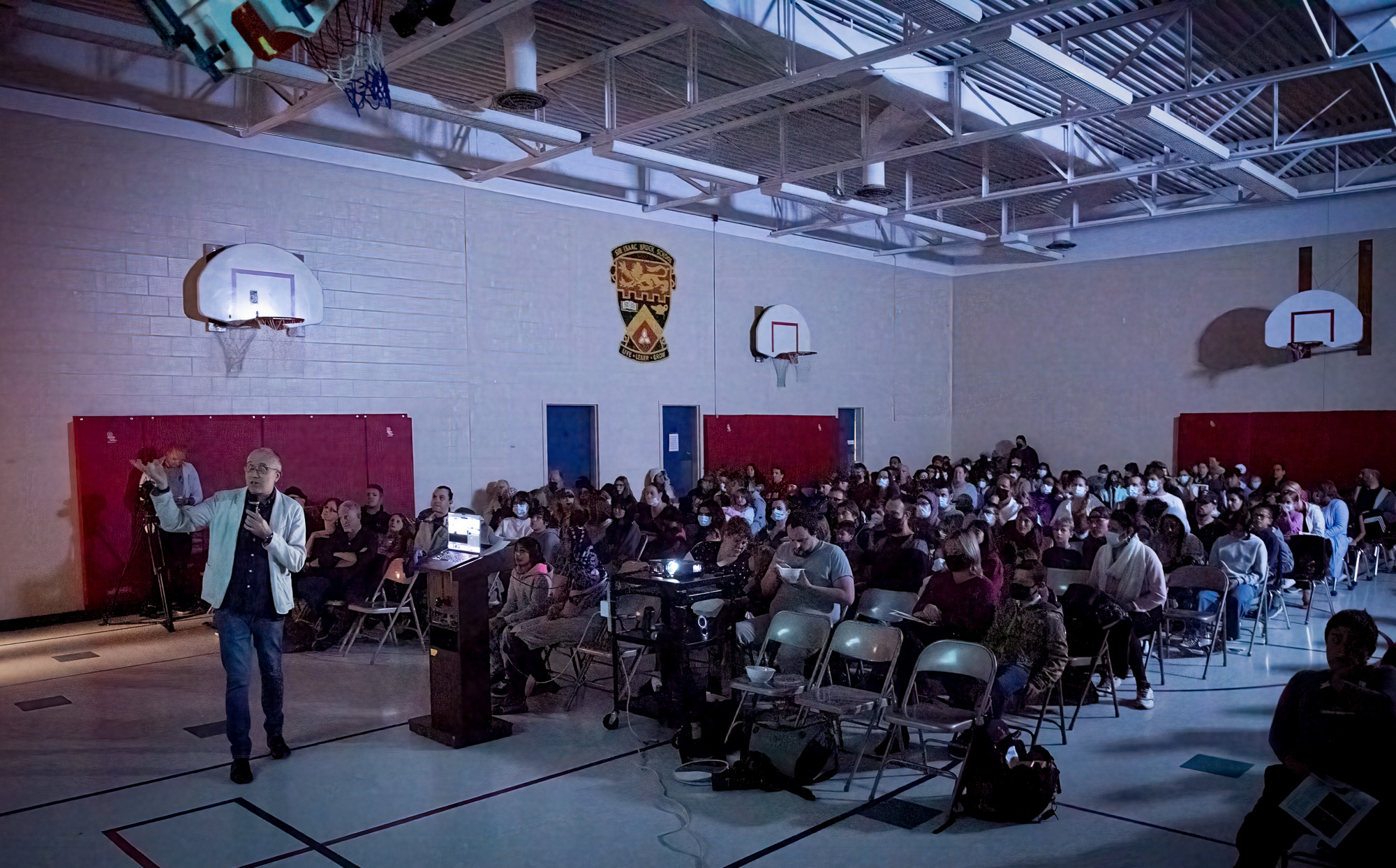
| Caleb Scharf (Columbia) gives the Sagan Medal lecture. What better place to give a Sagan talk than a basketball gym full of Canadian 4th graders! |
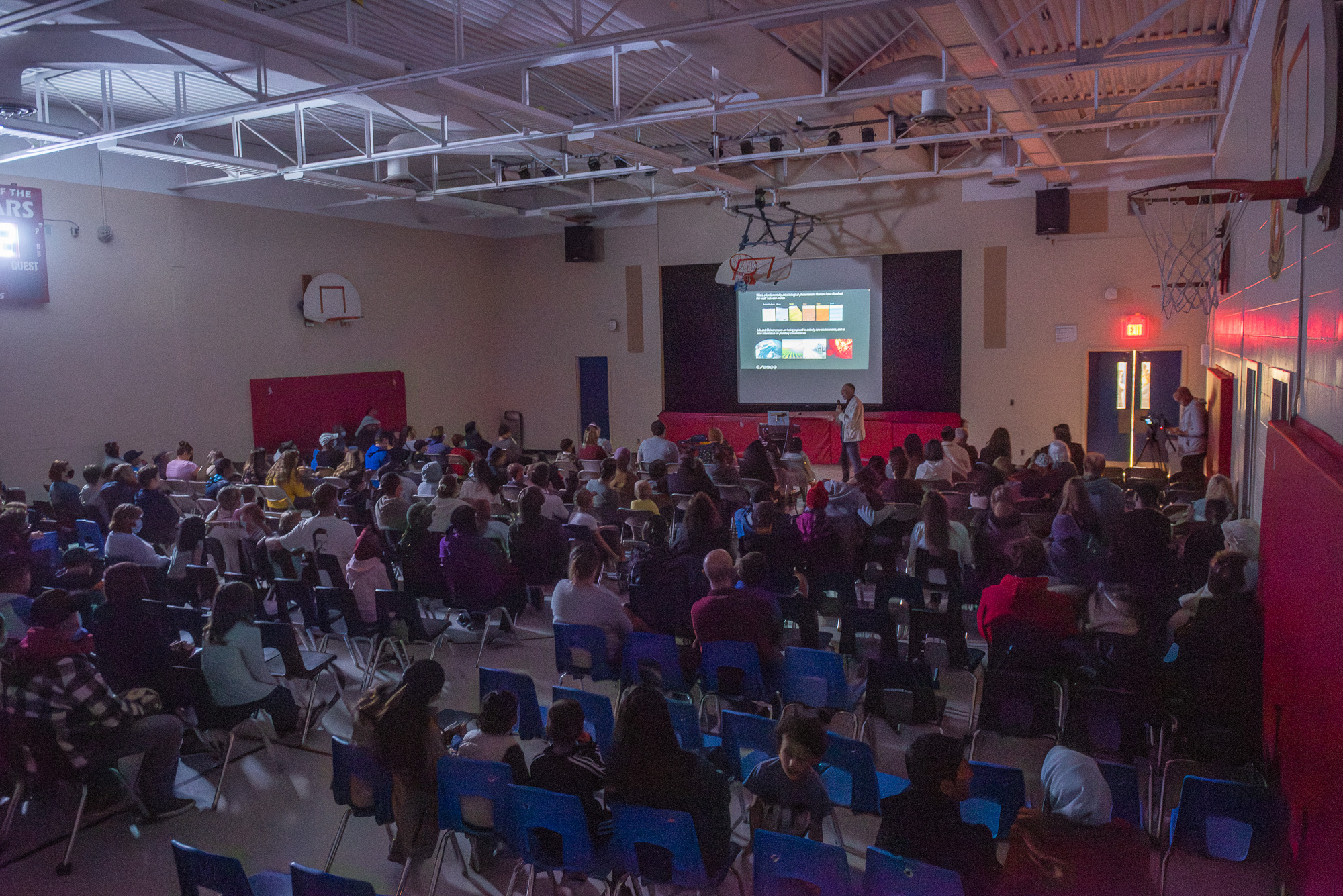
| Caleb Scharf (Columbia) gives the Sagan Medal lecture, talking about space exploration. |
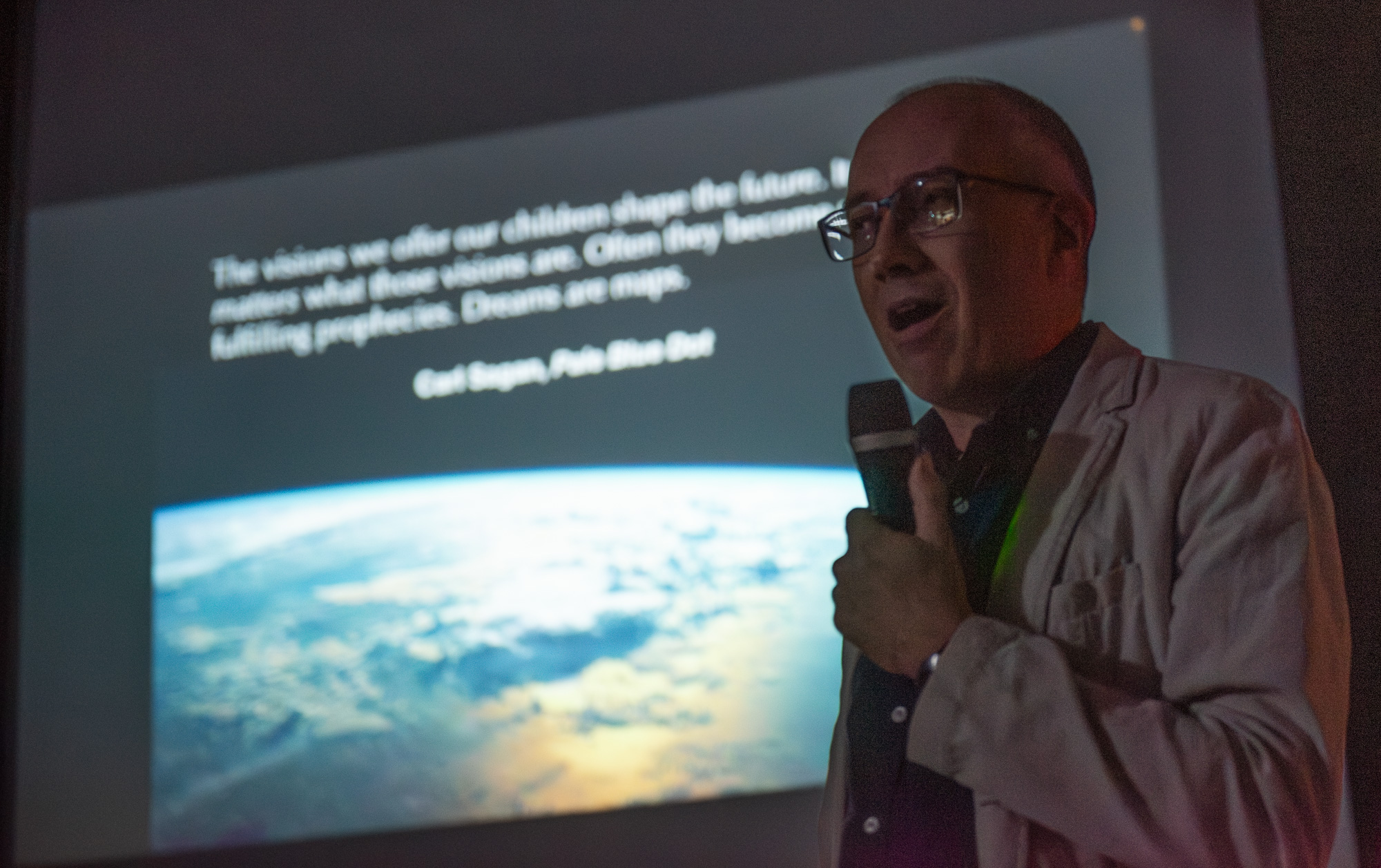
| Caleb Scharf (Columbia) invokes Carl Sagan, in his Sagan lecture! |
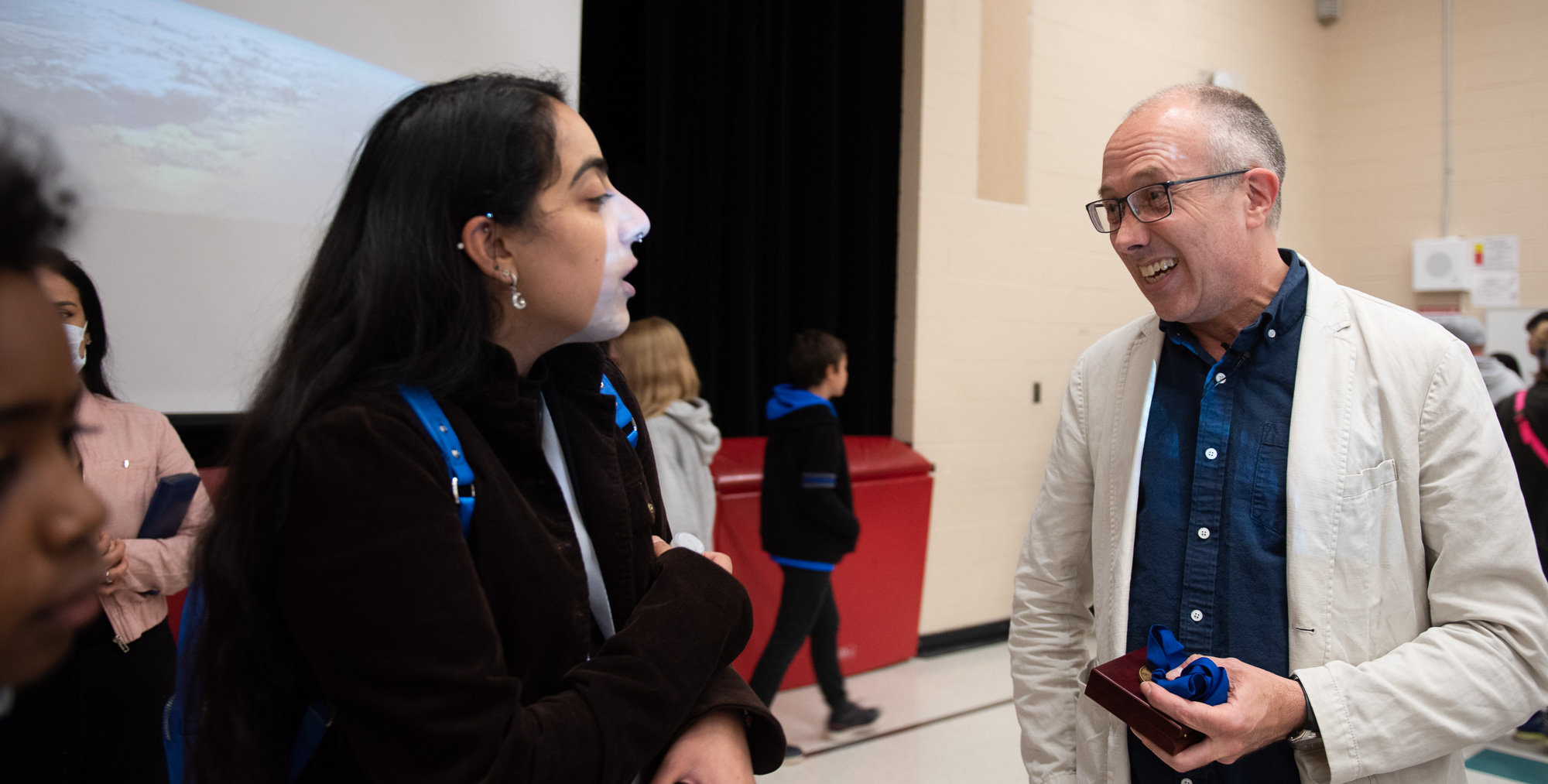
| Caleb Scharf (Columbia) chats with the fans after his Sagan lecture. |

| Caleb Scharf (Columbia) after the Sagan lecture. |
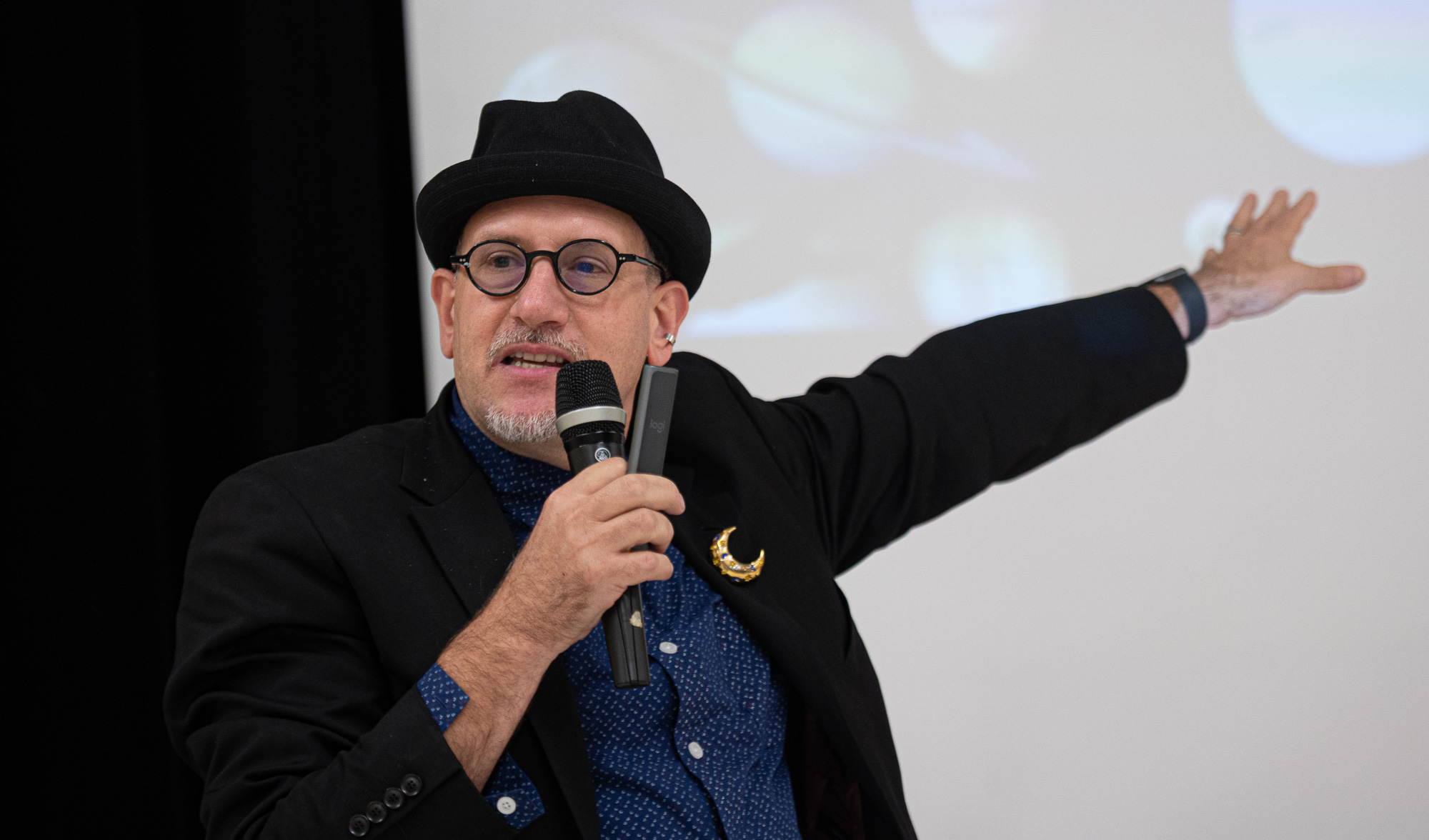
| Next up: David Grinspoon (PSI) gives a talk at Public Night. |
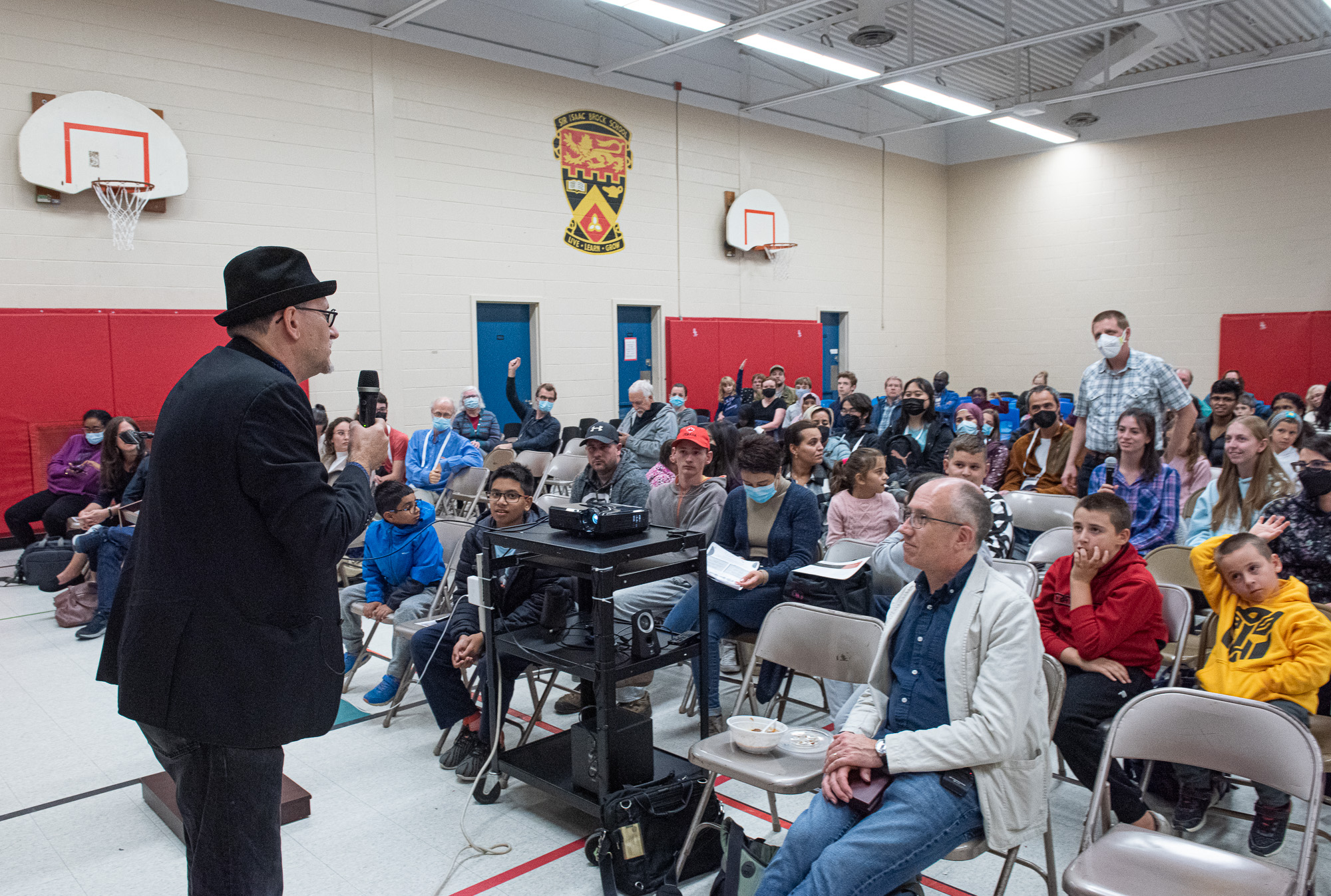
| It was a different audience than David Grinspoon (PSI) had anticipated, and he quickly pivoted. "You know what? I've got a bunch of slides prepared, but they're pretty boring. We're just going to jump right into Q&A. OK everyone -- who has a favorite planet??" |
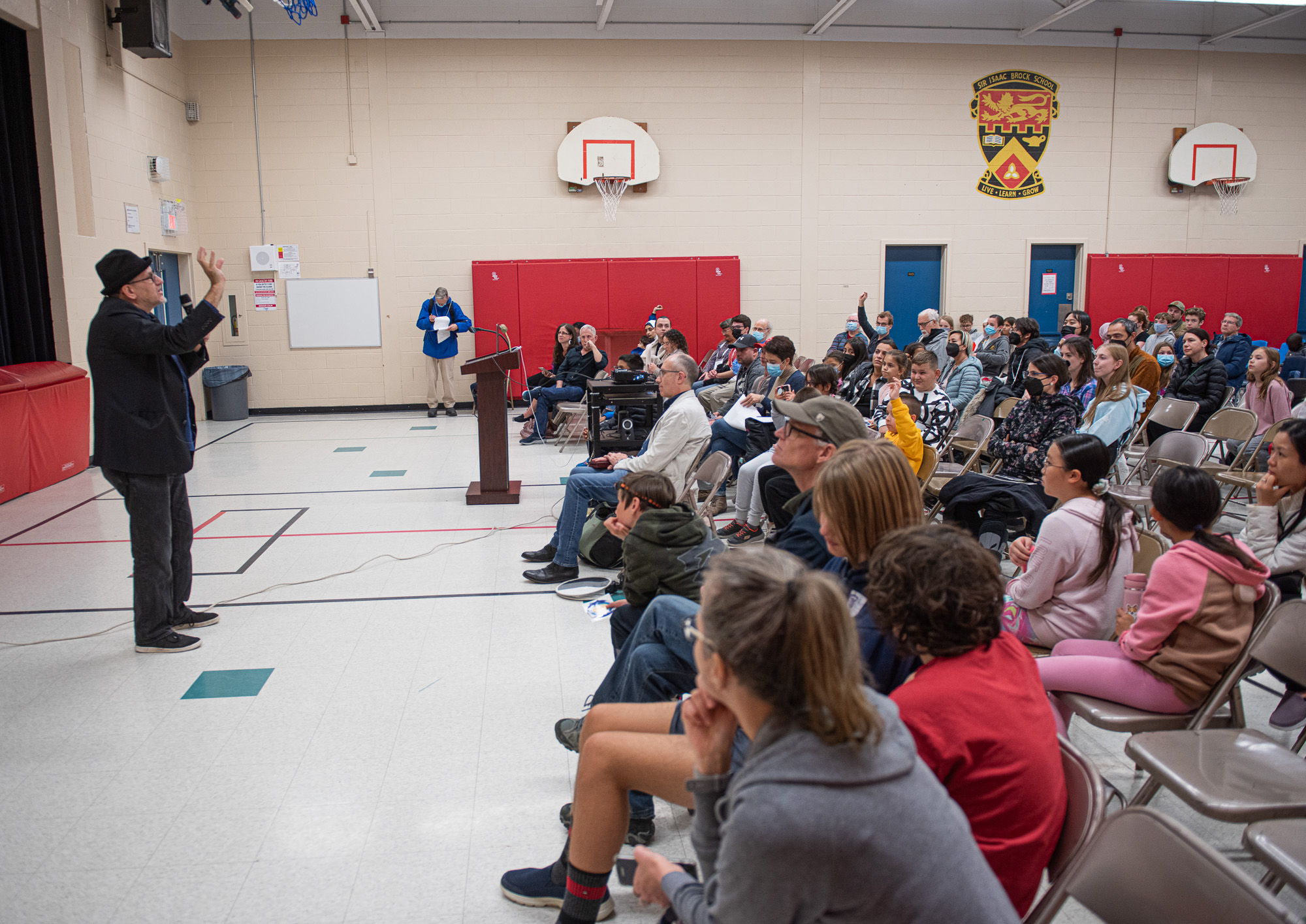
| "How do orbits work, and why are they circles and not triangles? Good question! So let's say you have a planet here, and you give it some gravity..." |
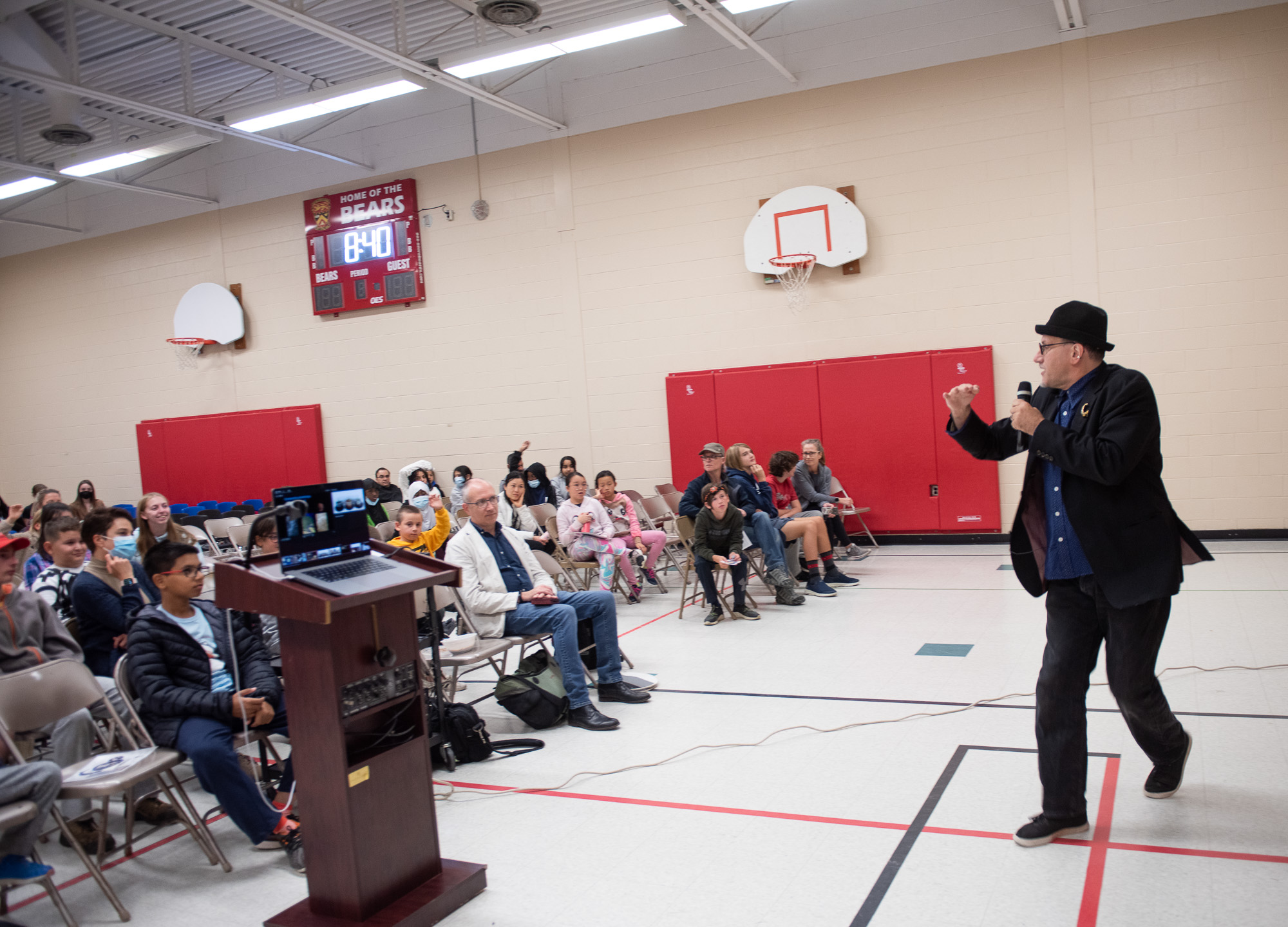
| "So then you have these aliens over here, and let's say they want to get over here, since it's a lot more awesome on the other side. So how do they do that?" |
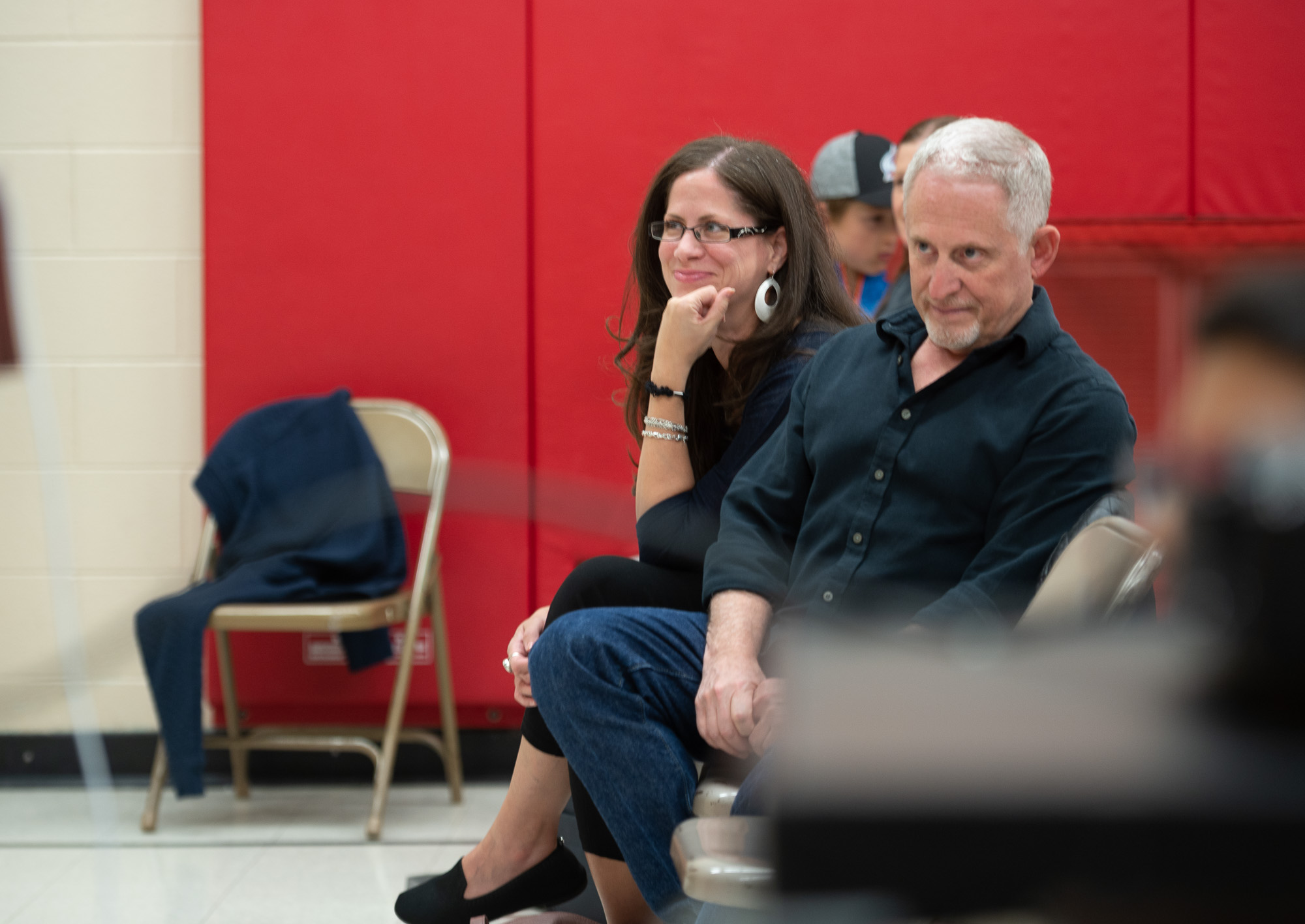
| David Grinspoon: "And see that guy over there, hiding in the corner? That's Alan Stern, who's responsible for the whole New Horizons mission to Pluto!" |
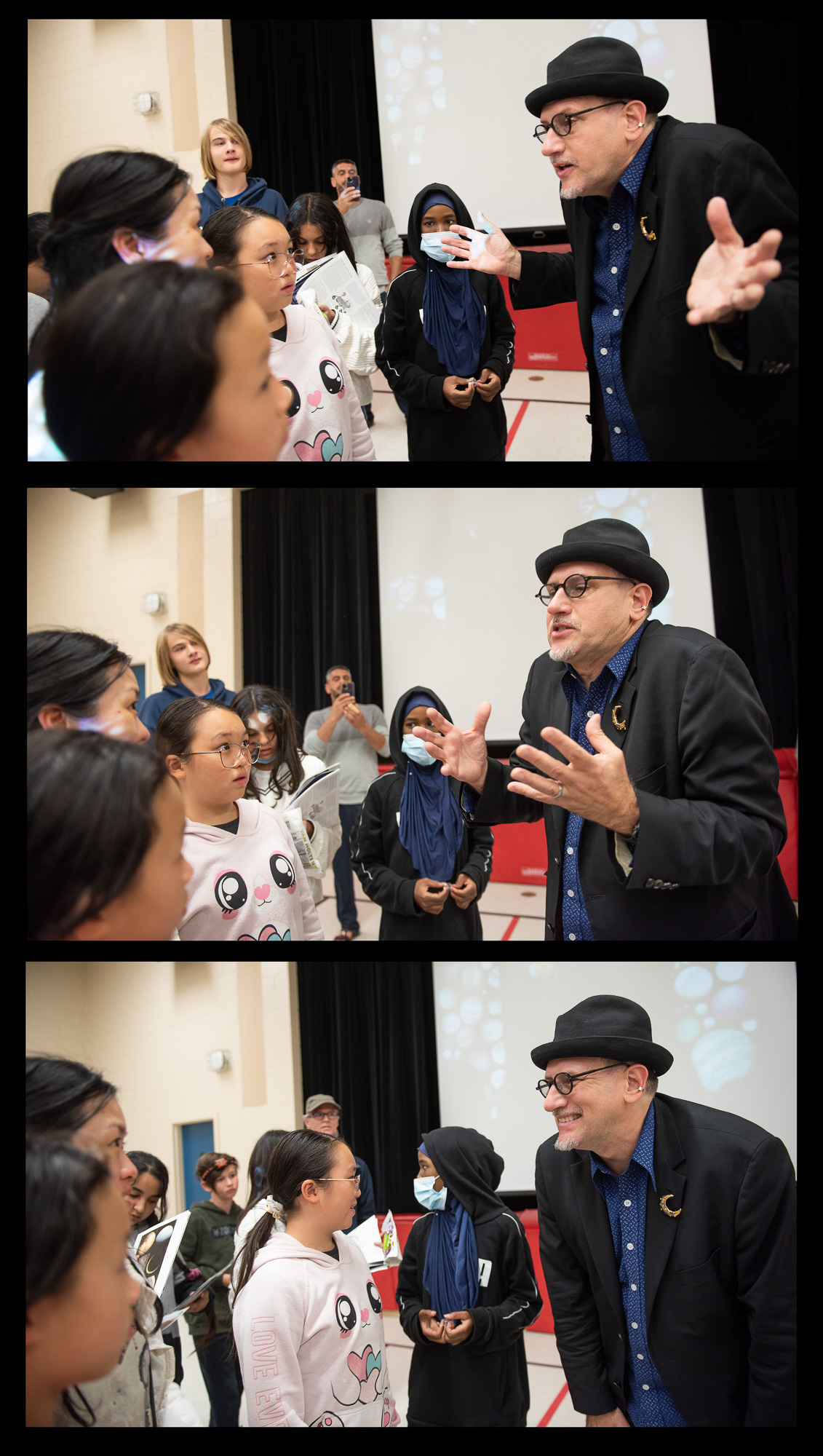
| David Grinspoon with fans after his talk. |
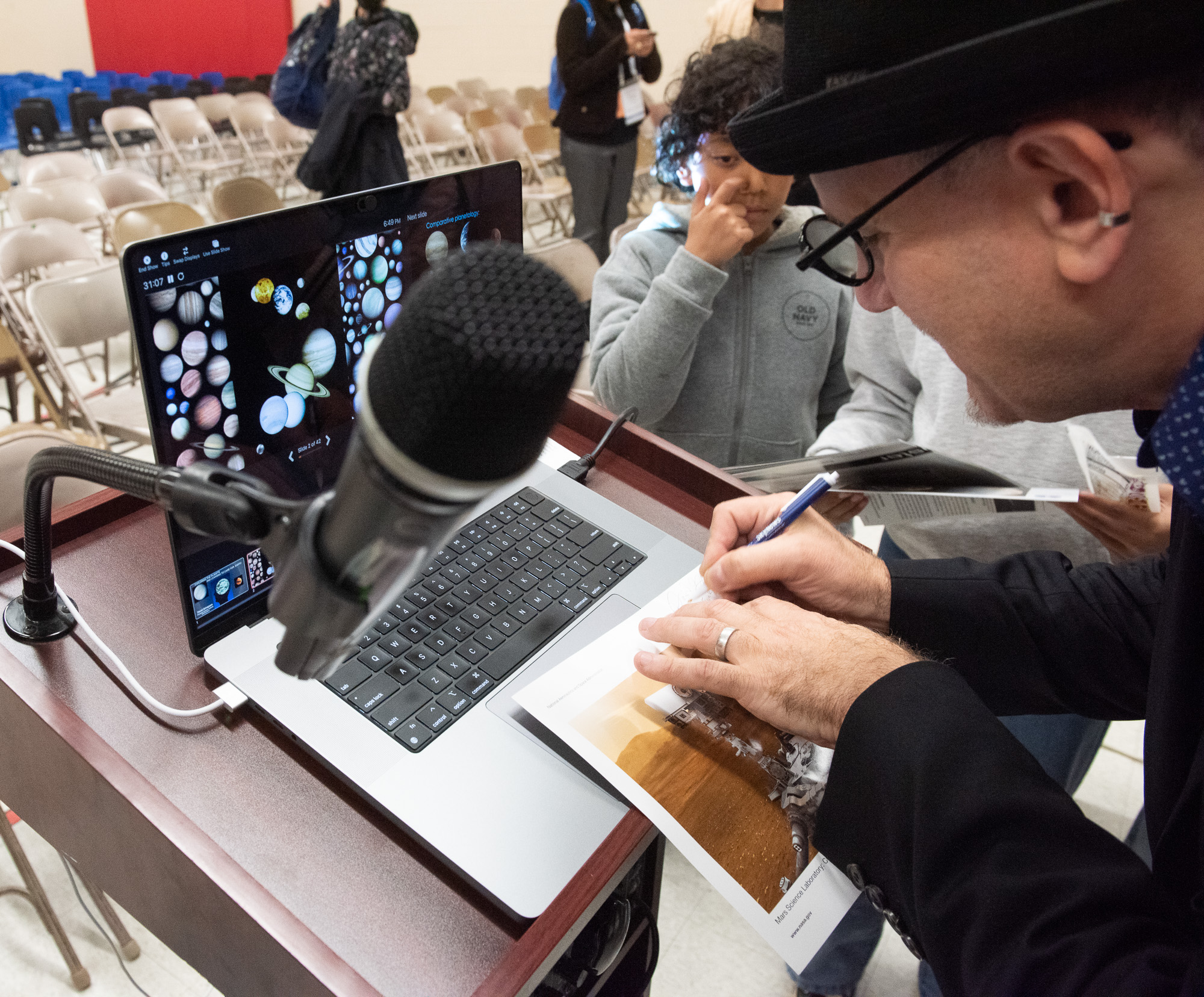
| David Grinspoon signs autographed NASA Mars lithographs for doting fans! Honestly, I would have loved to have one of those back in 3rd grade. I remember writing to JPL for images from Voyager, and they sent me some -- pretty awesome even without Grinspoon's signature. |
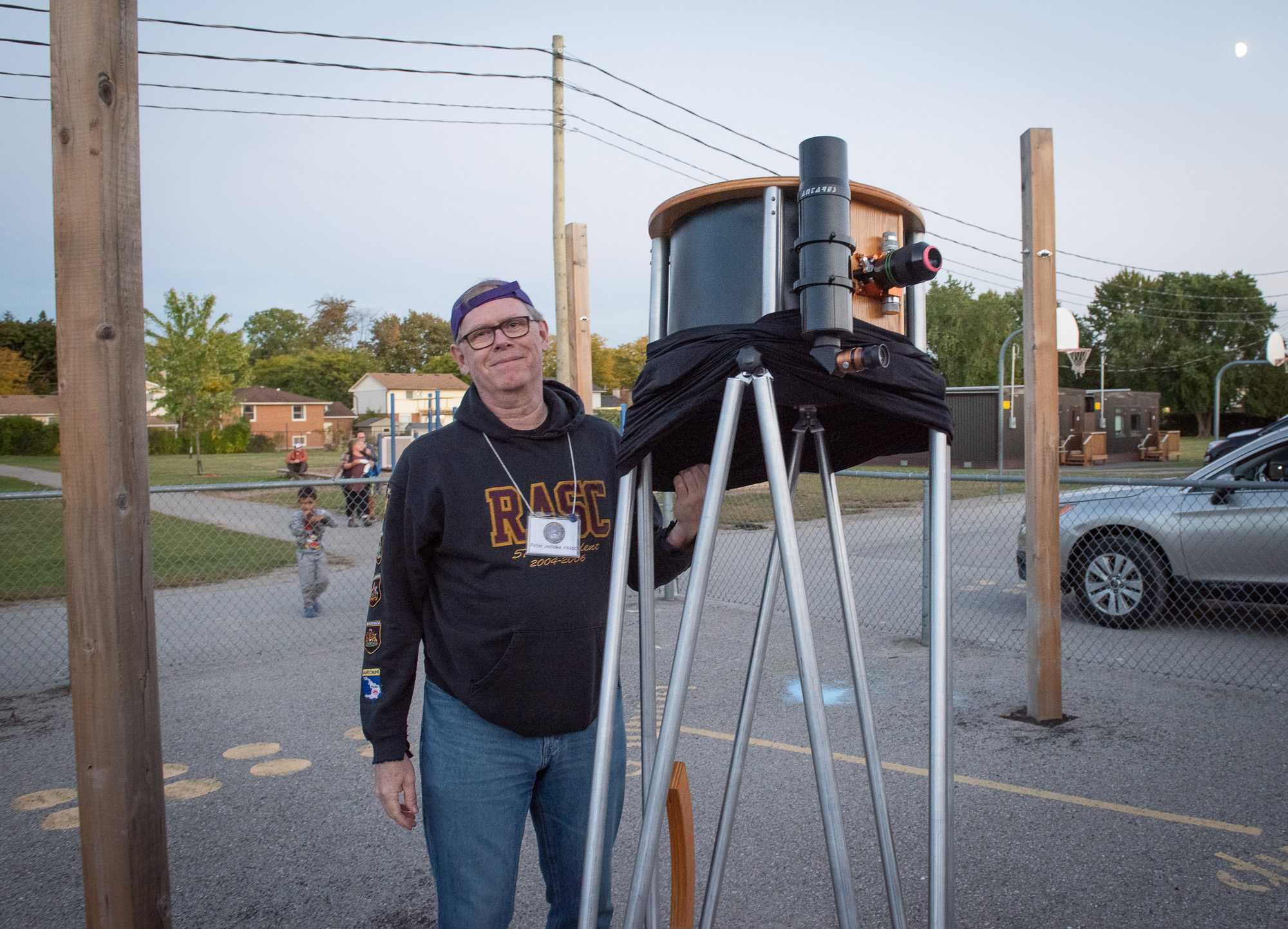
| Peter Jedicke and his colleagues at the Royal Astronomical Society of Canada set up their telescopes for the Star Party. Nice moon tonight!! Oh, and yes: Peter Jedicke is the brother of astronomer Bob Jedicke (U. Hawaii). |
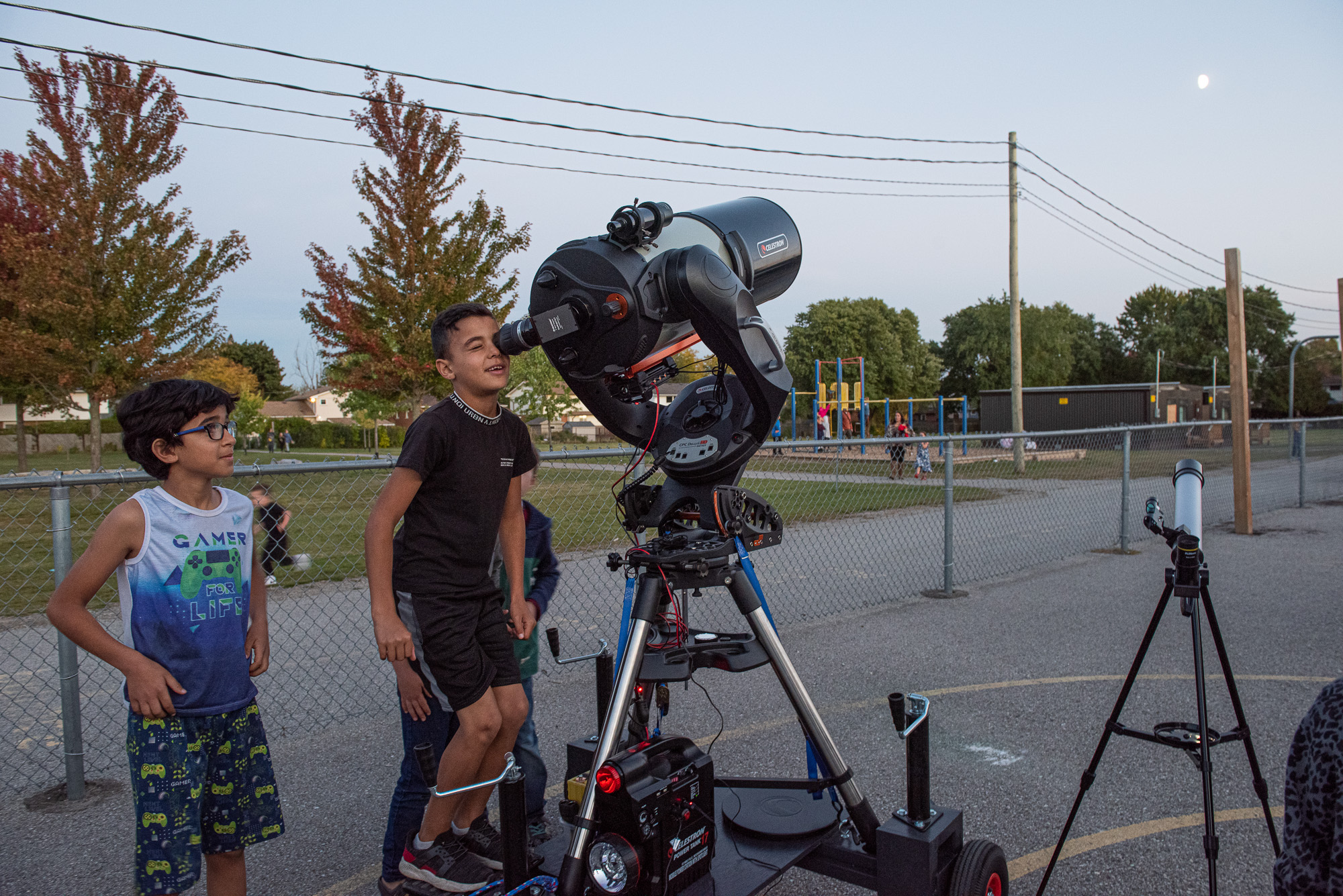
| Check out that moon! |
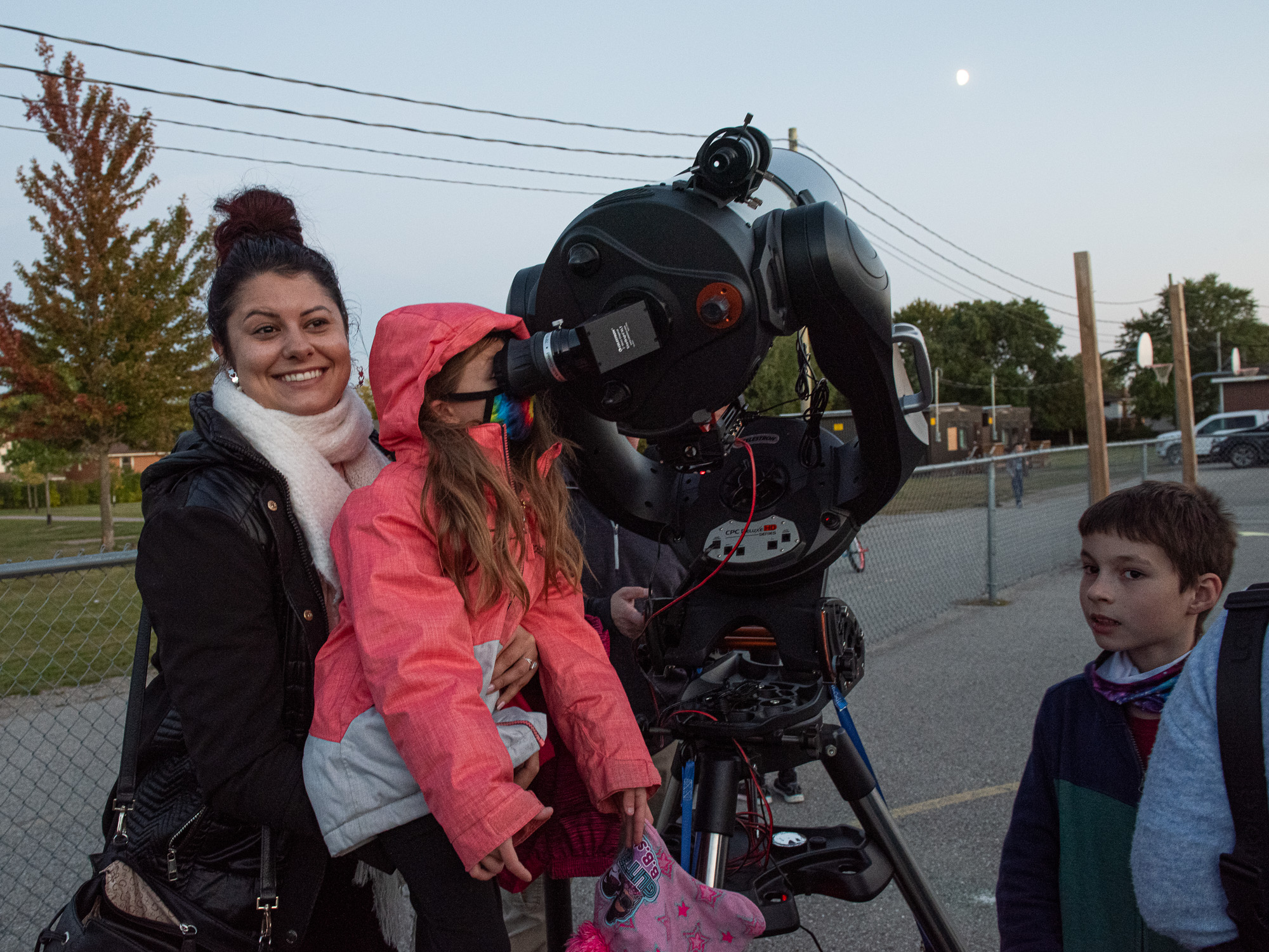
| Star party at the Public Night! There were something like 700 people who showed up for it -- a fantastic crowd! |
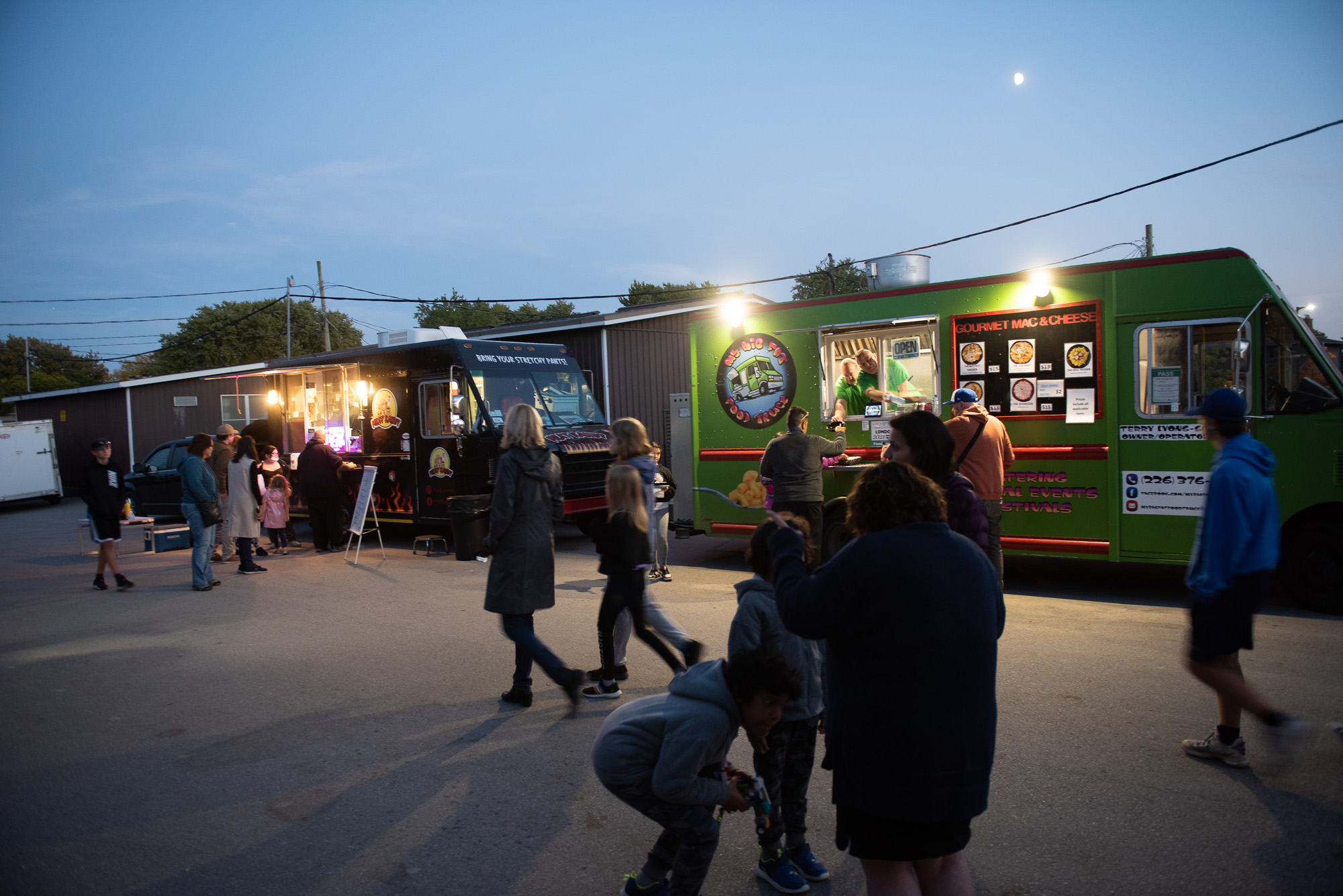
| The organizers had set up for several food trucks to show up at the Public Night + Star Party. Of course, I had to order from that mobile poutine truck! |
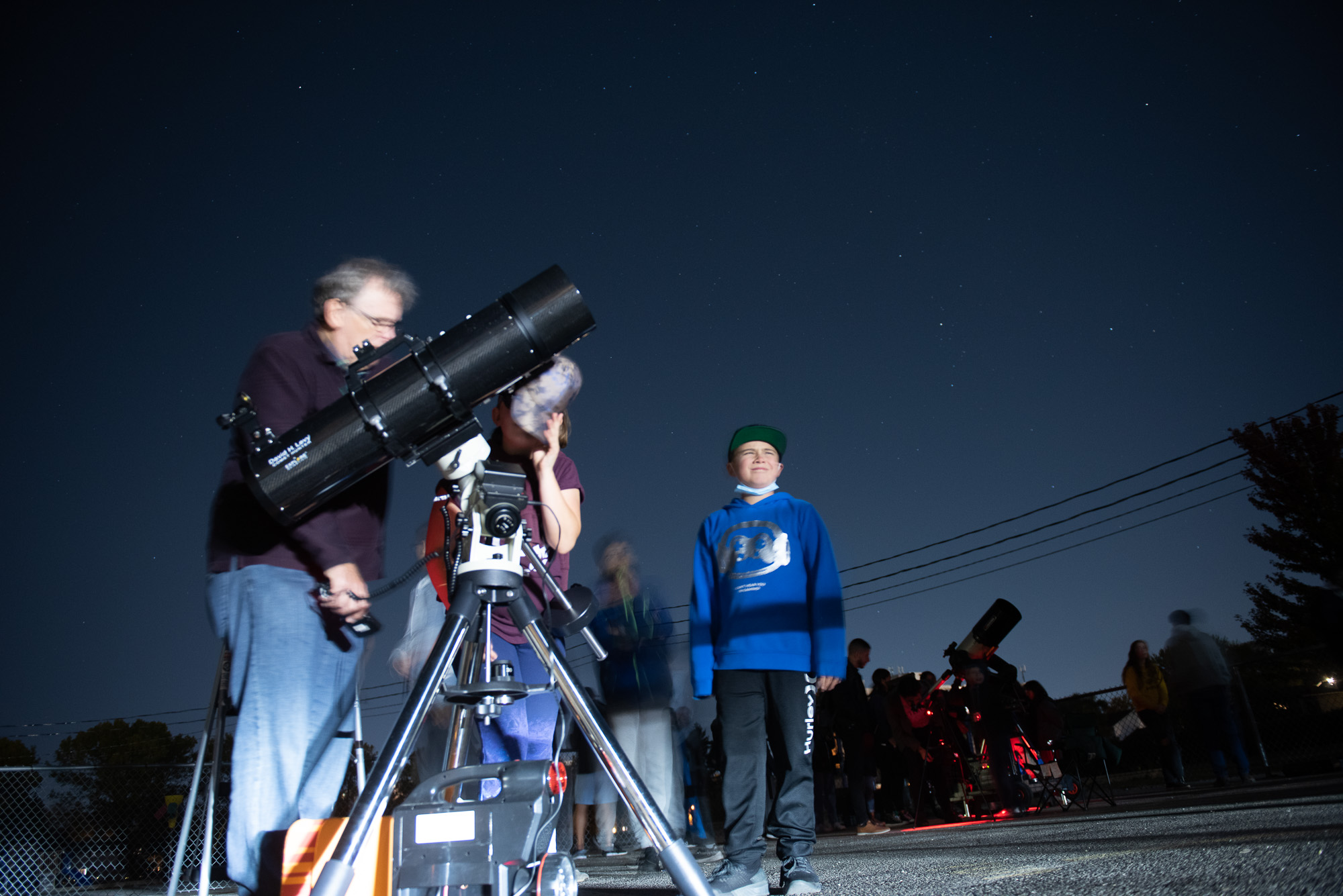
| Looking at Jupiter and its moons. |
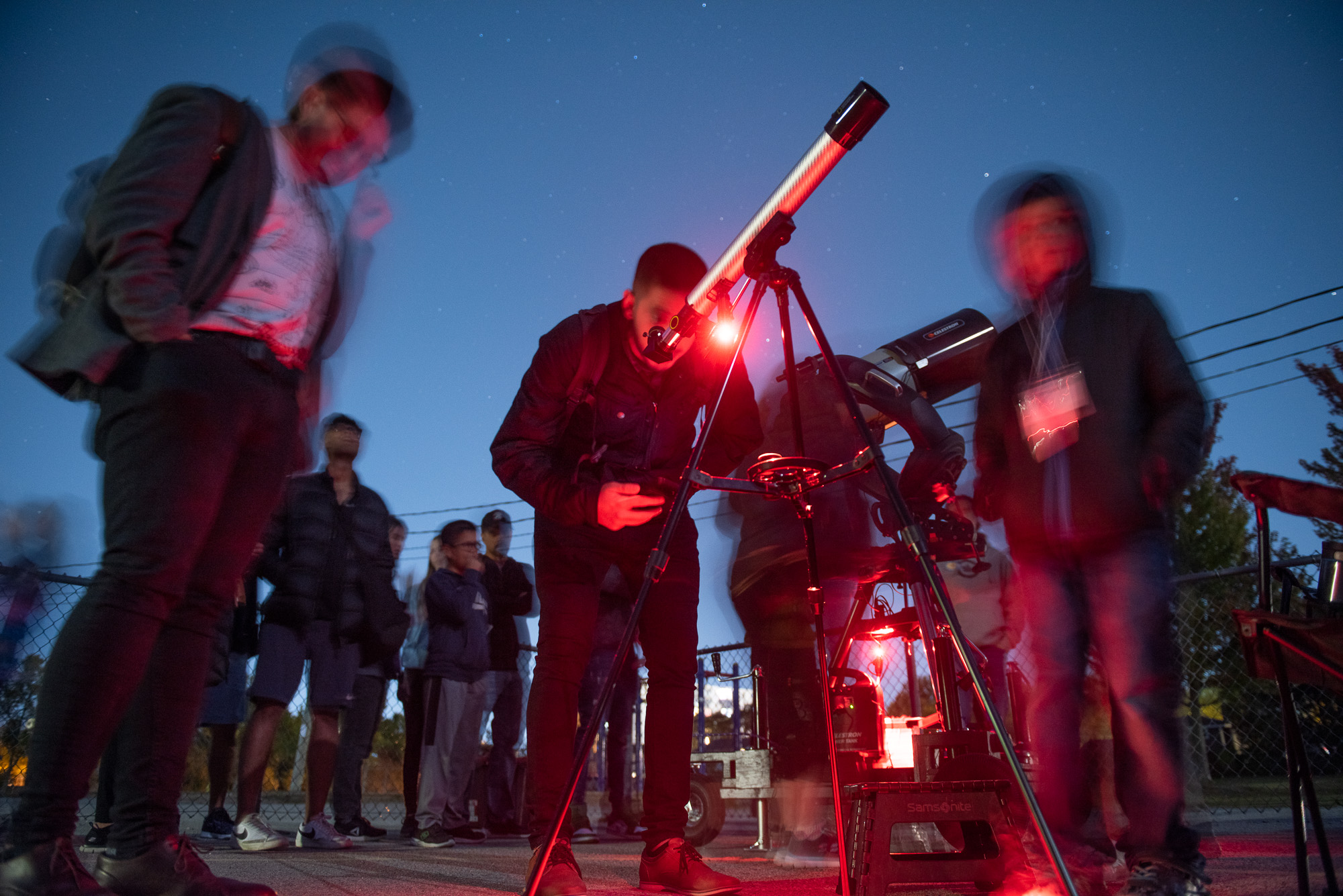
| Star party at the Public Night! Total attendance was about 700 people, with about a dozen telescopes set up. I came out after the big rush, but it was still a huge crowd. |
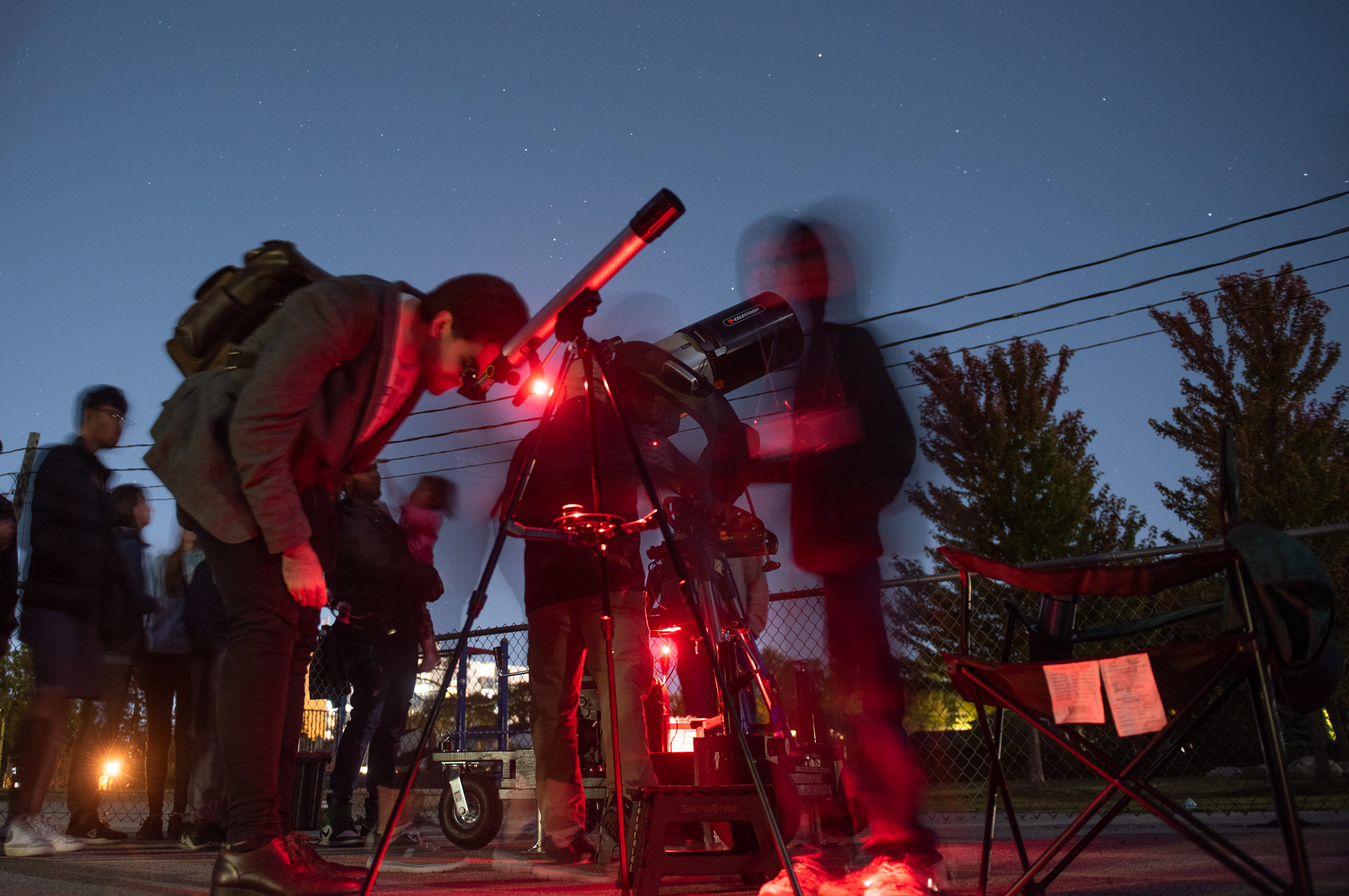
| Star party at the Public Night! |
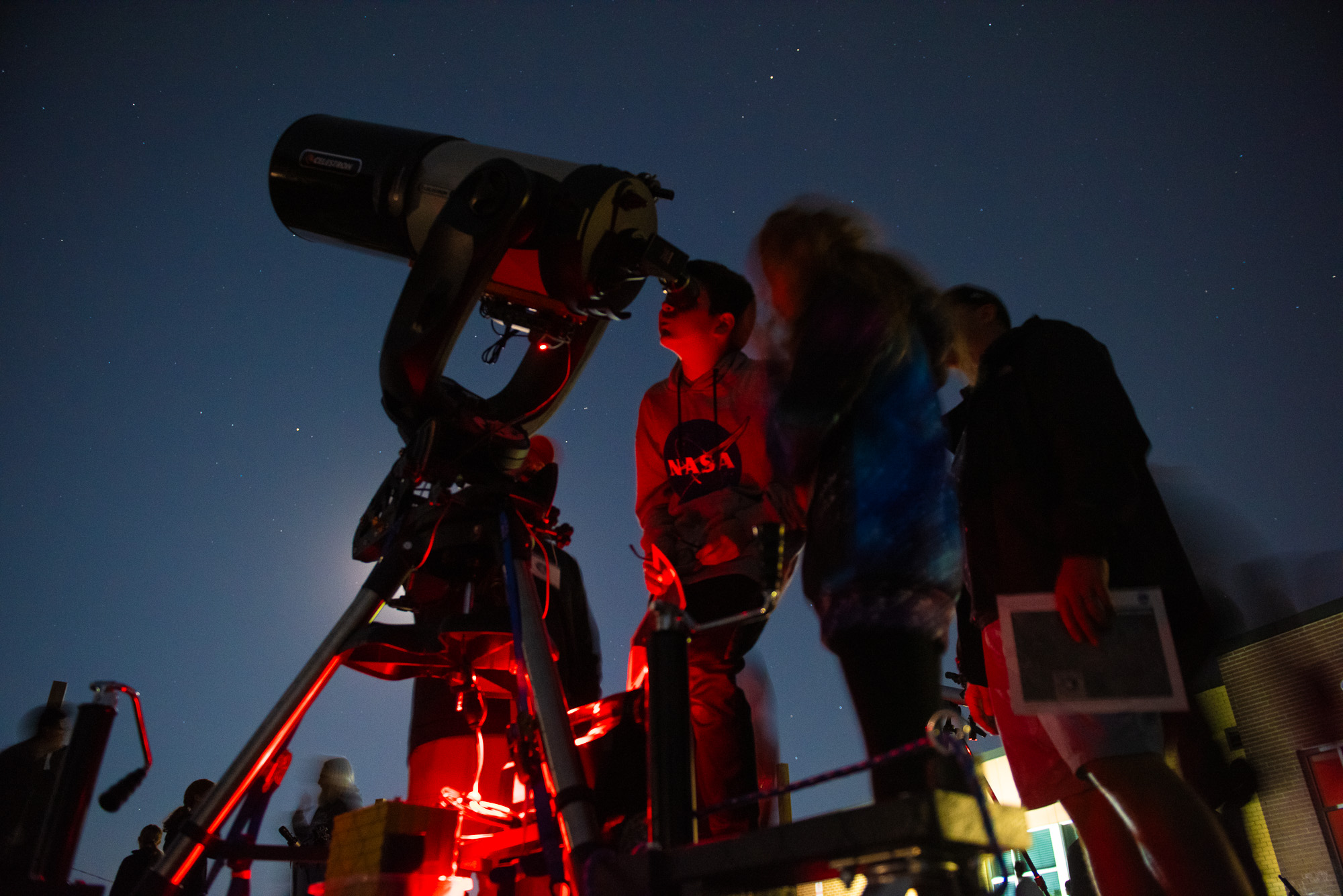
| Star party at the Public Night! |

| Brian Jackson (Boise State), Peter Jedicke (RASC London), and Katelyn Beecroft (RASC London) after the star party. It was fantastic to have such a large and successful public DPS public event. NB: A few weeks later, passing over essentially this same spot, was a huge fireball -- one of just six to date that was detected as an asteroid in space a few hours earlier, and then burned up the atmosphere. The entry point was over Ontario. Super cool, and we'll have to time future public nights so as to coordinate with such events. |
Invited Plenaries
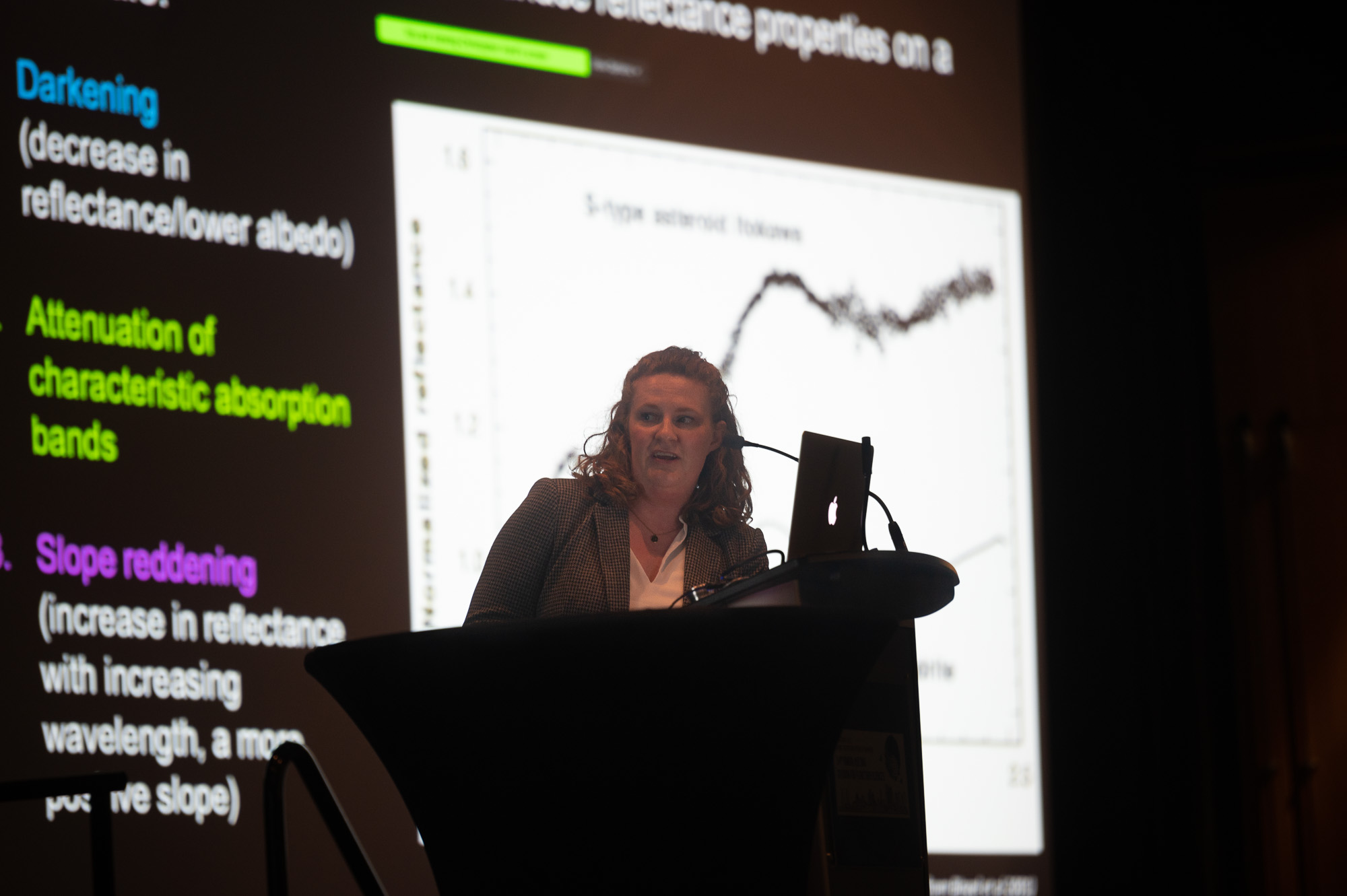
| Michelle Thompson (Purdue) presents in the Astromaterials plenary. |
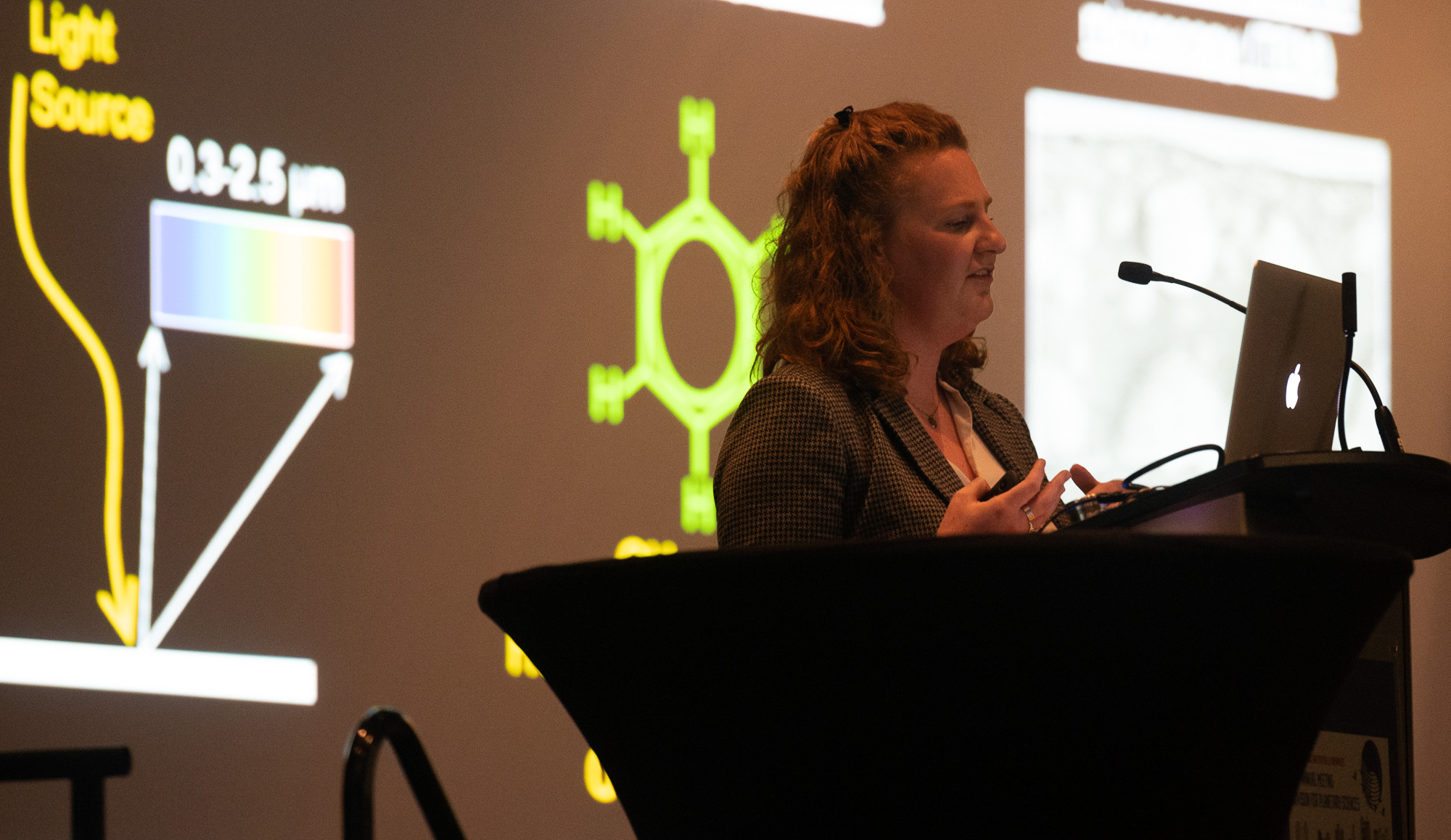
| Michelle Thompson (Purdue). |
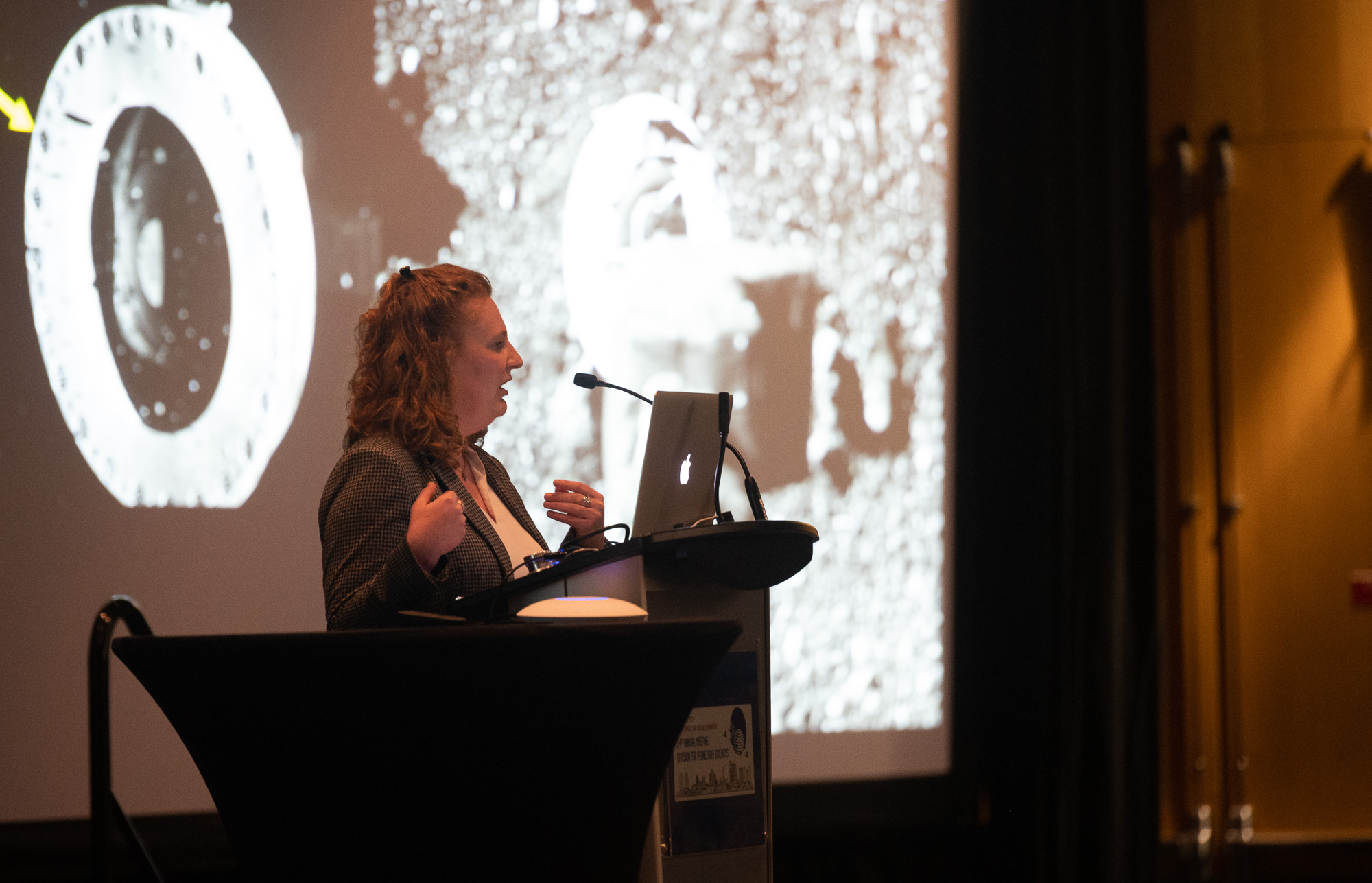
| Michelle Thompson (Purdue). |
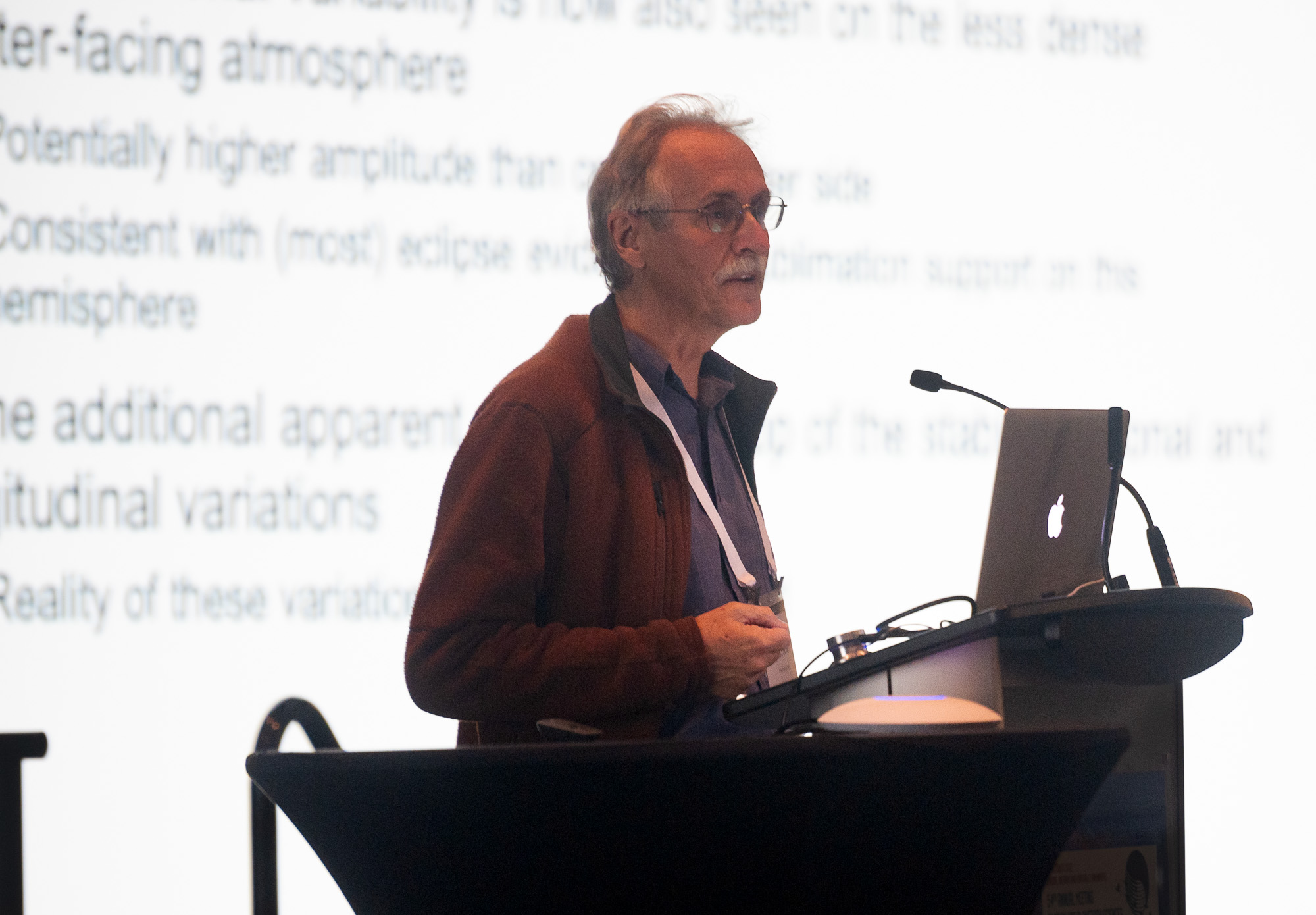
| John Spencer (SwRI) talks Io variability. Surprise: turns out that Io's atmosphere is pretty stable long-term, rather than coming and going with volcanic activity. |
| John Spencer (SwRI) talks Io variability. |
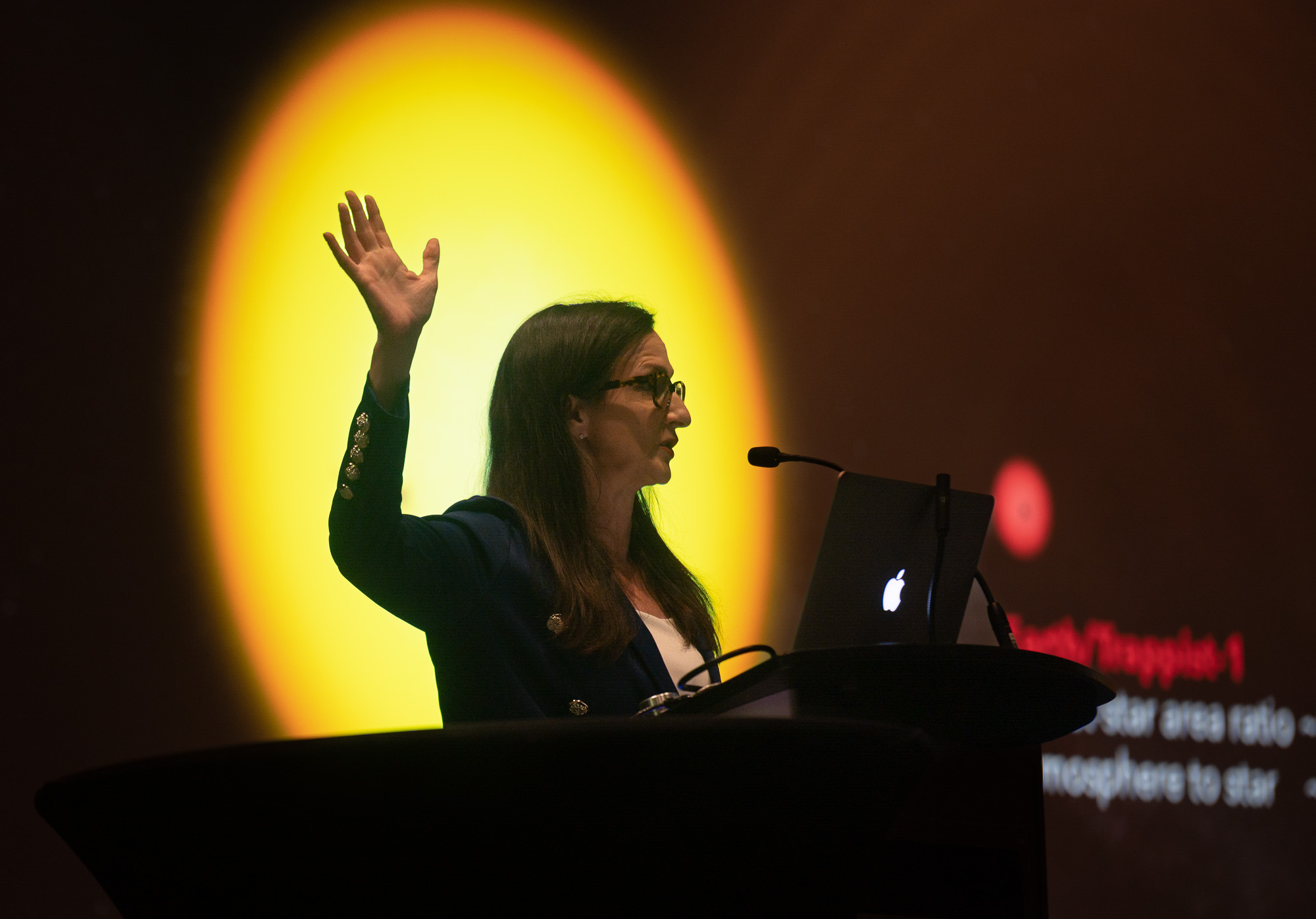
| Sarah Seager (MIT) talks about looking for biosignatures in exoplanet atmopheres. This was part of the new 'Bold Ideas' session. I thought it was cool: three plenary-length talks, about pushing things forward. |
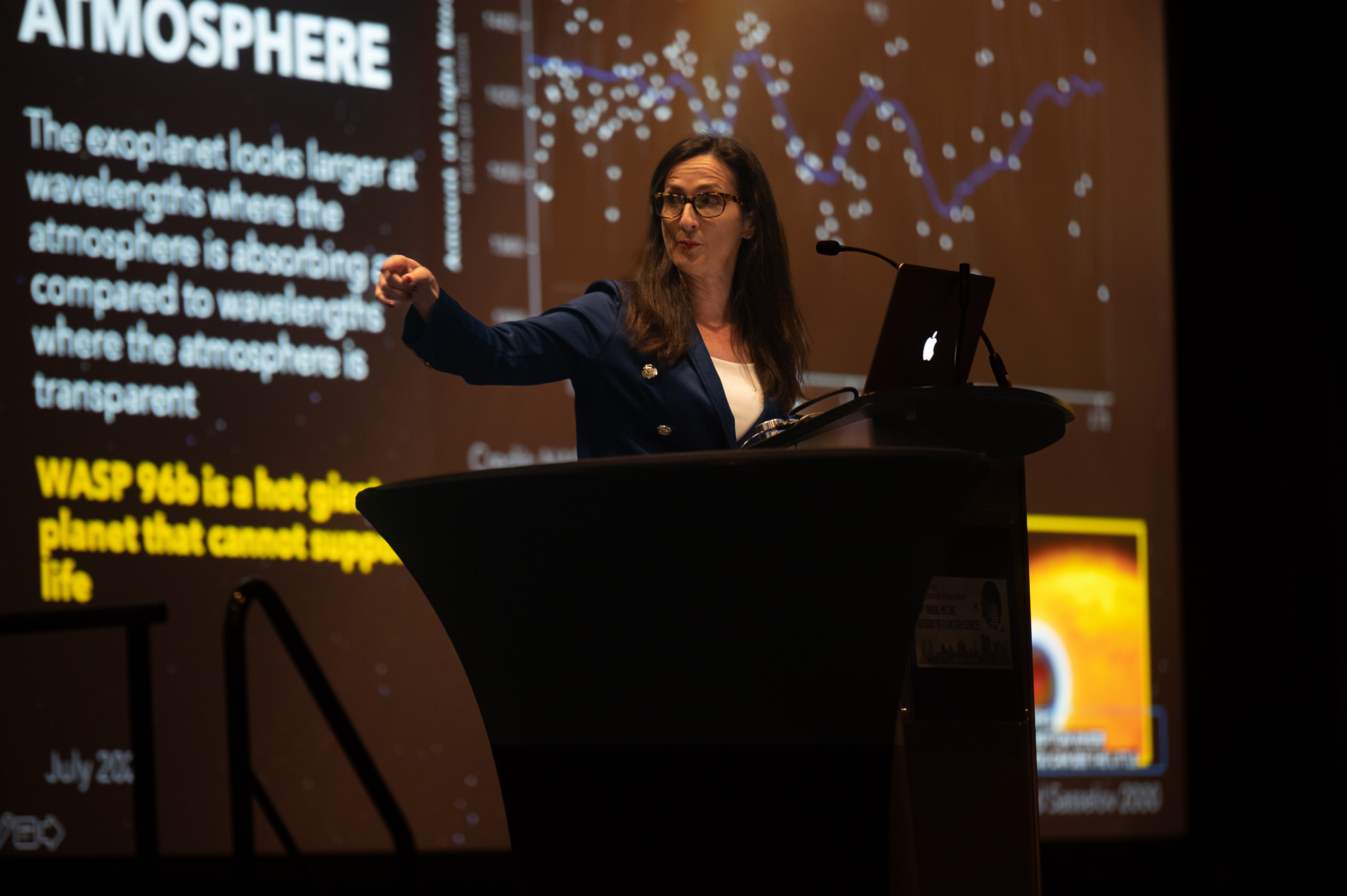
| Sarah Seager (MIT) talks about looking for biosignatures in exoplanet atmopheres. |
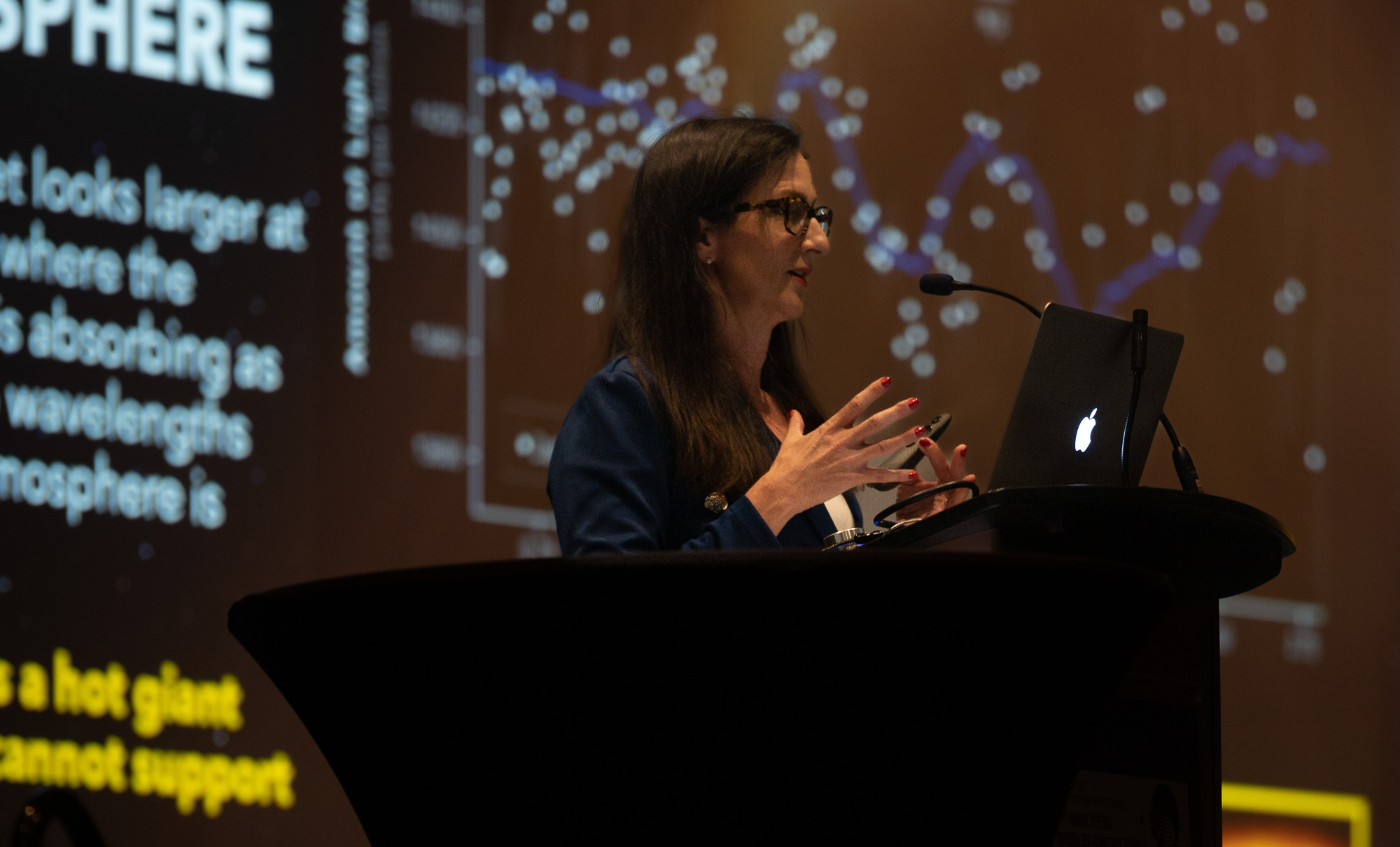
| Sarah Seager (MIT) talks about looking for biosignatures in exoplanet atmopheres. "And regarding life on Venus, due credit to David Grinspoon for keeping this idea alive all these years." |
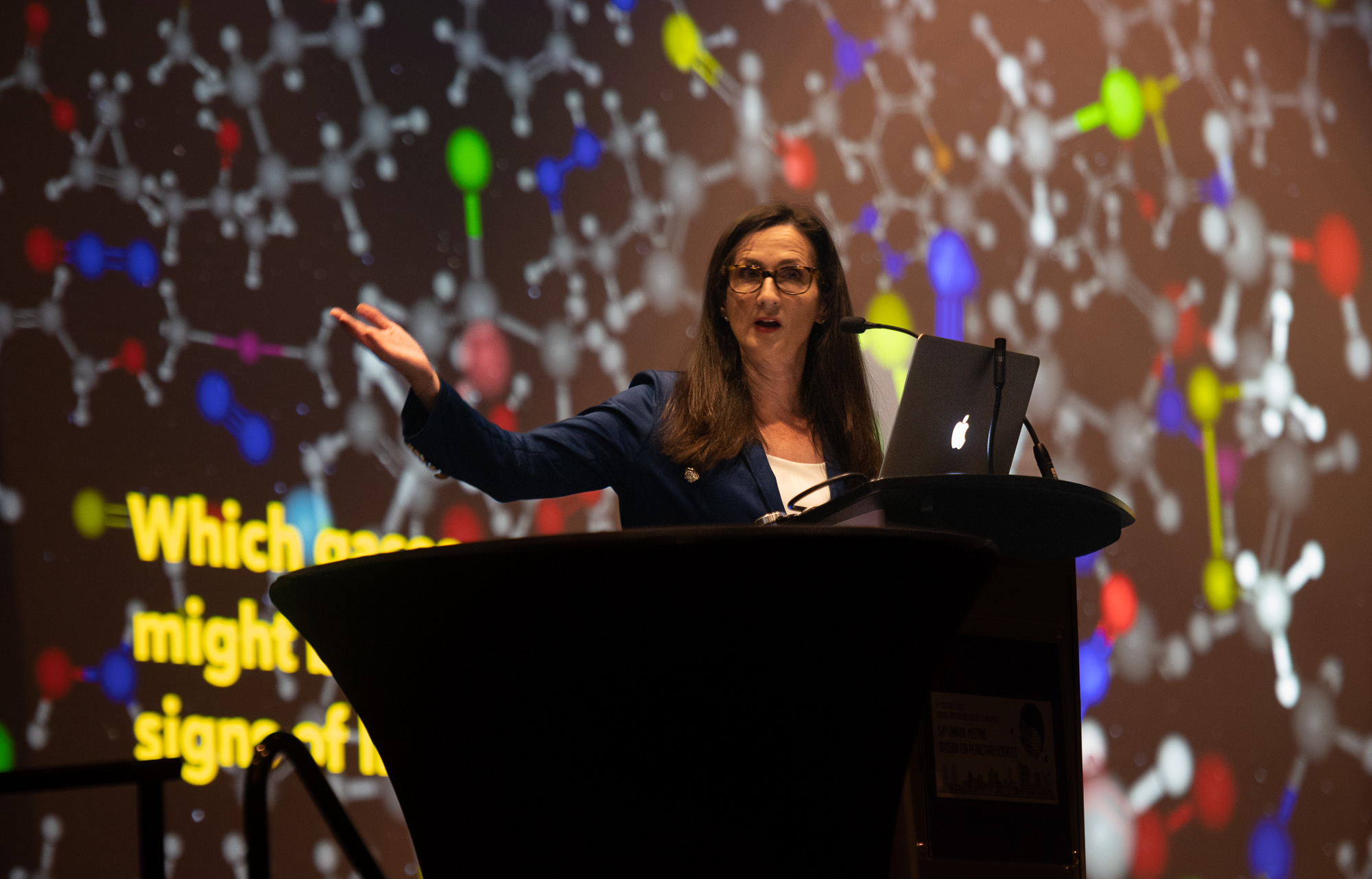
| Sarah Seager (MIT) talks about looking for biosignatures in exoplanet atmopheres. |
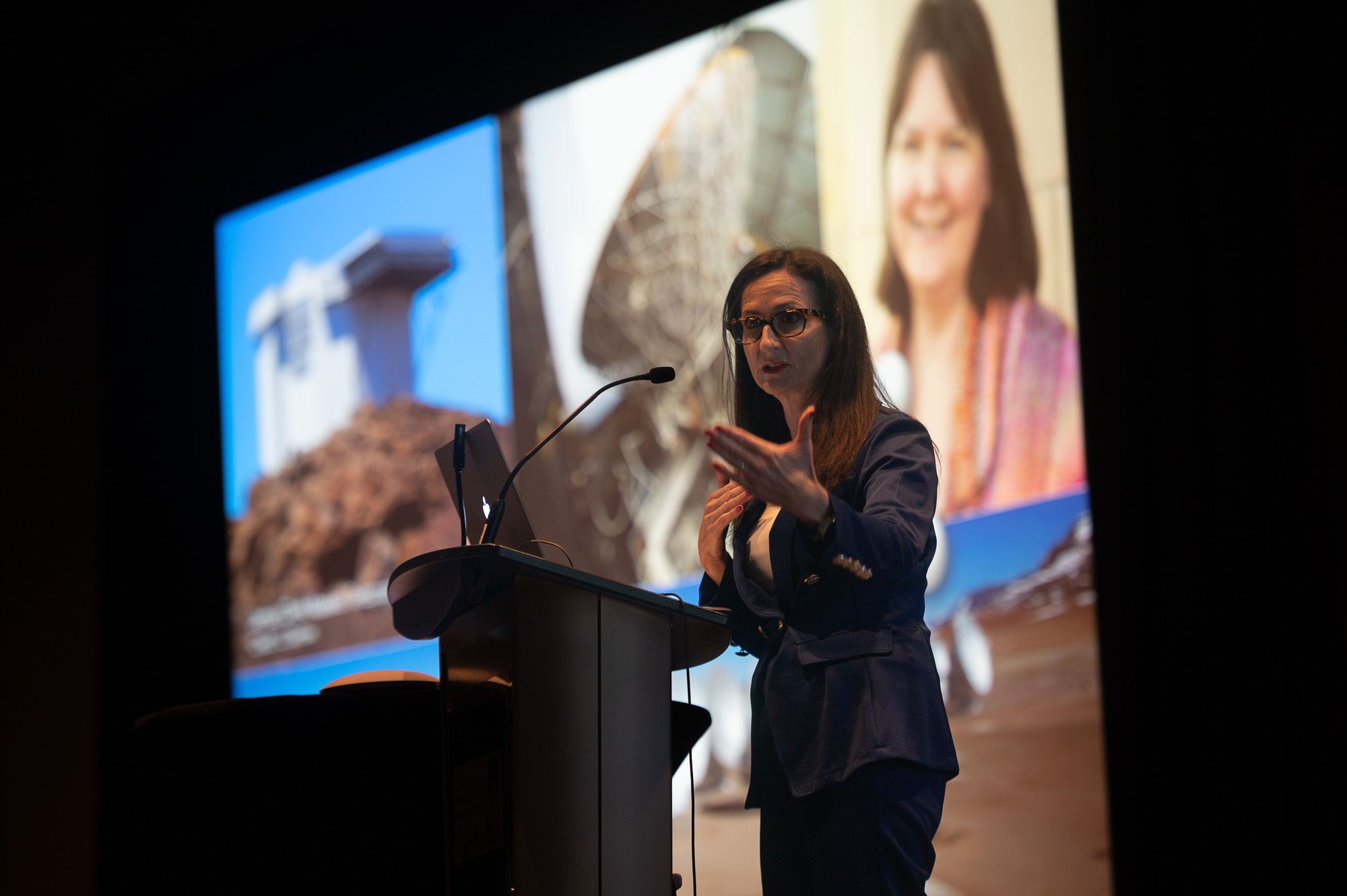
| Sarah Seager (MIT). |
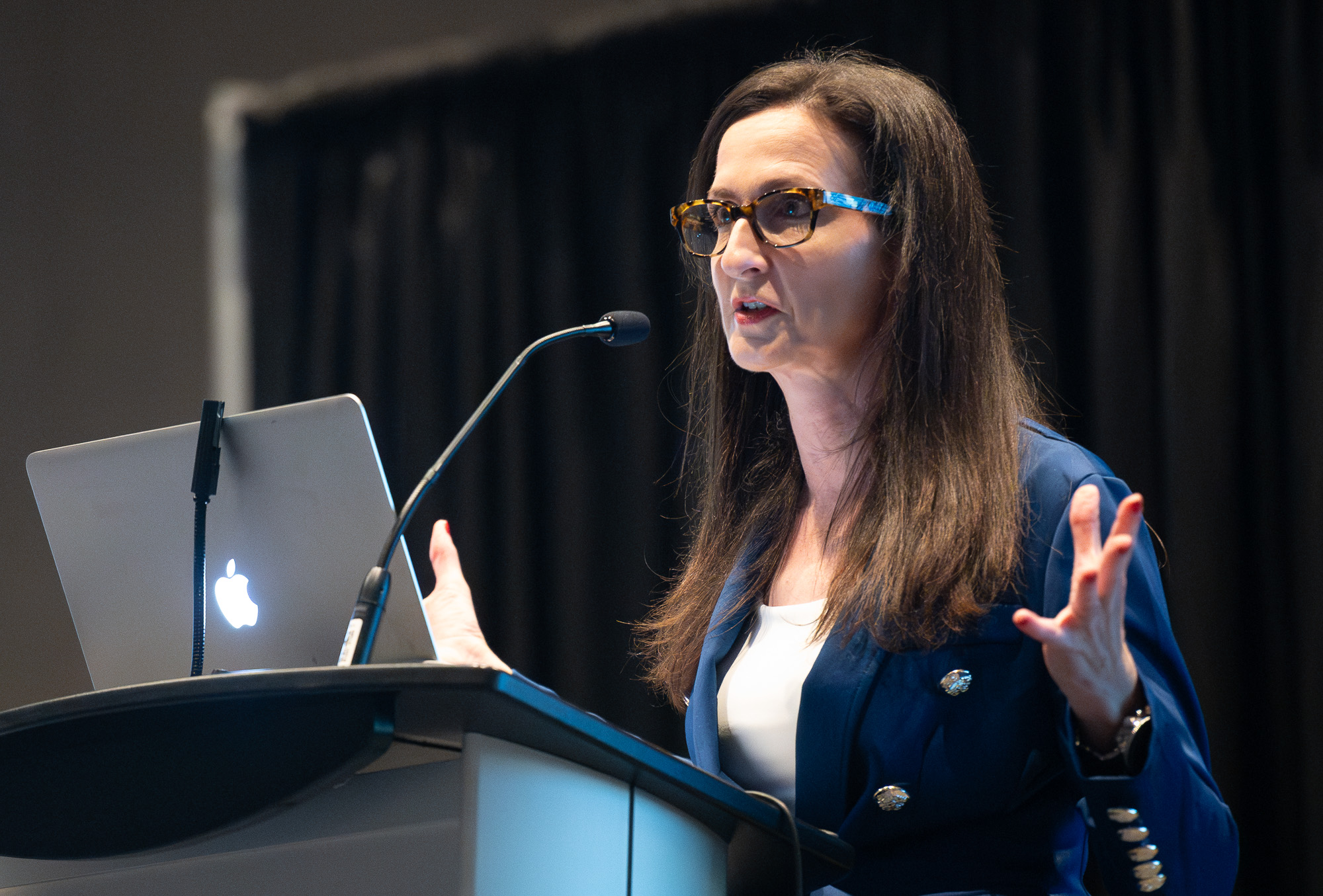
| Sarah Seager (MIT). |
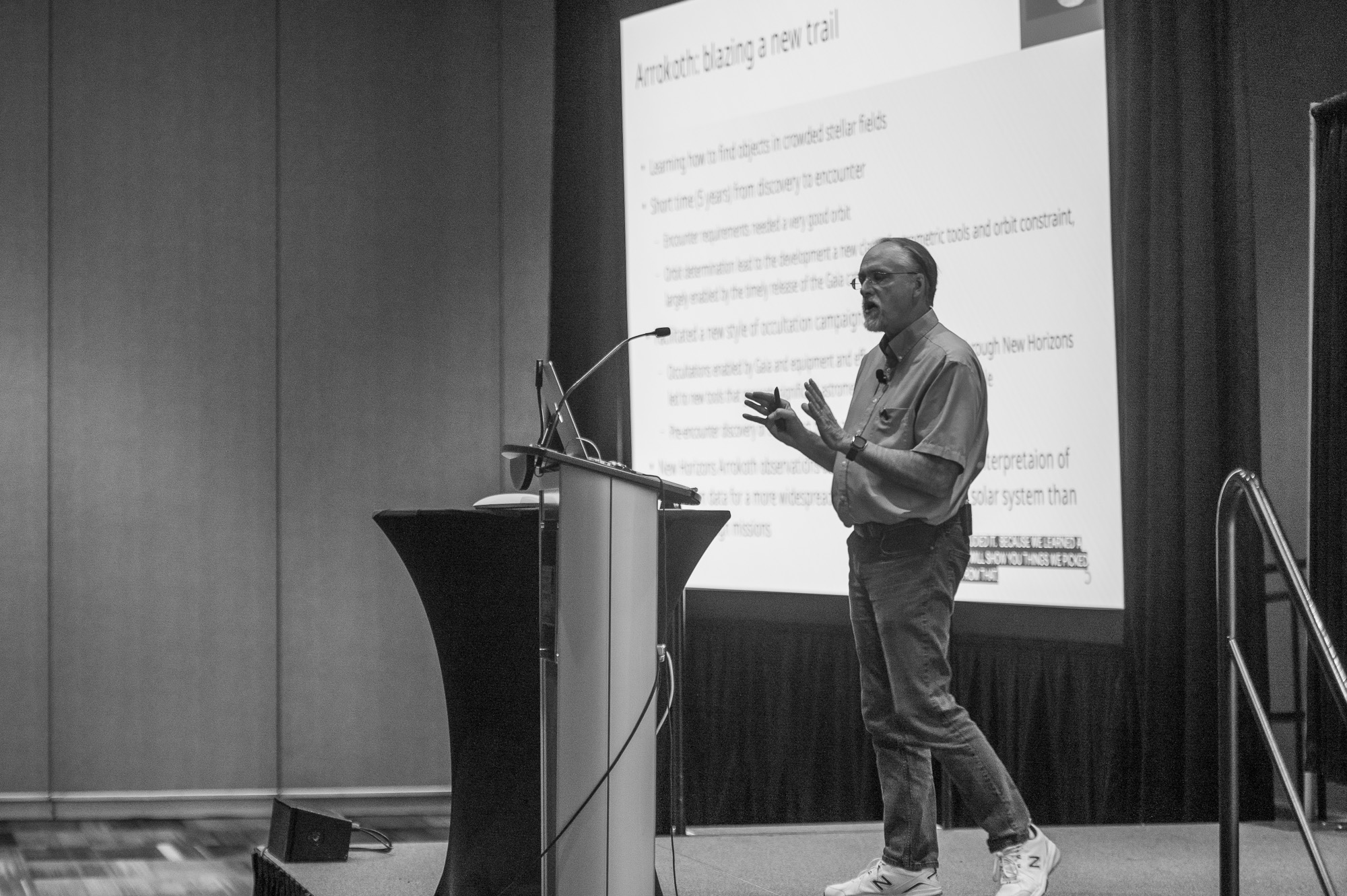
| Marc Buie (SwRI) talks about asteroid and small-body occultations, in the Bold Ideas plenary. |
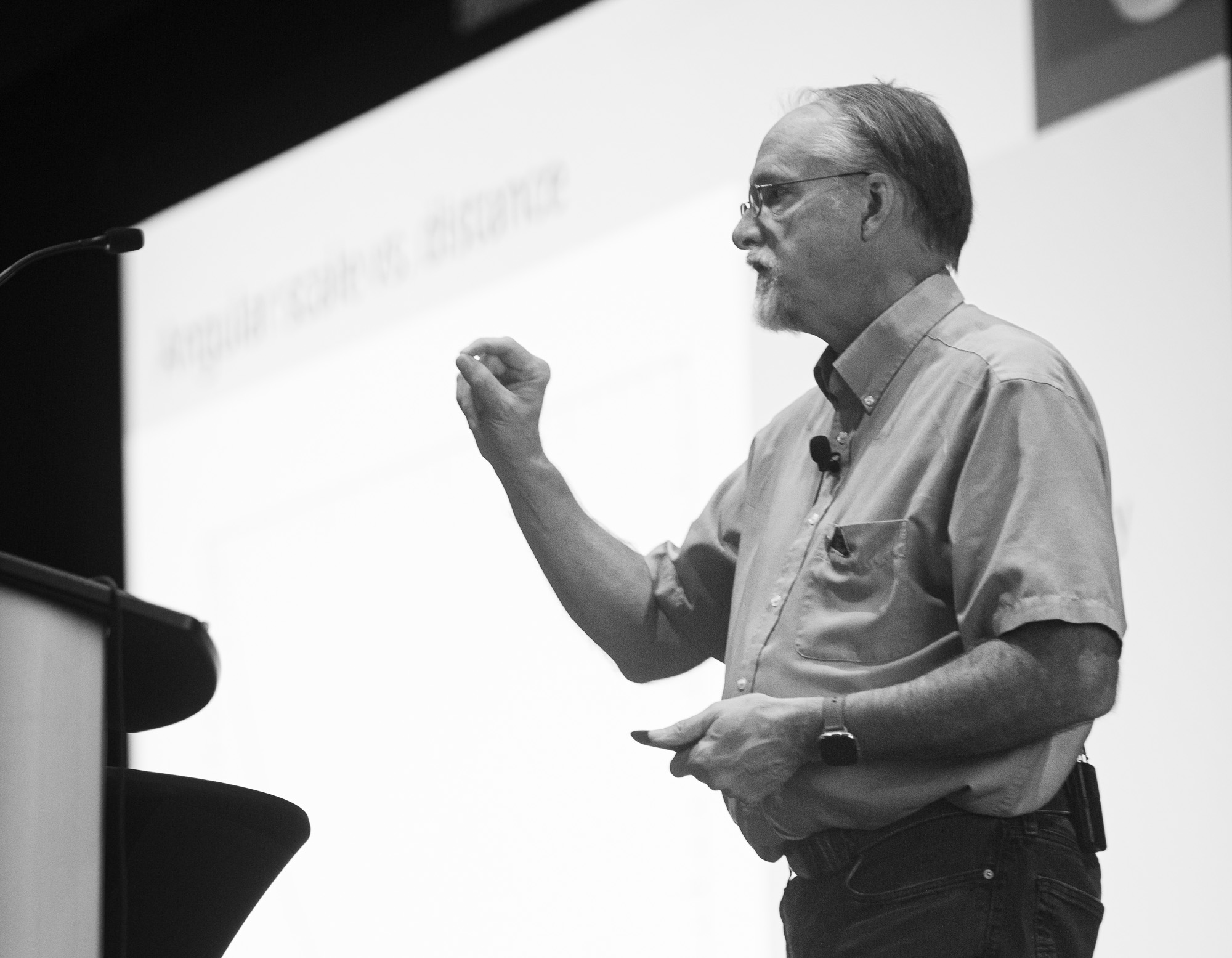
| Marc Buie (SwRI) talks about asteroid and small-body occultations, in the Bold Ideas plenary. Asteroid occultations were critical to New Horizons' Arrokoth flyby, and are similarly important for the Lucy encounters. |
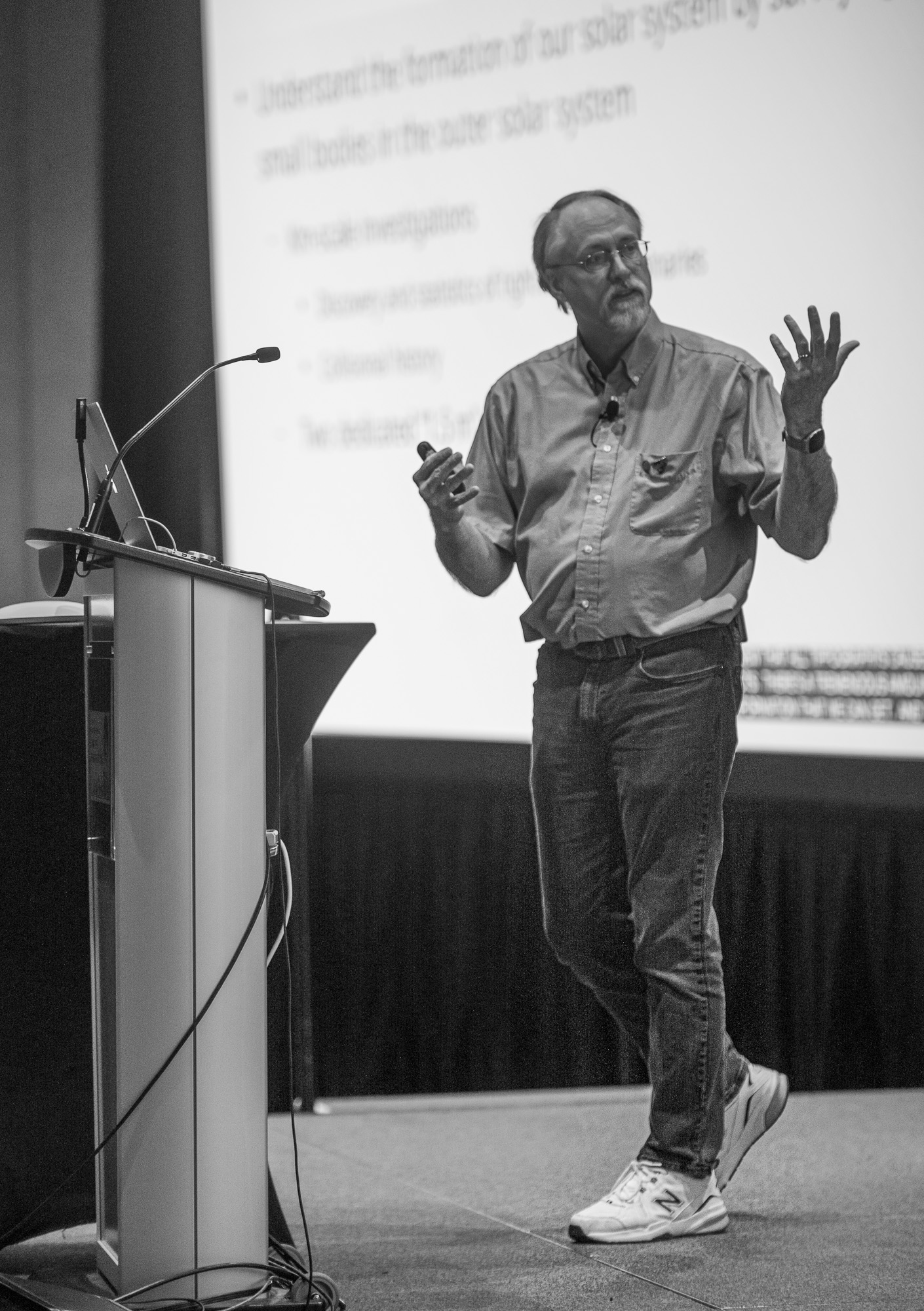
| Marc Buie (SwRI). |
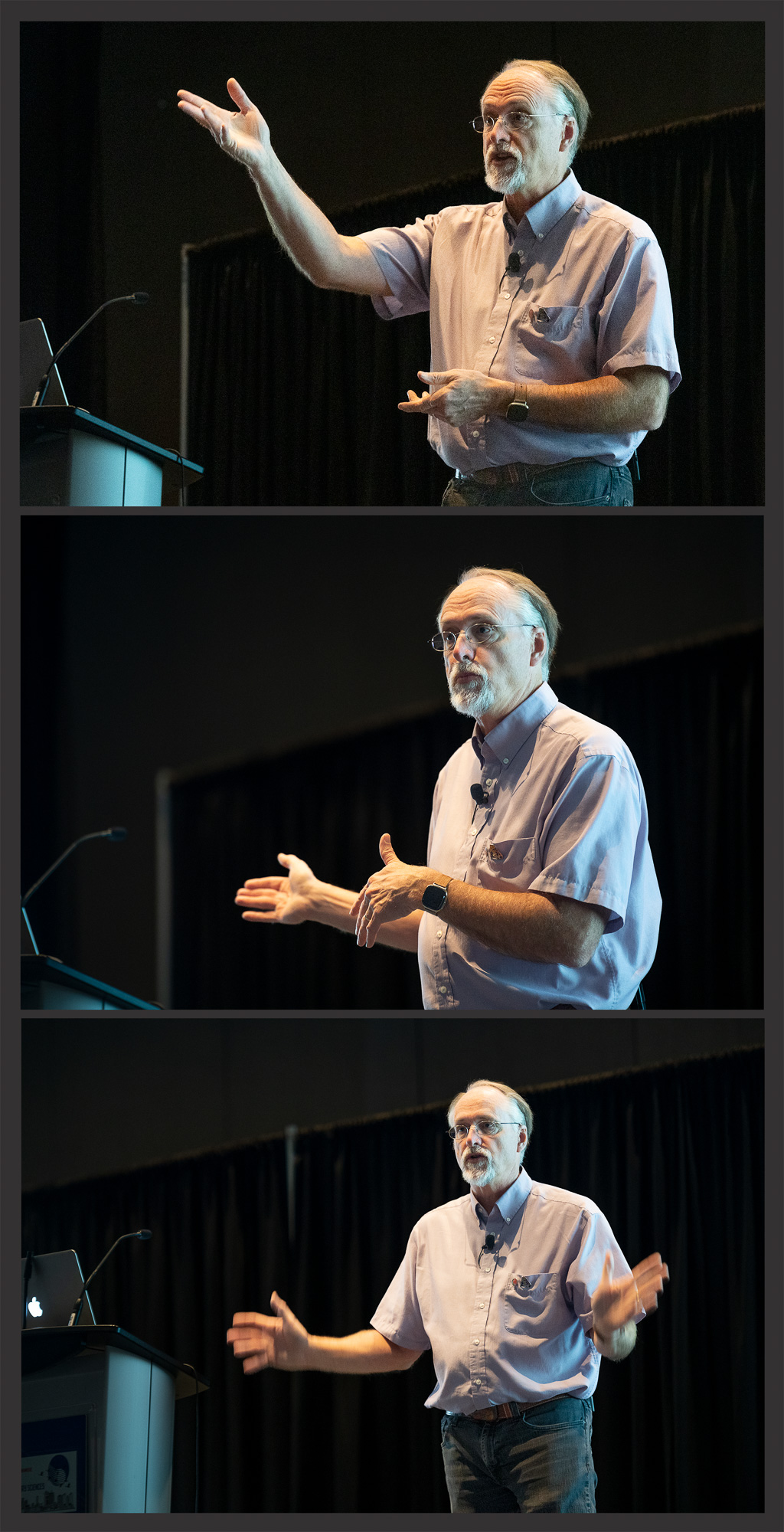
| Marc Buie (SwRI) talks about asteroid and small-body occultations, in the Bold Ideas plenary. "Look. We've got the techniques. We've got the training. We've got 82 telescopes. We can do this. There is no development needed. We just need money to send bodies into the field." |

| Emily Lakdawalla (freelance) gives a plenary on the history of space exploration for the last 60 years. |
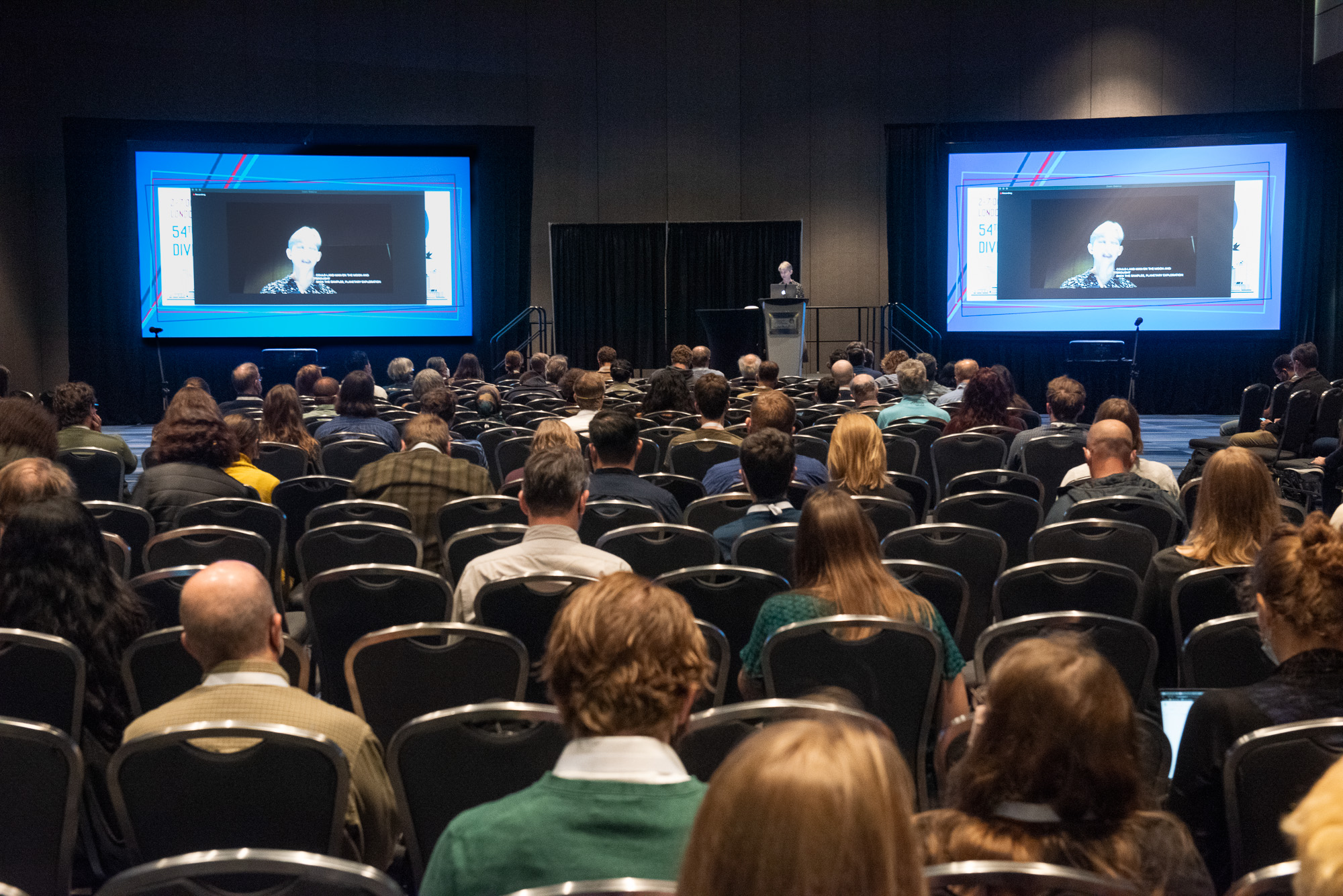
| Emily Lakdawalla (freelance) gives a talk on the history of space exploration for the last 60 years. |
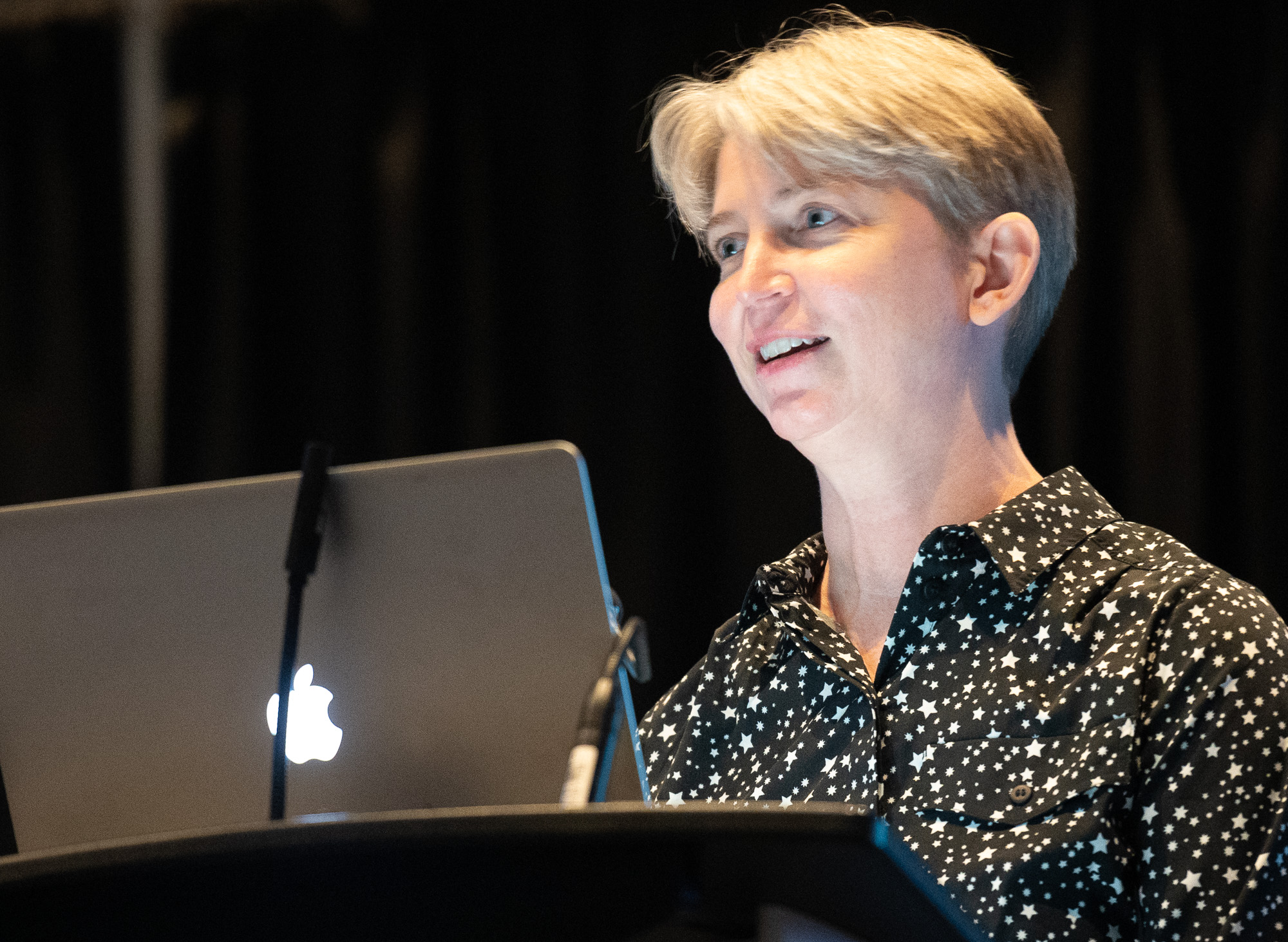
| Emily Lakdawalla. |
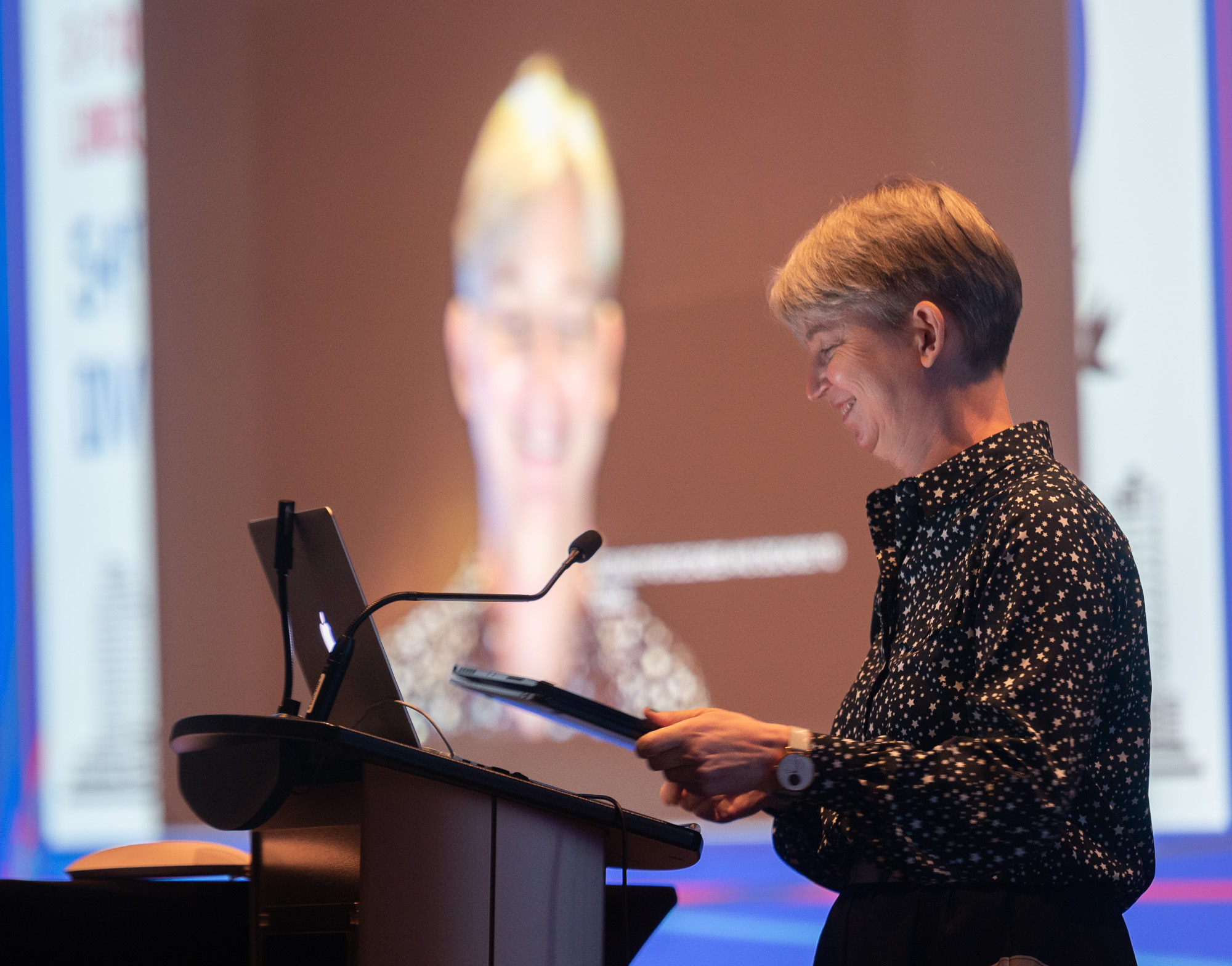
| Emily Lakdawalla. |
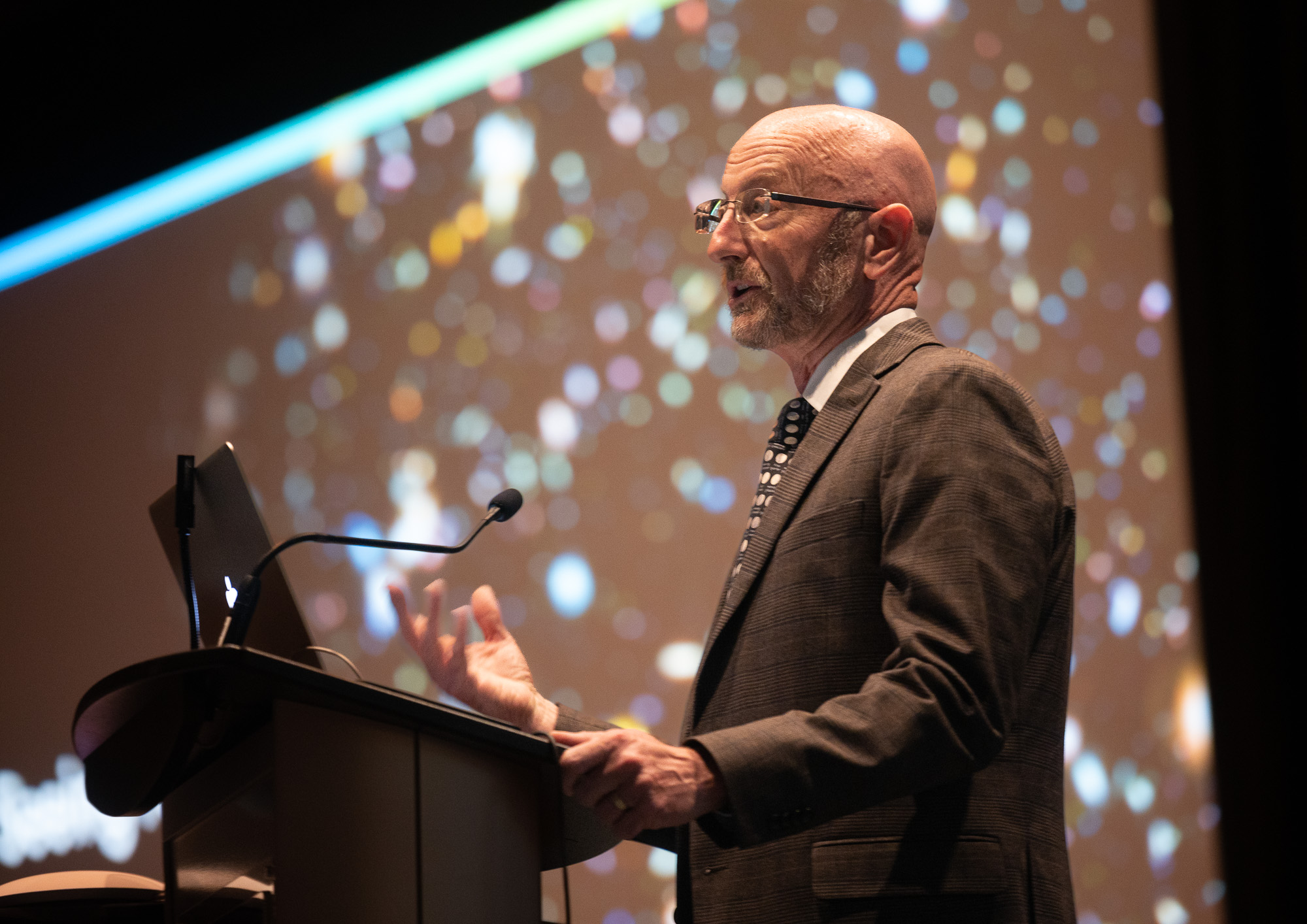
| Eric P. Smith (NASA HQ, Astrophysics Division) talks about the incredible engineering challenge that JWST was. "It has 155 motors. 400 meters of cables." |
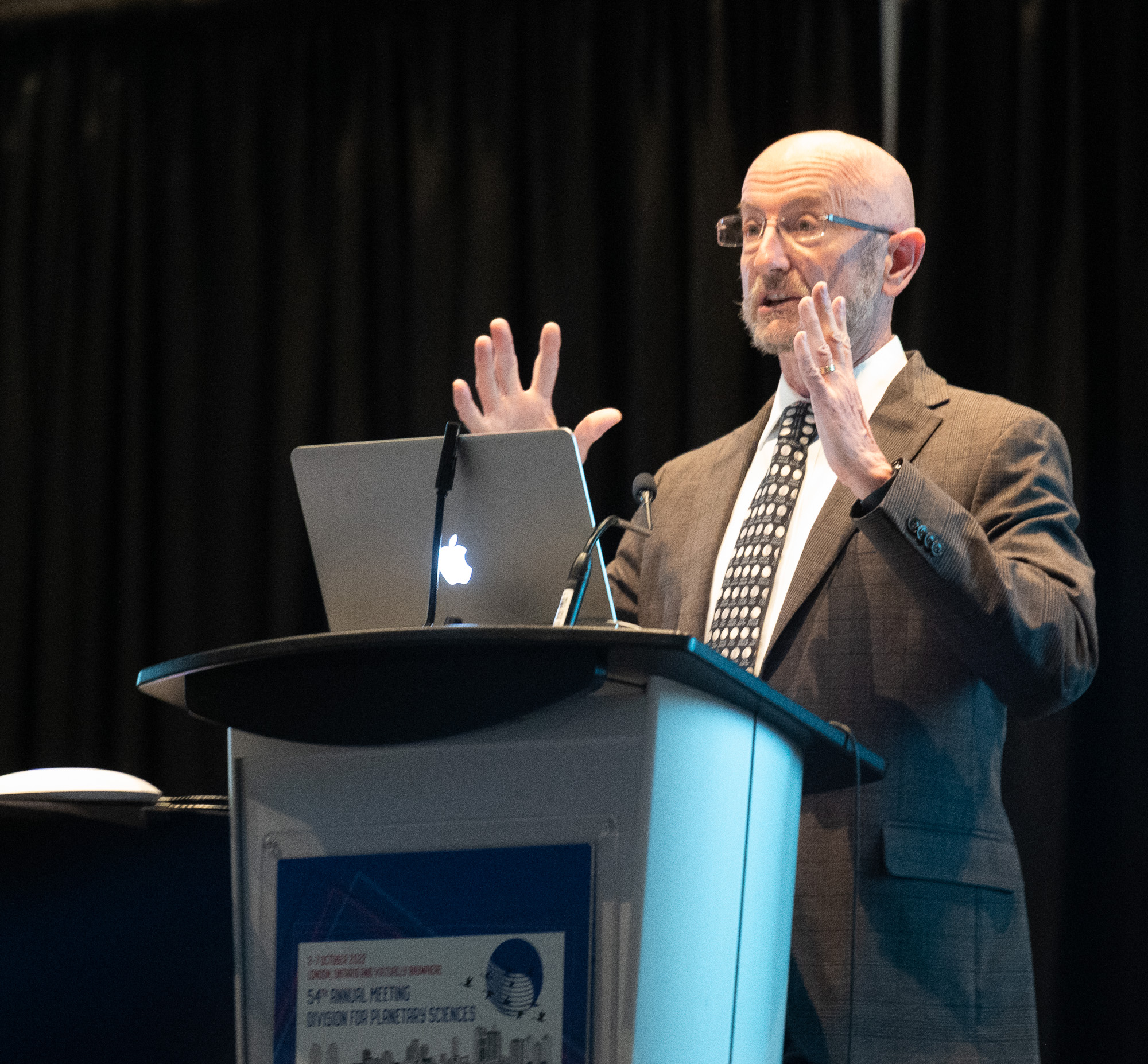
| Eric P. Smith (NASA HQ, Astrophysics Division) talks about the design of JWST. "It was originally anticipated that would be able to detect the very first stars, but it was not able to do that. So that was the original design requirement for JWST: Detect 11 nanoJanskys in the 1-2 micron range. And all of the rest of the telescope telescope -- the aperture, the sensitivity, the location -- falls down from that one requirement.'" |
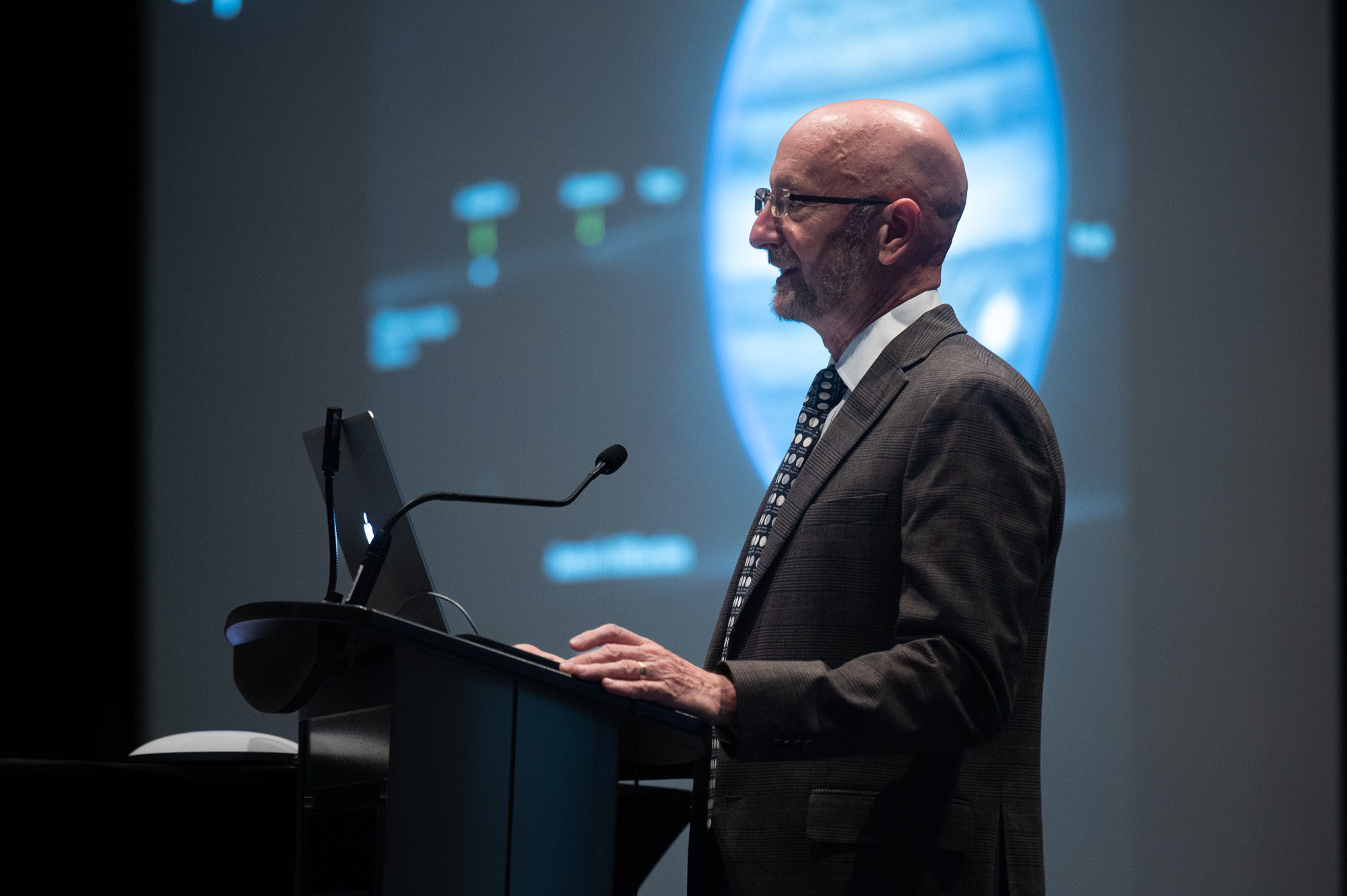
| Eric P Smith (NASA HQ) talks about JWST's early planetary science results, including this great Jupiter observation. "JWST Cycle 1 had 25% success rate. The TAC awarded 600 hours of planetary time during Cycle 1, which is 7% of all of JWST time." |
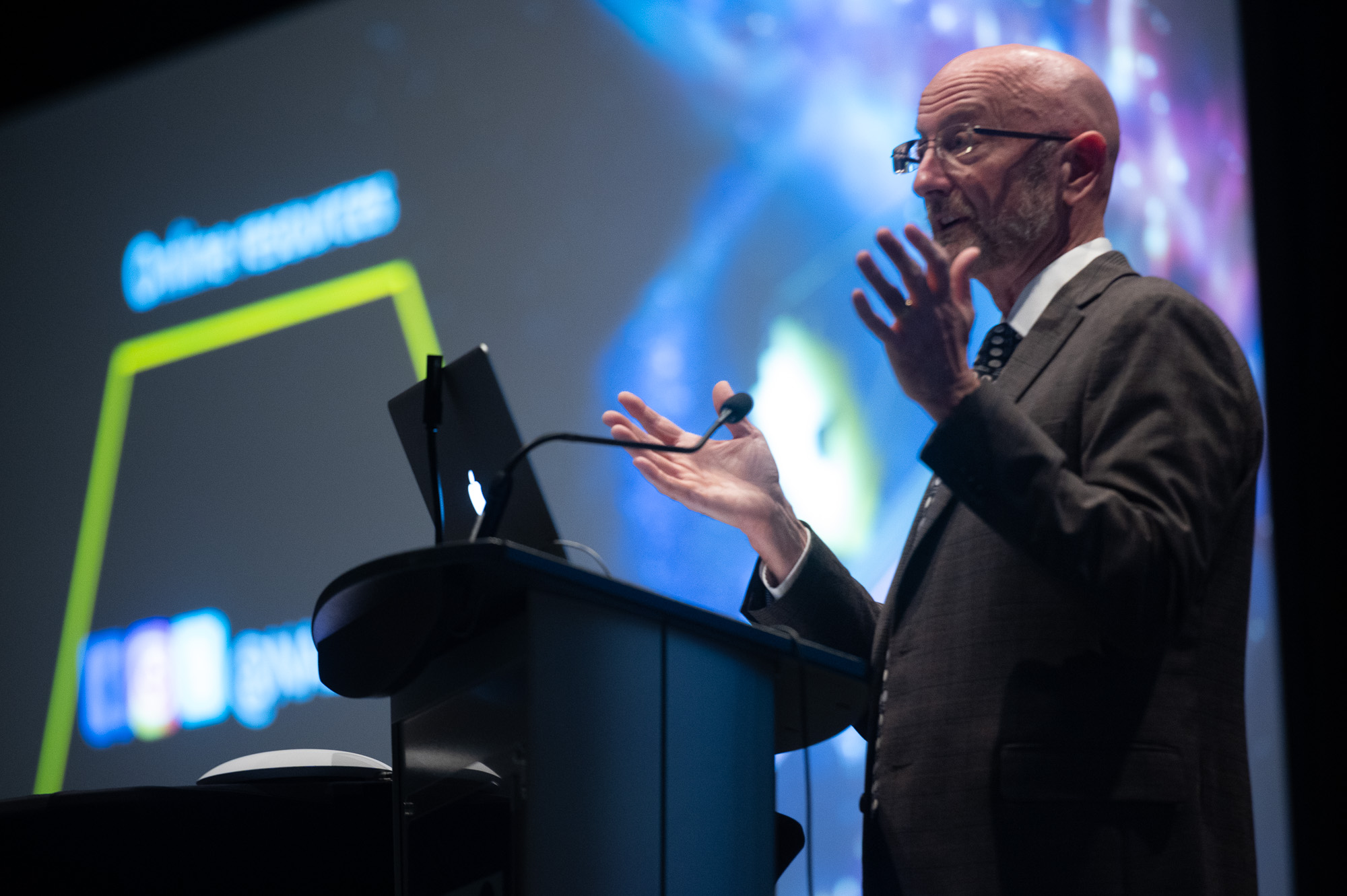
| Eric P Smith (NASA HQ) talks about JWST. |
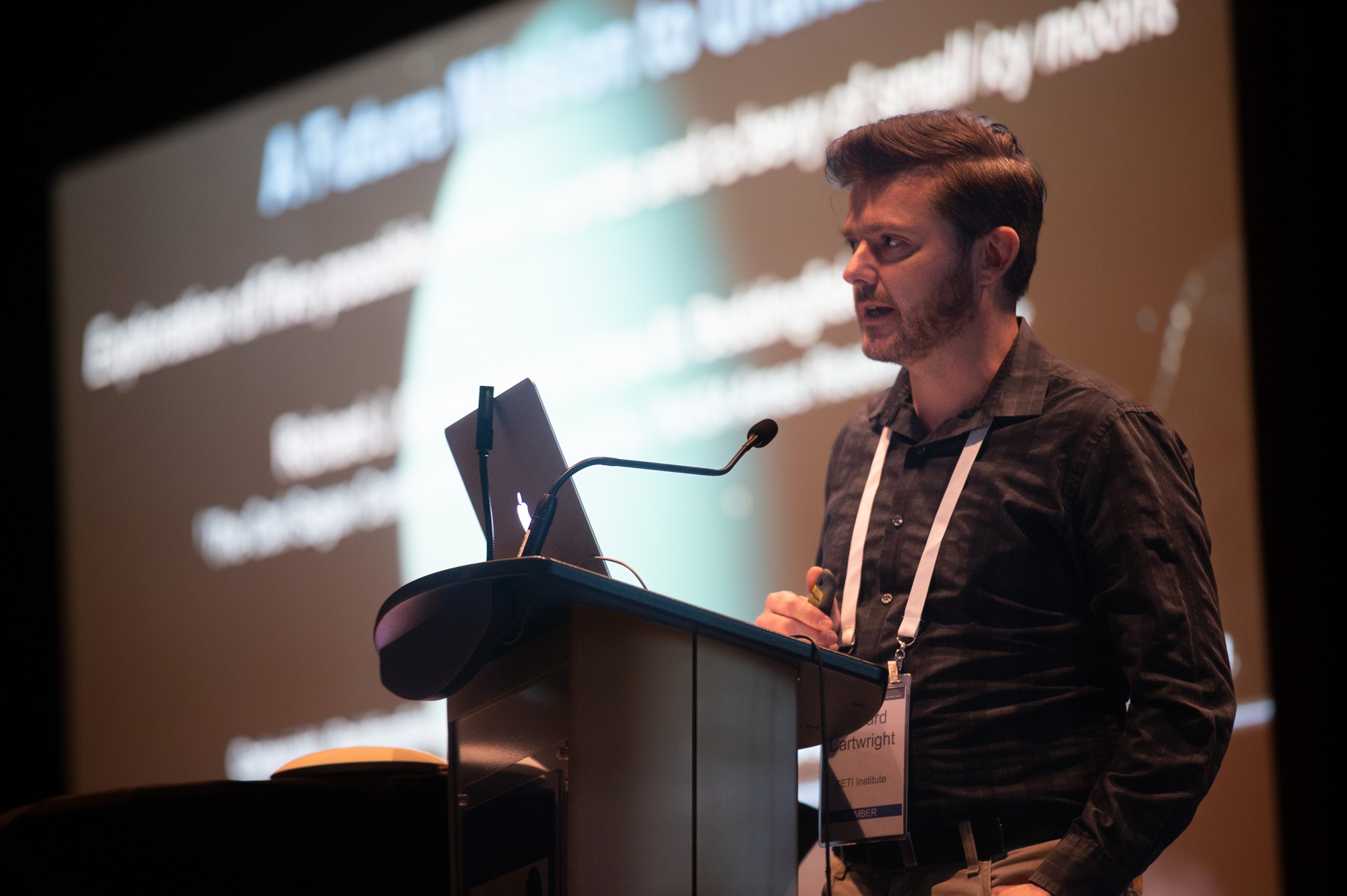
| Richard Cartwright (SETI) makes the science case for Uranus, based on the really diverse collection of moons it has. "I've been working on a Uranus mission for maybe the past 12 years." |
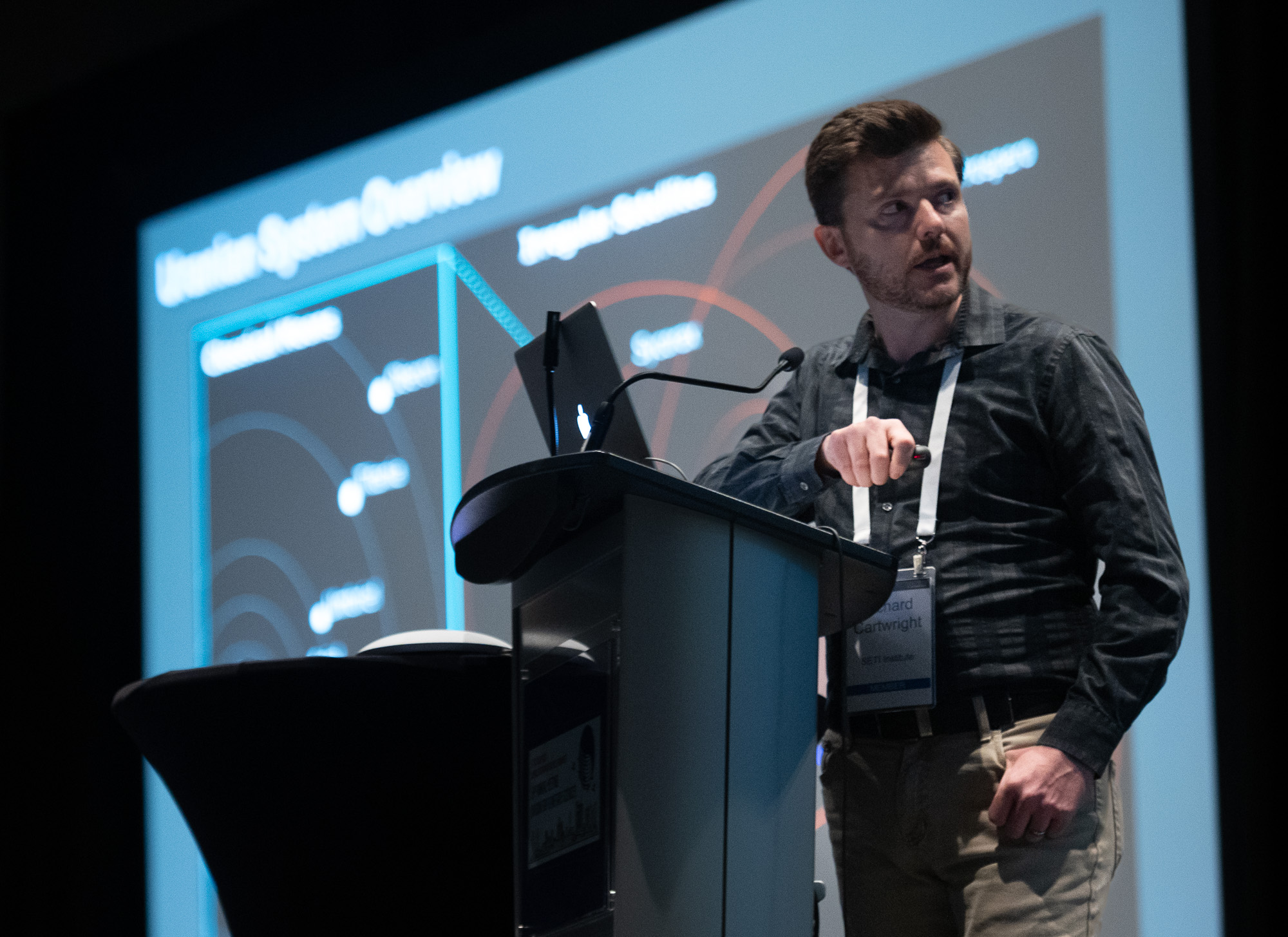
| Richard Cartwright (SETI) makes the science case for Uranus geology. |

| Amanda Hendrix (PSI) and Pat Beauchamp (JPL) are the session chairs. |
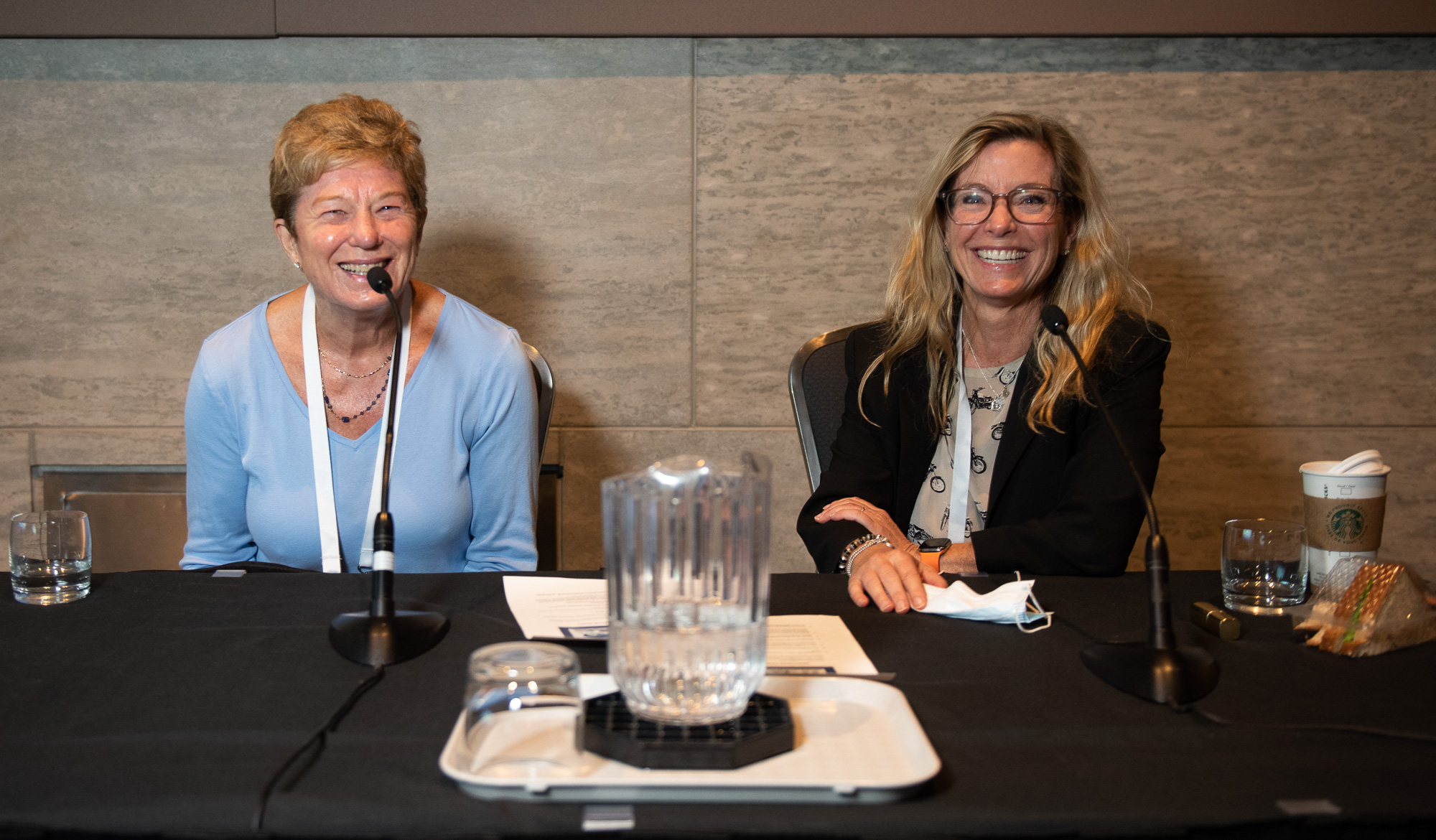
| Pat Beauchamp (JPL) and Amanda Hendrix (PSI) are the session chairs. |
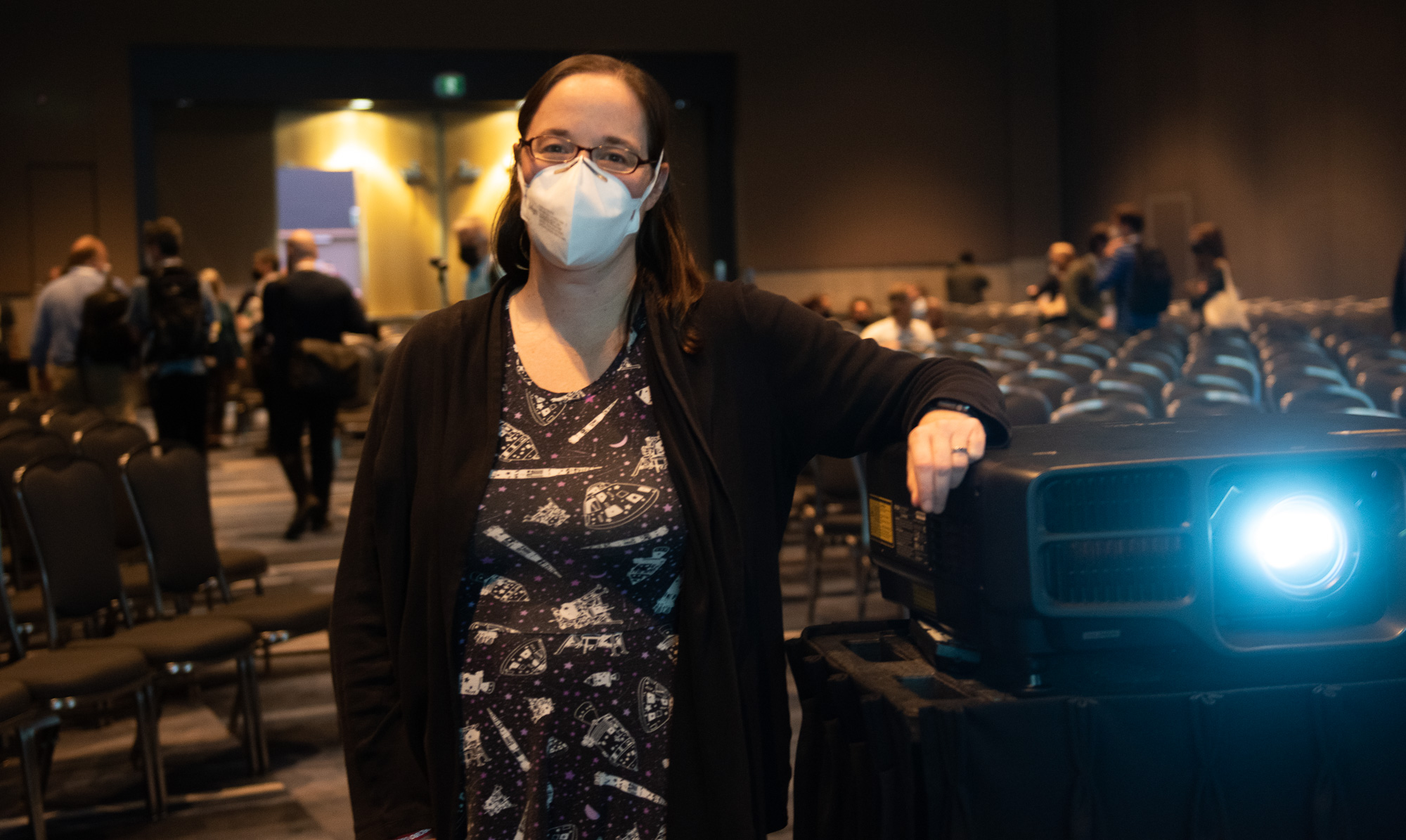
| As chair of the LOC, Catherine Neish (U Western Ontario) is pretty happy this meeting is going great! |
Poster Sessions + Hallways

| Steve Vance (JPL) shows off those fingernails! Steve and I chatted about some of the programs he's inolved in to work with scientists in Singapore. |
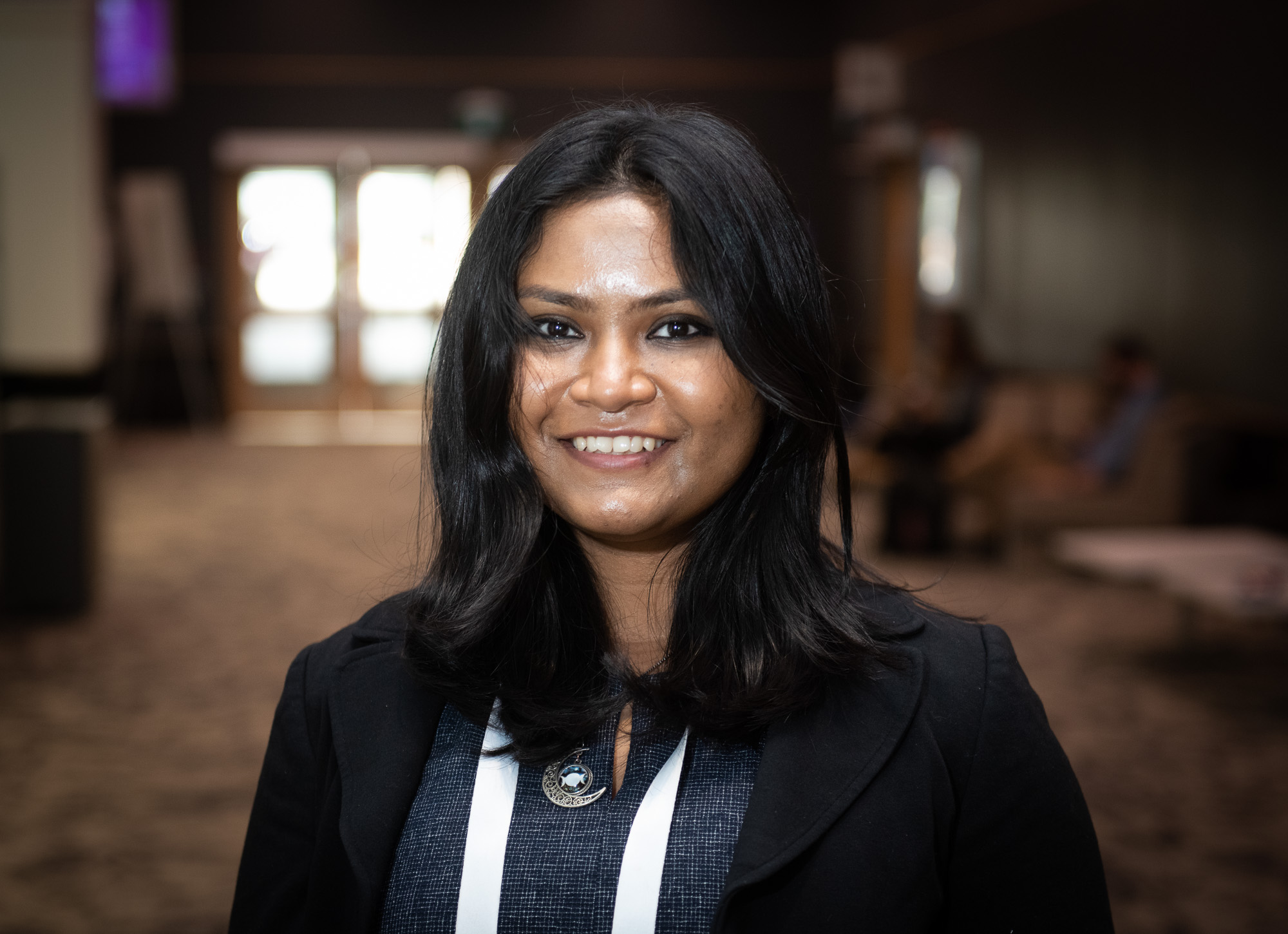
| Ankita Das (York University, Canada). Although we hadn't met in person, Ankita and I had heard of each other beforehand through the 'Astronomy Winter School,' a series of workshops held in Hyderabad. These were organized by U Western Ontario, while I was living in India. |
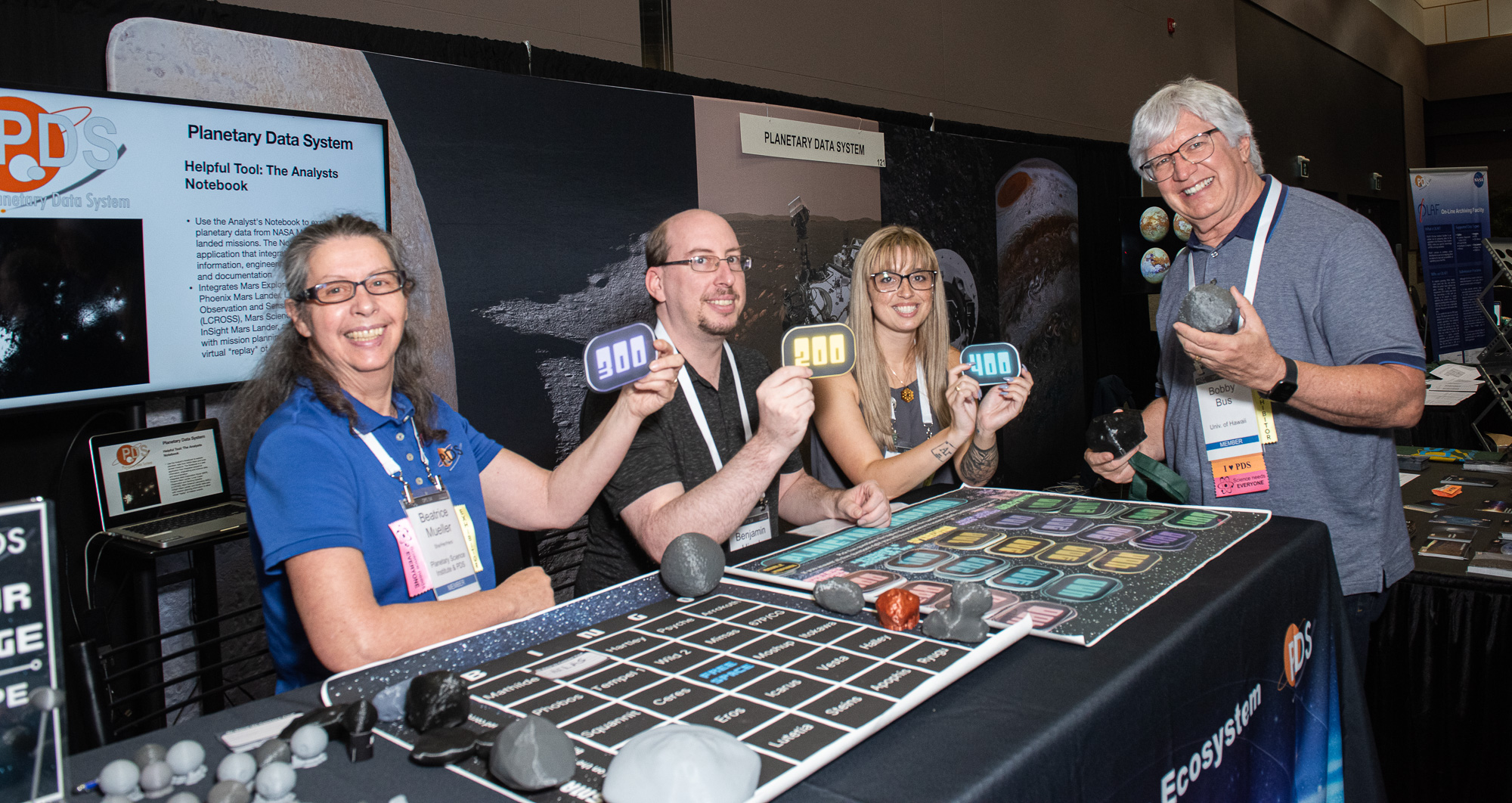
| Bea Mueller (PSI), Benjamin Hirsch (UMD), and Kristina Lopez (PSI) challenge Bobby Bus (U Hawaii) to Small-Body Jeopardy! Personally I think Bobby was in it just to win a 3D Itokawa, but I wish him the best of luck in taking on those expert curators. |
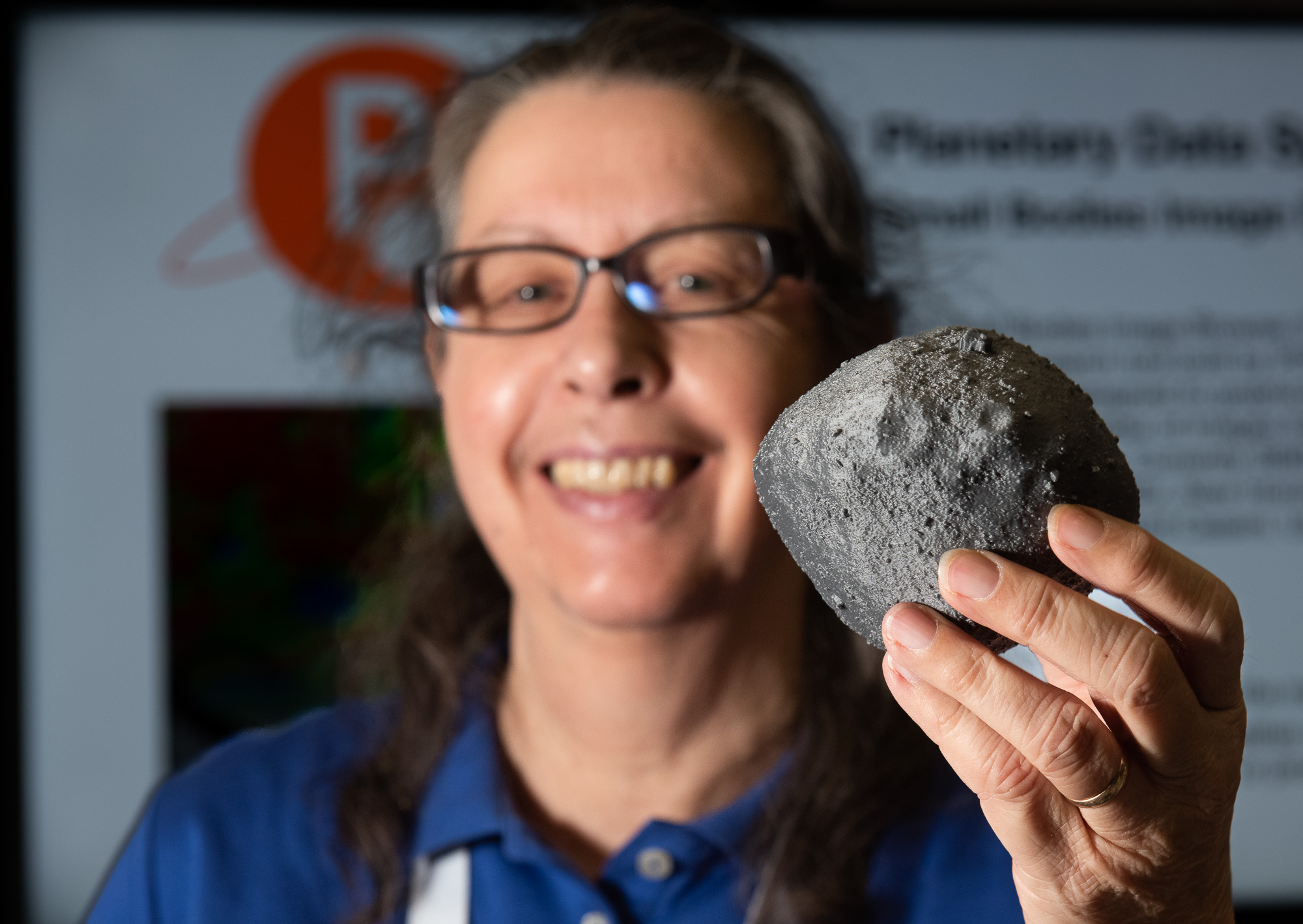
| Bea Mueller (PSI) with a great model of Bennu (or is it Ryugu?). |

| Tom Morgan (GSFC) is the project manager for the Small Bodies PDS node. |
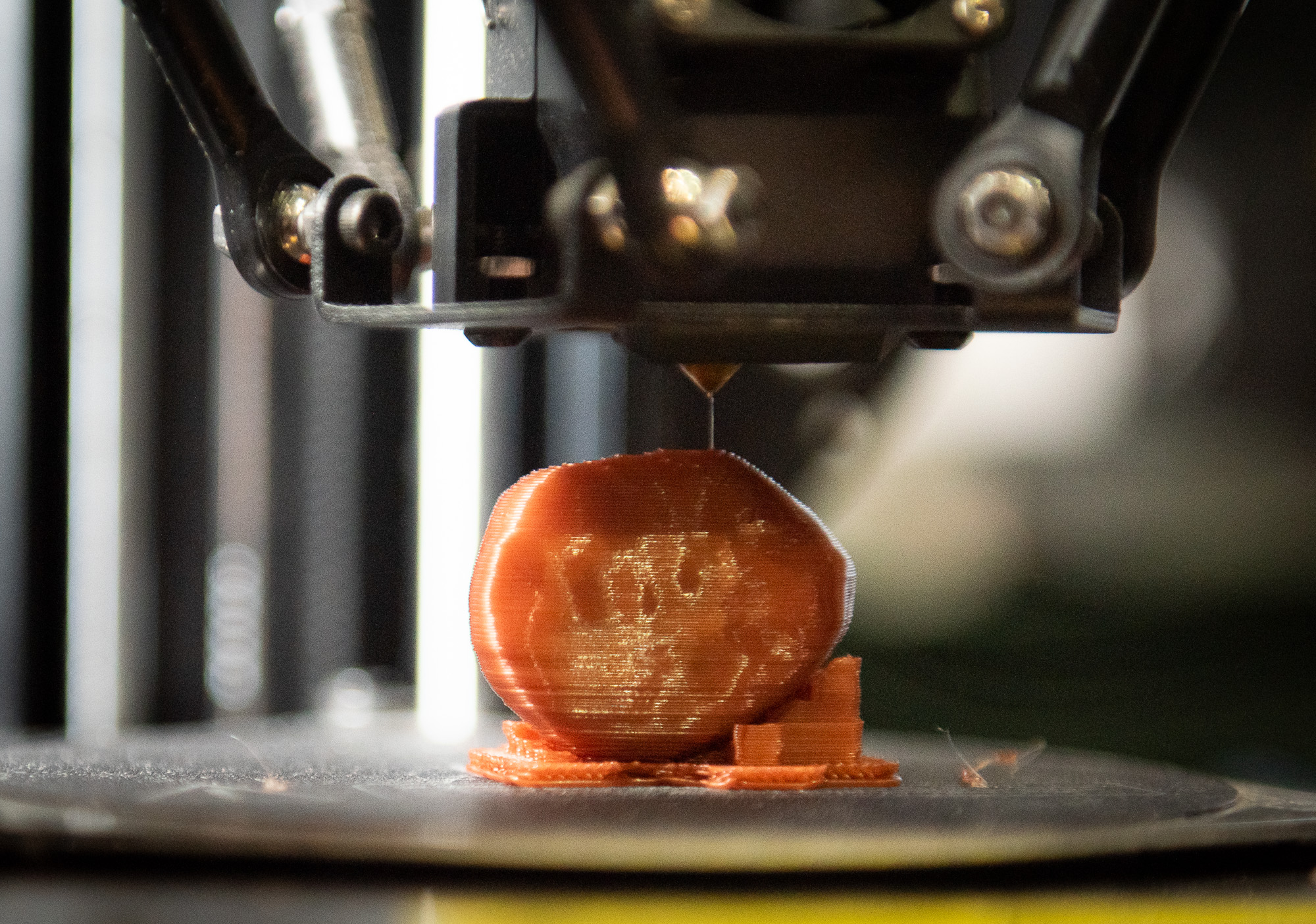
| The PDS node was going crazy printing up small bodies, for anyone who visited. |
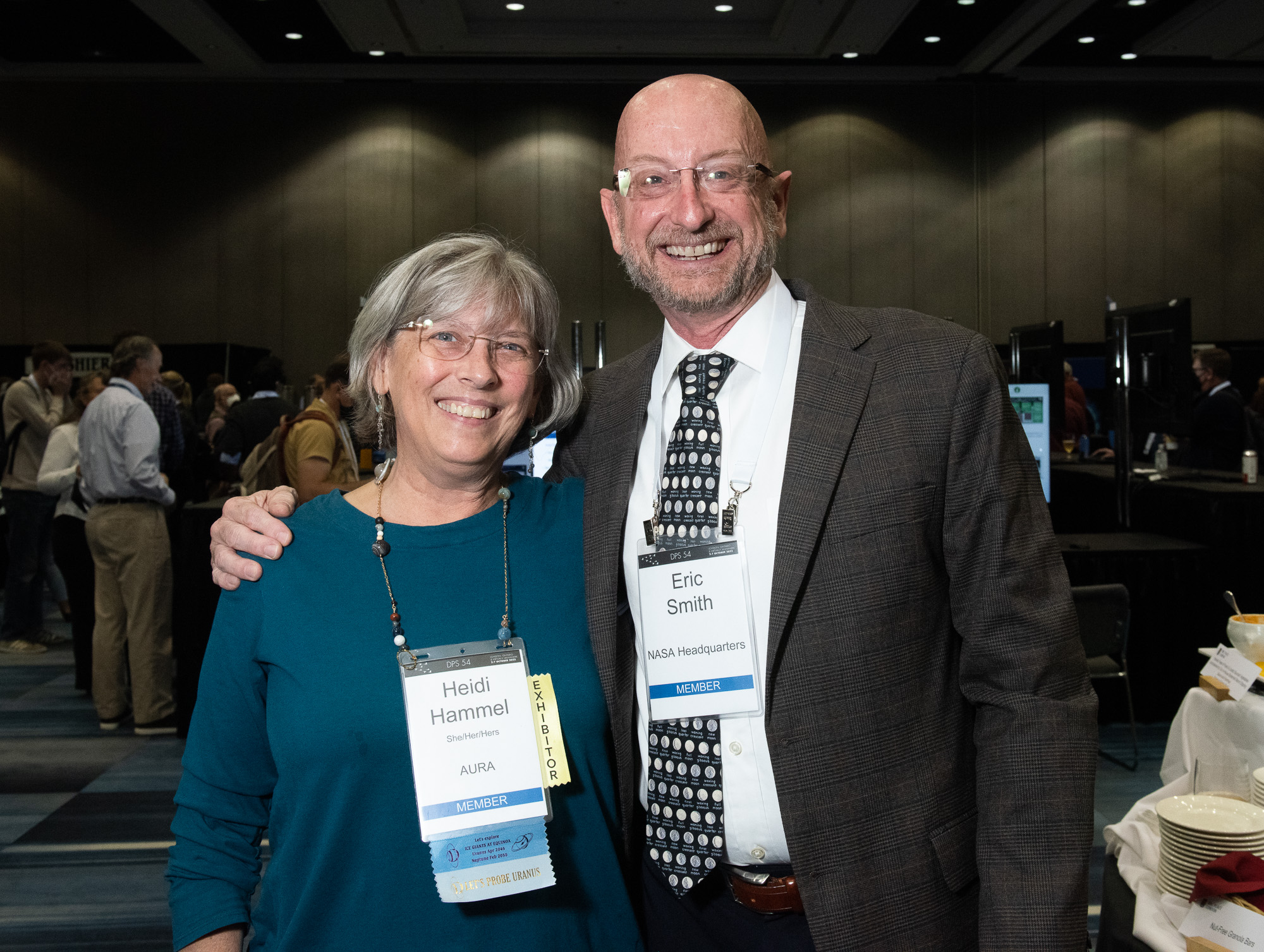
| JWST needed a cast of thousands, but two of the critical ones were Heidi B. Hammel (AURA) and Eric P Smith (NASA HQ). They've been working together on trying to get this telescope flying for the better part of 25 years. Eric talked about it today. "150 motors. 400 meters of pulleys and cables. Solar system tracking performance 3x faster than required. Spatial resolution 2x better than planned. Background levels lower than dreamed of..." -- and on and on. |

| Bob Jacobson (JPL) at the poster session. Bob worked on Galileo, Cassini, Pioneer Venus... and now Juno. |
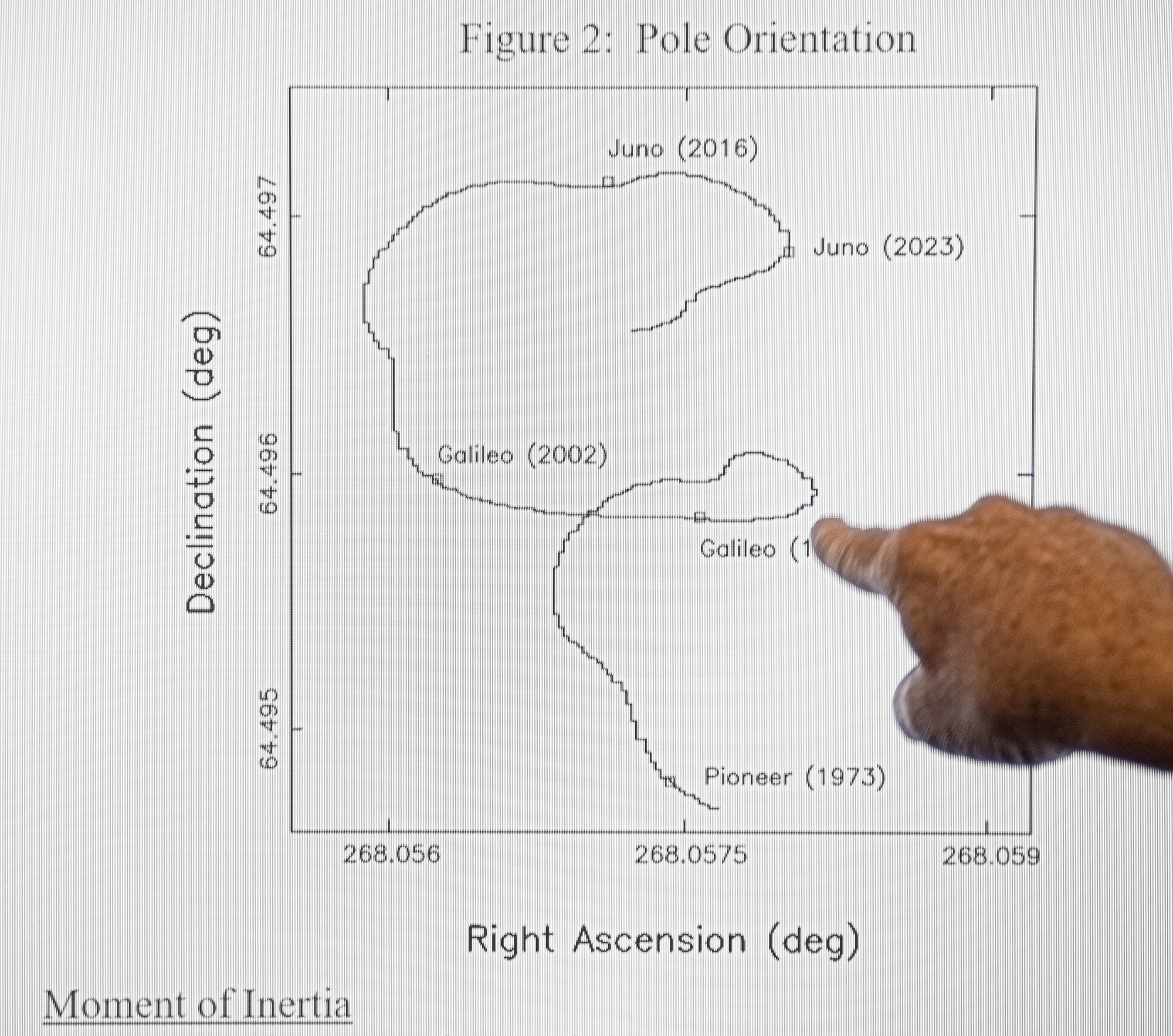
| OK, this is just the wildest plot, courtesy of Bob Jacobson (JPL) who points at his poster. "Yeah, this plot seems to be super popular this week. A lot of poeple think it looks totally crazy. So this is...yeah, this is Jupiter's pole position, vs. time, to about the 1/10,000th of a degree. The solid line there, that's the output of our model, which is run with the four satellites torquing Jupiter's pole around on its axis. These boxes here -- those are the measured data points, for Pioneer, Voyager, Galileo, and Juno. So if our model was wrong, we'd definitely know it." There's no one else in the world who could point to this and say they did it. |
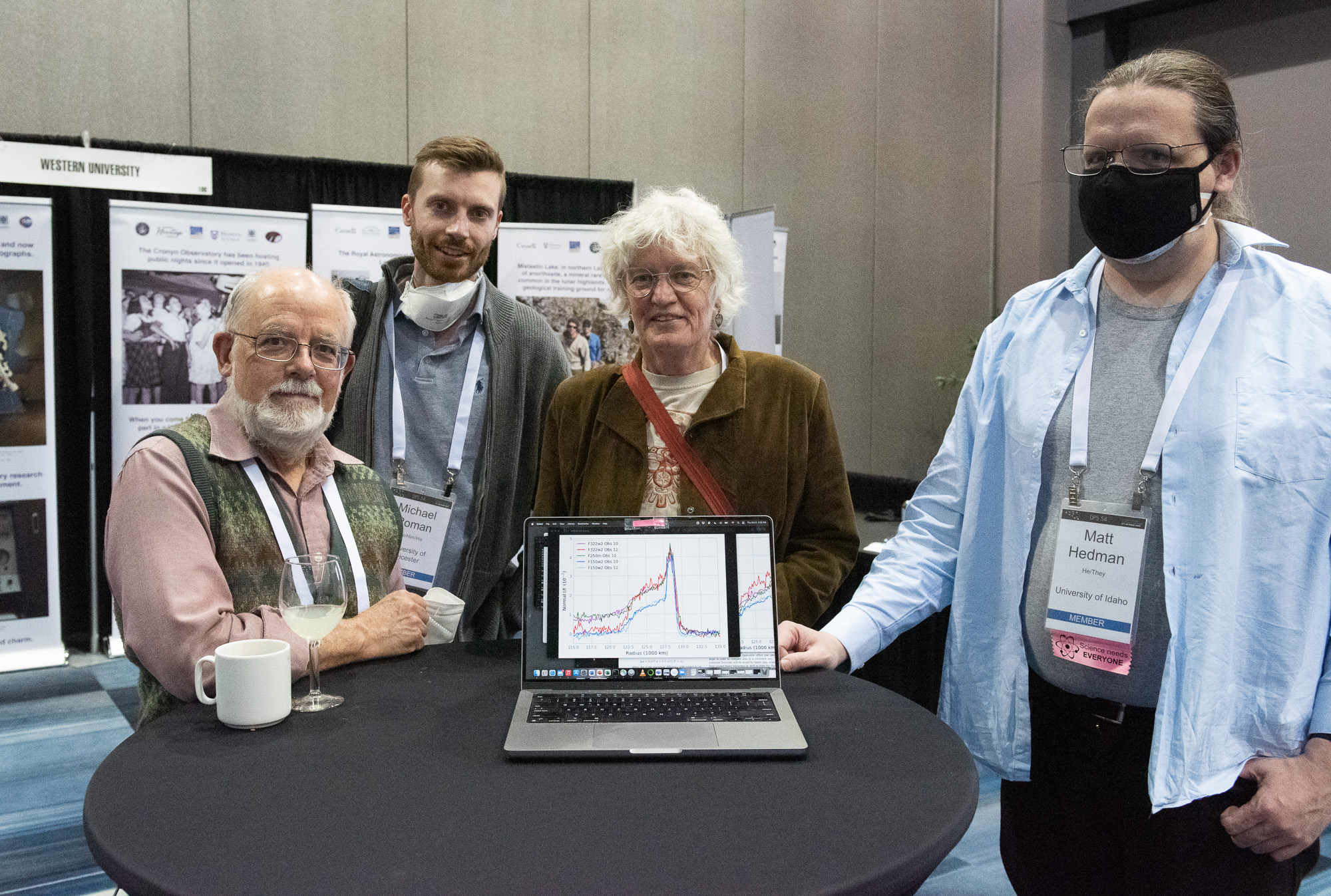
| Phil Nicholson (Cornell), Michael Roman (Leicester), Imke de Pater (Berkeley), and Matt Hedman (Idaho), show off a new Jupiter ring profile. [XX -- ok to show this?] |
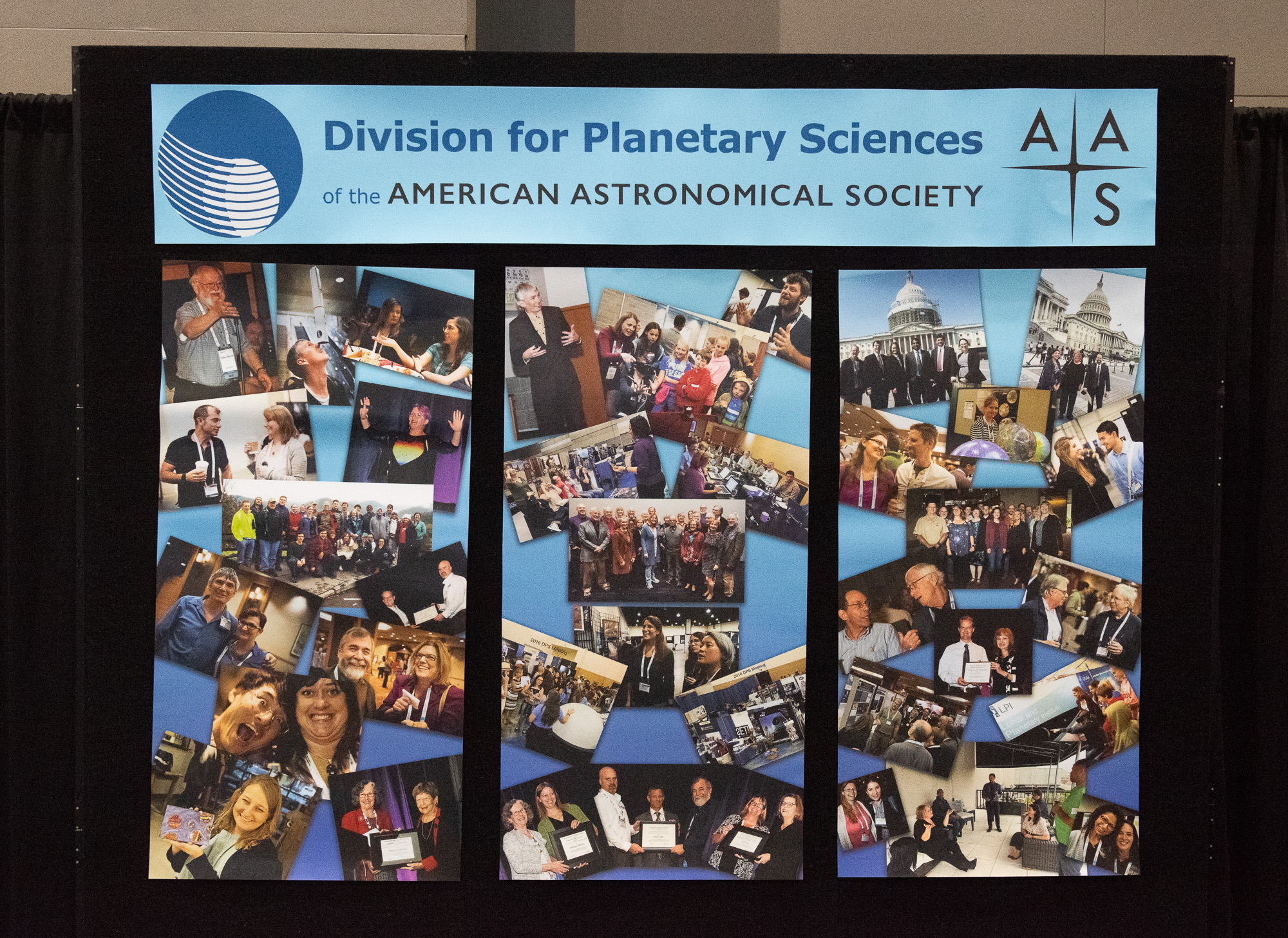
| Some historic DPS photos, at the DPS booth. Most of these are mine, but not all! |
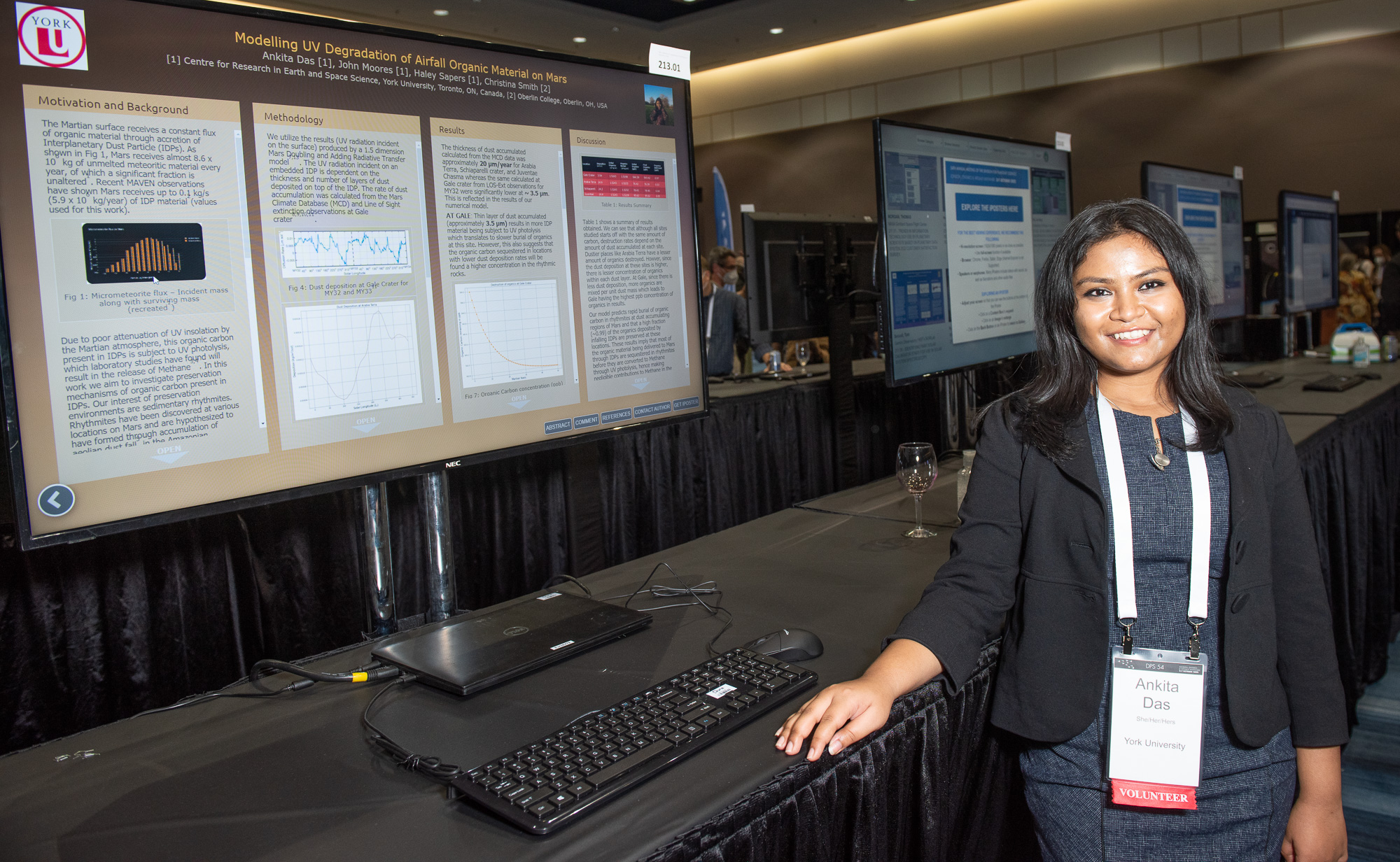
| Ankita Das presents her poster on the organic content of interplanetary dust particles on Mars. |
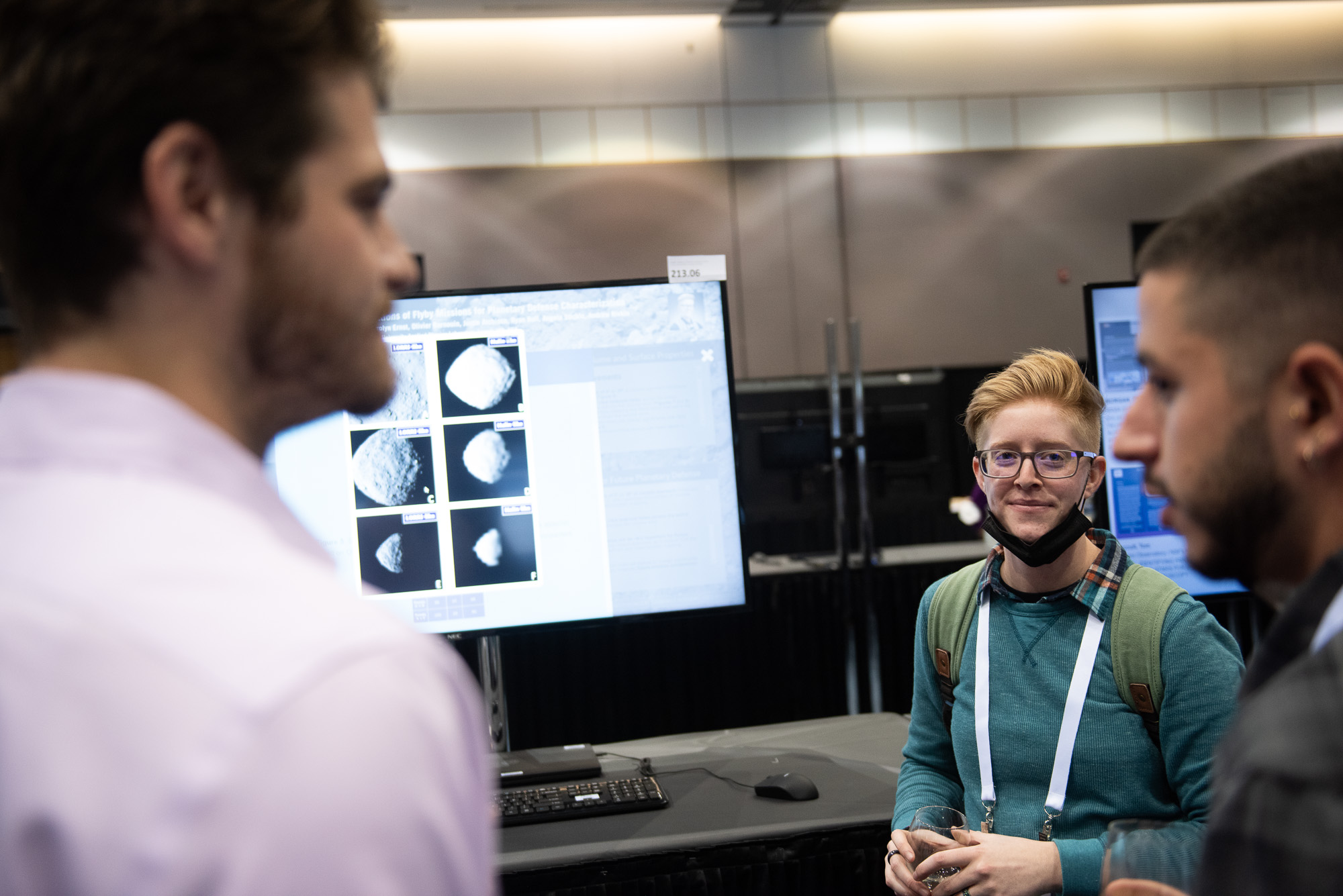
| Jodi Berdis (APL) talks asteroid flybys! |
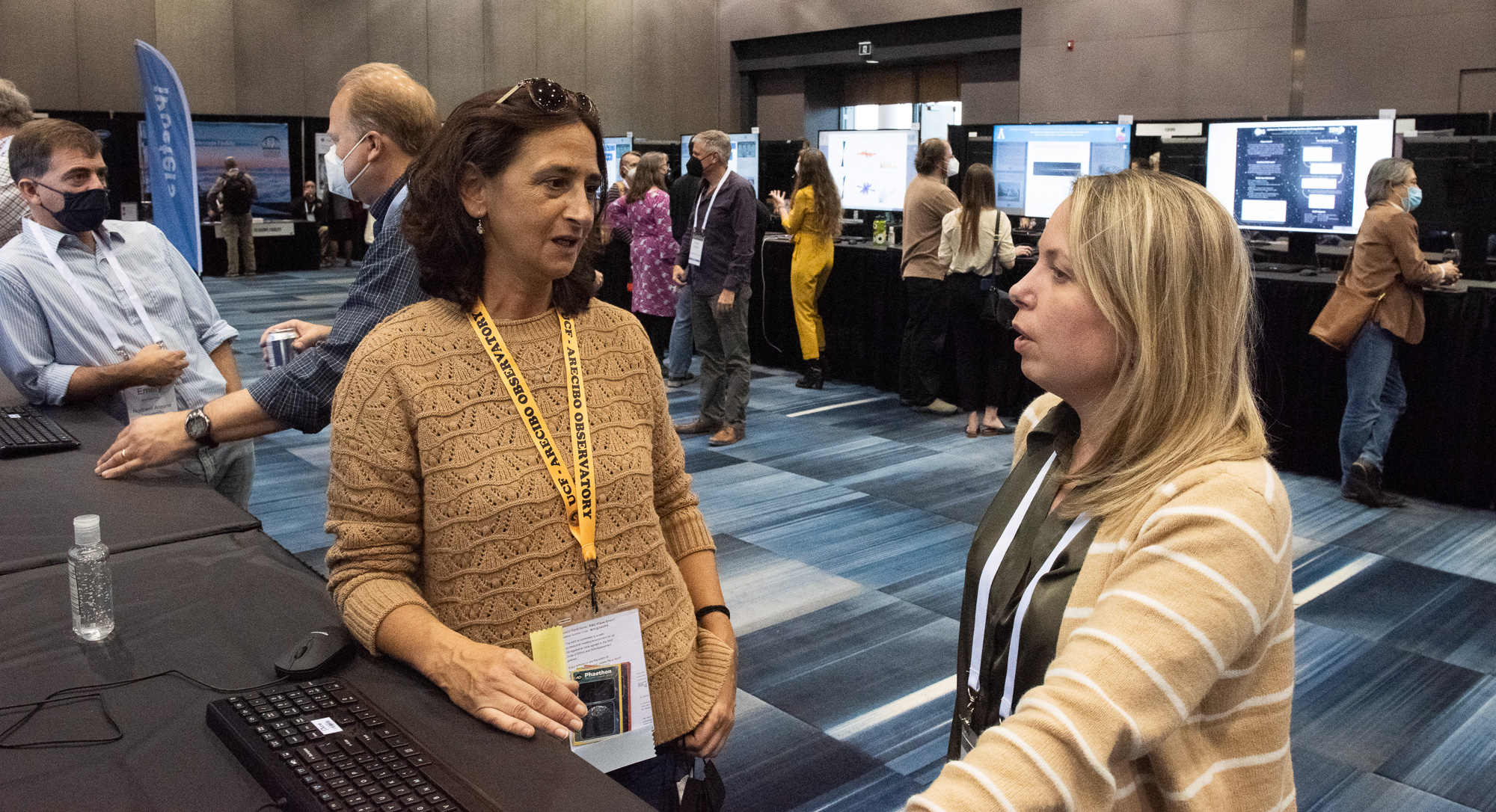
| Noemi Pinilla-Alonso (UCF) and ___ (GSFC?) at the poster session. |
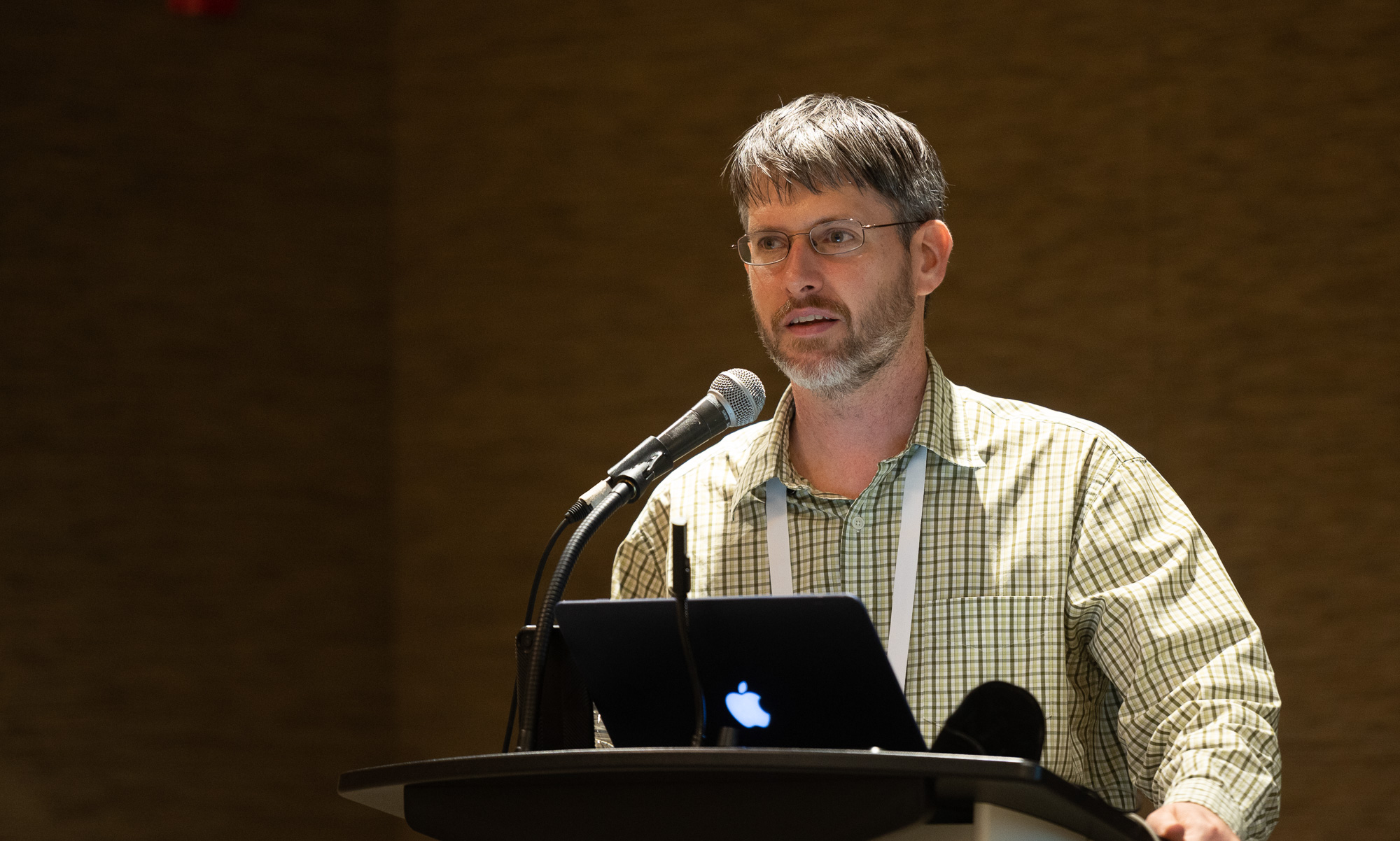
| Matt Tiscareno (SETI) starts the PDS Ring-Moon Systems Node Advisory Council meeting. |
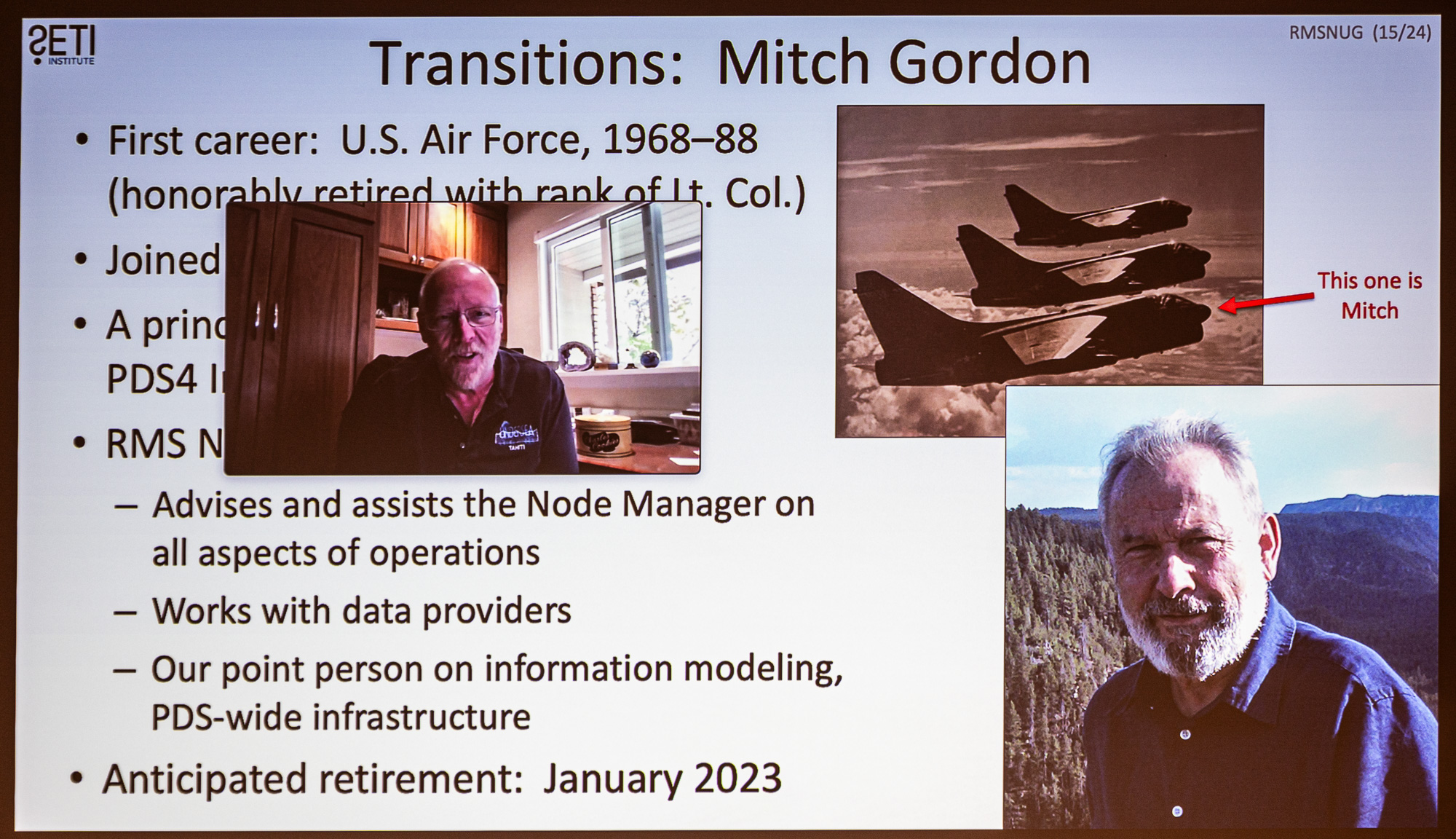
| At the PDS Ring-Moon Systems Node Advisory Council meeting, Mark Showalter (SETI, left) praises Mitch Gordon (SETI, lower right), who is about to retire. Mark talks about how (unbeknownst to me), doing planetary science and rings is something Mitch picked up late in life, after retiring as a Lt. Col. in the USAF. Mark: "Matt, you are amazing. But Mitch was the best hire I ever made." |
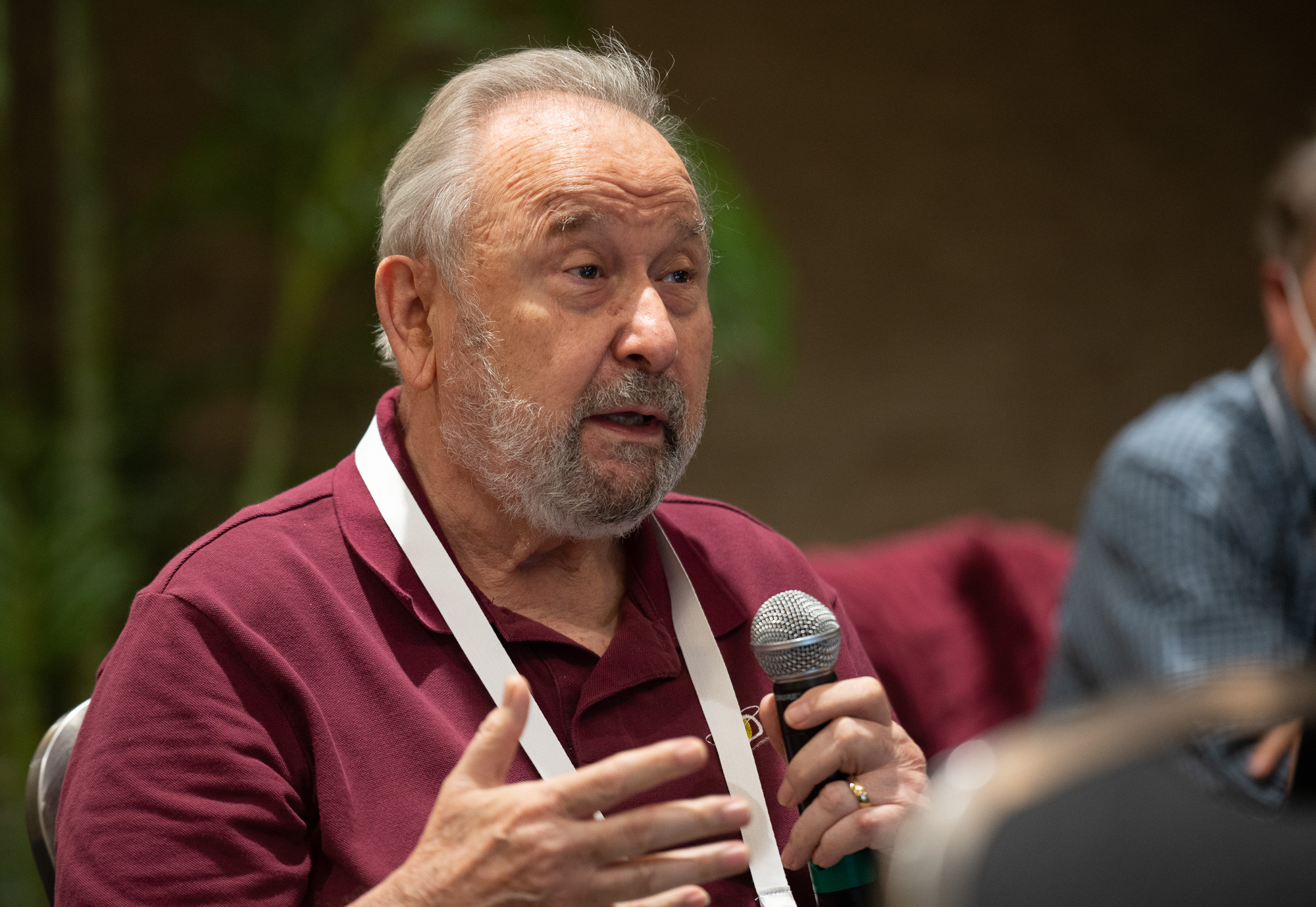
| Mitch Gordon (SETI) says a few words after being honored for his work on the PDS Ring-Moon Systems Node. |
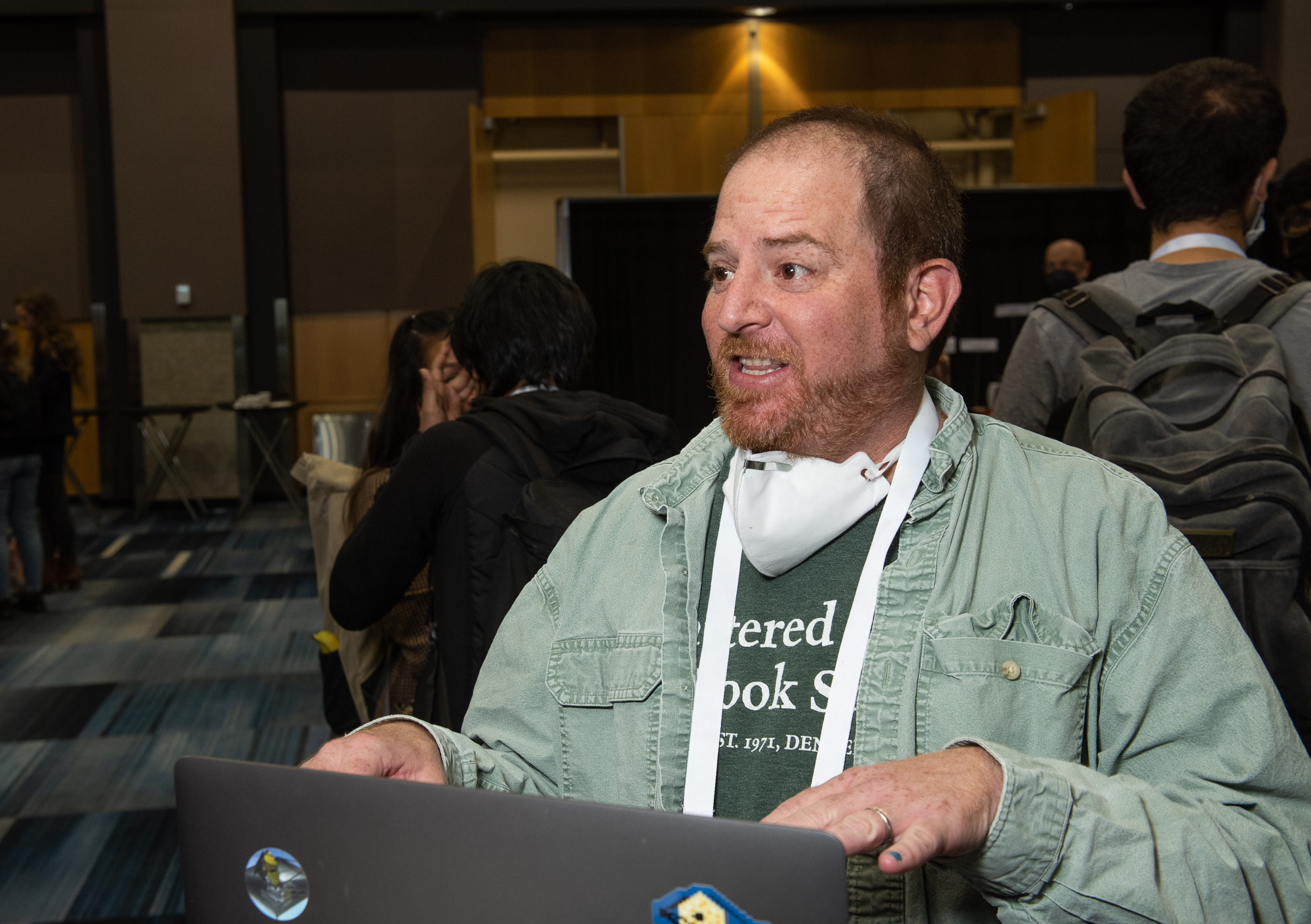
| Matt Burger (STScI) is having a great time. "I have a new job! Well, as of seven years ago, when I saw you last. I run the pipeline for HST, and some of JWST. And I'm working on this new project, where we're essentially making an all-sky mosaic of every single HST image ever taken. All the data, all the instruments, all the pixels, all merged. It's crazy." |
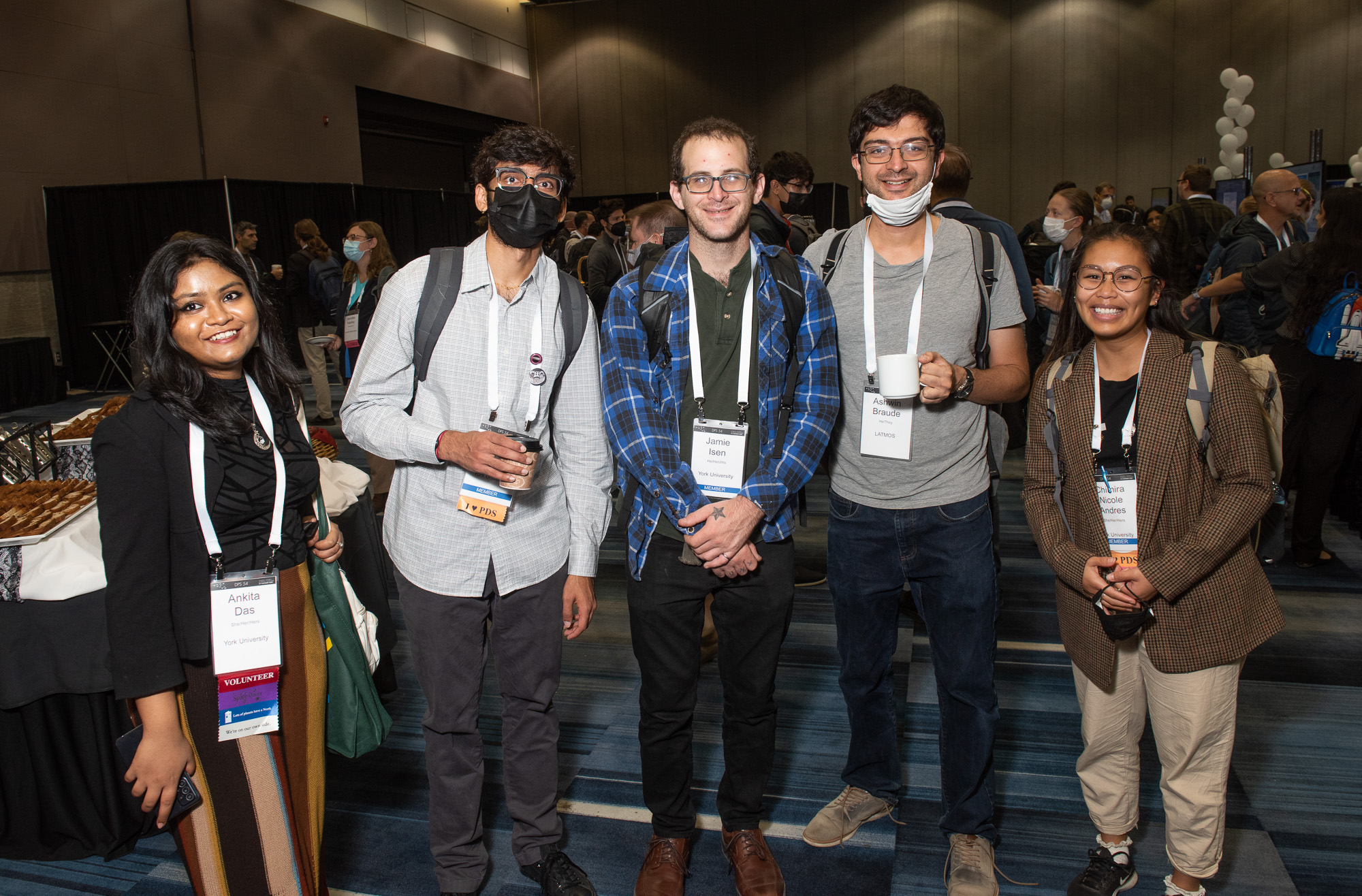
| Canadians (and one Brit) in full force! Ankita Das (York U), Pruthviraj Acharya (York U), Jamie Isen (York U), Ashwin Braude (LATMOS France), and Chimira Nicole Andres (York U). There was a ton of participation from students at UWO, York, U Toronto, and other local universities, and it was really great to see DPS expanding its reach. |
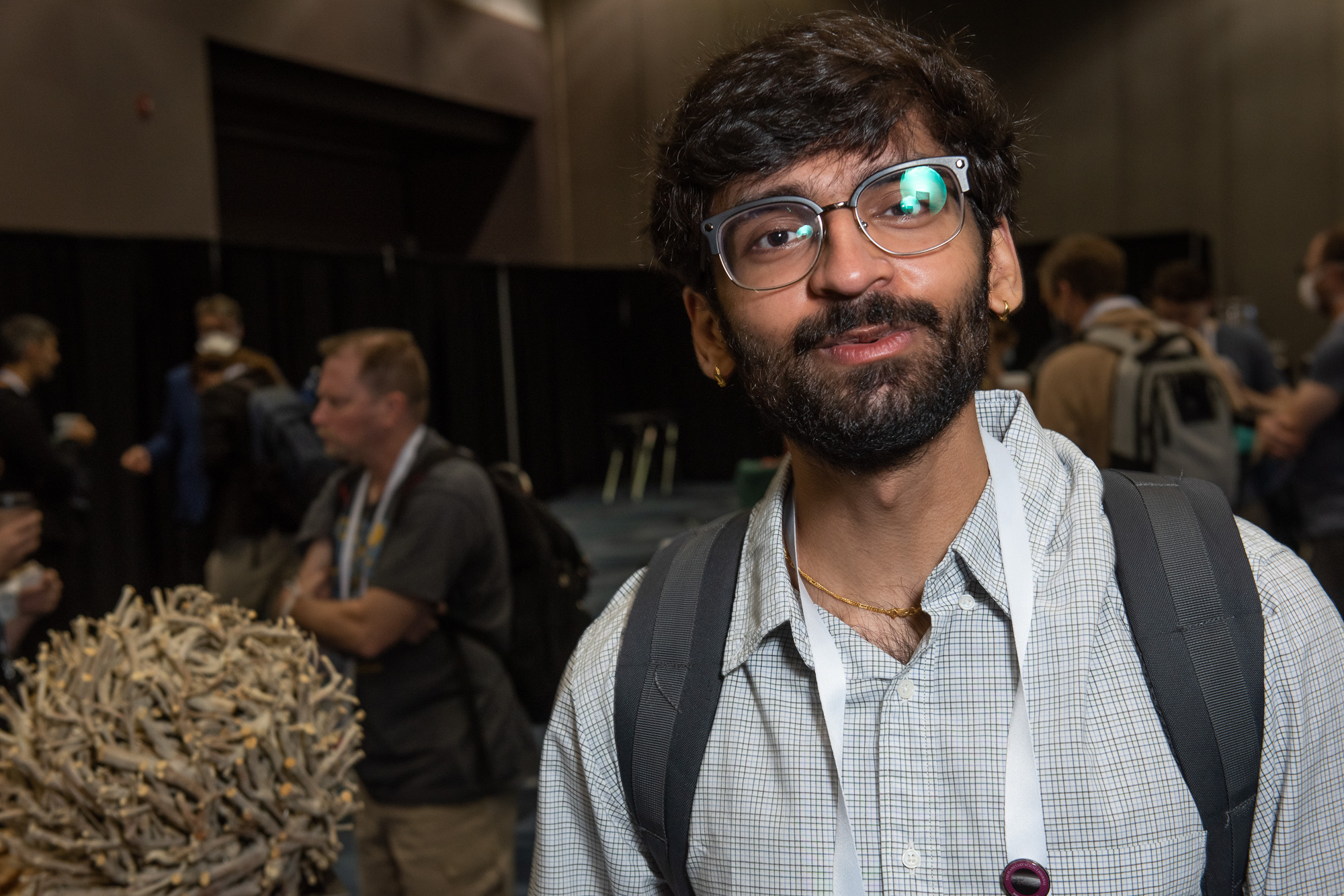
| Pruthviraj Acharya (York U, Canada) and I chat about Indian food, of which London Ontario does really well! "I almost went to Bombay once -- but we were on our way to Pune, and we bypassed it!" |
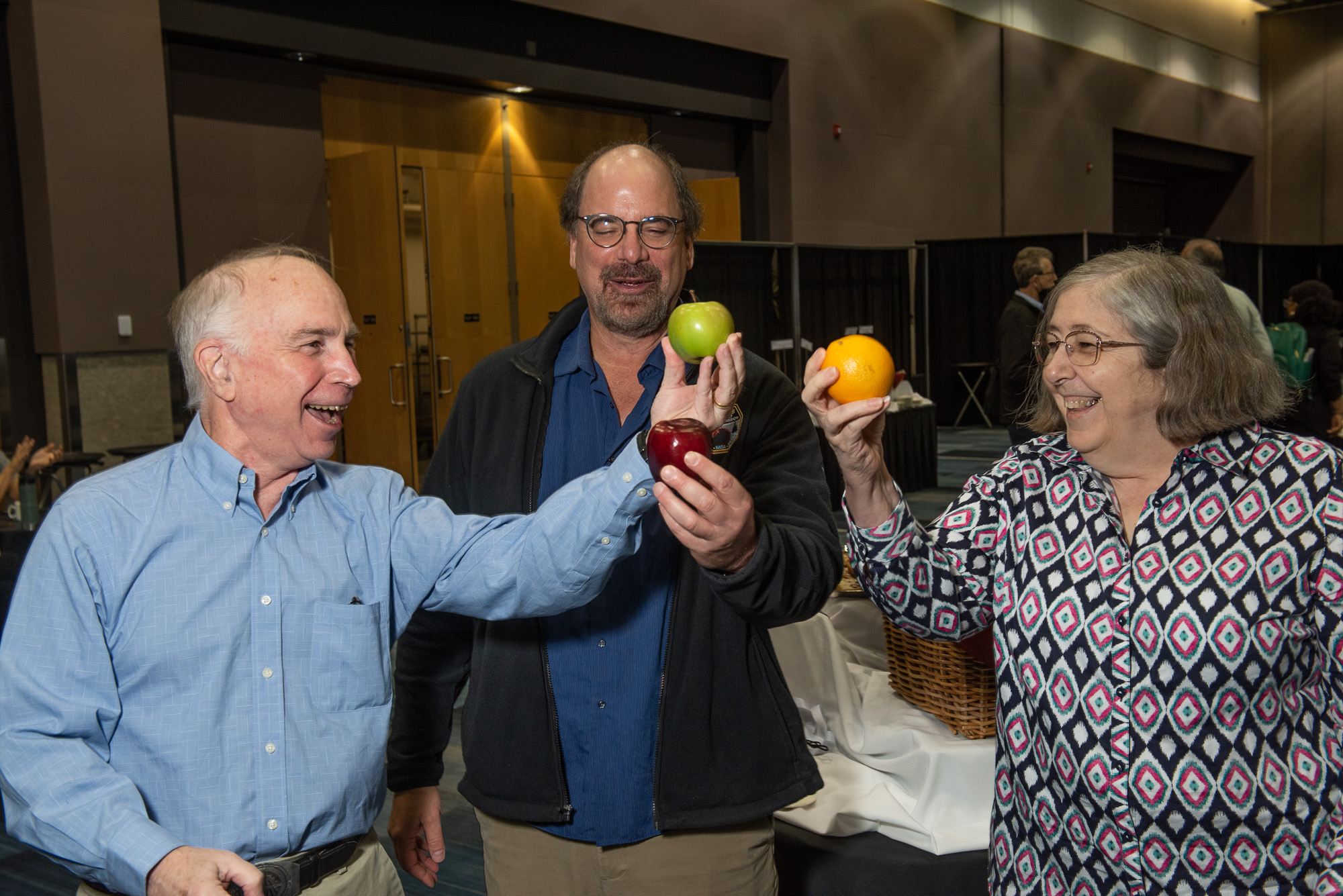
| Bill Cochran (UT Austin), Casey Lisse (APL), and Anita Cochran (UT Austin), show how the three-body problem works in our field, with some props from the snack bar. |
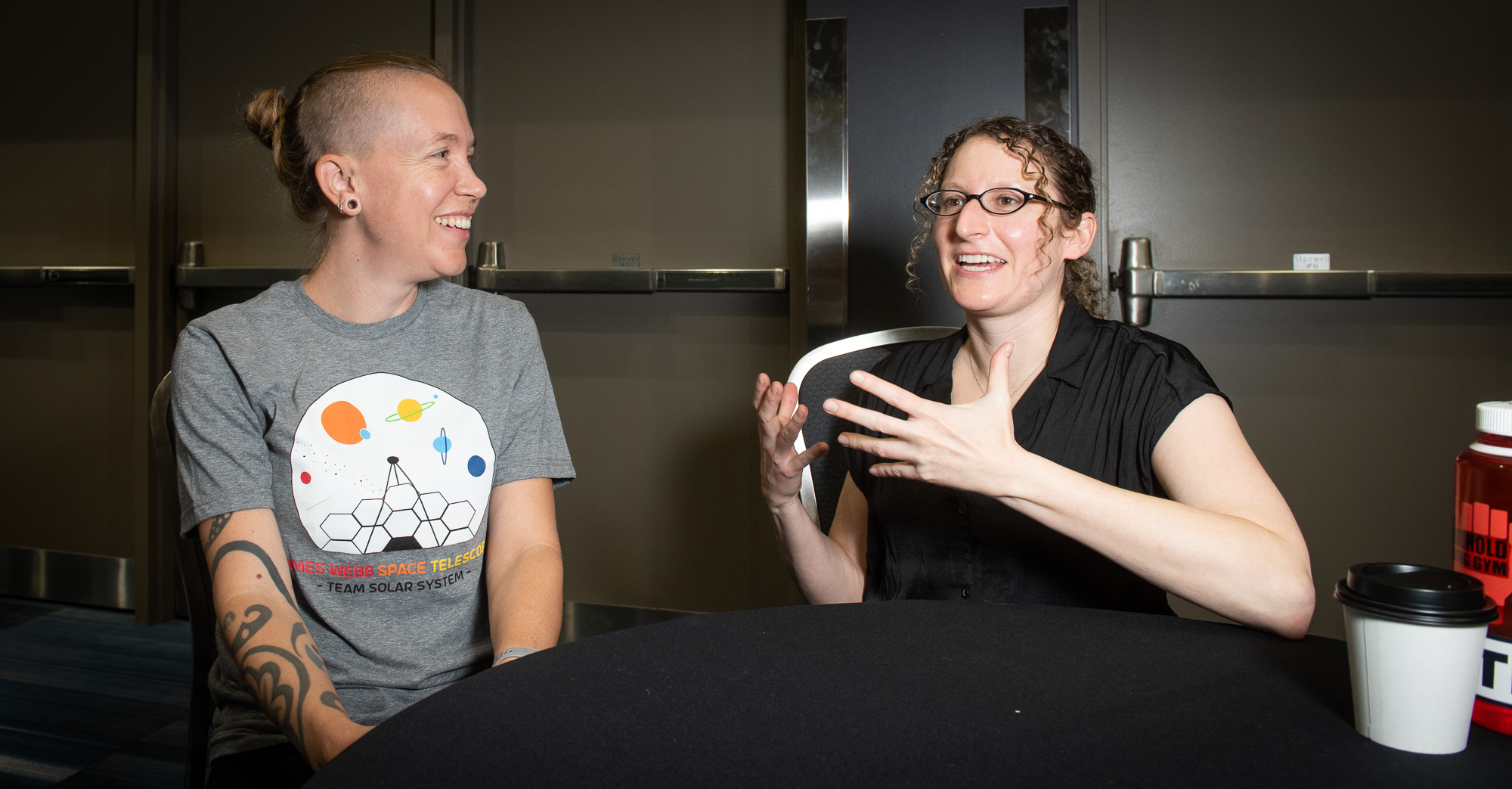
| Katherine de Kleer (Caltech) and Kelsi Singer (SwRI). |
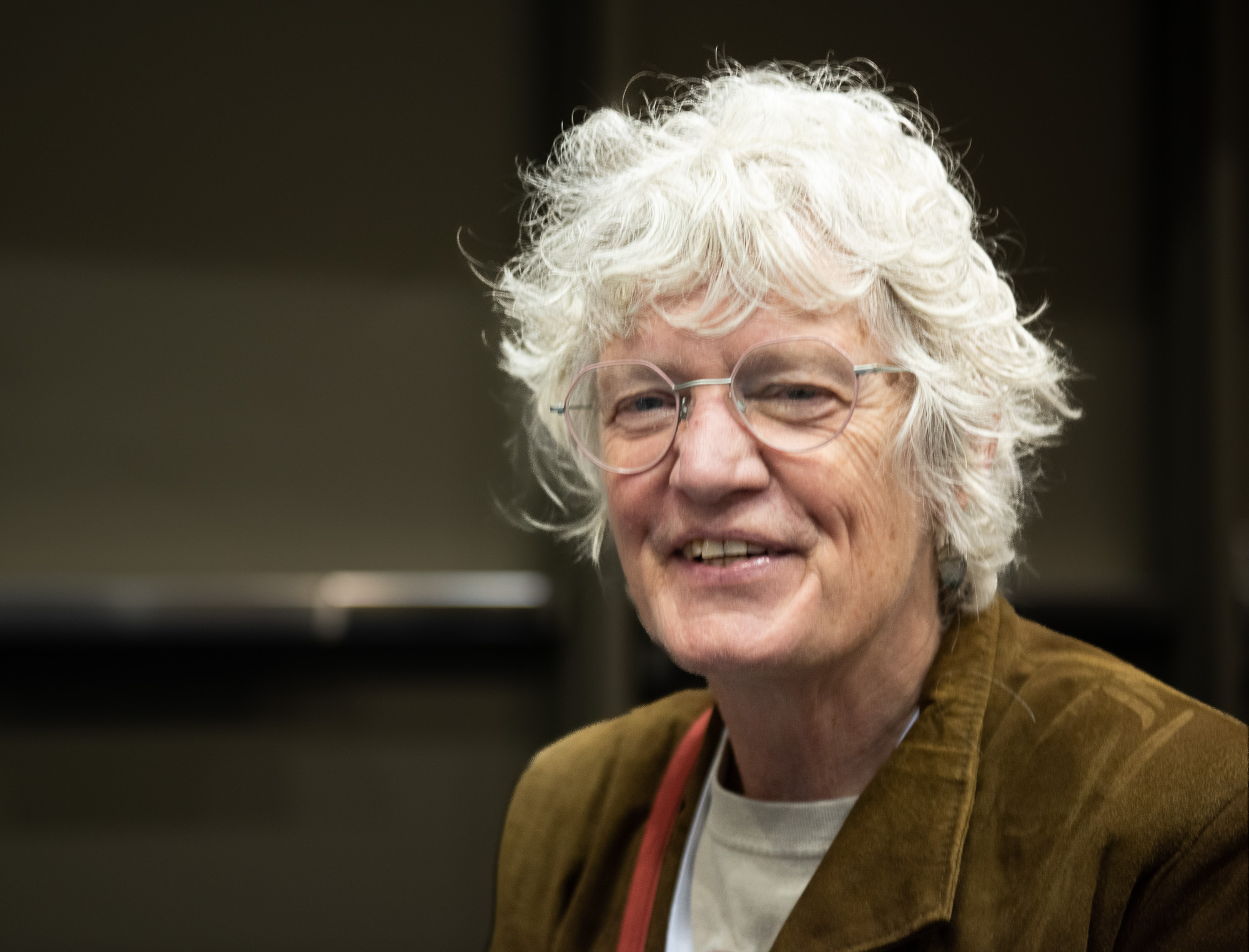
| Imke de Pater (Berkeley) is always radiant. |

| Julie Brisset (UCF), Estela Fernandez-Valenzuela (UCF), Christopher Cox (UCF), and Akbar Whizin (SwRI) |
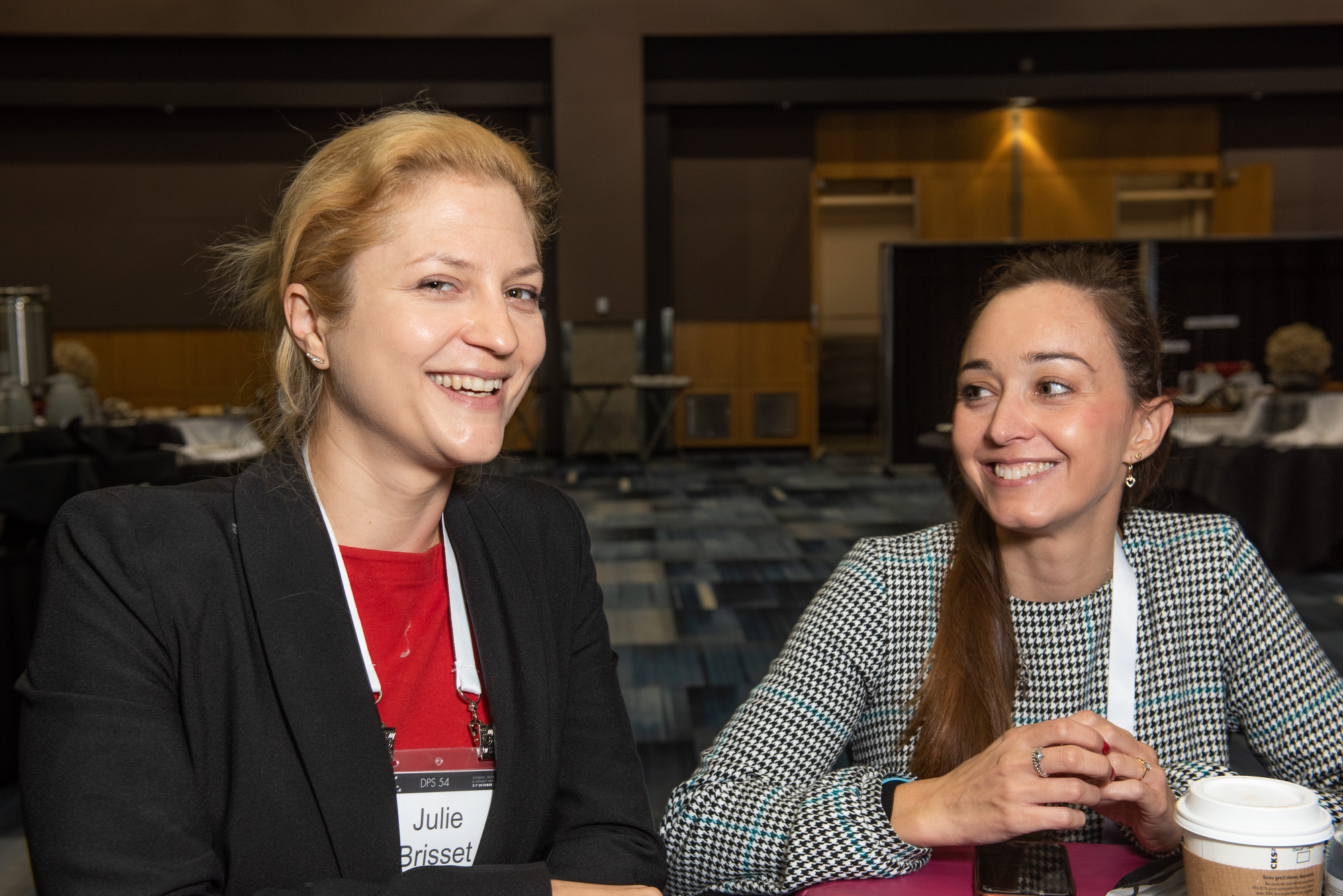
| Julie Brisset (UCF), Estela Fernandez-Valenzuela (UCF), Christopher Cox (UCF), and Akbar Whizin (SwRI) Brisset (UCF) and Estela Fernandez-Valenzuela (UCF). |
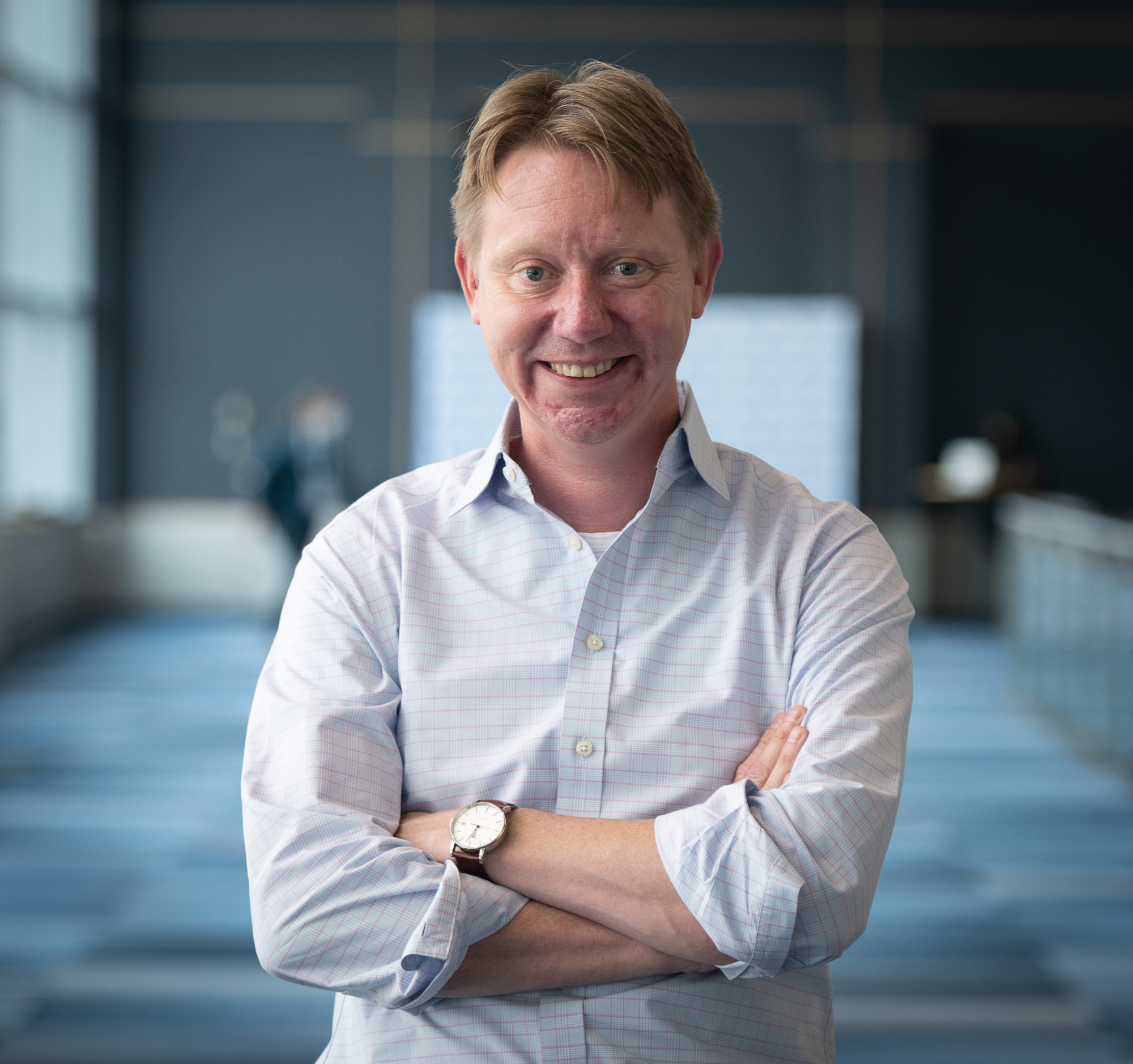
| Dennis Bodewits (Auburn). |
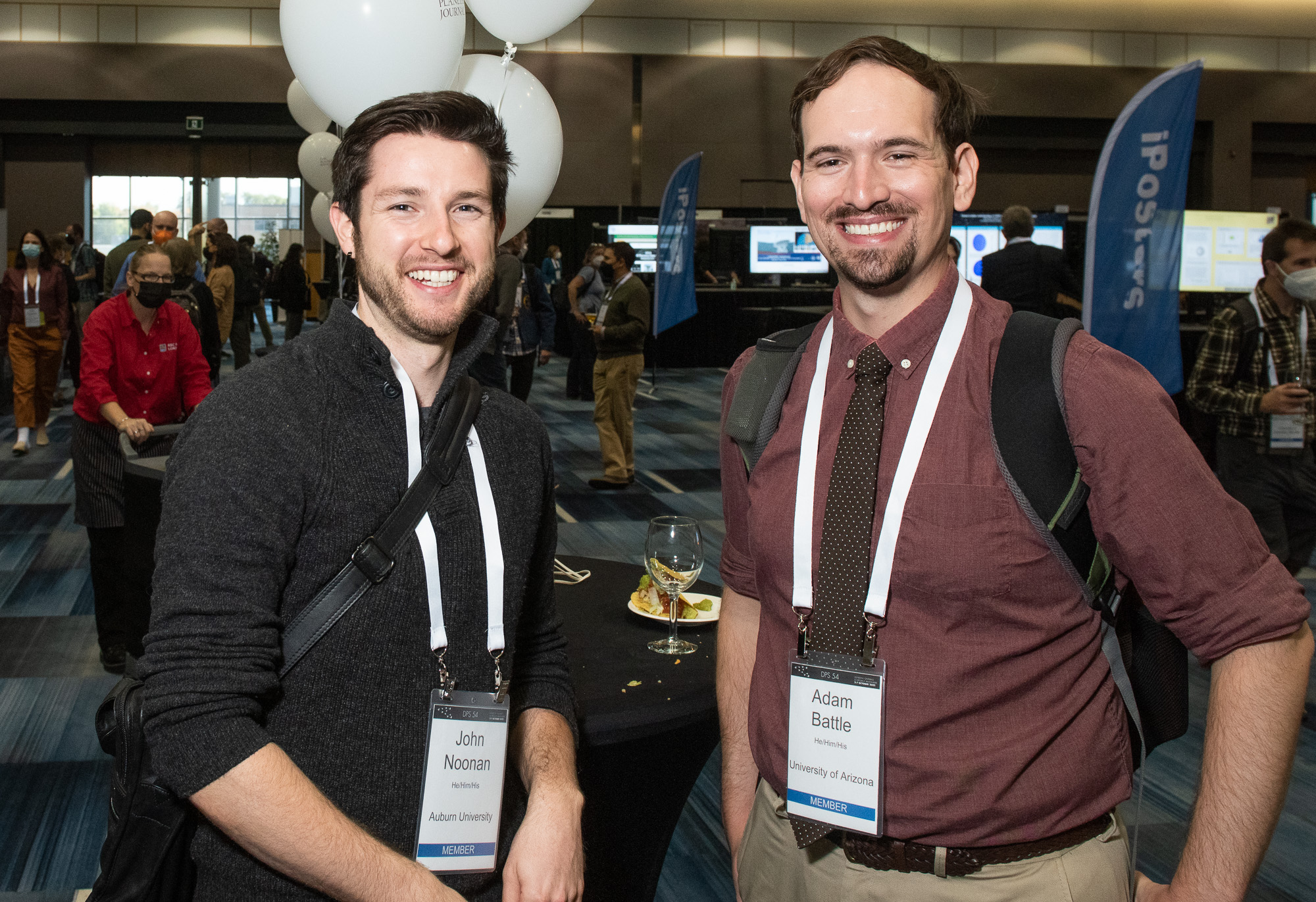
| John Noonan (Auburn) and Adam Battle (LPL). |
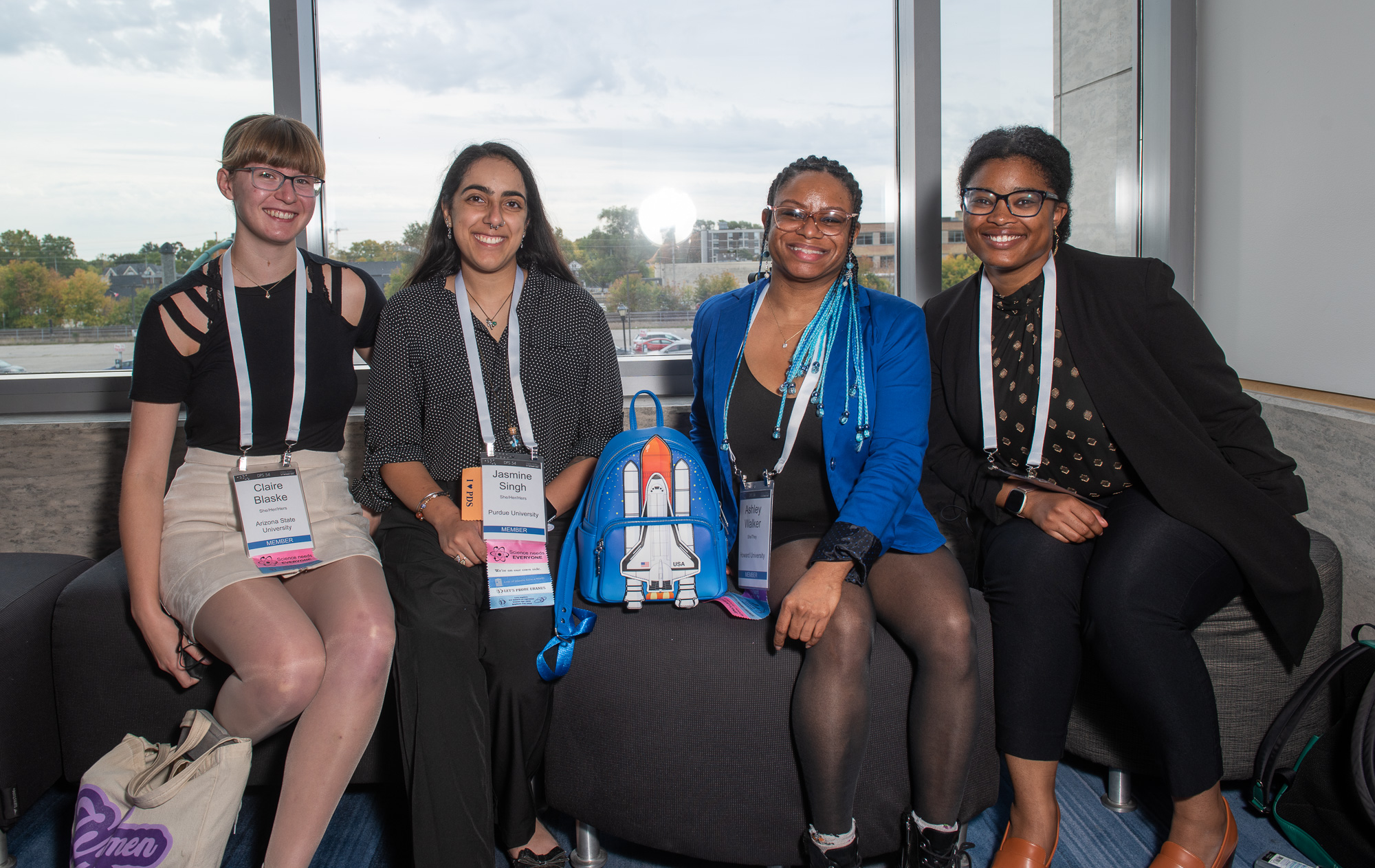
| Claire Blaske (ASU), Jasmine Singh (Purdue), Ashley Walker (Howard U), and Caprice Phillips (Ohio State). |
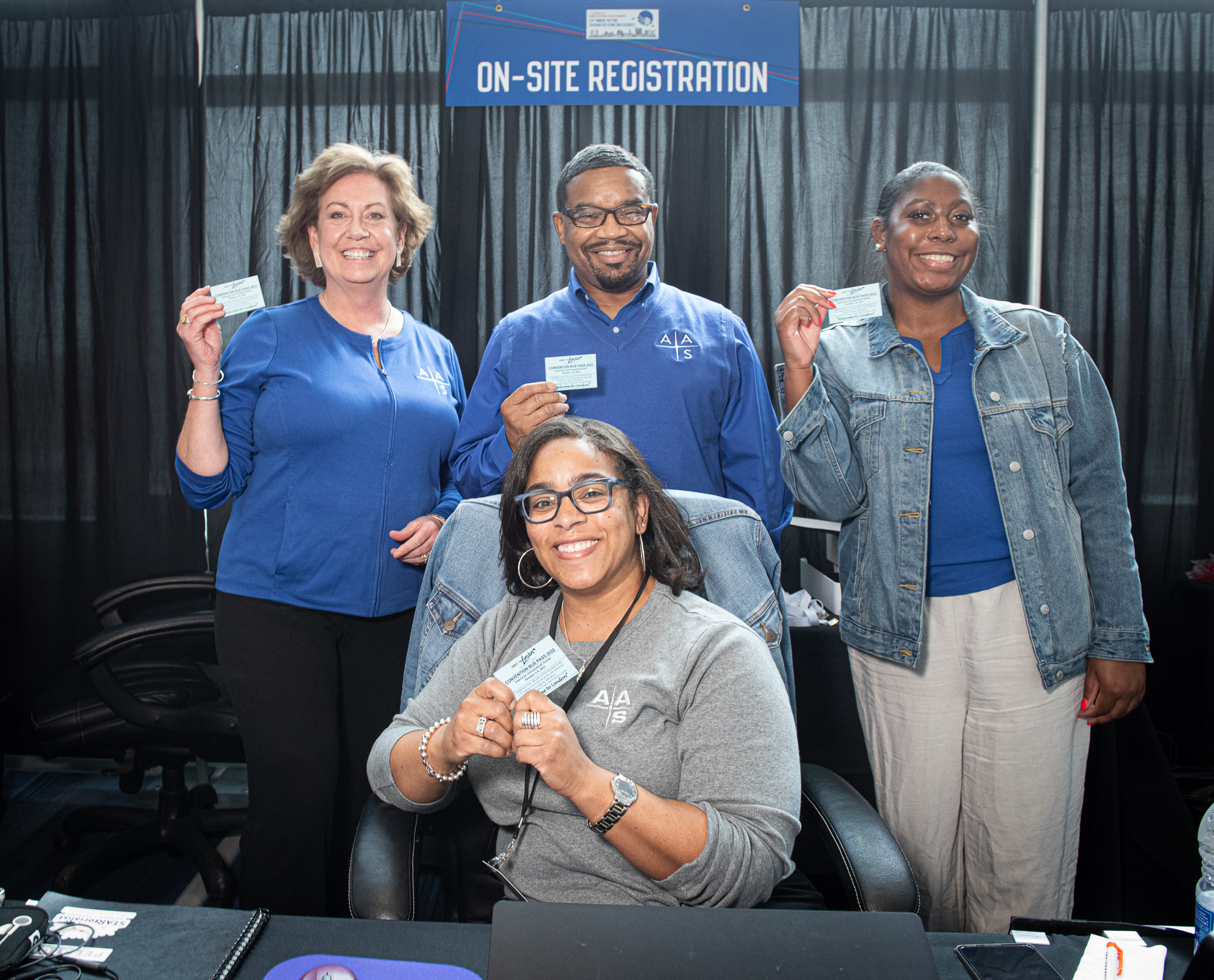
| The AAS registration-booth crowd wants to make sure you get your free bus pass to London! That's Ellizabeth Scuderi, Bill McCall, ___, and Crystal Tinch in front. |
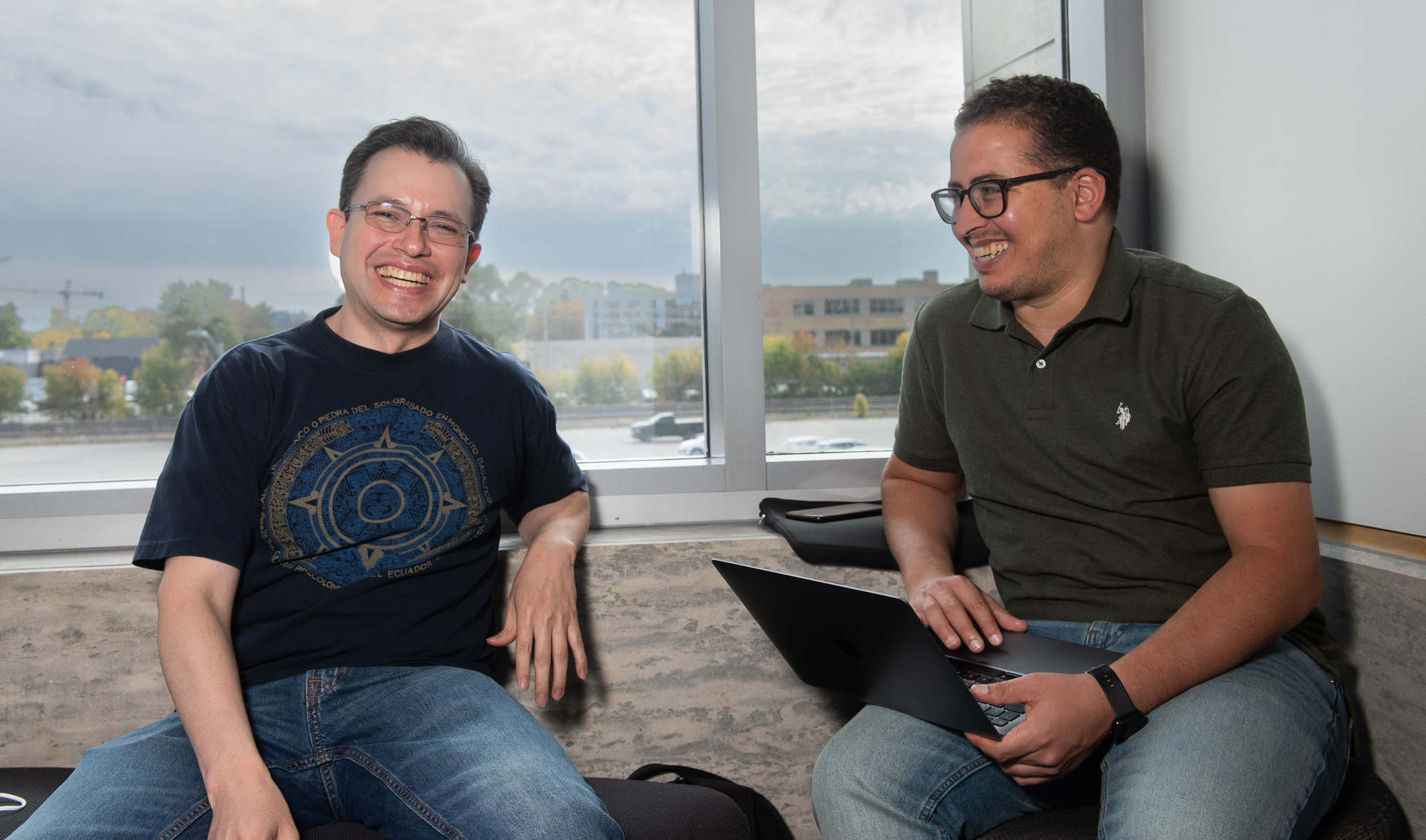
| Paul Sanchez (CU Boulder) and Youssef Moulane (Auburn) |
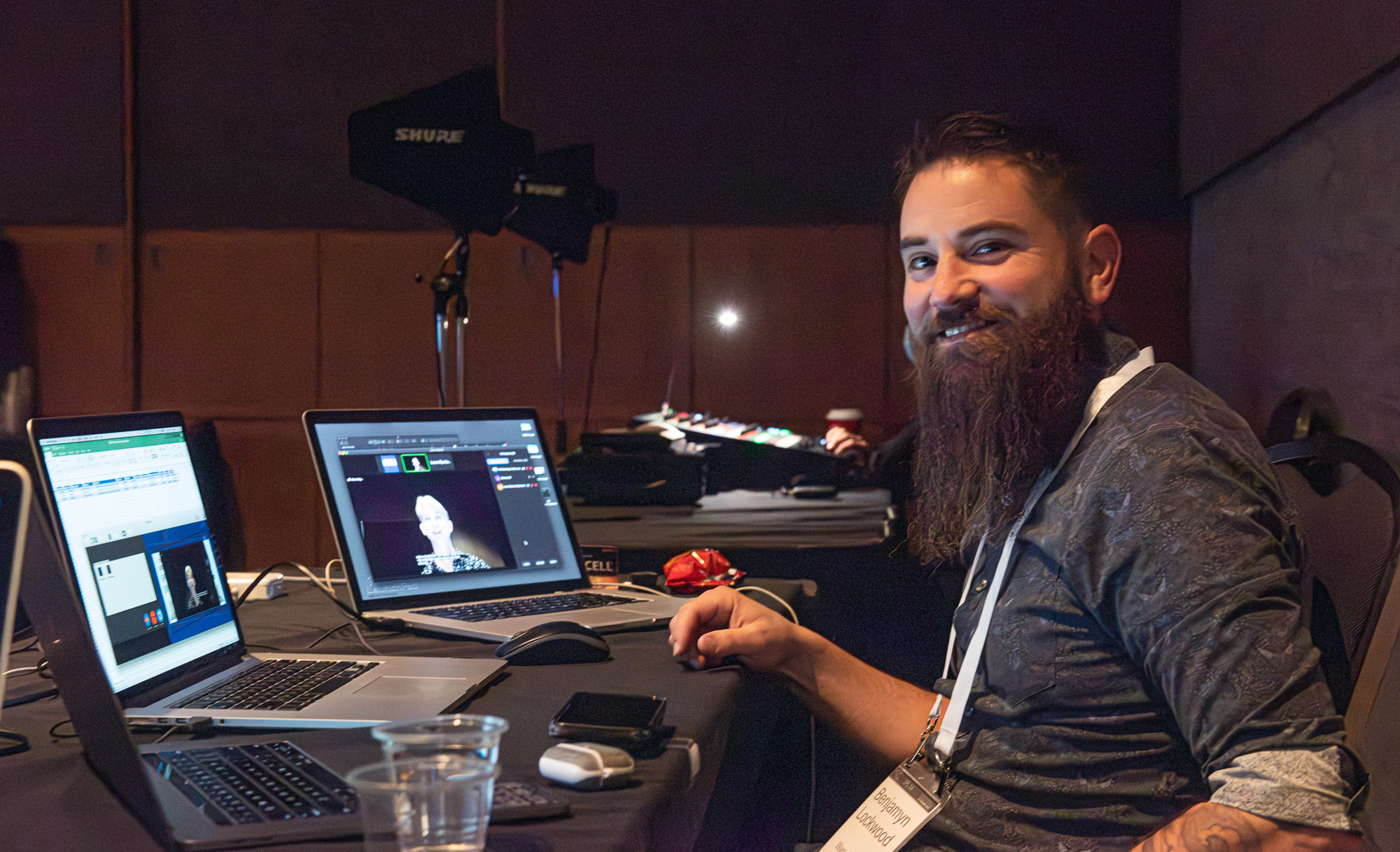
| AV tech Benjamyn Lockwood (Warp Speed Technologies) makes us all look good. |
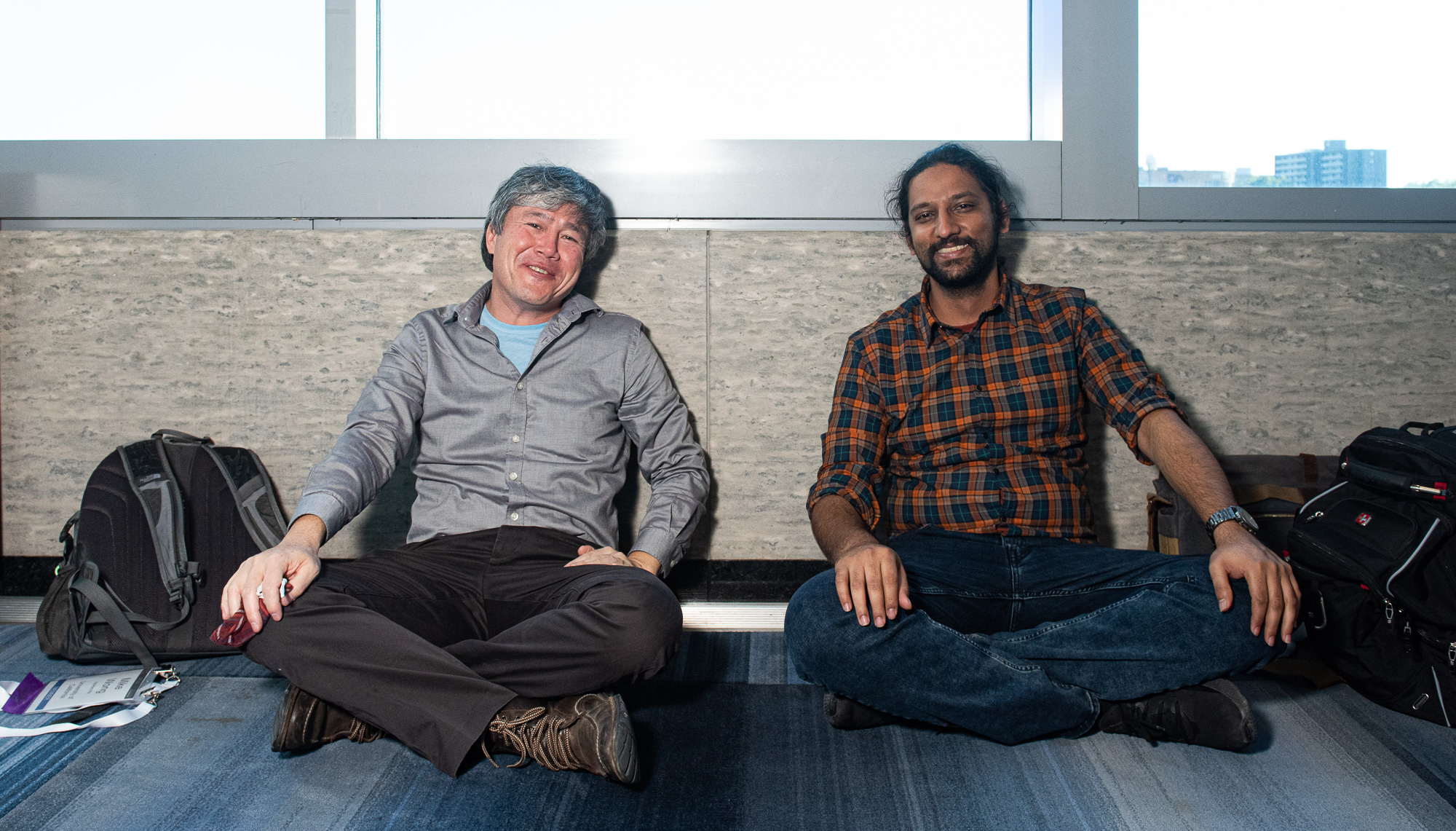
| Mike Wong (Berkeley / SETI) and Ramana Sankar (U Minnesota) talk about Juno data. Ramana gave a talk about citizen science being done with the JunoCam dataset, much of which is being looked at through Zooniverse. |
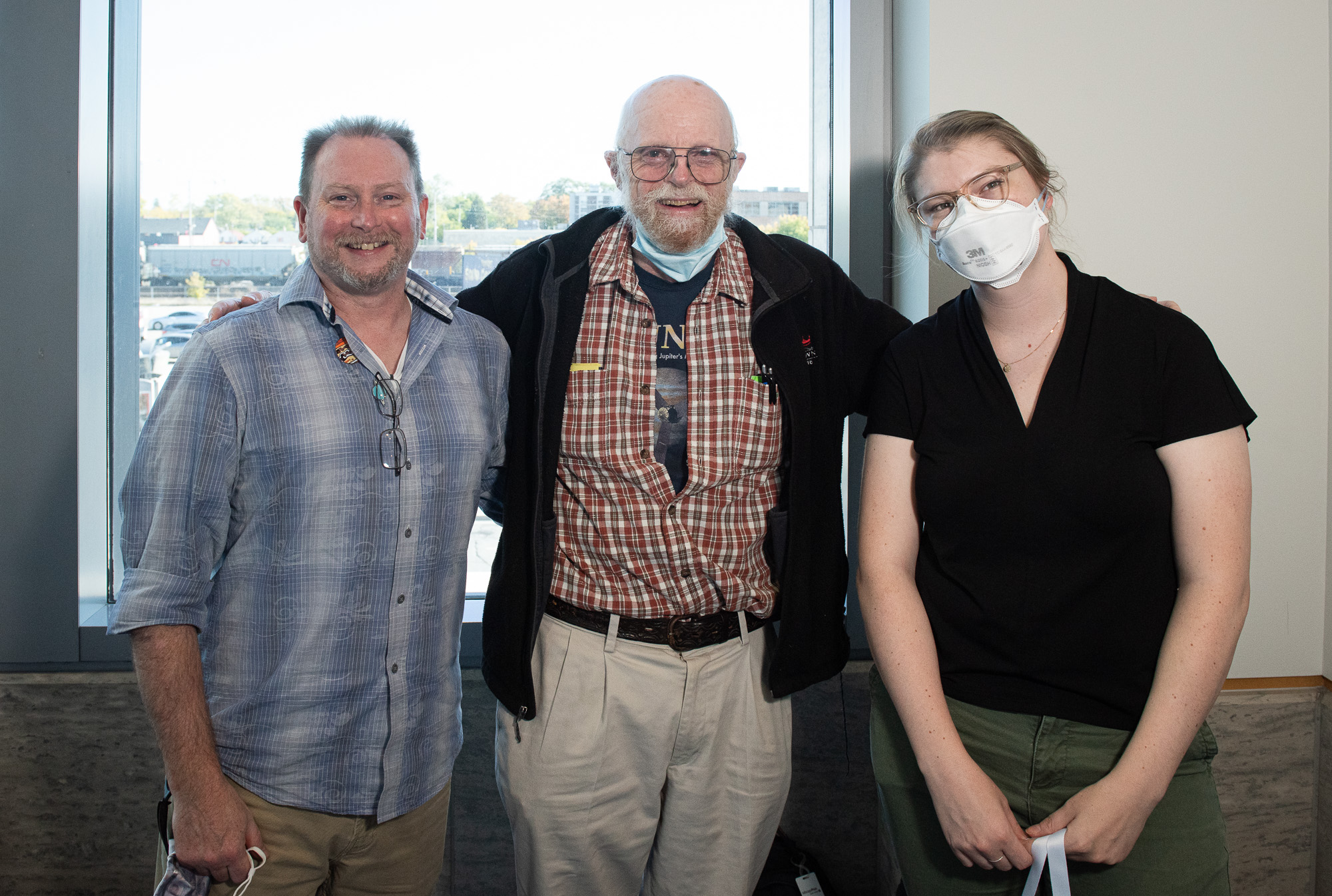
| Shawn Brueshaber, Glenn Orton, and Emma Dahl are all from JPL, and all love Jupiter. |
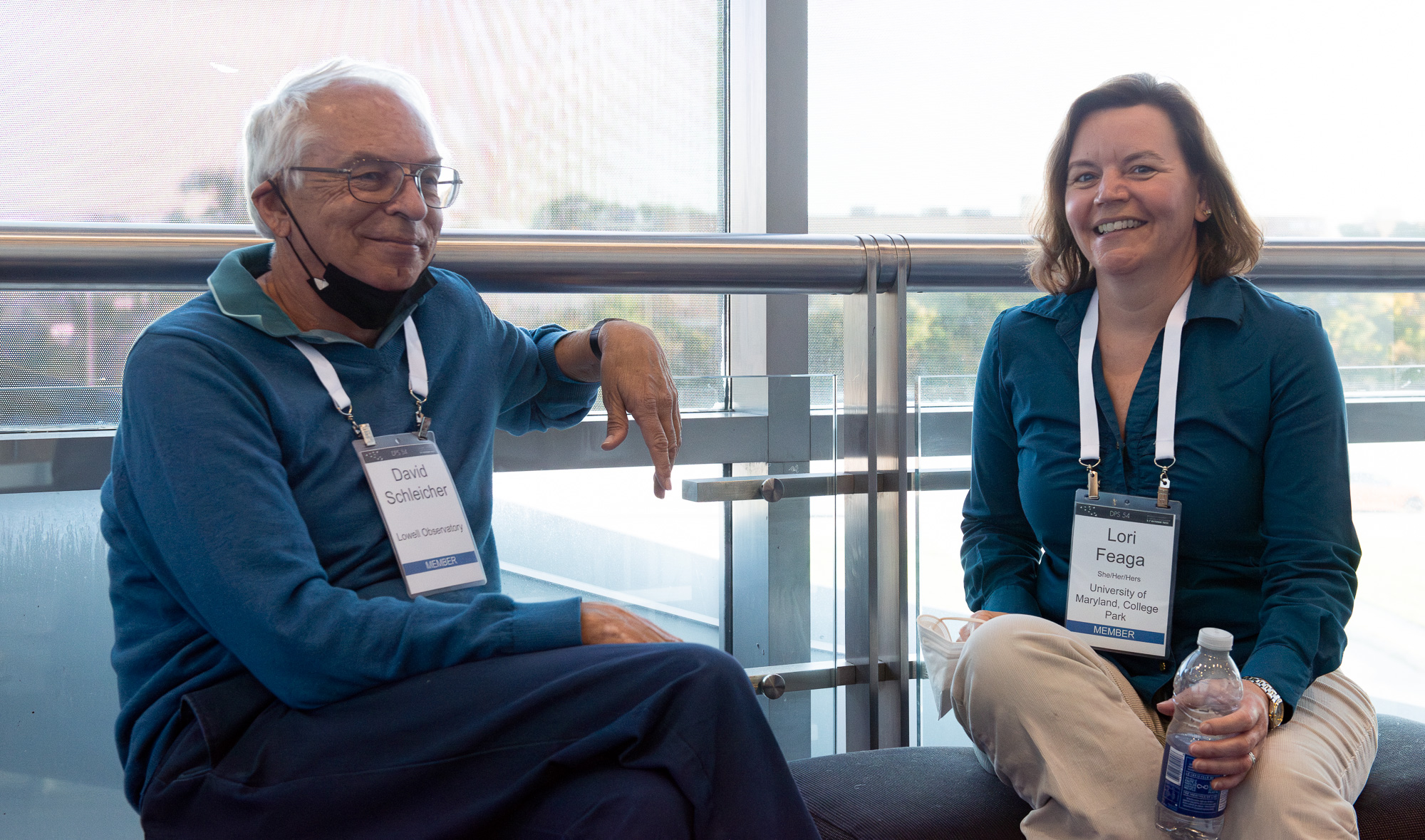
| Dave Schleicher (Lowell) and Lori Feaga (UMD). |
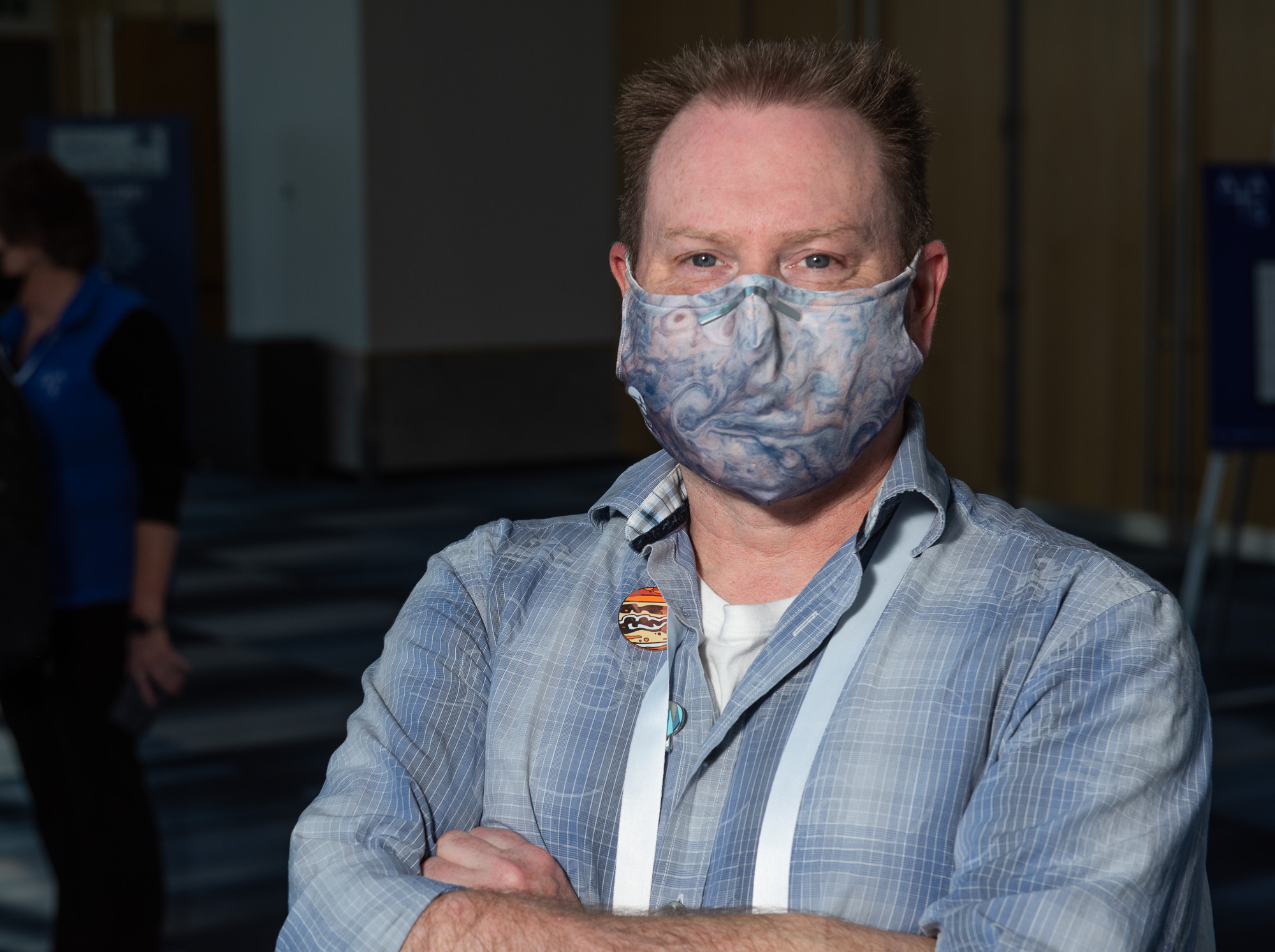
| Shawn Brueshaber (JPL) strongly endorses the Juno mission through his selection of facemask and other adornments. |
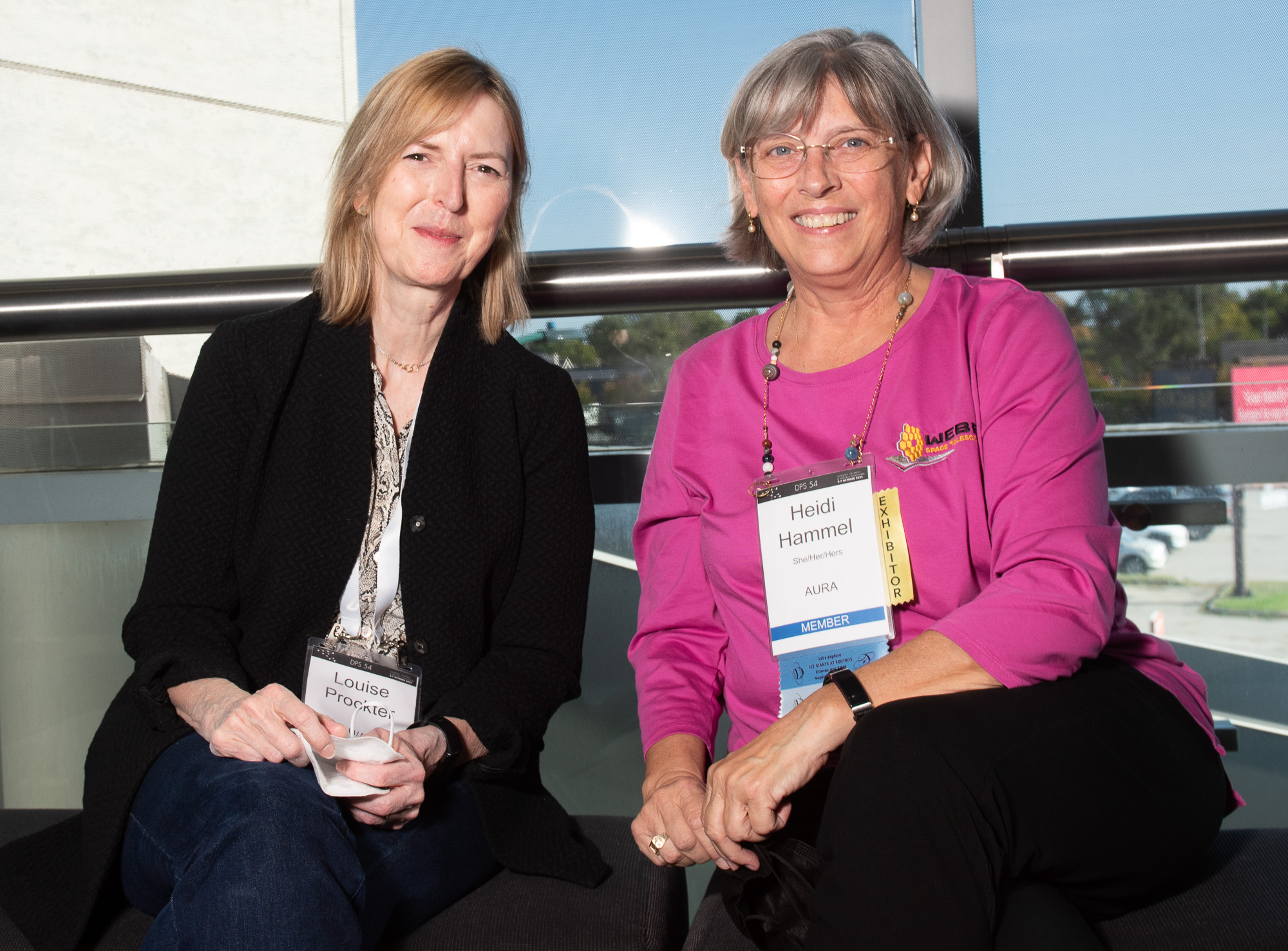
| Louise Prockter (LPI) and Heidi Hammel (AURA). |
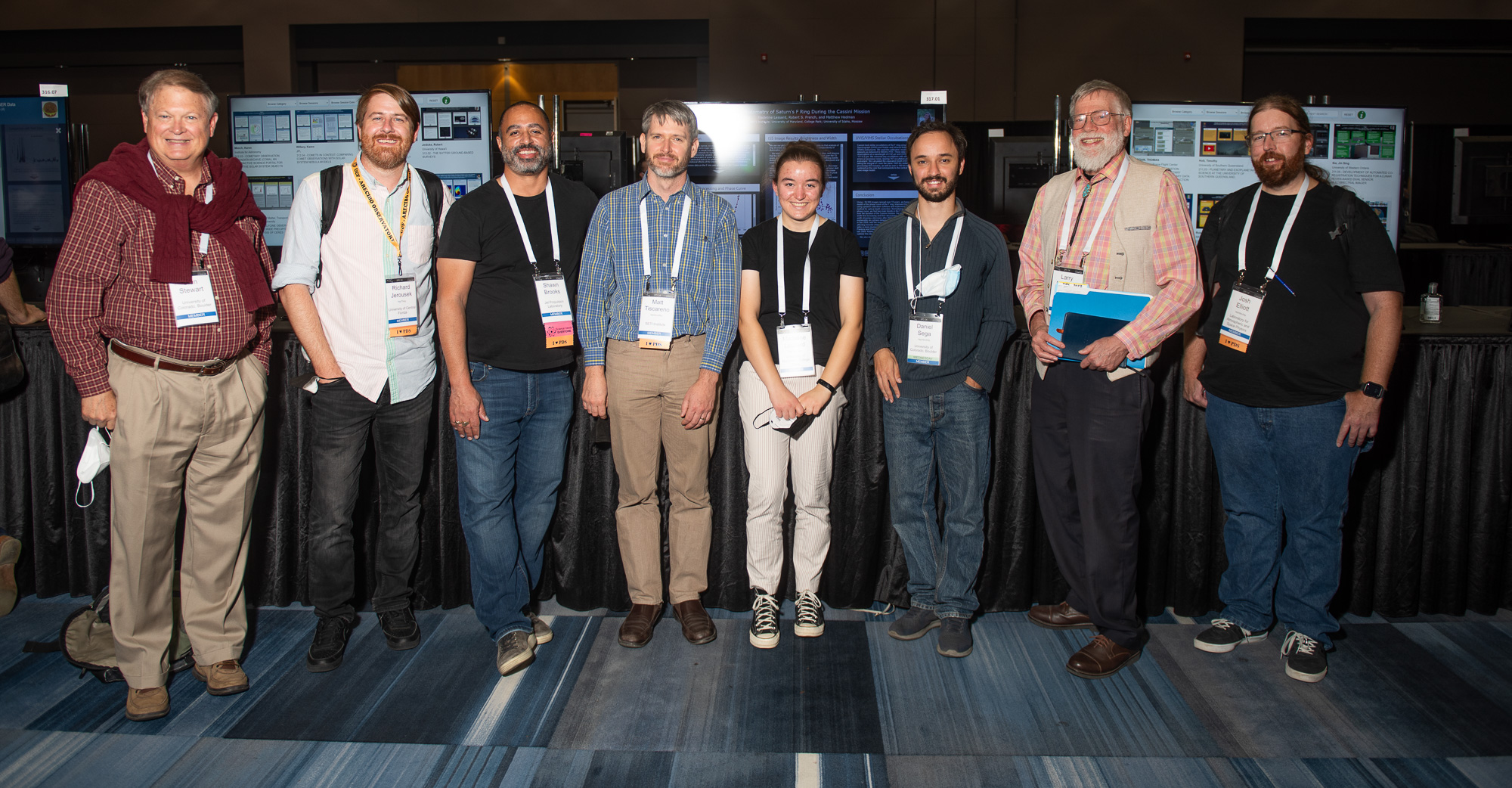
| Hey! It's much of the planetary rings community, gathering during a poster session! Glen Stewart (Colorado), Rich Jerousek (UCF), Shawn Brooks (JPL), Matt Tiscareno (SETI), Madeline Lessard (UMD), Daniel Sega (Colorado), Larry Esposito (Colorado), and Josh Elliott (Colorado). Yes, we're missing some key members, but this is a bigger group of rings people than we normally get in one place, now that Cassini is no longer pulling us together. |
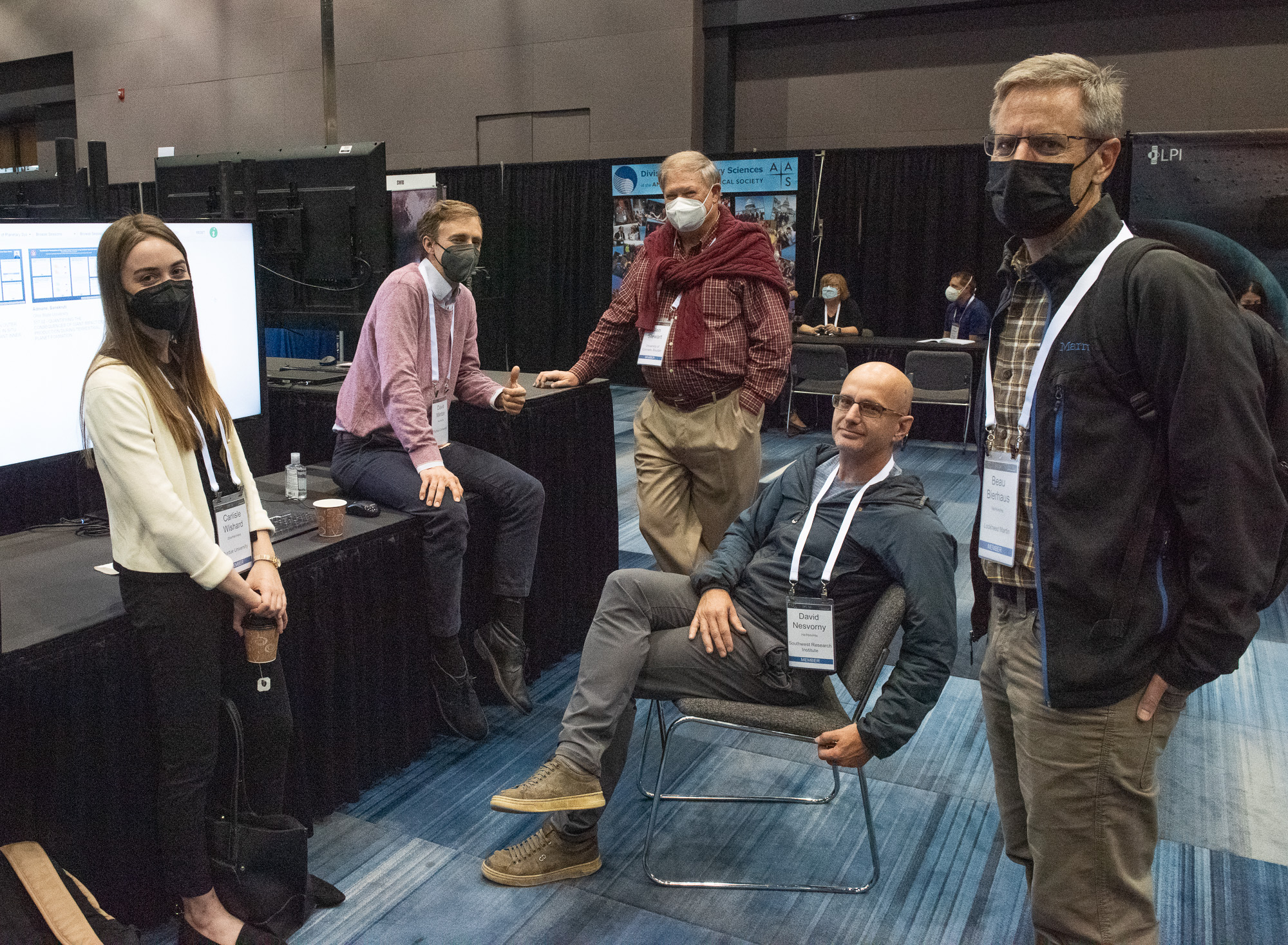
| In the poster session: Carlisle Wishard (Purdue), David Minton (Purdue), Glen Stewart (Colorado), David Nesvorny (SwRI), and B.B. (Lockheed). |
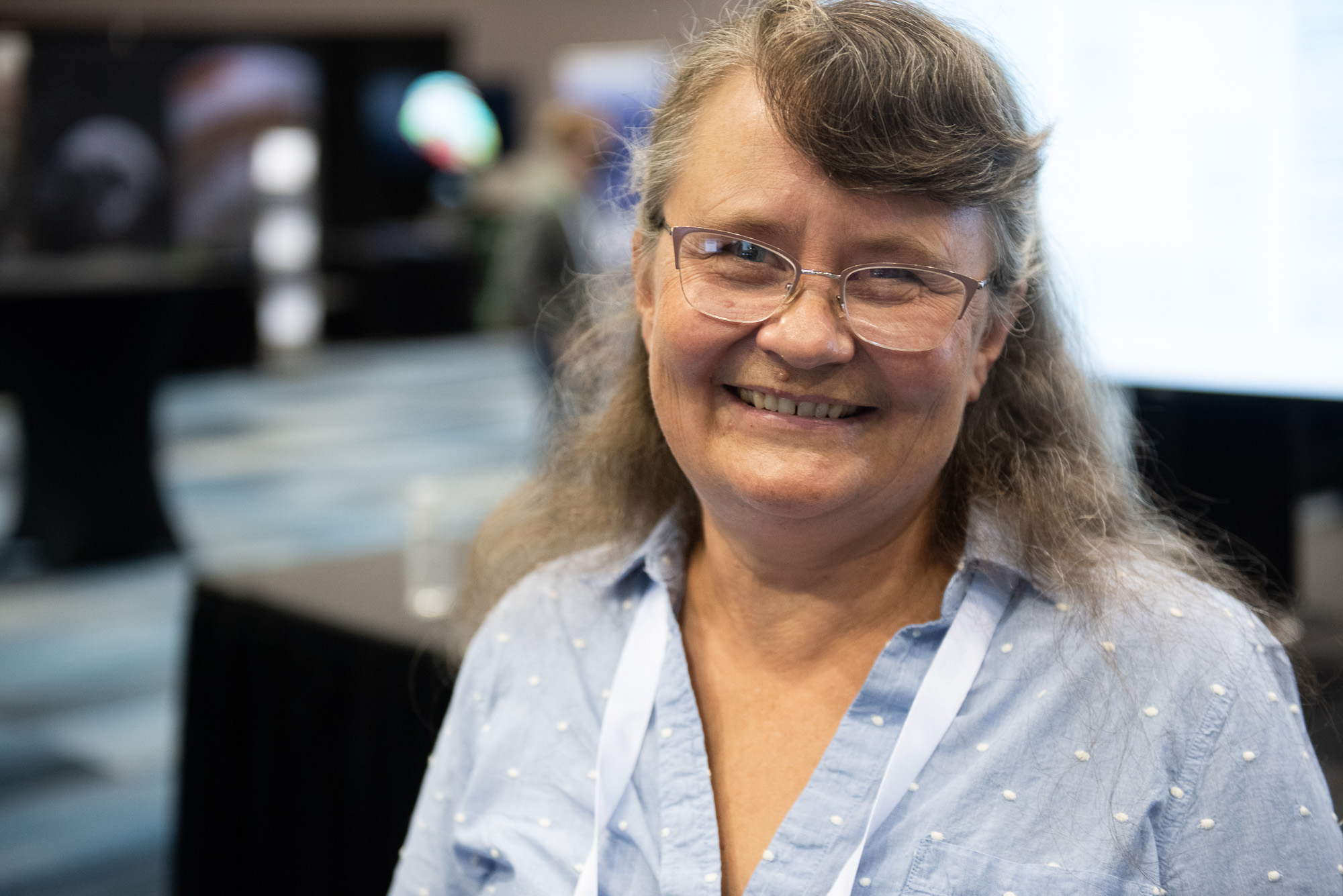
| Ulyana Dyudina (SSI / U Laverne). "Oh, you lived in Mexico? I was just down there. We were doing Ukrainian refugee work. There were hundreds of Ukranian refugees coming from Mexico to the US every day, and we were helping out. Now I may be Russian, but this whole thing is crazy, and I think it's even more important that we went down to help out." |

| Shawn Brooks (JPL), Erika Barth (SwRI), and Kurt Retherford (SwRI). |
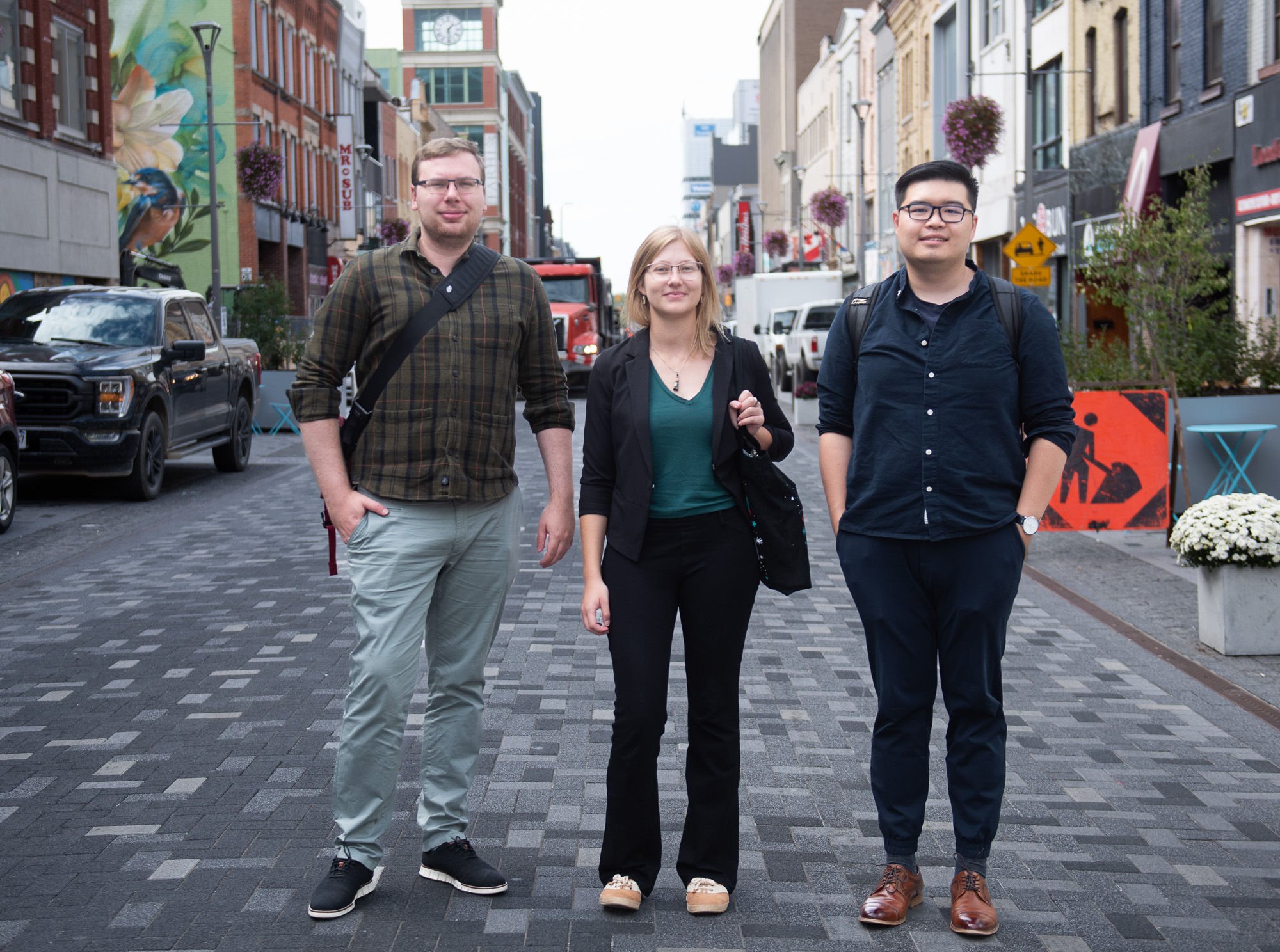
| Mykhaylo Plotnykov, Jennifer Scora, and Bo Peng (all U Toronto), outside in downtown London. |
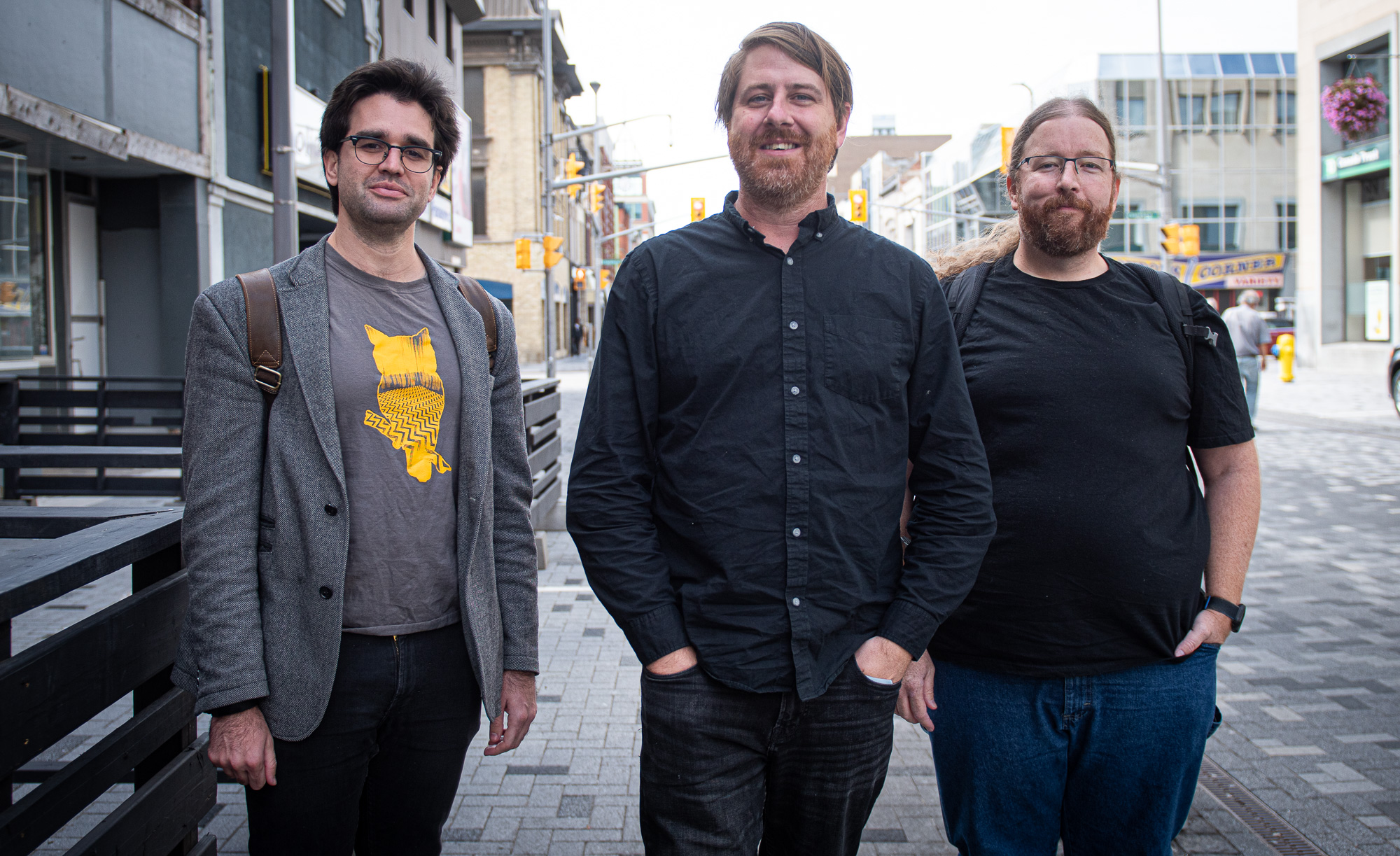
| Bryce Bolin (GSFC), Richard Jerousek (UCF), and Josh Elliott (Colorado) coming back from lunch. |
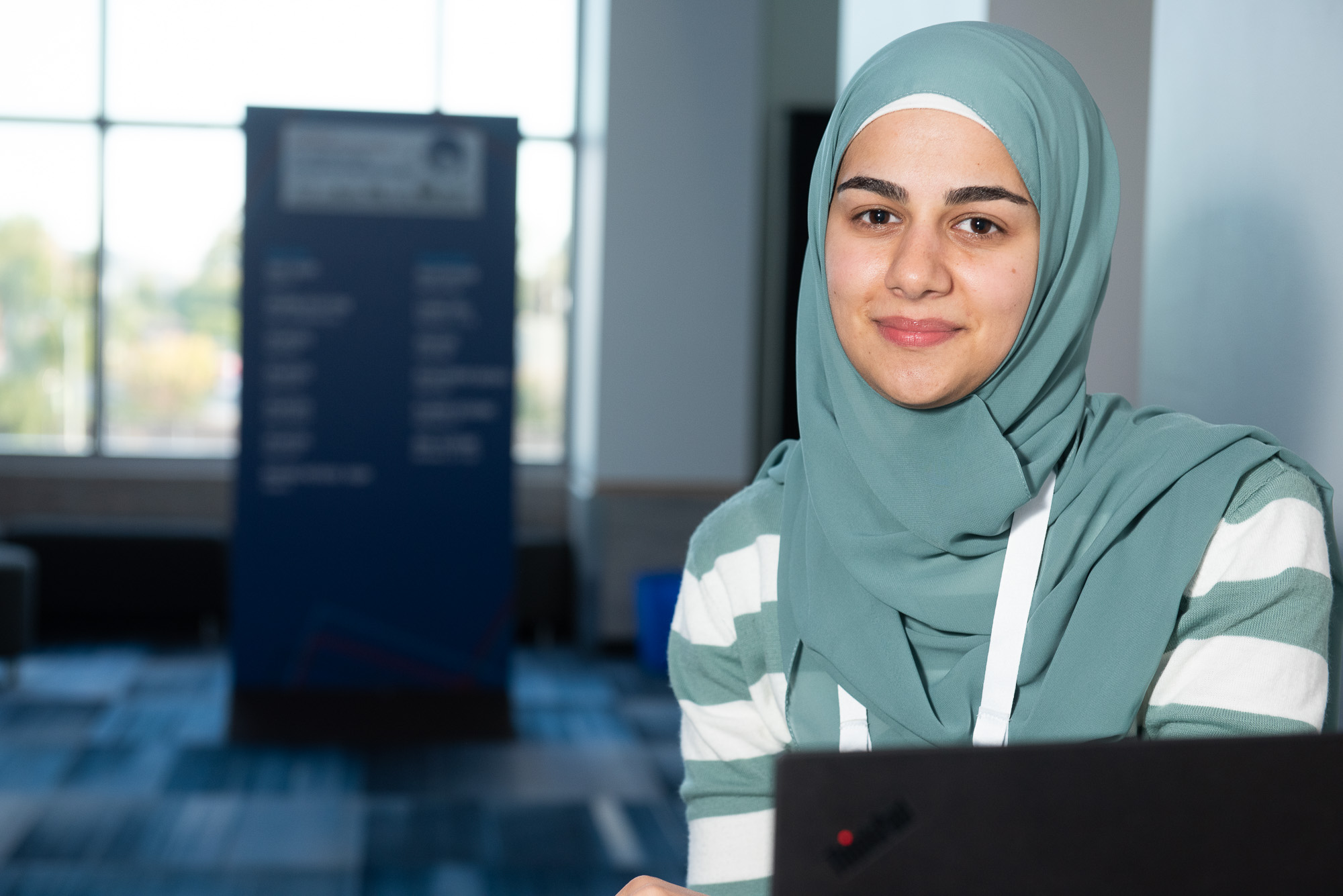
| Rola Dbouk (MIT) thinks of dynamical systems. |
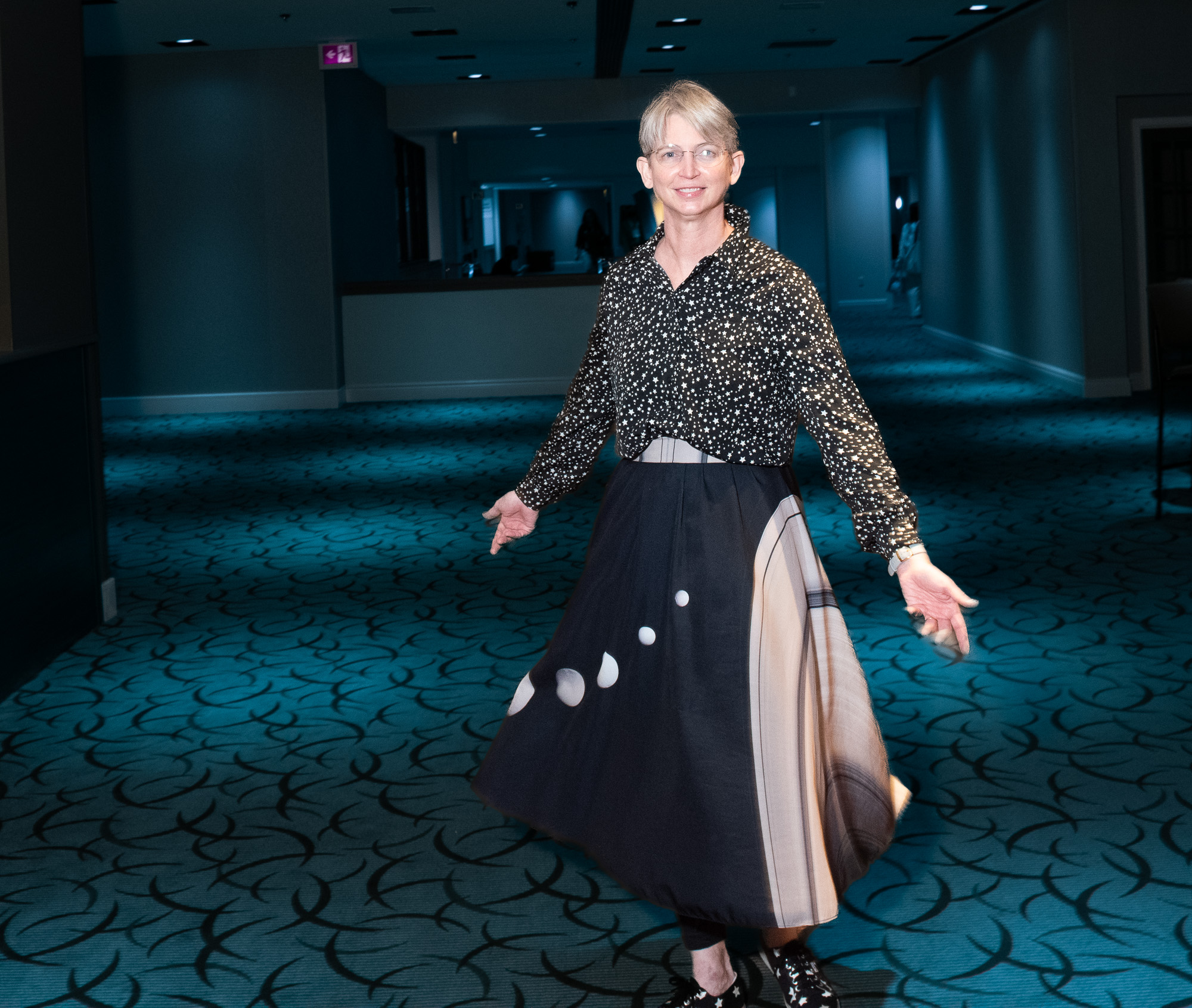
| Emil Lakdawalla shows off that amazing Saturn + icy moons attire. (And for a complementary interpretation of the Cassini dataset, do check out Sarah Horst's Titan, as presented in her 2017 Urey lecture.) |
Open Mic Night!
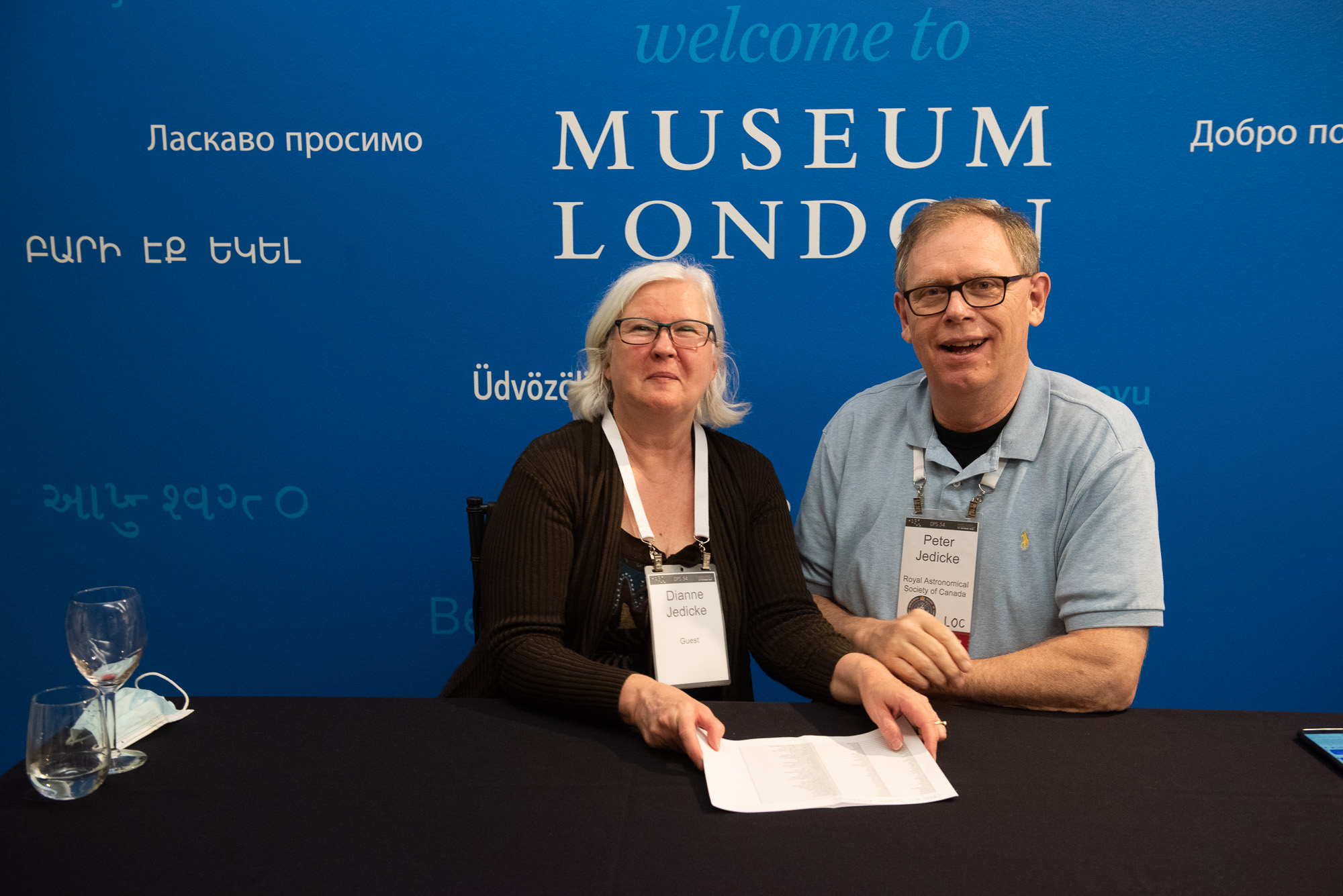
| Dianne and Peter Jedicke (Royal Astronomical Society of Canada) are happy you have come to the open-mic night, down the street at the Museum London.. |
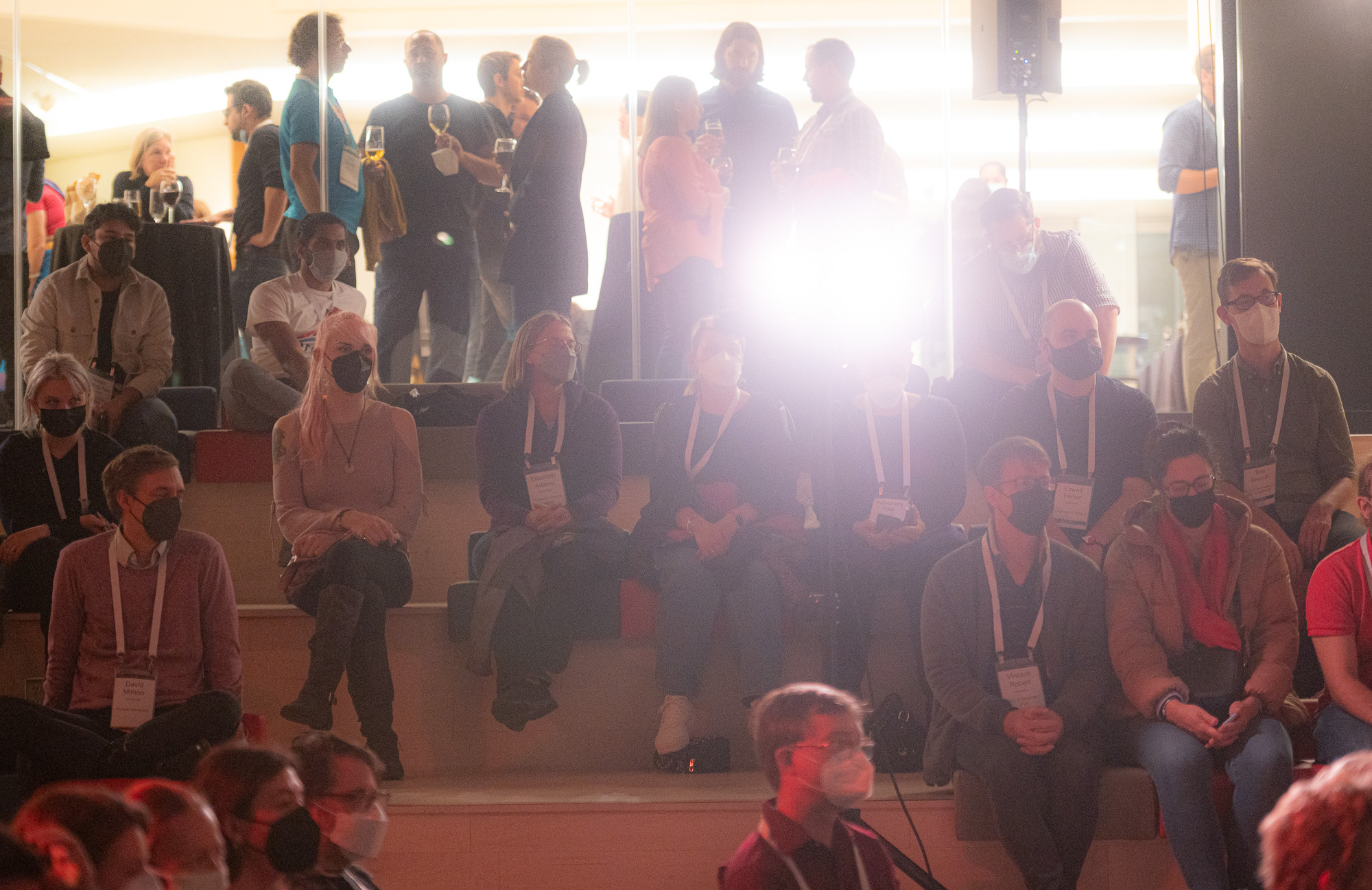
| Joe Spitale (SETI) talked about the challenges of setting up the open mic this year. "So, it was getting to be August, and COVID was still pretty high. I didn't really know about this whole open mic thing... we didn't want to cancel Open Mic night, but we didn't want to put people at risk. So I talked with Catherine Neish, and luckily she was 100% on top of things. She's already pretty much set it up. So we figured it out. Keep the masks on in the room, for everyone. Take them off the moment you're playing, but keep them on otherwise. And that big ensemble encore at the end, with everyone on stage, that we usually do? Yeah, no way were we doing that this year." |
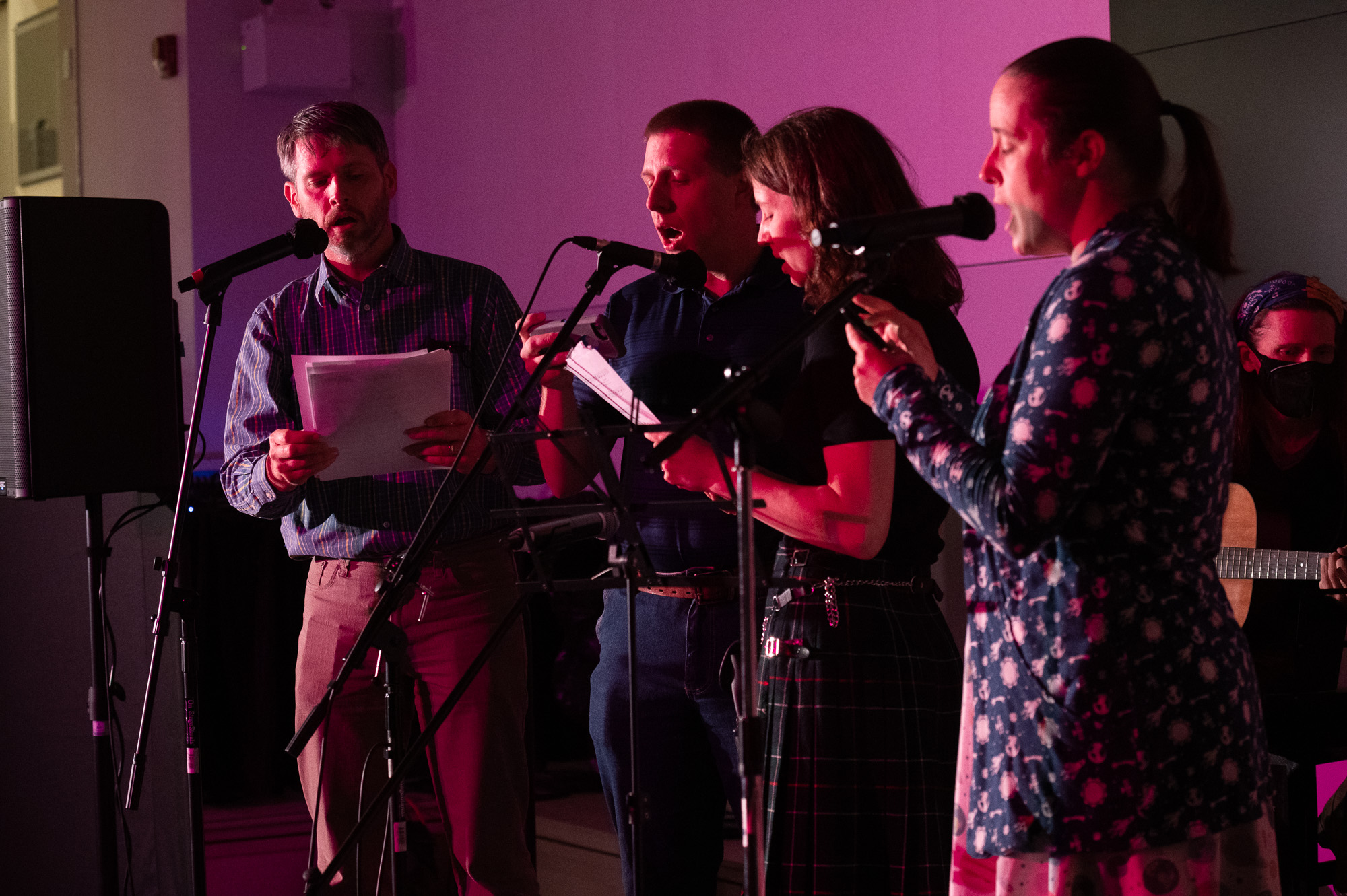
| The C-Rings start off the night: Matt Tiscareno (SETI), Brian Jackson (U Idaho), Shannon MacKenzie (APL), and Catherine Neish (UWO), with Joe Spitale (SETI) in the background. |
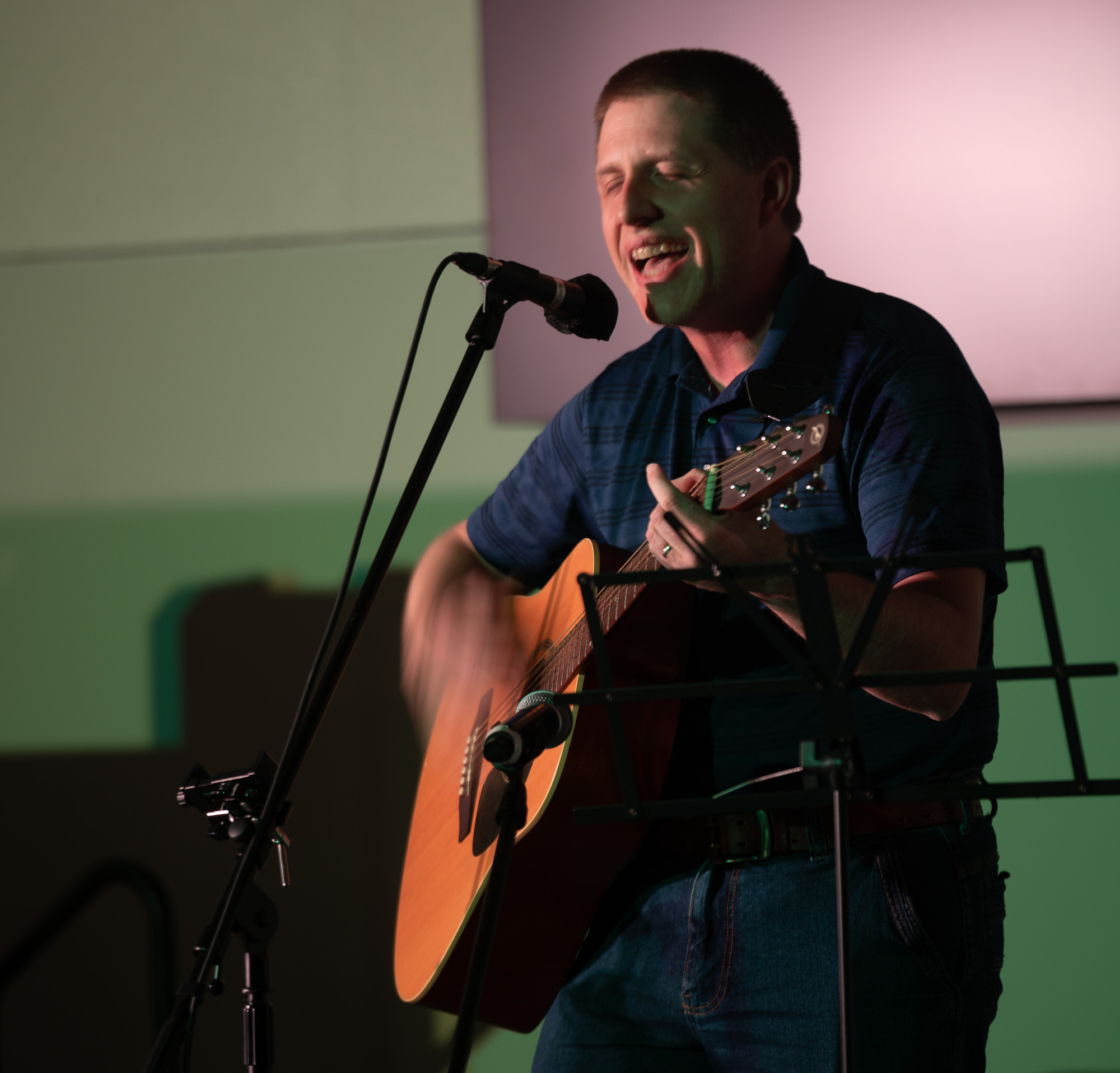
| Brian Jackson (Boise State) rickrolls us. |
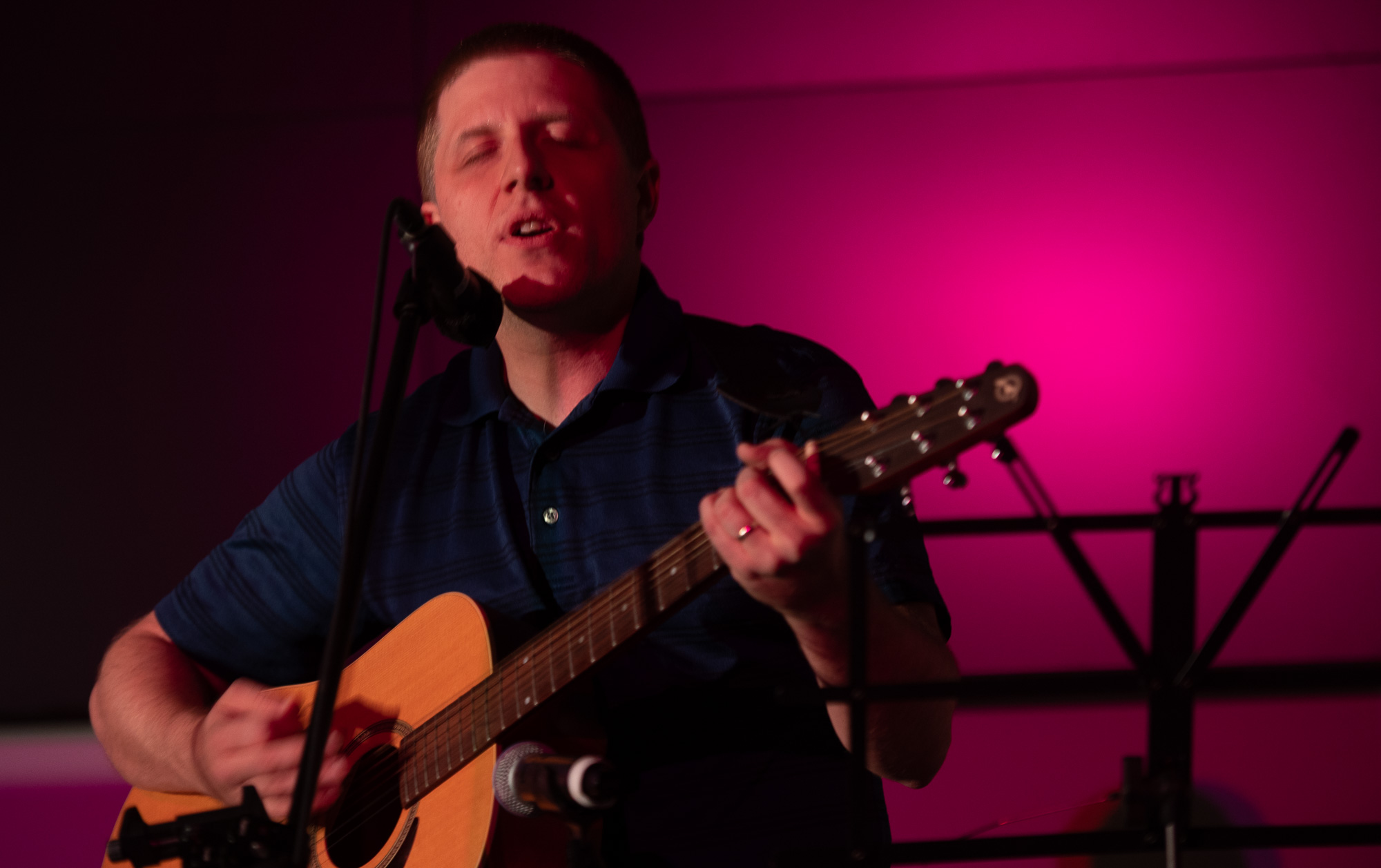
| Brian Jackson (Boise State). |
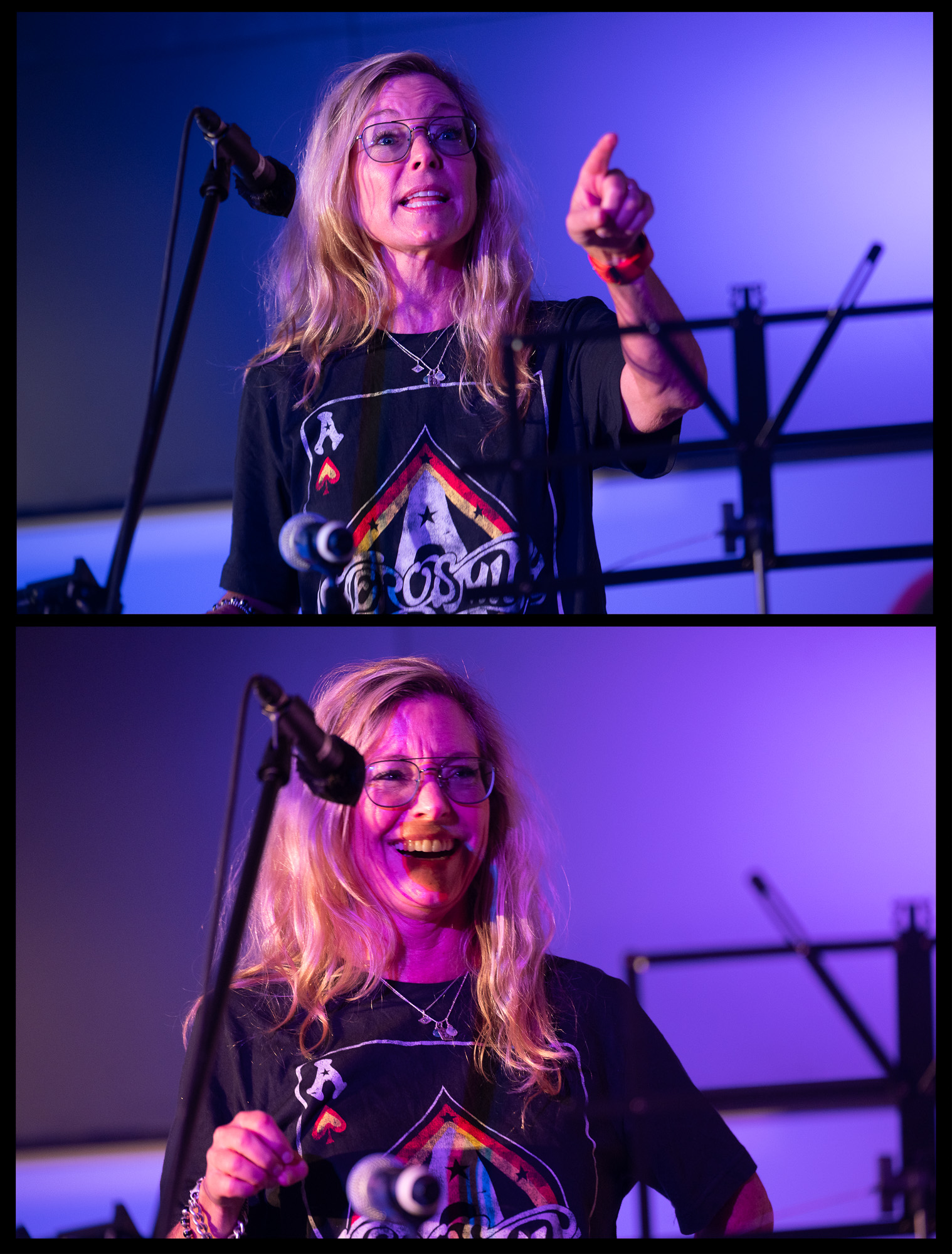
| Amanda Hendrix (PSI) takes the MC duties this year. And where is long-time co-host Andy Rivkin? Apparently spending his time with DART data, which impacted Didymos just two weeks earlier. |
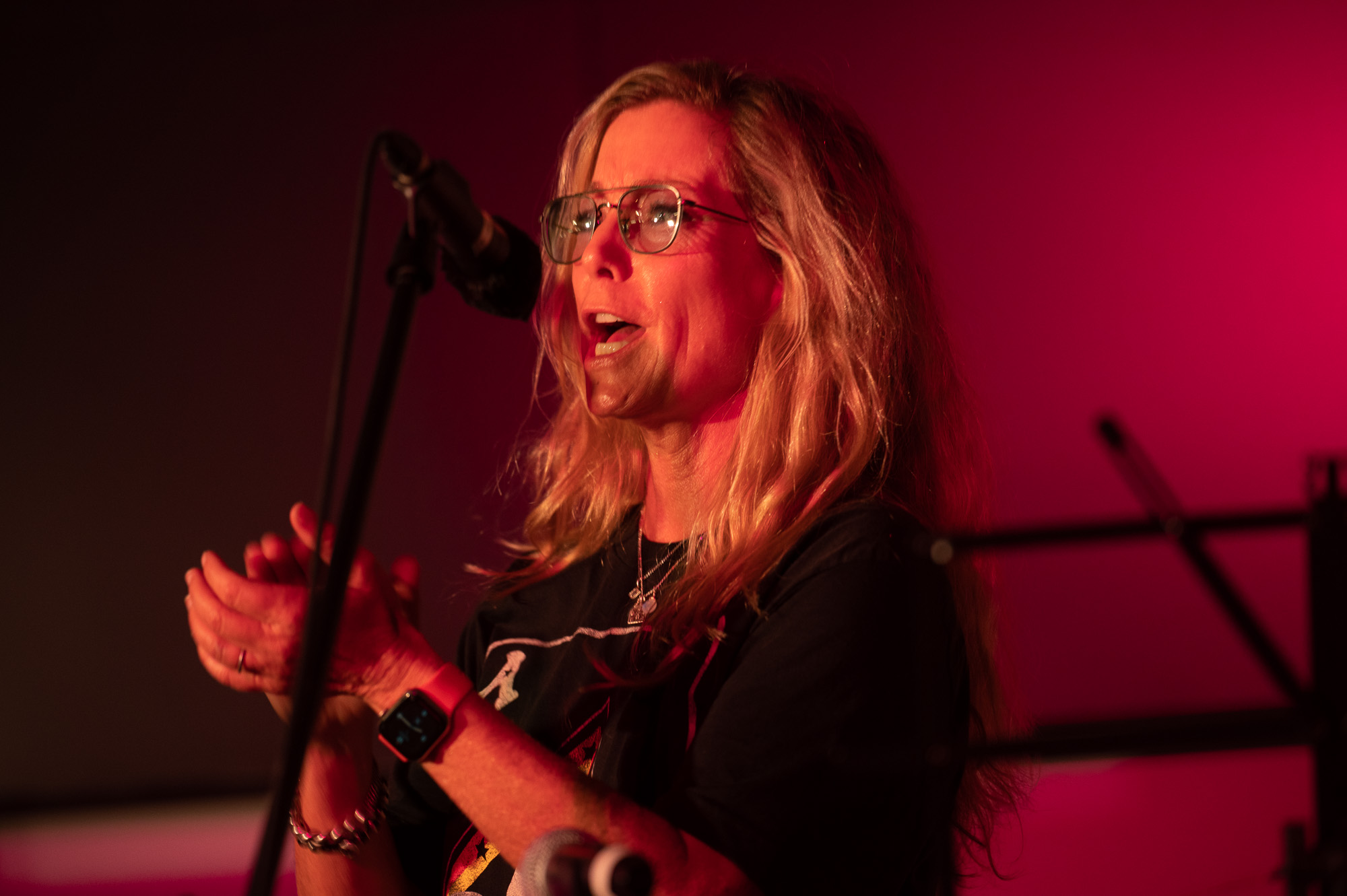
| Amanda Hendrix (PSI). |
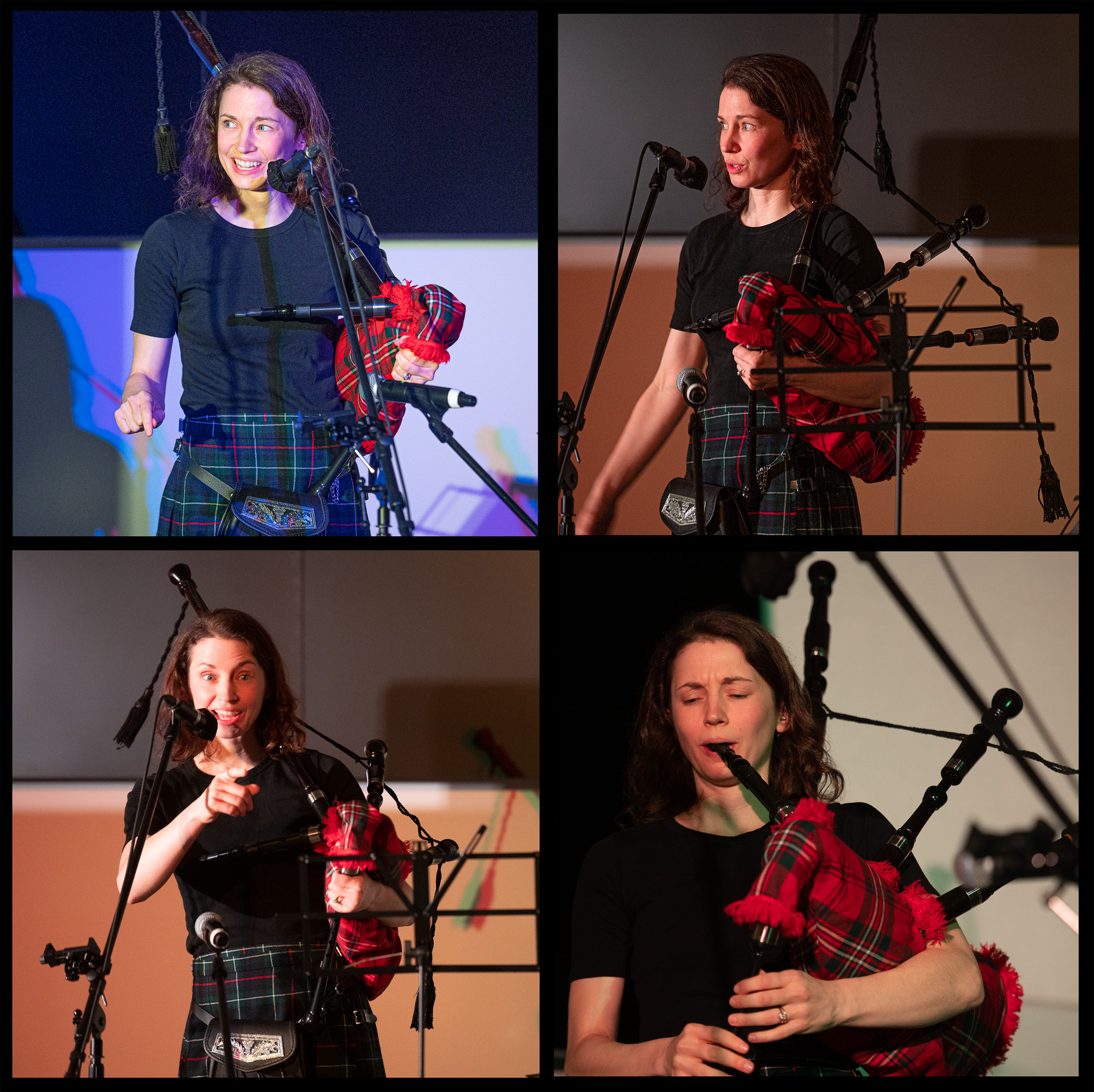
| Shannon MacKenzie (APL) brings out the bagpipes!! I definitely feel that one of the problems with the annual DPS meetings is that there have not been enough bagpipes in the past, and Shannon has really addressed this problem. |
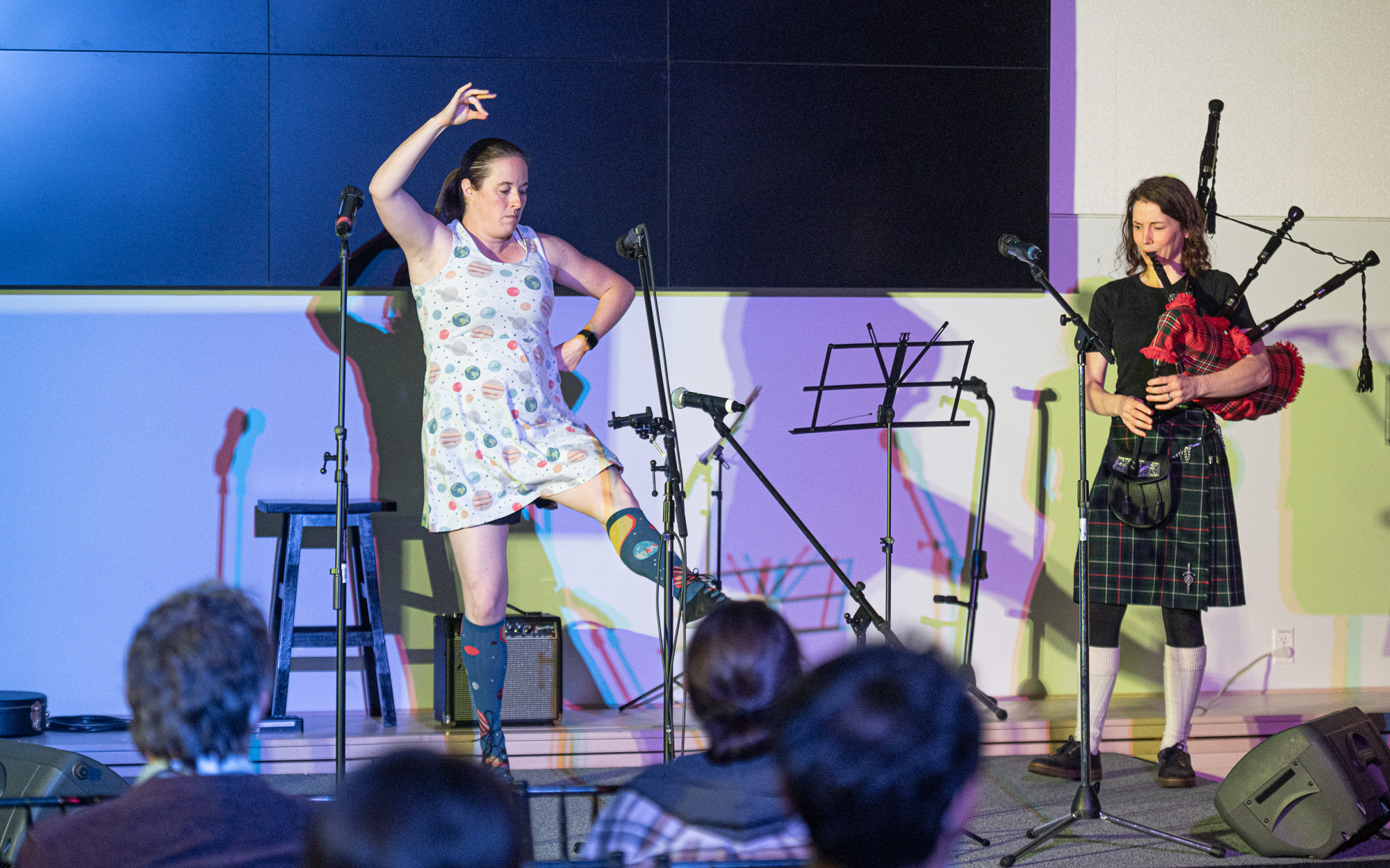
| And Catherine Neish (U Western Ontario) joins Shannon MacKenzie (APL) on stage for a jig! |
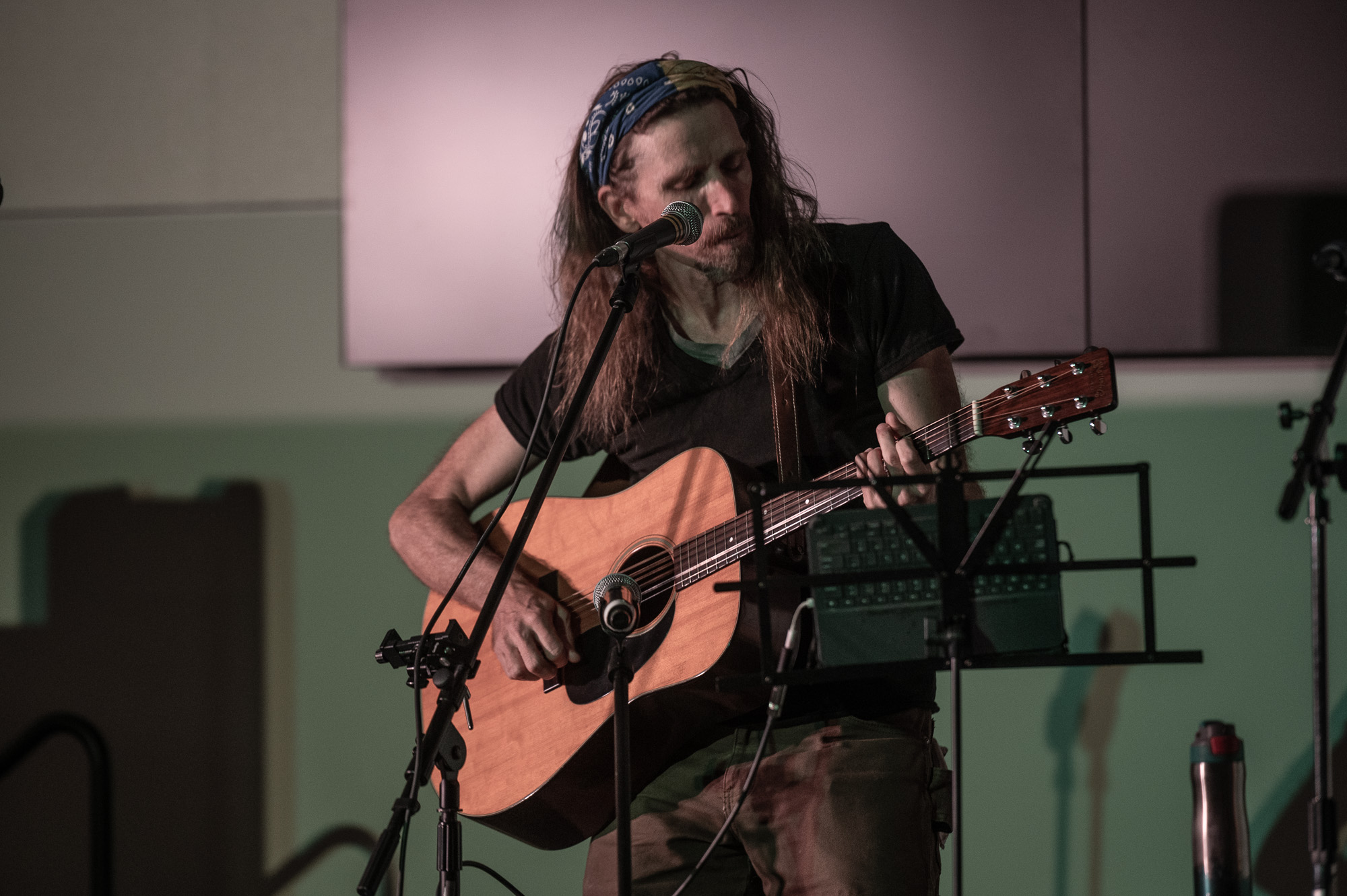
| Joe Spitale (SETI) gets going after finding the lyrics. "It's not downloaded! It's in airplane mode. I thought of everything in setting up this event, except for my own backing tracks. Can anyone bring me my iPad?" |
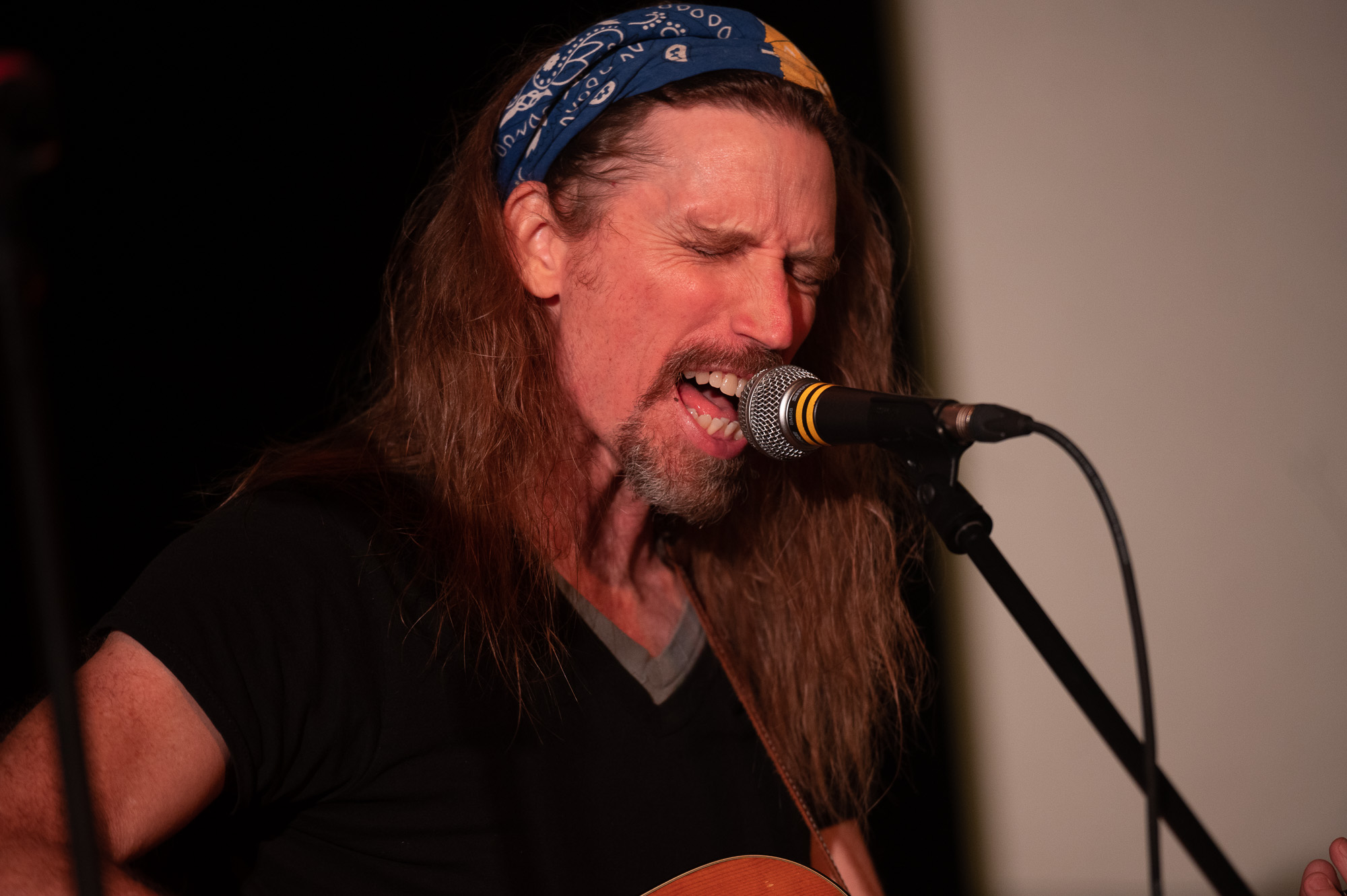
| Joe Spitale (SETI) set up the open mic. "Yeah, during the pandemic, I was organizing all these open mic sessions at Reid Park in Tucson. The big thing with the band shell in Tucson is the monsoon. You gotta hope there won't be monsoons, since if there is, you're gonna get drenched." |
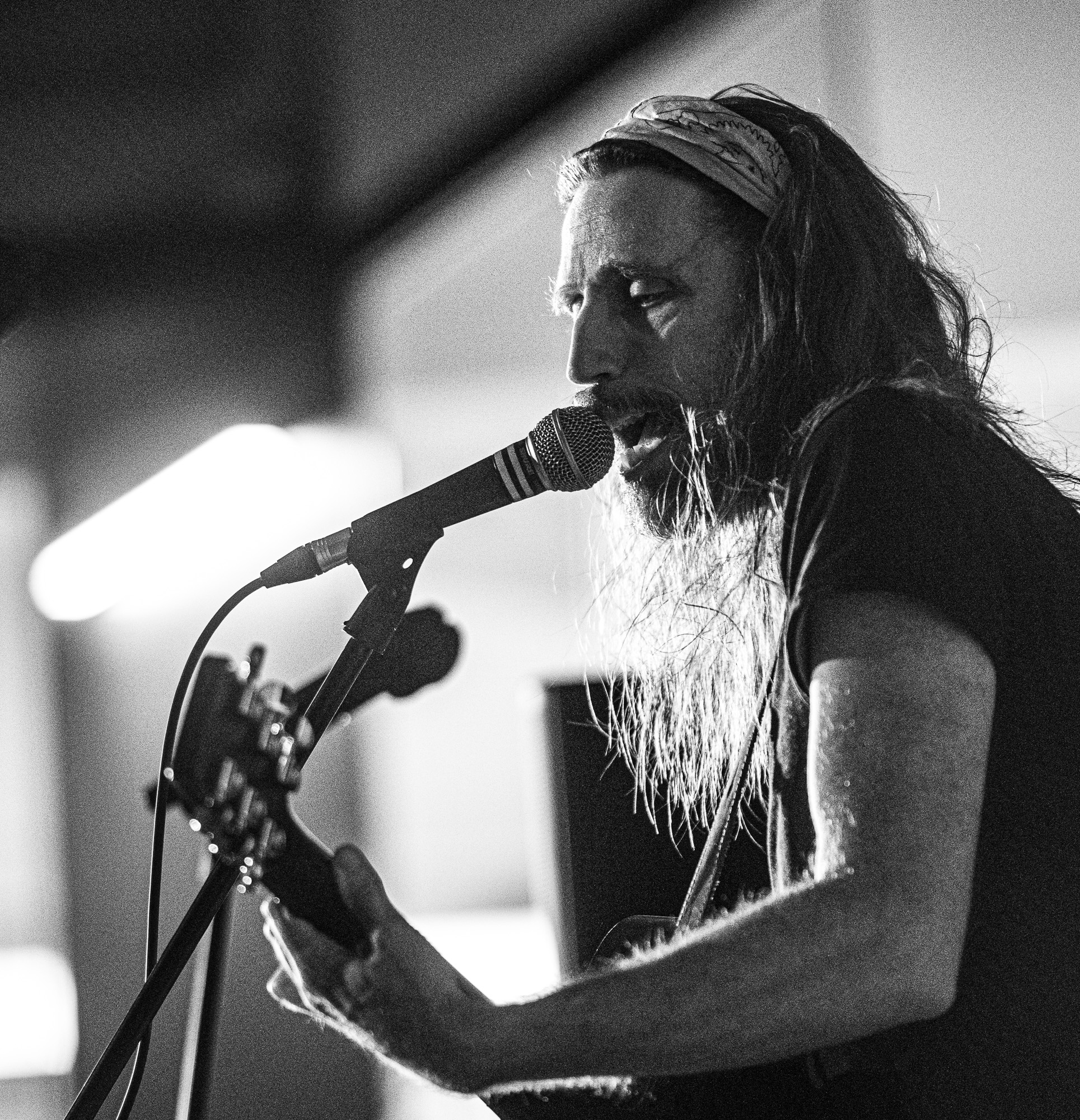
| Joe Spitale (SETI) does a song called Sorry, typo. It's actually called "Hand Grenade." |
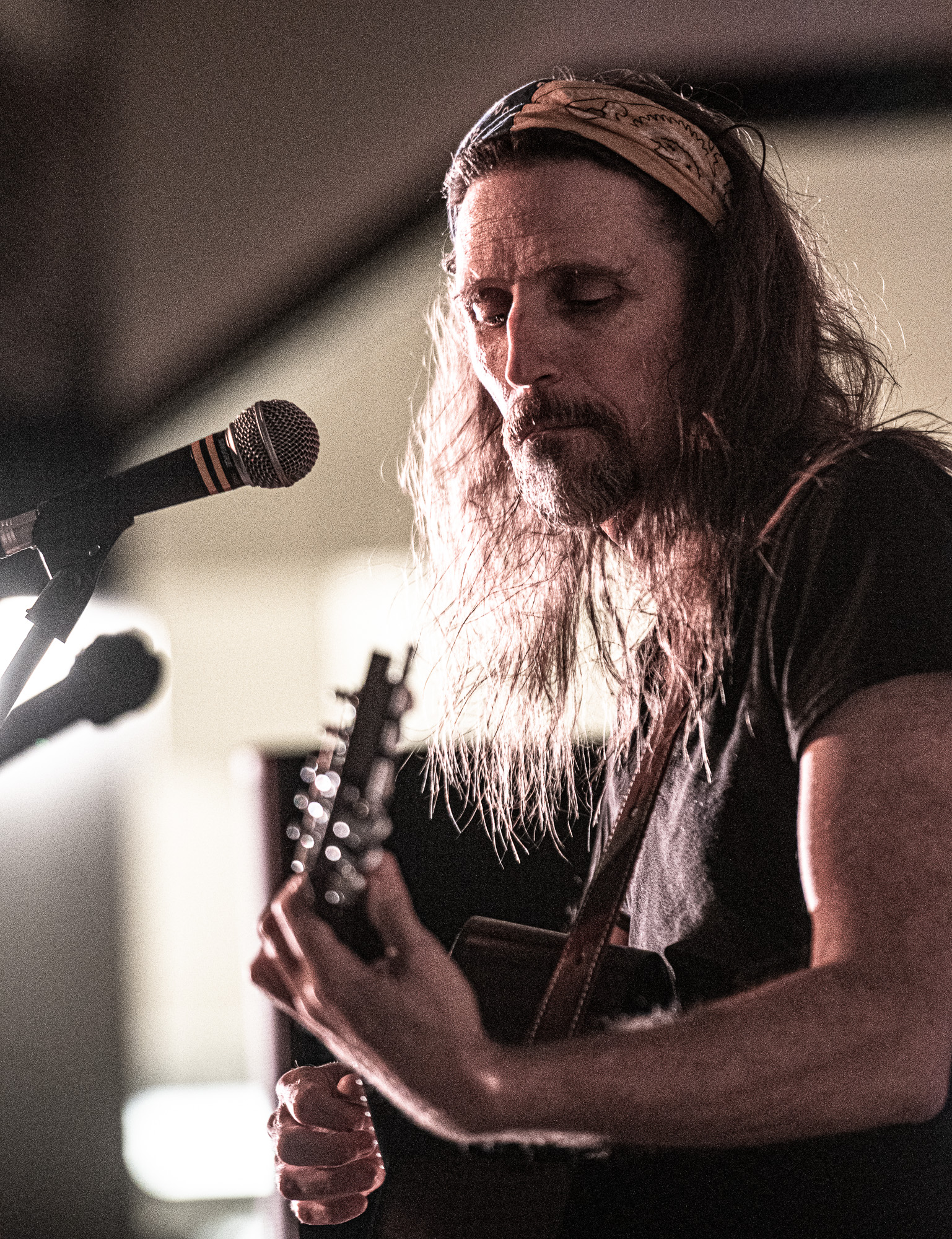
| Joe Spitale (SETI). |
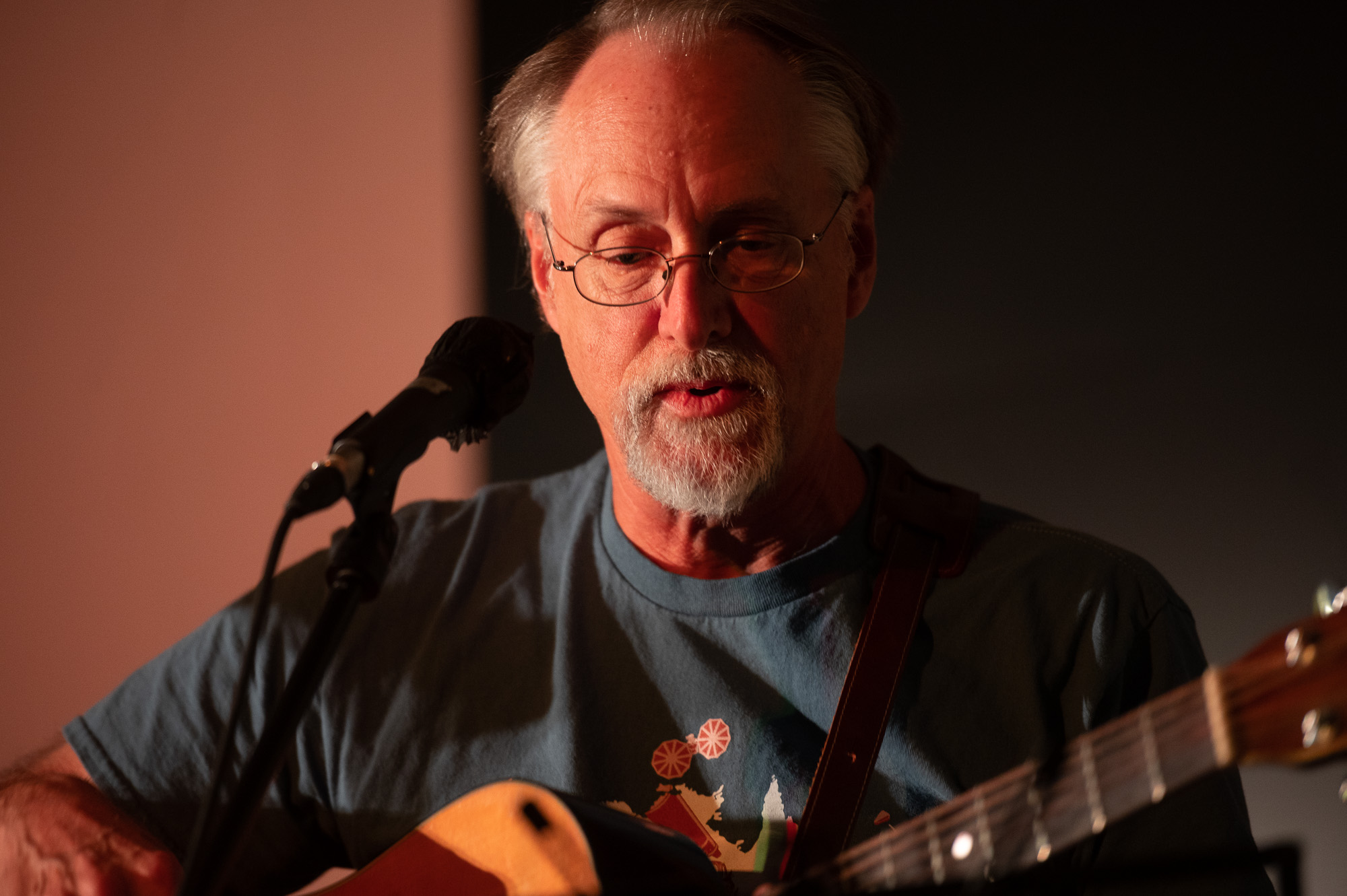
| Marc Buie (SwRI). |
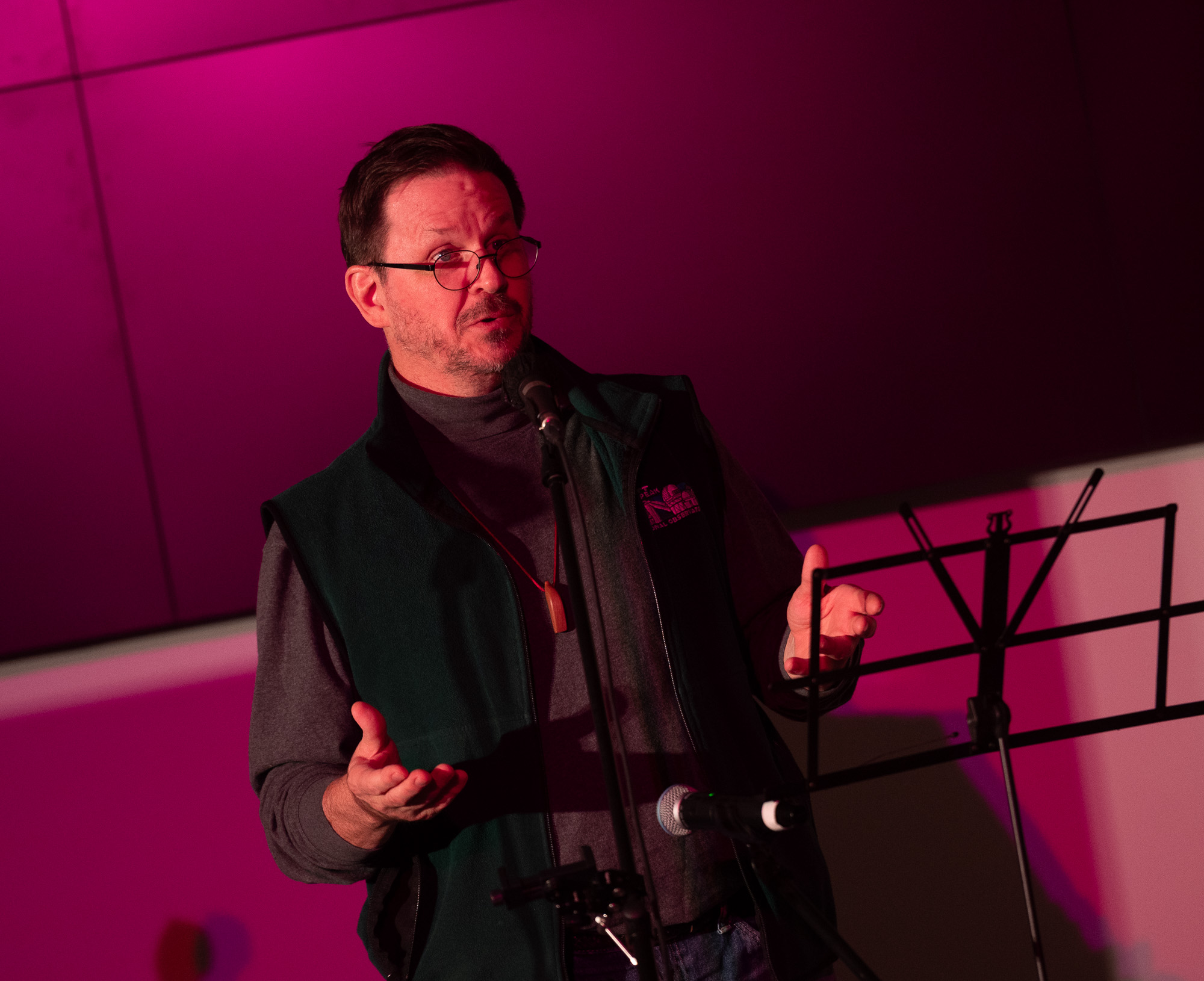
| 'Tim The Storyteller' Livengood talks about spectroscopy, in a very non-grey room. |
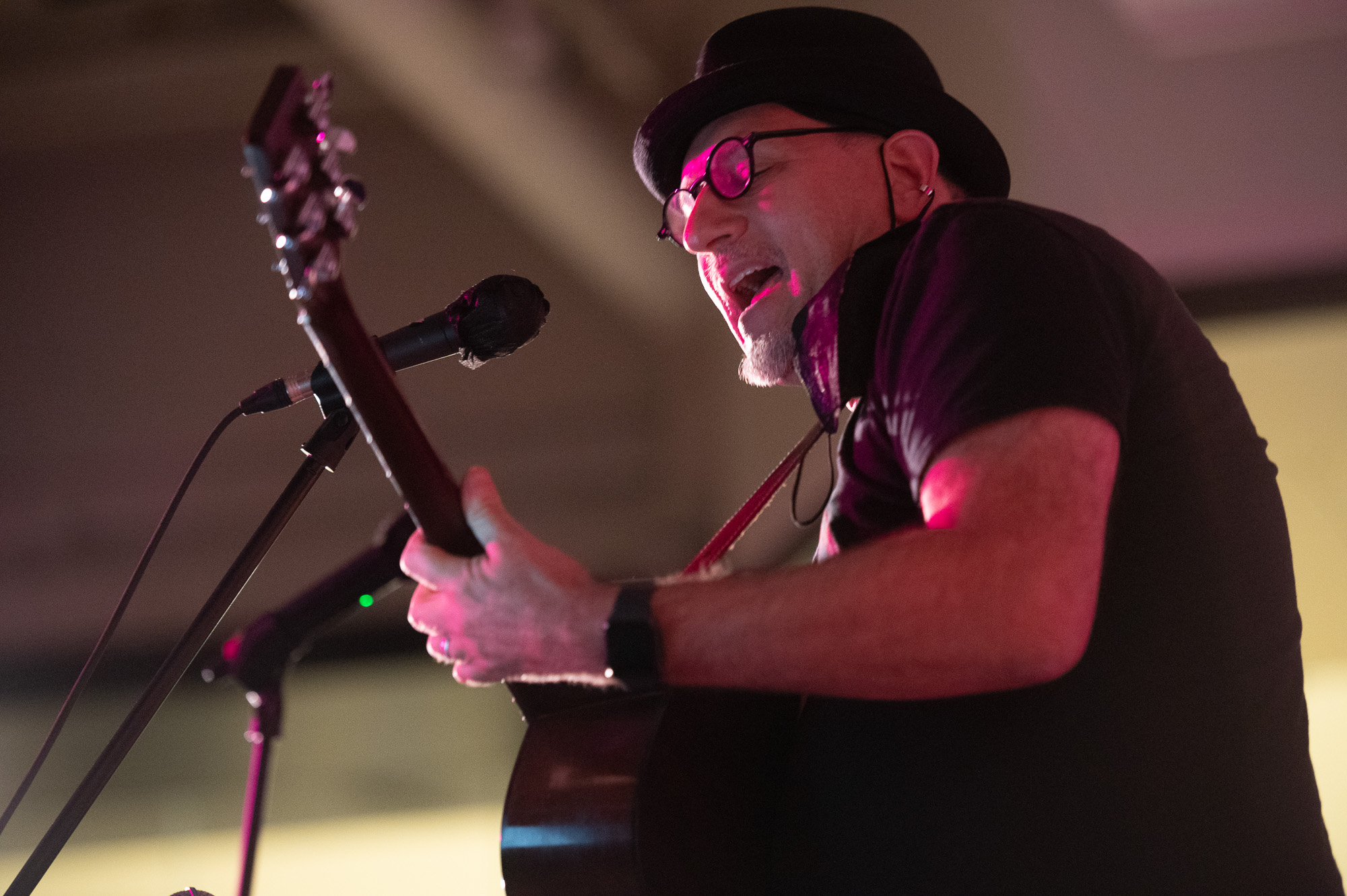
| David Grinspoon (PSI). "Speaking of London. I'm going to play a song about London. But this one's about the other London. It's the only one I know a song about." |
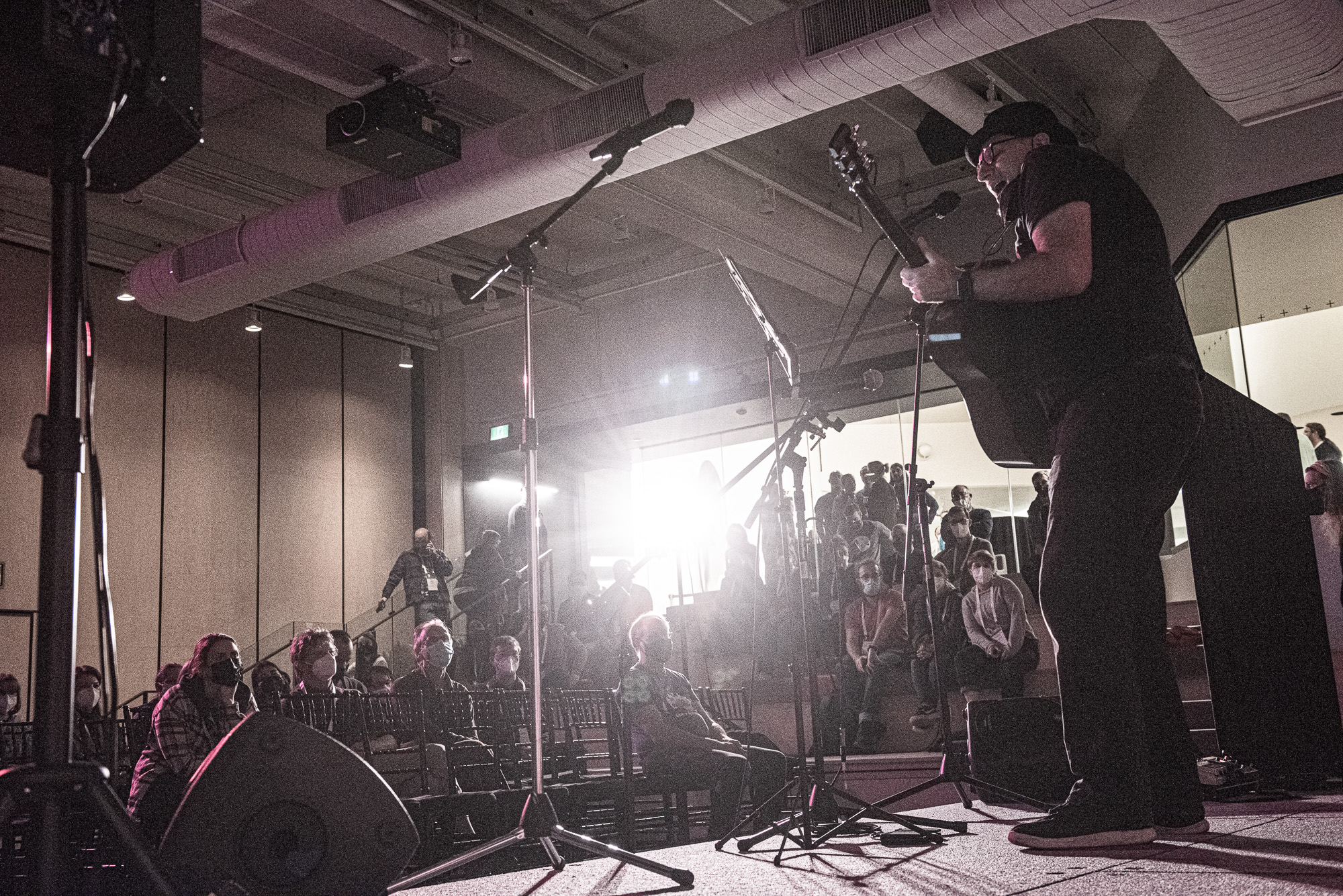
| David Grinspoon (PSI) at the Open Mic night. |

| David Grinspoon (PSI): "Lay out a blanket beneath the water tower... watch the meteor shower, heaven on display..." |
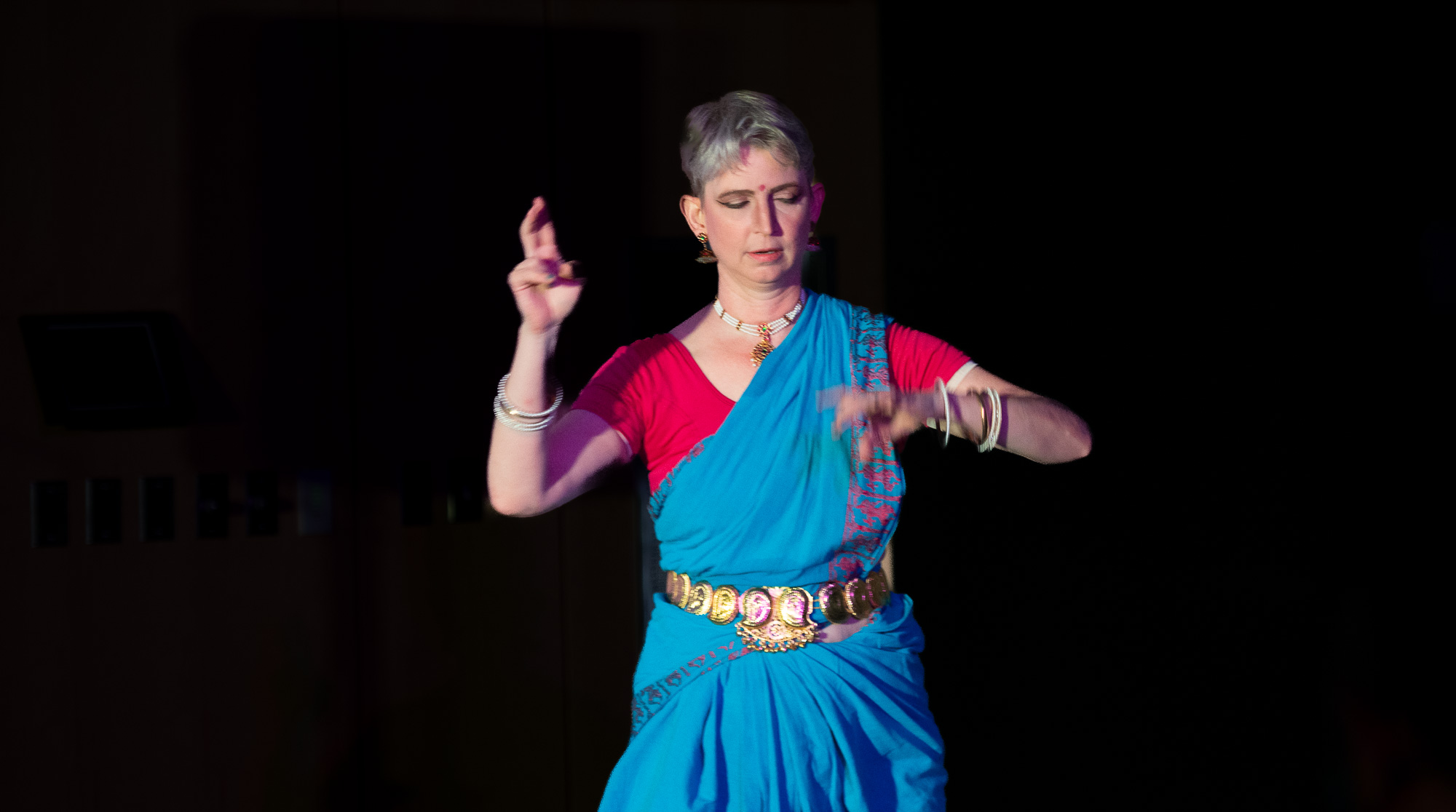
| Emily Lakdawalla does a Hindu dance for Navaratri. |
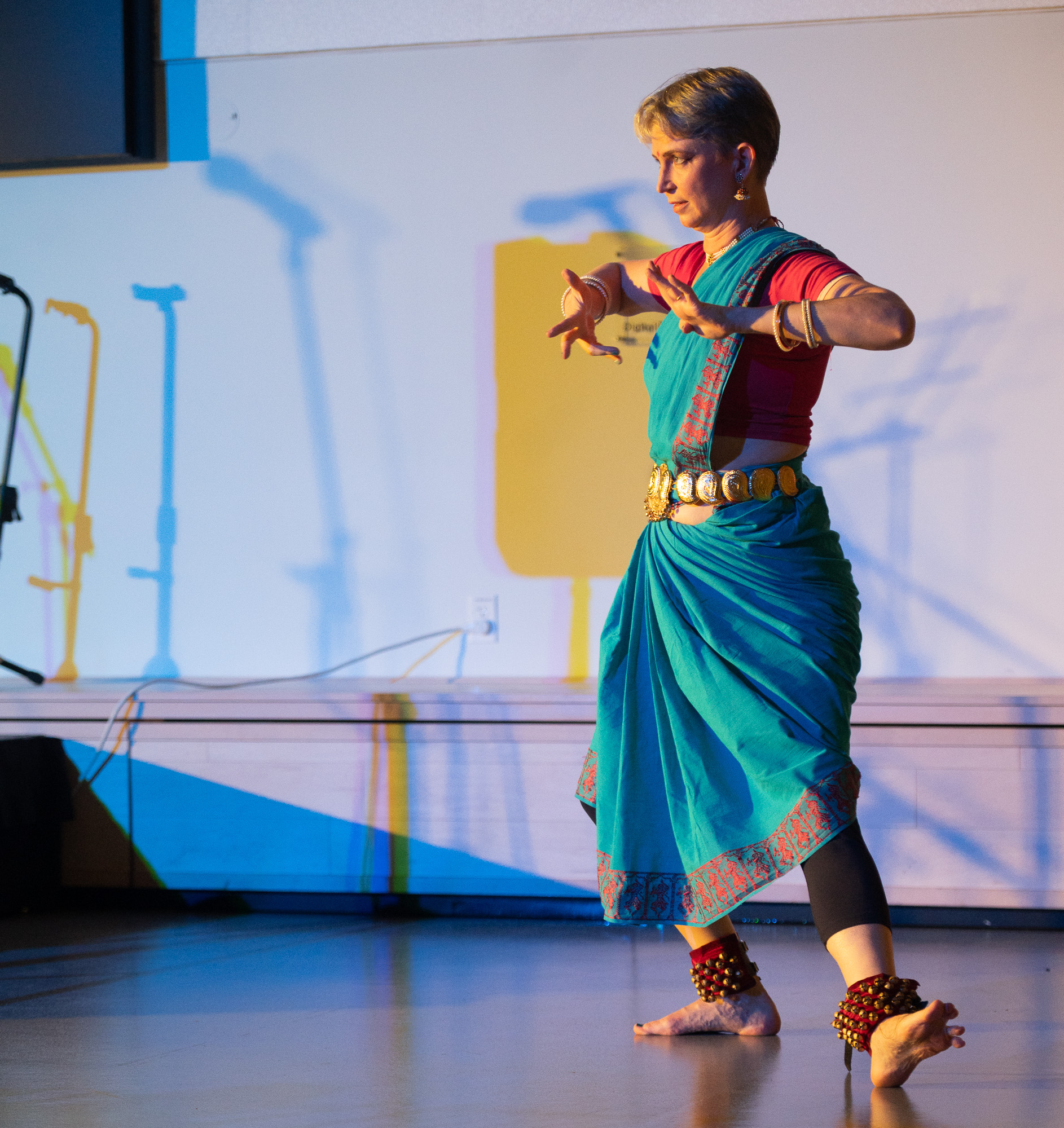
| Emily Lakdawalla. |

| Emily Lakdwalla. "DPS is often held during Rosh Hosanna, and this year it also falls during Navratri. And in fact tonight is the night of Durga Visarjan. Now I'm not Hindi, but my kids are, so all of our family learns the dances and celebrates it." |

| Ankita Das (York University, Canada). "So this is called Purano Shei Diner Katha. It's essentially Auld Lang Syne... but in Bengali, by the Indian Nobel laureate and poet Rabindranath Tagore." |
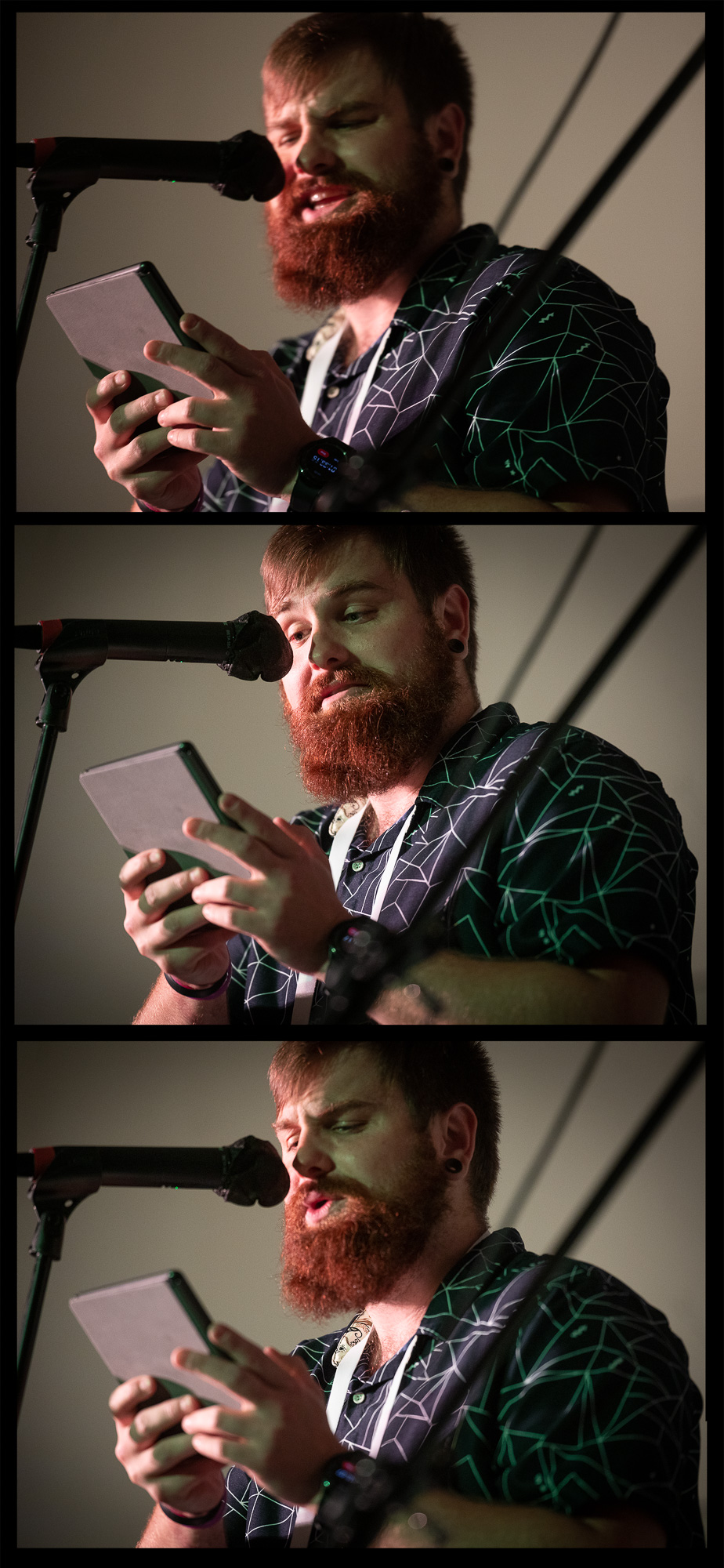
| Josh Hedgepeth (UWO) discusses large amount of blood being shed in a chapter of Roger Dodger. |
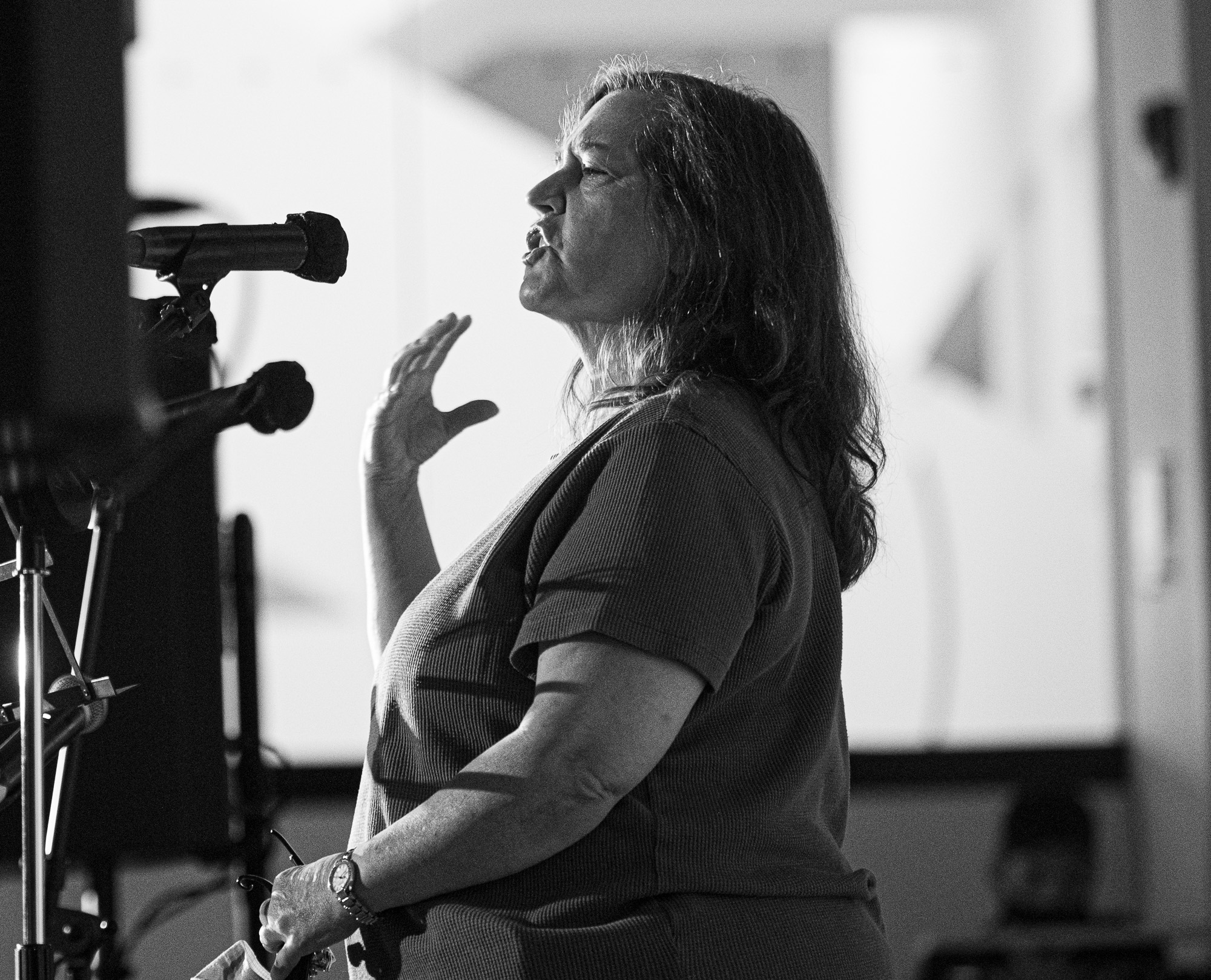
| Anne Raugh (UMD) tells a story in memory of Bill Boyer [sp?], RIP a few weeks ago at GSFC. Bill Boyer is usually a horn player, but he was doing a special role in Hey Big Spender (Chicago), where he lost a finger cymbal, and... well, you'll just have to ask Anne for the rest. |
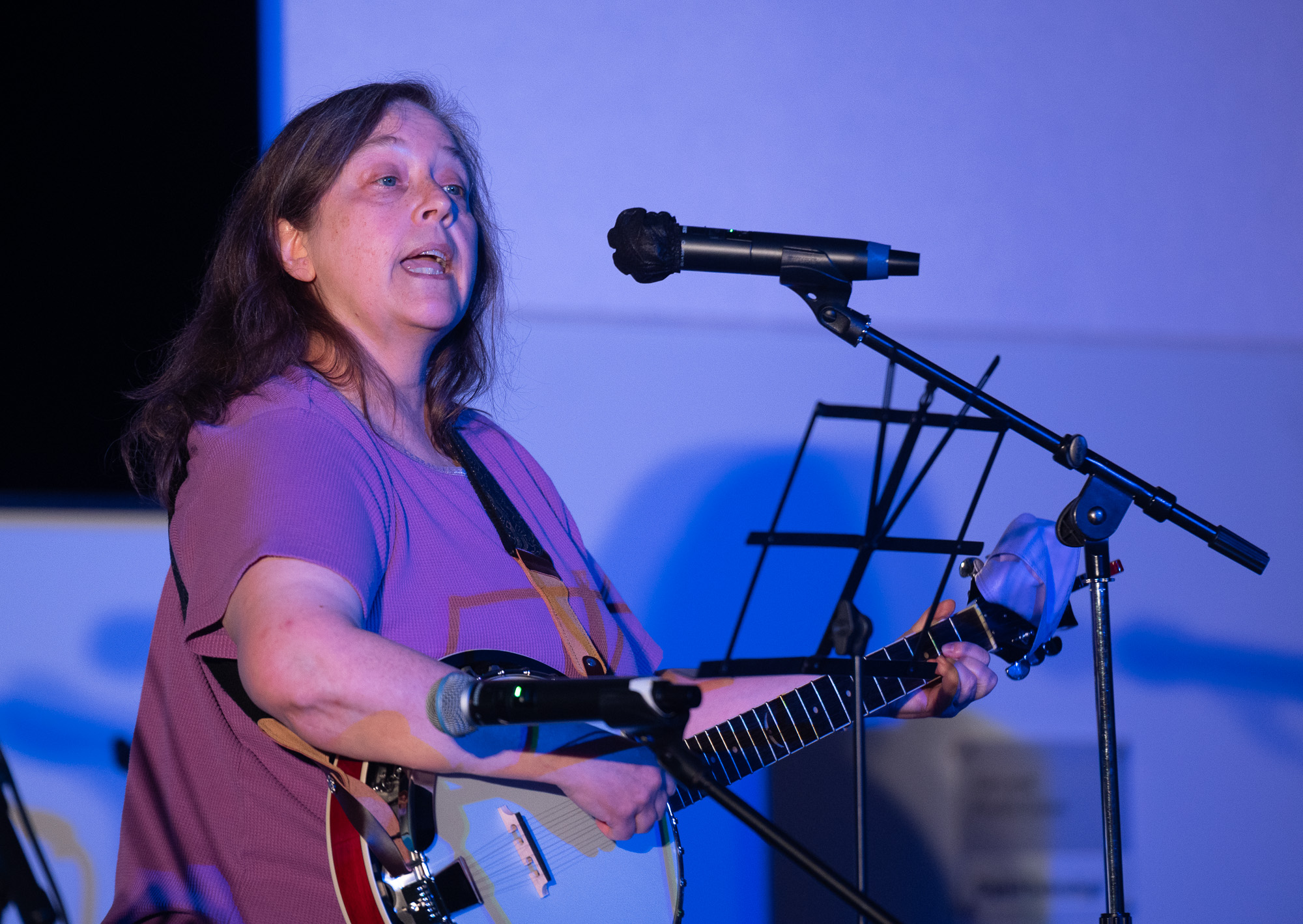
| And in a second contribution, Anne Raugh (UMD) brings out the banjo for an ode to commuting to the Goddard Spaceflight Center down I-270. |
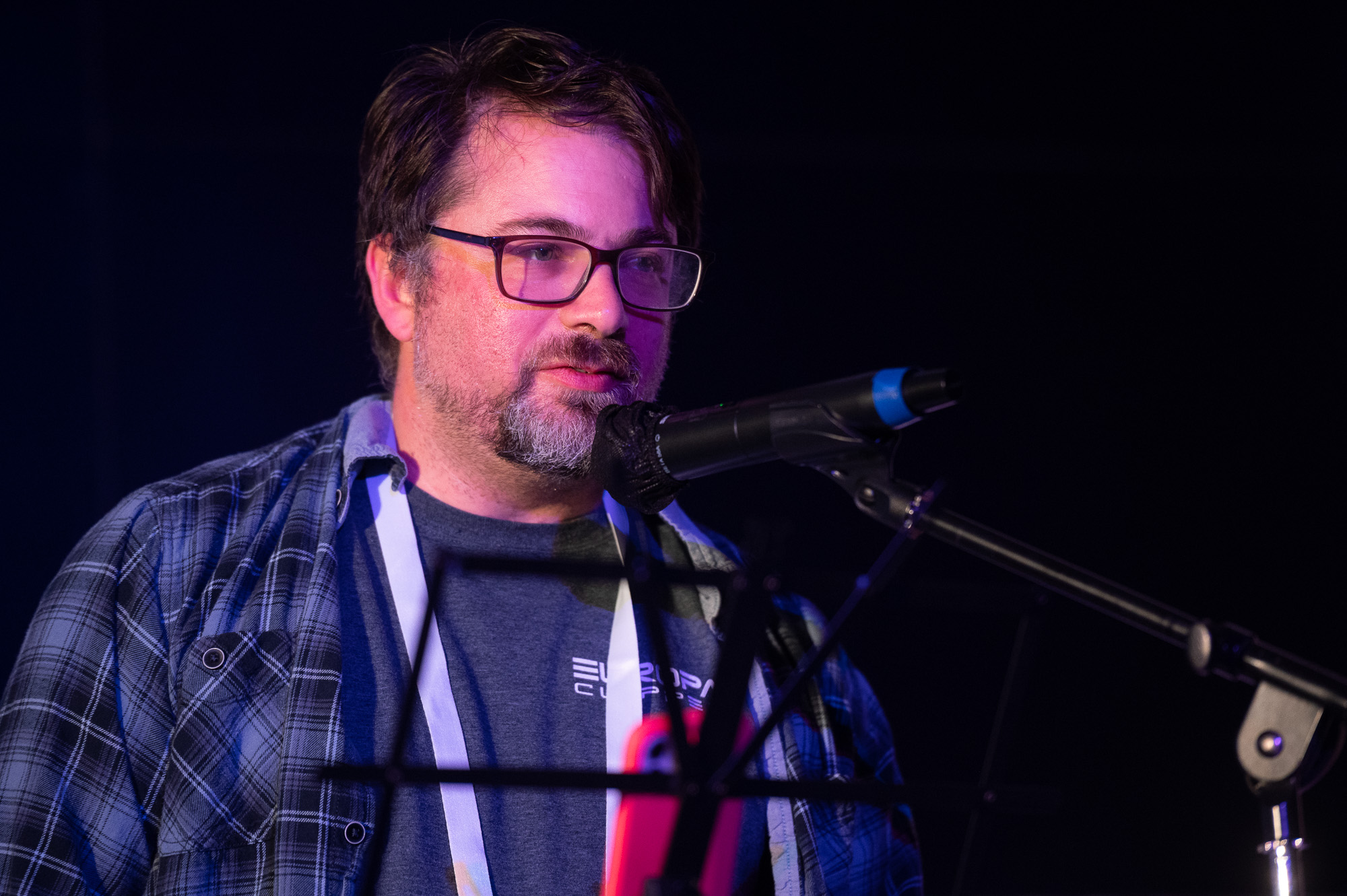
| James Roberts (JHU) presents his epic sea shanty entitled The Wreck of the Spacecraft Cassini. "I actually wrote most of this back in 2010, but I didn't breathe a word about it until Cassini was actually finished. Didn't want to jinx anything!" "The legend lives on from Cassini on down of a planet'ry system that's crazy. |
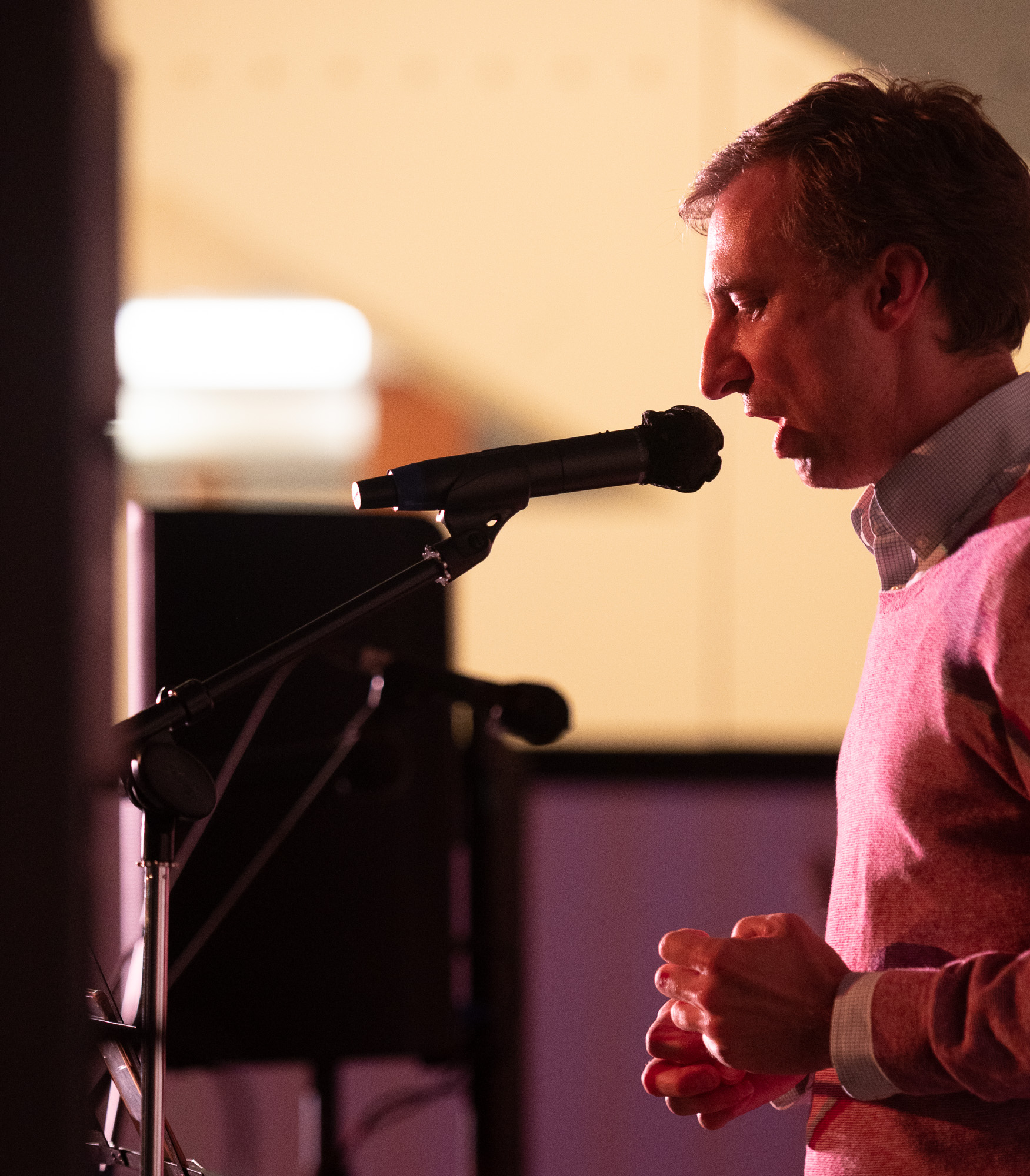
| David Minton (Purdue). "I'm more of a numericist than a lyricist. So this will be a short one. It's called 16 Bugs, and it's a gospel number about debugging in Fortran vs. Python, followed by a push to GitHub." I wouldn't have guessed it, but David is an amazing bass. |
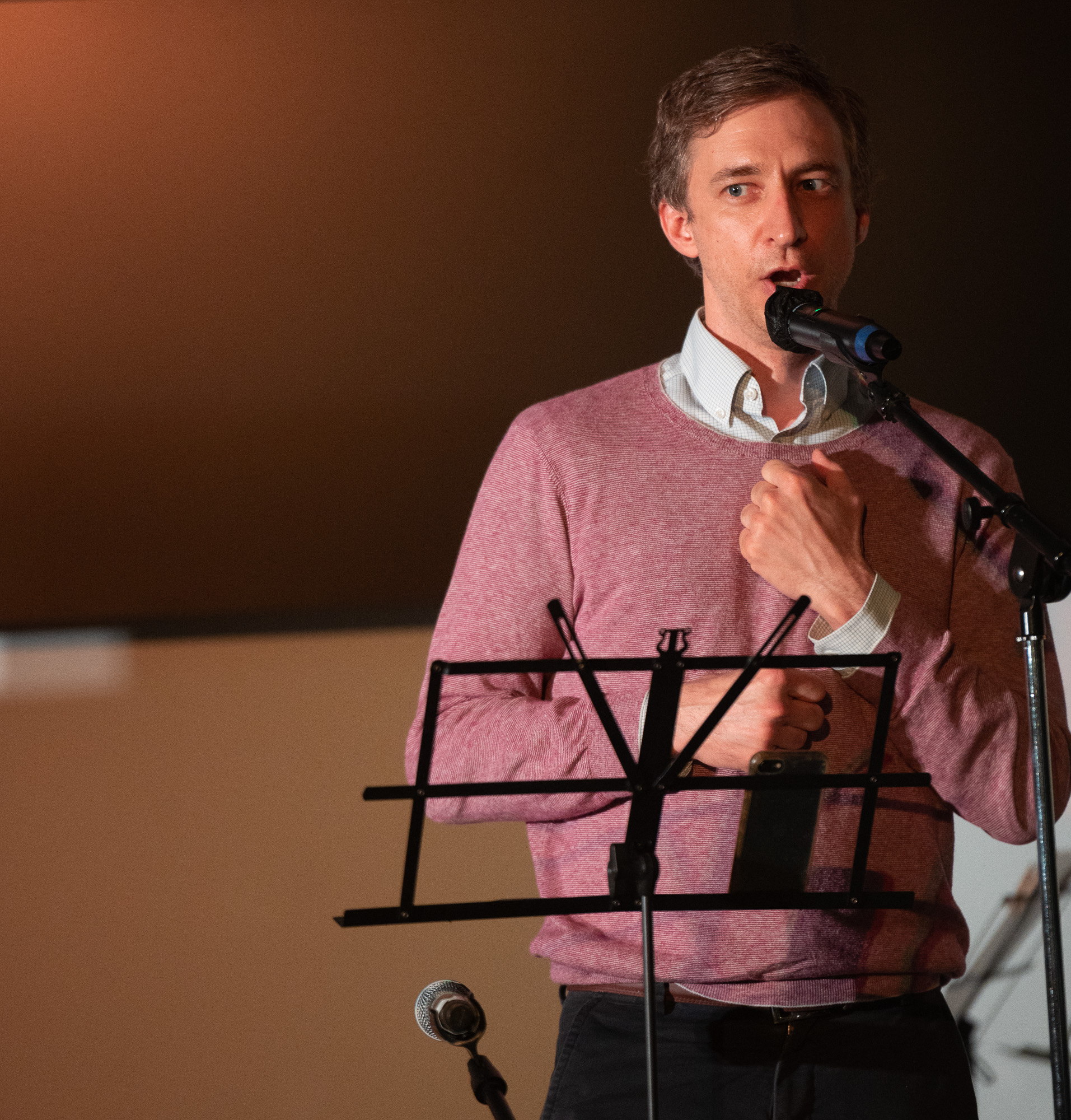
| David Minton (Purdue). |
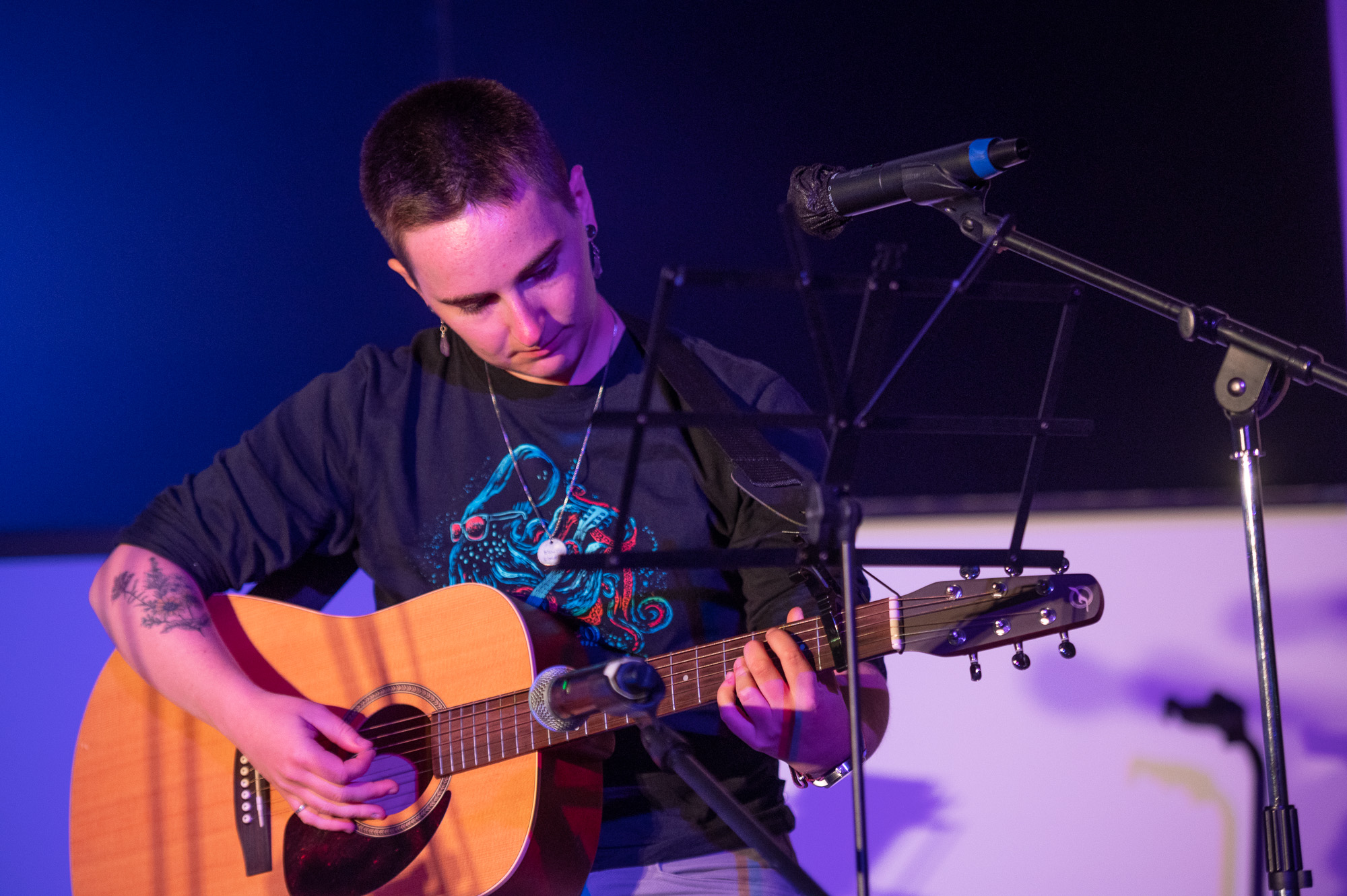
| Catherine Ryan (UWO). |
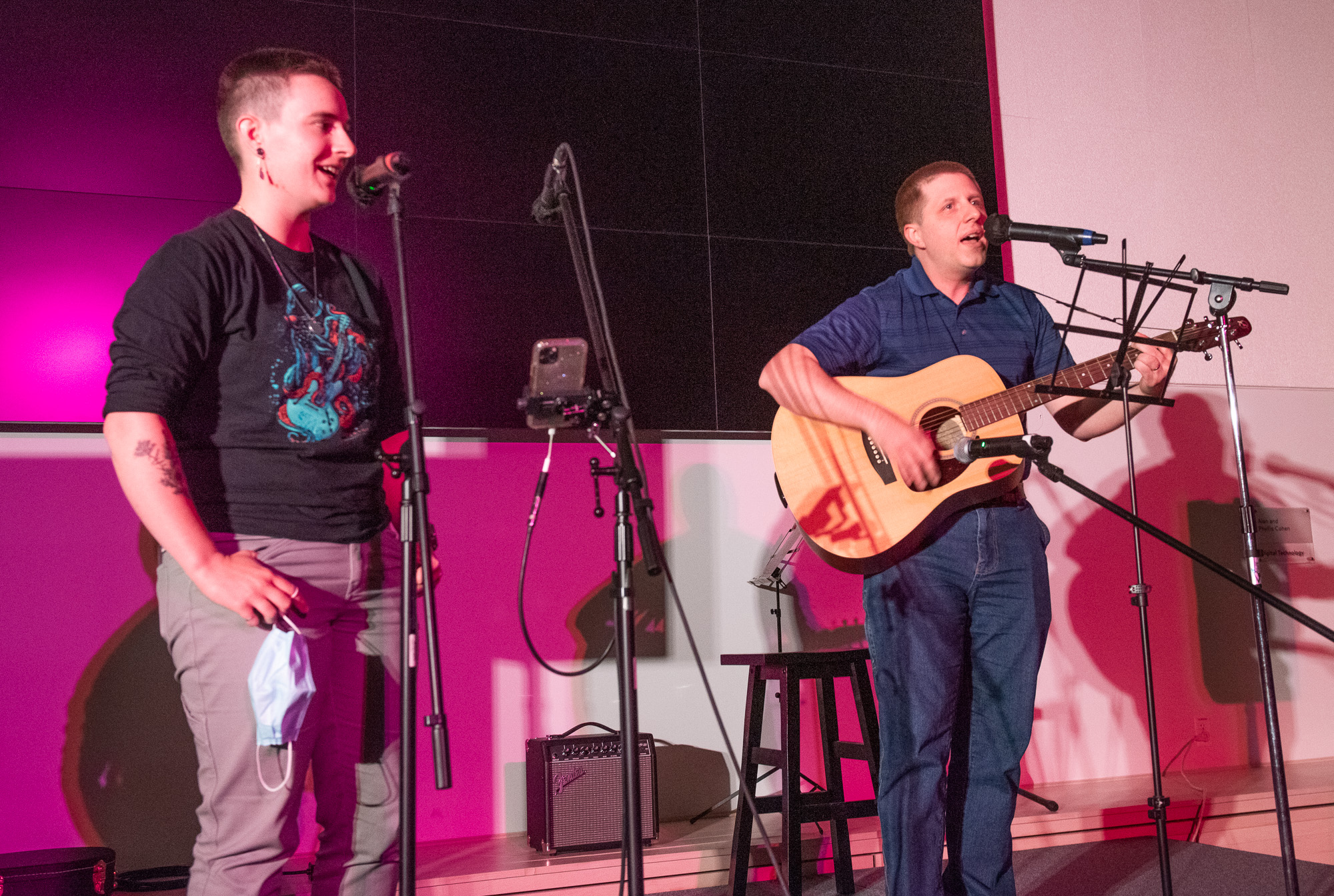
| Catherine Ryan (UWO) and Brian Jackson (Boise State). |
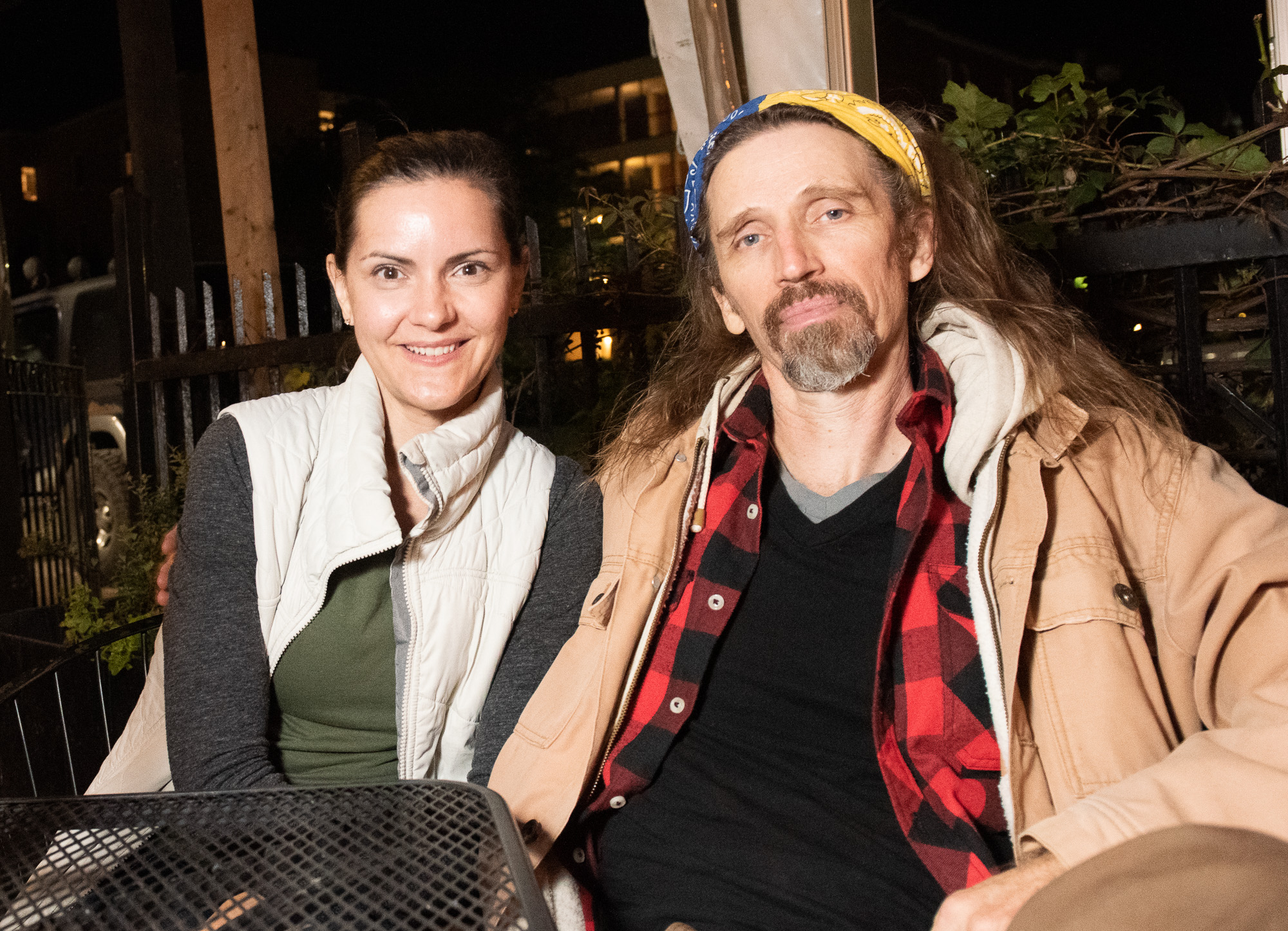
| Joe Spitale (SETI) post-open-mic with Lisa. Lisa talks about when she was starting vet school around the time of Hurricane Katrina, and drove to New Orleans with a Suburban full of vet supplies to help dogs stranded in the flooding. "We did reunite one dog with its family -- it was the greatest thing." |
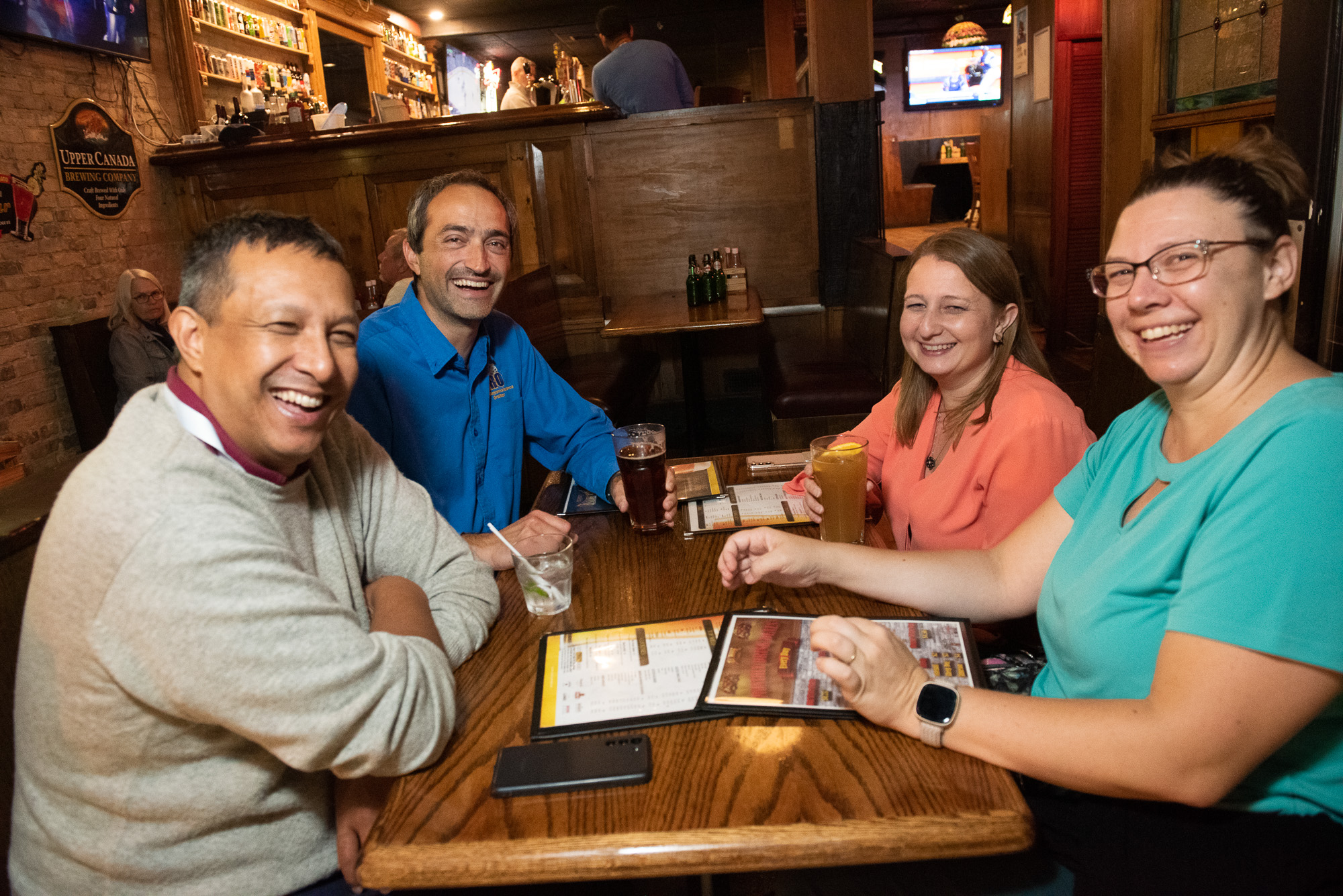
| Some post-open-mic beverages, with Ujjwal Raut (SwRI), Cesare Grave (SwRI), Tracy Becker (SwRI), and Jennifer Hanley (Lowell). |
Henry Throop
Last modified 25 Sep 2023