Jump to section:
- Science Team Meeting
- Divert Decision Meeting Rehearsal
- New Horizons Hazards Operations
- Time Out!
- Back to work
- APL Tour
- Final TCM Decision Meeting
- A Few More Group Shots
- Post-facto
Science Team Meeting
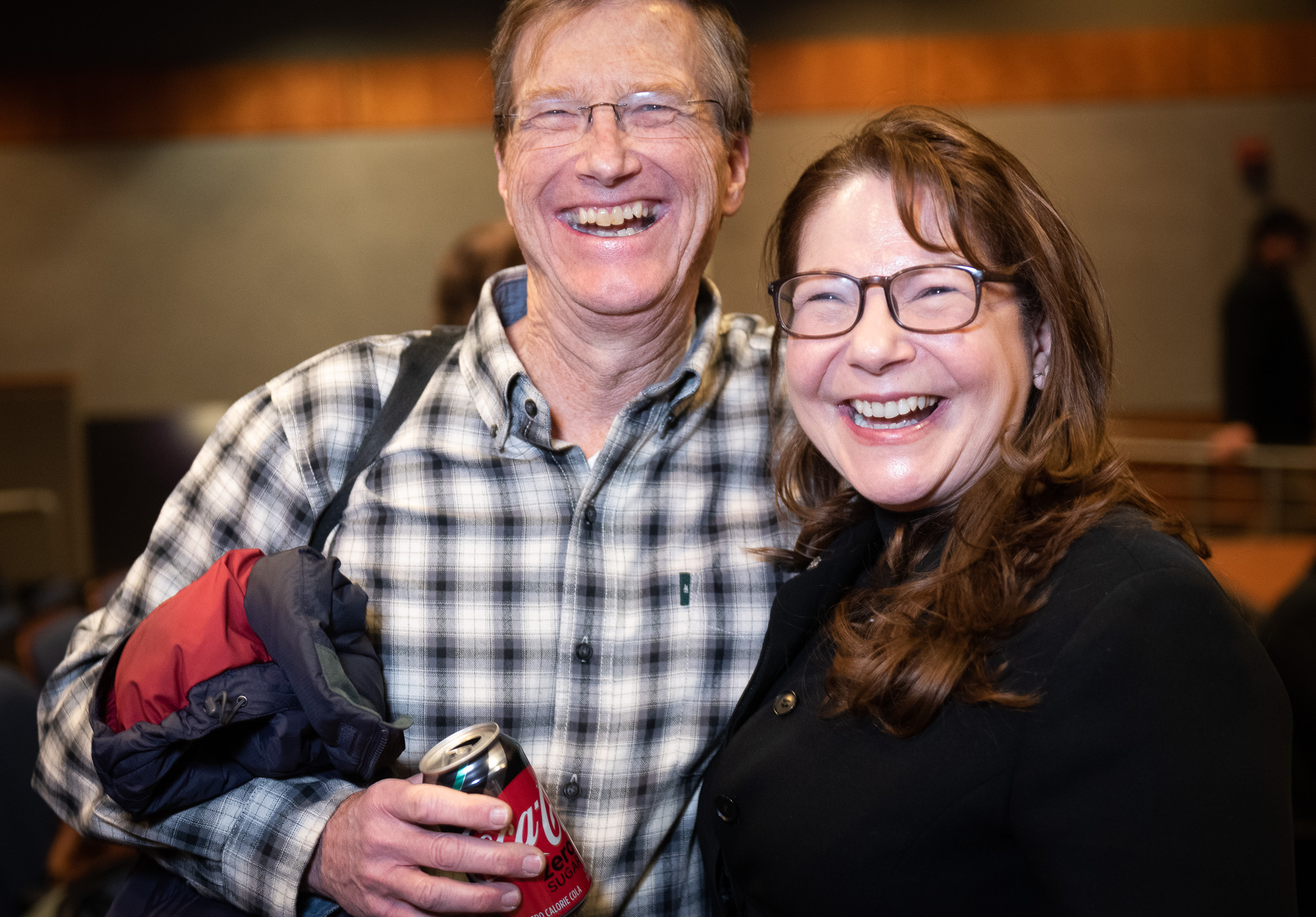
| Hal Weaver and Adriana Ocampo at the Science Team Meeting. |
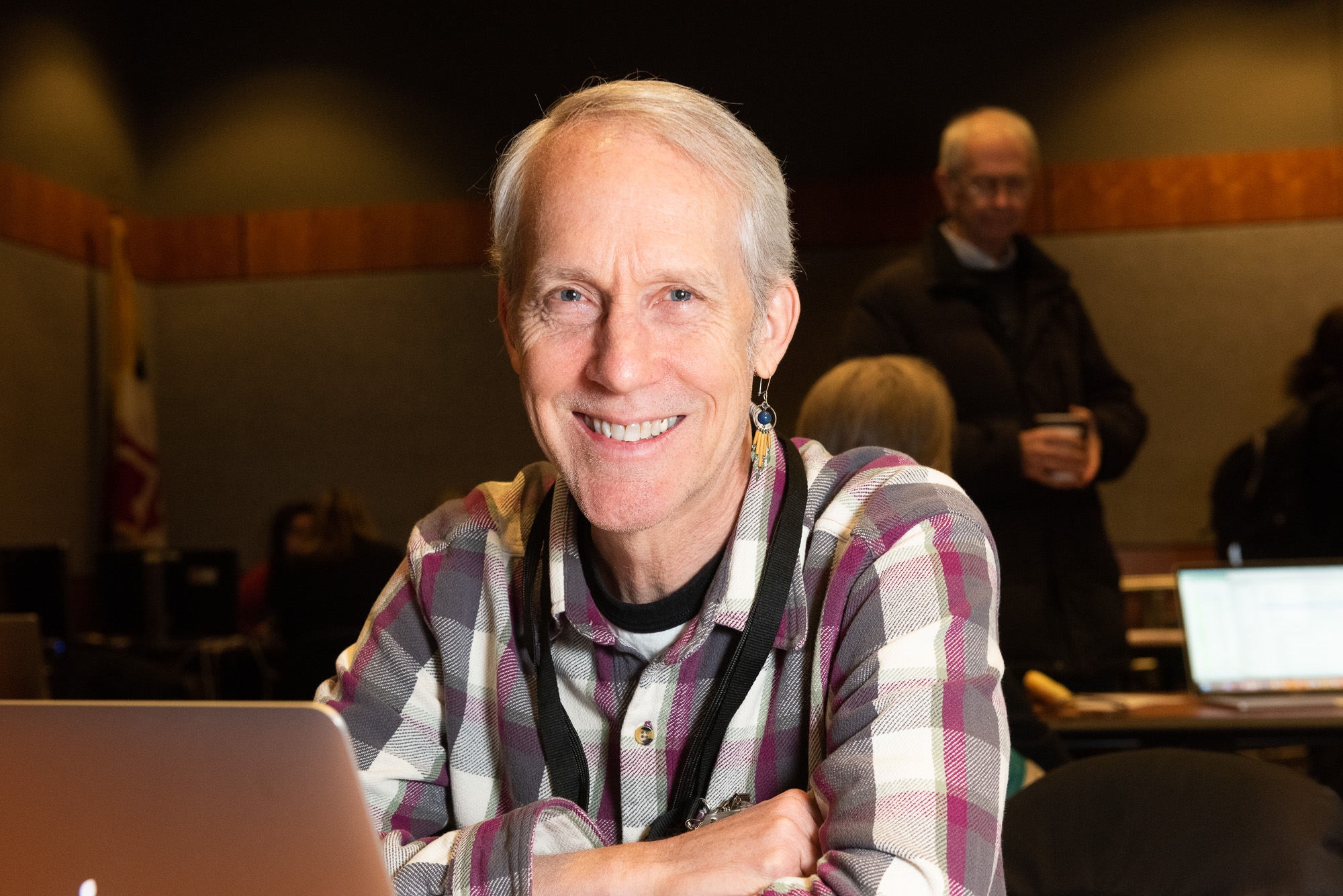
| Joel Parker tells me about his son's Fulbright-funded adventures teaching in Omsk, Siberia. |
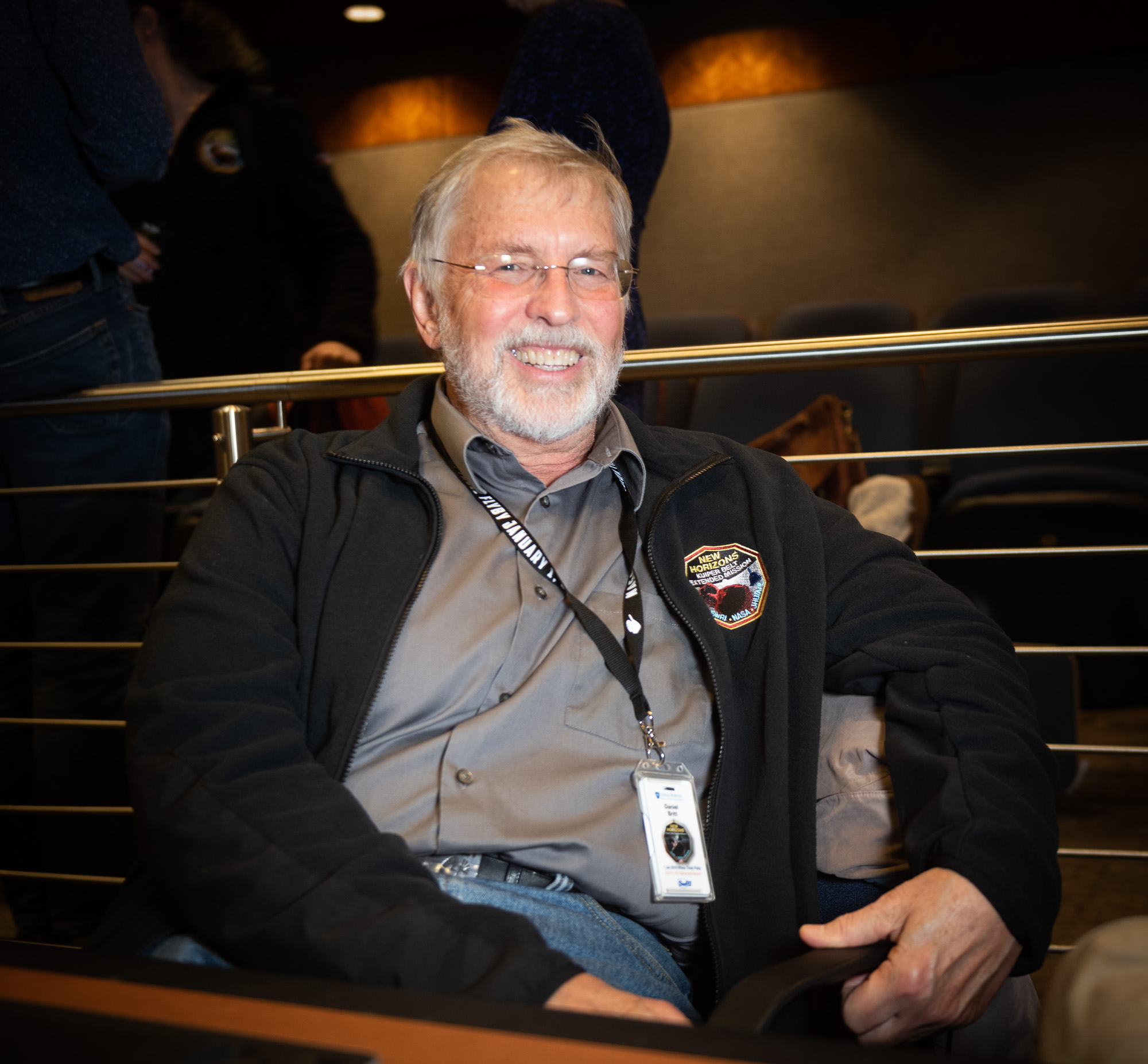
| Dan Britt. |
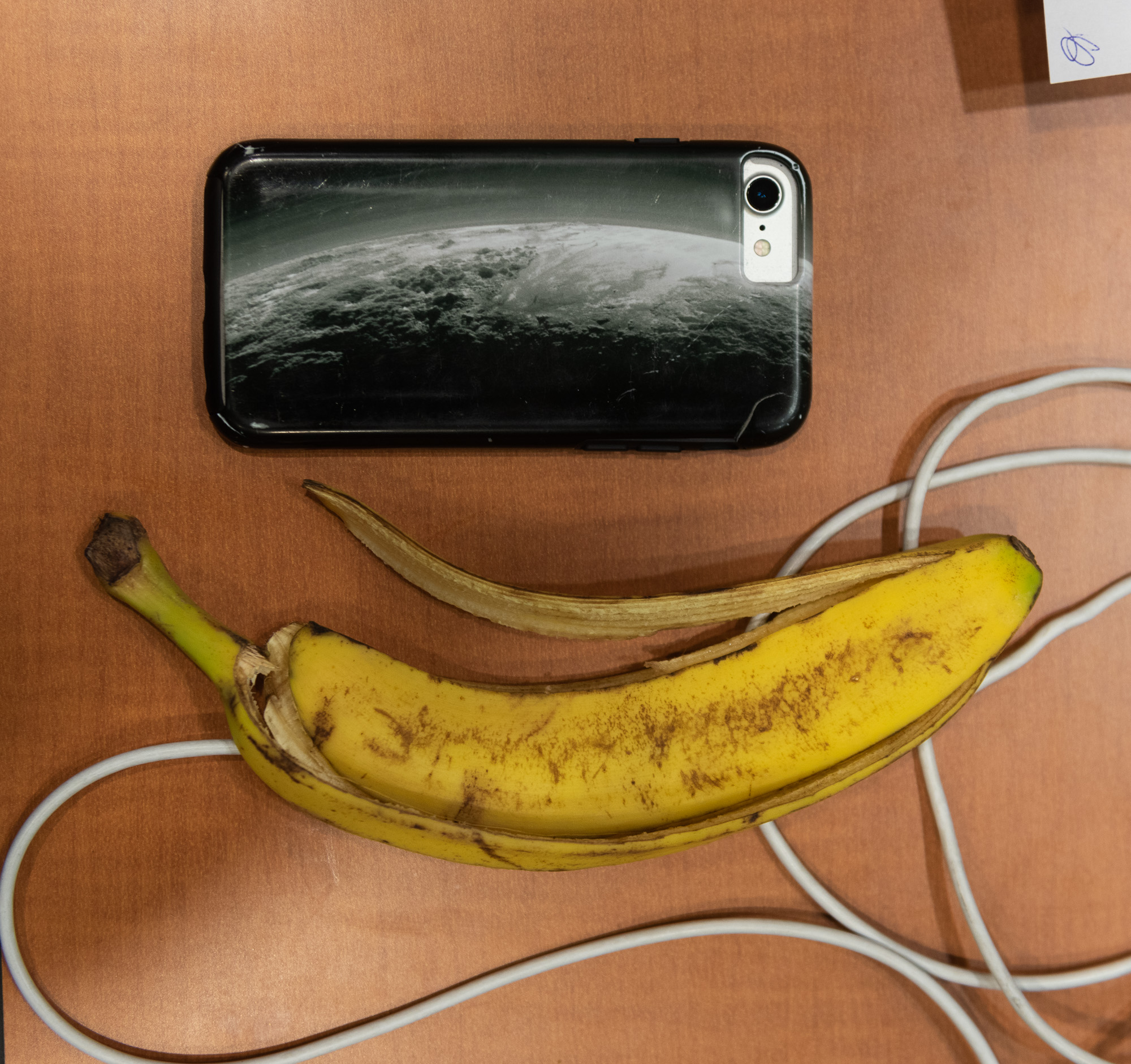
| New Horizons may be powered by plutonium, but it's taken a lot more than 11 kg of bananas to get us all the way there. |
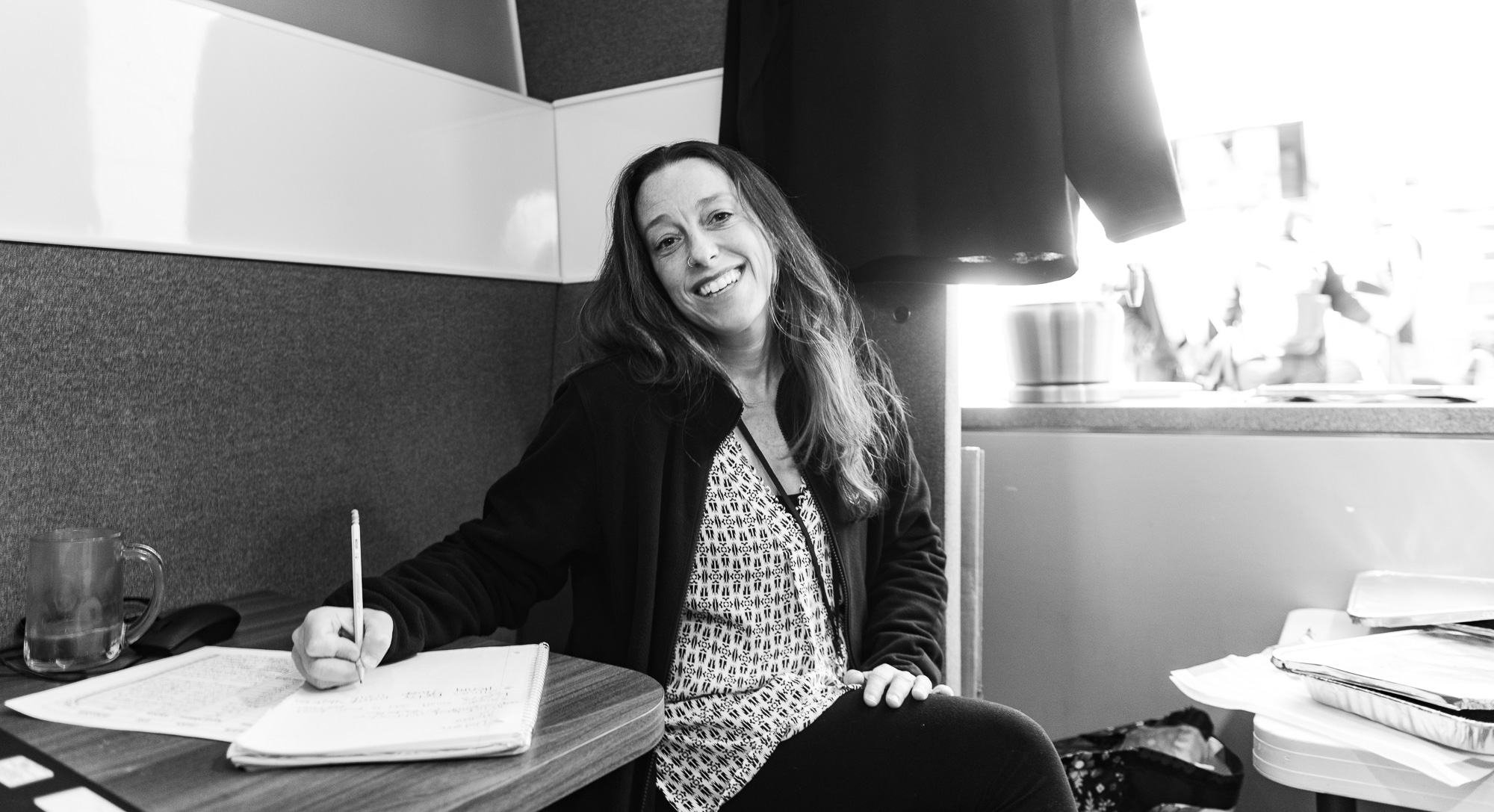
| Lisa Turner is making a list. Zoom in and you can see she's just added my name. I wonder what for! |
Divert Decision Meeting Rehearsal
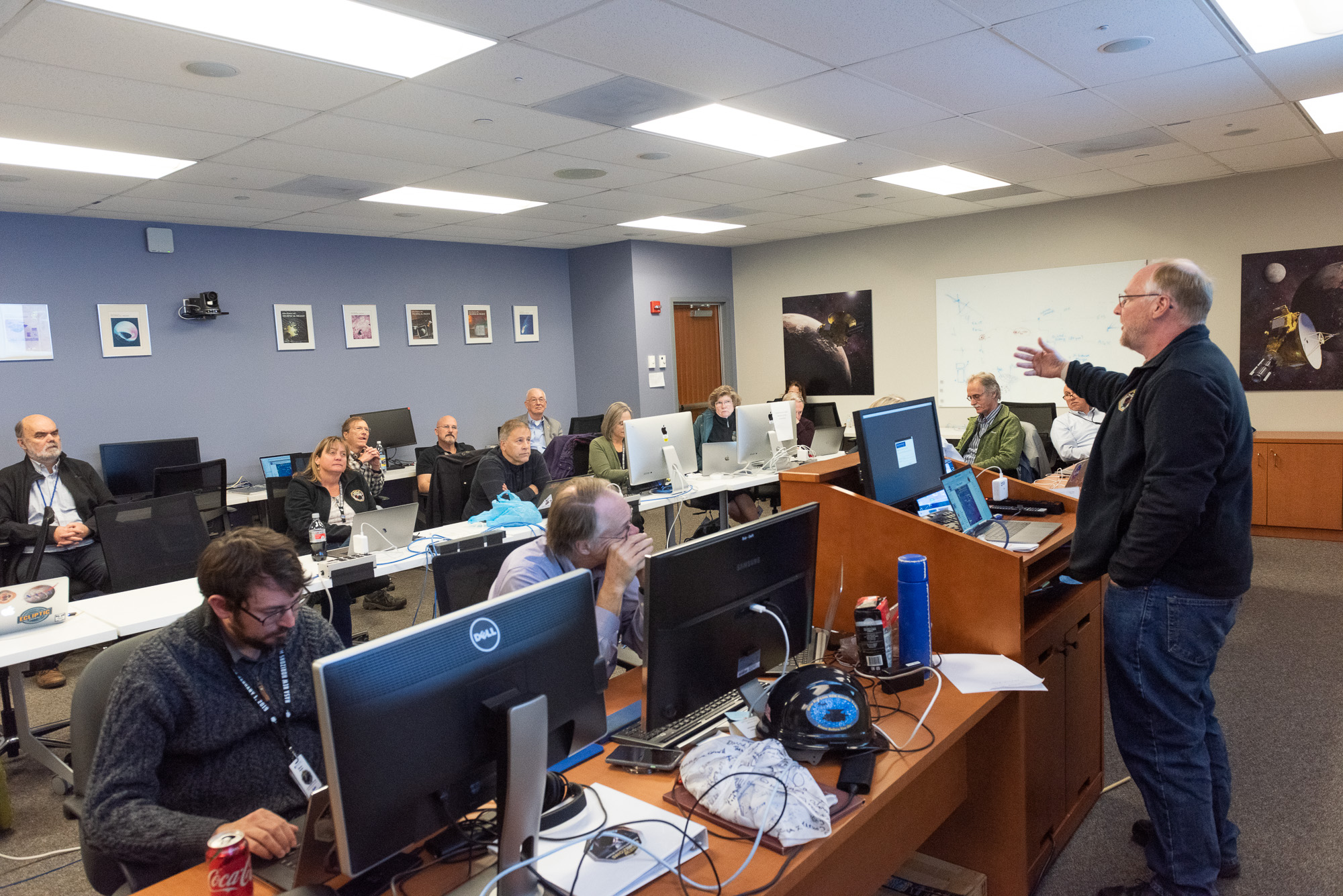
| Mark Showalter kicks off the TCM Divert Decision Meeting rehearsal. We had rehearsals for everything, including meetings. |
| John Spencer walks through a practice of various spacecraft scenarios he's dreamed up, which might cause us to consider diverting to the alternate path. |
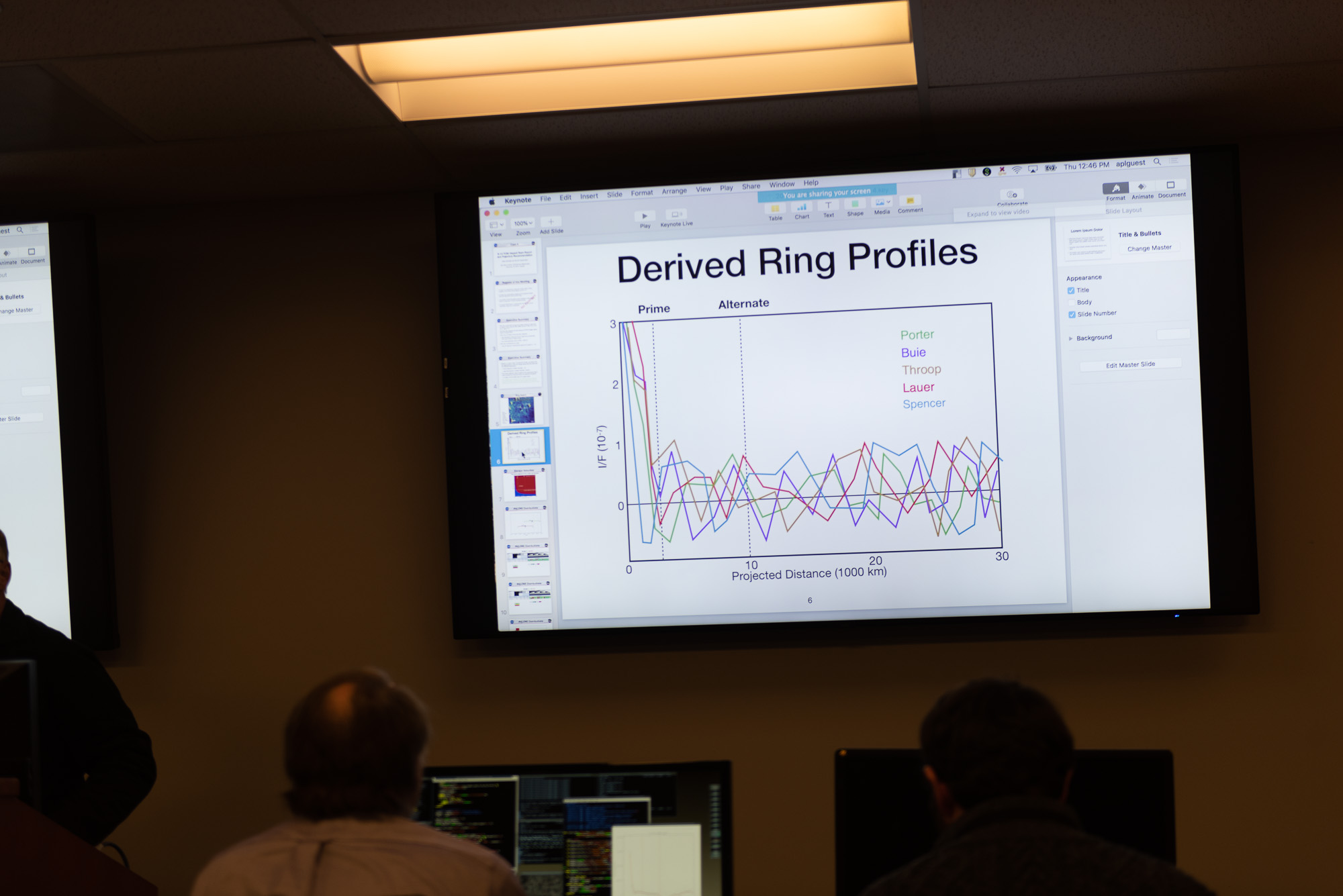
| One of the philosophies of the hazards operations is that no one should trust anyone else. So, five different measurements of the ring radial profile, for five people measuring them. That being said, these are remarkably consistent, in part because they are fake data! John spent much of the three-day train ride from Colorado to DC making up fake data to use in the fake decision meeting. |
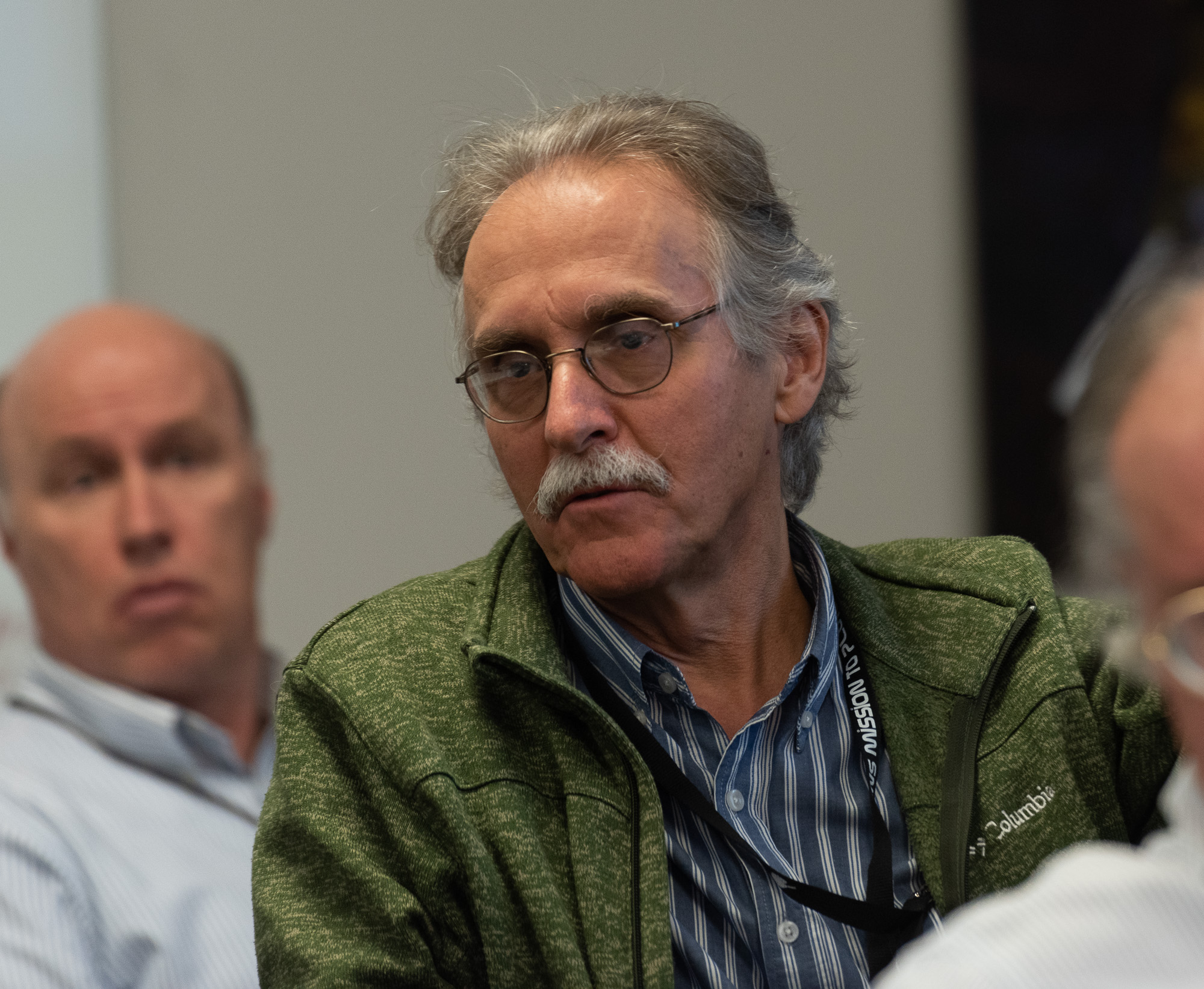
| John Spencer, with Carl Engelbrecht behind. Not too many photos of Carl, but he was a big part of our happiness at APL. |
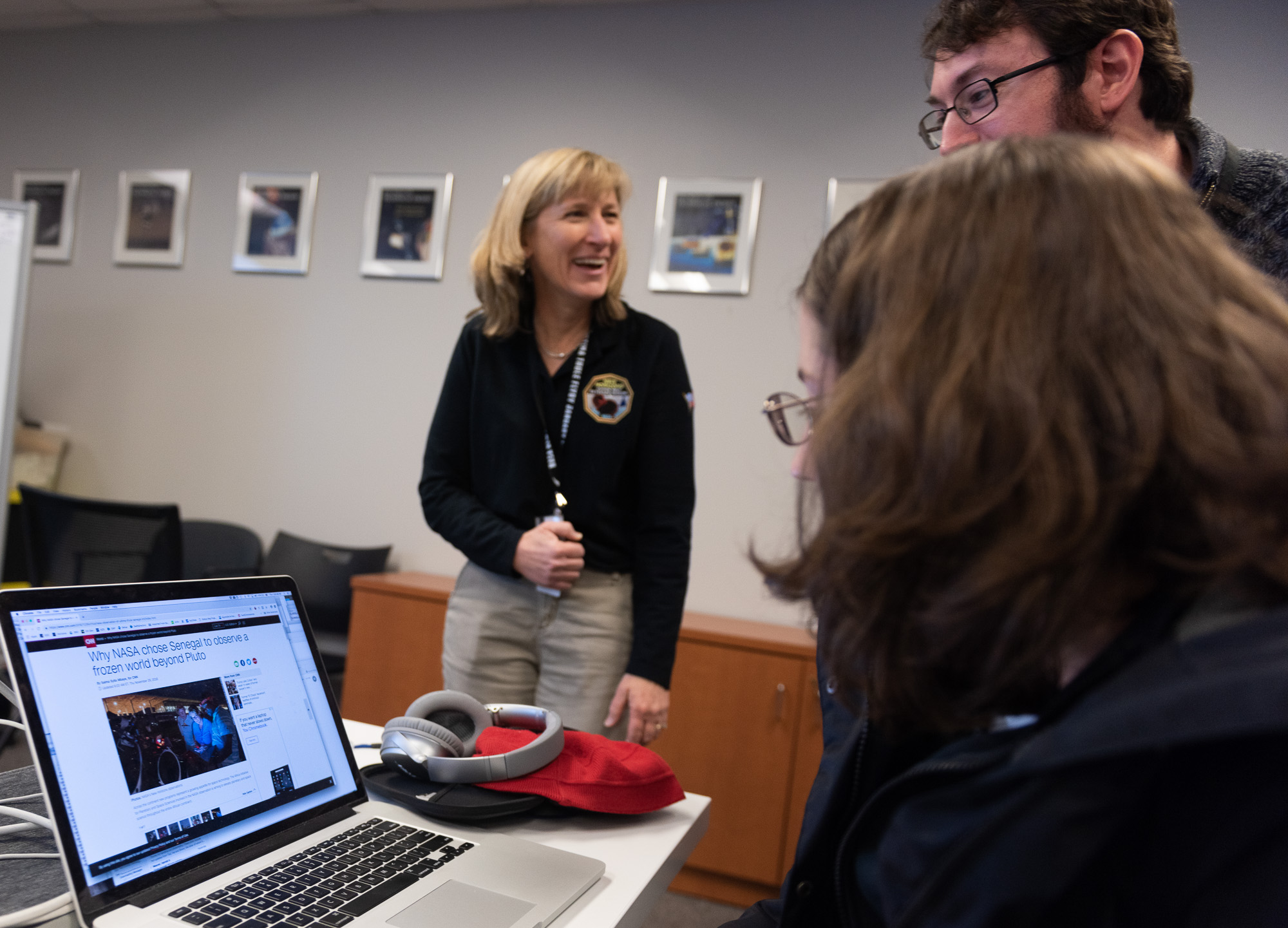
| APL Project Manager Helene Winters stops by. Amanda: "Check out this article that just came out on CNN... it's about the Senegal occultation trip, and it's by Salma Mbaye, who we observed with. Oh, she was so cool -- she was the first PhD astronomy student ever in Senegal." |

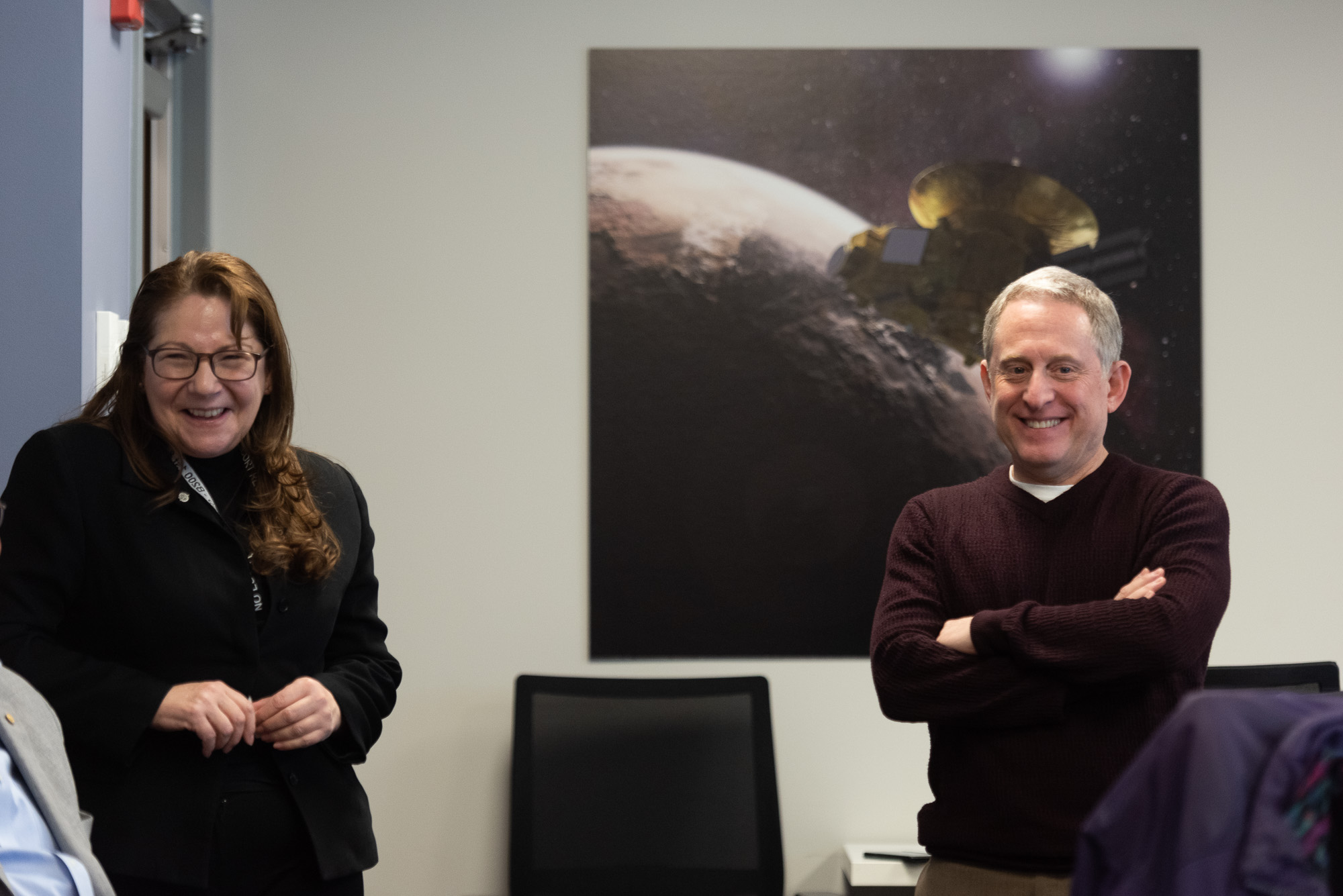
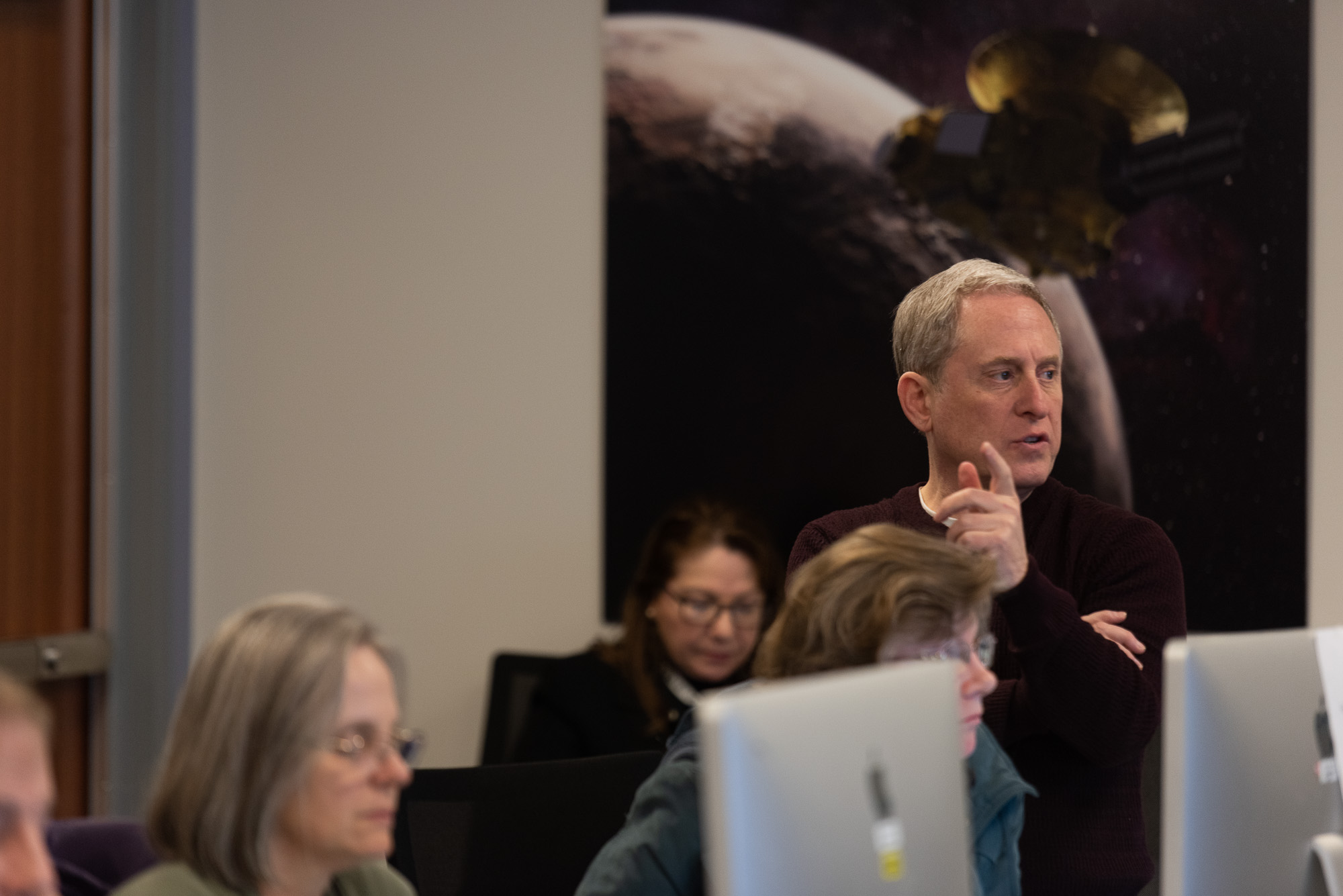
| Hal Weaver, Glen Fountain, Adriana Ocampo, and Alan Stern. |
|
|
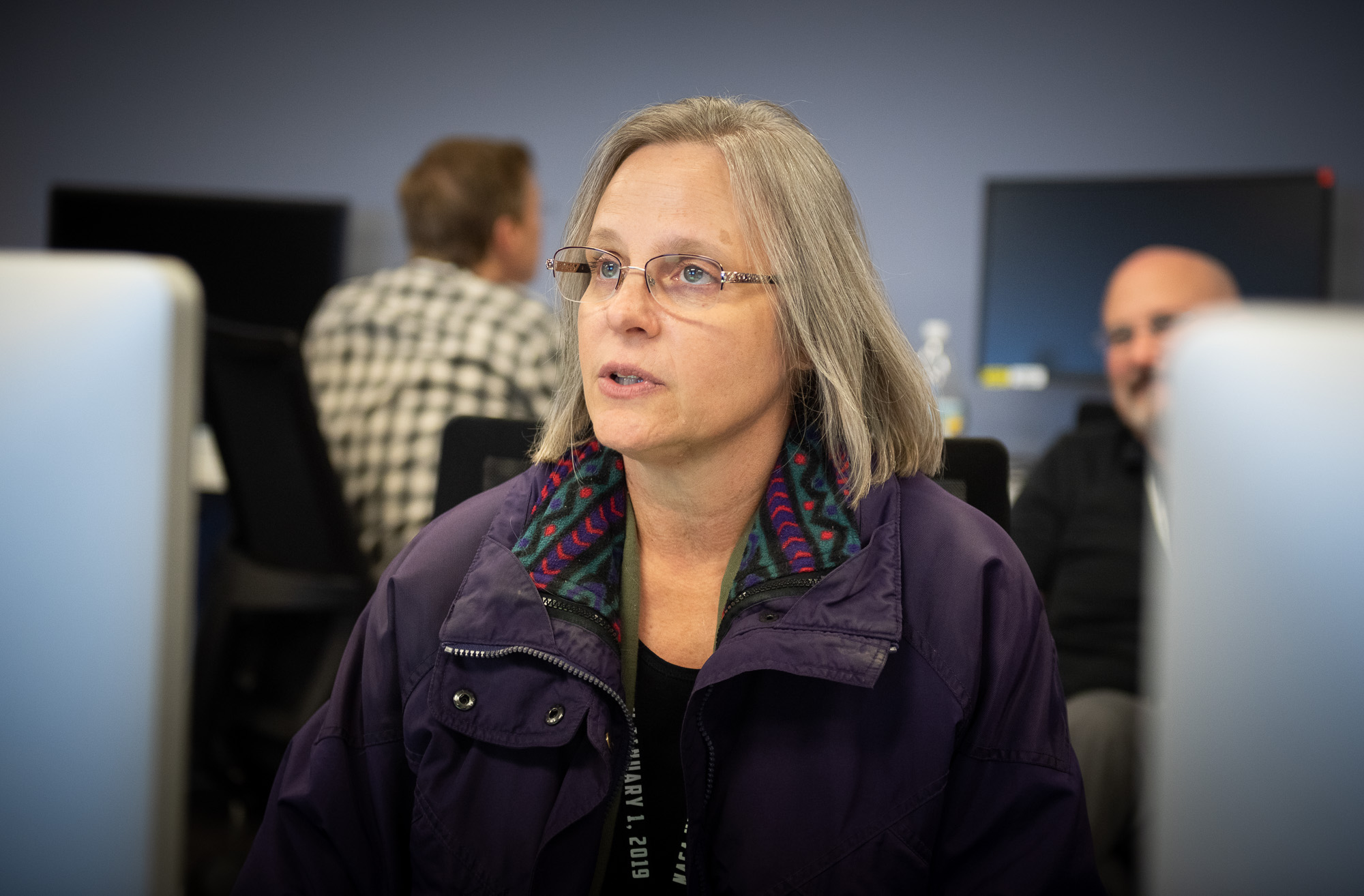
| Mission Operations Manager Alice Bowman, at the divert decision run-through. |
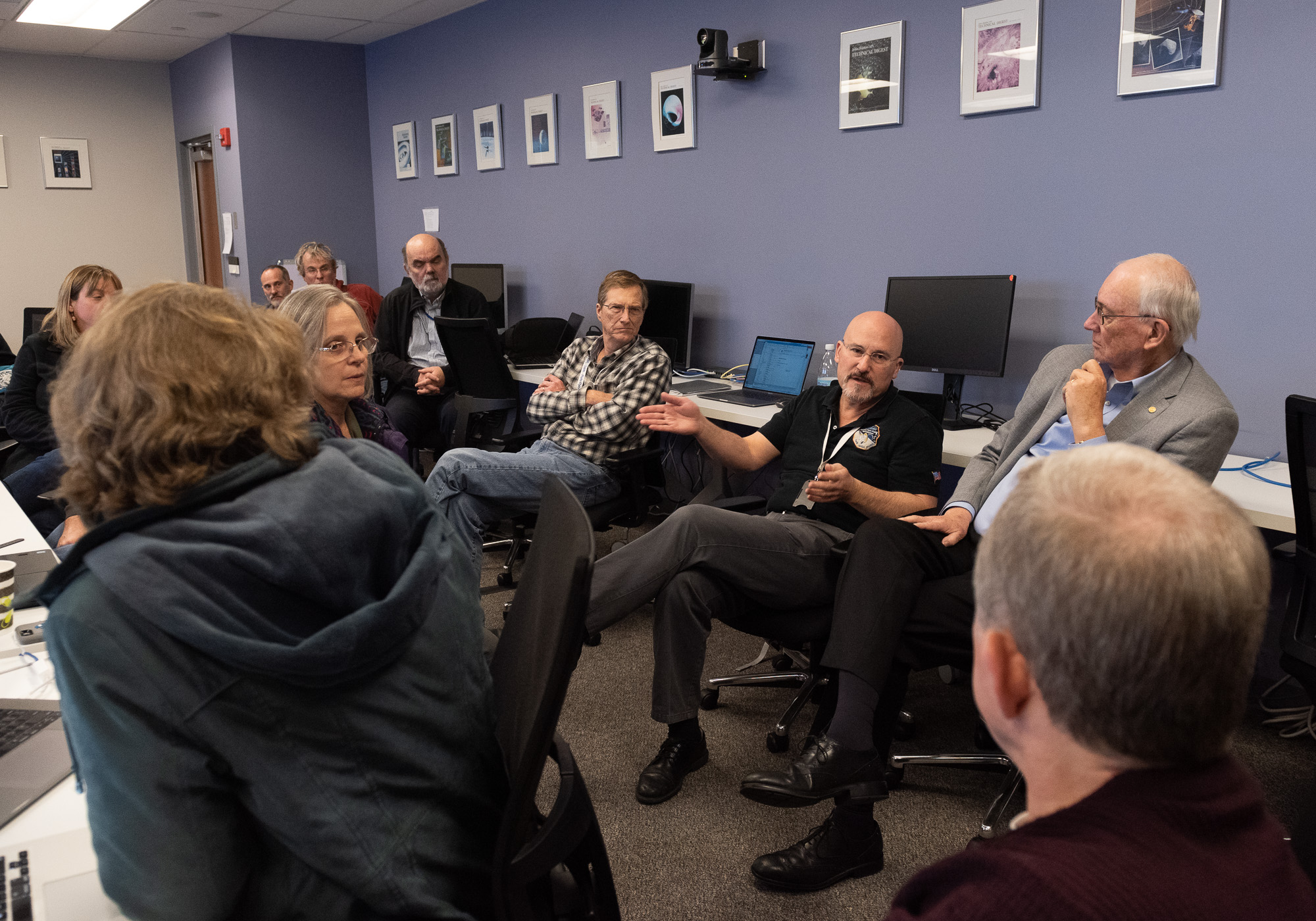
| Chris Hersman debates over whether to take the Prime or Alternate trajectory. |
|
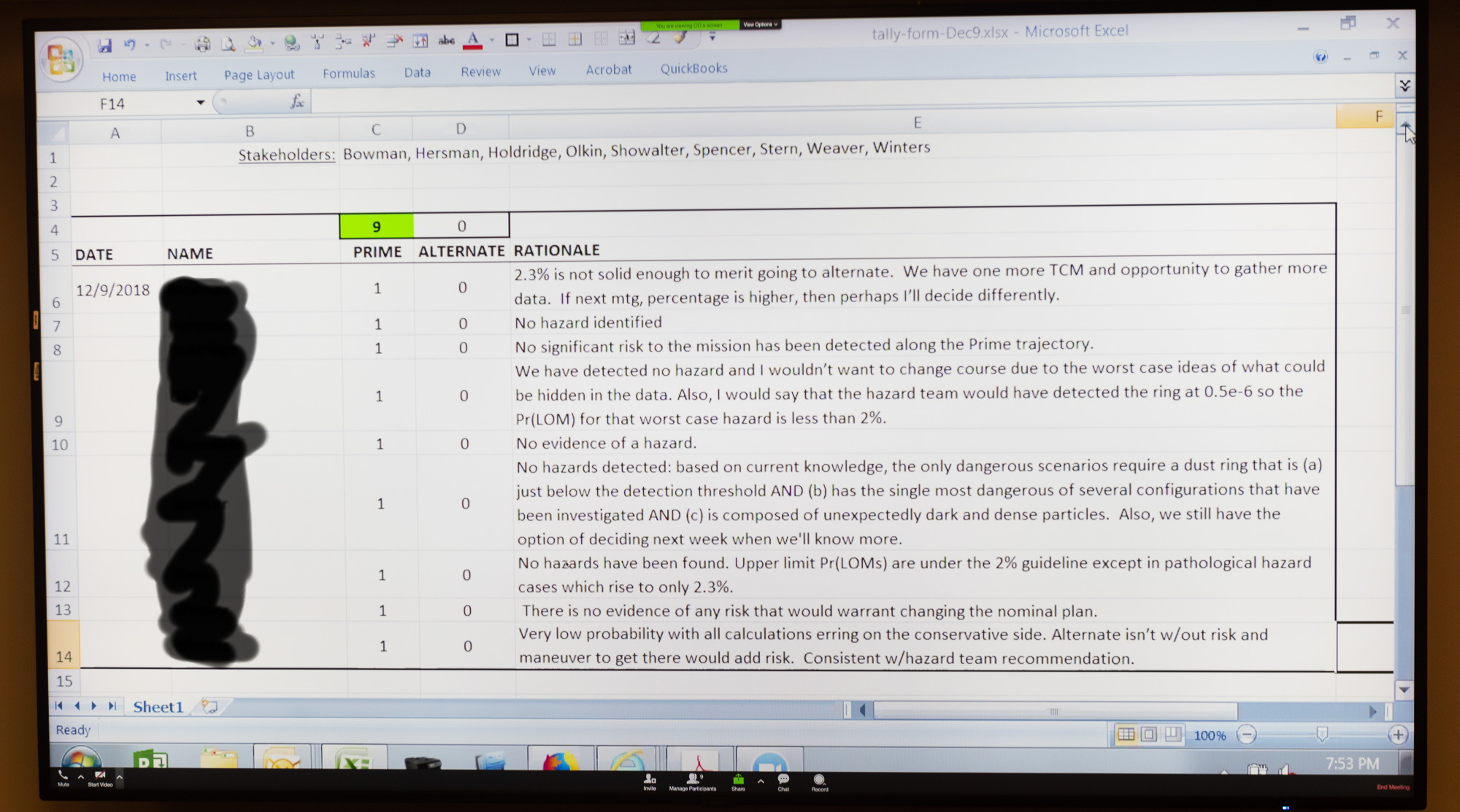
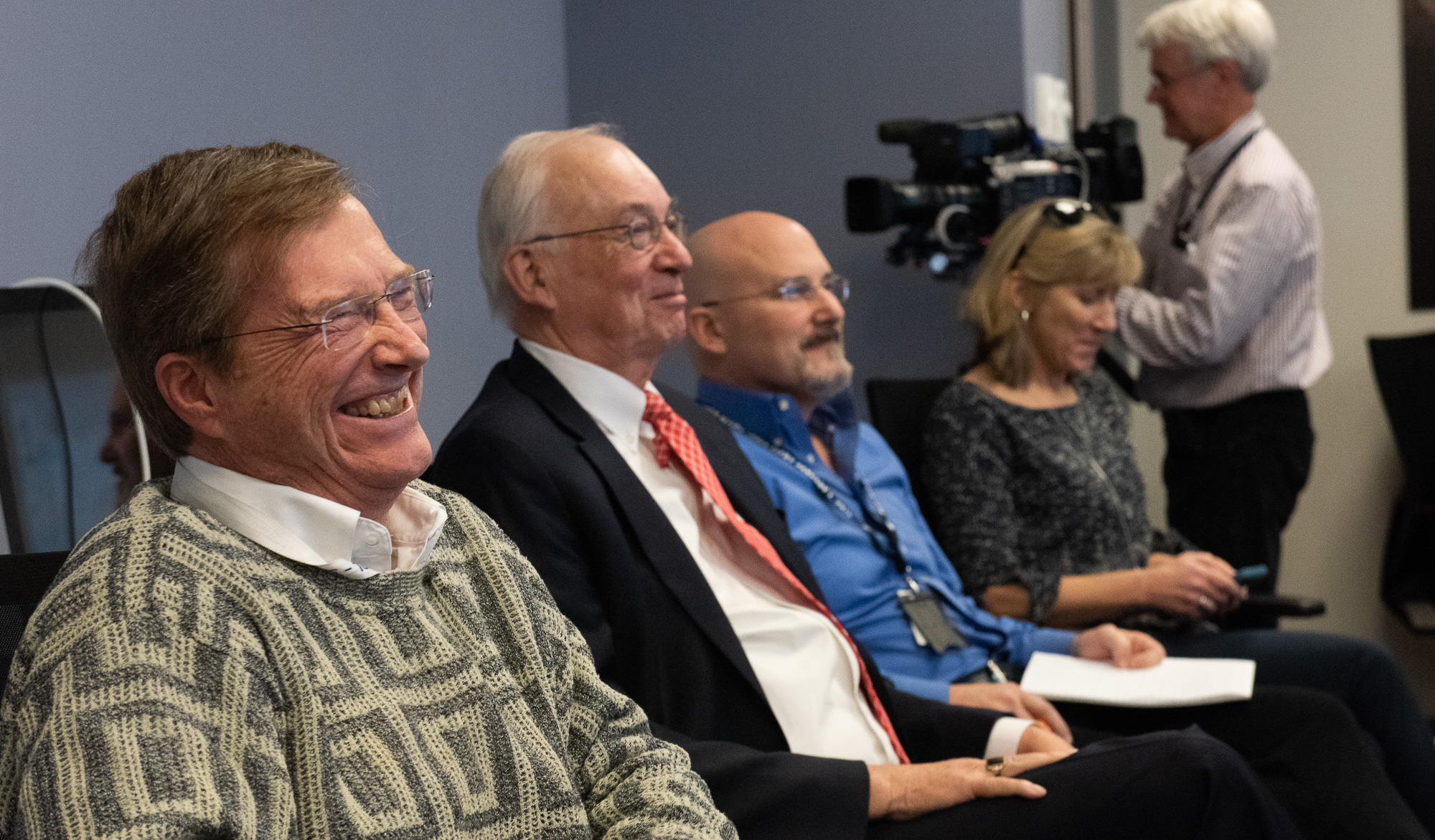
| We played out various scenarios (i.e., this is fake, a rehearsal only!) for what might go wrong with the spacecraft, and debated what to do. What would you do if you lost LORRI at K-20d? The risk here is that if the primary imaging camera is gone, then you won't be able to navigate your way to MU69 as precisely. So, it may be worth it to fly the more distant Alternate trajectory and recover some data, rather than risk losing it all by flying too close on the Prime, where MU69 will whiz past before you can image it. |
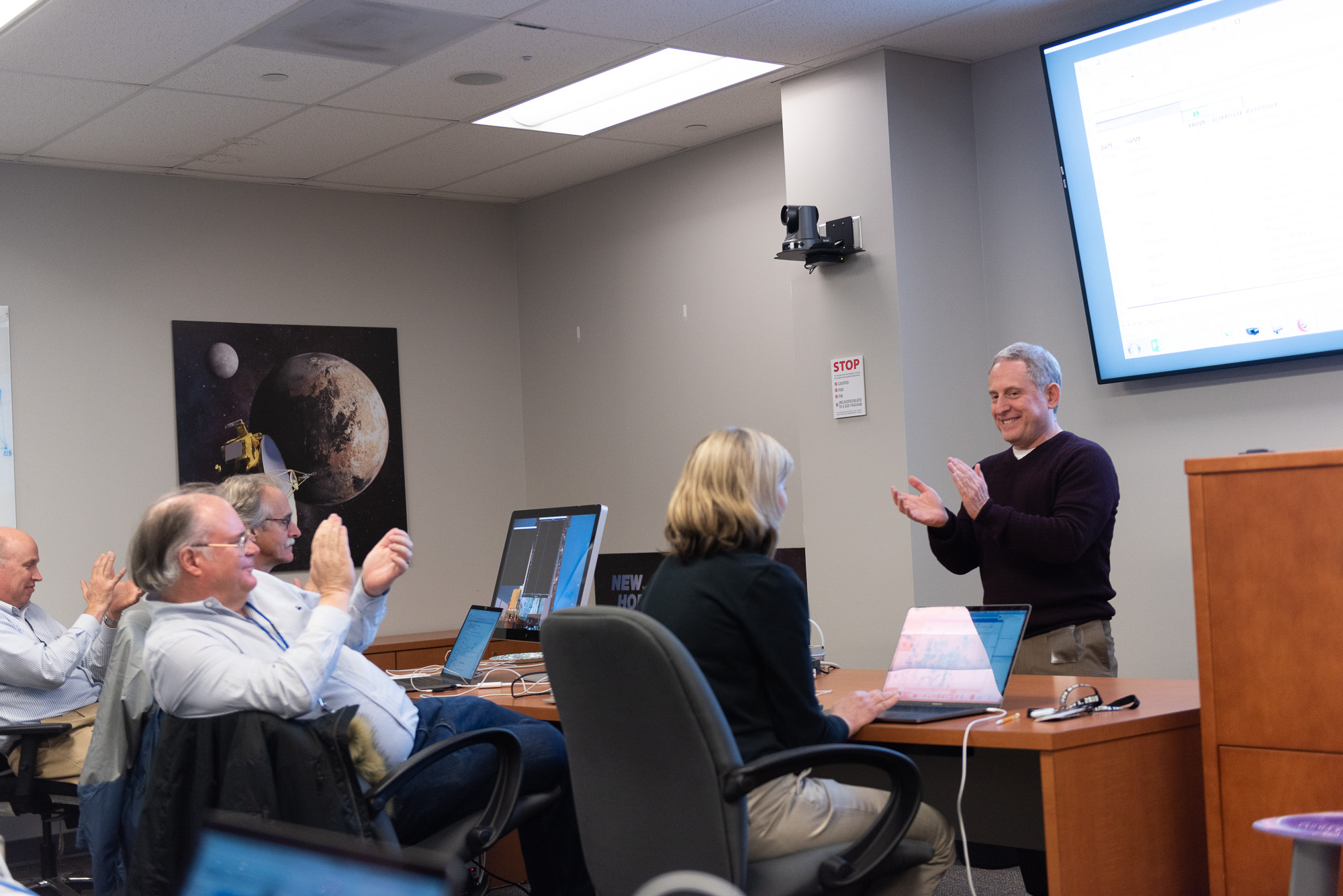
| And we've chosen to remain on the Prime trajectory, at least for this rehearsal. This surprised John, who thought that at least one of his scenarios would be bad enough to fly the Alternate. |
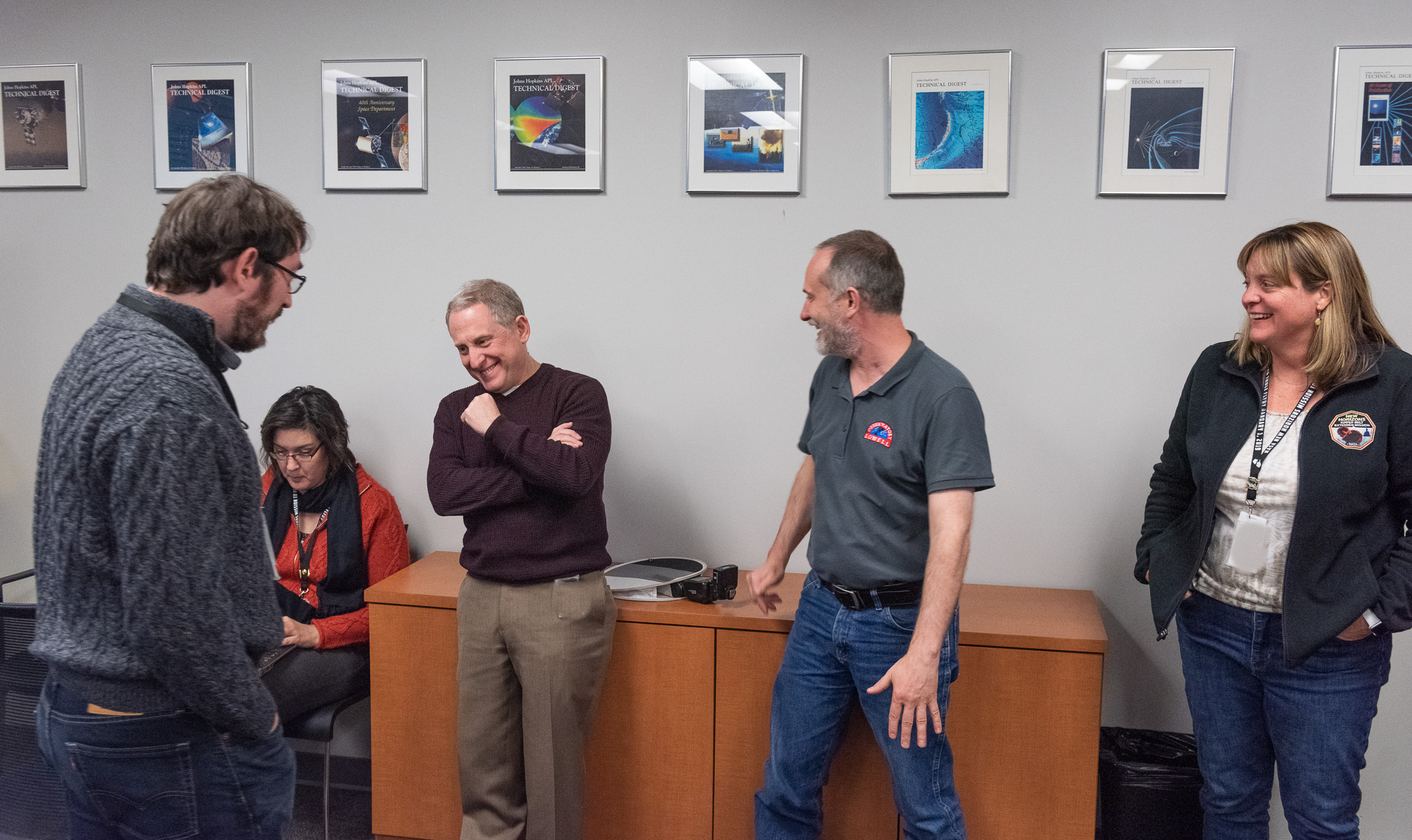
| Alan, with Cindy Conrad, Simon Porter, Will Grundy, and Cathy Olkin. Cathy has beeen Deputy Project Scientist on New Horizons for a long time, and is soon transitioning off to work on the Lucy mission. |
|
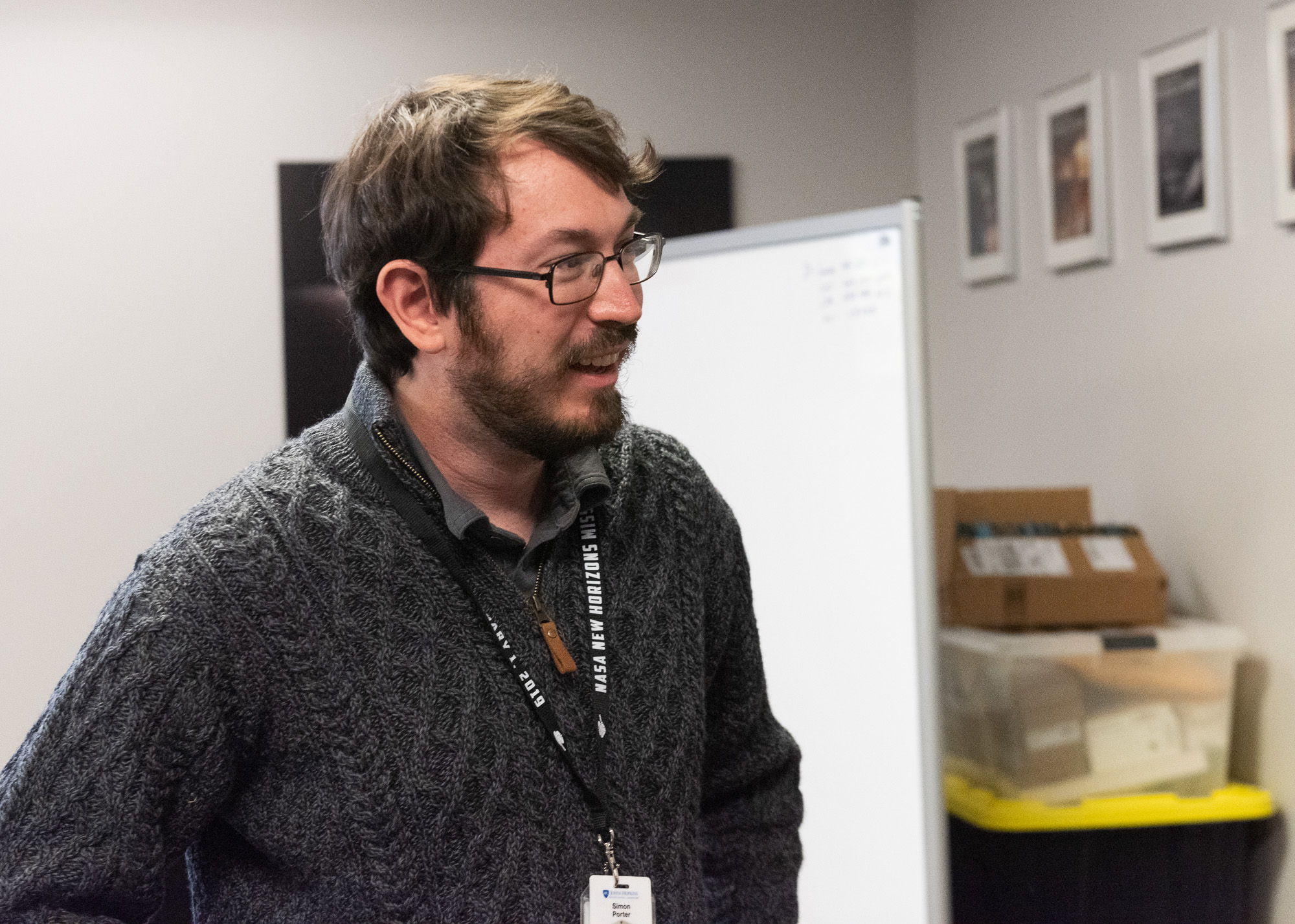
| Simon Porter can do anything. As Will Grundy said a few months ago: "Yeah, my role here is to be a second-rate backup for Simon, basically. Frankly, I think we're all second-rate backups for Simon." |
New Horizons Hazards Operations
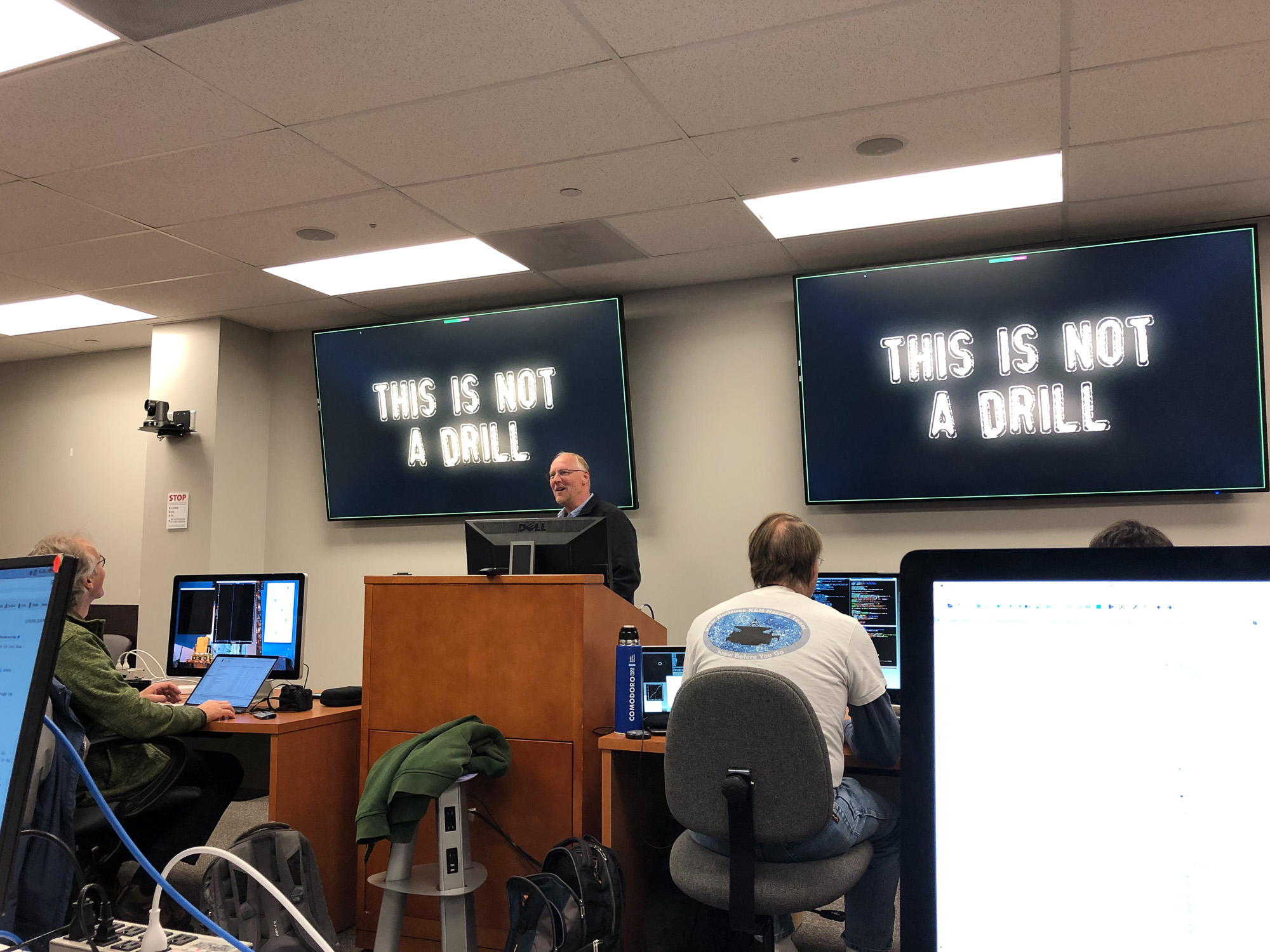
| And Mark Showalter kicks off the Hazards operations. We've had 18 months of rehearsals, telecons, software development, and in-person practice sessions, and now we're finally at the real deal. Today is K-31d, so we have 15 days until the decision to divert or not, and 16 days after than until encounter. |
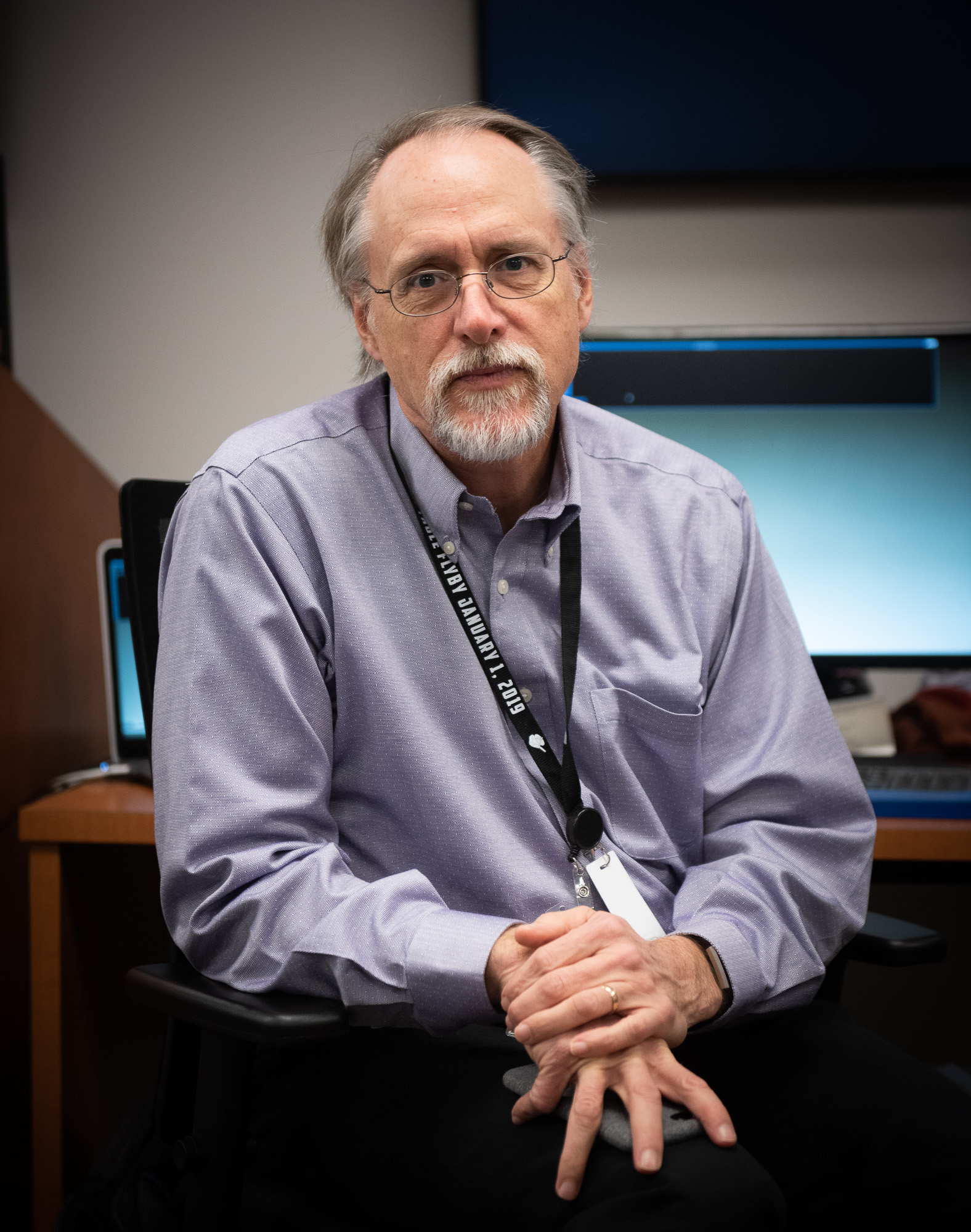
| Marc Buie. |
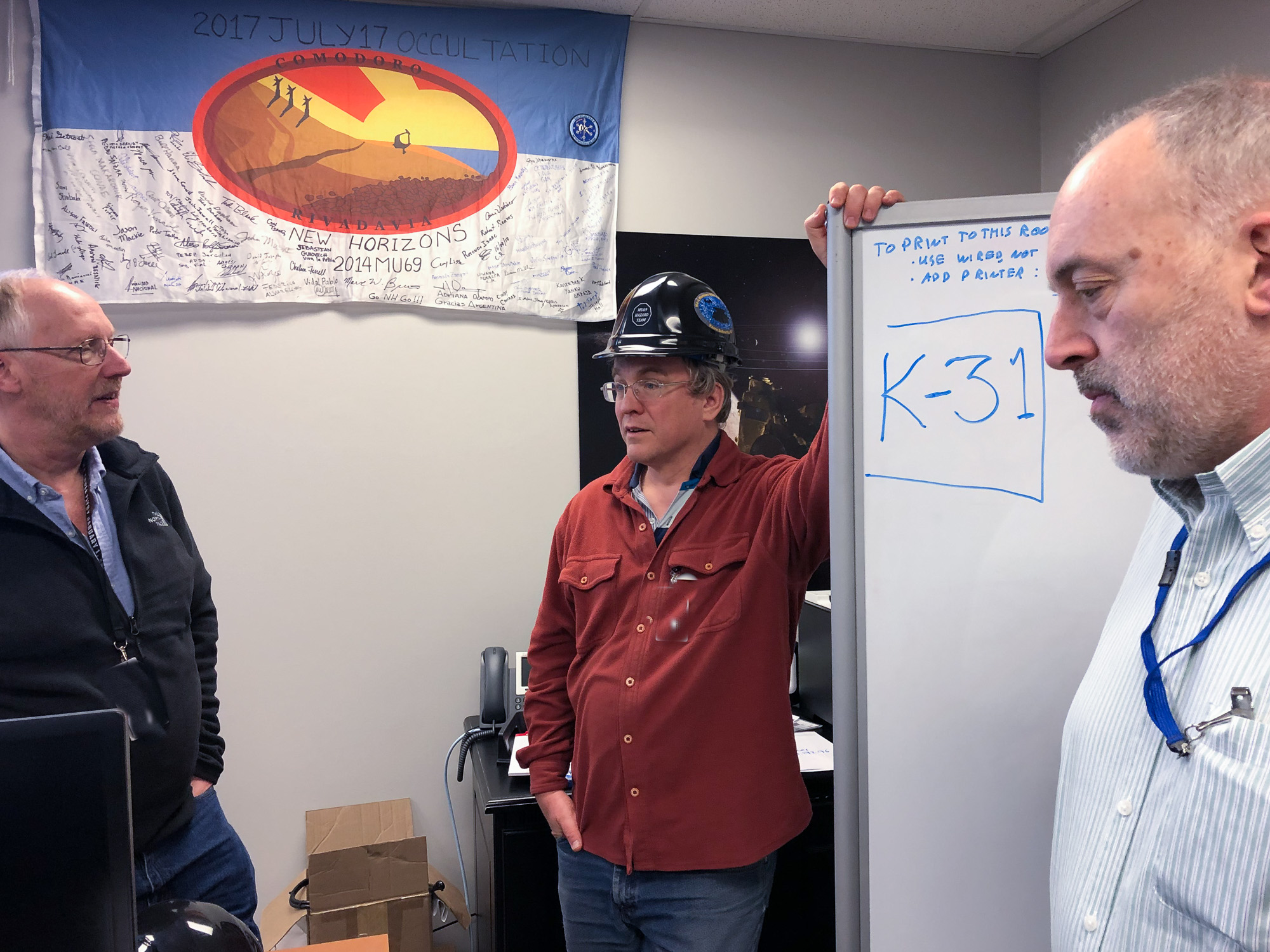
| Mark Showalter, Doug Hamilton, and David Kaufmann. Behind them is the signed flag from the summer 2017 MU69 occultation campaign to Comodoro, Argentina. We're at K-31d. |
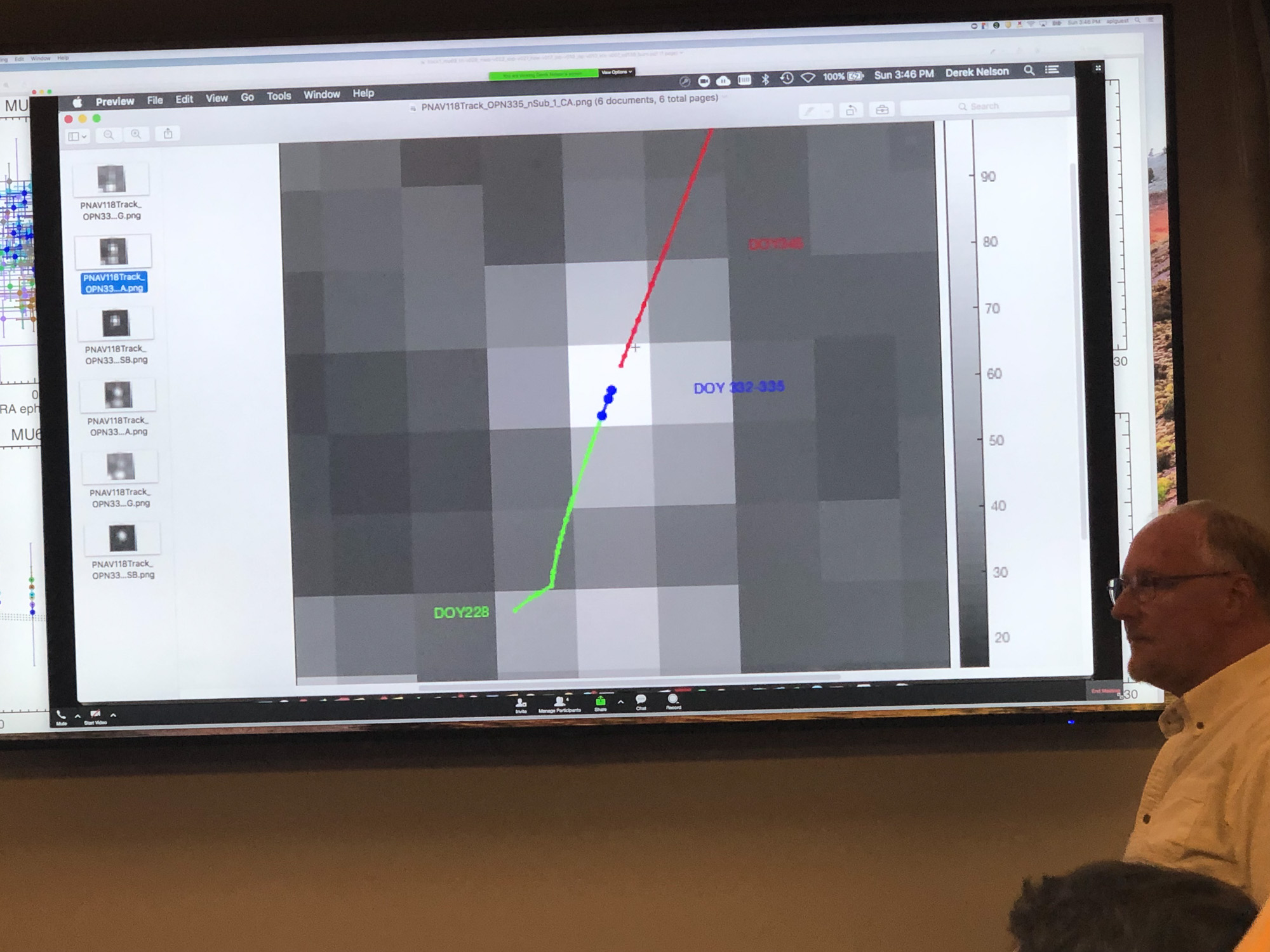
| I love this plot, generated by the NAV team at KinetX. So, MU69 is traveling against the background star field, and we can watch its motion. But it's traveling very slowly! In fact, every day, it travels only about 1/10th of a pixel, since we're headed straight for it. The Optical Navigation -- OpNav -- team's job, among other things, is to watch the position of MU69 from the spacecraft, and use that to infer our trajectory. The bend here you can see at the bottom is the result of a TCM burn that was done sometime after day-of-year 228. |
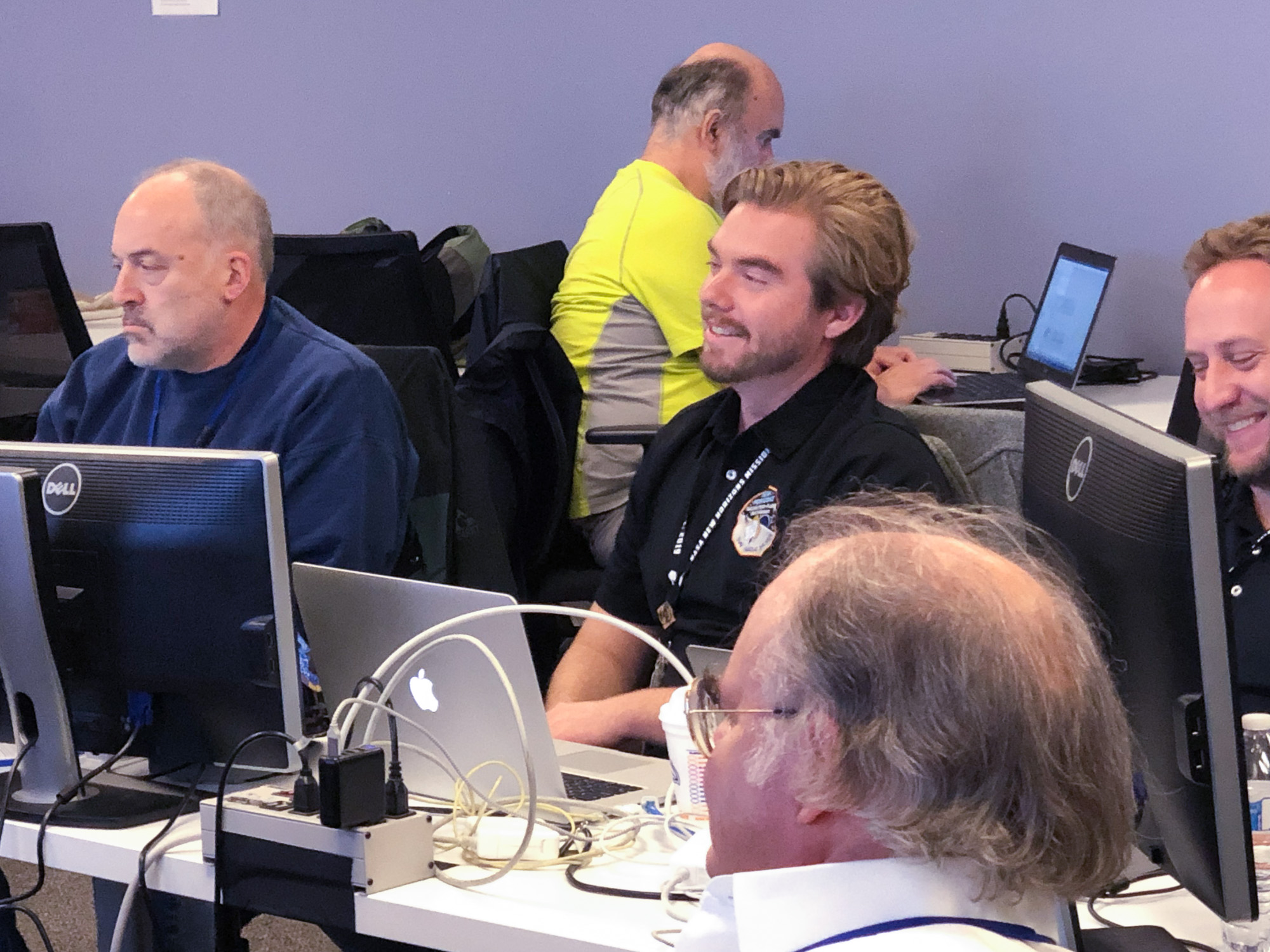
| Derek Nelson, center, is the head of New Horizons OpNav at KinetX. |
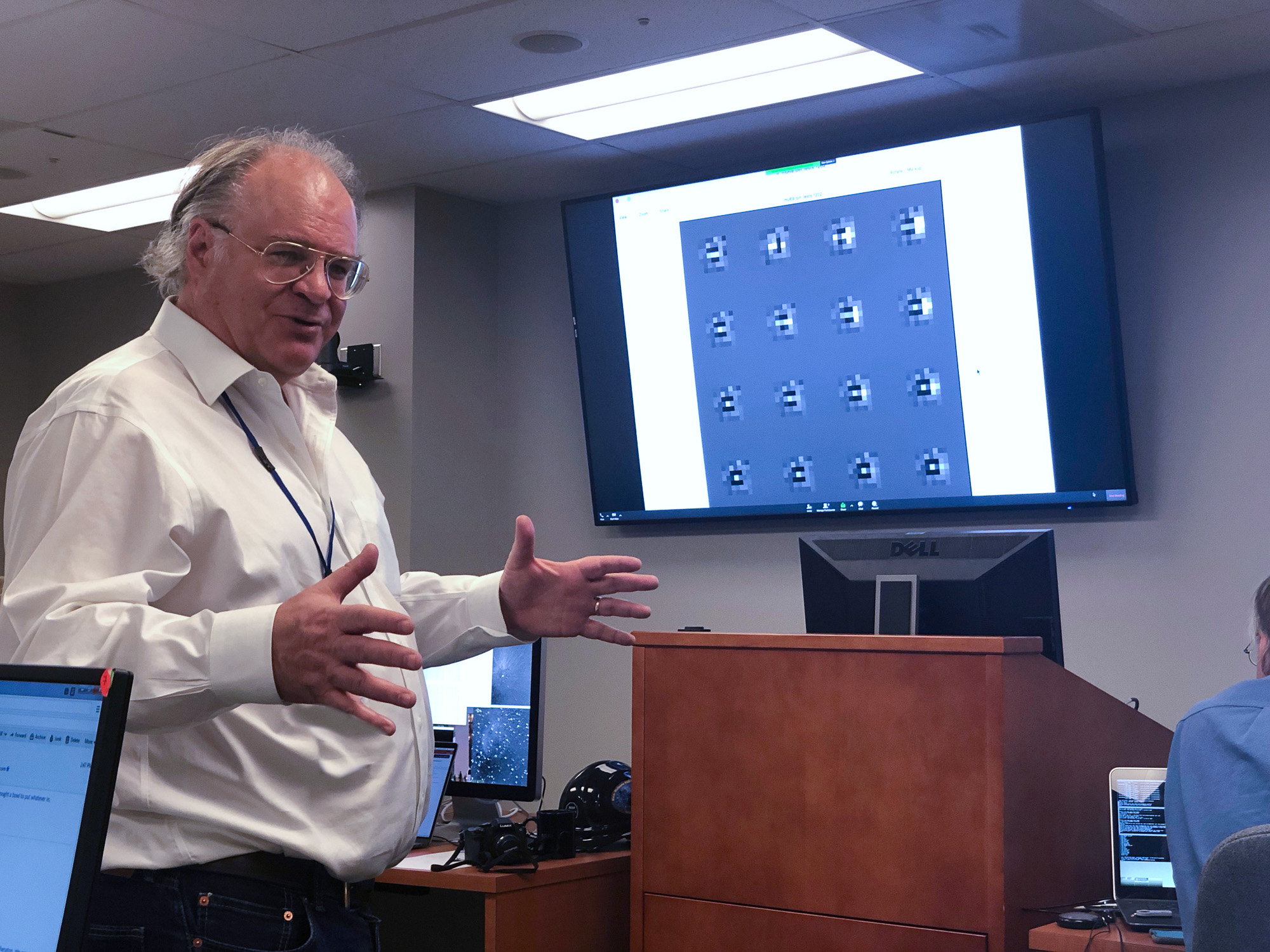
| Tod Lauer shows off his PSF residuals. "Yeah, just put me down on a beach anywhere, and you know what I'd be doing to have fun? I'd get out my laptop, and I'd be solving some sort of image analysis problem. It's just great. I took all these classes about deconvolution and Fourier theory in school, and at that time it was all theoretical. No one had ever touched a CCD, or used real digital imaging data. It was a case of the theory being way out front of the engineering. But sure enough, we got our hands on some of the very first CCDs at Lick, and I started to play with the data, and now, suddenly, it's not theory any more." |
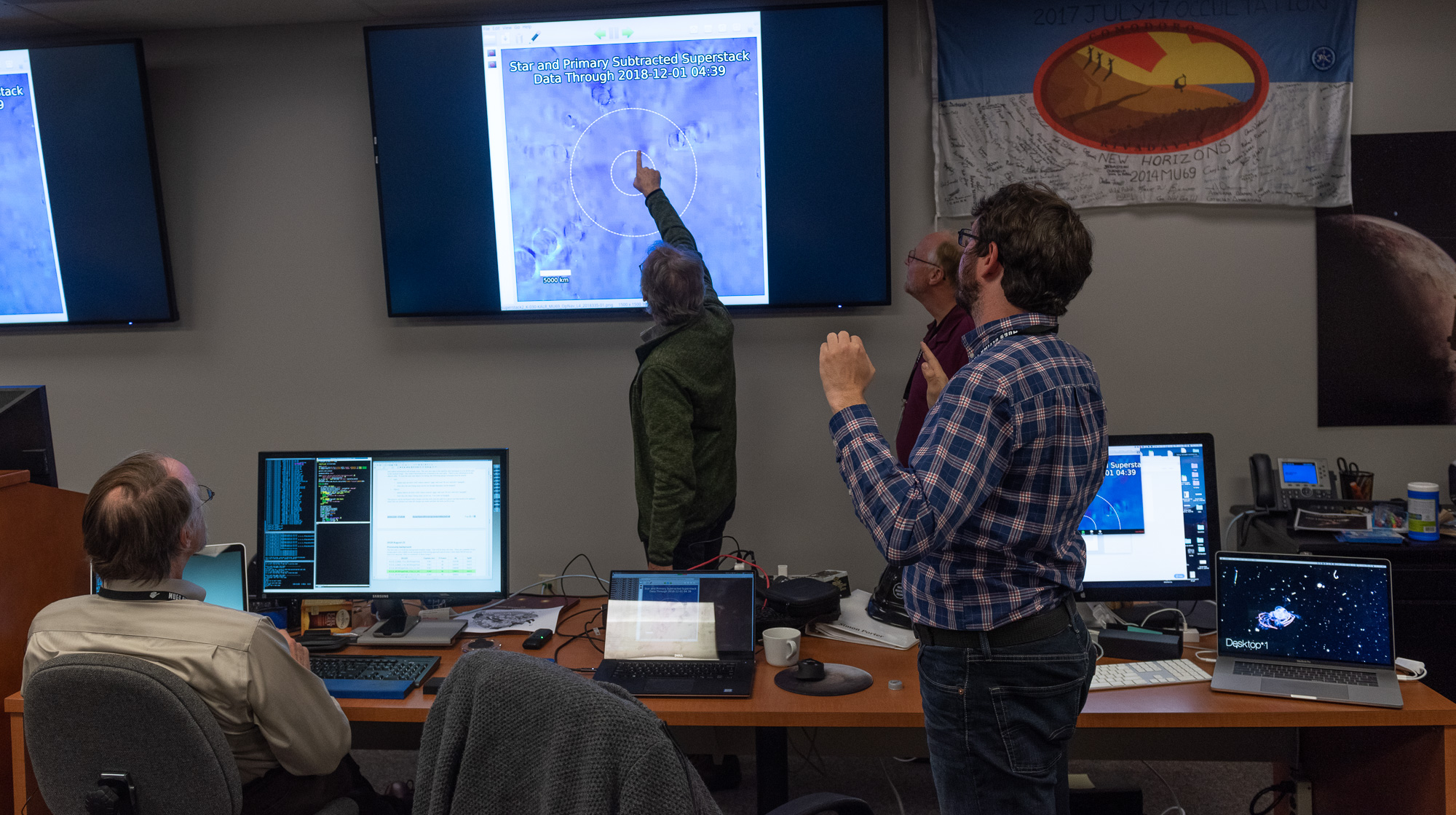
| John, Marc, Simon, and John look at debris in the way at the primary orbit (inner circle). But no -- it's just stars. |
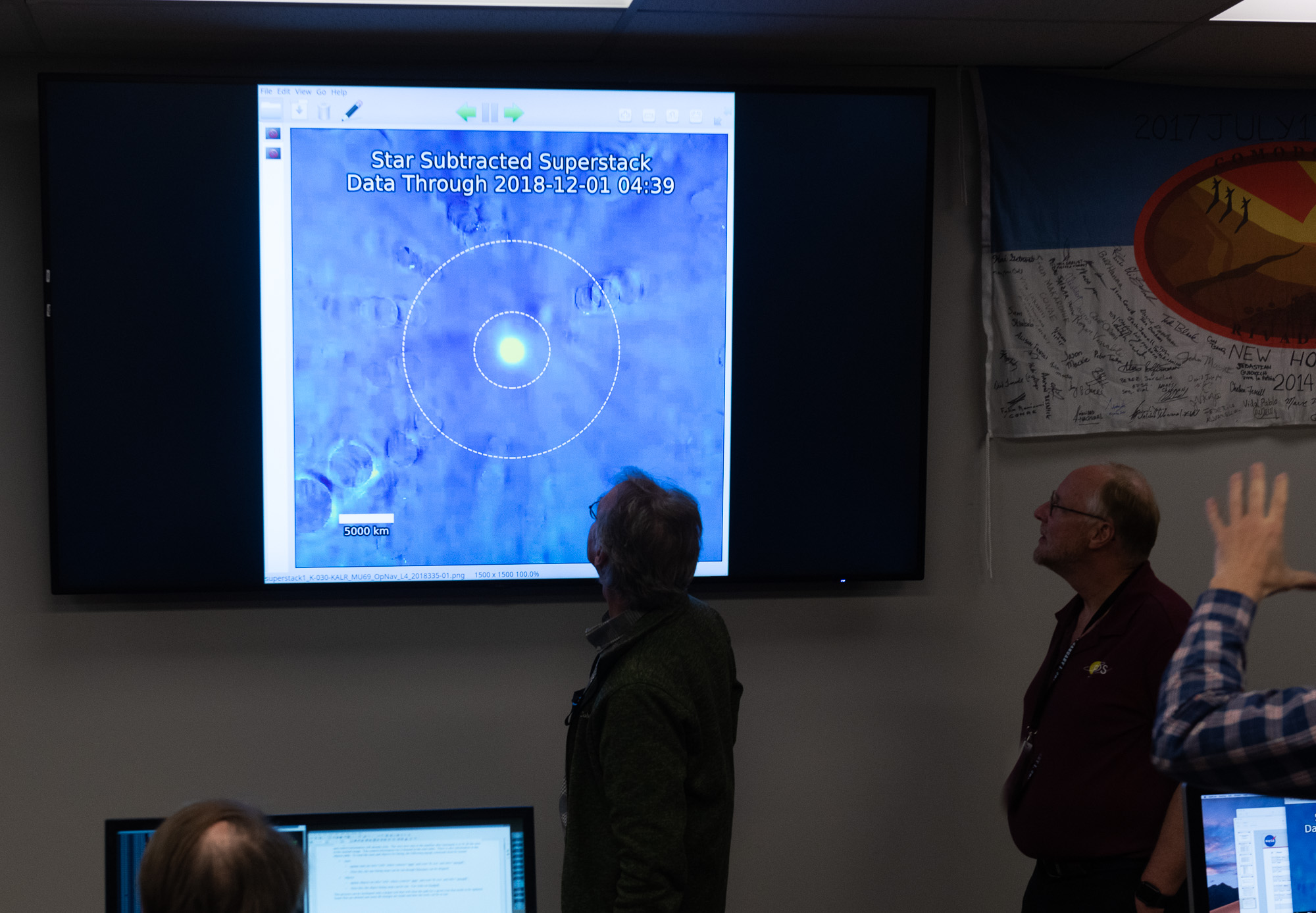
| Check out that bright MU69! |
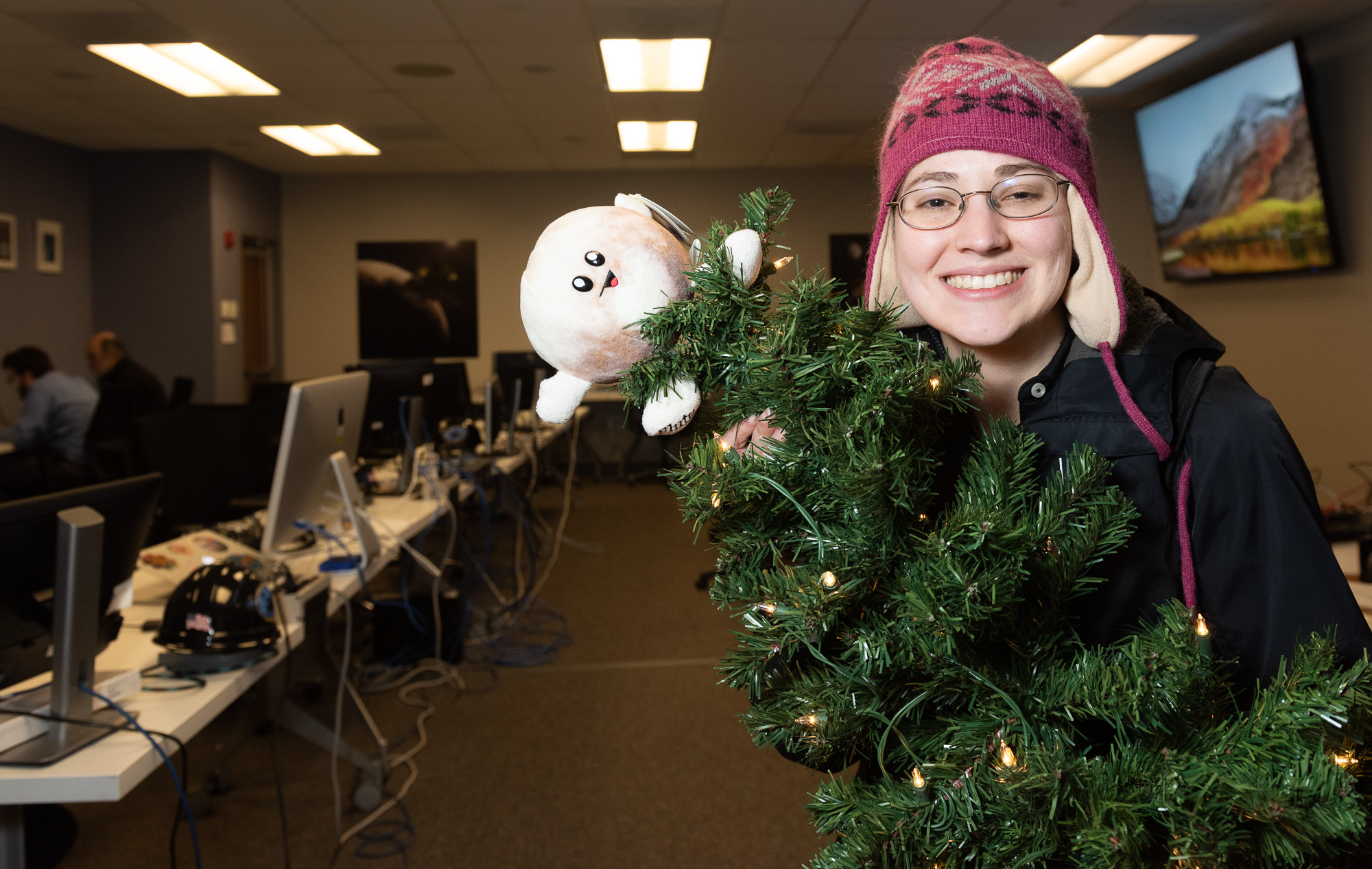
| Amanda has decorated our tree with a scientifically correct, heart-filled Pluto. |
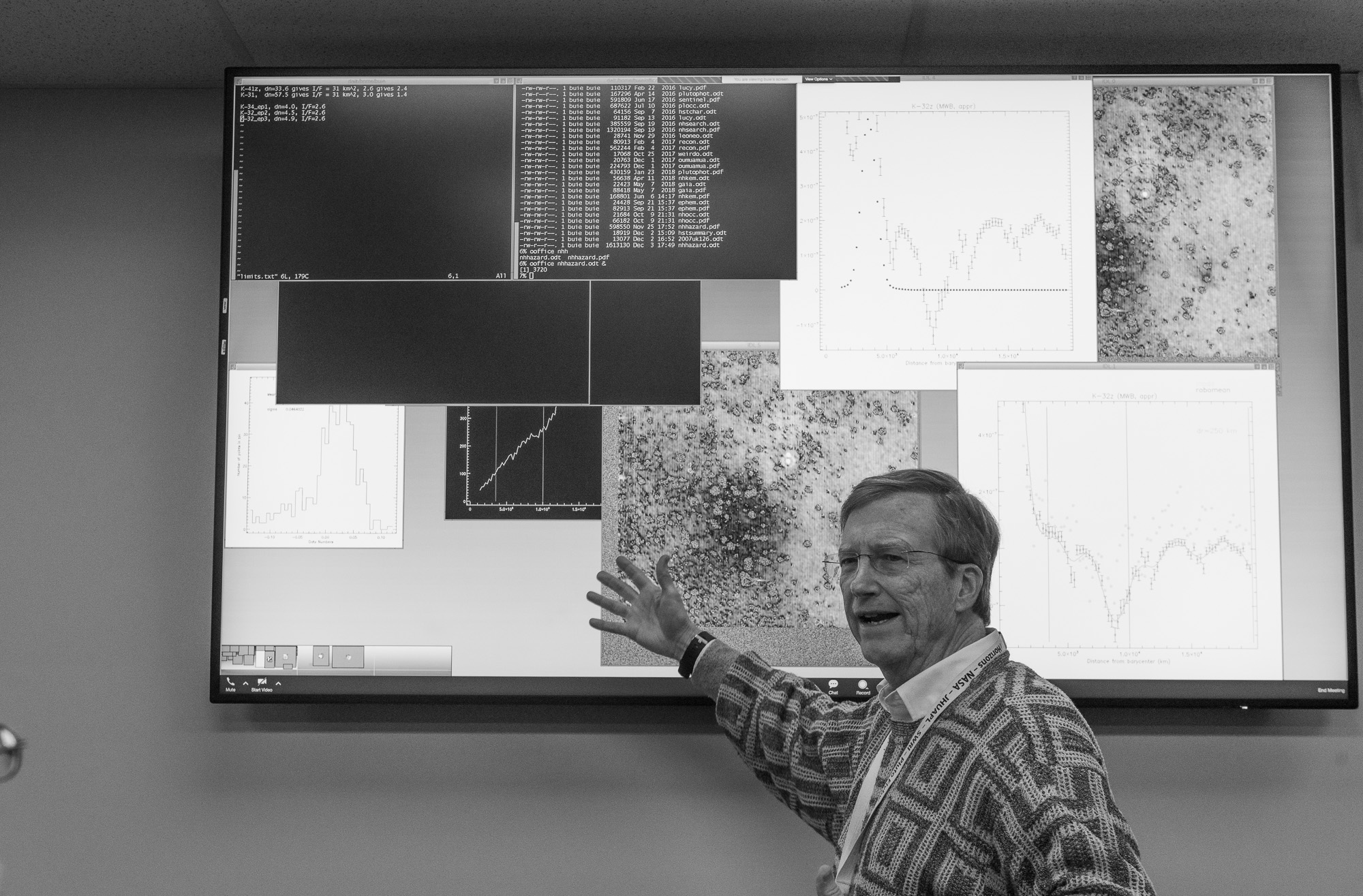
| Hal Weaver checks out some of Marc Buie's flattened image stacks (center bottom) and radial profiles (two white plots). |
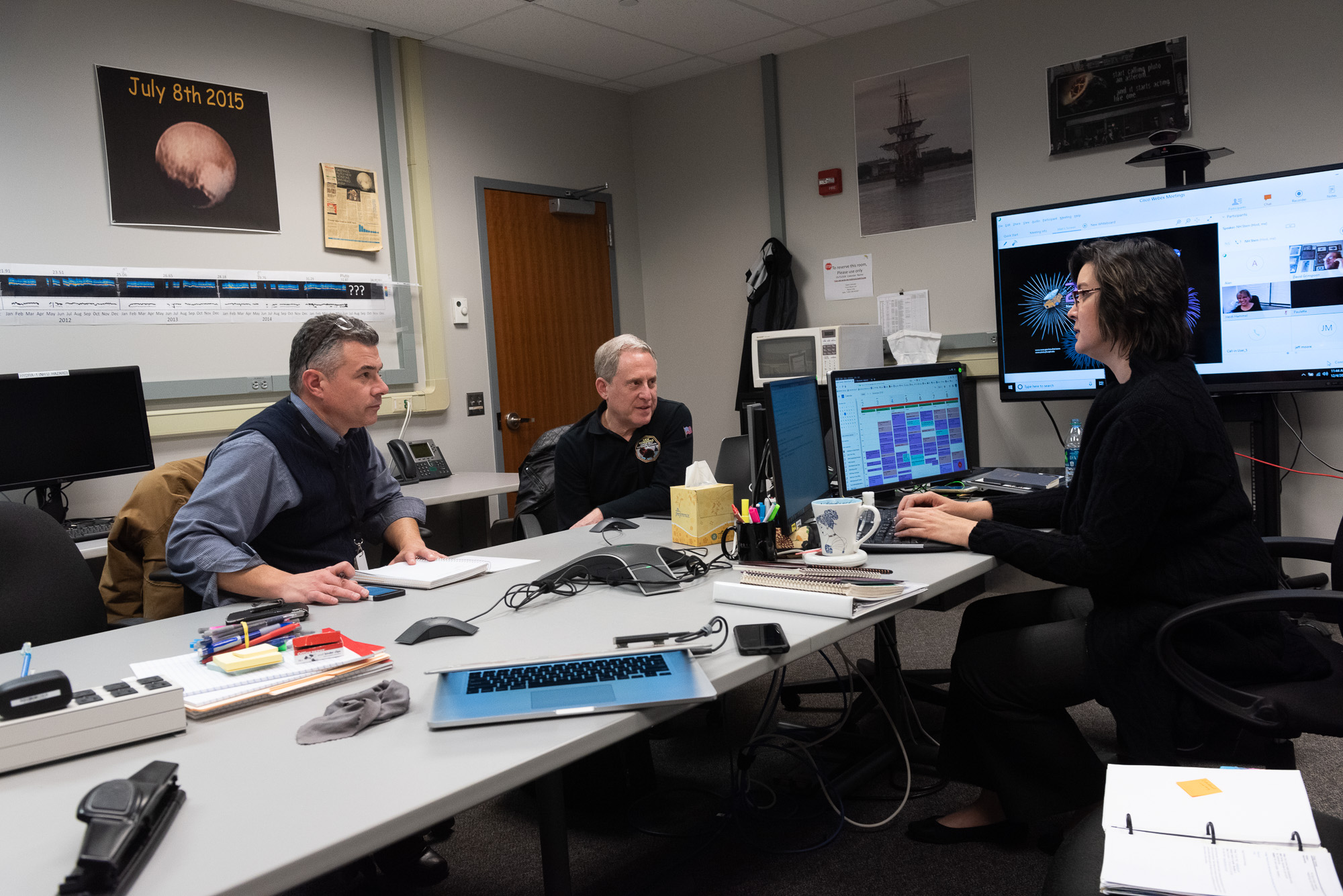
| Alan Stern, Mike Buckley, and Cindy Conrad talk about media plans for encounter. |
|
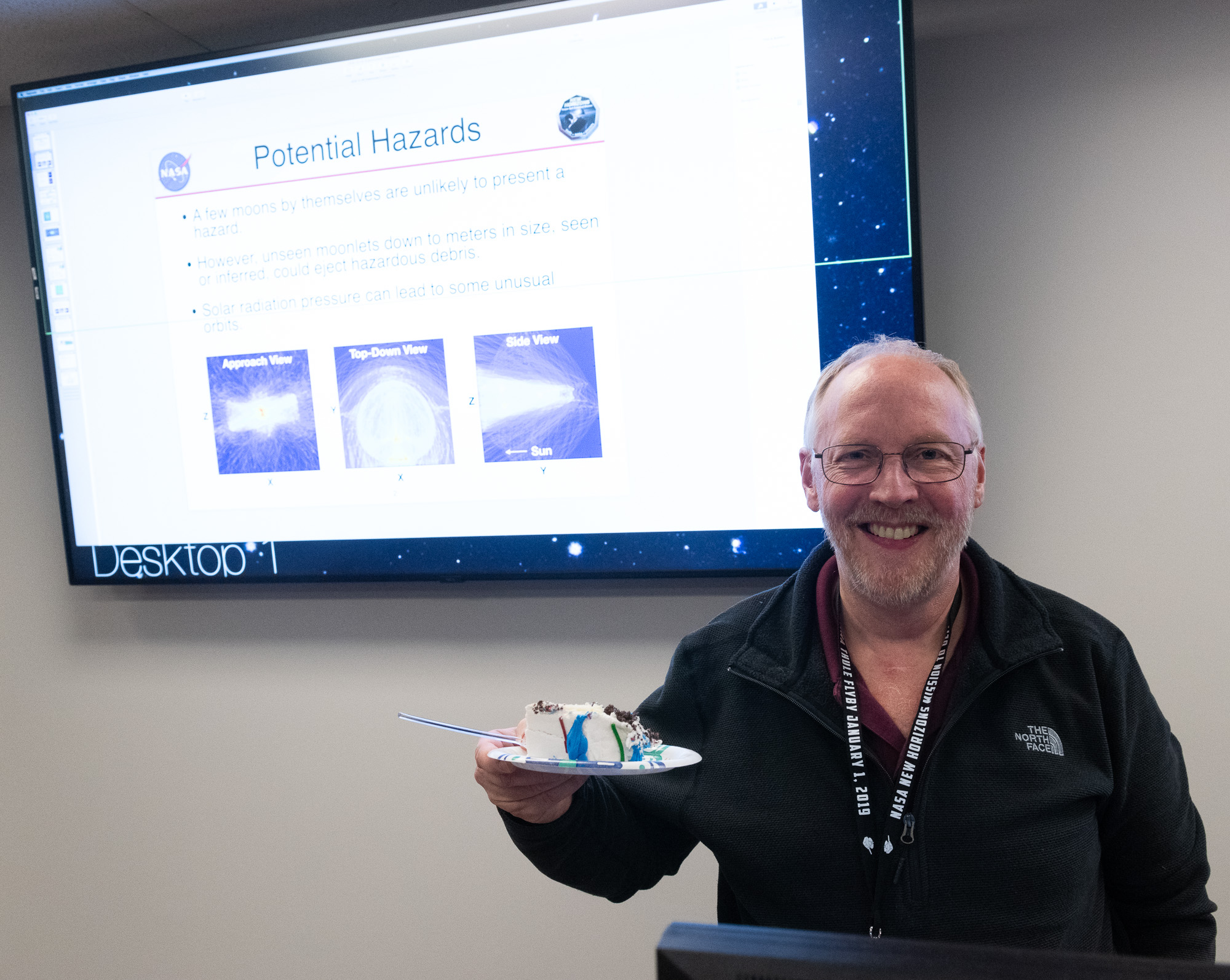
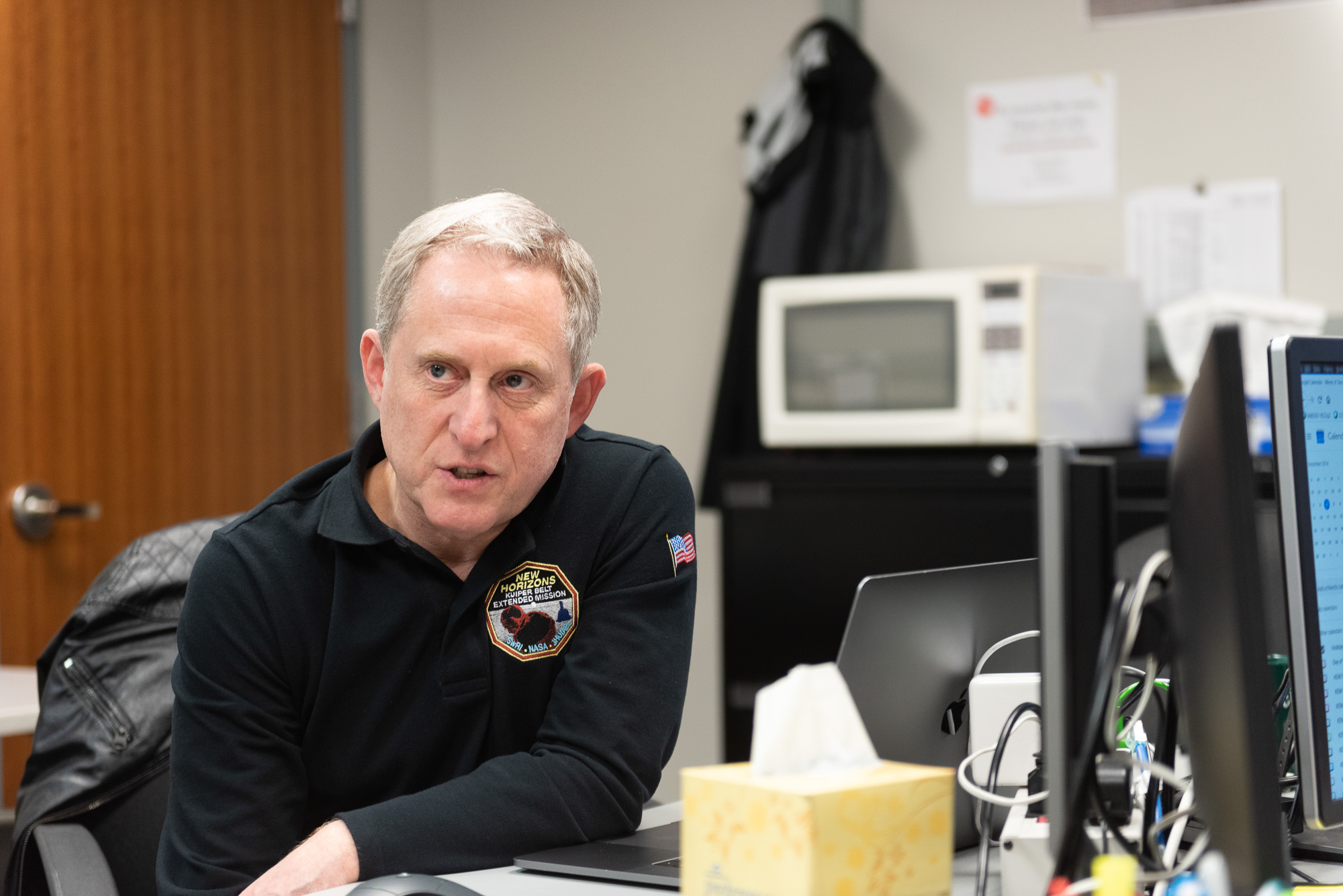
| Mark Showalter celebrates his birthday by running a telecon and talking about dust trajectories! |
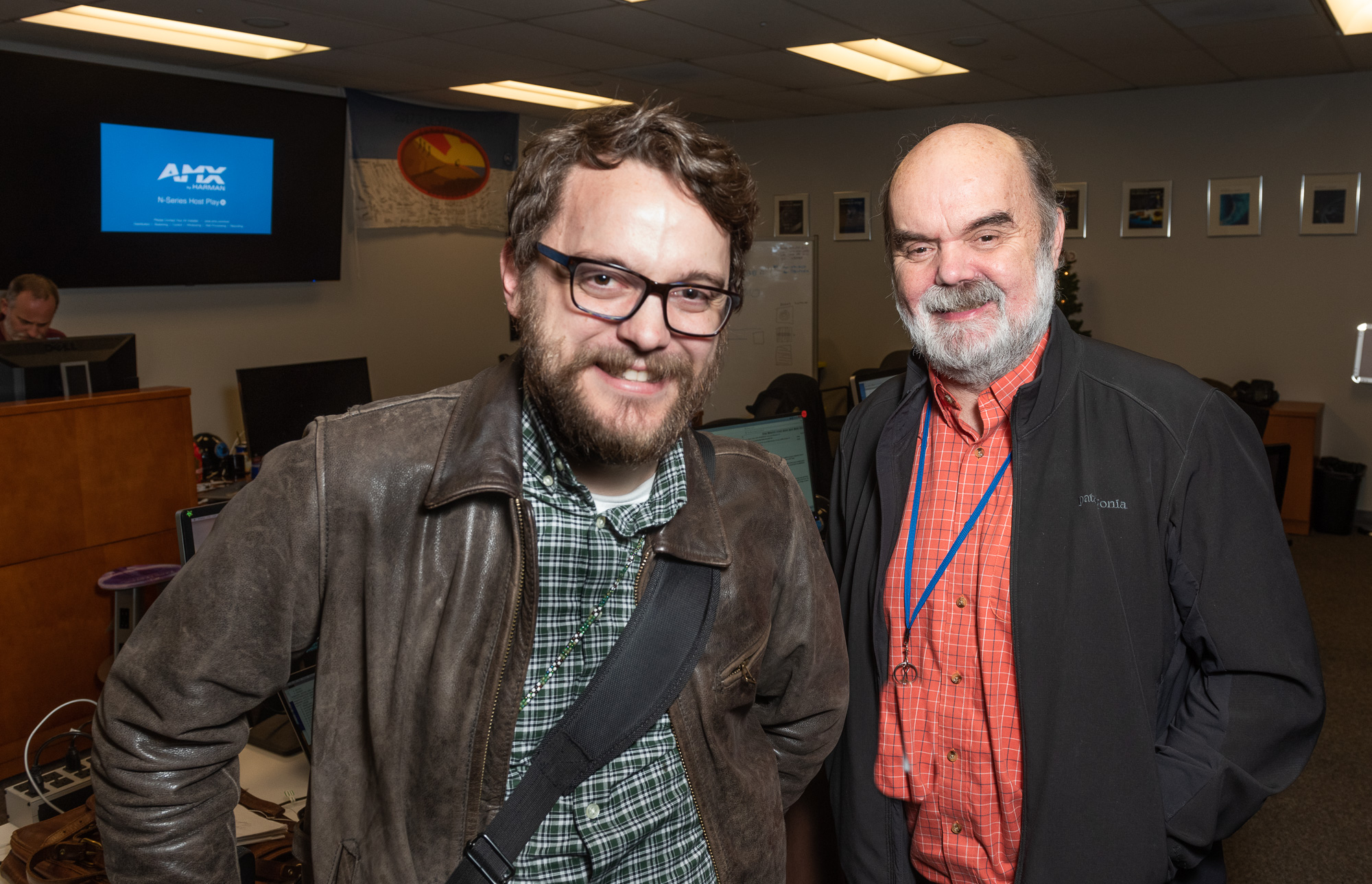
| Thomas Mehoke and Doug Mehoke! |
Time Out!
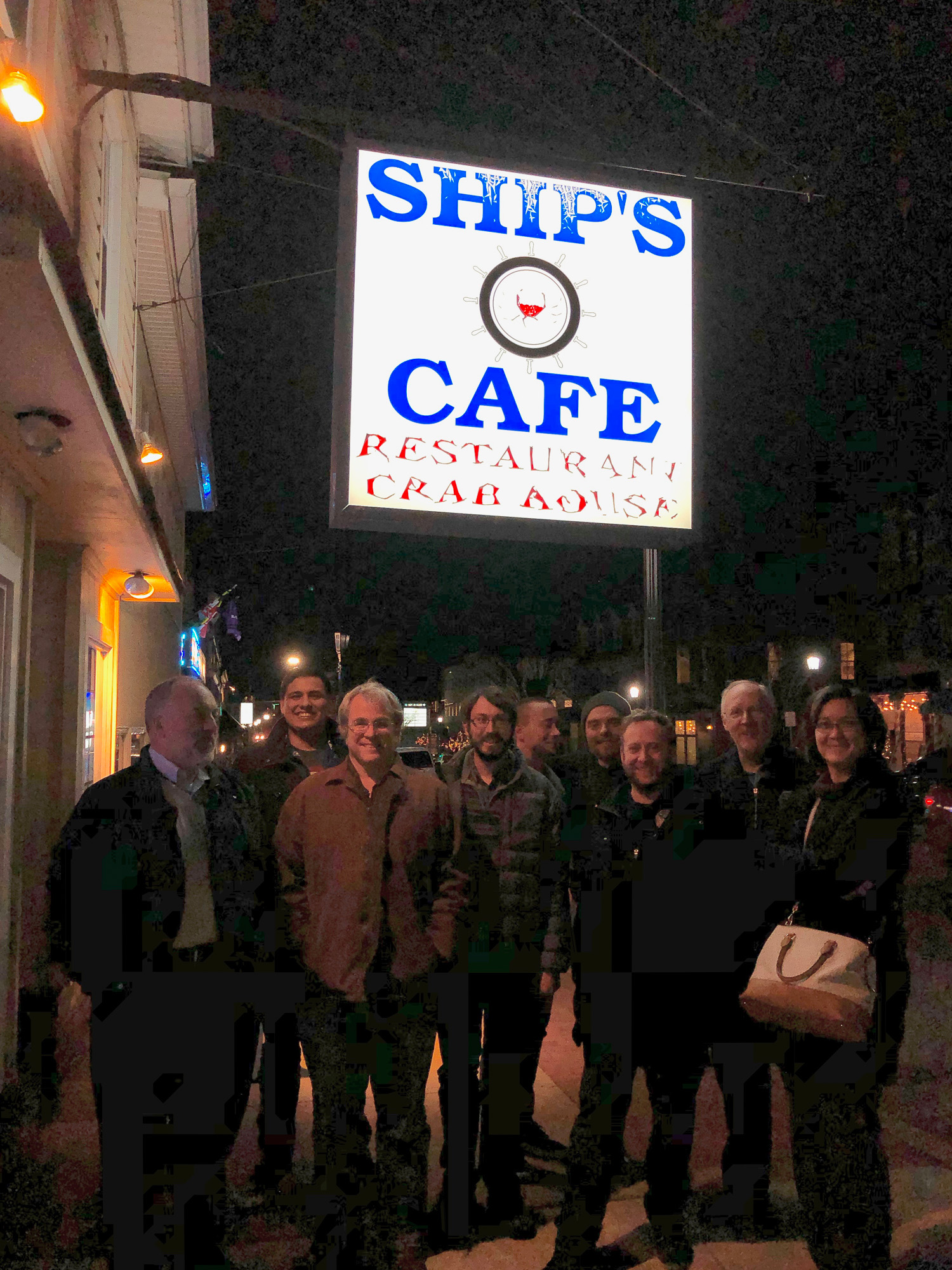
| Hazard team takes the evening off for some Maryland crabs. Cindy is a big crab afficionado and we are lucky to have her showing us the true path! |
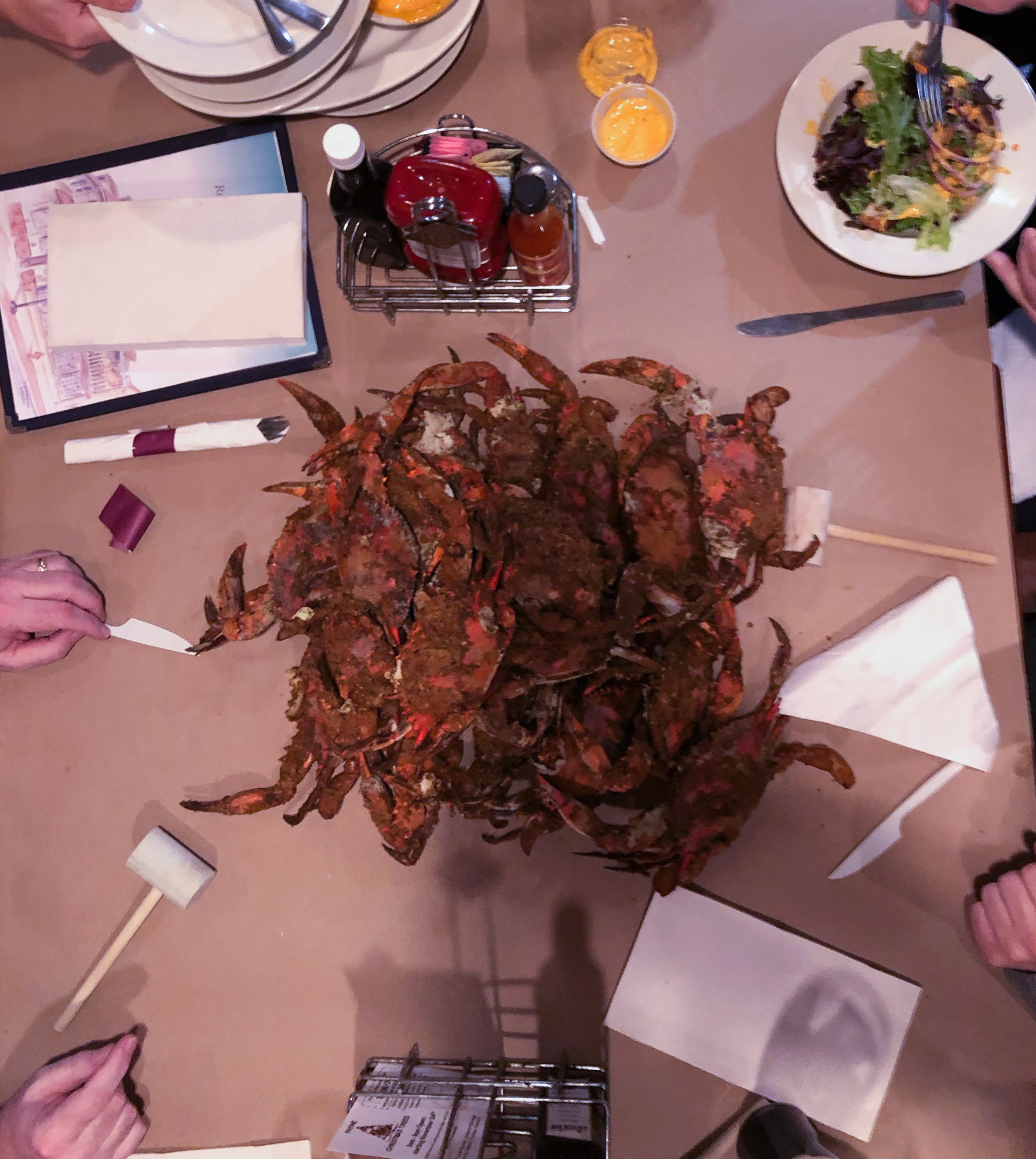
| Check out those crabs! 18 there, and another 18 at the other end of the table. |
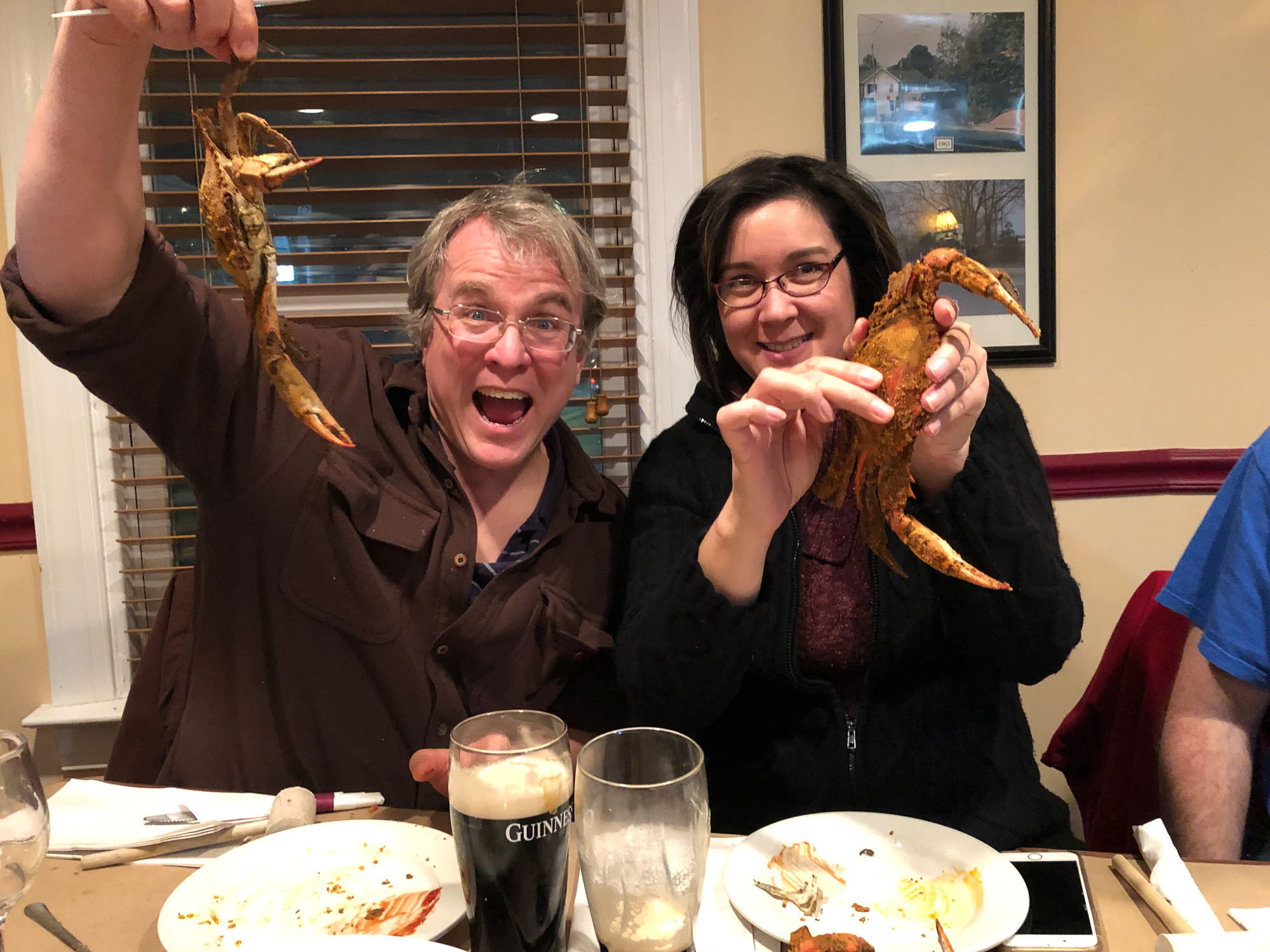
| Doug Hamilton and Cindy Conrad take the first step. |
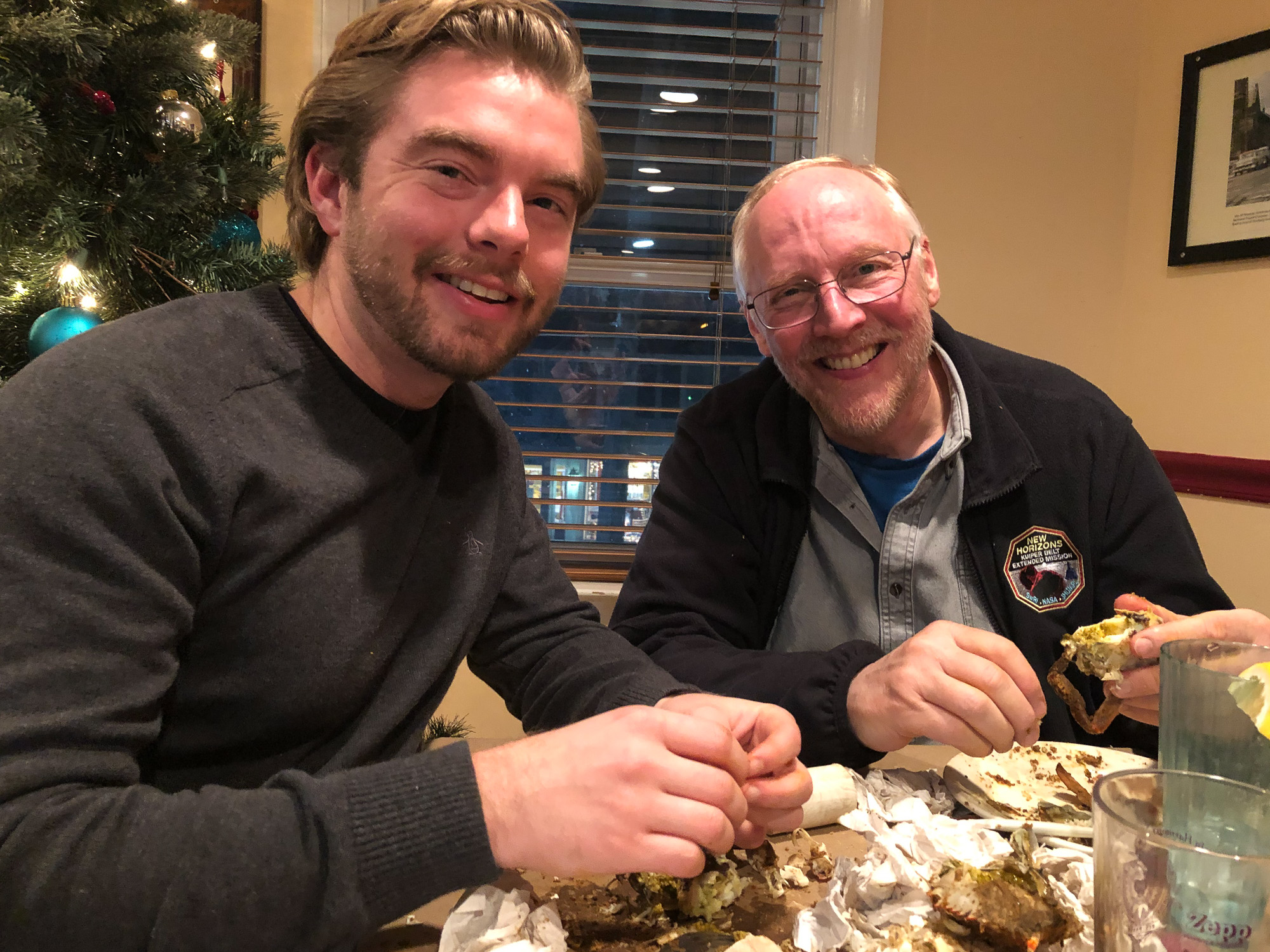
| Derek Nelson and Mark Showalter, mid-crab. |
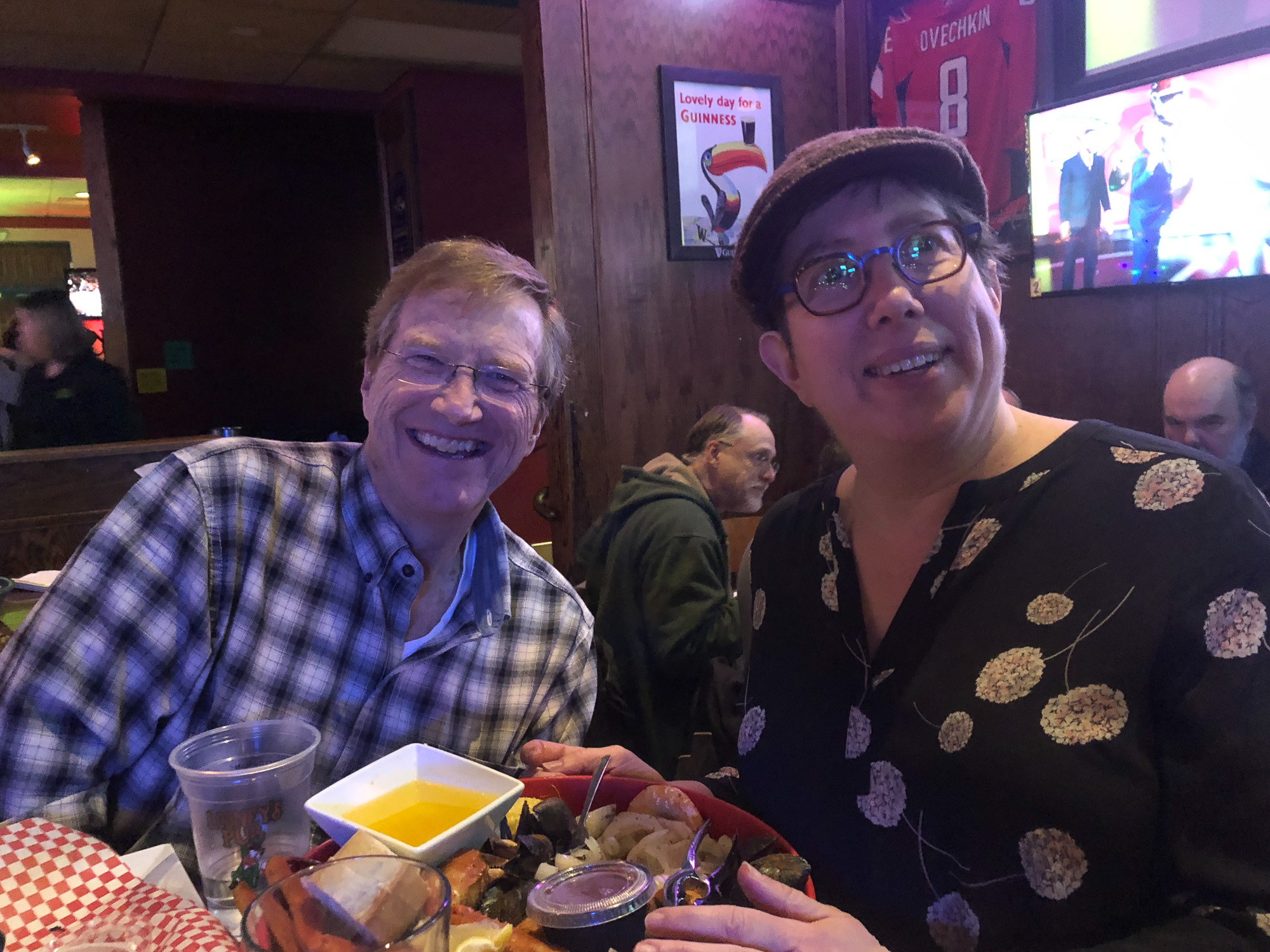
| Hal Weaver and Leslie Young. |
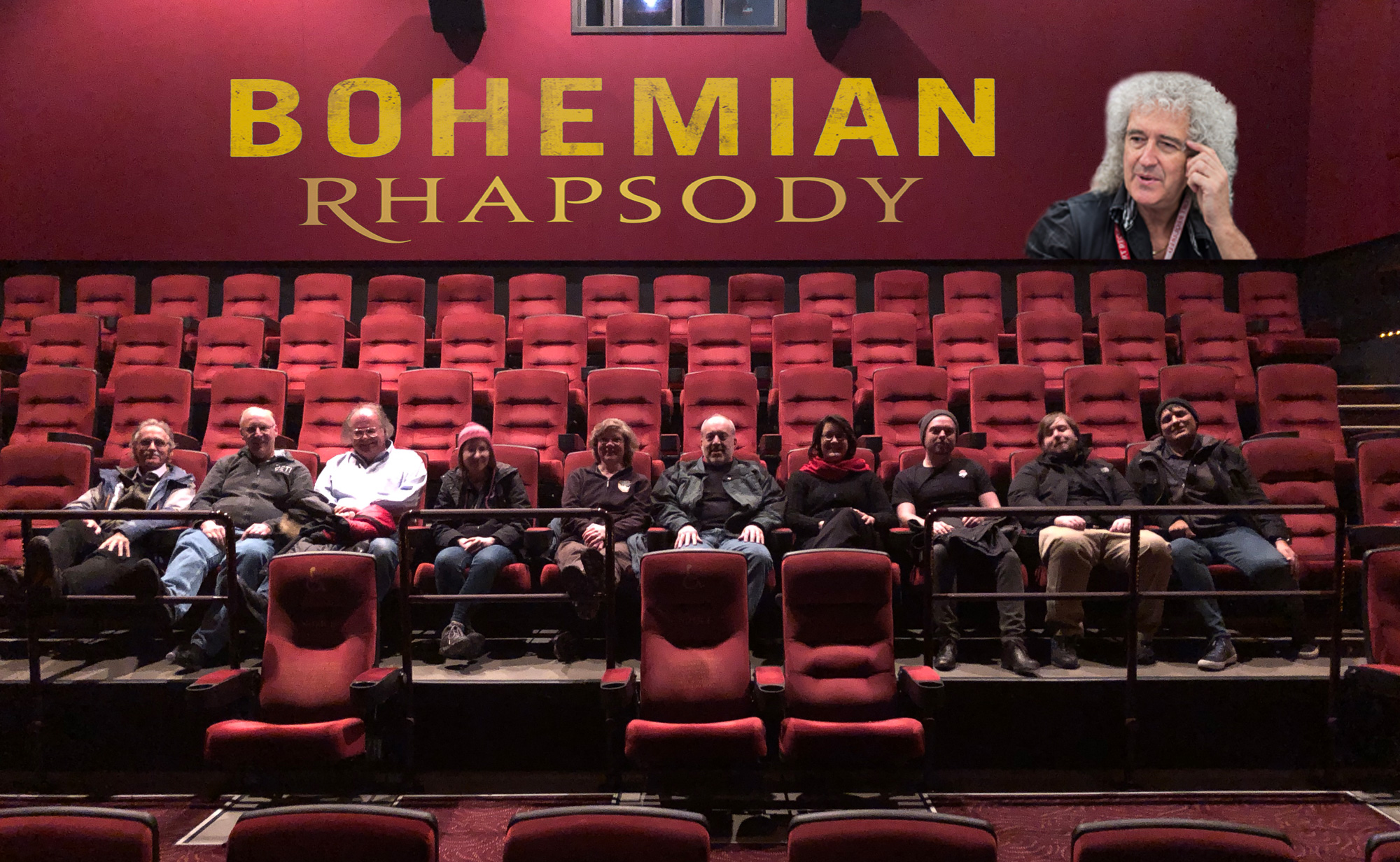
| Field trip! The hazard team went to watch Bohemian Rhapsody. Queen guitarist Brian May worked with the mission for a couple of days at the 2015 Pluto encounter. (Yes, he does have a PhD in astronomy -- and no, he didn't bring his guitar.) He's already put together a song and video for MU69: Brian May to Release First Solo Single in 20 Years from NASA Control Room: New Horizons. The movie is great, and we love Brian. From left: that's John Spencer, Mark Showalter, Tod Lauer, Amanda Zangari, Anne Verbiscer, David Kaufmann, Cindy Conrad, Derek Nelson, Joel Fischetti, and Michael Salinas. |
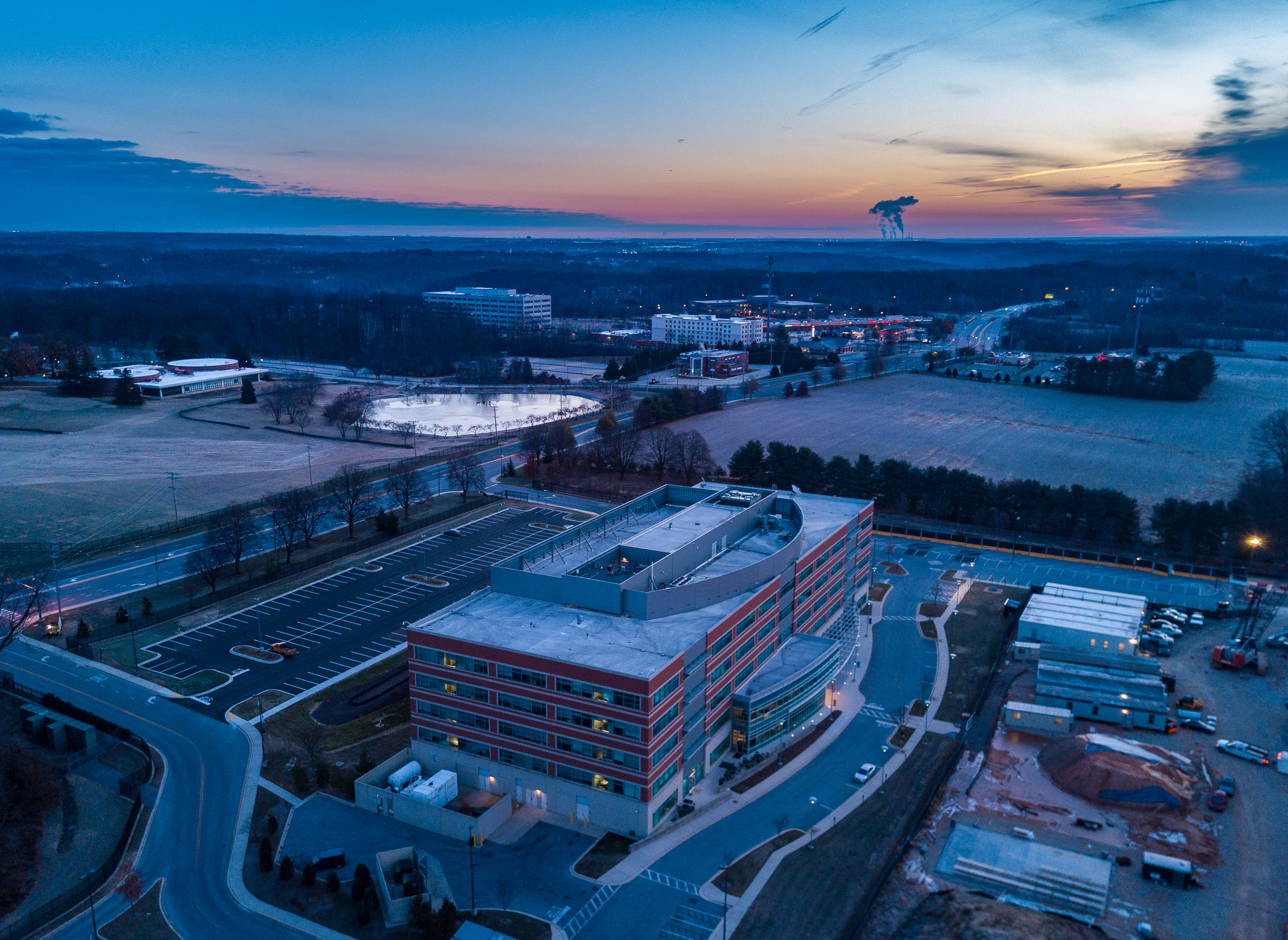
| And here's our local neighborhood near APL. In the foreground is Building 200, the new Space Department building, which is where all of New Horizons science operations are done, including our work on the Hazards team. The building with the white circles on the far left is the Kosiakoff Center ('K-Center'), which is where the public and press events for the flyby will be. In the middle is the hotel we were holed up at for three weeks, and just behind that is the clearly visible strip mall, with a plethora of restaurants we all made good use of. |
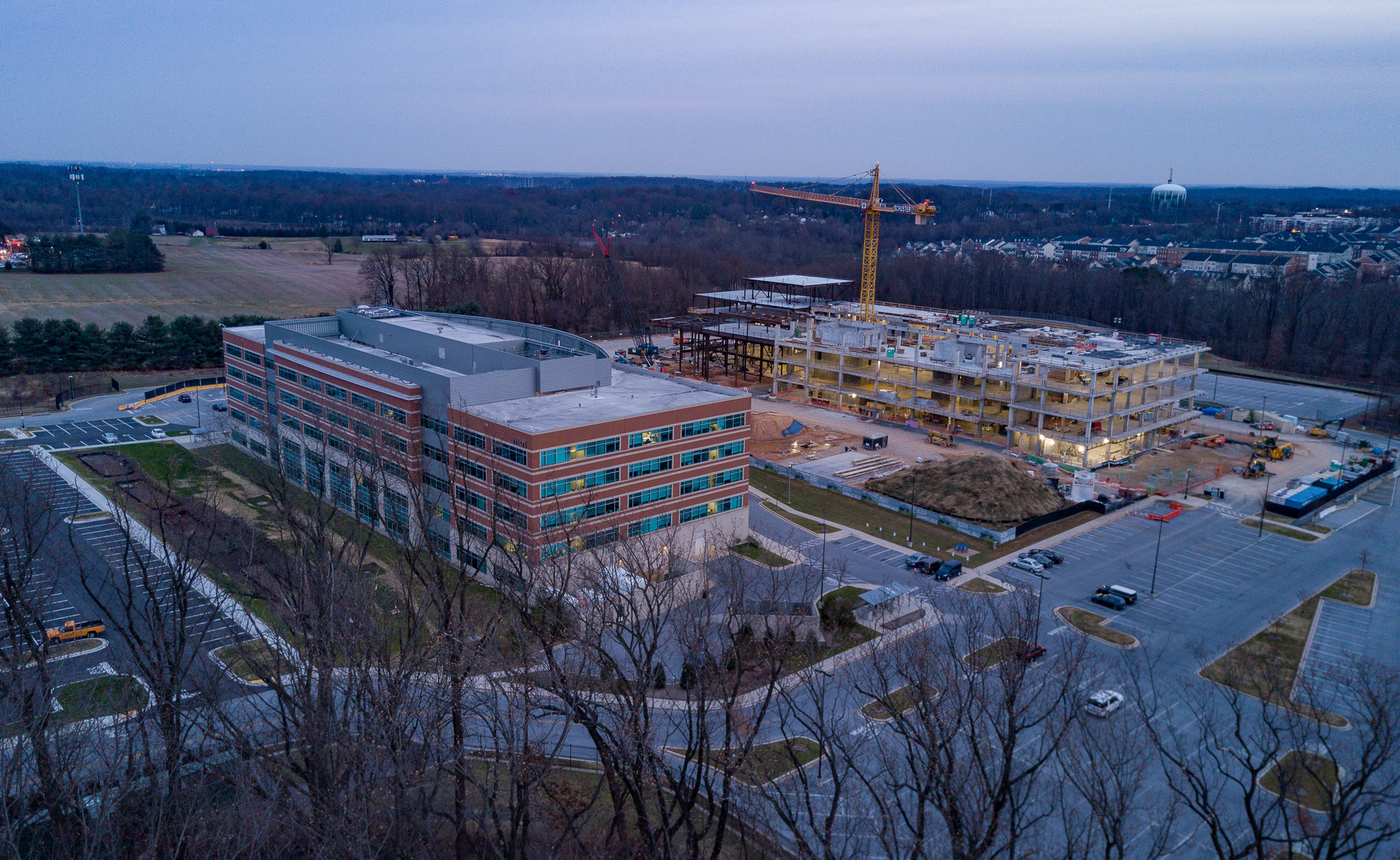
| New building -- Building 201! -- going up next to Building 200. Recently, a non-space friend of mine visited NASA's Goddard Spaceflight Center. "But I have one question for you. Why do they just name all the buildings after numbers? Can they really not come up with good names for them, and do people really prefer to use numbers?" |

| Behind APL is the subdivision of Maple Lawn; to the left is a legitimate agricultural operation. |
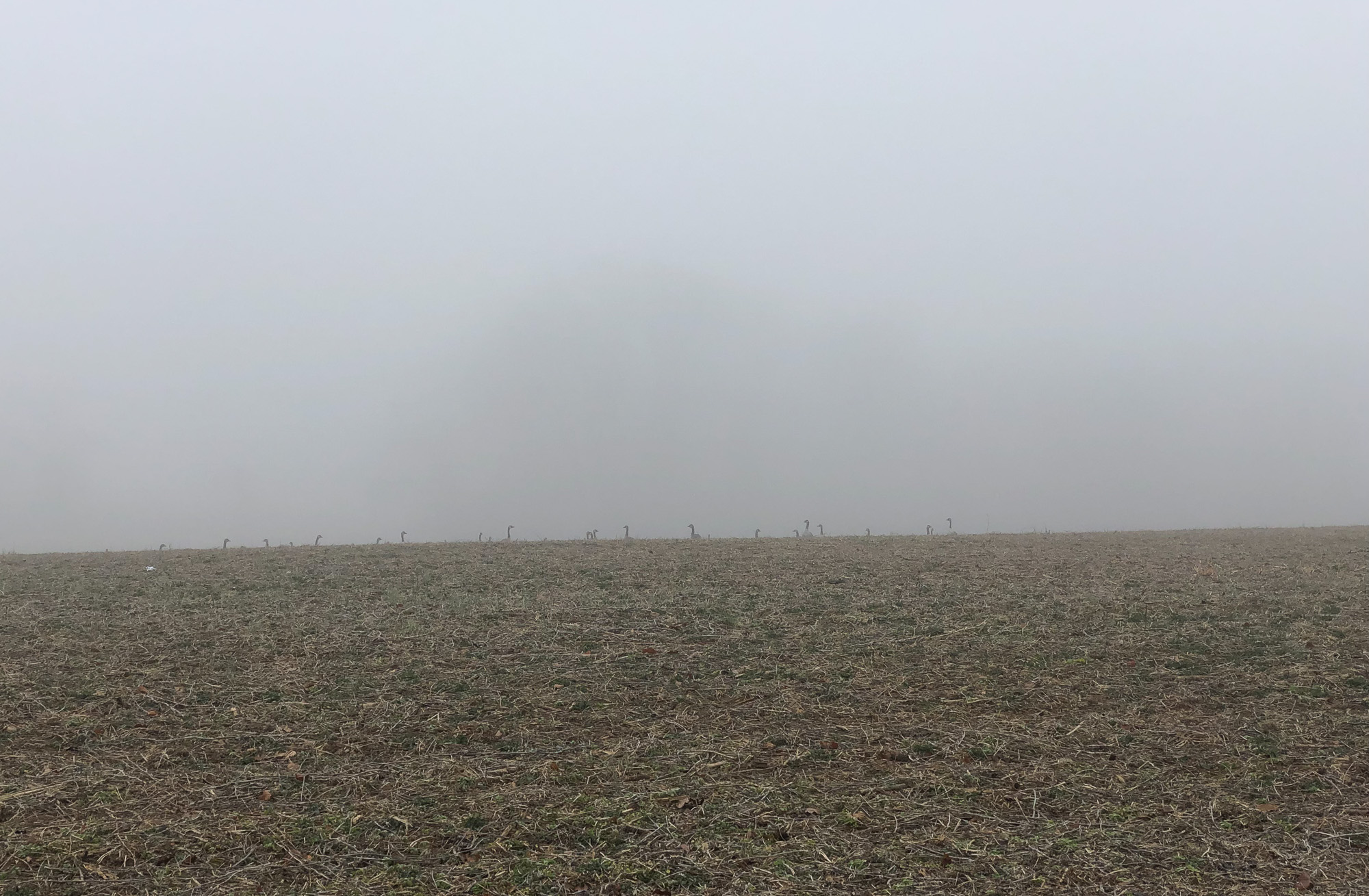
| Geese in the field next to APL! Despite being the headquarters of New Horizons, NEAR, Solar Probe, and countless other space missions, APL is still in a semi-rural location, with a lot of agriculture nearby. |
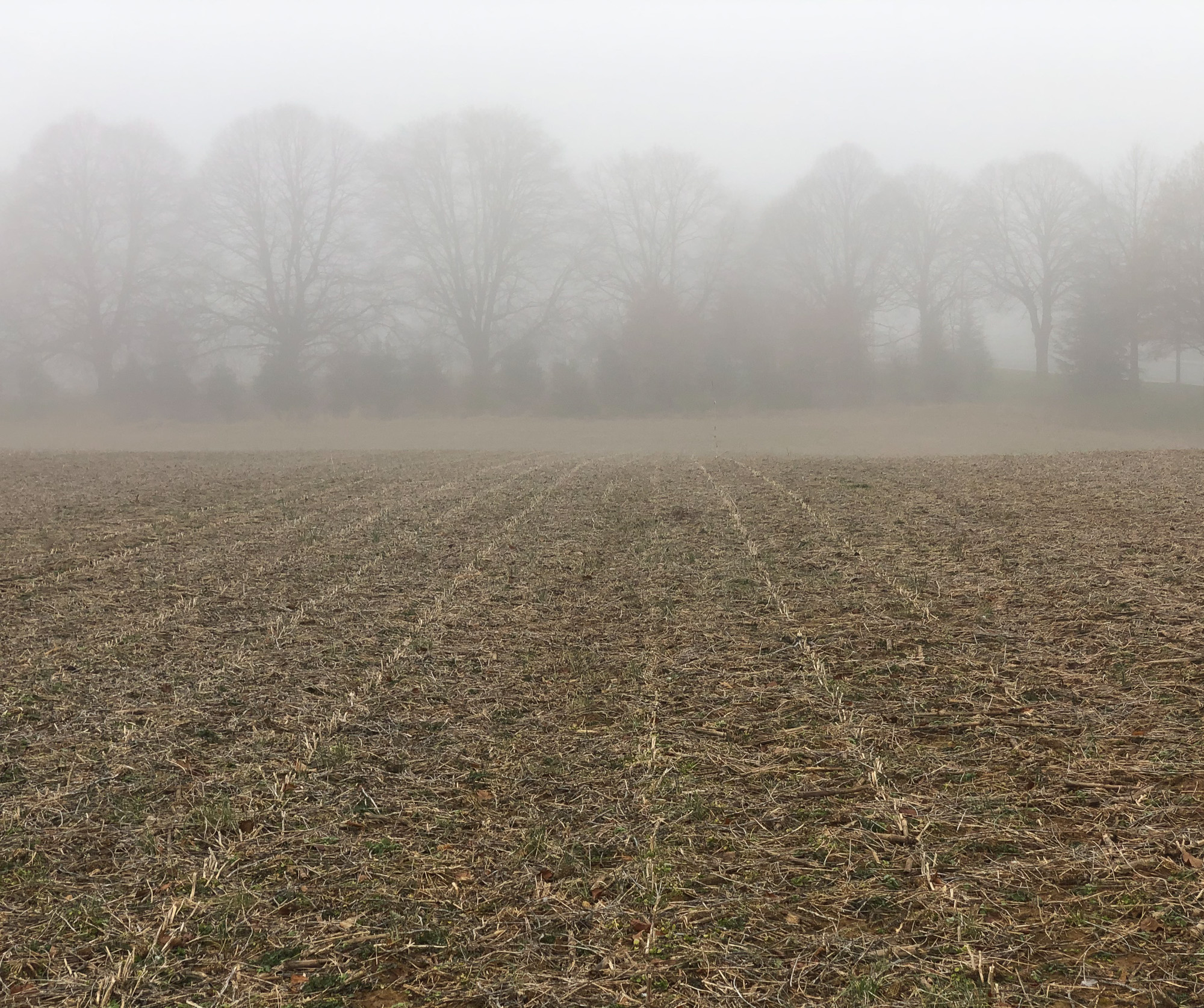
| Morning fog walking to the lab! |
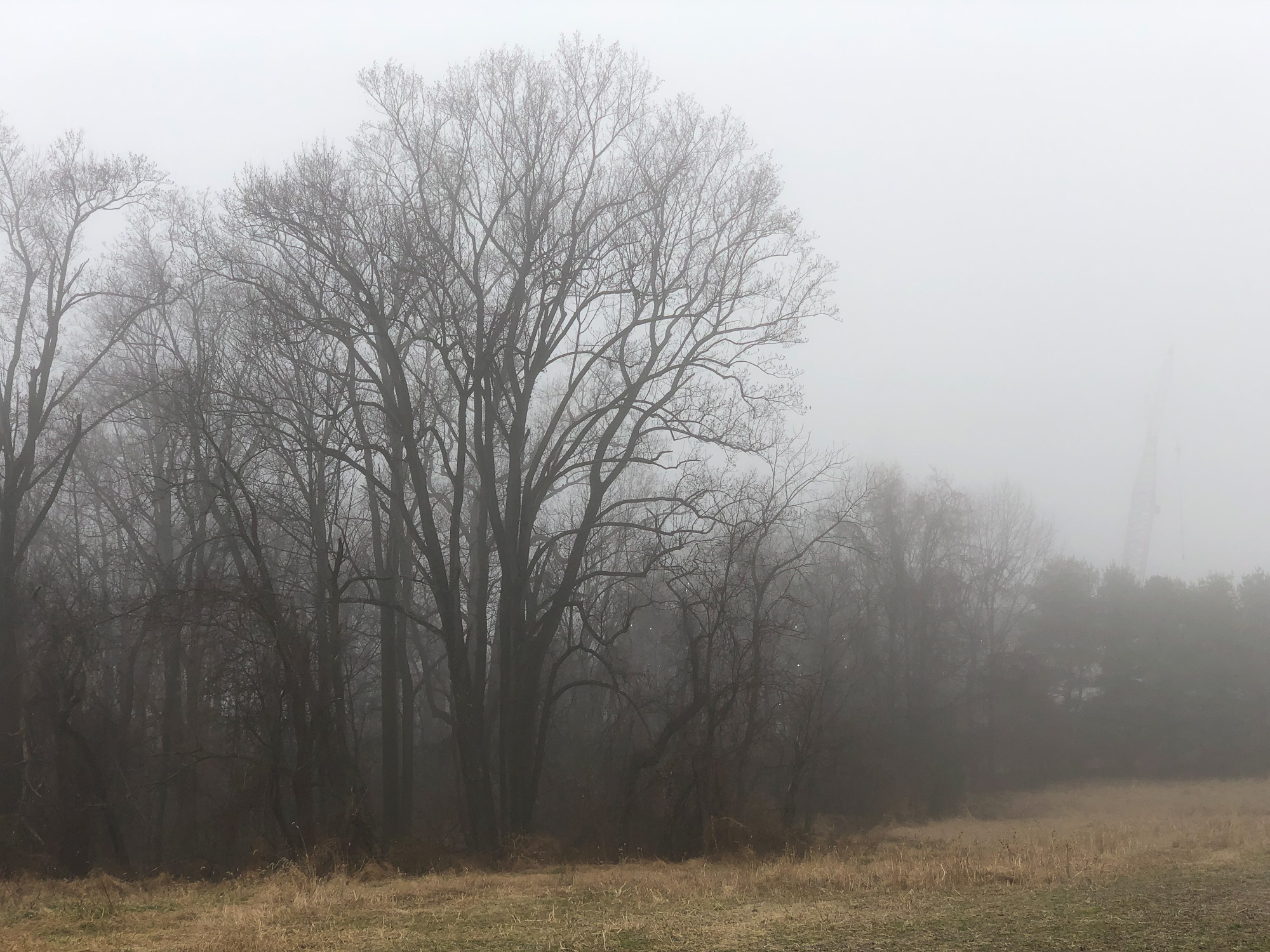
| Light and crane from the new building, seen from the trees next door. |
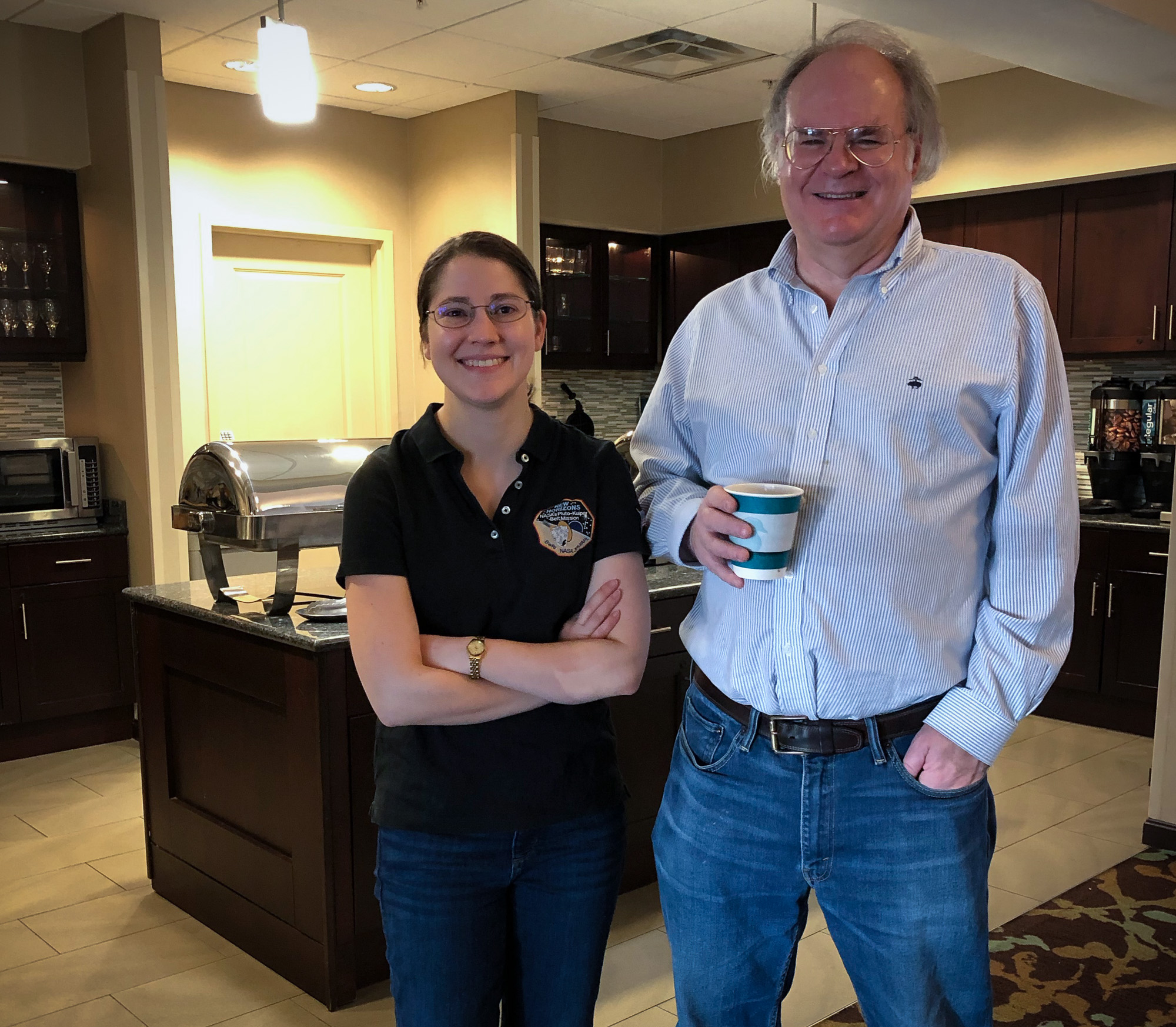
| The Homewood Suites next to APL was supposed to be open for business well before the 2015 Pluto encounter. That deadline came and went, so the team ended up staying six miles away in Columbia. Fortunately now the Homewood is open, and we have a nice walkable hotel with at least a two-sigma breakfast bar. |
Back to work
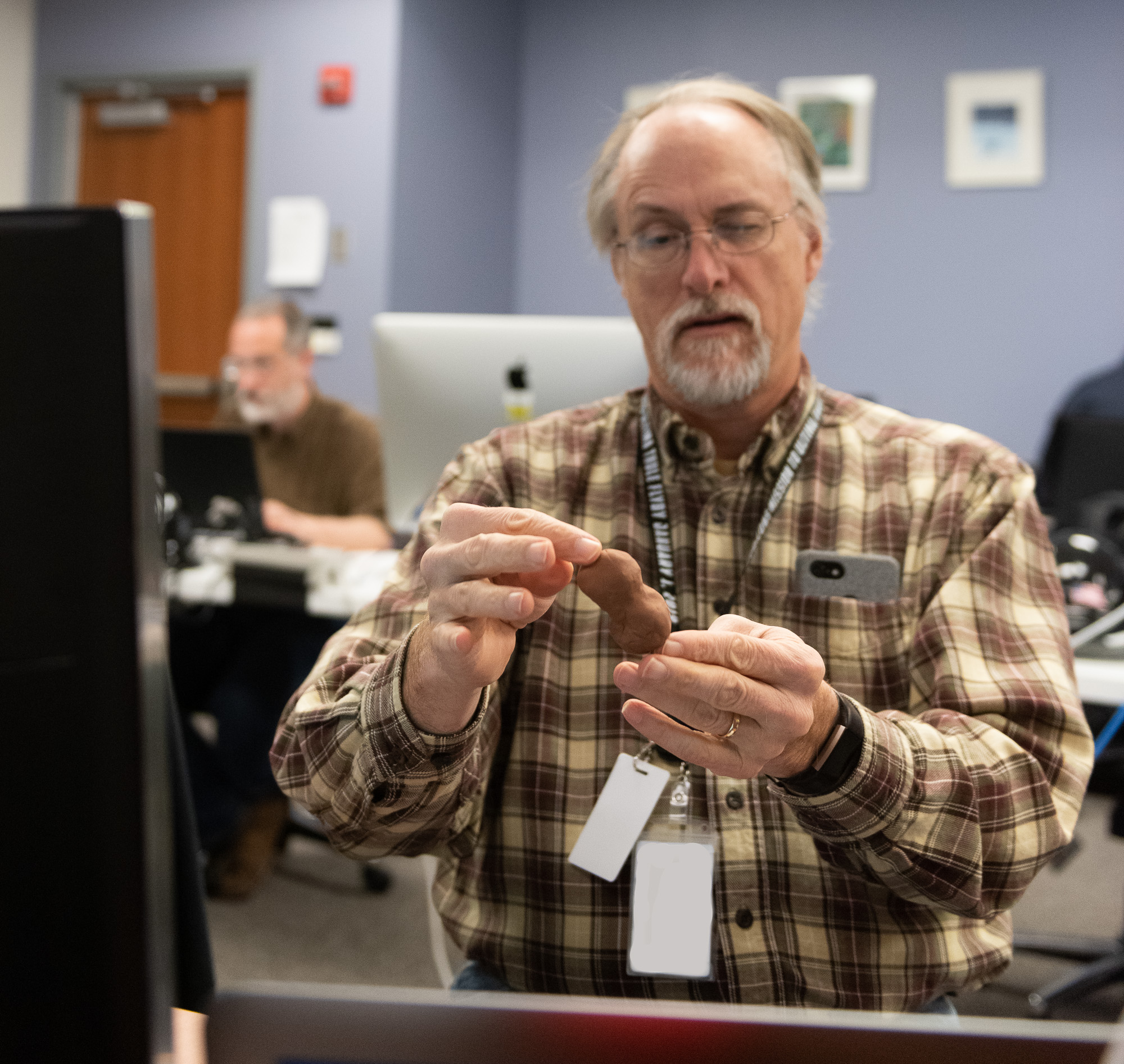
| Marc Buie gets his sculpting tools, and starts making MU69 models. This isn't technically part of the Hazards work, but we were analyzing unresolved images, so we may as well make rotational light curves. |
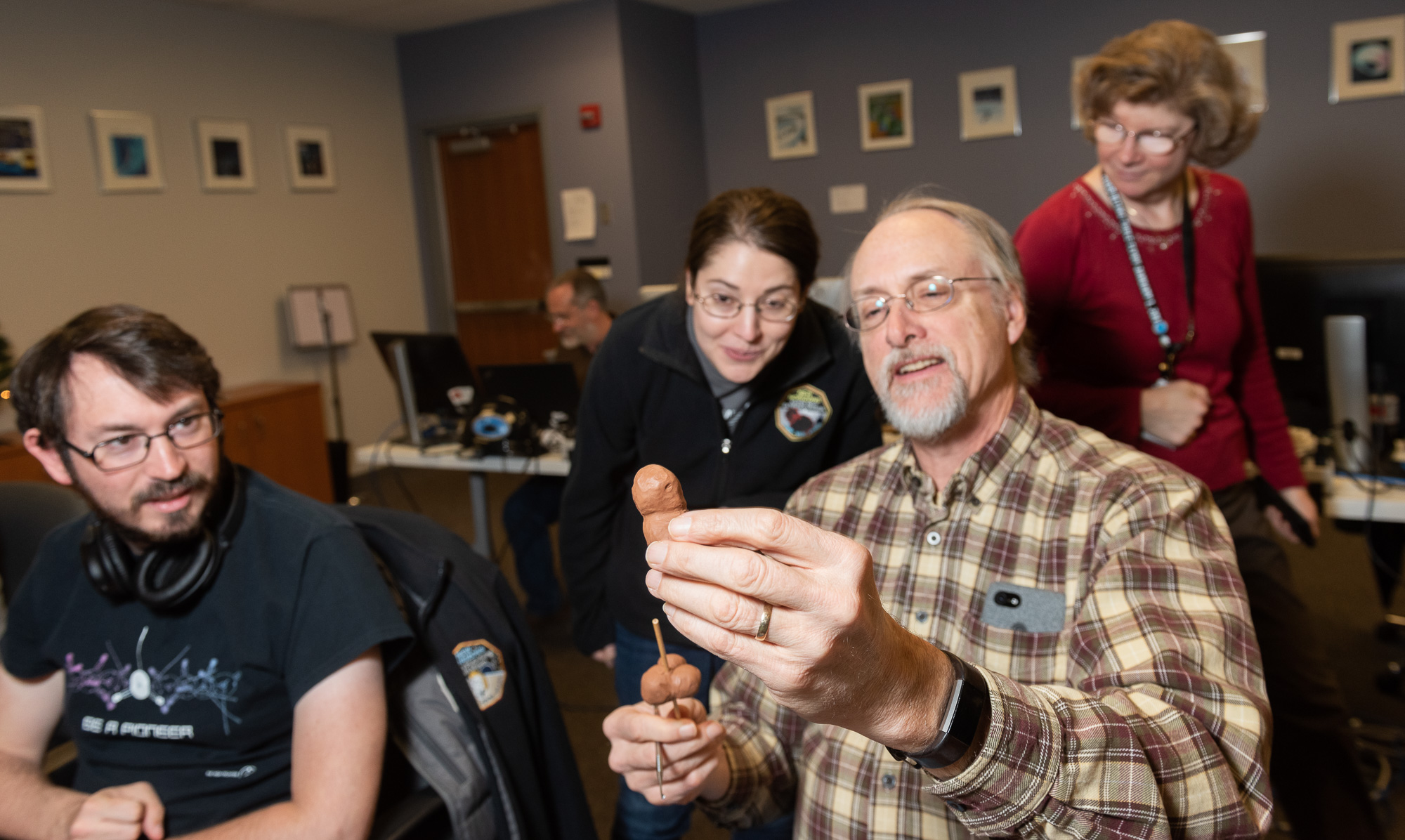
| Simon, Amanda, and Anne -- all veterans of multiple MU69 occultation campaigns -- give Marc input on fits to the light curves and occultation data. |
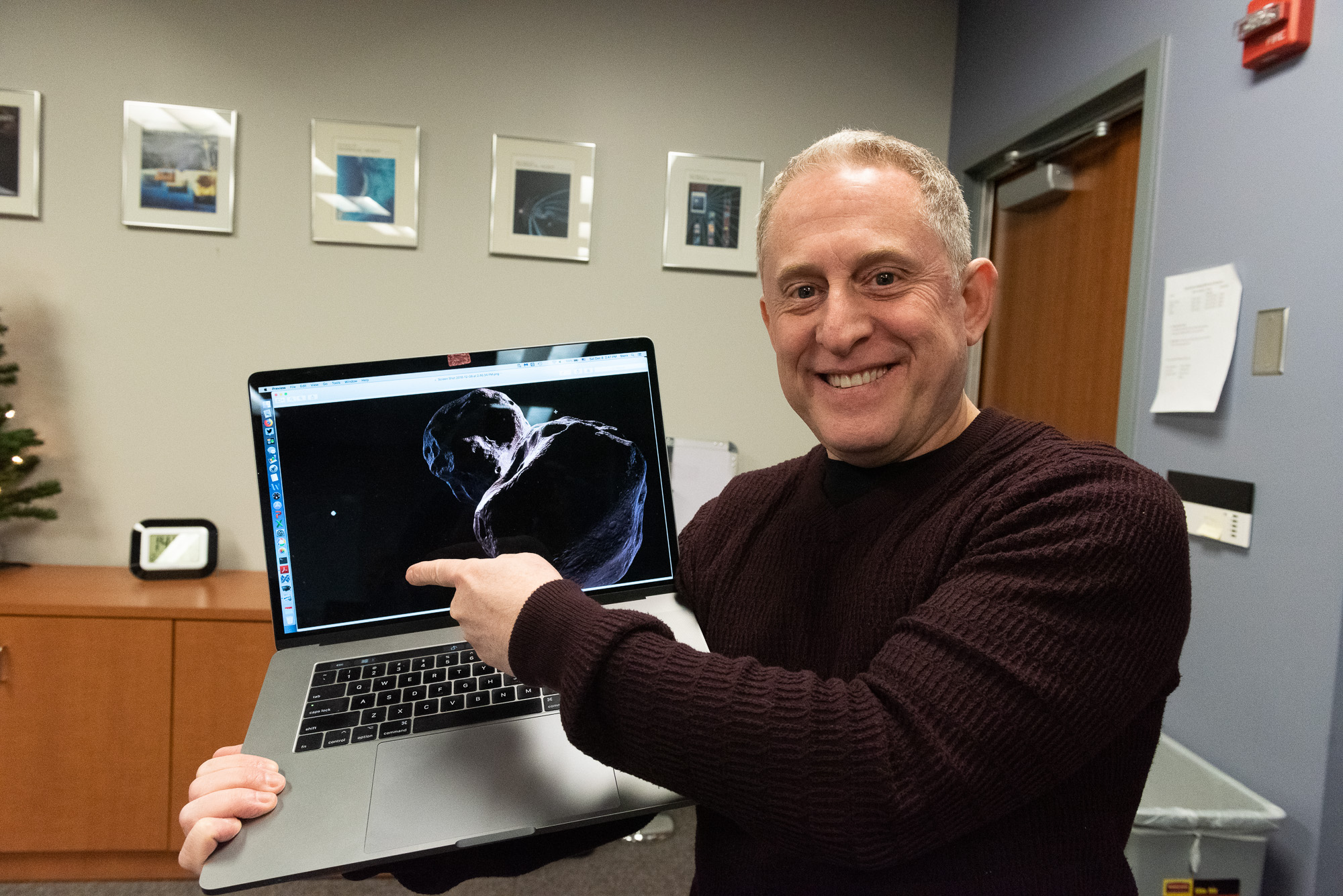
| Alan: "So I saw this article talking about how today, OSIRIS-REx got to 'the giant asteroid Bennu'. You want to see a giant asteroid? Here's 500-meter Bennu on the left, to the same scale as Ultima on the right." |
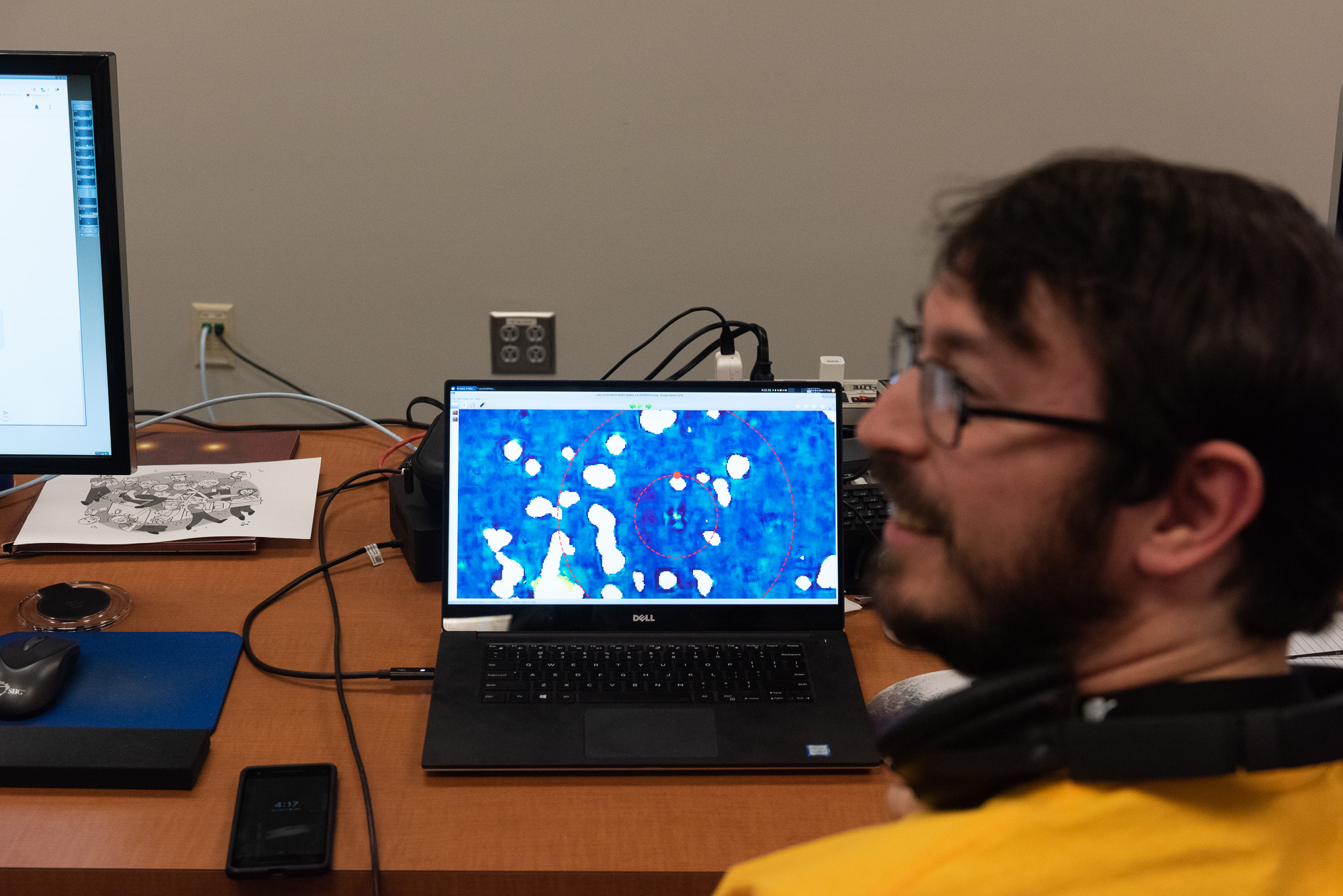
| Simon Porter with his latest image stack. Blue is the background level, roughly 0 DN +- 1e-6. White are masked stars, and the red lines are sunflower orbits around MU69. |
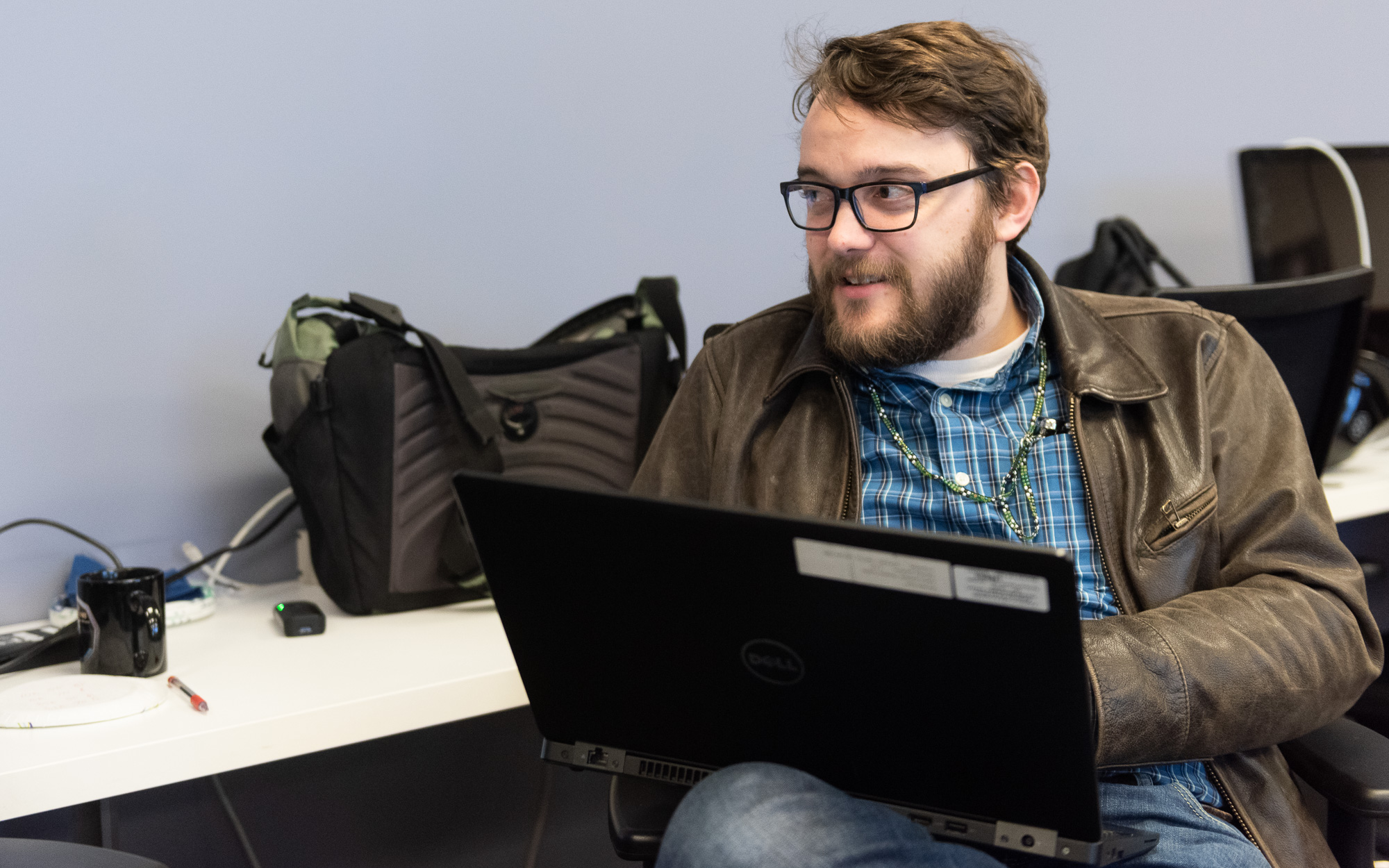
| Thomas Mehoke. Thomas and his father Doug Mehoke did the final steps in the hazard analysis, which involved computing the actual damage to the spacecraft given a certain impator flux. |
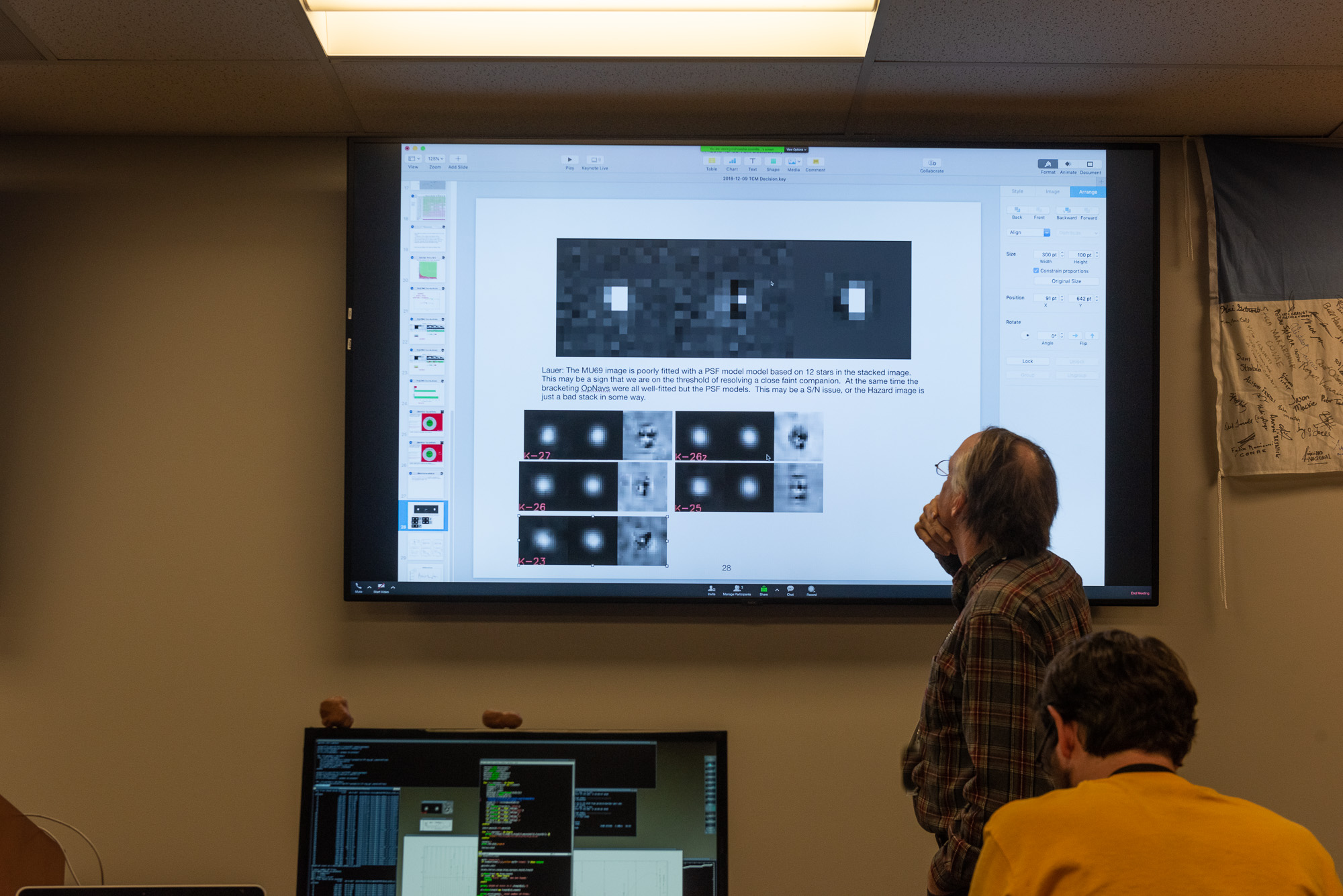
| Marc Buie examines a very carefully worded slide about MU69's PSF. The subtext here that we all want to know the answer to: "Does MU69 have a moon??" Though by a week later, the same strange PSF hadn't come back, so we had no ongoing evidence for a distant moon. Evidence for any close moons won't come until much later -- here, we're still at a resolution of 600 km per 4x4 LORRI pixel. |
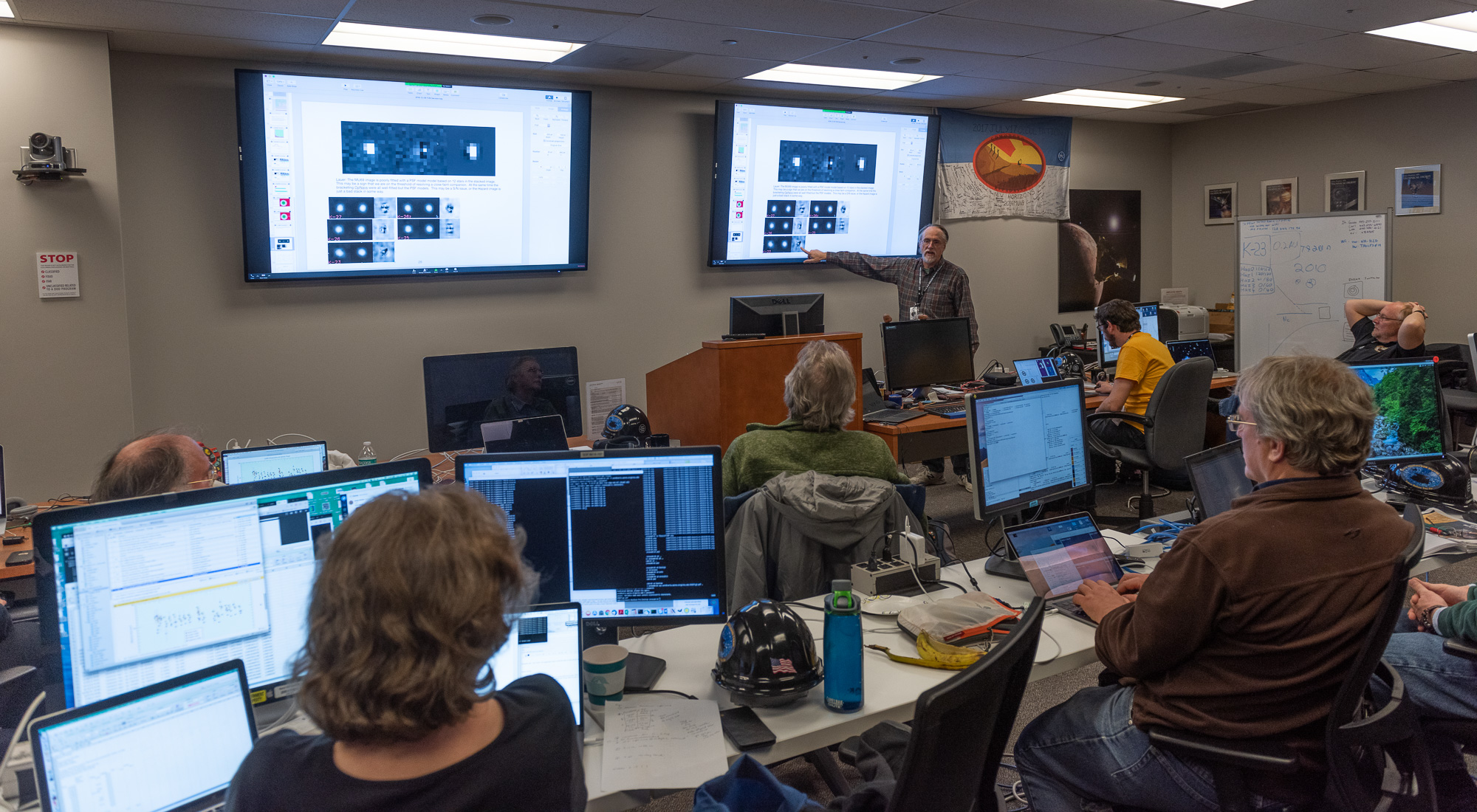
| Marc and the group talk about PSFs. |
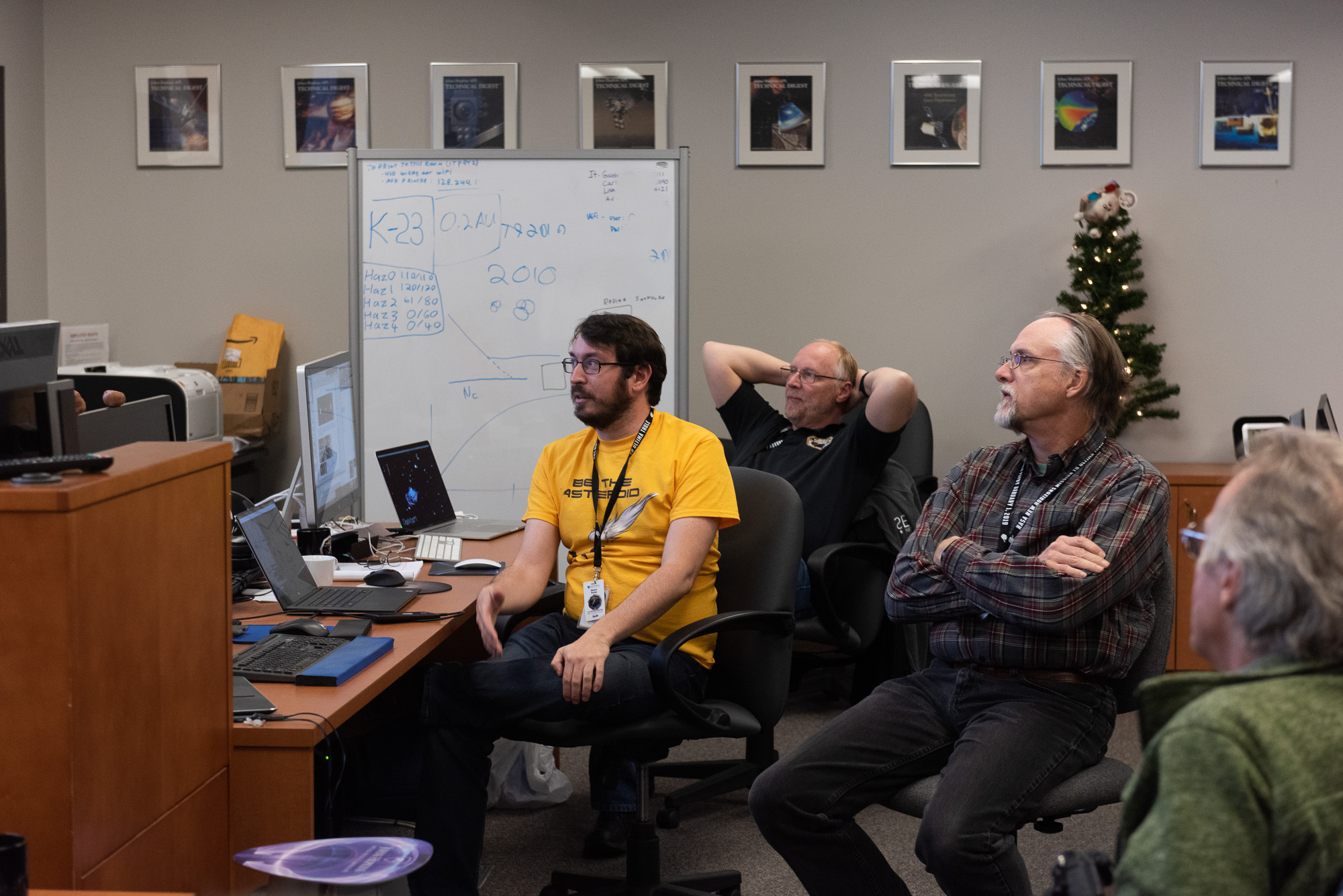
|
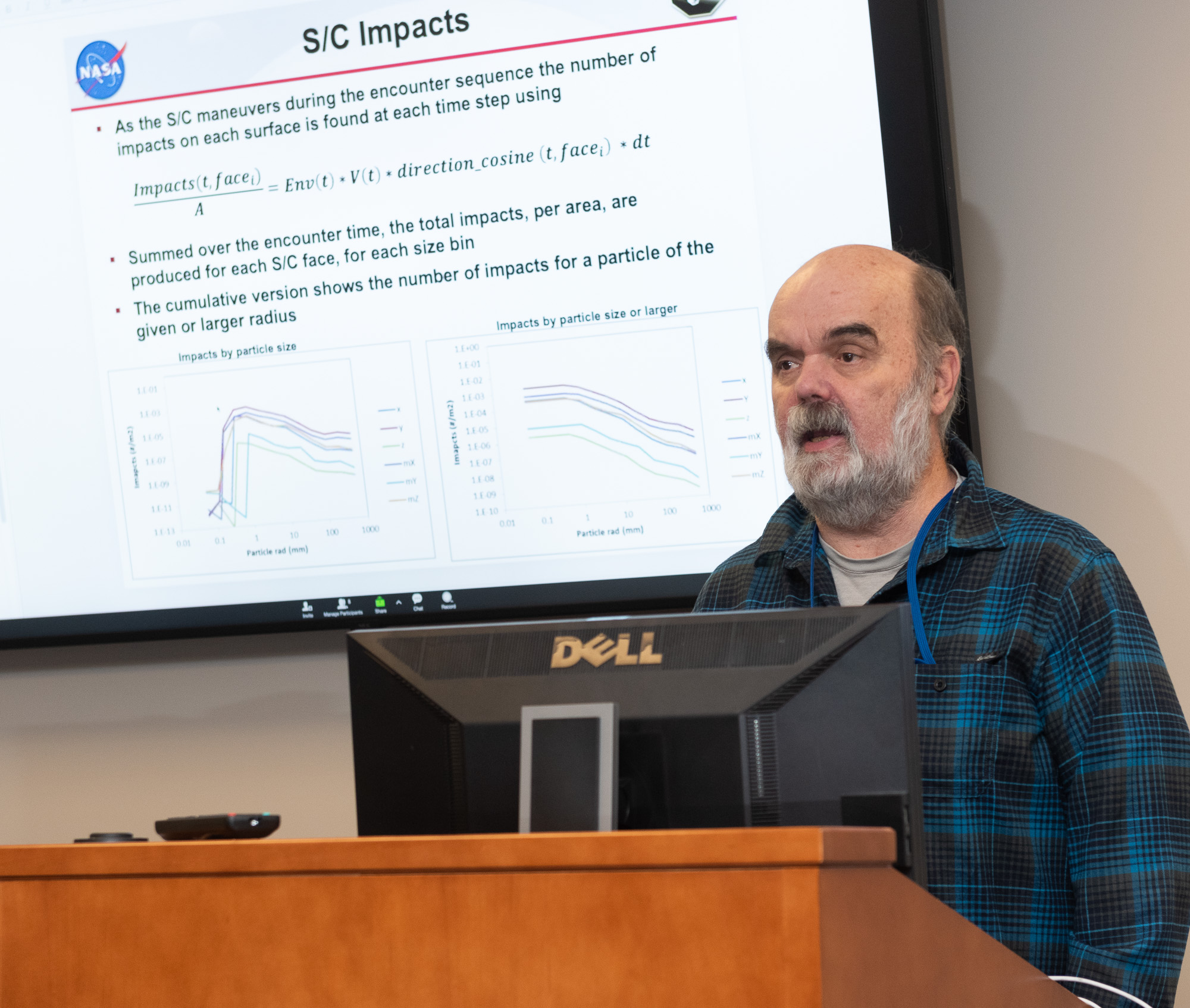
| Doug Mehoke gets the entire hazard team up to speed on damage probabilities. |
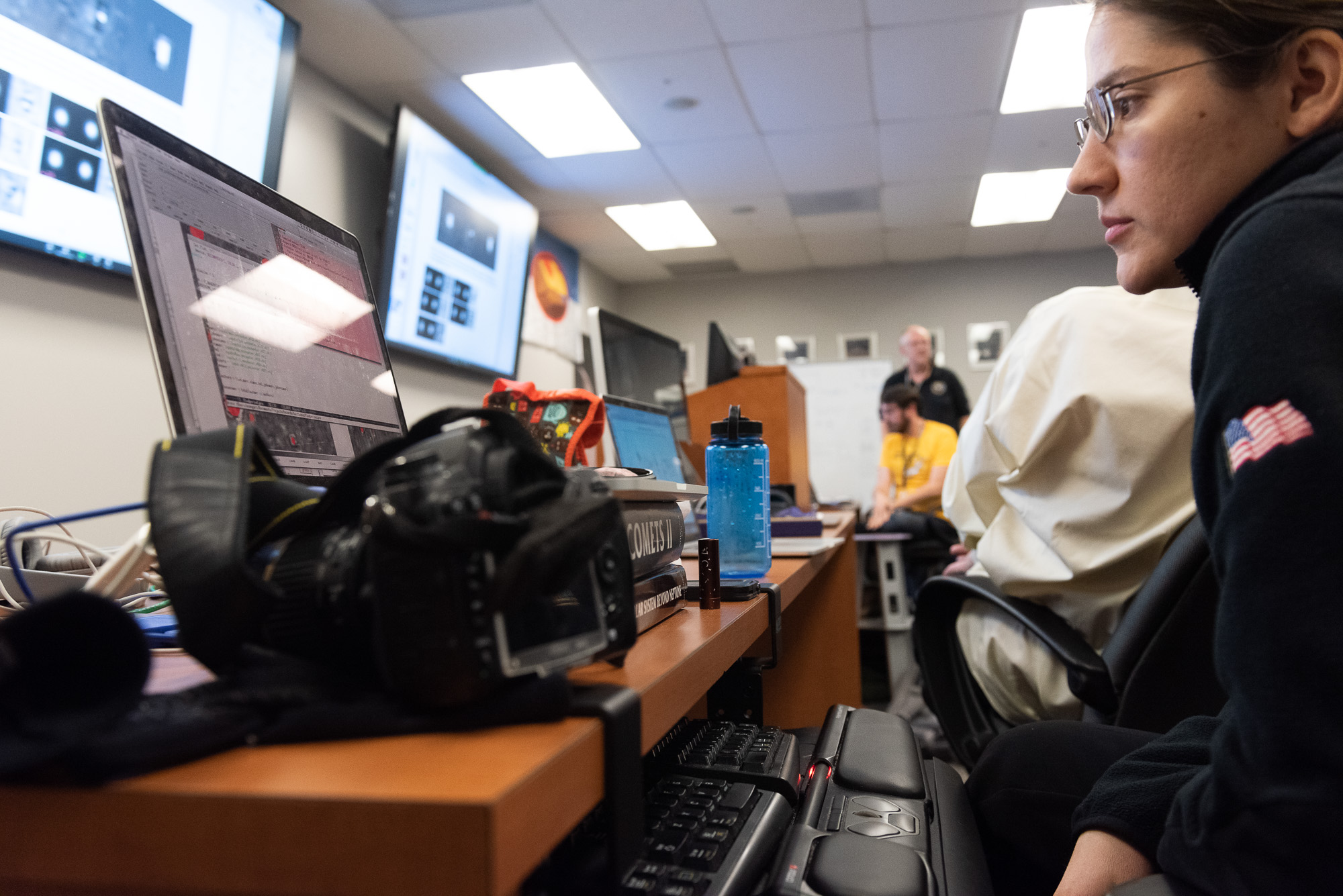
| Amanda Zangari really wants to plot your light curves and astrometry! |
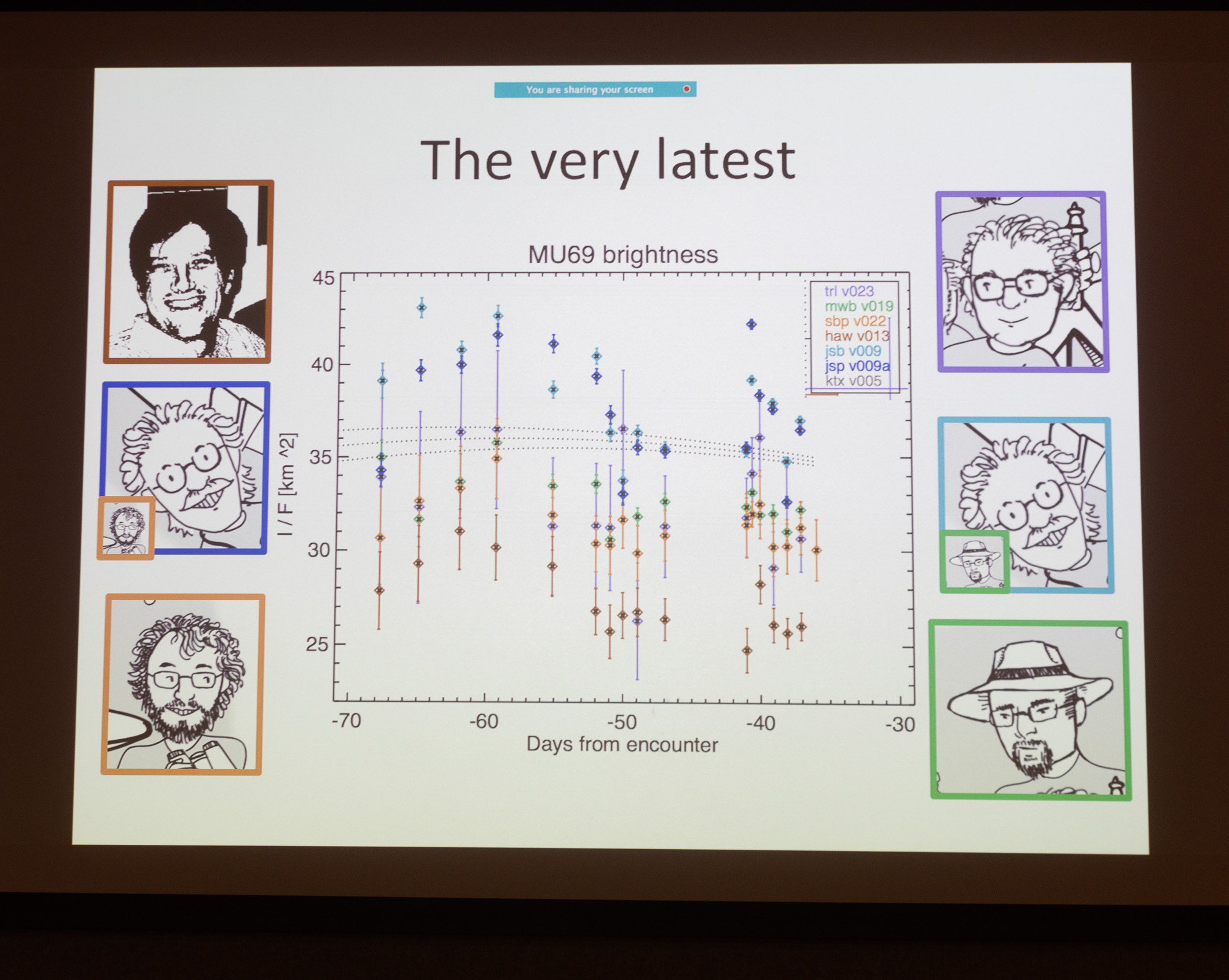
| And check out Amanda's latest plots! This time they're color-coded to indicate the author. Artwork is by Tod Lauer's daughter, Sandra Muller. Clockwise from 2 PM, that's Tod, John/Marc, Marc, Simon, John/Simon, and Hal. |
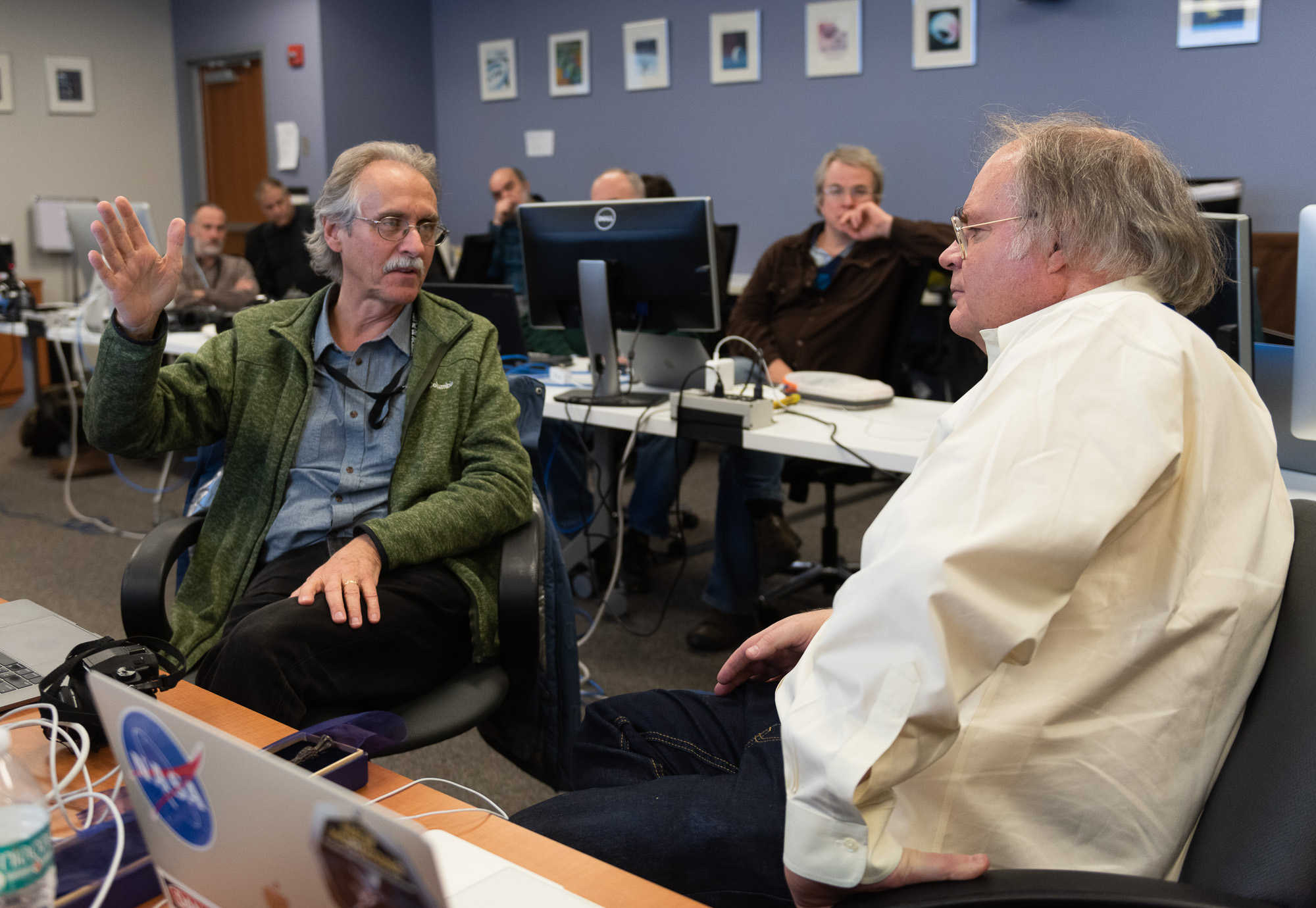
| John Spencer and Tod Lauer. |
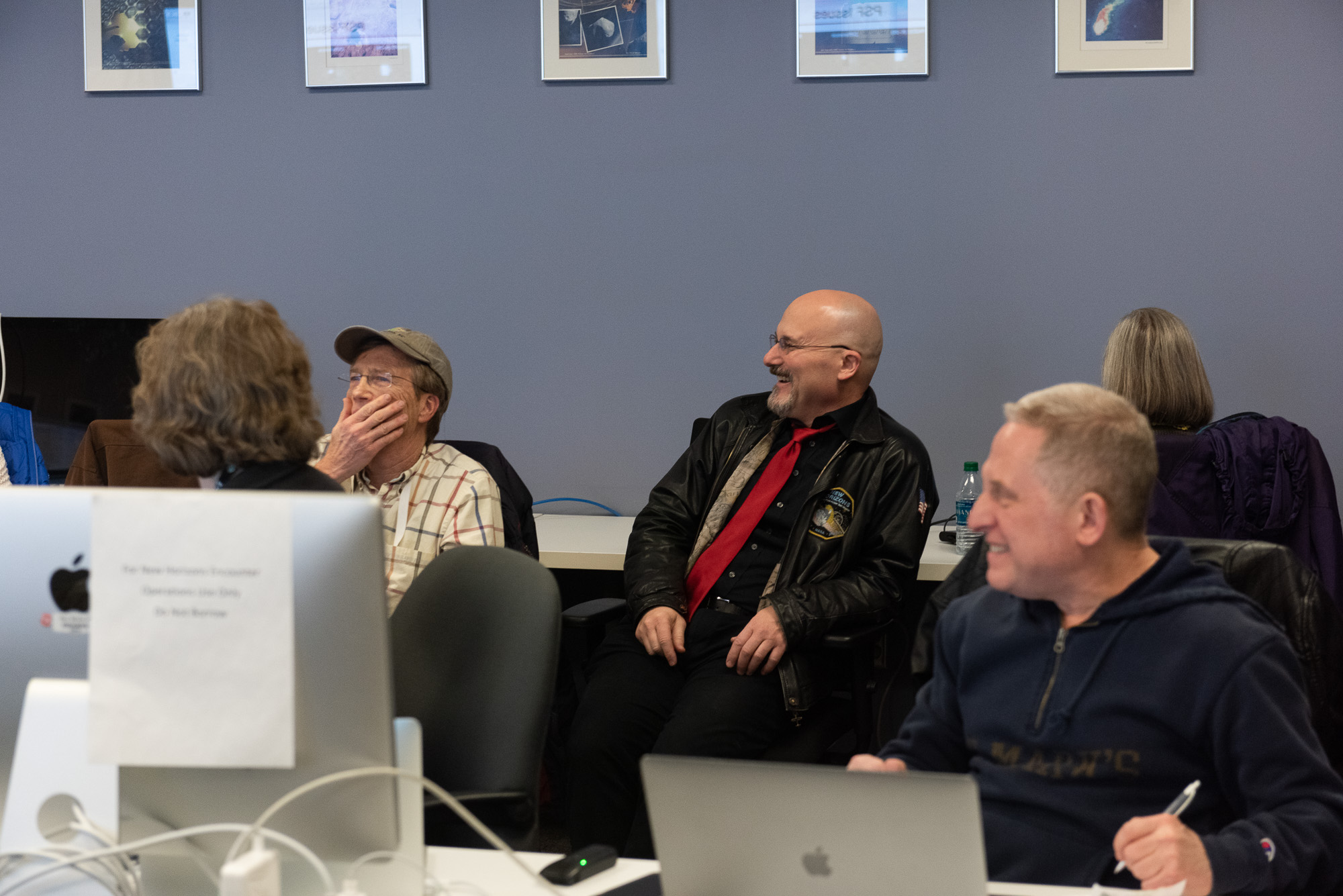
| Chris Hersman in the fashionable red tie. |
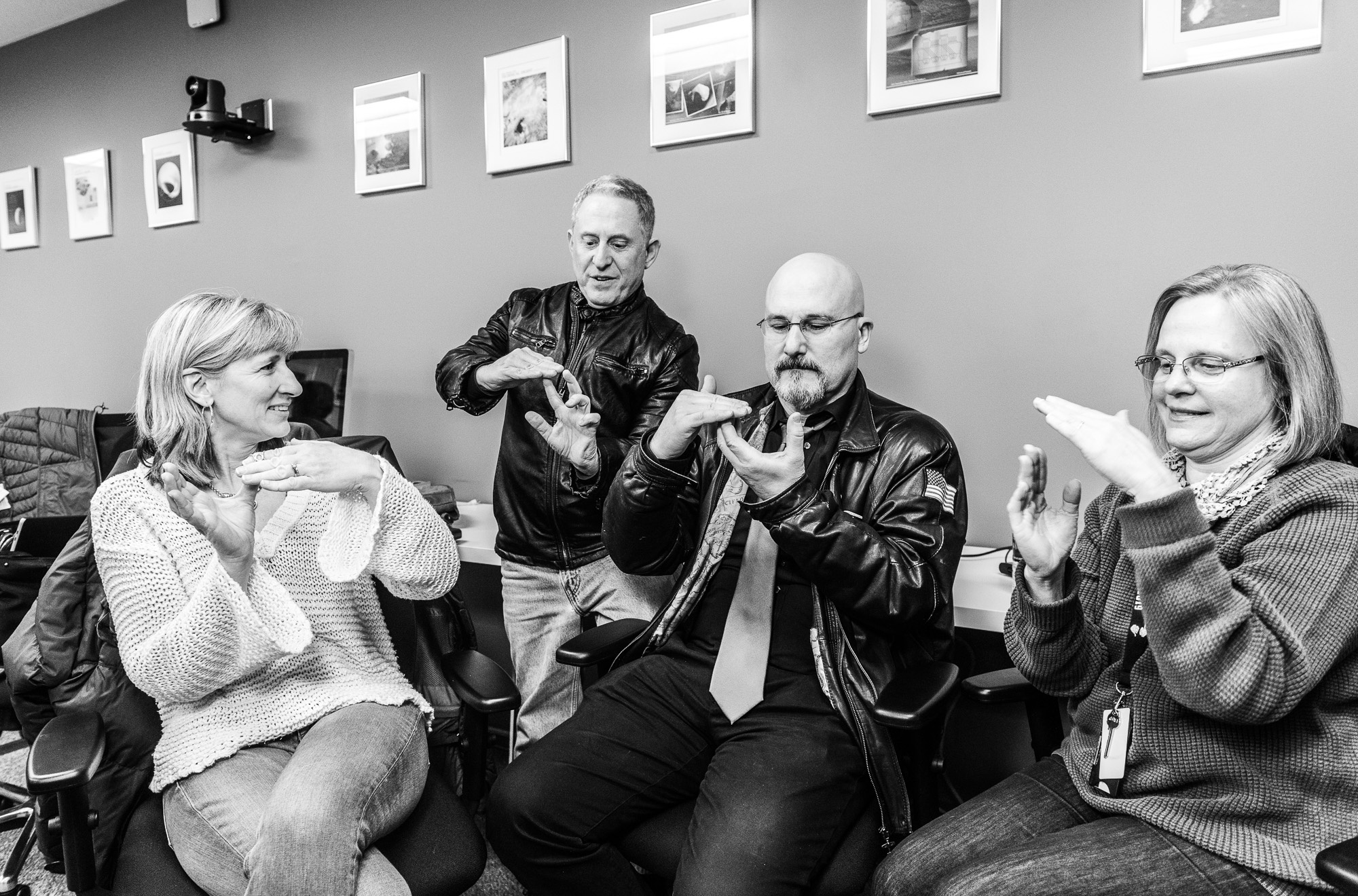
| Alan: "I tell you what... let's do the Ultima Thule symbol. It's really easy... it's a U and a T. Some guy on Facebook showed it to me." |
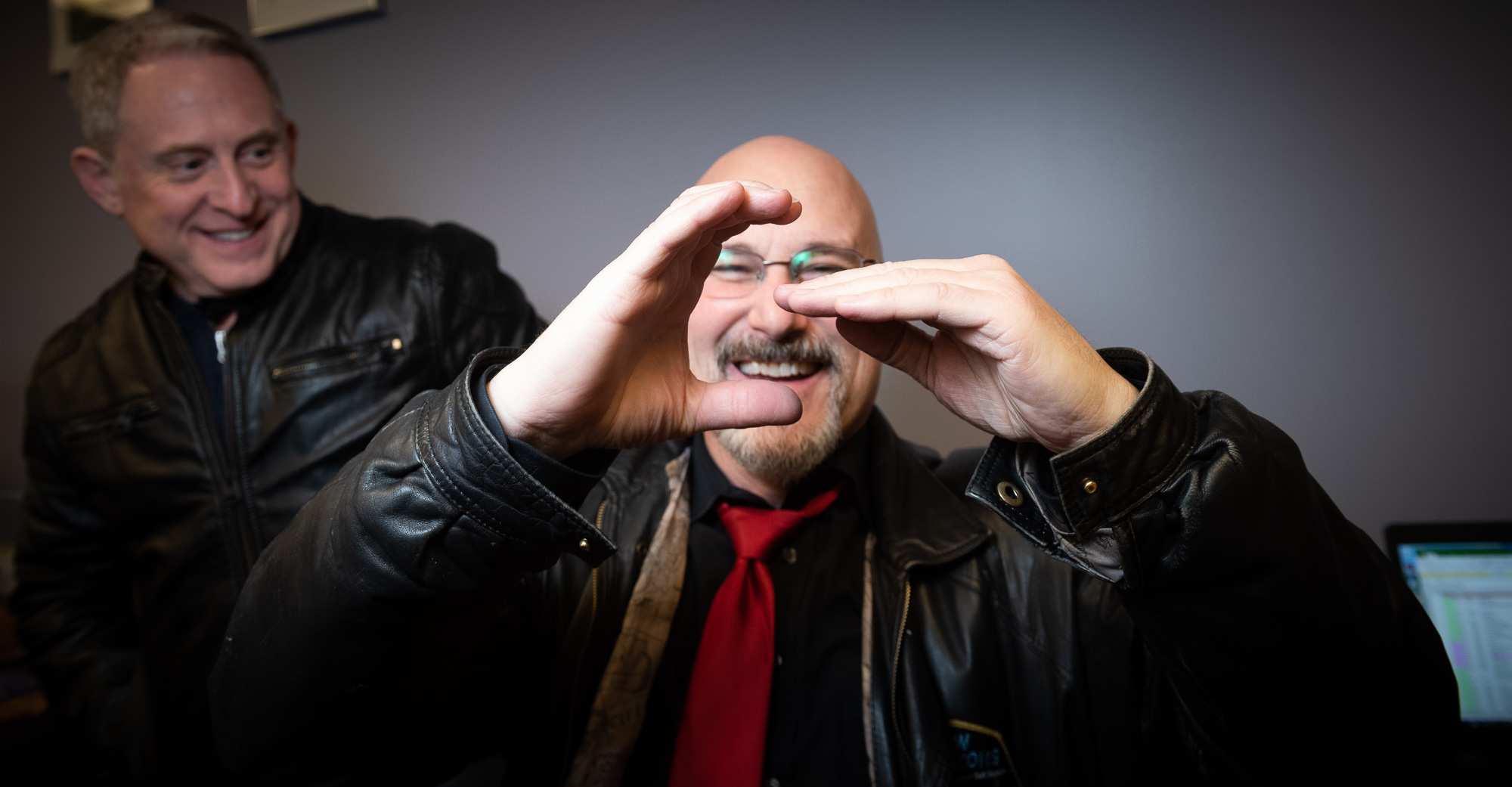
| Chris Hersman comes up with something. I don't know what it is, but it's not MU69, or Pluto. Guess we gotta find a new target! |
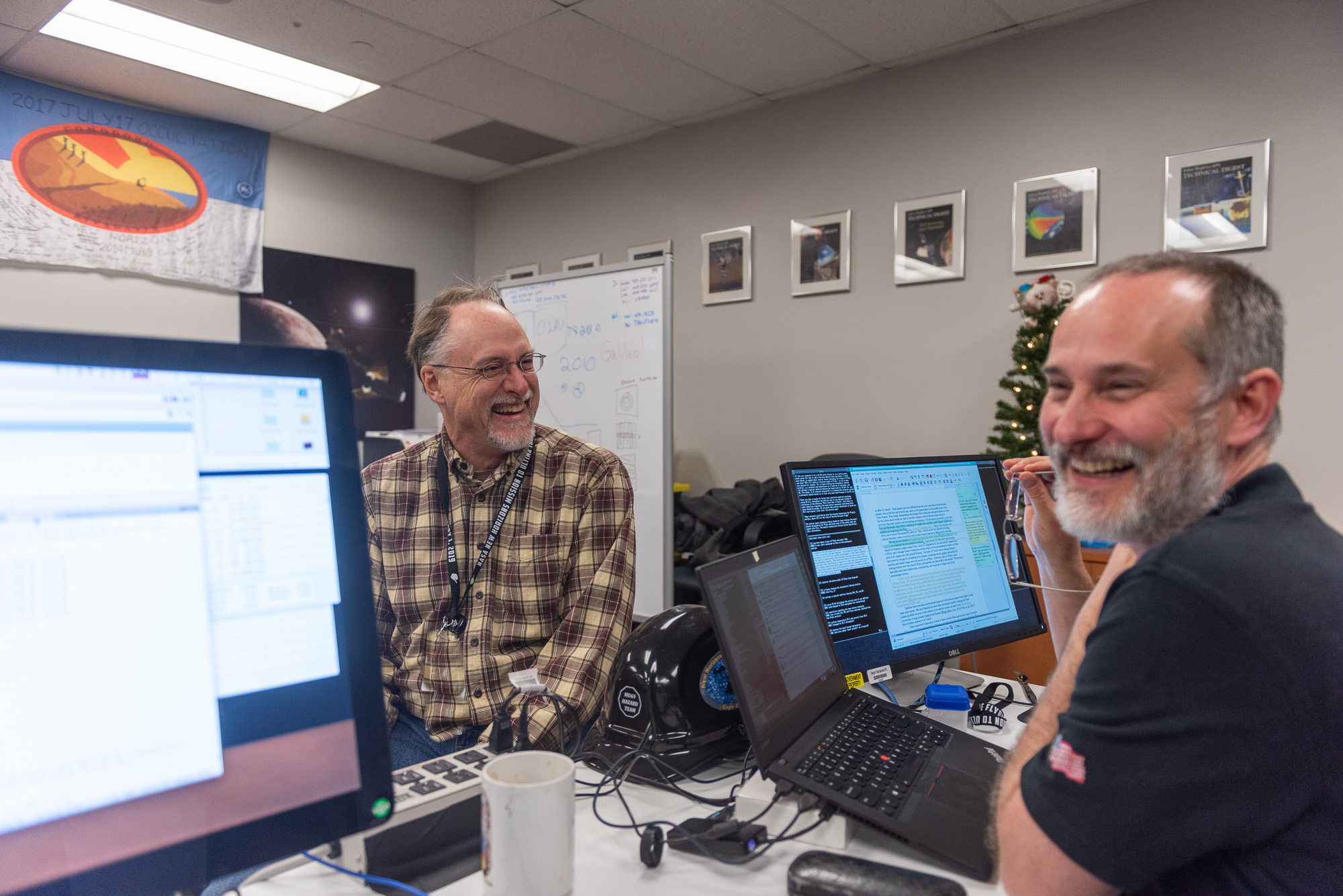
| Marc Buie and Will Grundy. |
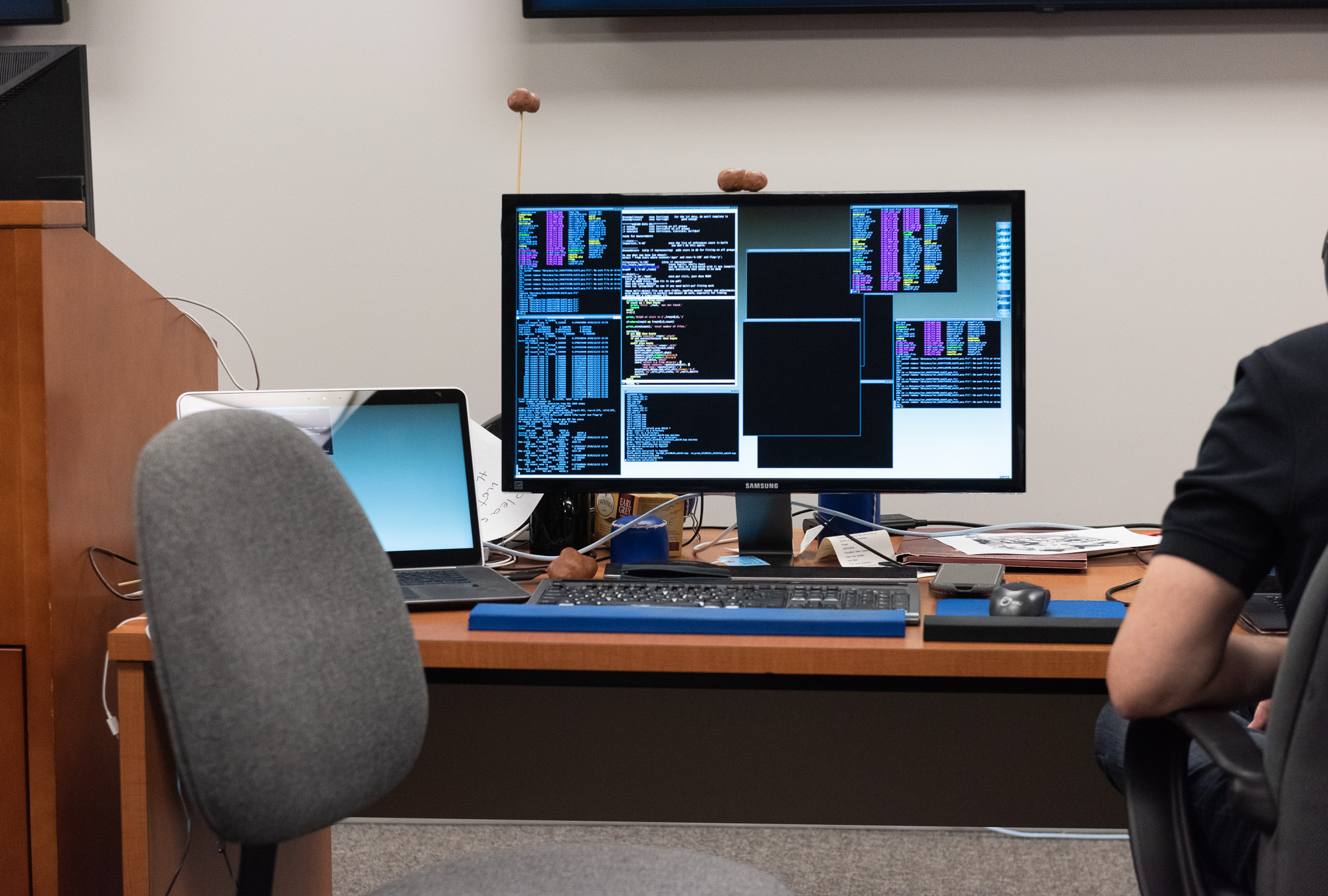
| Marc Buie's computer, with his three competing shape models. |
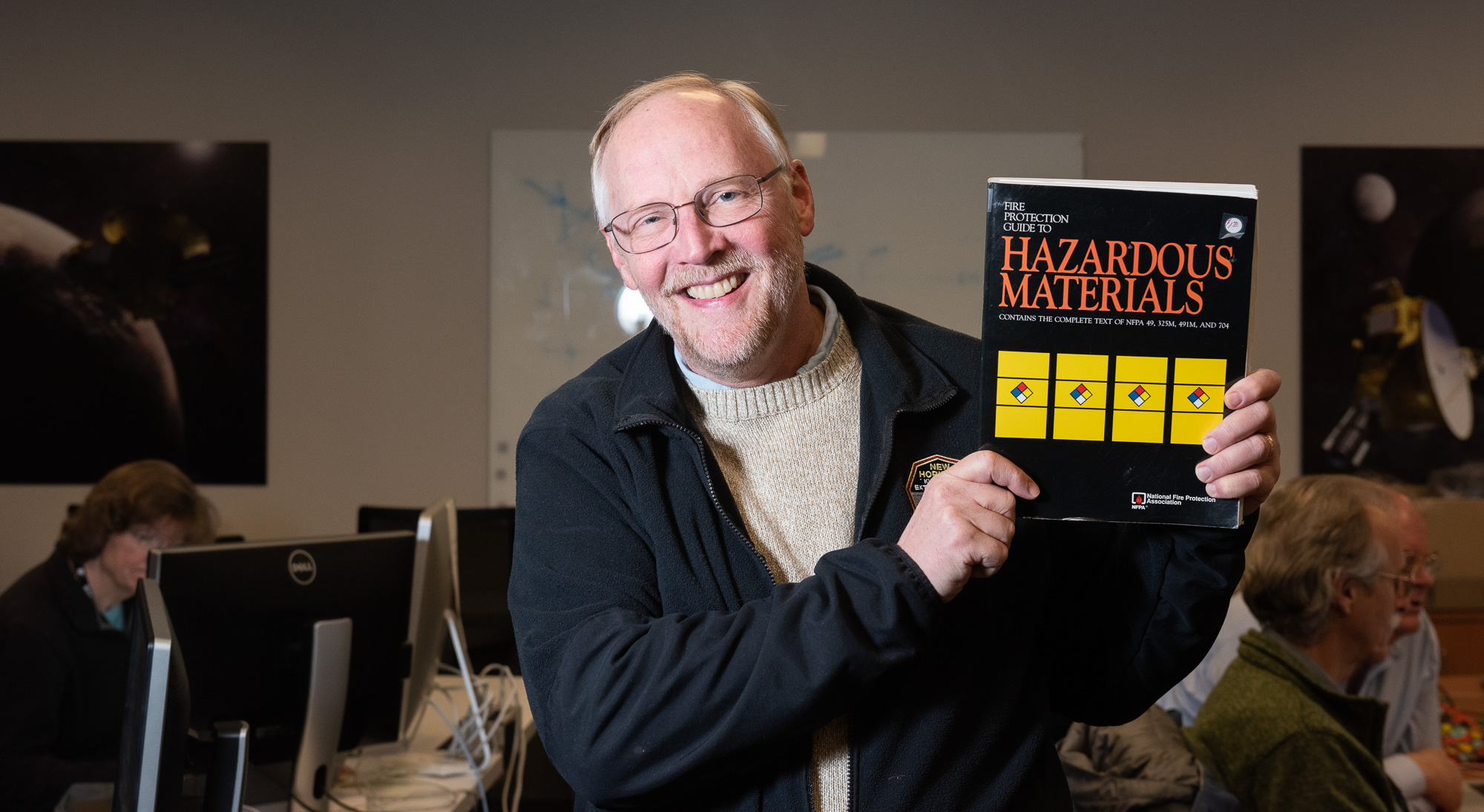
| Mark Showalter: "So, they were just disposing of books downstairs. I saw this and had to get it. Read up, everyone!" |
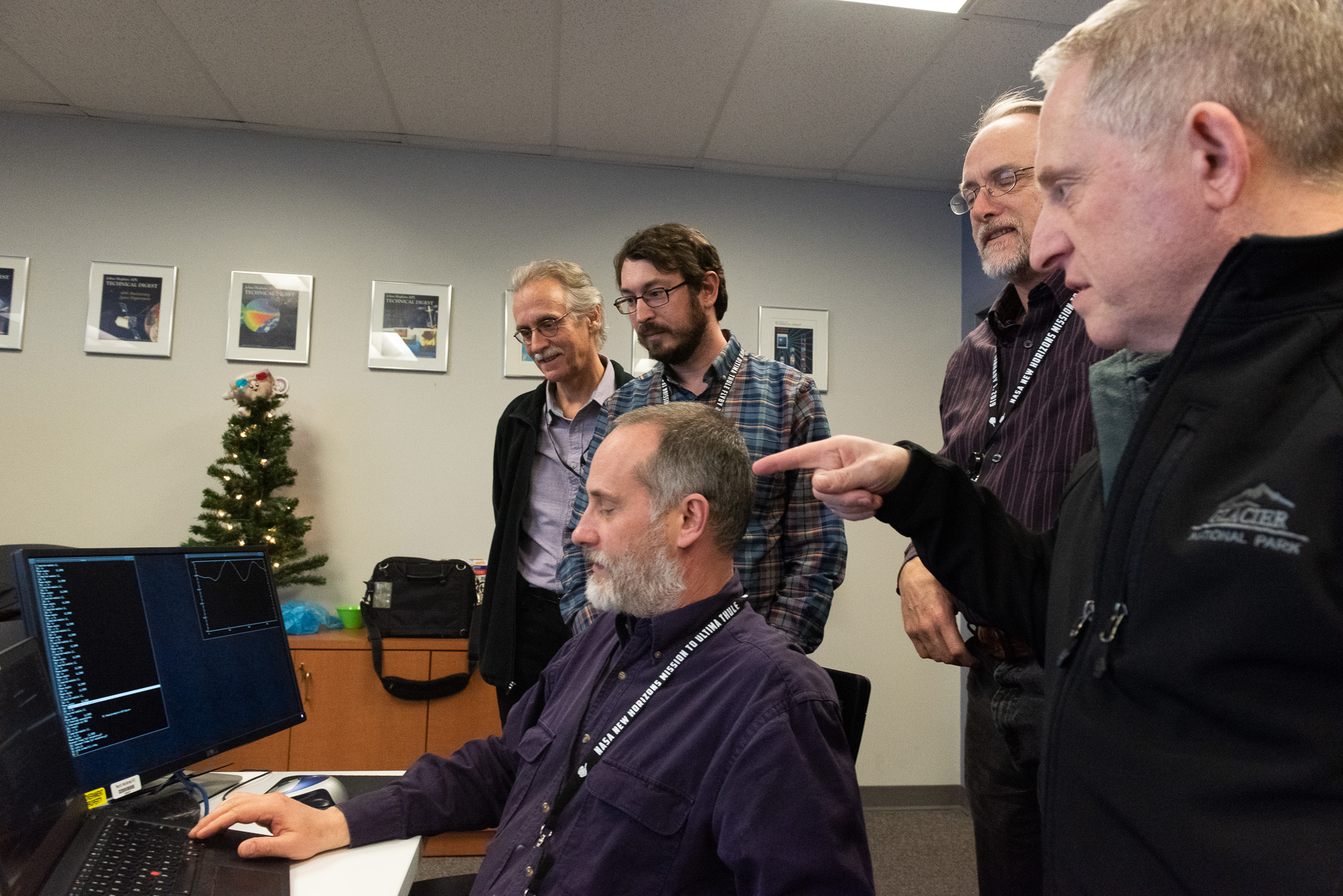
| Will Grundy is putting together light curves. |
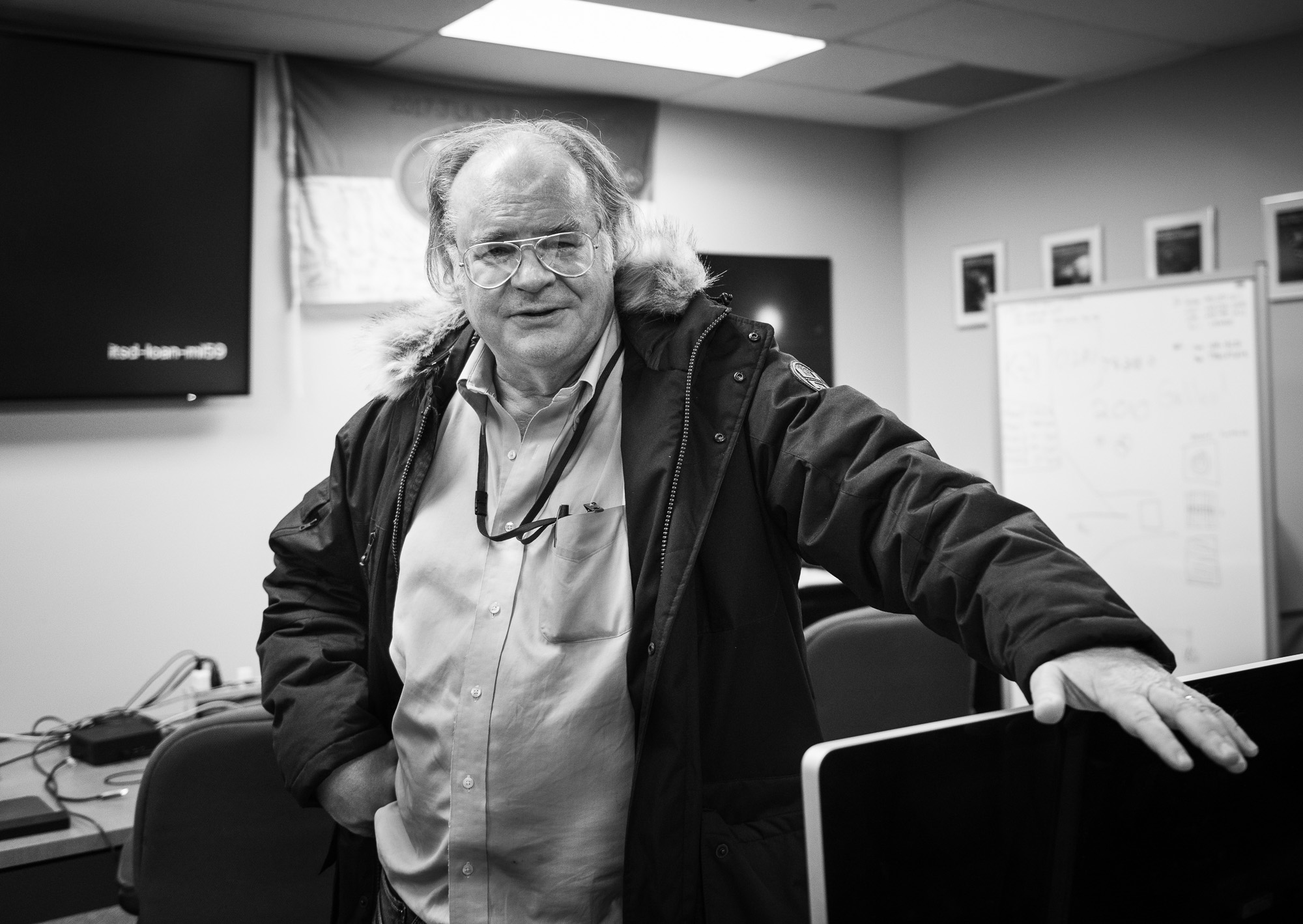
| Tod Lauer usually studies galaxies, and only got into New Horizons through a chance email to Project Scientist Hal Weaver. But his skills in analyzing and reducing CCD images have been critical to the mission, both at Pluto and en route to MU69. "You know, it hit me when I was working doing the early PSF business on Hubble. Usually on these things, there's a big team, and everyone does their part, and all the work gets done by someone. It's a chain of people, and your result gets out there somehow, by bouncing around long enough. And then I was working on my thing -- the image reconstruction -- and I thought... there is no one else! If I don't do this, no one else will do it. And if I screw it up, no one else is gonna fix it." |
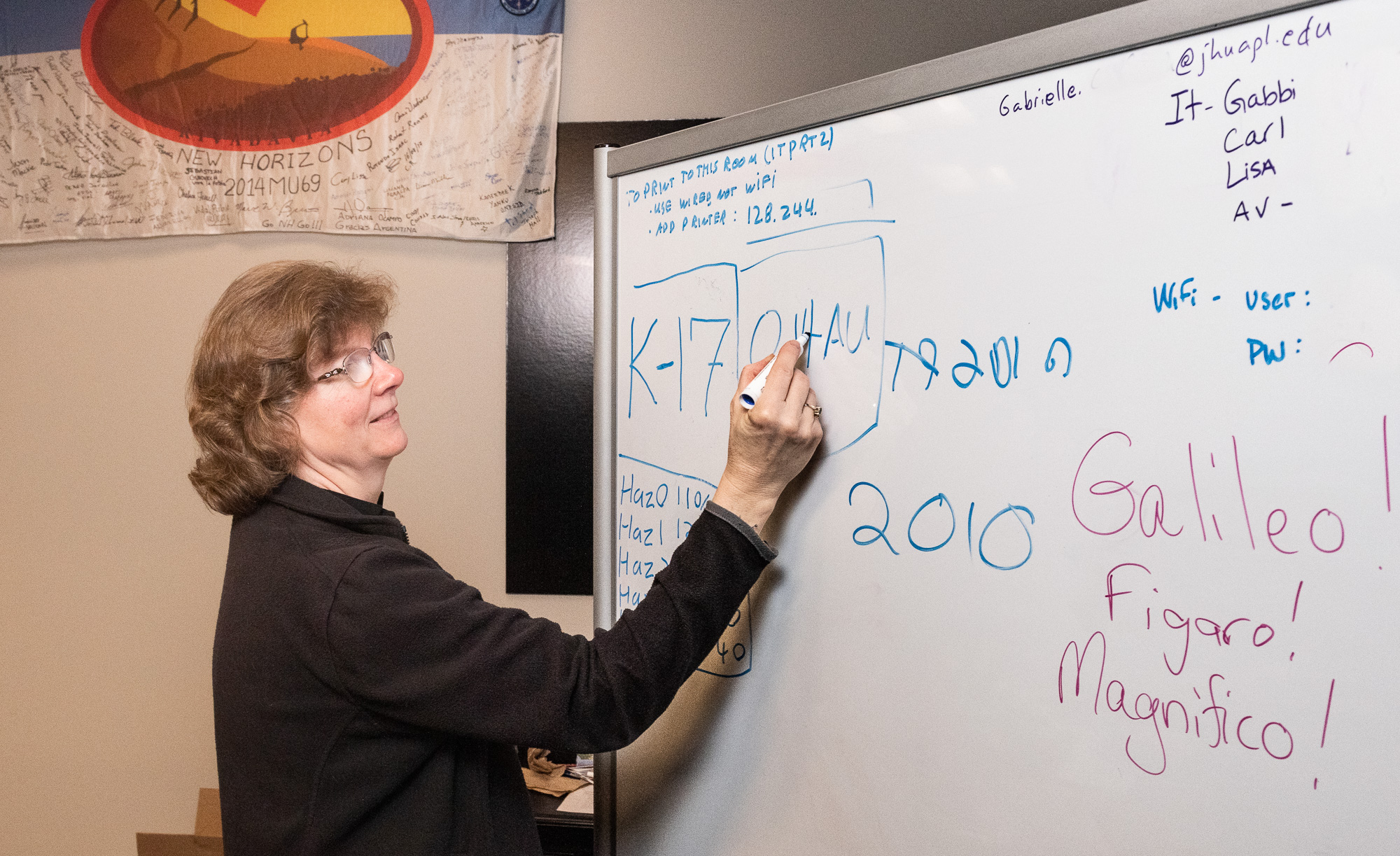
| Anne updates the distance... 0.14 AU and dropping fast! And yes, Bohemian Rhapsody lyrics below. |
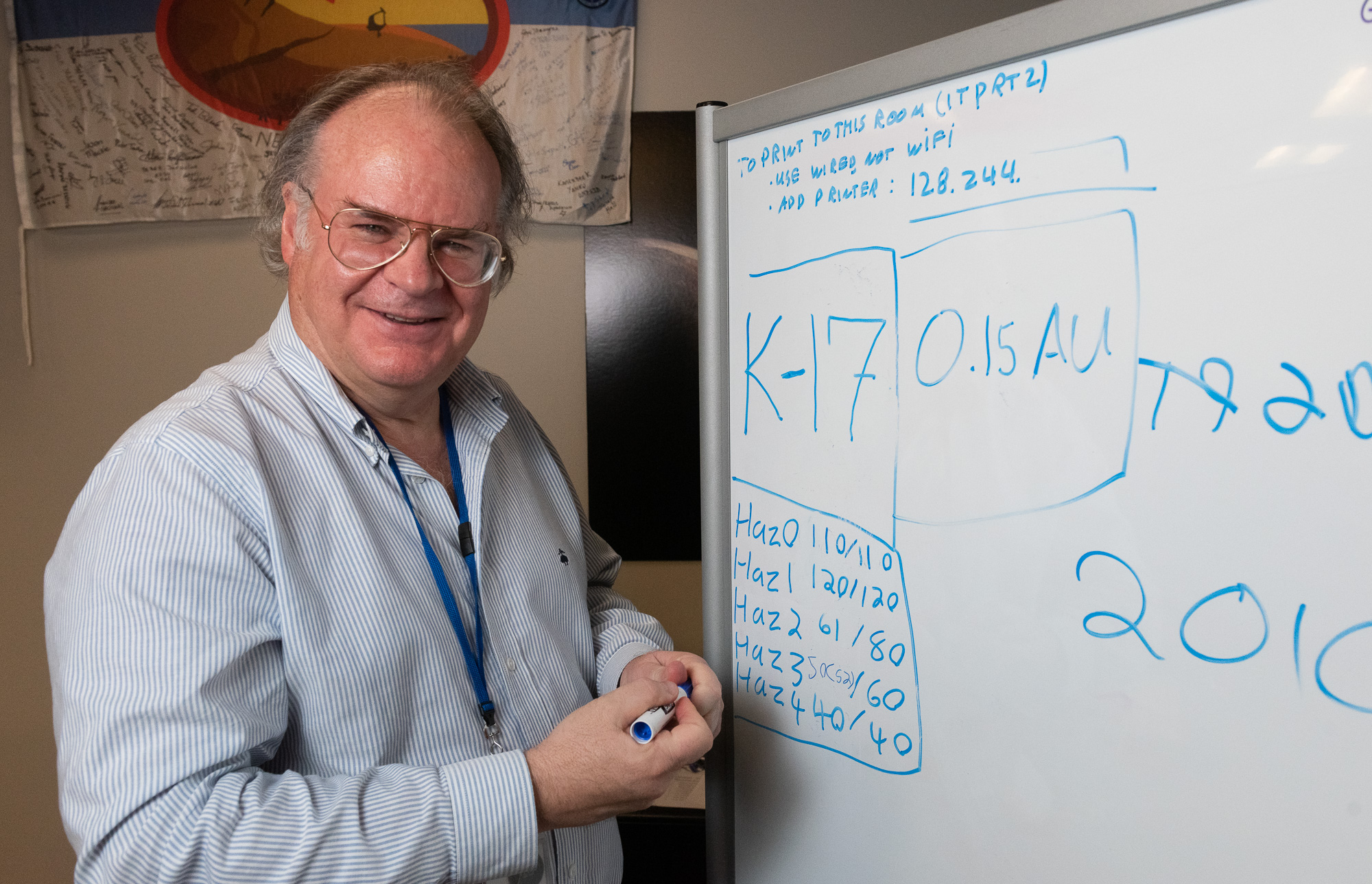
| Gotta mark off those days! Countdown to January 1, 2019. Below on the left are the number of images received: e.g, 61 of 80 frames from our HAZ02 sequence. In this particular case, the remainder of these images were lost due to a power issue at the NASA 70-meter dish in Goldstone. The downlink schedule is alreay tight, and by the time they would be retransmitted we would have newer data anyhow. For what it's worth, all of these 400+ images, plus hundreds more, were taken looking at exact same spot in the sky. We just watched MU69 over and over... no change in pointing whatsoever, except for the random shifts from pointing jitter in the spacecraft. |
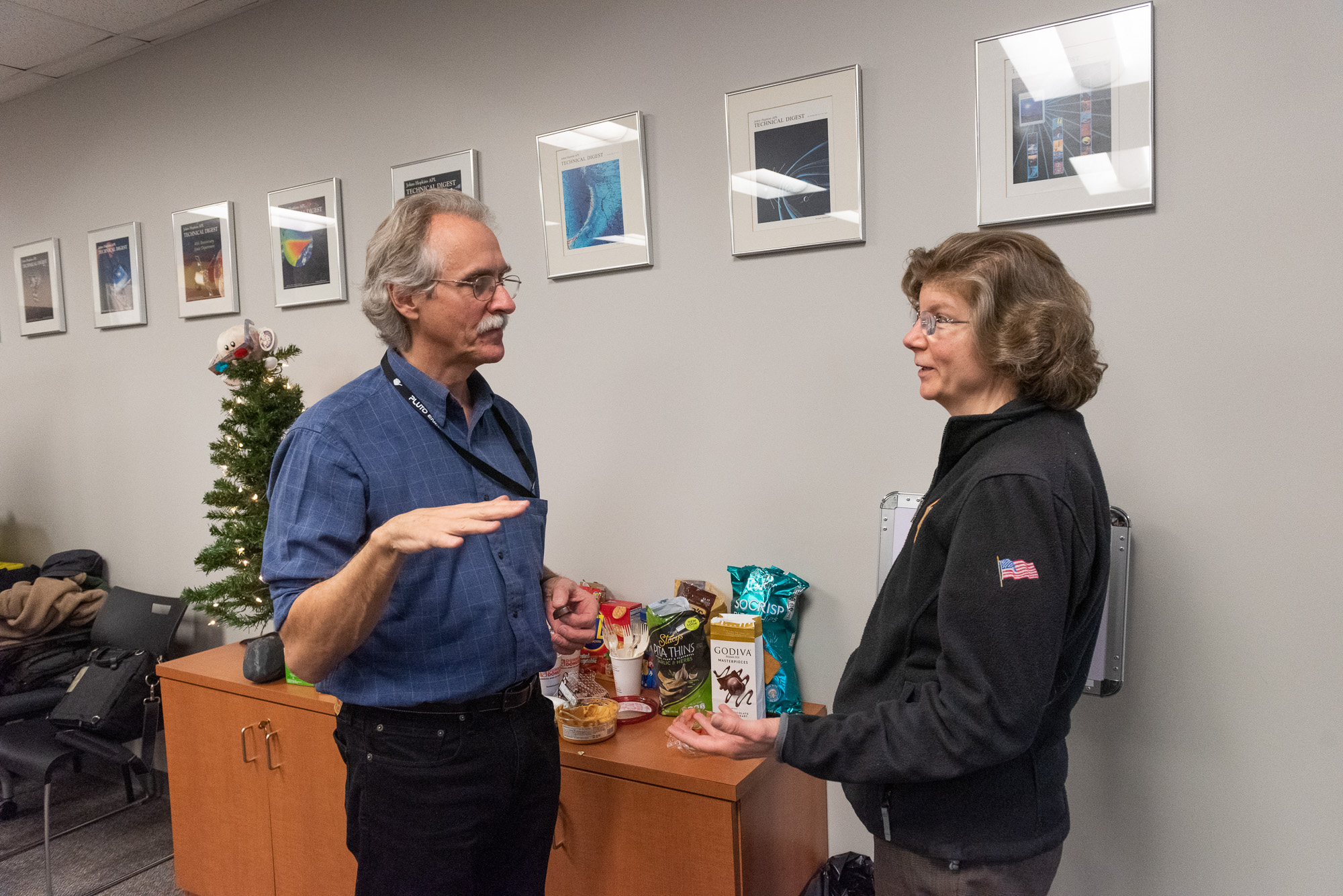
| As our time comes to an end, the snacks do keep on coming! |
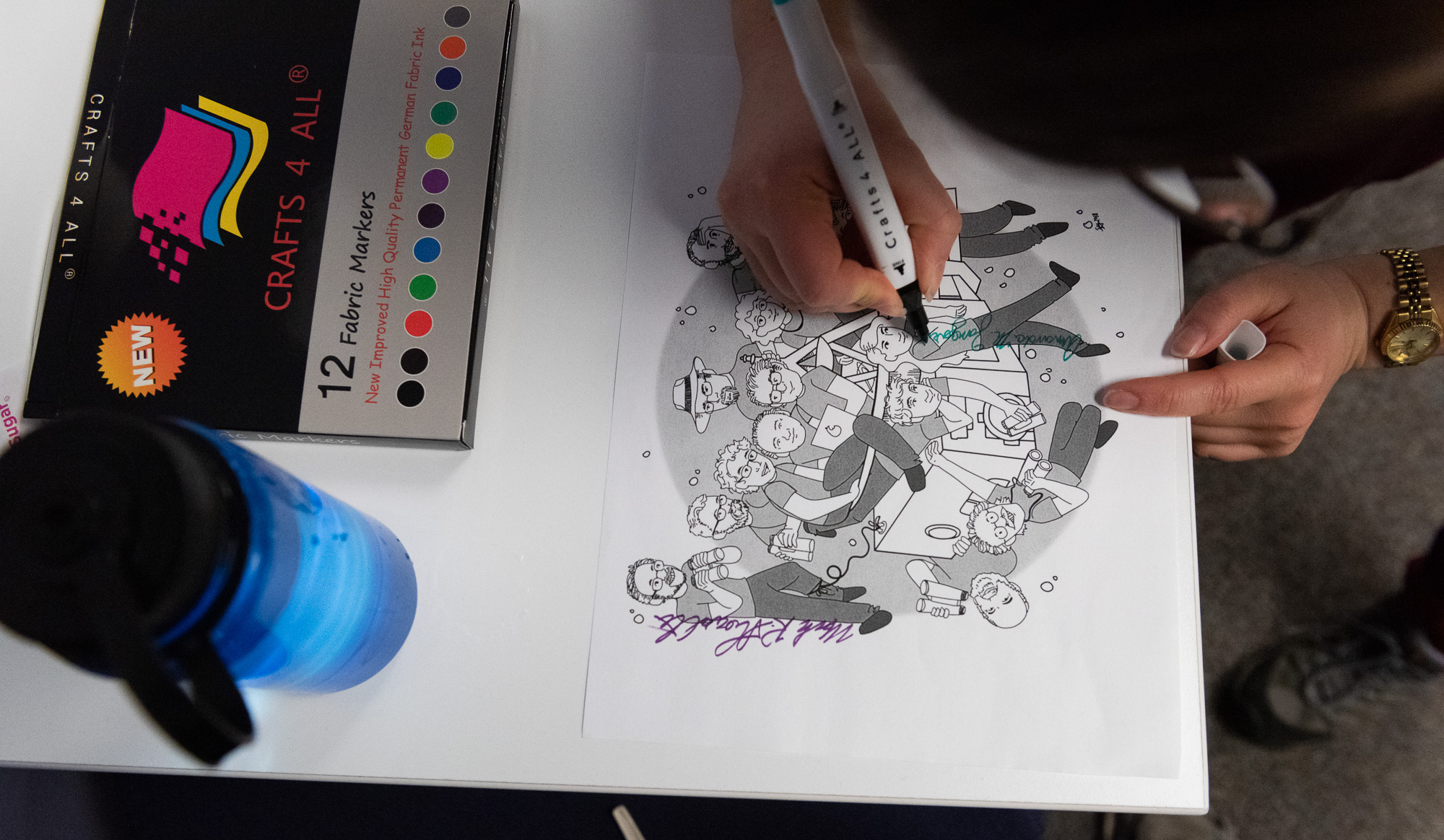
| Amanda signs our awesome team portrait, by Tod's daughter Sandra Muller |

| Check out that tri-lobed spheroid! |
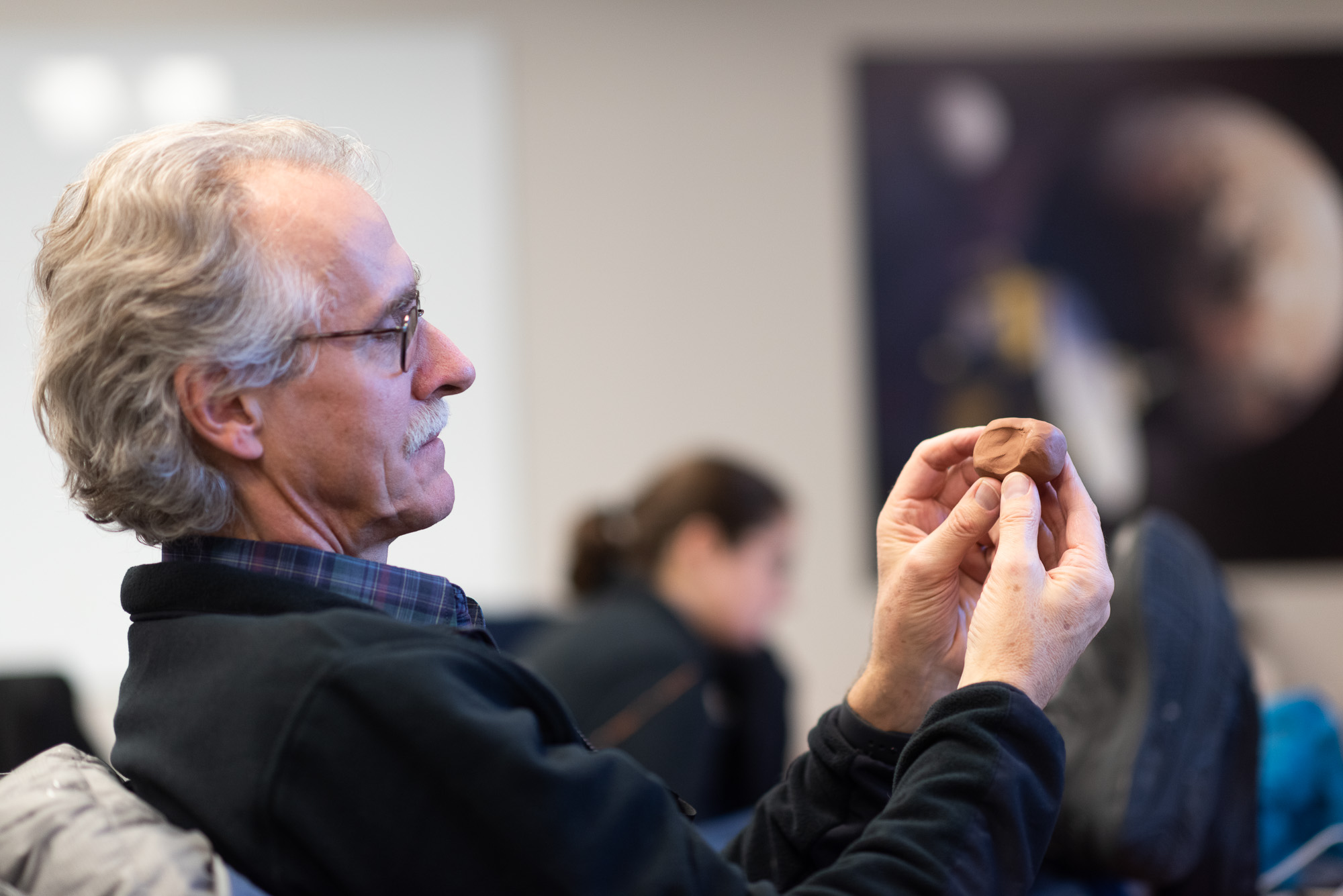
| John Spencer hasn't found any rings yet, so it's time to optimize that shape model! |
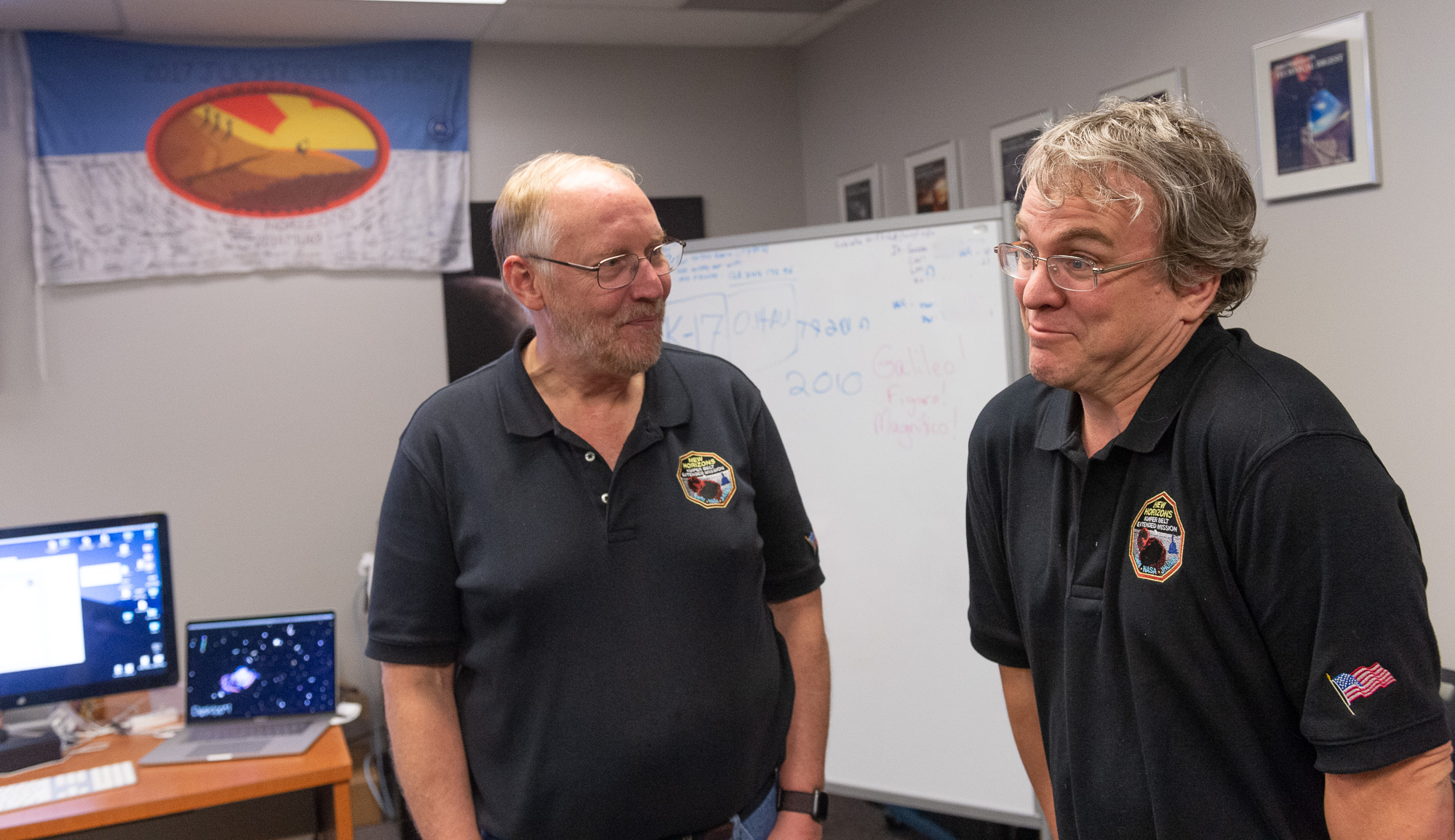
| Mark Showalter and Doug Hamilton. |
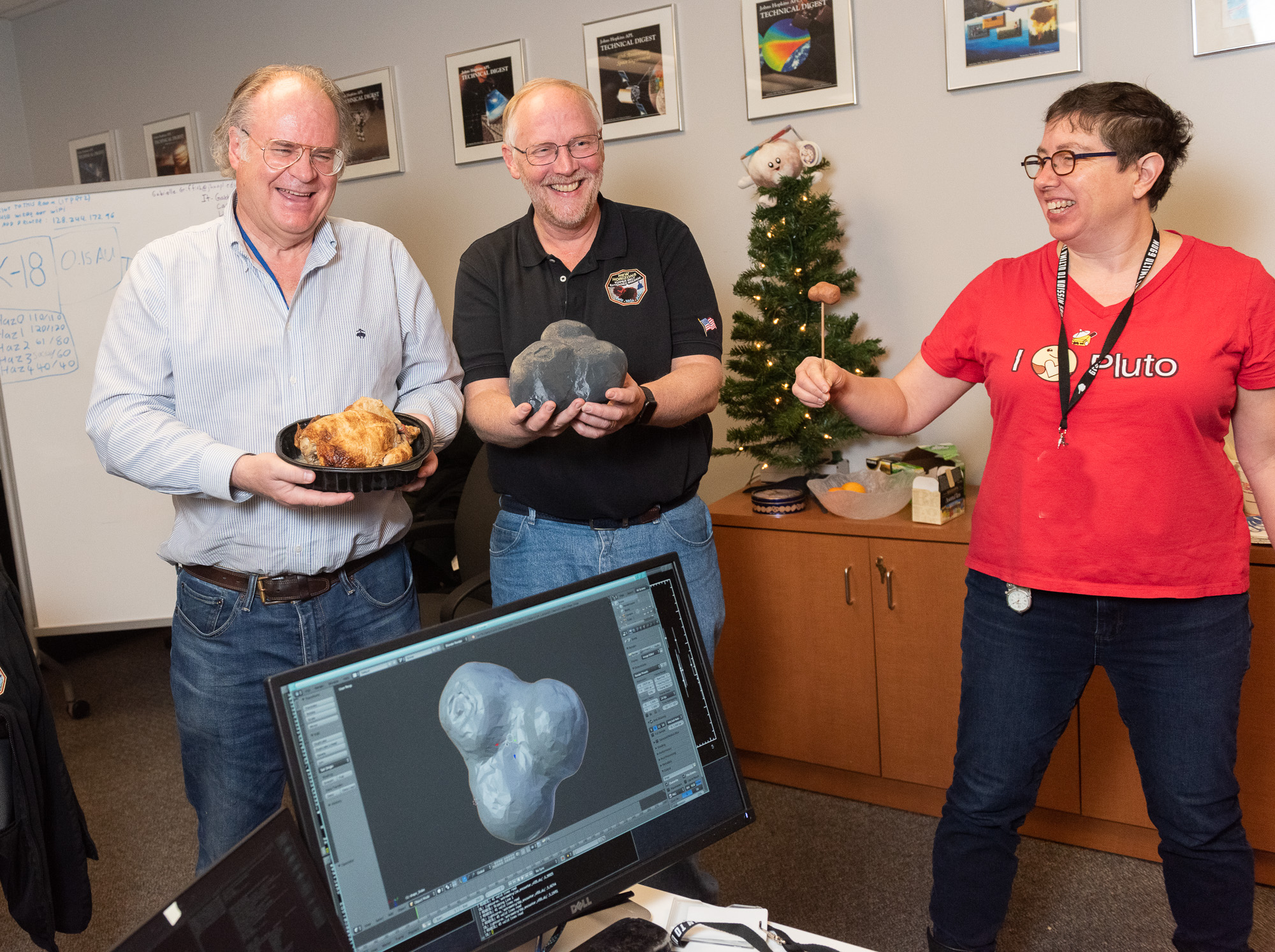
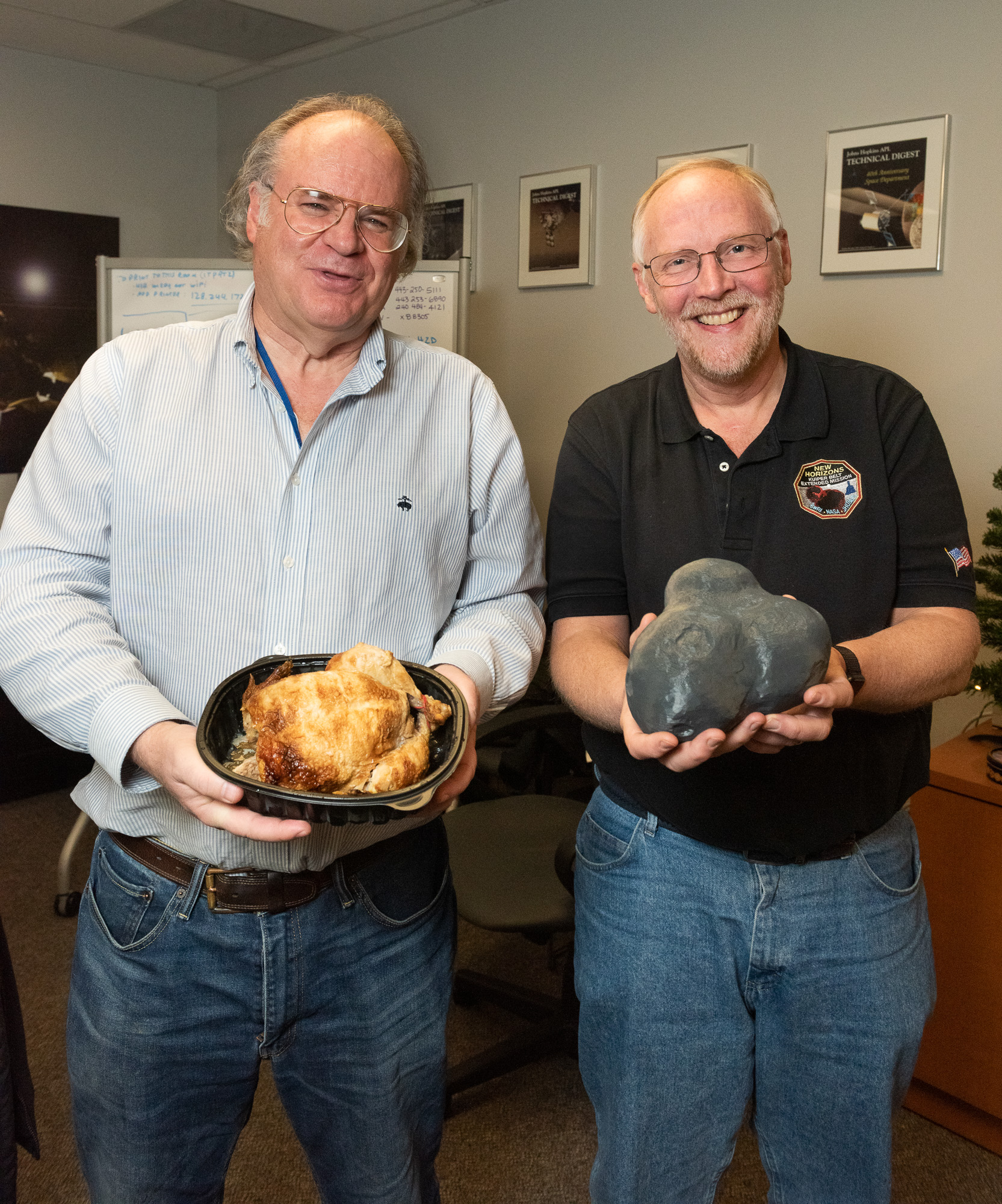
| Tod: "Will... your fancy 3D model might be right. But you know what else matches that light curve precisely? A rapidly spinning rotisserie chicken. Otherwise known as... Ultima Poulet!" |
|
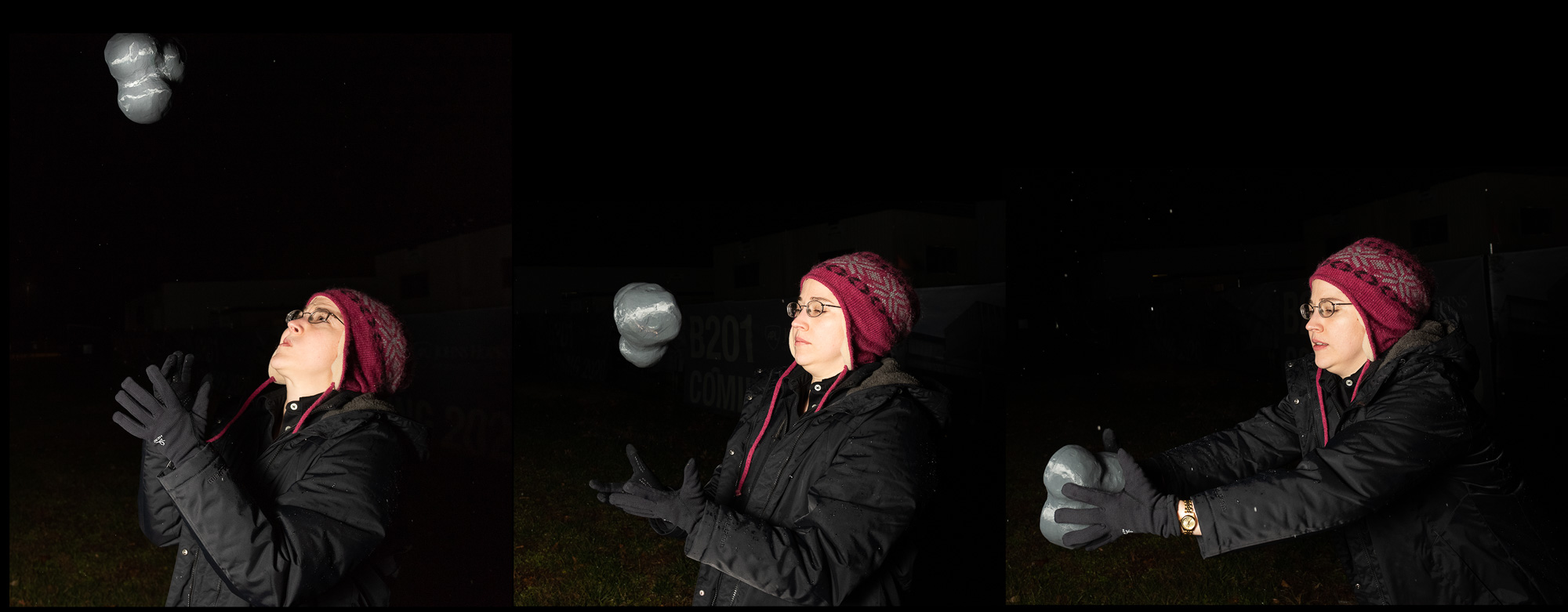
| Marc Buie made his clay model of what he thought MU69 looked like. The tri-lobed shape was based on the occultation data, and hints at the light curve that we measured during our Hazard time. Local APL-er Kirby Runyon scanned Marc's model, and duplicated it on a 3D printer. Will Grundy generated a light curve from the 3D scan. And Amanda wanted to figure out the axis of rotation, so she took it outside and tossed around Kirby's model. All in the name of science! |
APL Tour
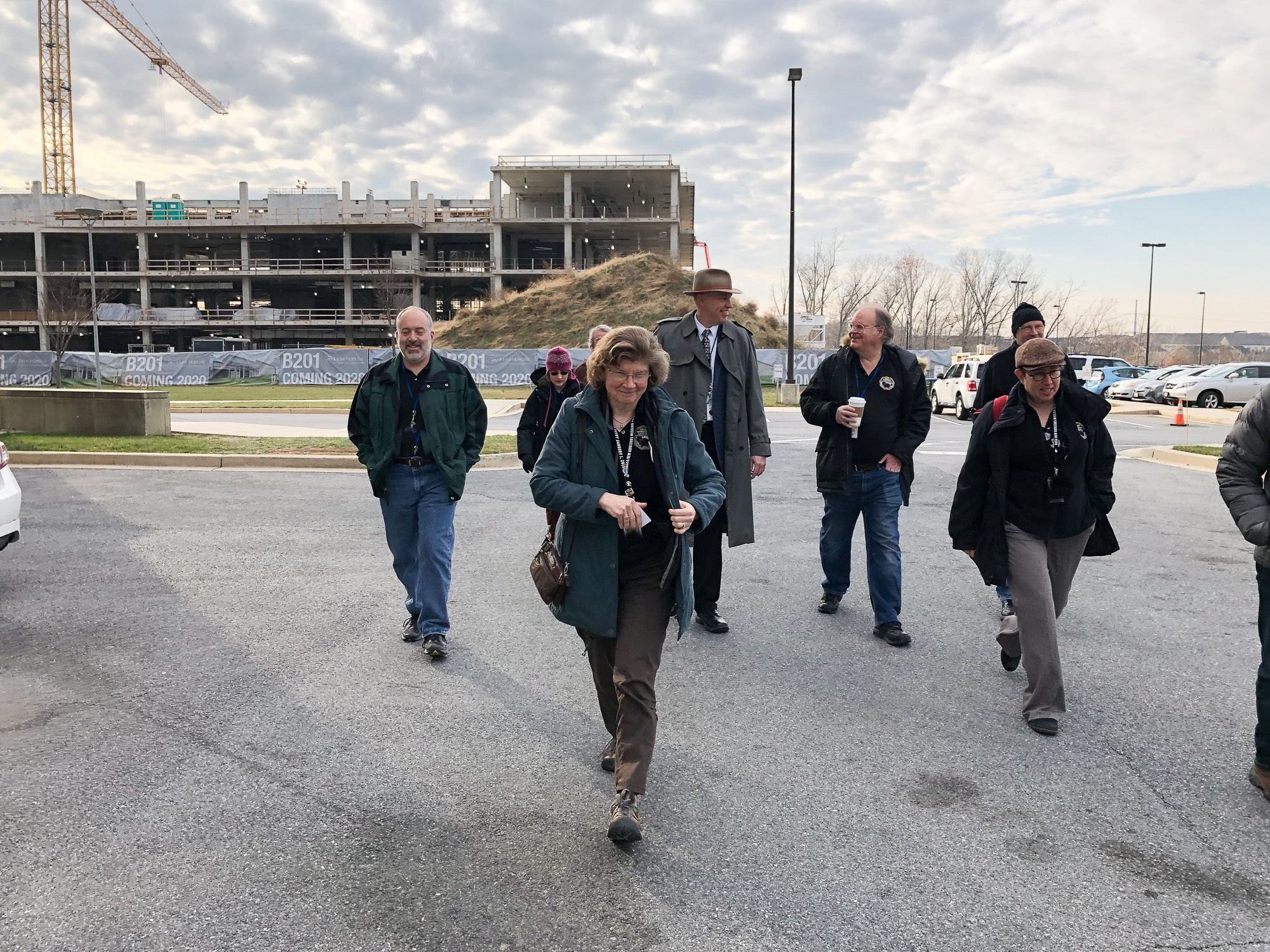
| Ooh! Having spent more than two weeks and found nothing at all, work on hazards is winding down. We have a 'free' morning a few days before the final presentation. Carl Engelbrecht (in the Fed-looking trenchcoat) has offered to take us on a tour of the lab. We head over to the Mission Operations Center (MOC), from where New Horizons is actually run. Then we'll see the cleanroom where the spacecraft was assembled, and take a tour of the environmental testing lab -- where APL's spacecraft are spin-balanced, calibrated for radio intereference, given a shake test, and so forth. At the time of NH's construction APL did not have a large enough thermal-vac chamber to do the final environmental testing, so they shipped it off to Goddard for that. |
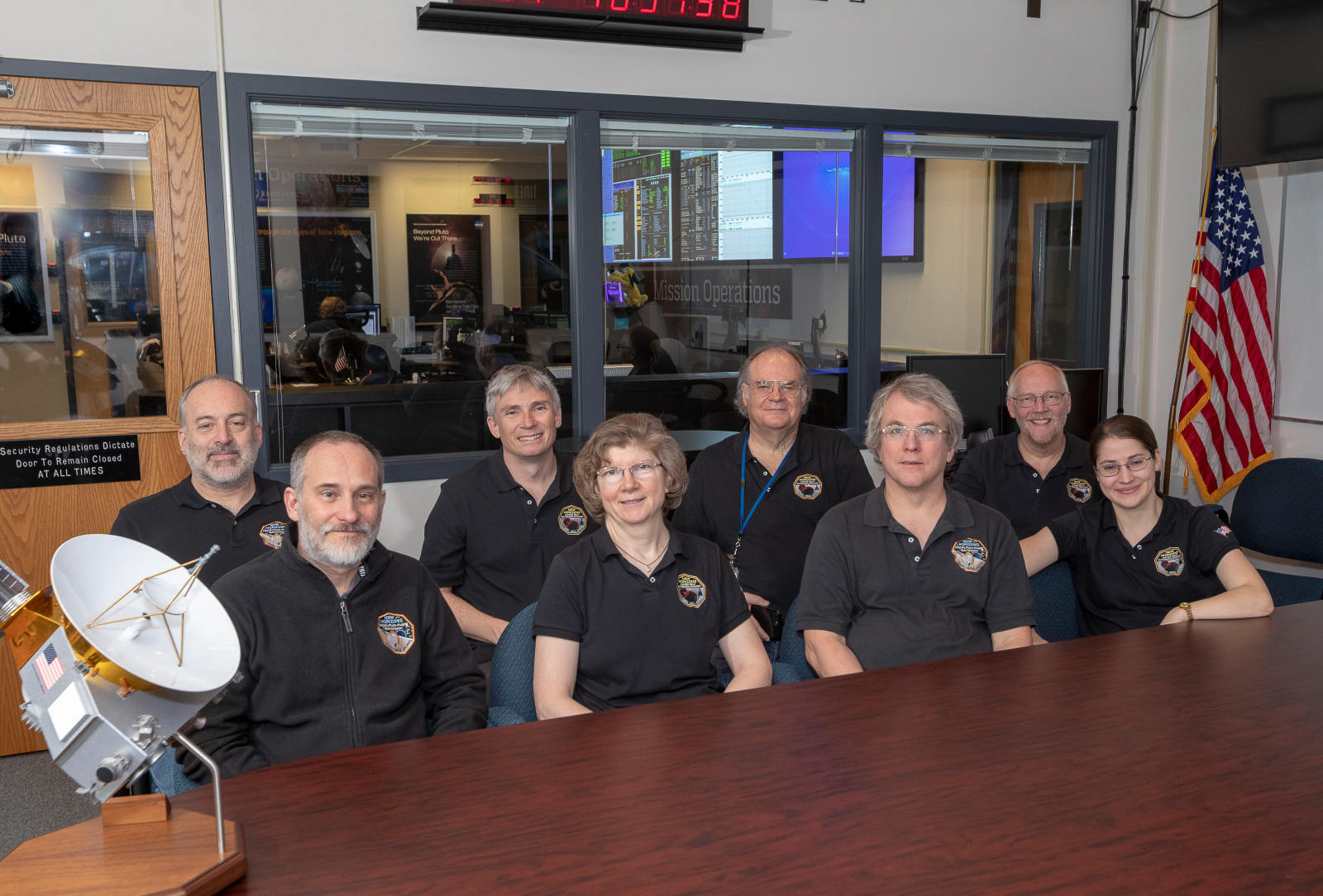
| We dropped by the New Horizons Mission Operations Center (MOC) for a quick photo shoot. Look closely and you can see Pluto-the-dog on the console behind us. (Walt Disney named the dog after the recently discovered planet, in the early 1930's.) This is the realm of Alice Bowman, the NAV team, and the multitude of engineers on the spacecraft. Photo credit: JHU-APL. Their photographer Craig started recently at APL, filling in for the senior photographers who were off shooting launches in Florida for several months earlier in the year. |
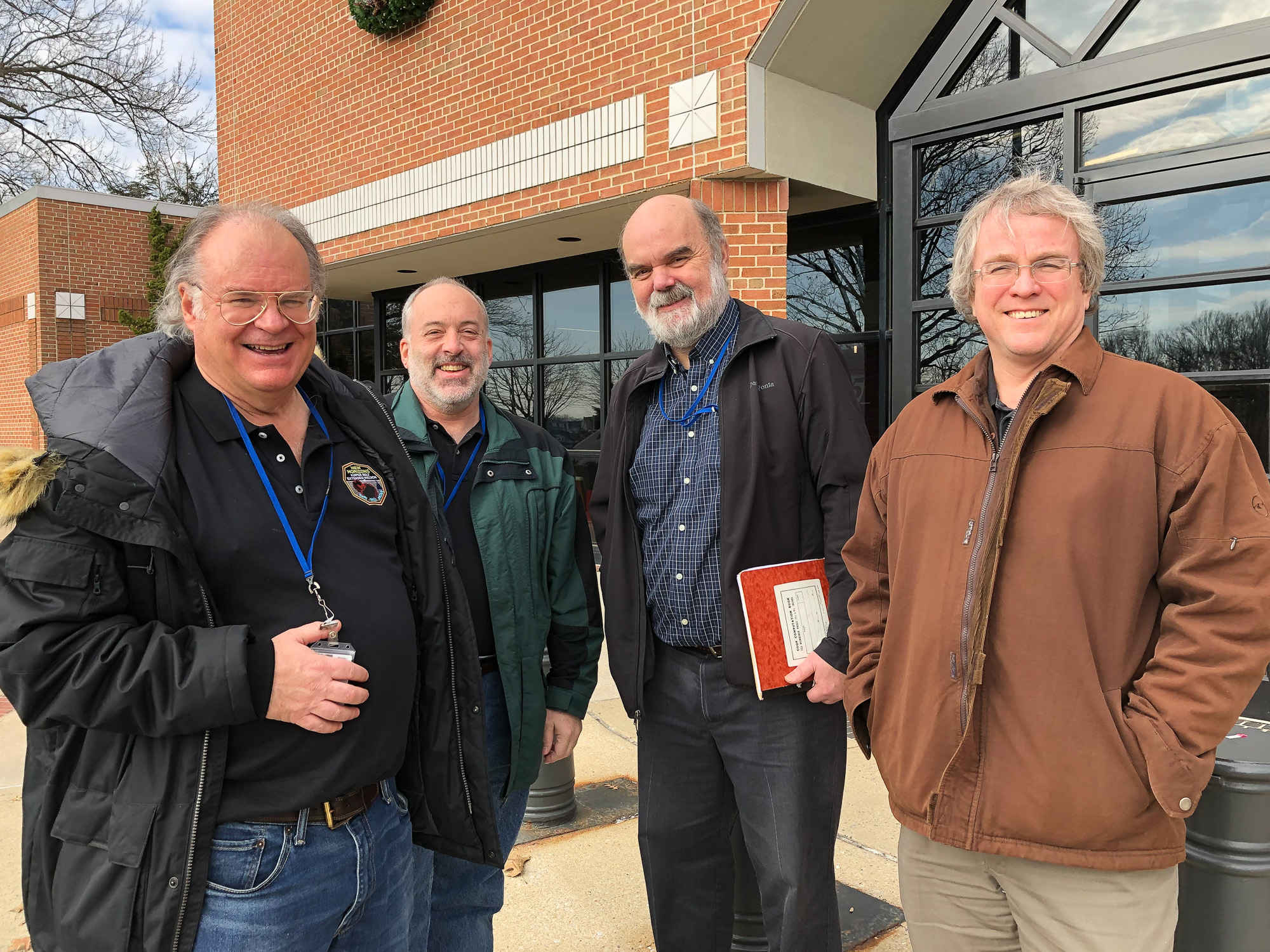
| We run into Doug Mehoke -- administrator of the environmental testing labs which we've just seen -- as we leave the main APL lab and walk across the street back to our Hazardous Operations Center in Building 200. |
Final TCM Decision Meeting
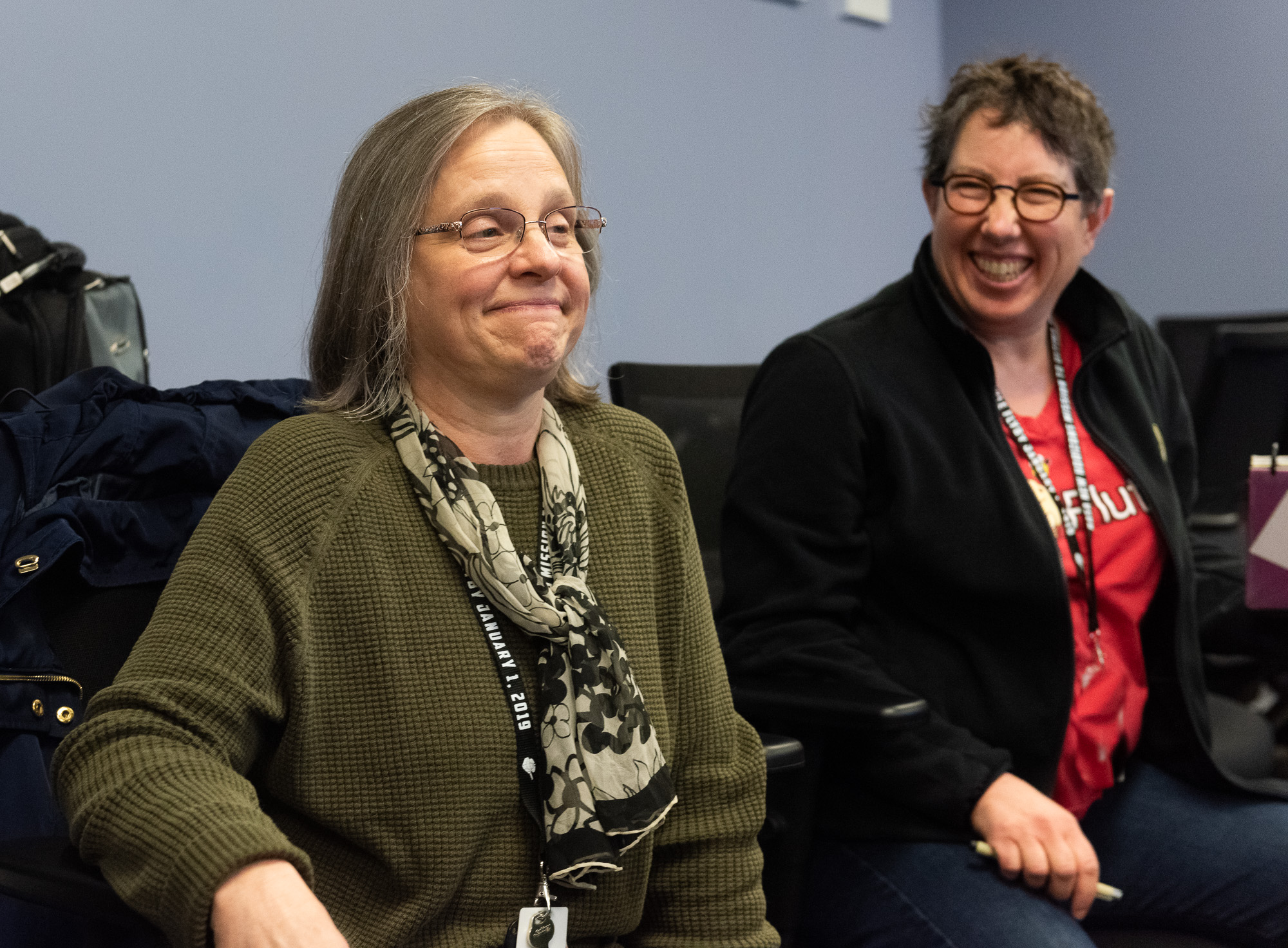
| The culmination of our work is a decision meeting with the spacecraft management on December 16. Originally it was scheduled for 3 AM (no joke) to give us maximum time to analyze any risks. But having seen absolutely nothing of concern in the images, we rescheduled for a more amenable Saturday evening slot. And here we are! That's Alice Bowman, no doubt grimacing at a bad joke by Leslie Young. |
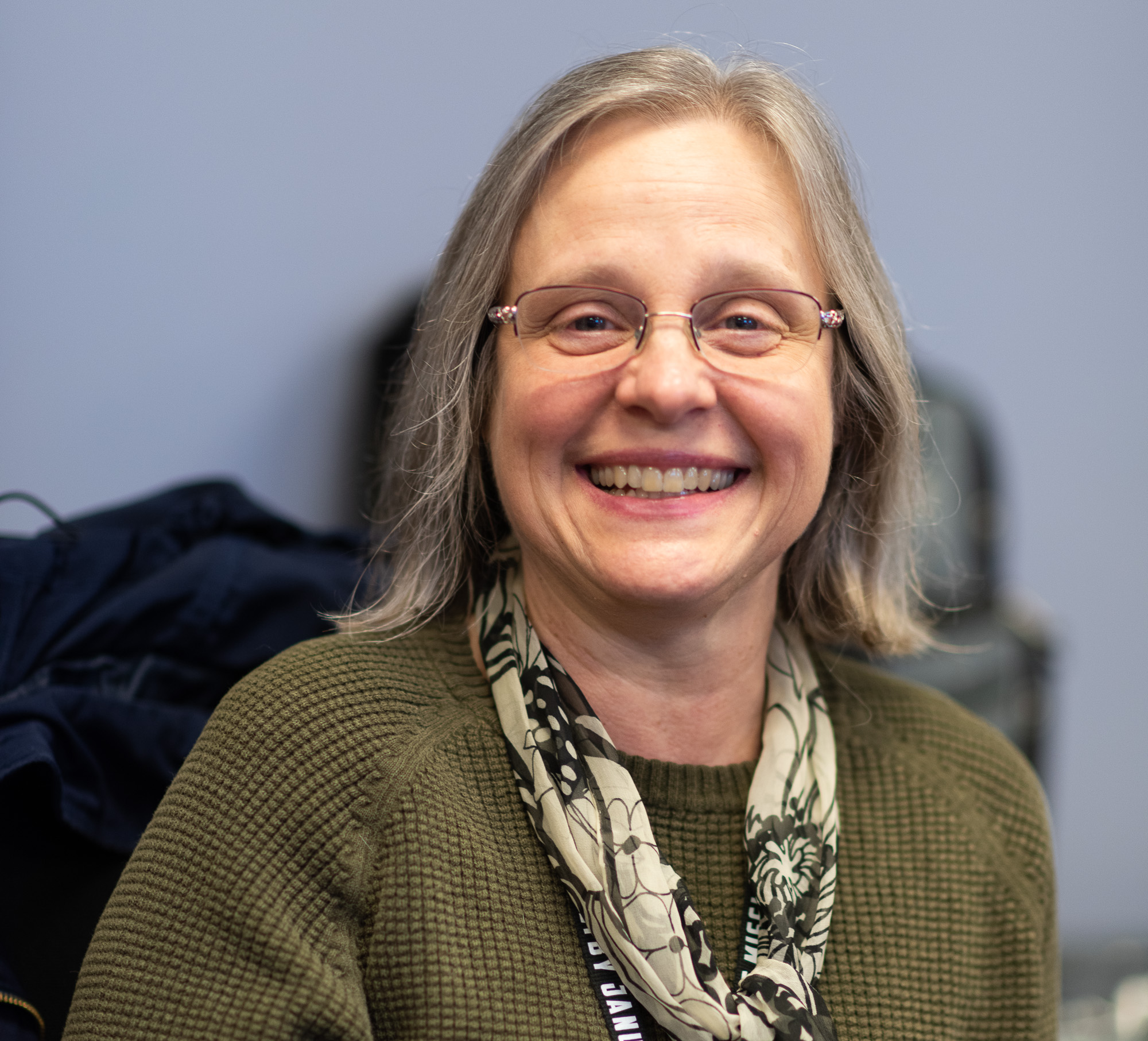
| Alice Bowman. |
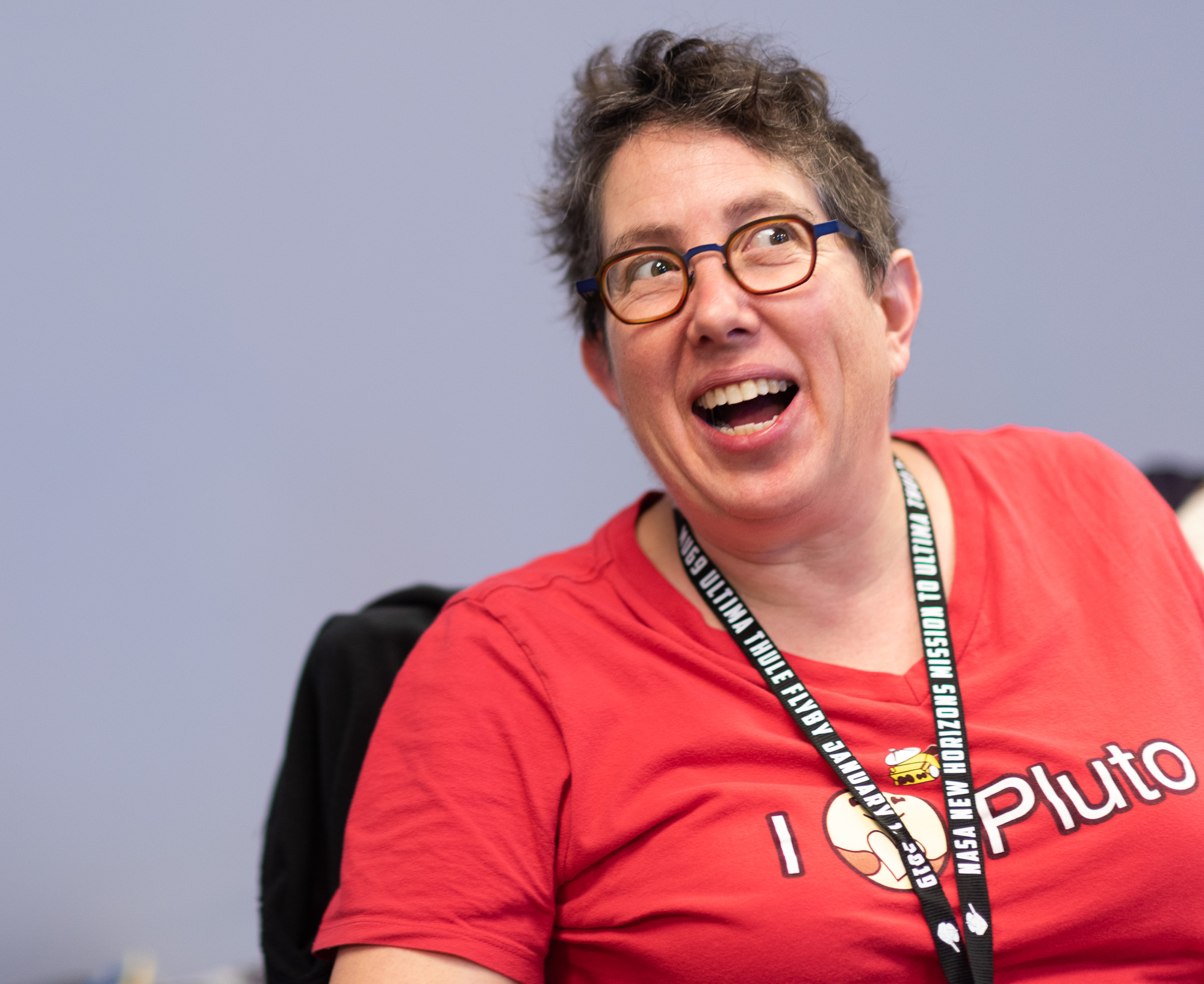
| Leslie Young. |
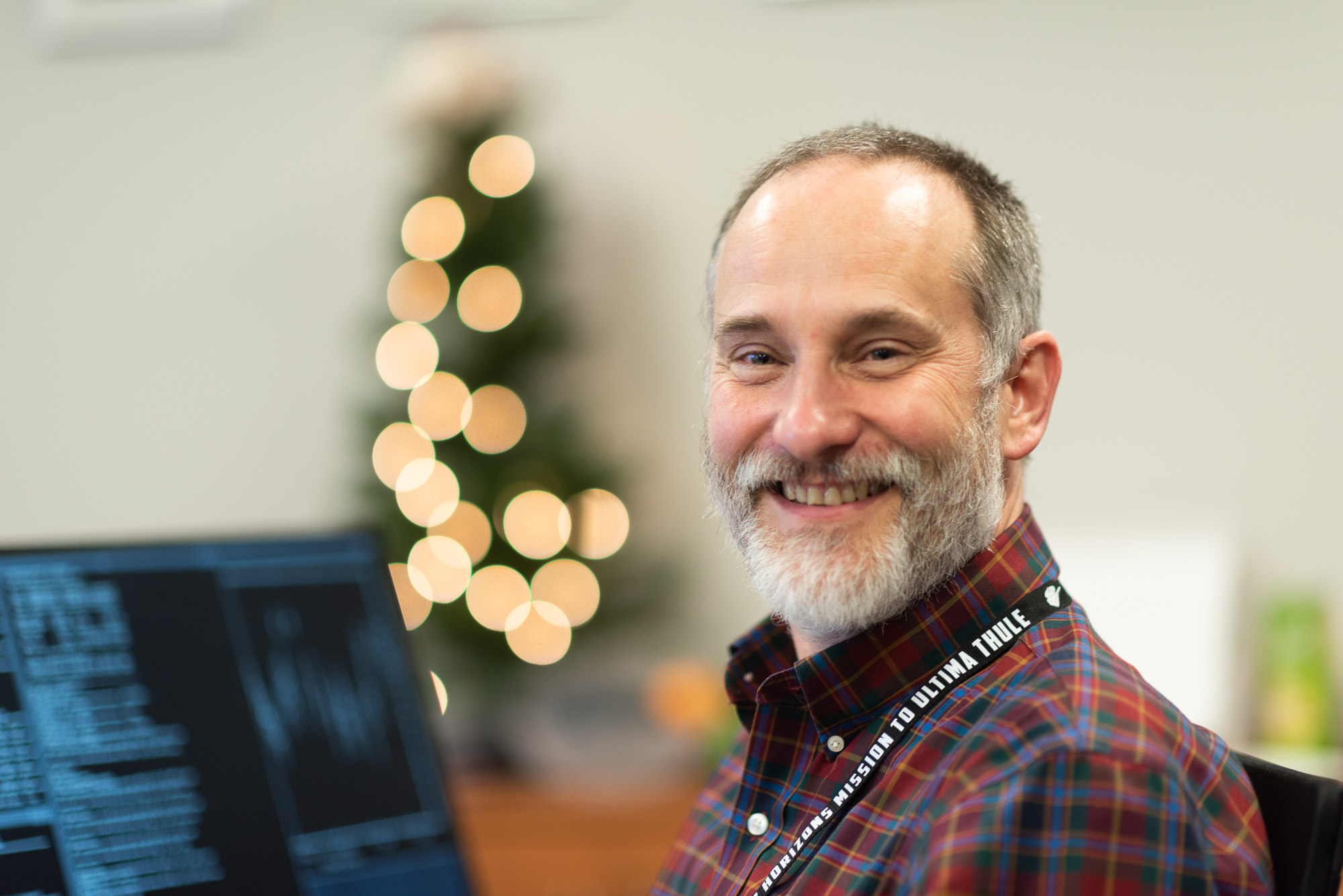
| Will Grundy is almost as festive as our tree. |
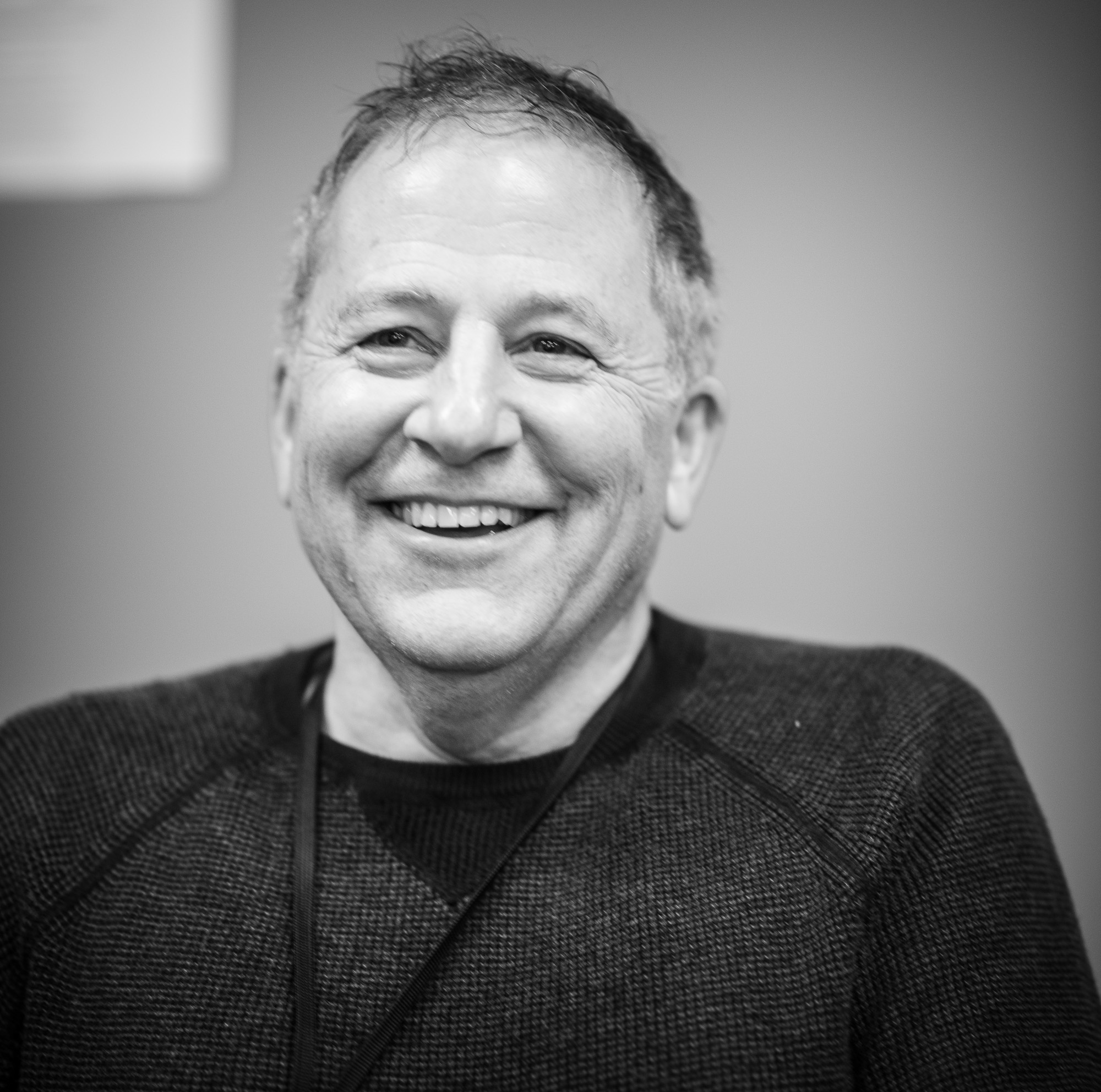
| Mark Holdridge. |
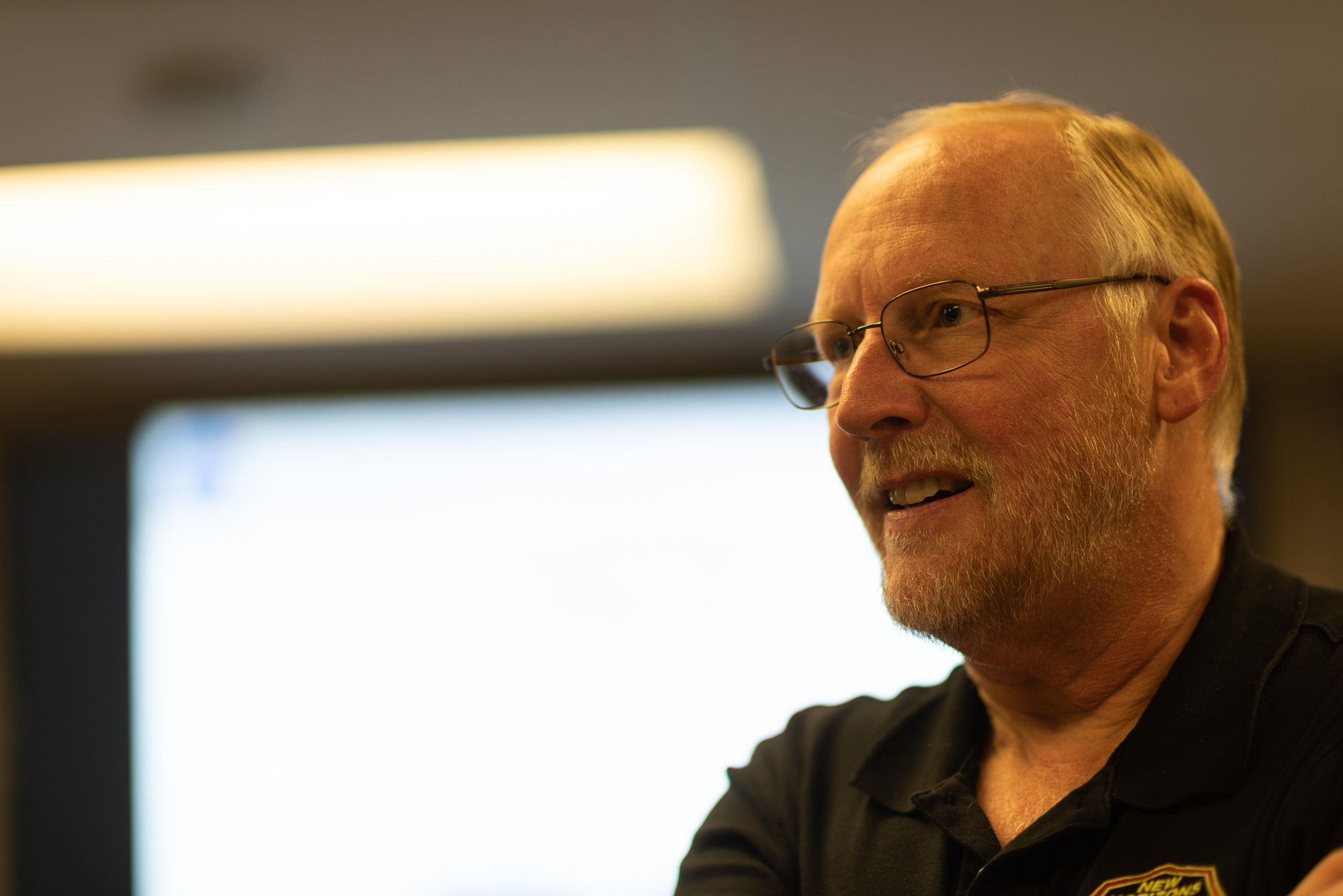
| How to make Mark Showalter extremely uncomfortable at 6:59 PM. Doug Hamilton: "Hey Mark! David and I were just trying a new set of parameters, and we found something really interesting in the system here..." |
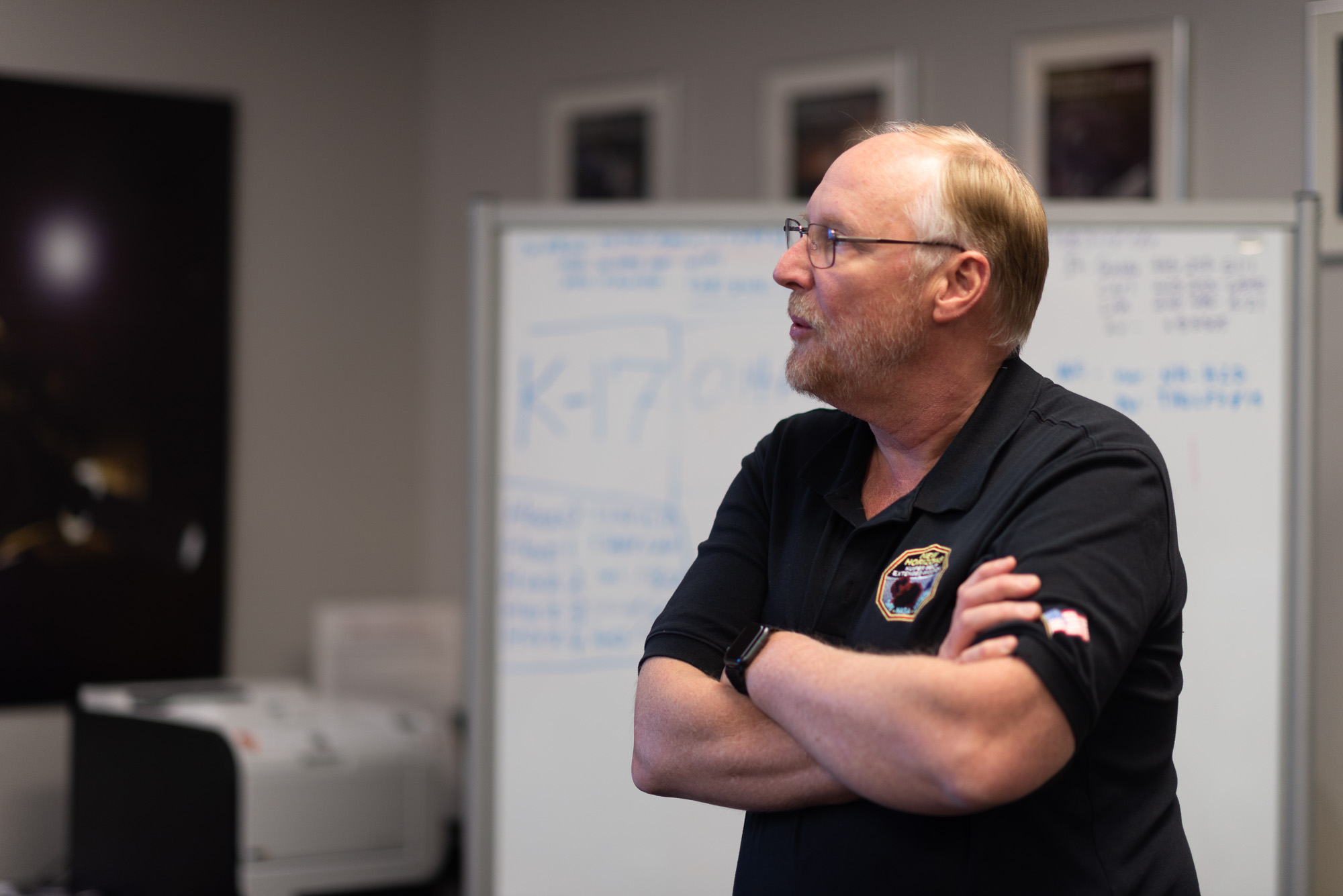
| And he's off! Mark Showalter starts the final presentation. |
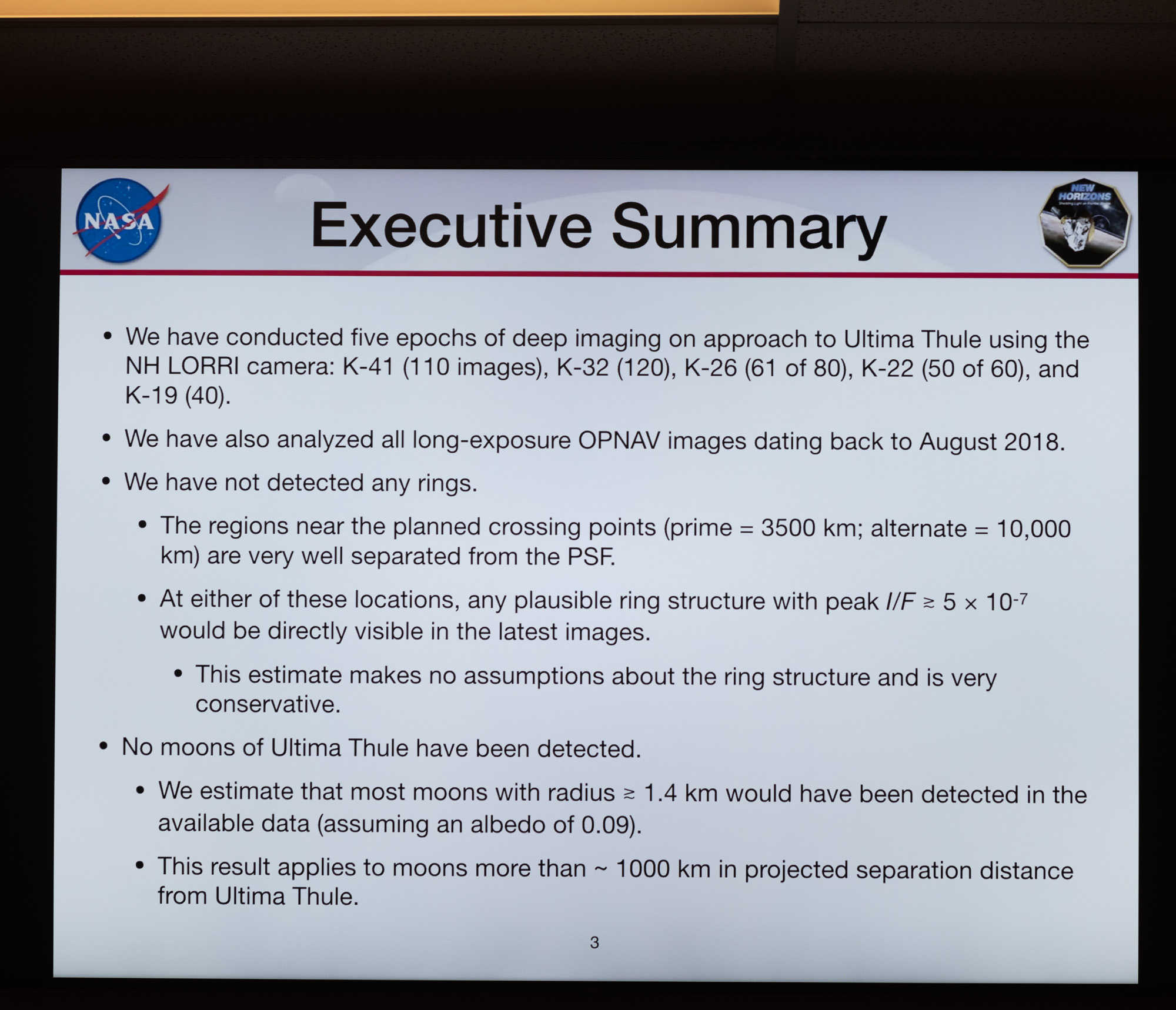
| All of our results, executively summarized. |
| John Spencer documents. |
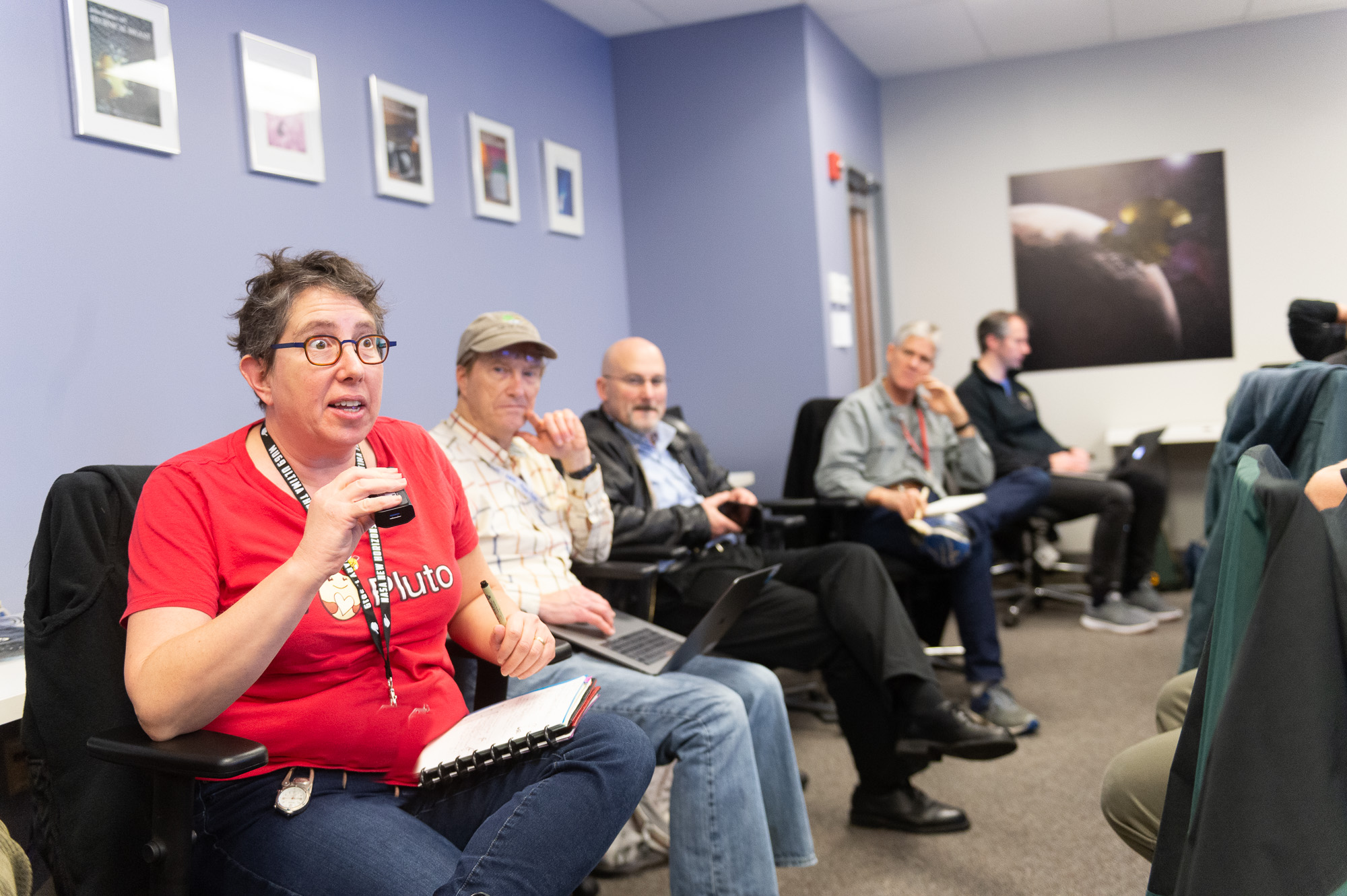
| Leslie Young asks about moons. |

| Alan Stern is really excited! |
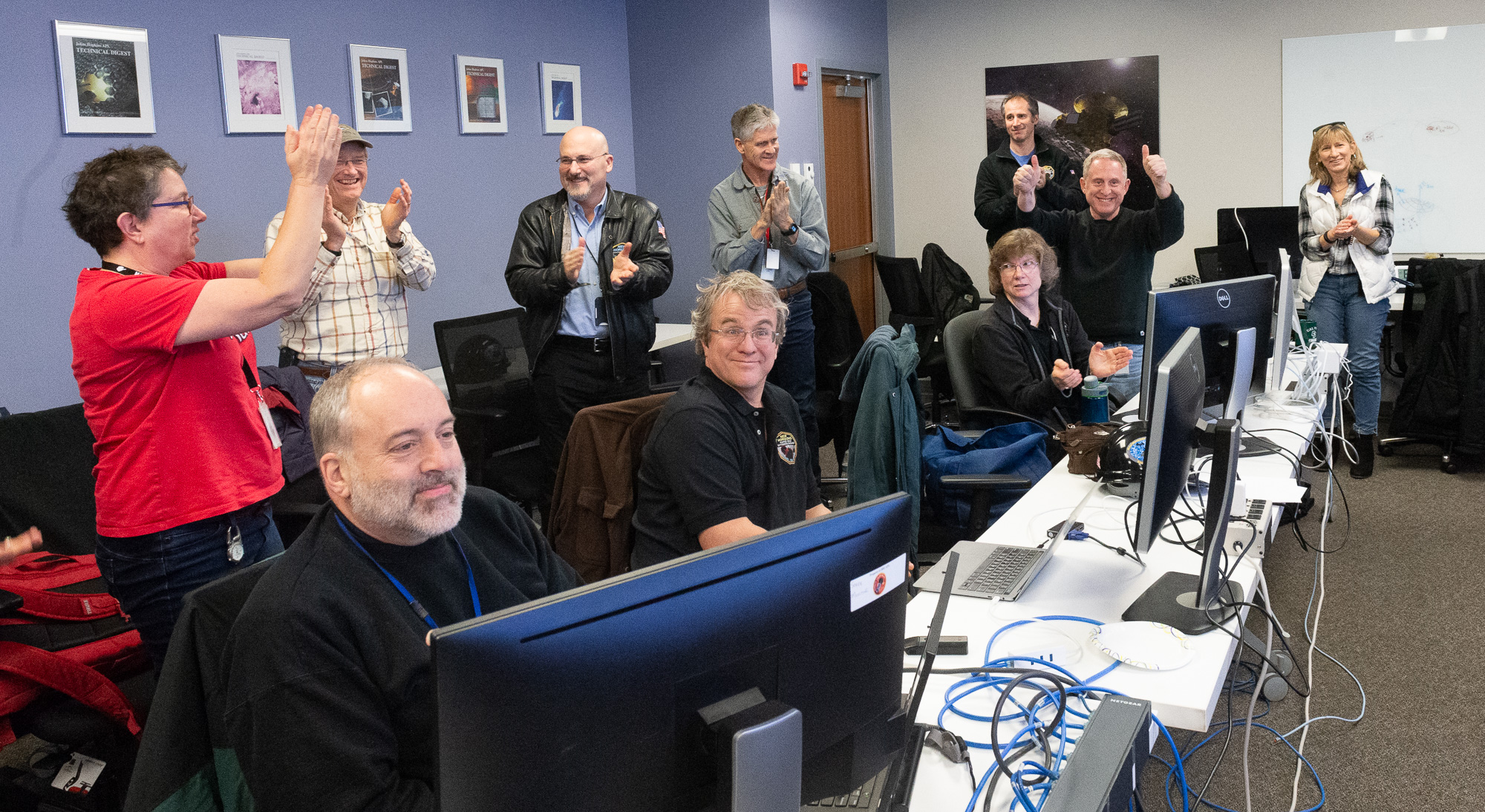
| And by unanimous agreement of the 'Stakeholders' (i.e., mission management and engineers), as well as the Hazard team, we've declared the MU69 system safe! |
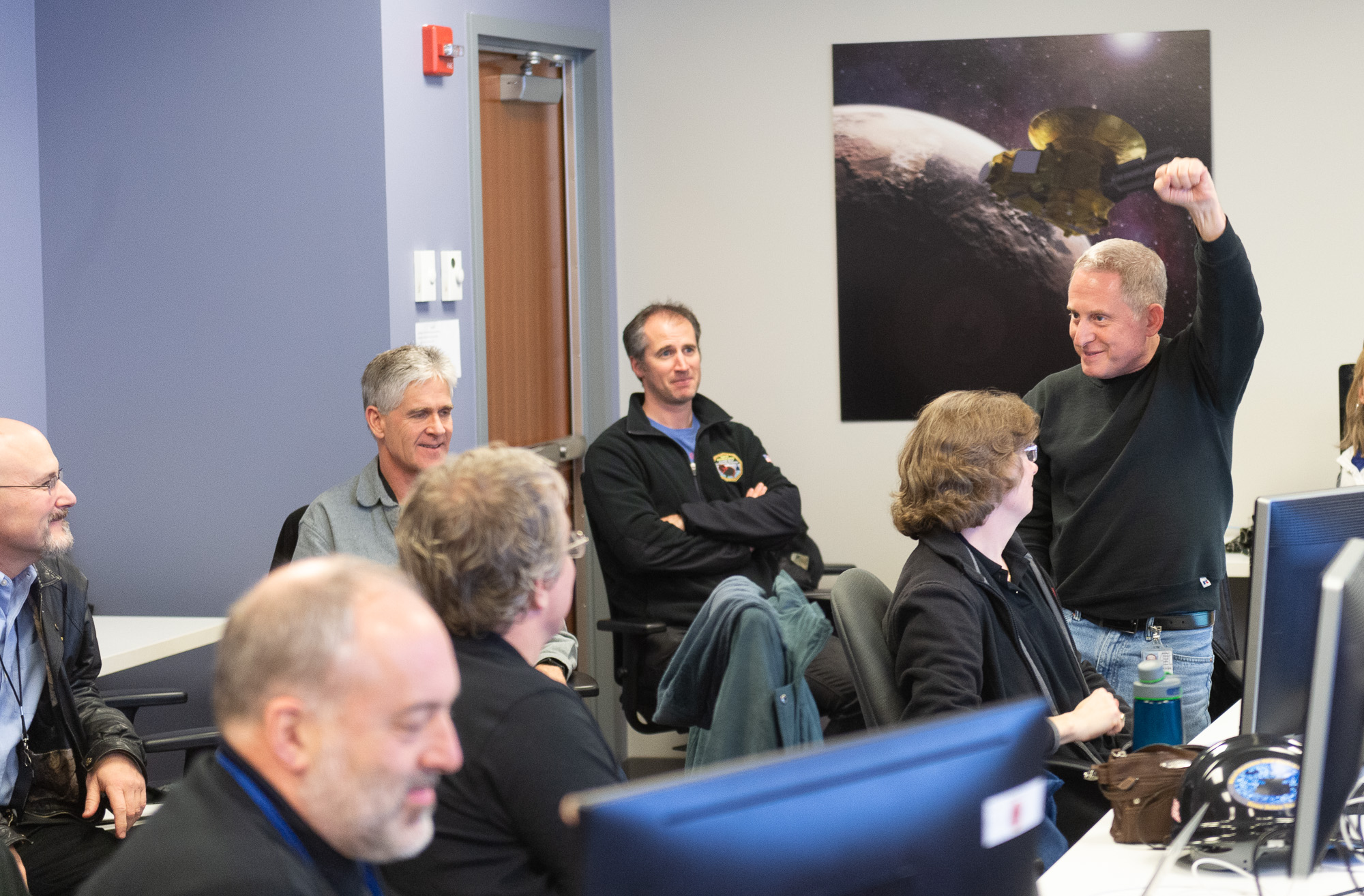
| Alan Stern: "We are flying the prime to Ultima Thule! Sixteen days from now, we will be there. I'm going to inform [NASA Planetary Science Division director] Lori Glaze right now in an email. Congratulations everyone. 18 months of work, 5 in-person ORTs, 60 telecons, and about five billion emails... incredible job keeping our spacecraft safe. Now let's go!" |
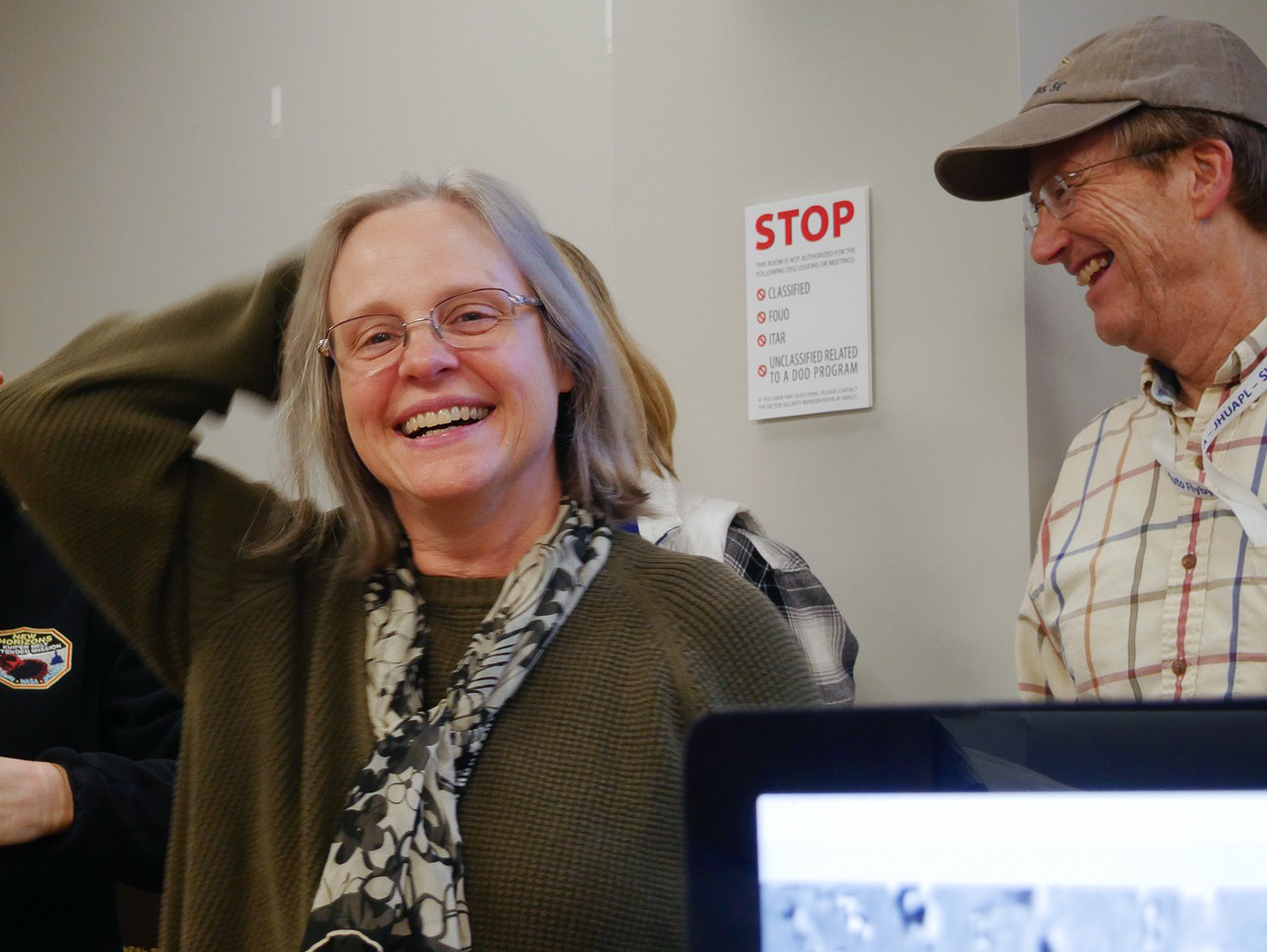
| Alice Bowman and Hal Weaver are breathing more easily now. Photo by John Spencer. |
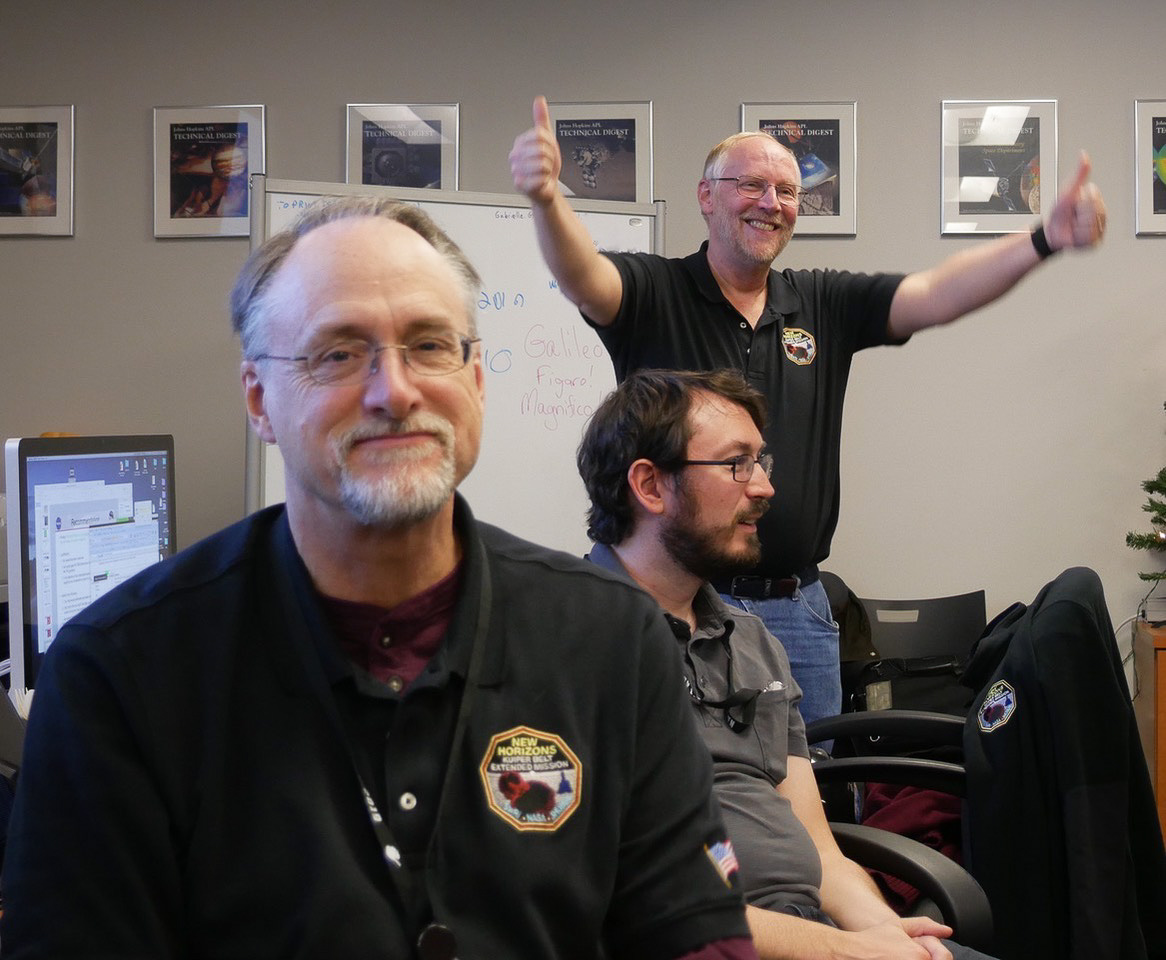
| Mark Showalter has emerged victorious over the dust particles! Photo by John Spencer. |
A Few More Group Shots
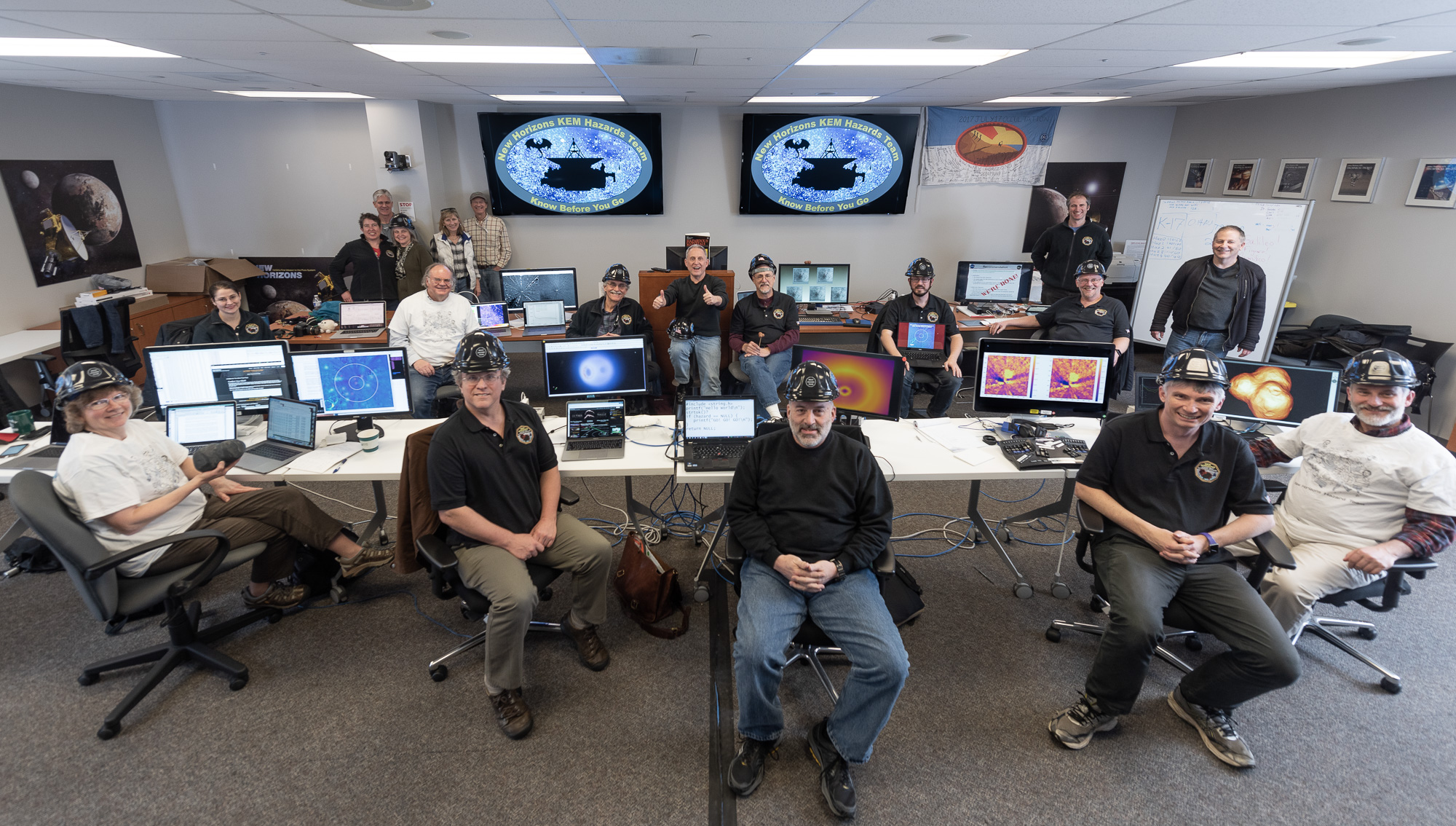
| A group shot, taken right after the final hazard decision was made. This one had a lot of setup, lighting, and planning that isn't visible. Taken with a Nikon 14mm super-wide lens, with two flashes planted on the ground behind a shelf to reduce shadows, and the camera on a tall tripod almost at the ceiling. Exposure set to capture both the people, and the screens, in one shot. It's easy enough to get a group shot of all of us standing together, but what I really wanted to get was the crowded room at APL, and all of the cool plots and images that we spent three weeks generating. Zoom in and you can see hidden messages from David and Mark! Bottom row: Anne Verbiscer, Doug Hamilton, David Kaufmann, Henry Throop, Will Grundy. Middle row: Amanda Zangari, Tod Lauer, John Spencer, Alan Stern, Marc Buie, Simon Porter, Mark Showalter, Mark Holdridge. Back wall: Leslie Young, Jimmy Lee, Alice Bowman, Helene Winters, Hal Weaver, Fred Pelletier. |
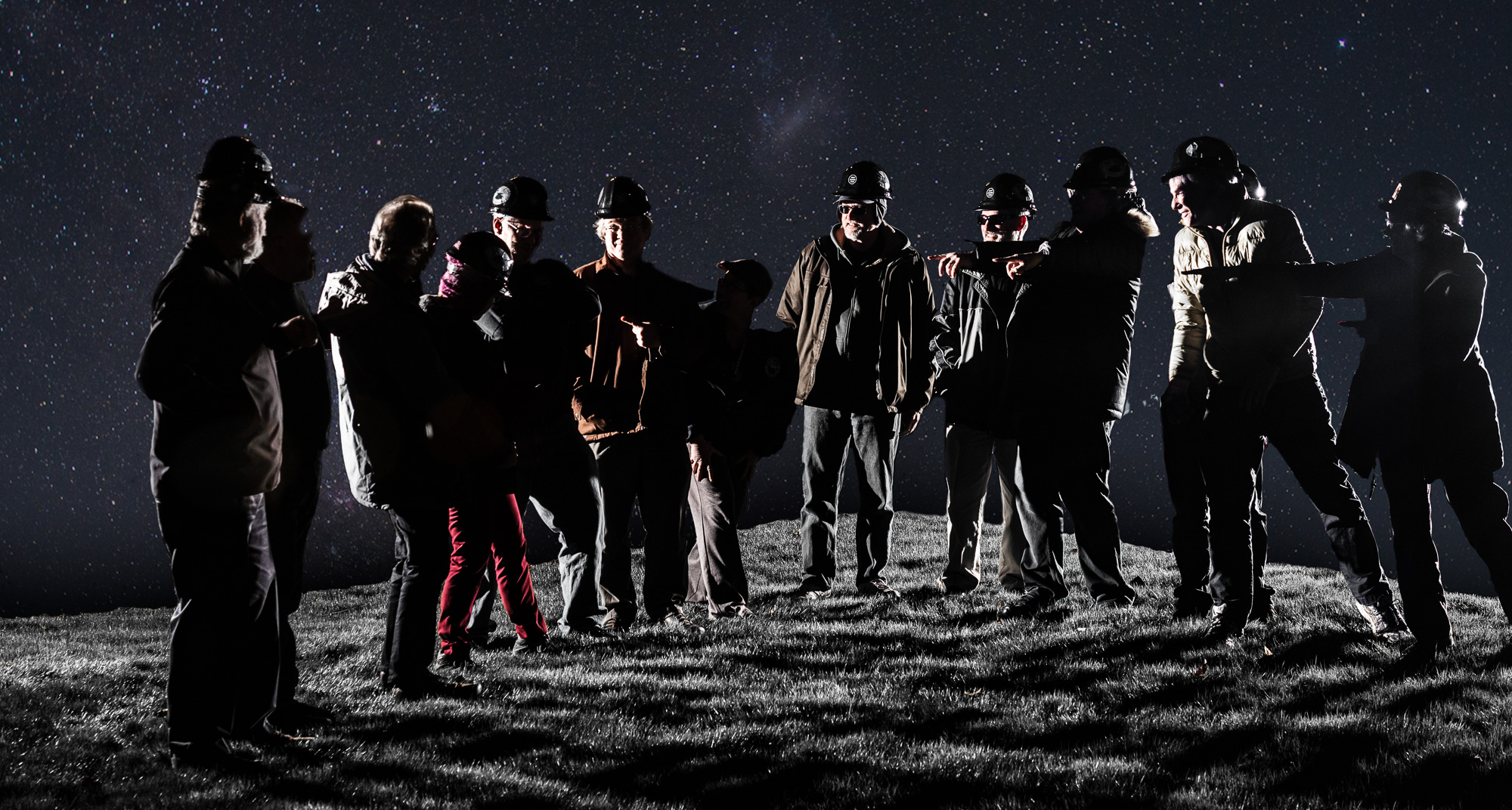
| Hazard team gets to work! Taken outside in the cold night in front of APL. I lit this from the side with a pair of flashes. From the left, that's Doug Mehoke, David Kaufmann, John Spencer, Amanda Zangari (red pants), Mark Showalter, Doug Hamilton, Leslie Young, Marc Buie (center), Will Grundy, Tod Lauer, Simon Porter (occulted), Henry Throop, and Anne Verbiscer. Lis Turner, unseen, clicked the shot. |
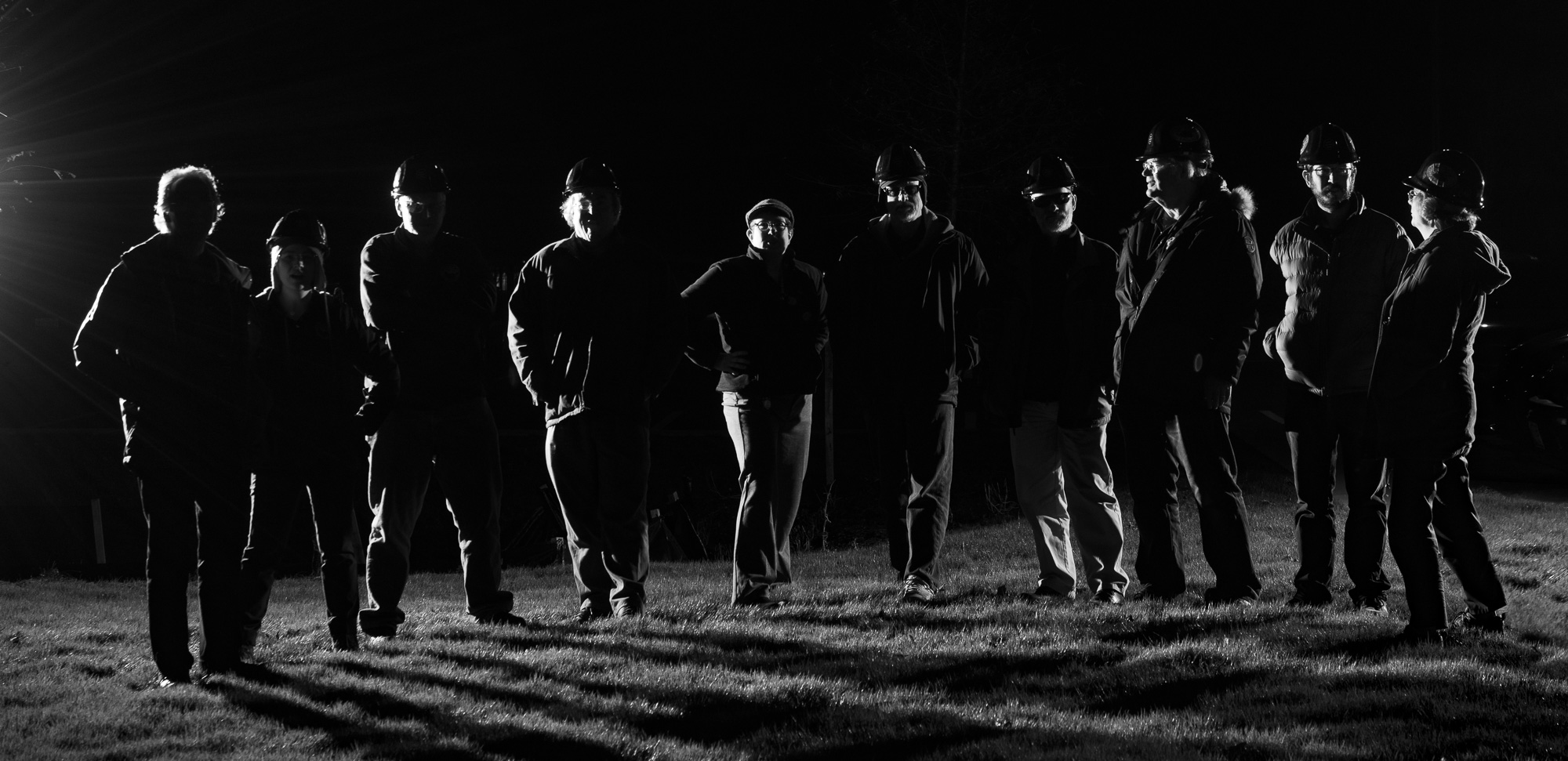
| Keeping space safe! |
Post-facto
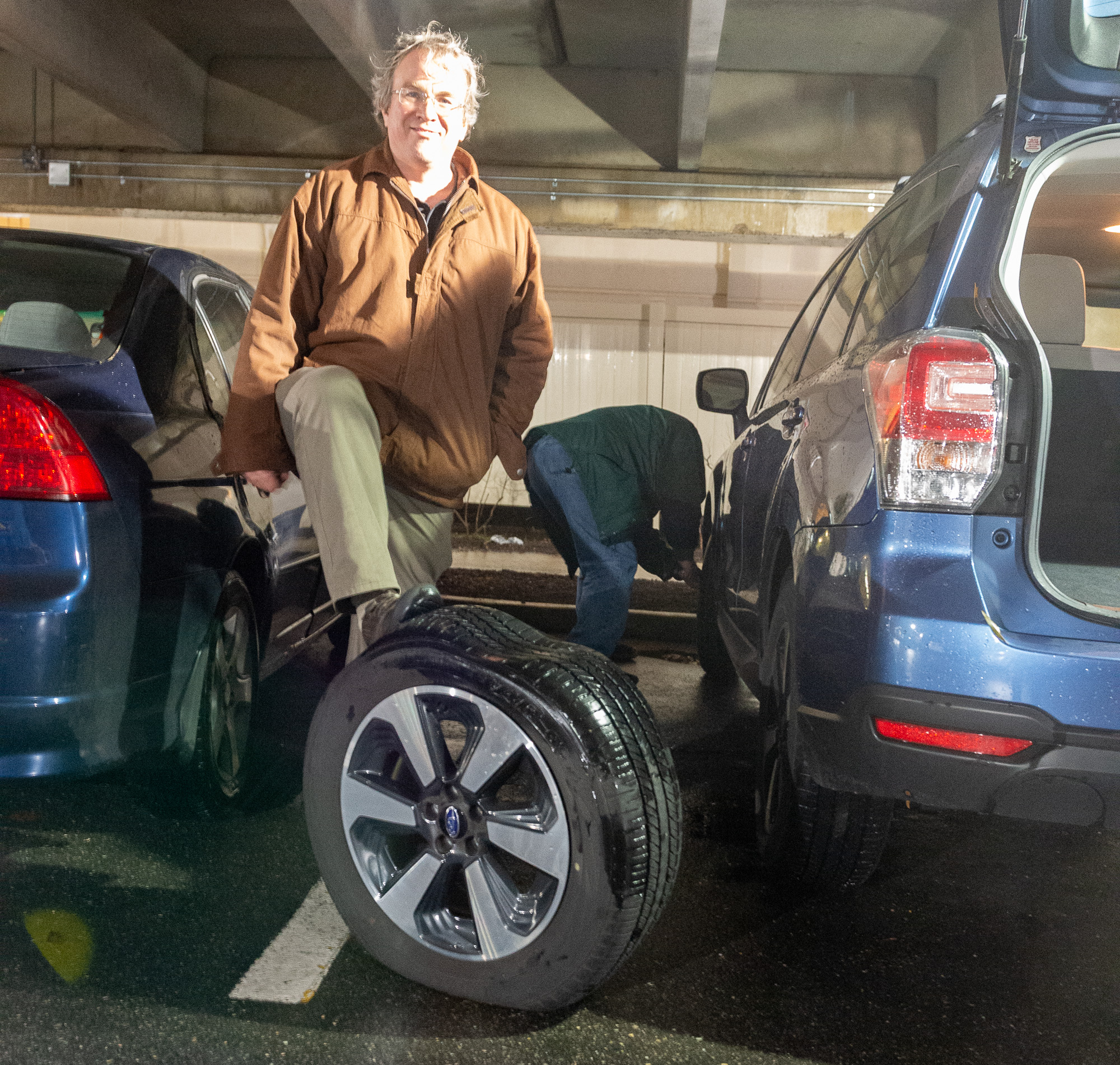
| We celebrated with a team dinner after the TCM decision meeting. But lest we get a bit too over-confident about our abilities, there was exactly one hazard left for us, waiting on Highway 29 in the middle of the road. |
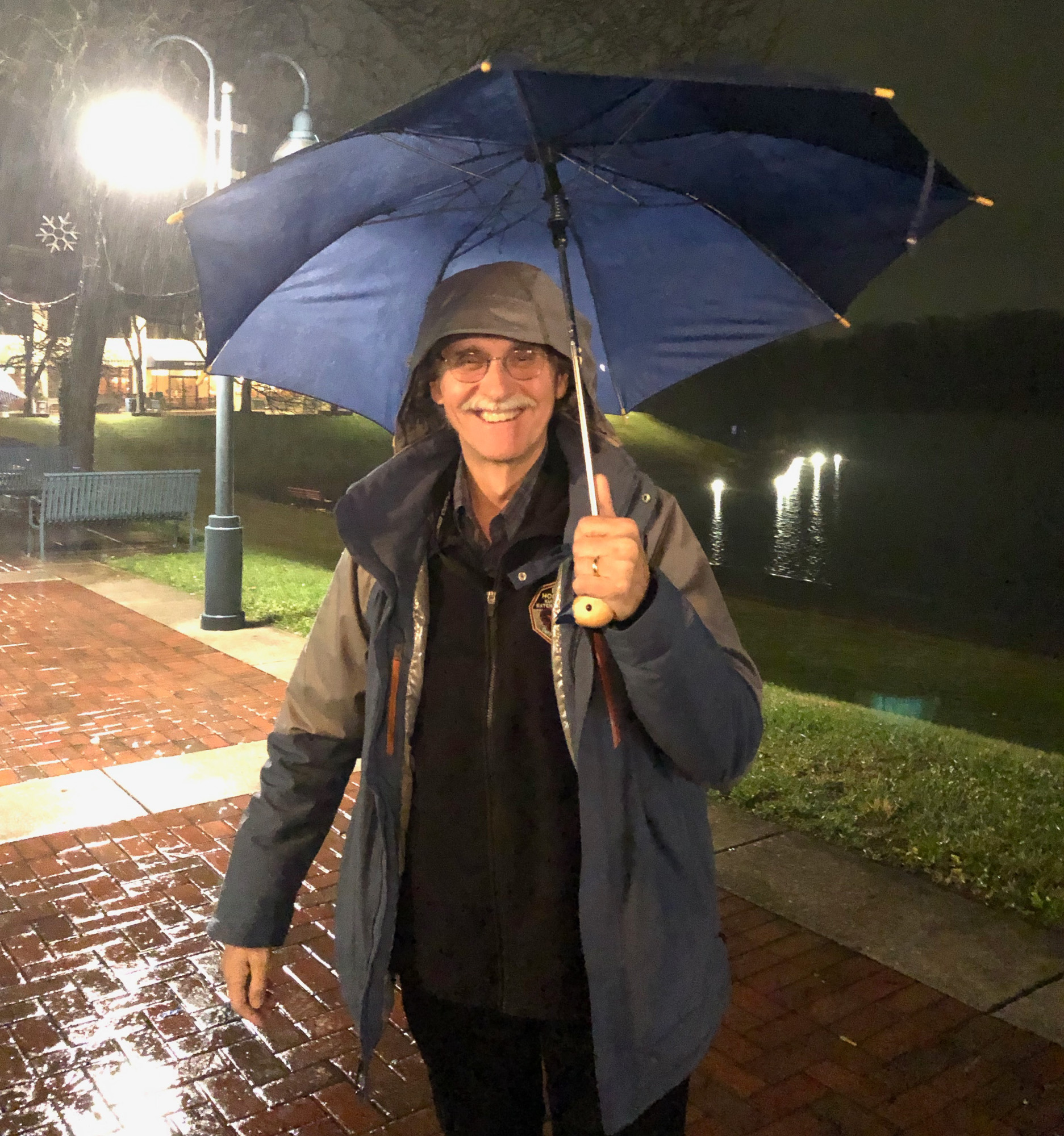
| John Spencer takes off in the rain. Many of us are headed home, but John is among the core team who is staying throughout Christmas and New Years to keep the spacecraft going. Then we'll all be back at APL on December 28 for the encounter itself. |
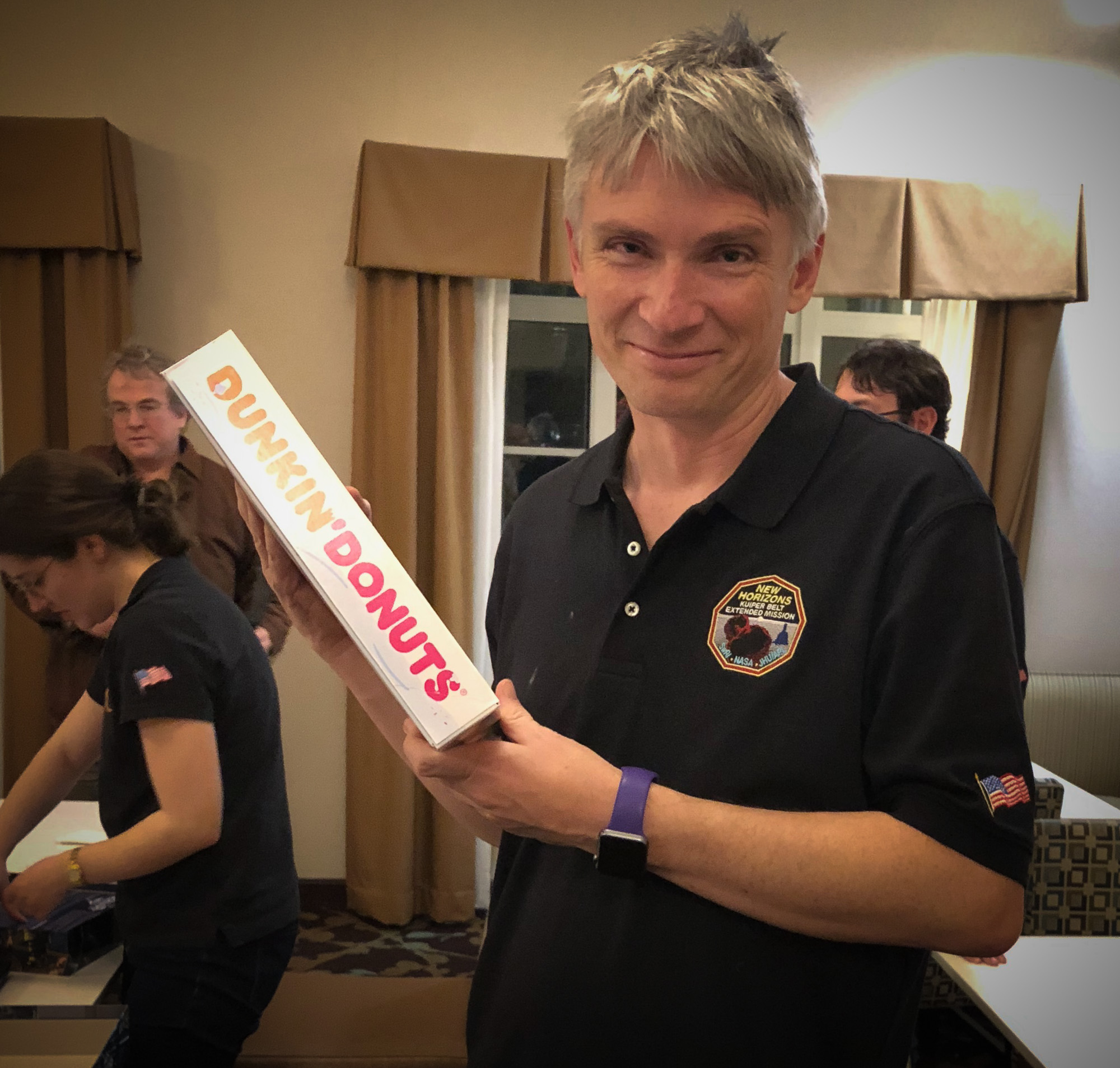
| Back at the hotel, after a big dinner, we still have 13 donuts to finish off. Why exactly? Early that morning, Tod and I were having breakfast together, and we were both independently thinking about how awesome it would be to get some donuts to bring in. And being Saturday, APL's cafeteria was going to be closed for lunch -- more reason for getting those donuts now! I bought the donuts from across the street, and then due to a series of unlikely events, ended up losing the donuts in the hotel. They'd vanished, and I was locked out of my room, and the cleaning staff denied all knowledge, and the front desk manager could not help. In the end, feeling lost and hopeless, I went back to Dunkin to replace my lost donuts. Two hours later the hotel called me and they'd located my missing donuts in front of a stranger's locked hotel room door. Thirteen extra donuts, and they had to be finished, so we made the most of it. |
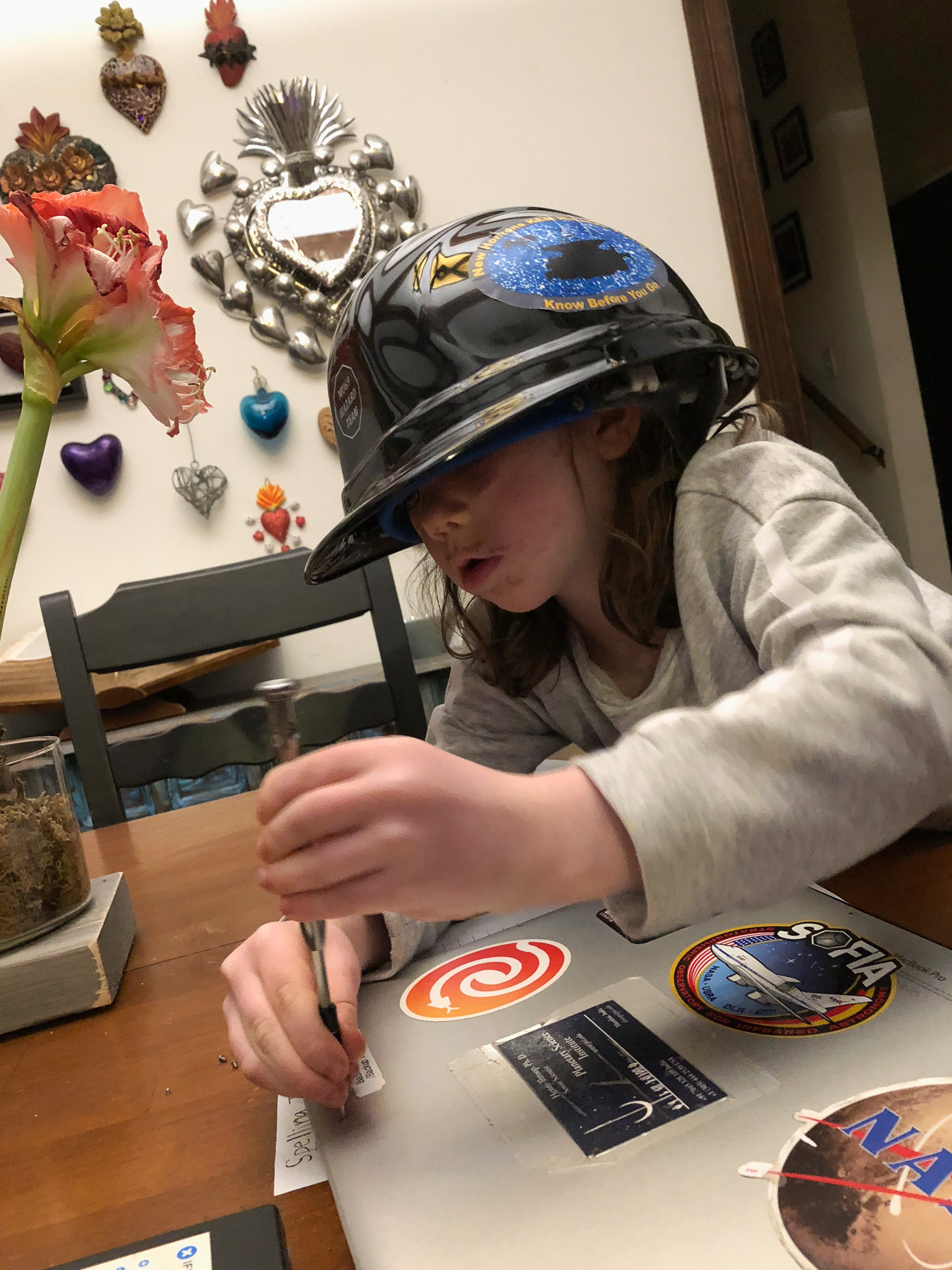
| And back at home, Astro has really taken to my hard hat. "Can I wear your astronomy hat to school tomorrow? And maybe your astronomy shirt too? And can I do a mission for you? Here, let me unscrew your computer, and you can call that a mission, and I'll get a sticker for it, OK?" Thank you to Heidi, Astro, Piper, and Finn, for keeping things going at home, and welcoming me back after my extended absence. |

|

|

|

|
 Return to list of galleries
Henry Throop
Last modified 11 Jun 2023