|
Flying in to beautiful Cape Town! That's Table Mountain at the center, with the port right below it. The observatory (where we'll have a 'base camp' for a few nights, but not observe the event itself) is in the city, a little to the left of Table Mountain.
|
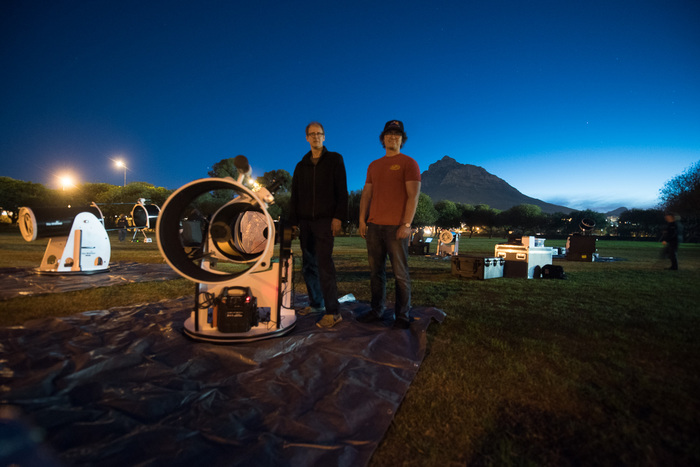 |
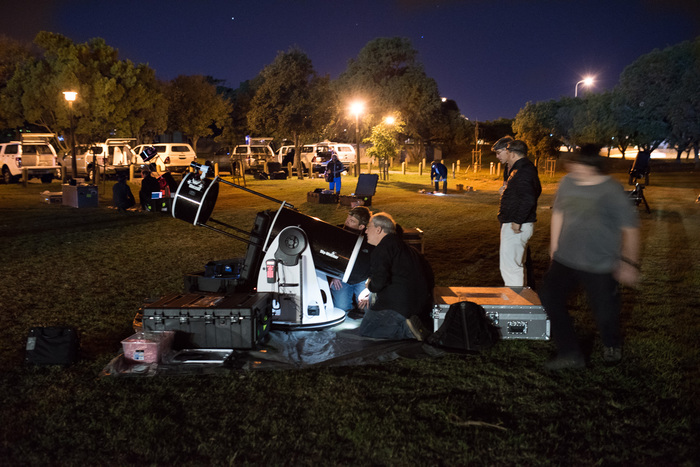
This is a telescope trip, so let's jump right in! I landed in Cape Town in the late afternoon, and headed over to the hotel were we staying at, next to the South African Astronomical Observatory (SAAO). Out in the grass in front of the hotel were a bunch of us already setting up. Most people arrived earlier in the day, and collected their telescopes from the shipper. Now were we were setting them up, finding any damaged or missing parts, and getting familar with the southern sky. Cape Town isn't a dark site (SAAO moved all their research telescopes to Sutherland in the 1970s), but we don't need that tonight. Here, Jeff Regester and Sam Strabala have just set up their telescope.
|
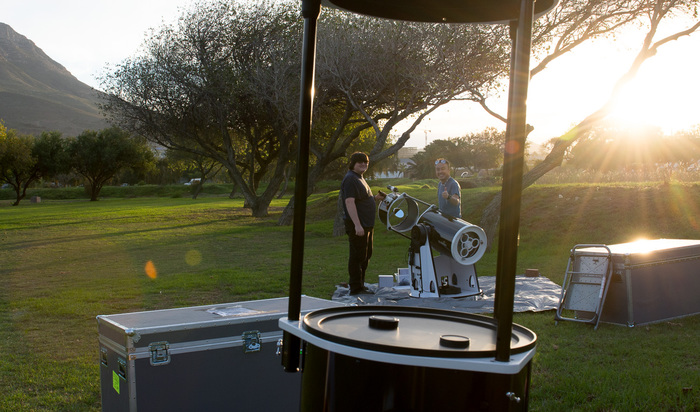 |
Con Tsang and RJ Smith have unpacked theirs as well. These are brand new 16" dobsonians. Typically Dobsonians are very manual telescopes, but these have drive motors and have most of the capability of much fancier scopes. They're a lot cheaper, too.
|
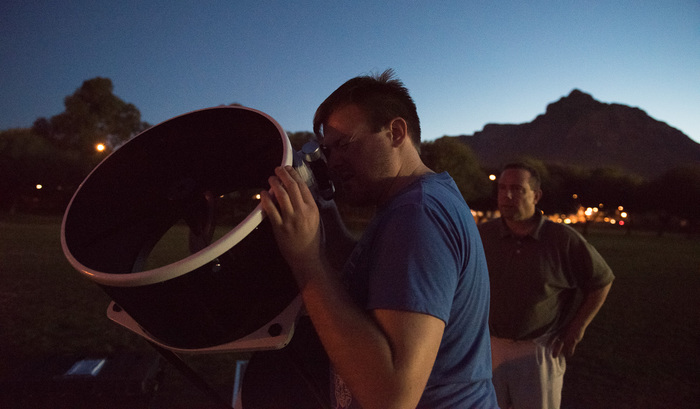 |
Alex and Eliot try to get aligned on Jupiter. The finder got knocked pretty far off during shipping, so they were using the brightest thing in the sky. Behind them is Devil's Peak, which is blocking the view of Table Mountain that you can see from almost everywhere in Cape Town.
|
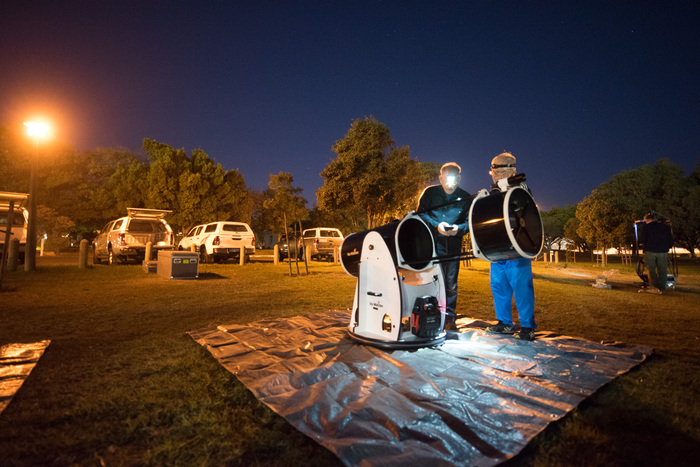 |
Ted and Paul are amateurs frrom Phoenix. They're both really experienced observers, who've spent a lot more time using telescopes like these in the field than many of us.
|
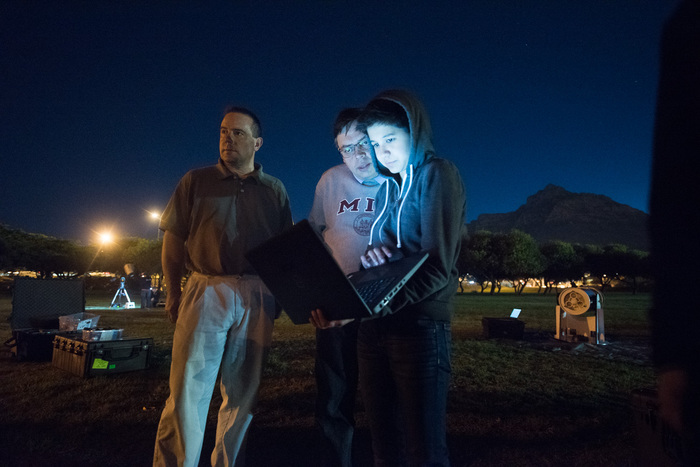 |
Eliot Young, Michaael Person, and Anicia Arredondo.
|
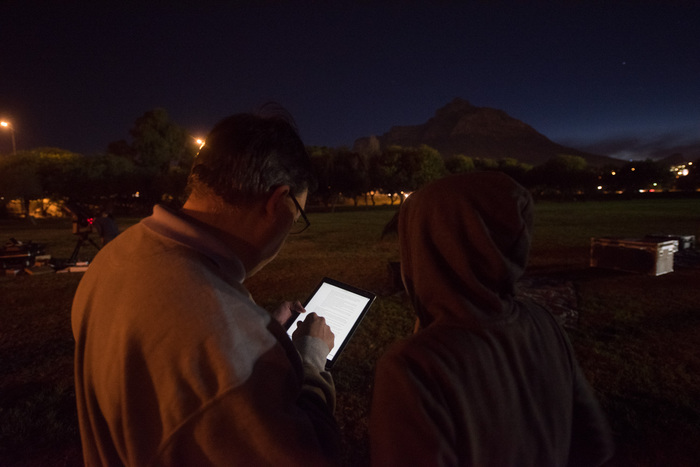 |
Michael Person and Anicia Arredondo.
|
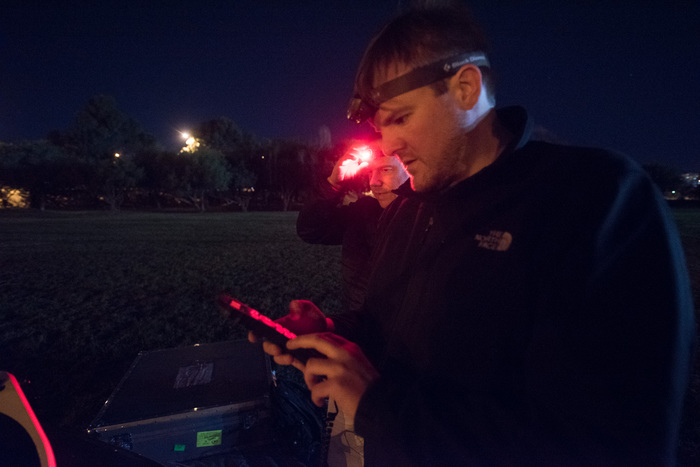 |
Eliot Young and Alex Rolfsmeier figure out the hand paddle that controls the telescopes. These telescopes are brand new -- with the exception of some practice in Boulder, most of us have not used them before. Thus, we have a bunch of 'practice nights' -- both to figure out the systems, and shake out any issues.
|
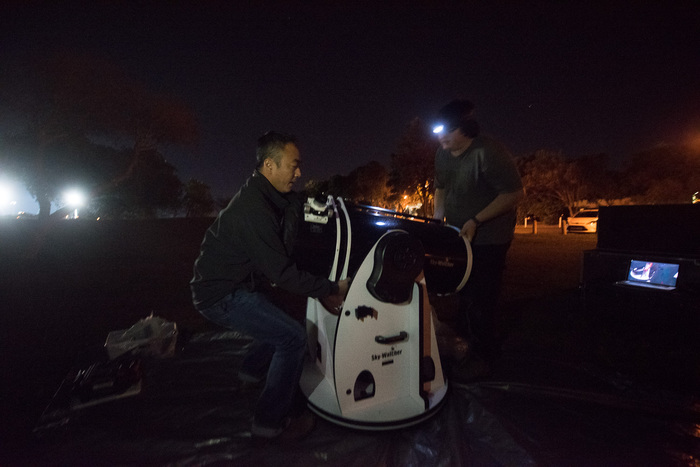 |
Con Tsang and RJ Smith load that optical tube assembly (OTA) into the base.
|
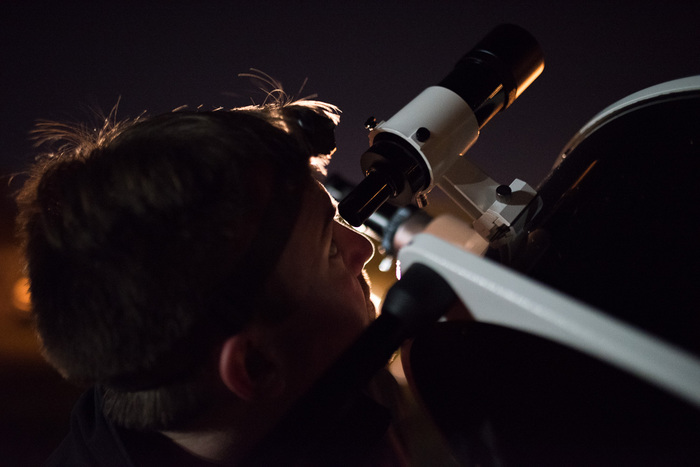 |
Alex Rolfsmeier searches for a target.
|
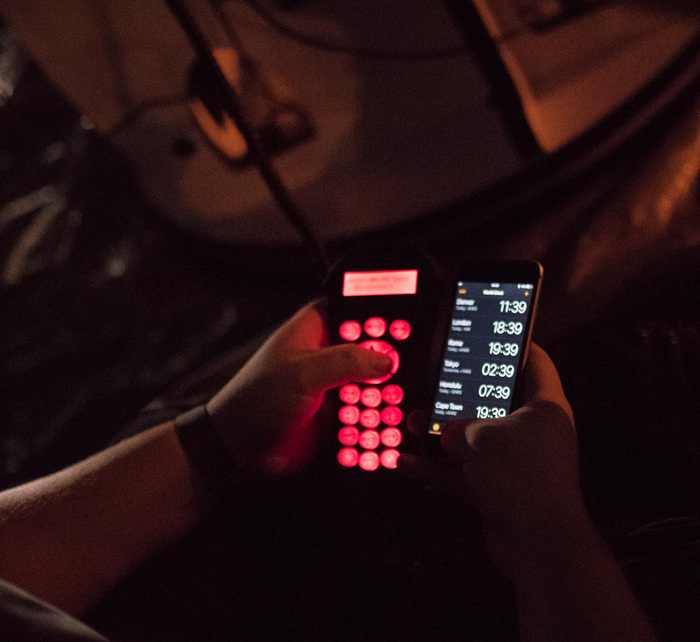 |
A common theme of the evening: time zone conversions! For consistency, we had all of the computers and telescopes set up to use GMT, rather than local time, but this meant a lot of checking time zones at first...
|
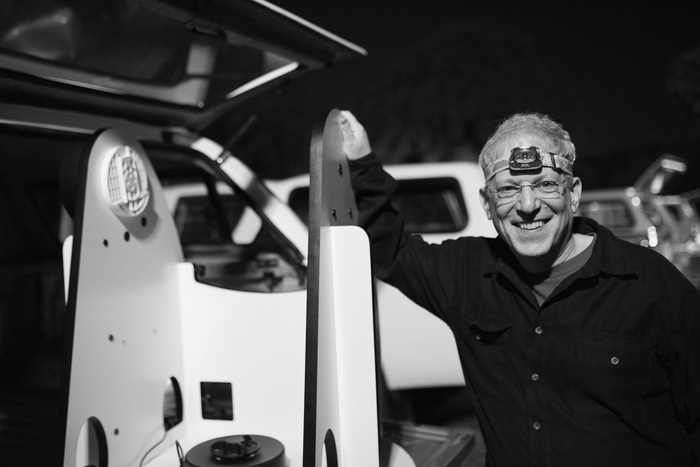 |
Ted Blank and a row of bakkies.
|
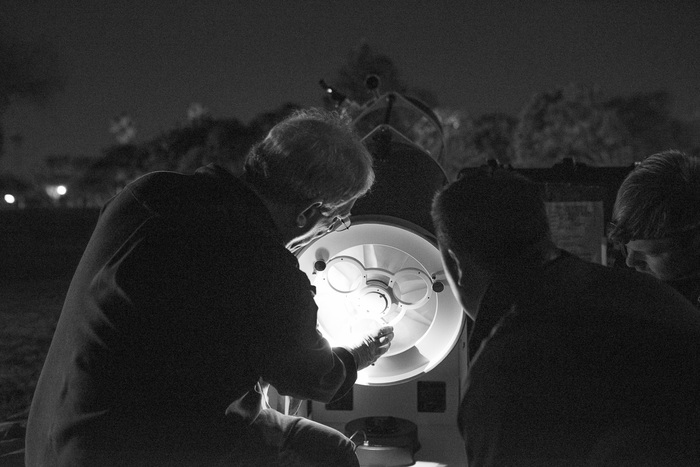 |
Looking at that mirror cell.
|
 |
|
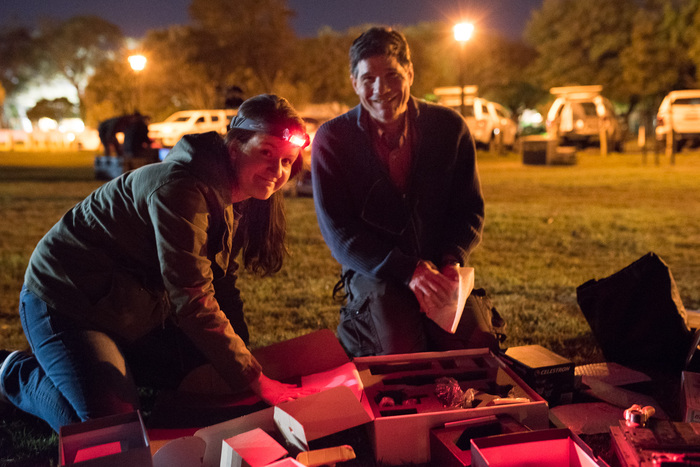 |
Bridget Anderson and John Wilson get their hardware ready. They are from UVA and brought their own three large telescopes (two 14" Celestrons, and a 24"), so they've got their own boxes to unpack.
|
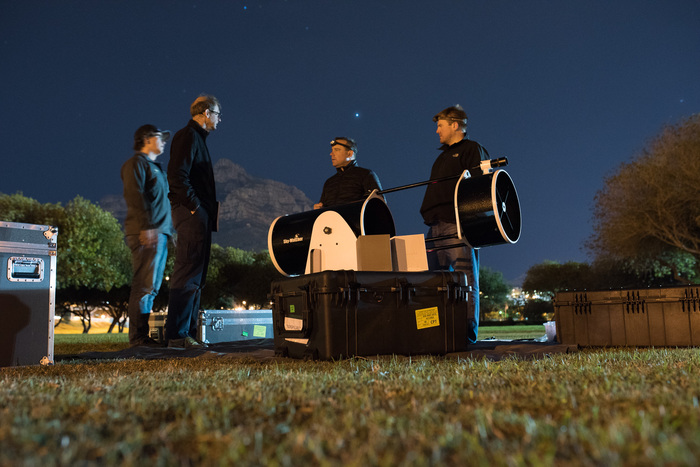 |
Sam, Jef, Eliot, and Alex confer.
|
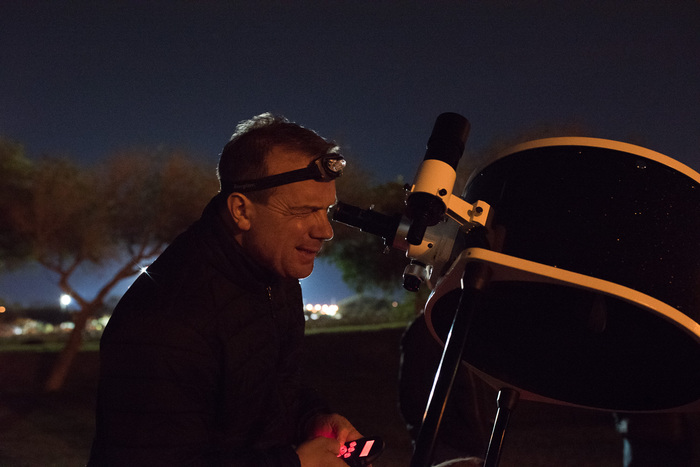 |
Eliot is convinced he will eventually find Jupiter.
|
 |
The next morning, Eliot and I spend some time tracking down local amateurs for advice on weather and sites, and running to hardware stores for equipment (foam padding, lots of tape, garbage bags, etc). In the afternoon, we all gather at the hotel for a group meeting. The group's plan is this: Another night of practice in the field at the hotel (same as last night), then shifting over to the field in front of SAAO.Drive north to Clanwilliam, where we'll be based for the event itself. Along the way, we'll find our individual sites. Finish with a night of practice in Clanwilliam.A night of practice at the real sites.And finally, the occultation itself, on the night of June 2-3, at 5:09 AM local time.Then we'll drive back, pack up the telescopes, drop them off to be shipped to Argentina for the next occultation, and fly back home.
|
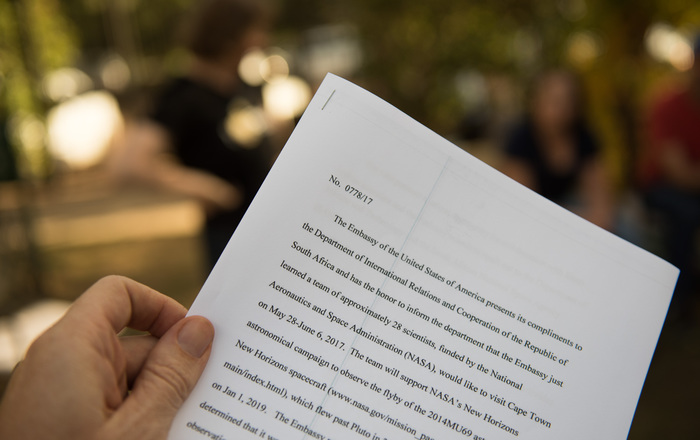 |
We have two important documents. One is Amanda's 'Plankton,' which is the essential tasty cookbook for how we set up the telescopes, find the field, and take data. The other is this handy 'diplomatic note' from the US Embassy, explaining what we are doing to any local police or farmers. The Embassy (and the local Consulate in Cape Town) did a ton of work to help us bring in our hardware, get vehicles, and be able to drive around safely.
|
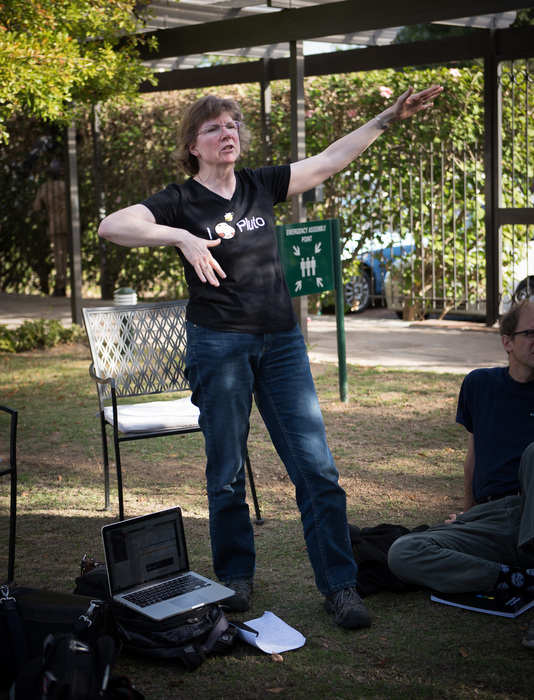 |
Anne Verbiscer is our leader!
|
 |
|
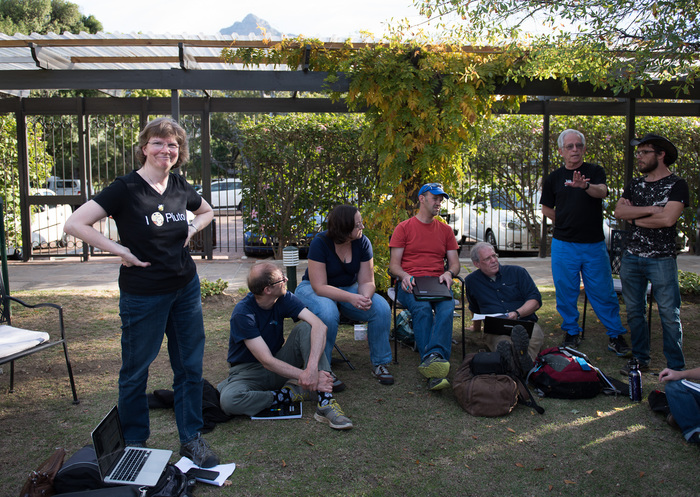 |
Anne Verbiscer is our leader!
|
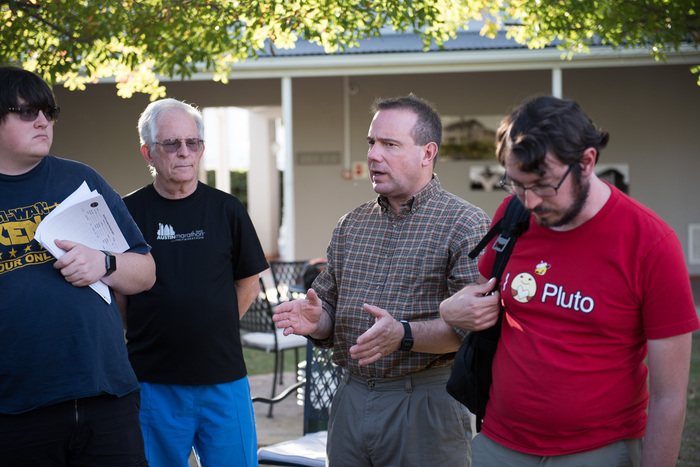 |
RJ Smith, Paul Maley, Eliot Young, and Simon Porter all love Pluto, even though only Simon is vocal about it today.
|
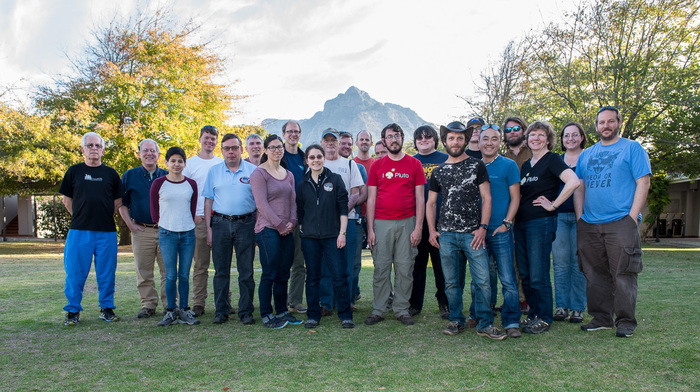 |
And this is everyone! From left: Paul Maley, Ted Blank, Anicia Arredondo, Christian Carter, Michael Person, Henry Throop, Trina Ruhland, Jeff Regester, Amanda Zangari, John Moore, Alex Rolfsmeier, Charles Danforth, Eliot Young, Simon Porter, RJ Smith, Jason Mackie, Sam Strabala, Con Tsang, Aaron Resnick, Anne Verbiscer, Emily Kramer, Amir Caspi. Institutions include SwRI, MIT, U. Colorado, UVA, JPL, IOTA, PSI. Everyone came from the US except for me, plus we were joined by a few more locals. And don't forget: in parallel to us is a similar-sized team in Argentina, plus a bunch of observers at ground-based observatories in both countries. This is a huge campaign -- by far the biggest occultation experiment ever conducted (except for those involving Amir's favorite planet, the sun).
|
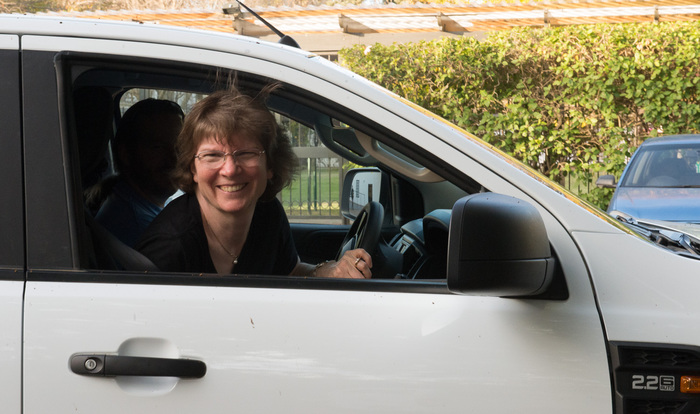 |
Anne head down the street to set up!
|
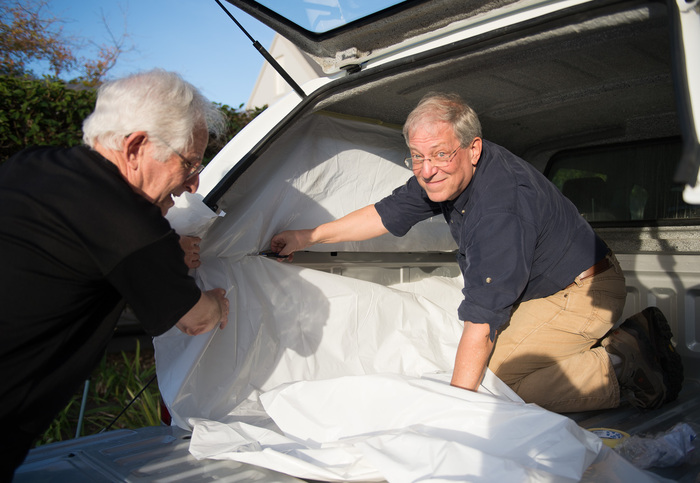 |
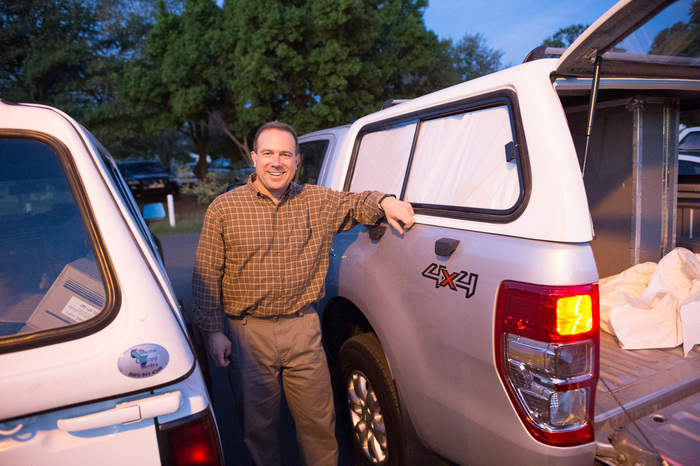
Paul and Ted cover up their vehicle to protect its juicy contents.
|
 |
|
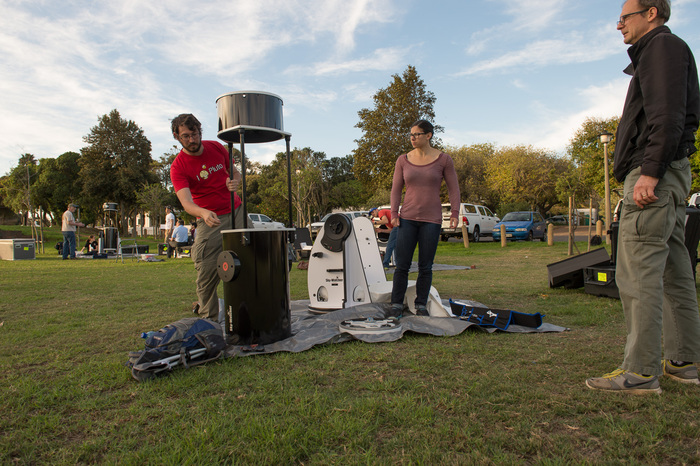 |
"Hey guys... can you come over here?"
|
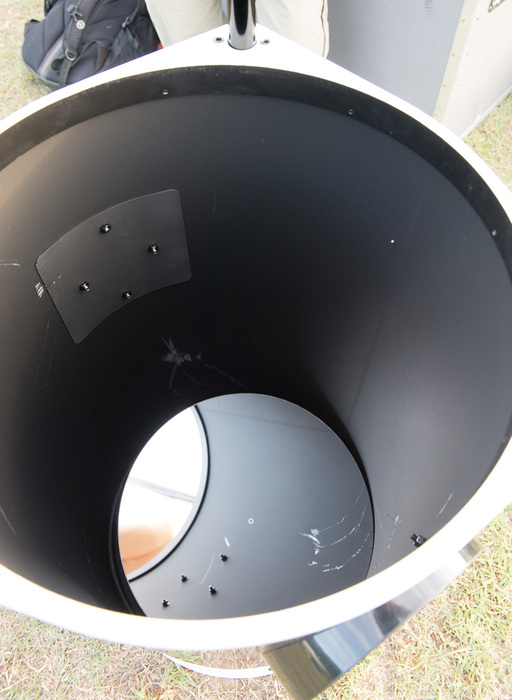 |
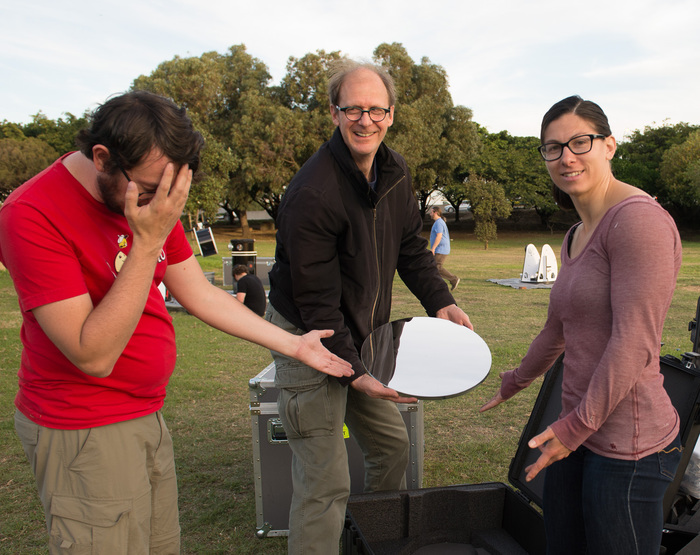
Well, here's something you never want to see... the primary mirror has somehow come off entirely! The scrapes on the side of the tube show that it's been bouncing around for some time.
|
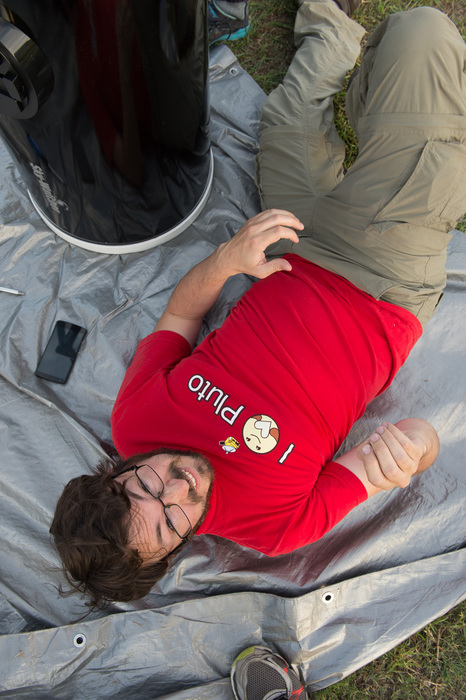 |
Simon gets down to assess the situation, and unscrew the mirror cell.
|
 |
|
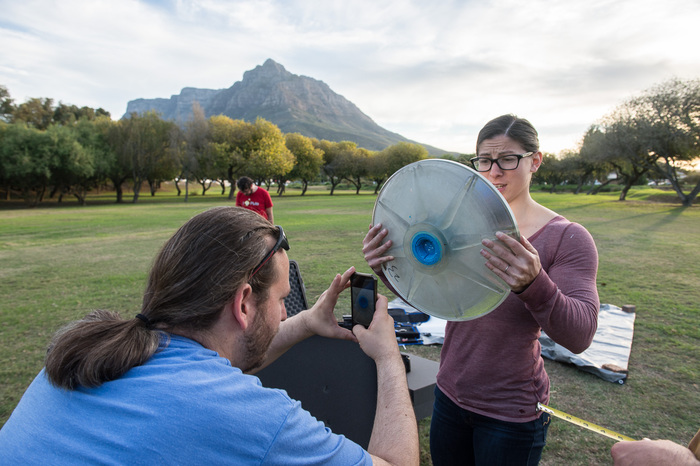 |
Amir photographs the broken connection, while Trina inspects the beautiful scenery behind her.
|
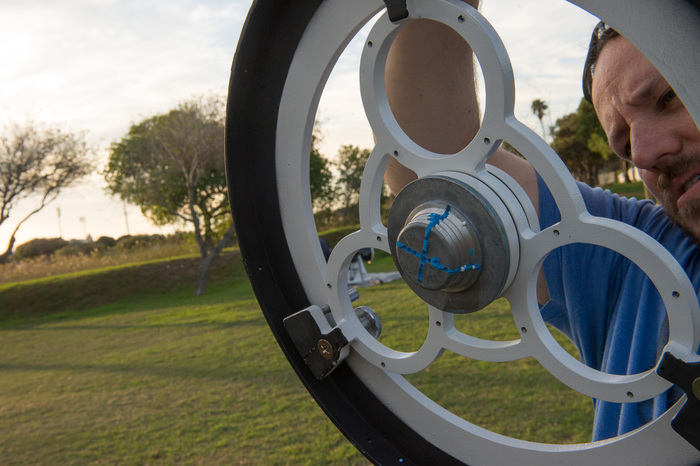 |
The mirror is apparently glued into place, using a silicone adhesive. It had just a single point of attachment.
|
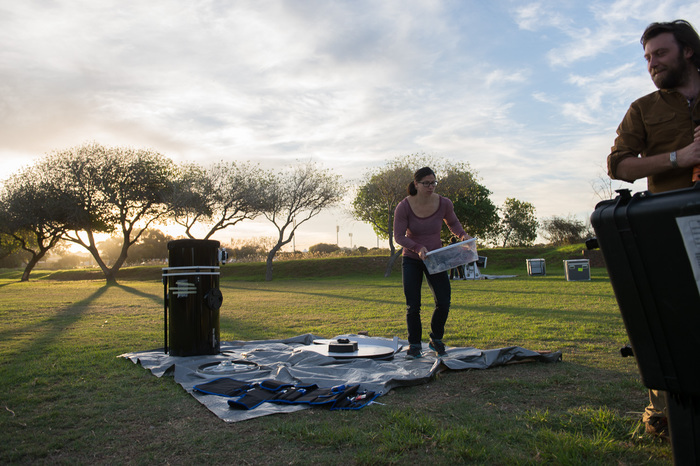 |
Trina packs up the rest of that telescope. They won't be needing it tonight...
|
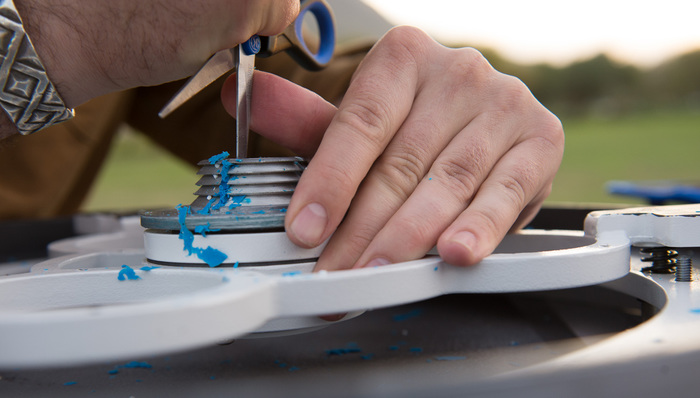 |
We have 26 people on the ground. Most people are assigned to one of 12 two-person telescope teams. Aaron Resnick and I are the two 'floaters,' so our job is to fix emergencies. Time to step up to the task! Aaron gets busy in scraping out that mirror cell connection. We're going to try to reglue it.
|
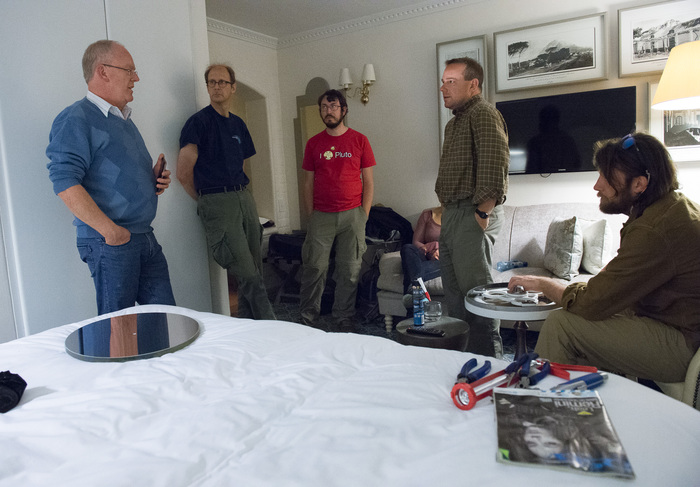 |
We're really lucky to get a visit by Martin Lyons, a telescope builder with one of the local clubs (the Cederberg Astronomical Observatory. We talk about mirror gluing with him.
|
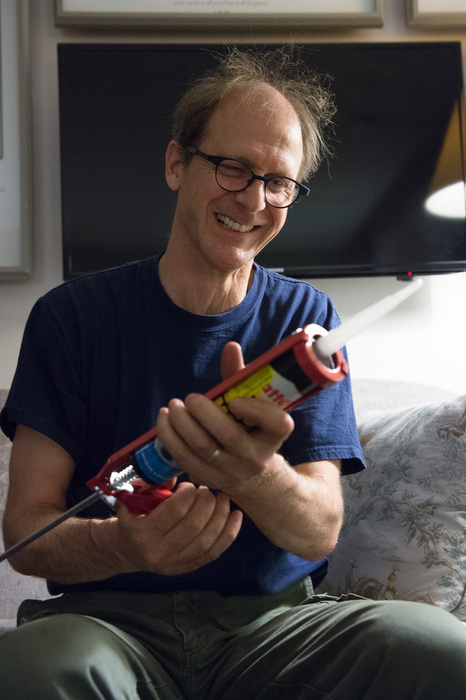 |
Jeff has bought some strong adhesive, and is getting ready to glue it.
|
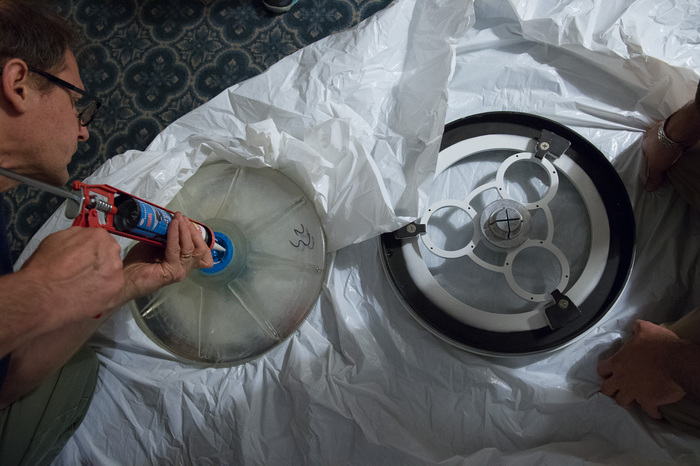 |
Glueing that mirror back on...
|
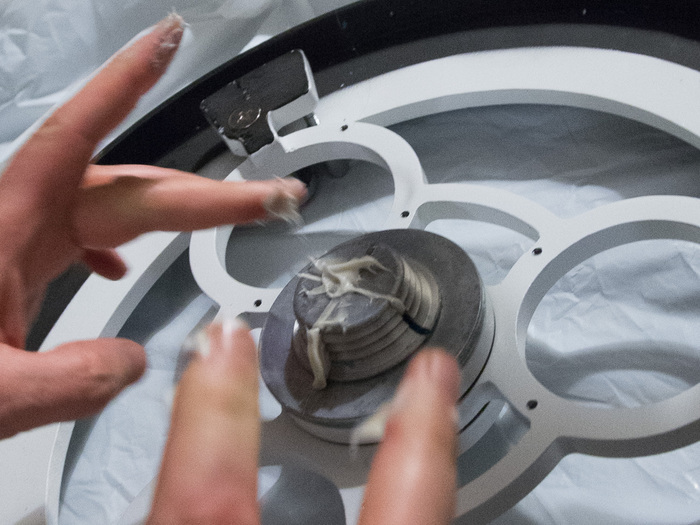 |
It's very sticky adhesive -- that sort of amount will take hours to rub off of one's hands (as I found out from experience).
|
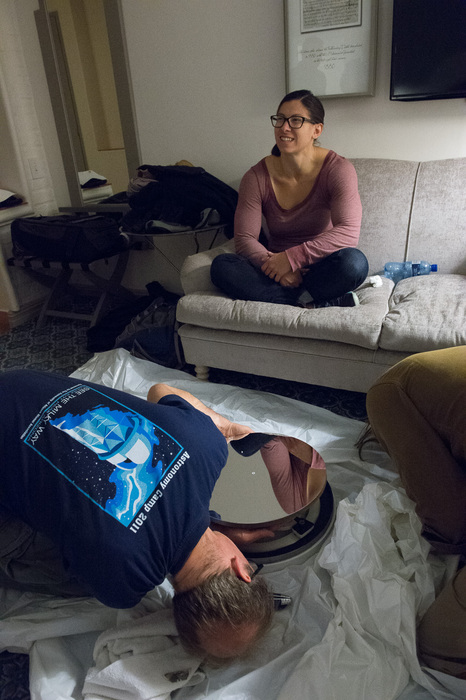 |
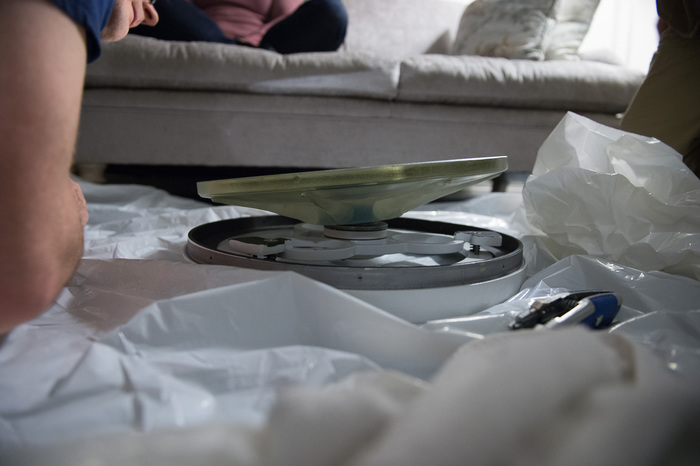
Jeff placing that mirror.
|
 |
|
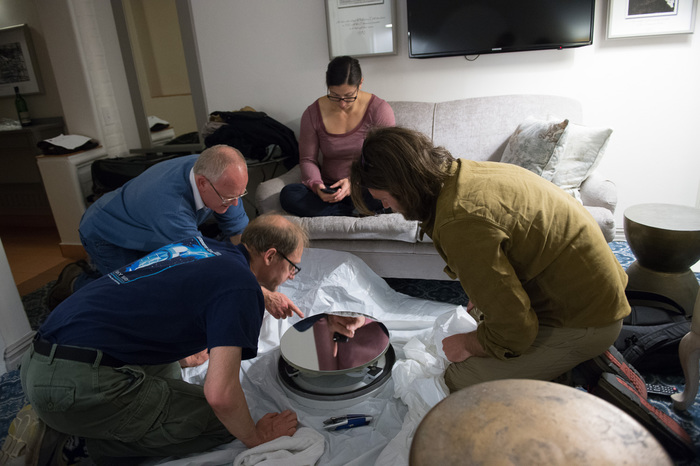 |
Martin lends a hand, and some advice. "But you know what? I don't think it's going to stick. I just don't think it will. If we had more time, what we should do is bring this telescope to my place, and I have a vacuum chamber that I use for gluing mirror cells on."
|
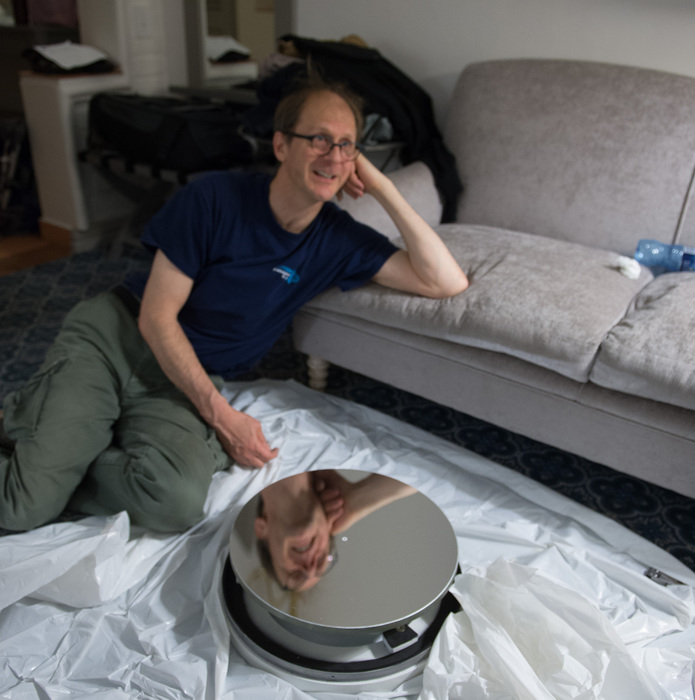 |
Martin was right: in the morning, it was on, but not tight enough to keep it secure while rattling across dirt roads in the Karoo.
|
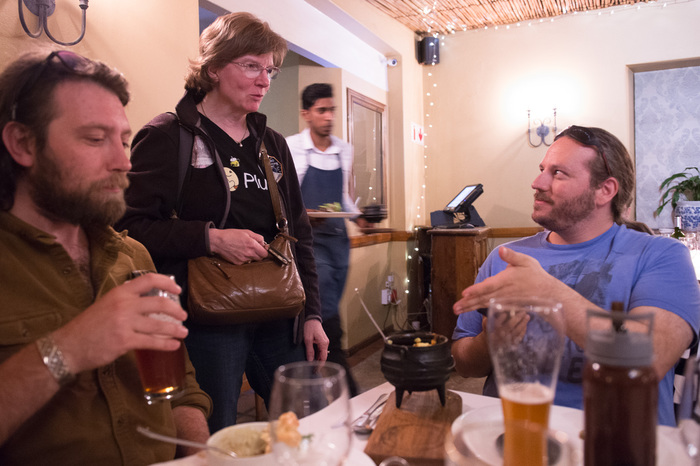 |
We're at the hotel restaurant, specializing in South Africa's favorite cuisine: red meat. Also, butternut, and beets. "Anne, certainly you'd like some of our springbok hot pot, would you not?"
|
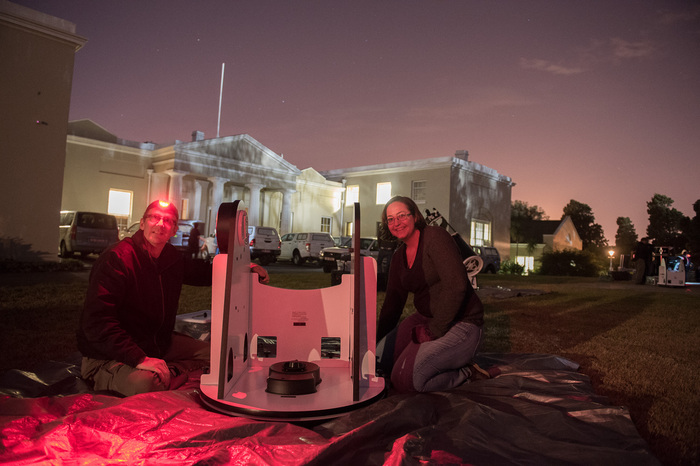 |
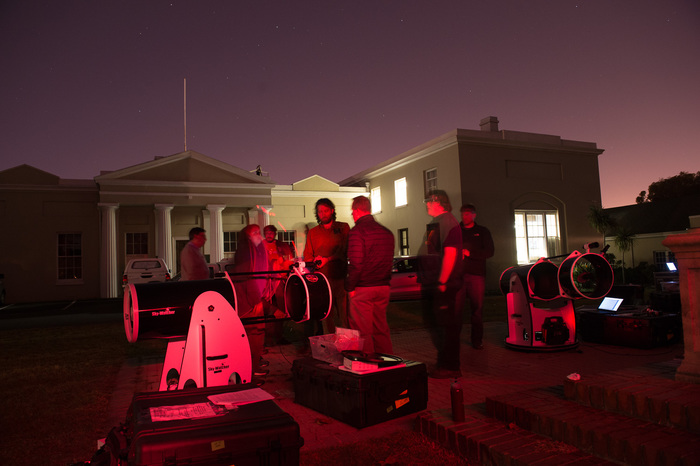
After dinner, we head about 300 meters down the road to SAAO. The main observatory building (with the columns) was built in 1829! There's a long history of science done here, including a lot of early work in stellar parallax. The large telescopes from Cape Town, Johannesburg, and Pretoria were moved to the new dark site in Sutherland (4 hours to the NE) in the 1970s. I suppose by setting telescopes on the observatory grounds, we are rekindling the historic age of Cape-based South African astronomy!
|
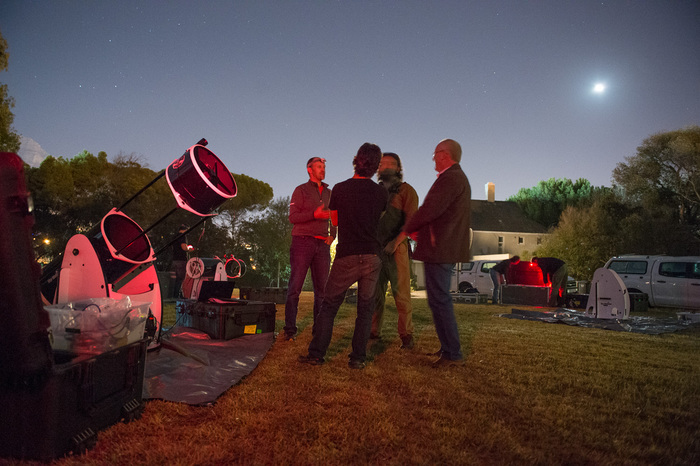 |
Charles, Aaron, and Jason talk with Martin Lyons. That's the moon rising behind them.
|
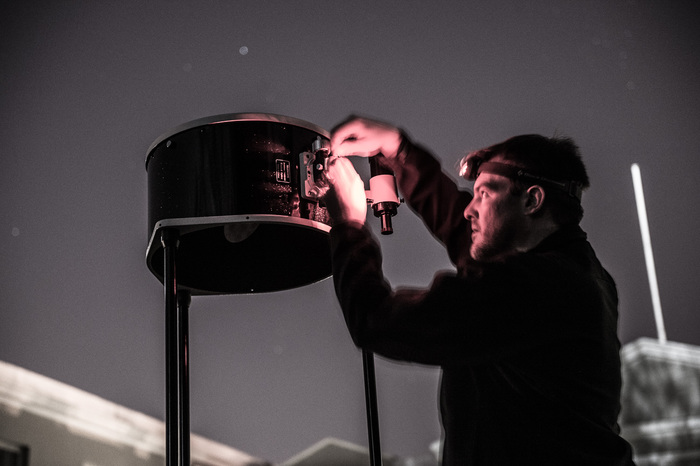 |
Alex aligns his finder scope.
|
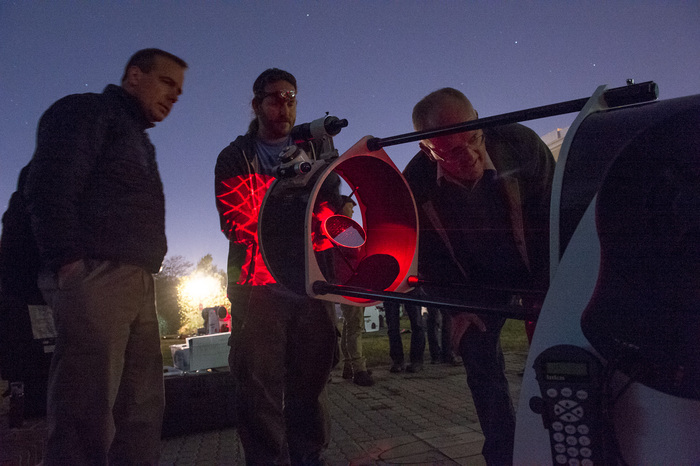 |
Martin Lyons proves to be extremely useful for getting these telescopes collimated. The mirrors have gotten knocked around quite a bit on their trip from Boulder, but his laser collimators do a quick job in getting the primary and secondary re-centered.
|
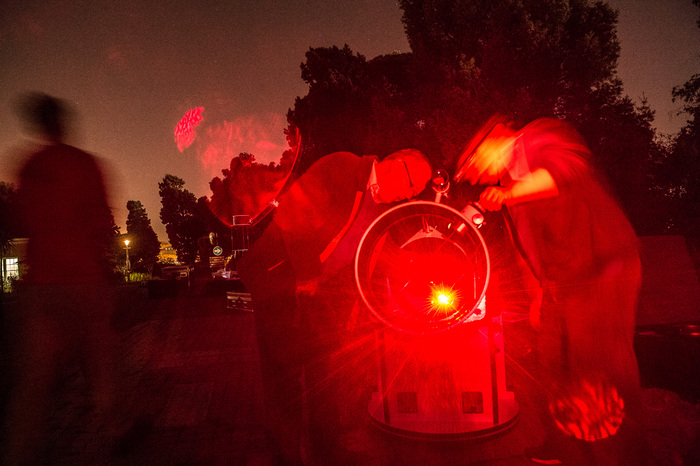 |
DO NOT LOOK AT THE LASER BEAM!!!
|
 |
|
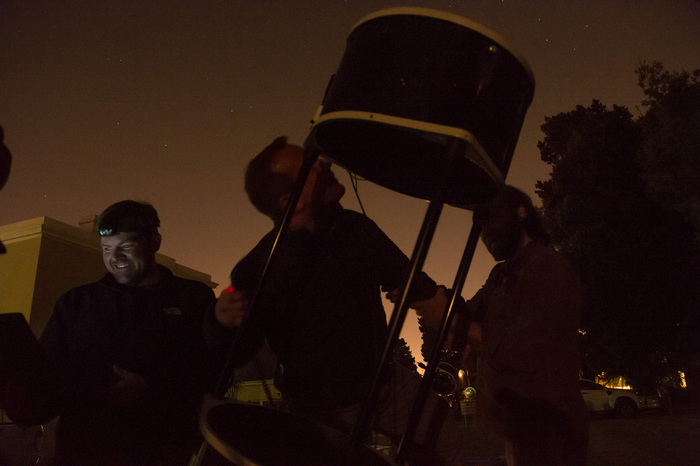 |
Eliot and Alex work their telescope.
|
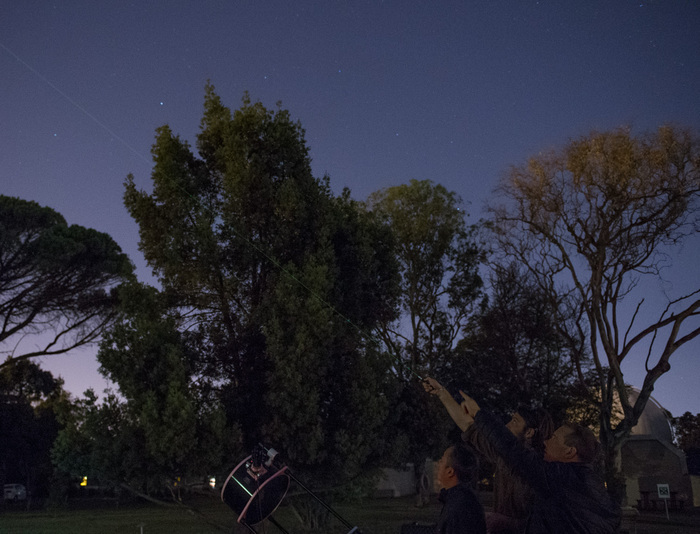 |
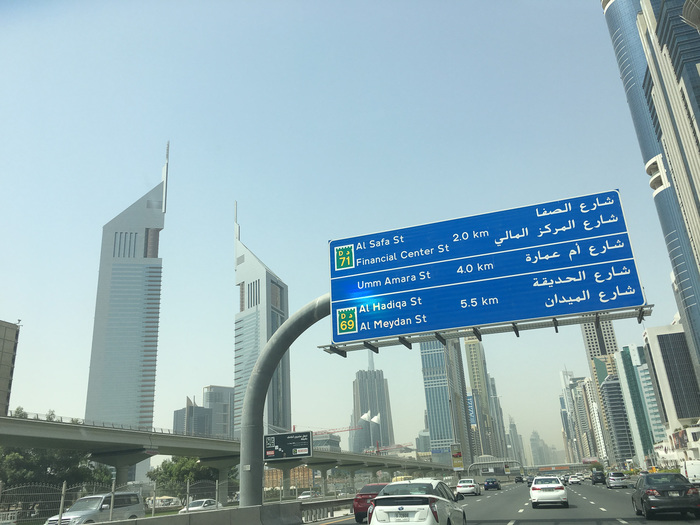
Oooh! My green laser pointer comes useful, as we try to find our target field. Our star itself is a relatively nameless 15th magnitude object, but it is near the 2nd mag star Nunki (aka Sigma Sag). One week later, my discussion with immigration in Dubai went like this: Them: Sir, is that a laser pointer you have with you? Me: Yes, it is? Them: What color is it? Me: Green. Them: Please sign this form, and we will destroy your laser pointer for you.
|
 |
|
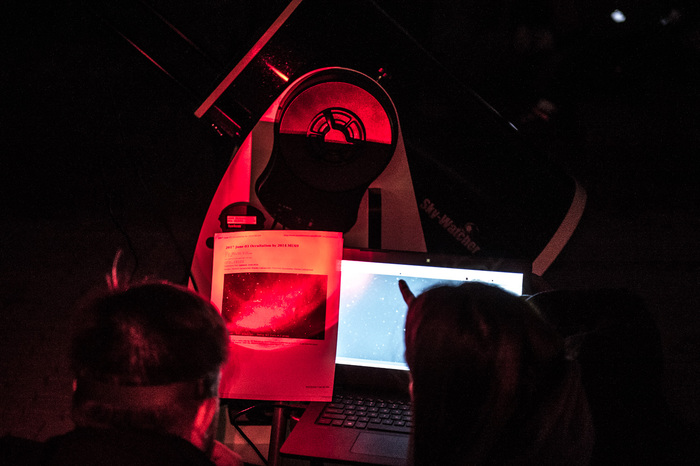 |
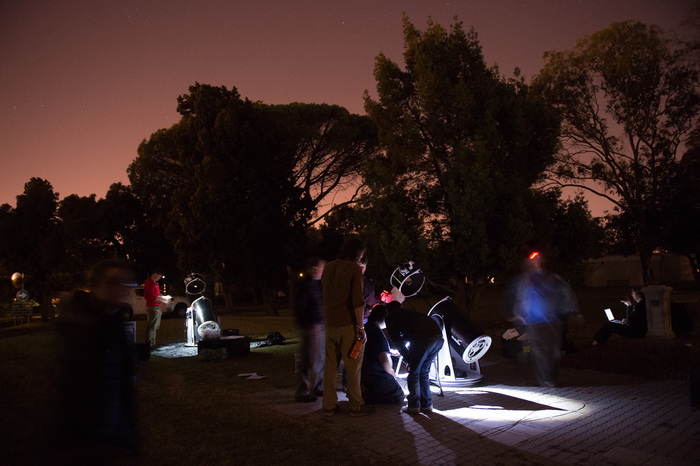
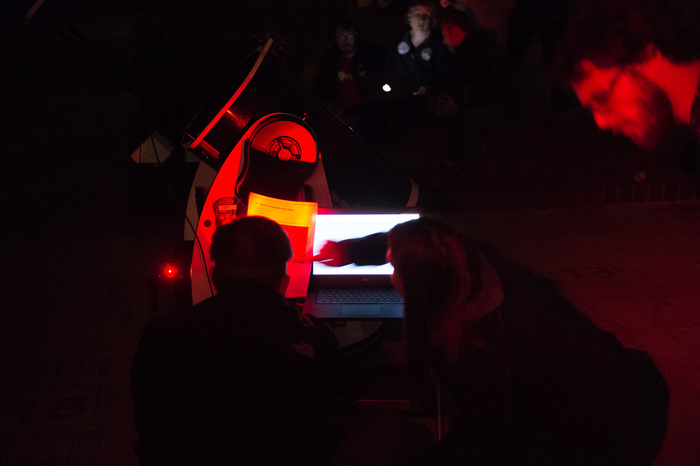
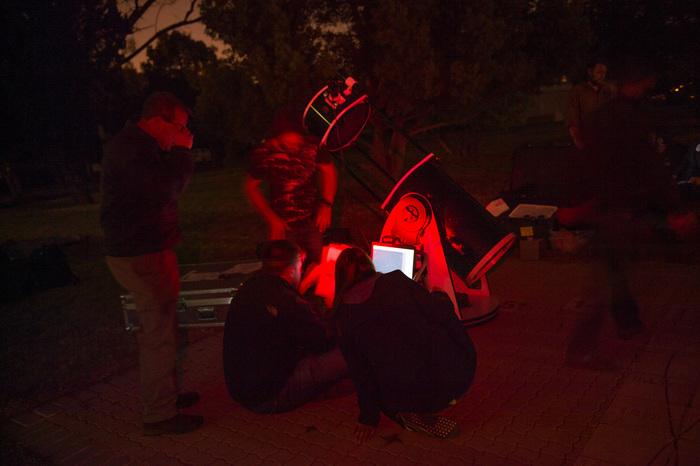
And they are on the field! Amanda has put printed star charts in the 'Plankton,' which after some rotation eventually match what we see on the screen.
|
 |
|
 |
|
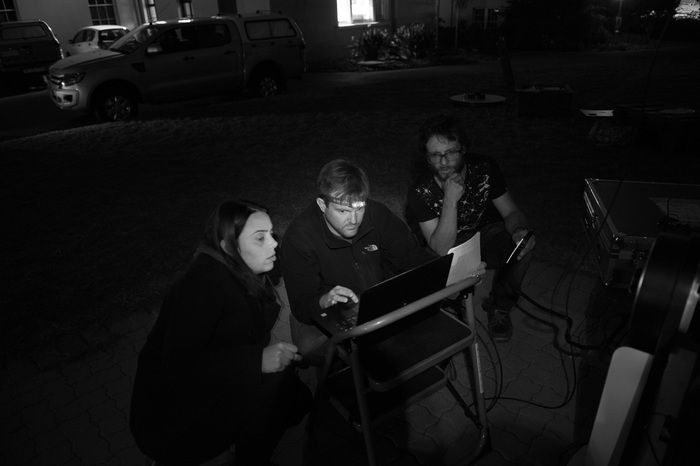 |
Anja, Alex, and Jason try to match stars.
|
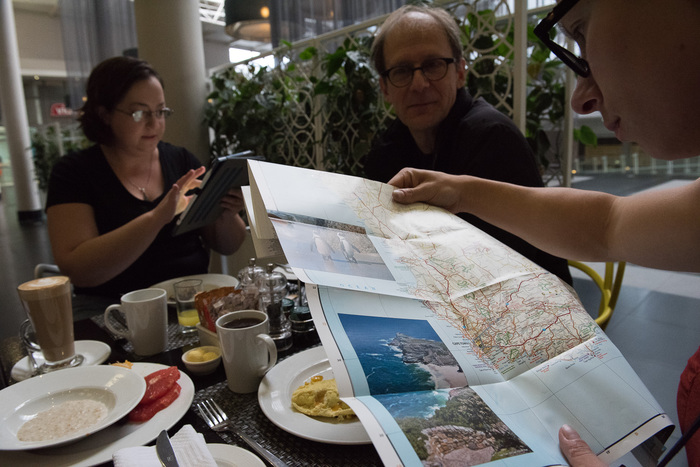 |
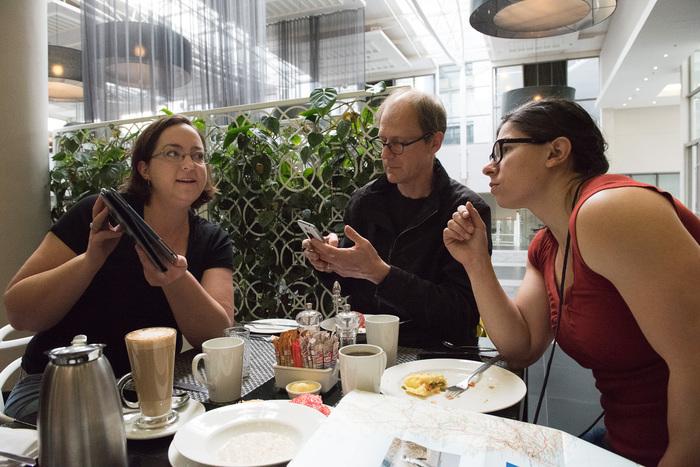
The next morning, back at the hotel. I'd forgotten about South Africa breakfasts, but this is a massive spread. Trina pulls out that map.
|
 |
|
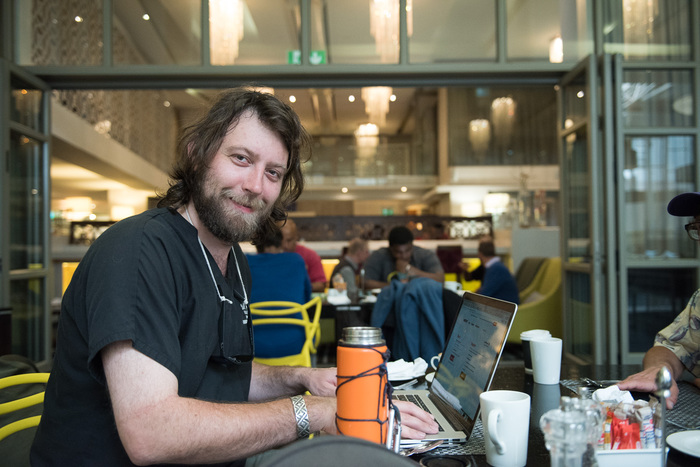 |
Aaron has his EMT outfit on, in case we have any medical emergencies at that breakfast buffet. He is a retired ski patroller, turned occultation chaser.
|
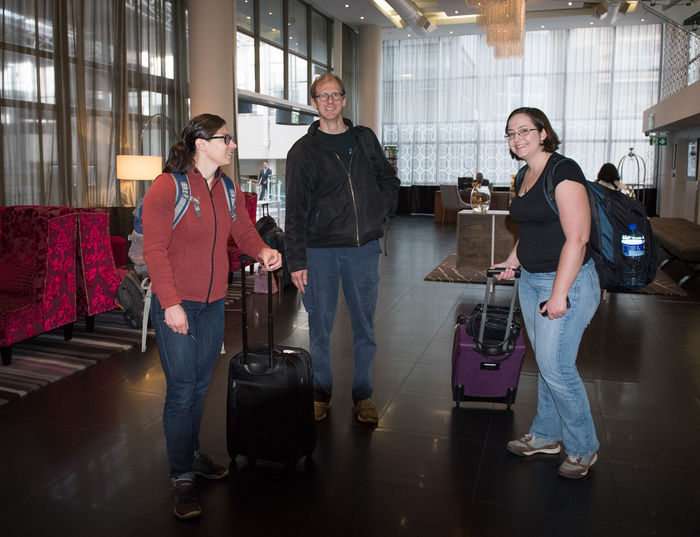 |
And we're about to head off! Trina, Jeff, and Emily check out of one hotel and head to their bakkies to drive north.
|
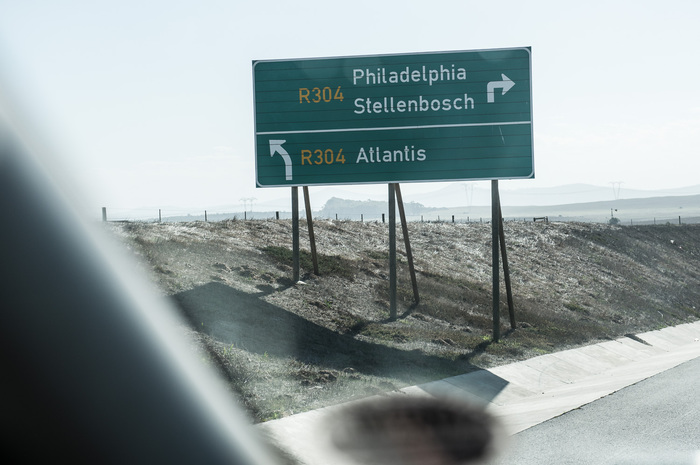 |
What an amazing set of choices we are offered!! It was hard to pick just one...
|
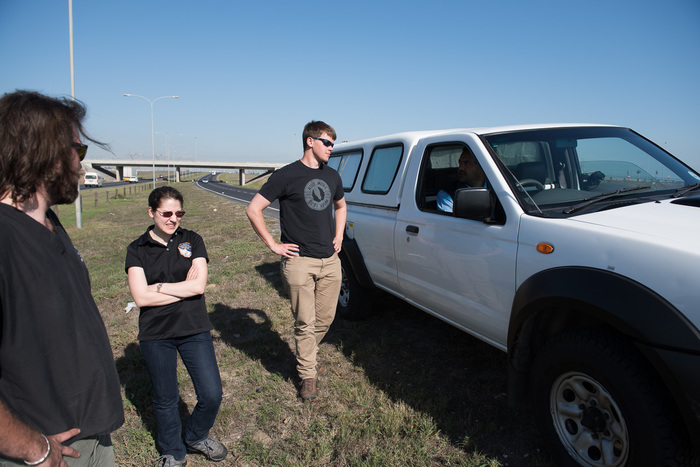 |
Aaron and I have picked up supplies and a local obsever in Cape Town. But as we leave the city limits, we get a call from Amanda and Christian, who have suffered a breakdown heading out of town. The rental car company is en route with a replacement, but we come by to make sure everything is sorted out.
|
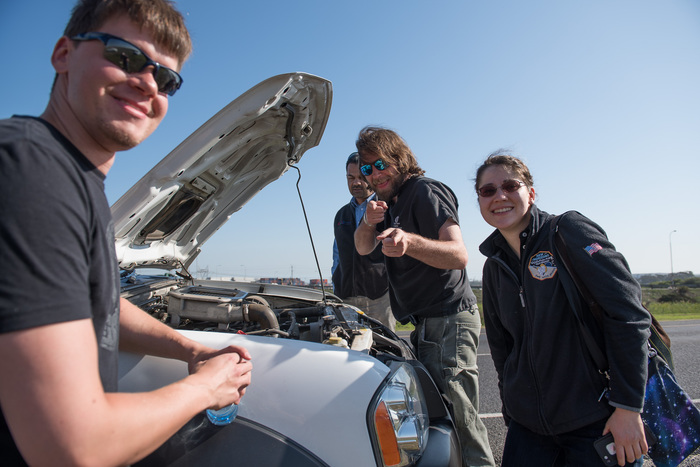 |
Amanda's dad is a mechanic. "His advice? Get a new bakkie."
|
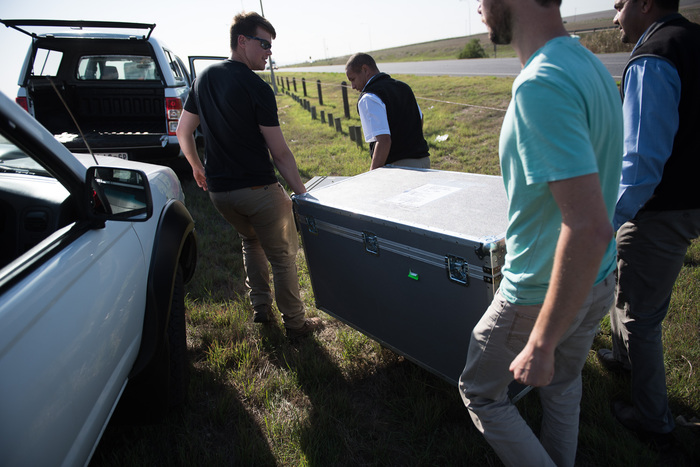 |
At 16", these telescopes are by no means huge. But the heavy duty shipping crates we have at least double their size and weight, and it's a challenge to get everything into a full-size bakkie, plus a pair of observers. We move things to the new vehicle, and everyone heads north.
|
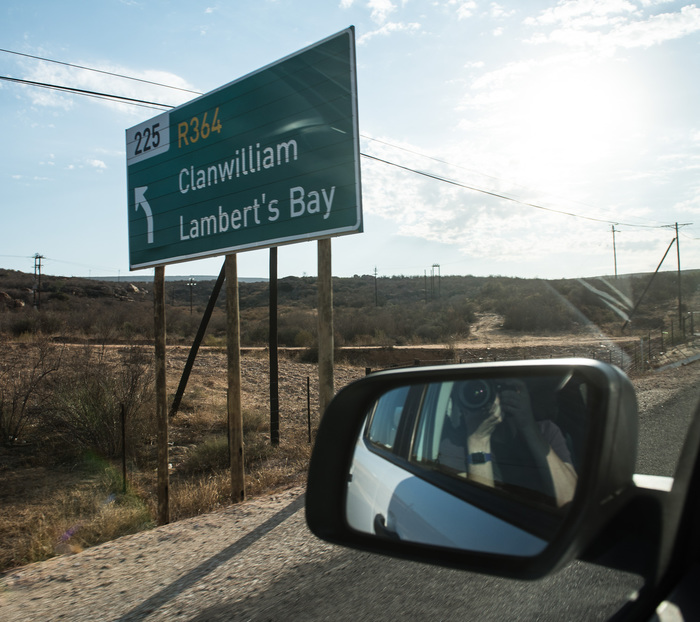 |
We've made it about three hours up the N7 to Clanwilliam. The city is known as a major processor of Rooibos (South African honey-bush tea).
|
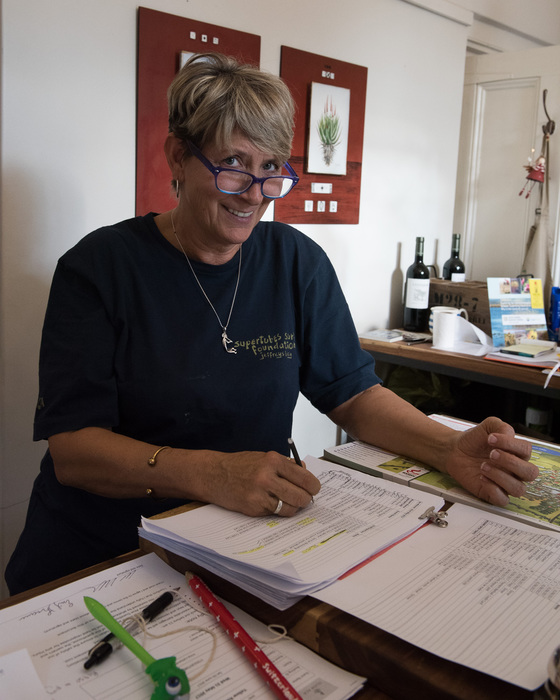 |
In Clanwilliam, we drop by the Yellow Aloe guest house, with the very charming Anne.
|
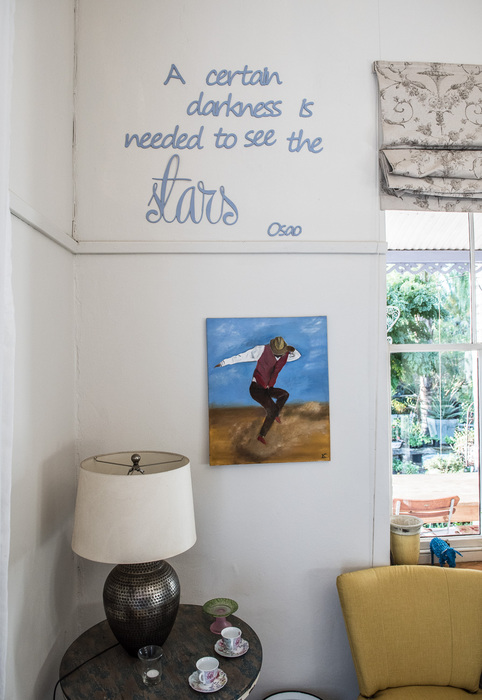 |
"Well, but you also need good weather!", someone points out.
|
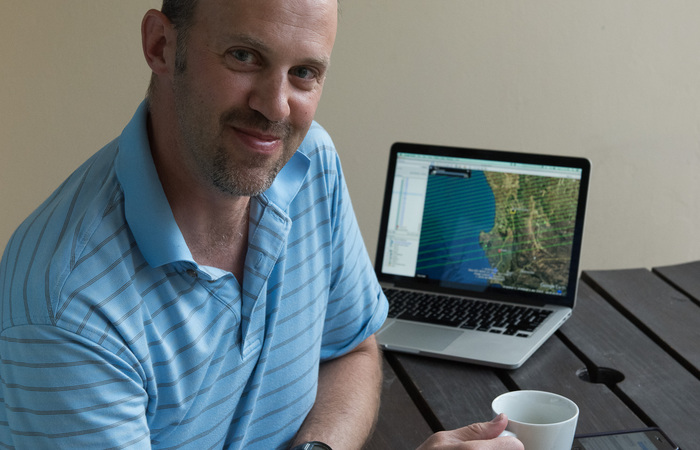 |
Most of the groups searched for sites during the drive up today. On Charles' laptop are the occultation chords -- i.e., each team is assigned one line, and can put themself anywhere, as long as it's on that line (and dark, and no deadly animals, etc.).
|
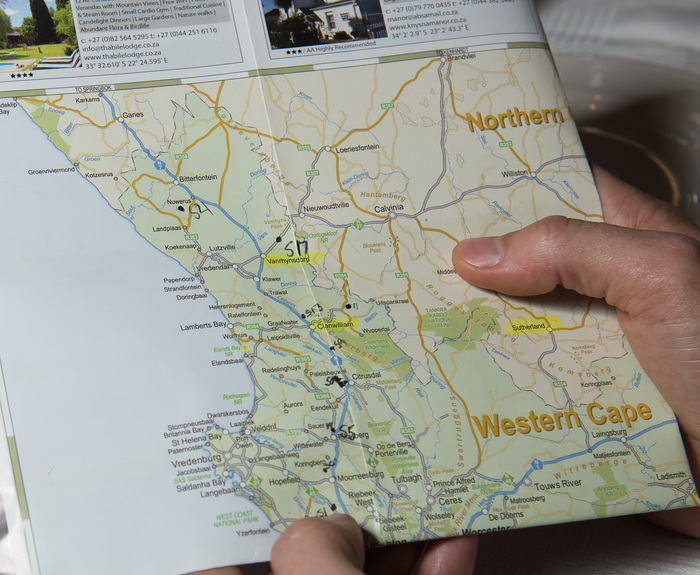 |
The sites along the chords are numbered from S1 to S21 (non-inclusive). 'S13' is the closest site to Clanwilliam. All the 'N' sites are in Argentina. As floaters, Aaron and I weren't assigned to a site, but will move around as needed.
|
 |
|
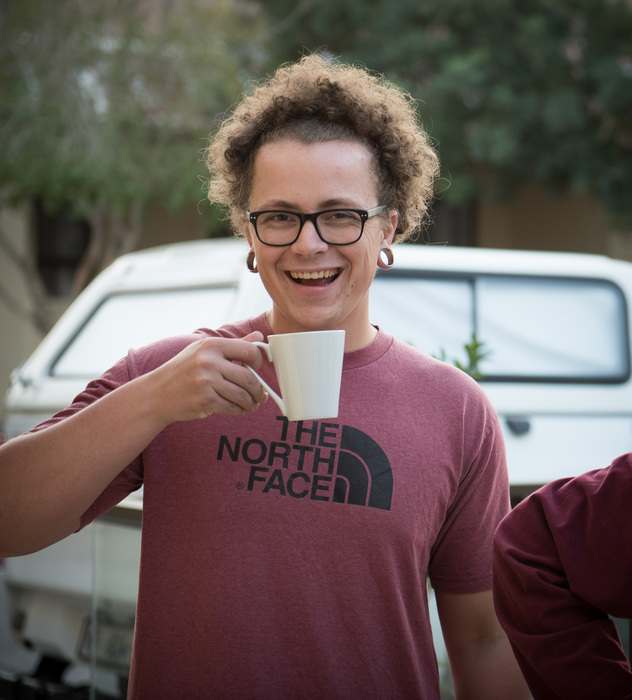 |
Sam Strabala enjoys that tasty beverage!
|
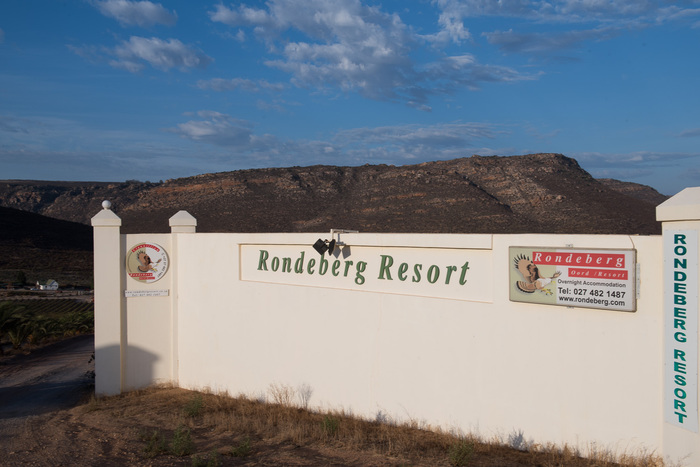 |
Our dark site near Clanwilliam is the Rondenberg Resort, which is an RV park ('caravan park') about 20 minutes outside of town. Many people stayed there, and we used it for meeting and night-time practice. Their website even has a big section covering the occultation, including articles in the Cape Times and the the local Afrikaans newspaper about the NASA group.
|
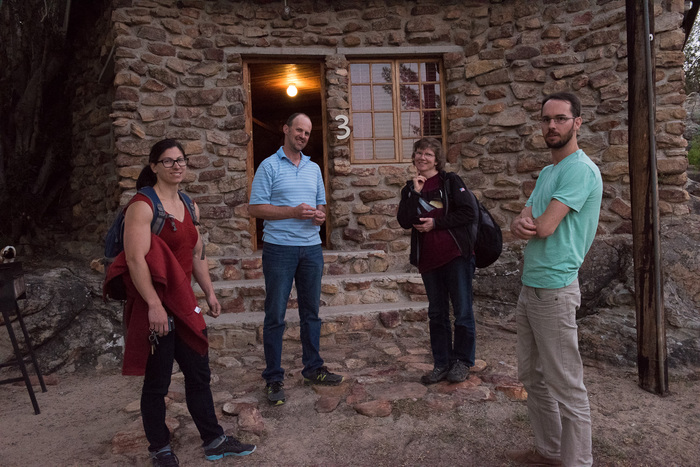 |
Trina, Charles, Anne, and local SAAO postdoc Nic Erasmus, at the Rondeberg.
|
 |
Amir's bathroom has a tree, a climbing wall, and a stone shower. It was pretty incredible.
|
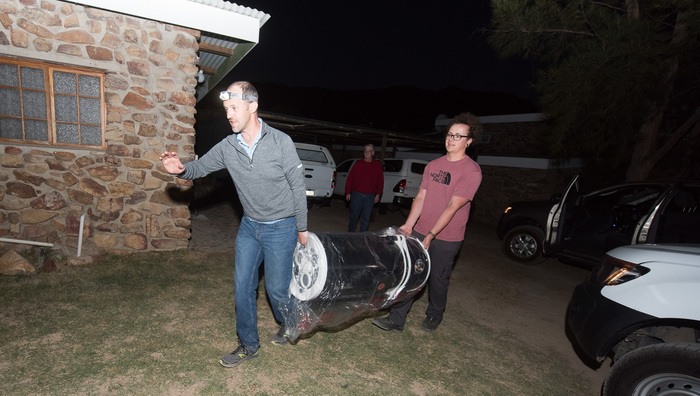 |
Time to get those telescopes out!
|
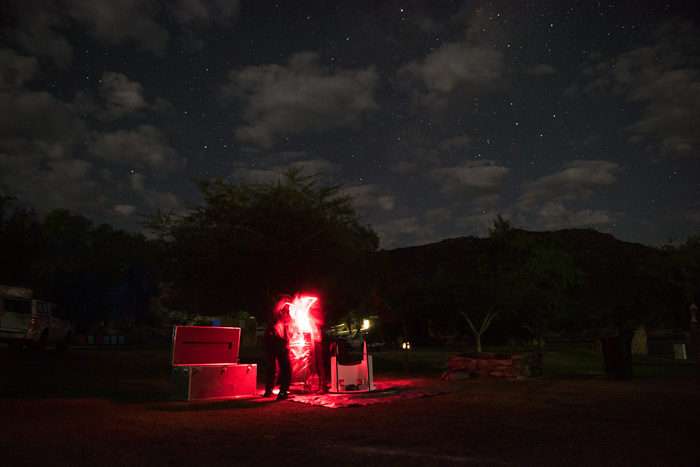 |
Yeah, a little bit of clouds...
|
 |
But we could see a lot of stars still.
|
 |
|
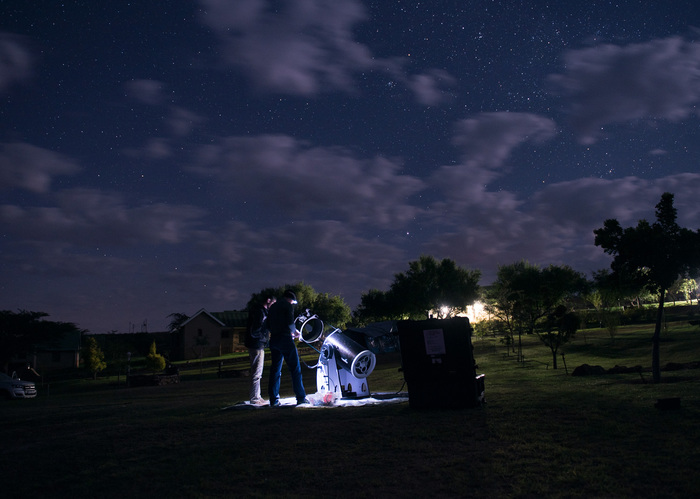 |
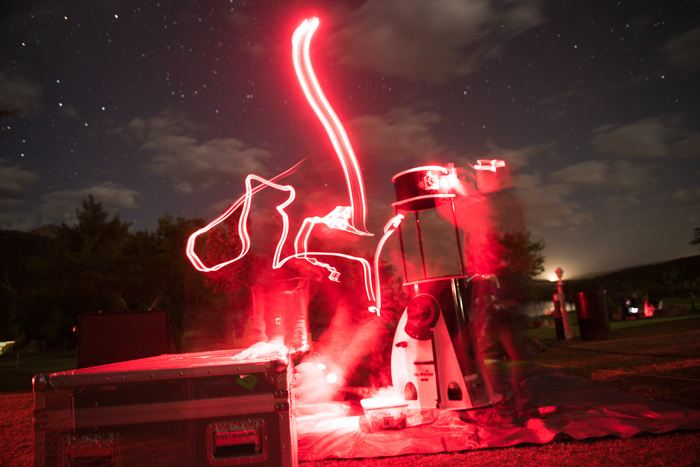
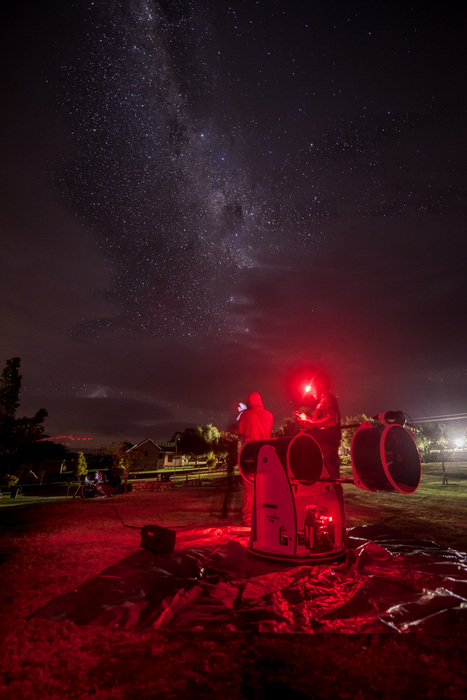
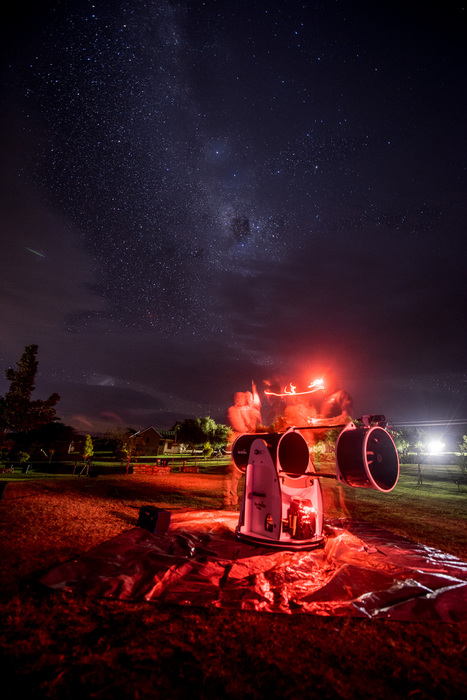
The night was moderately successful. A lot of equipment problems, and while we all eventually found the right field, it was slow going. The cloud coverage increased during the night, which didn't help things. You can see here too one possible alignment issue: that telescope is sitting flat on the ground, but the ground isn't flat! It was also irrigated, so things had sunk in by a few degrees at the end of the night. It's all good -- that's why we had practice nights.
|
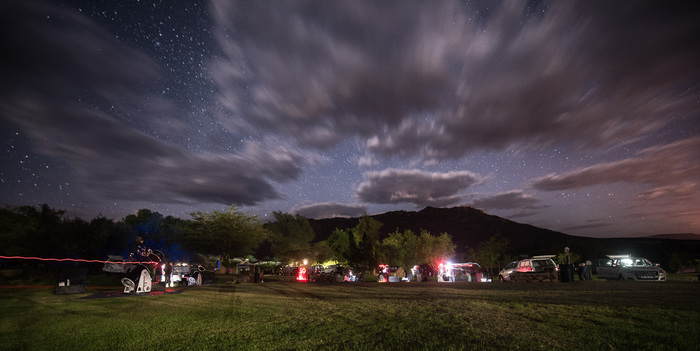 |
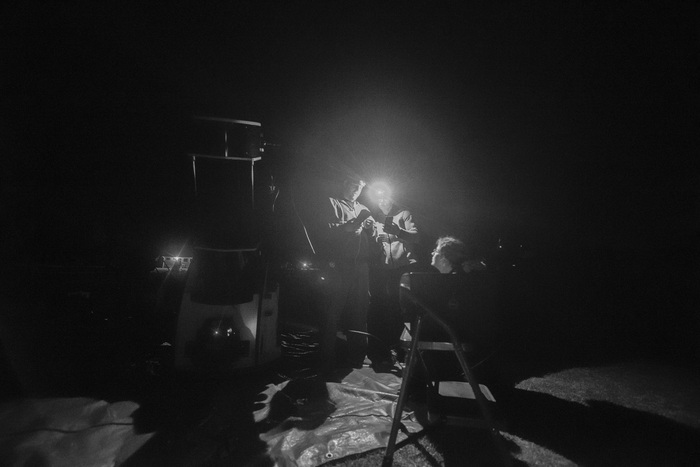
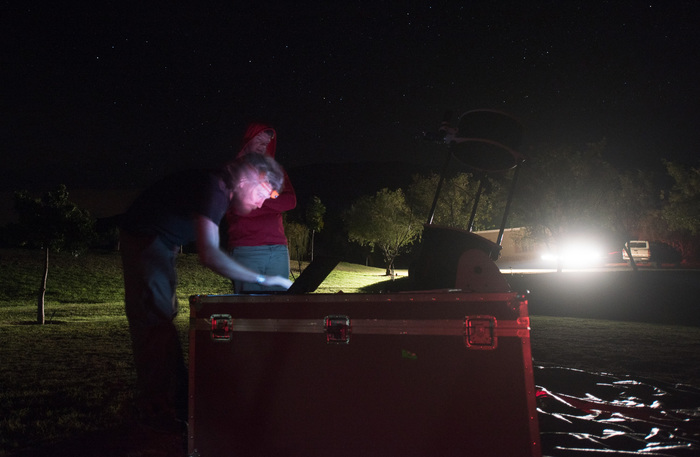
The telescopes need two stars to align. We'd often find one, and then it would be a long wait until a second star (bright enough, and identifiable to our hemispherically challenged minds) would come into a clear patch for long enough chase after.
|
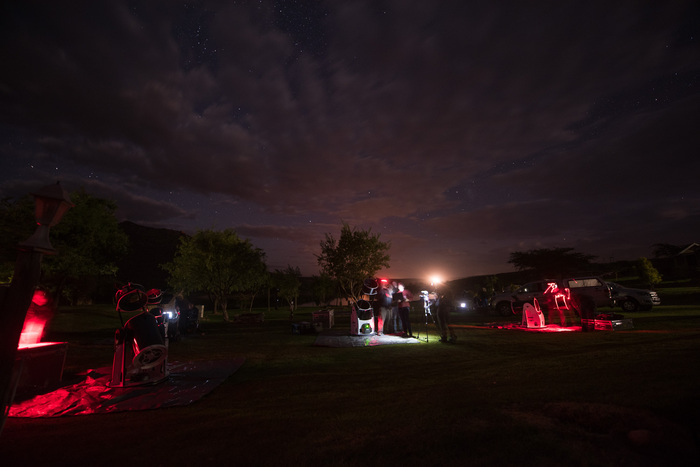 |
Not looking too good here...
|
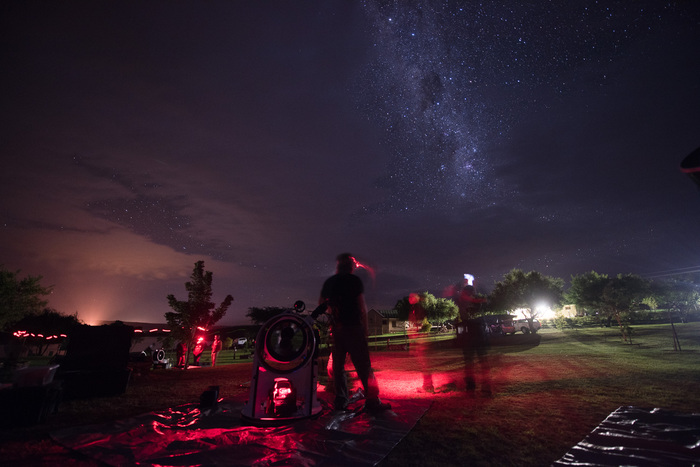 |
But hey -- at least we get a nice view of that southern Milky Way!
|
 |
|
 |
|
 |
|
 |
By 3:30 AM it still wasn't clear, but we'd gotten aligned a few times, found the field twice, and basically knew what we were doing.
|
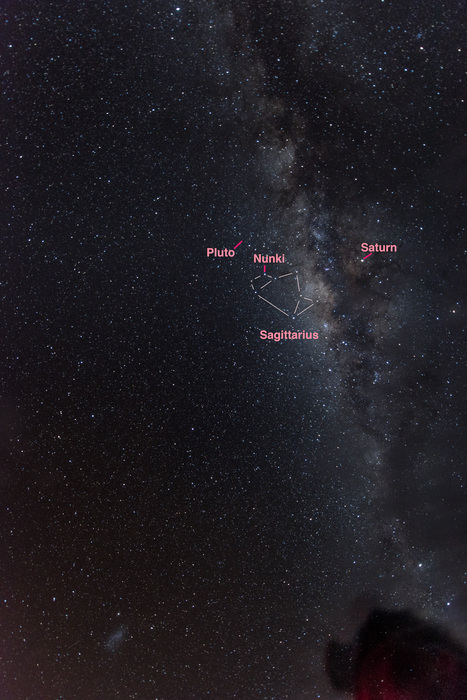 |
Whoa! And by 4:30 AM it's cleared up, and here's our star field! Sagittarius is easy to see. We aligned on the 2nd mag star Nunki, and then it's a small offset from there to MU69. Pluto and Saturn are nearby. That's the Small Magellanic Cloud at the lower left, and someone's body at the lower right.
|
 |
At lunch the next day, Jeff and Simon scheme.
|
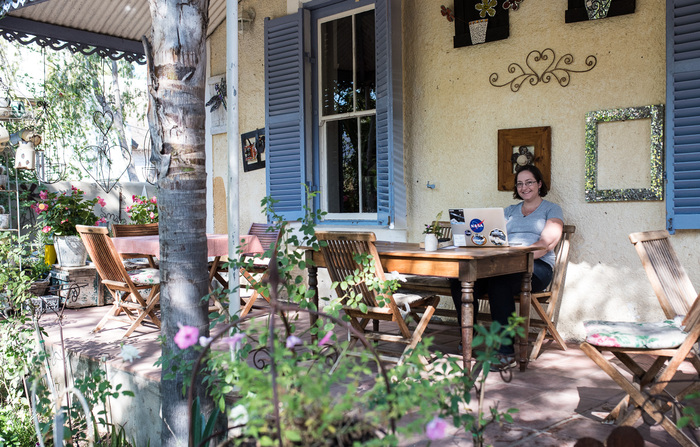 |
While Emily plans back at the guest house.
|
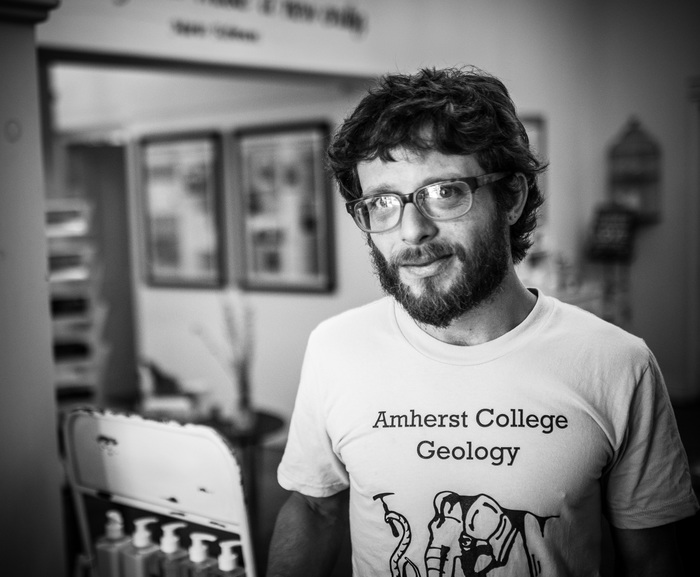 |
Jason Mackie is a man of many careers, including a long stint building store fixtures for shopping malls. But now, a chance meeting has gotten him into occultations... this is is second, after a Pluto occultation in New Zealand in 2015.
|
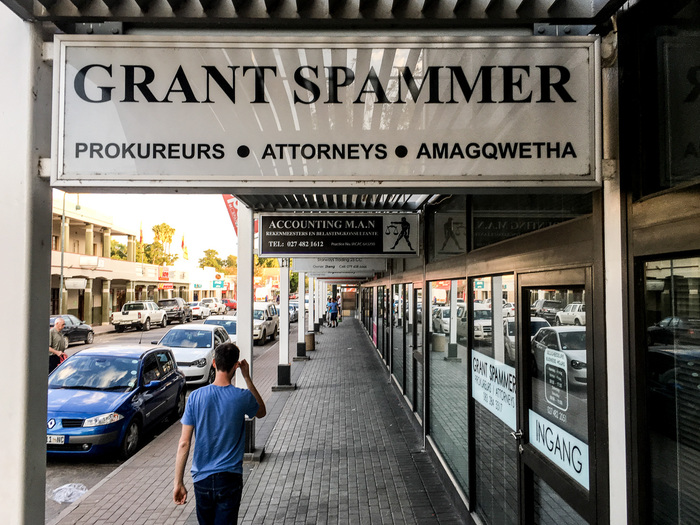 |
Oh, what I woud do to have the title Grant Spammer, Amagqwetha.
|
 |
|
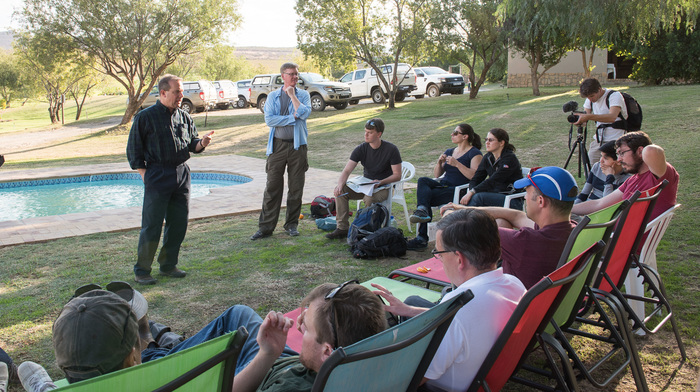 |
Time for a group meeting! The weather is not looking very promising. We have 36 hours until the event, and the prediction for Clanwilliam is pretty patchy. By this time of year usually it is raining, so we're better than normal, but not quite good enough. We have a long discussion, and eventually decide that half the groups will stay in Clanwilliam, and half will head east. Far enough easy, and the weather is predicted to be clear.
|
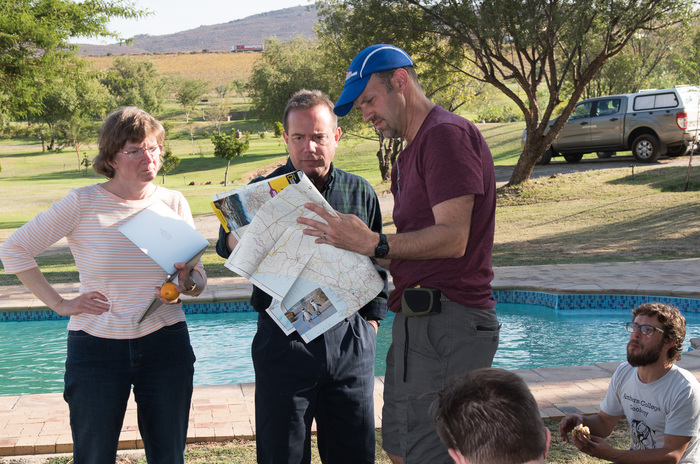 |
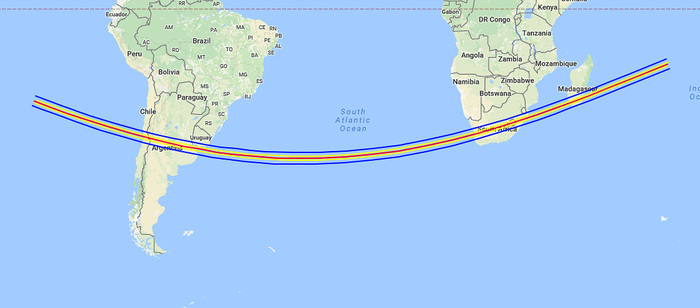
Just how far are we going? About 600 km, past Carnarvon, to Victoria West / Vosburg. This is solidly in the middle of the Karoo, in a very remote area of the country.
|
 |
As our chief predict planner, Simon stays at the Clanwilliam so he can be in touch with the Argentina team.
|
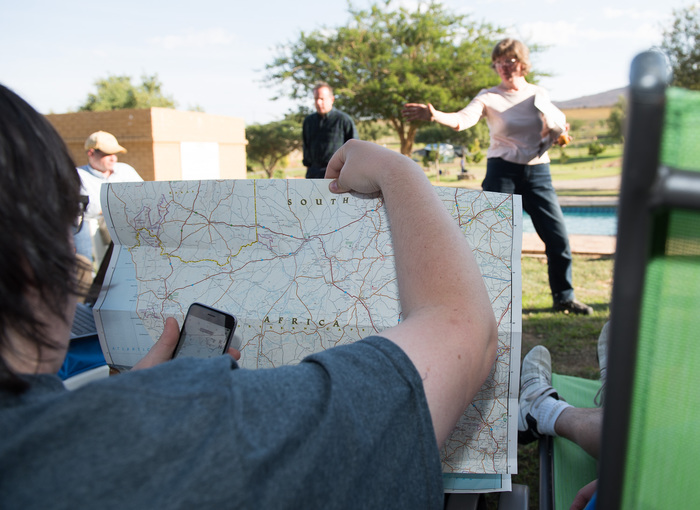 |
RJ maps out his destination.
|
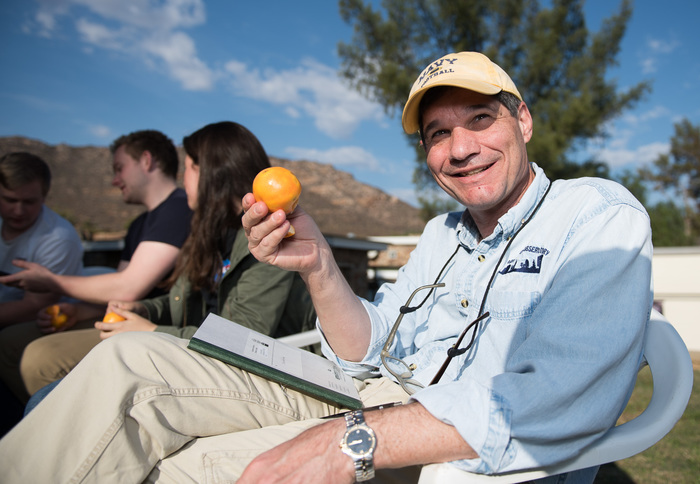 |
John Wilson is among those of us who love oranges.
|
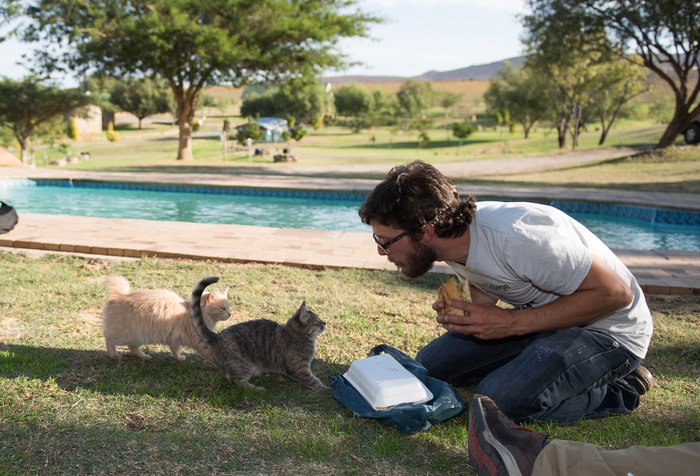 |
Jason likes cats, and they like him (or at least his meaty sandwich).
|
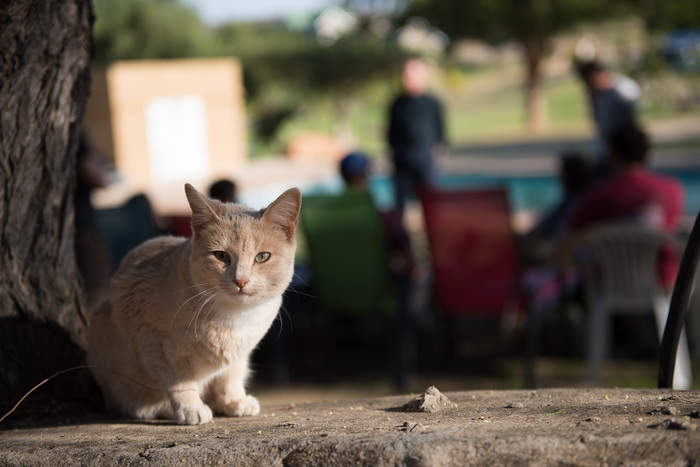 |
|
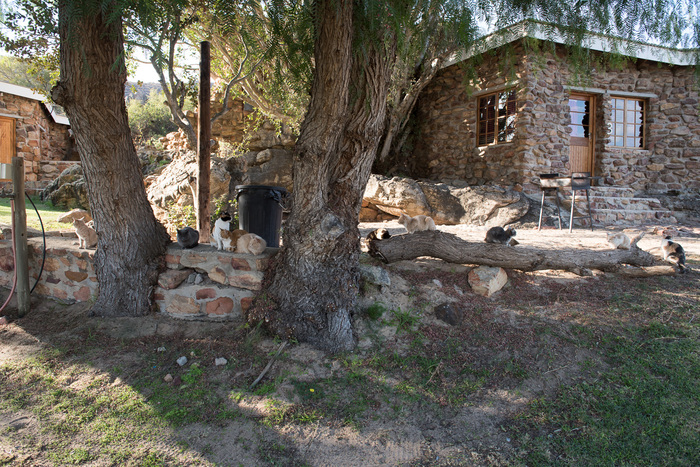 |
A challenge to the reader: find all ten cats in this picture. Hint: they are all in a line.
|
 |
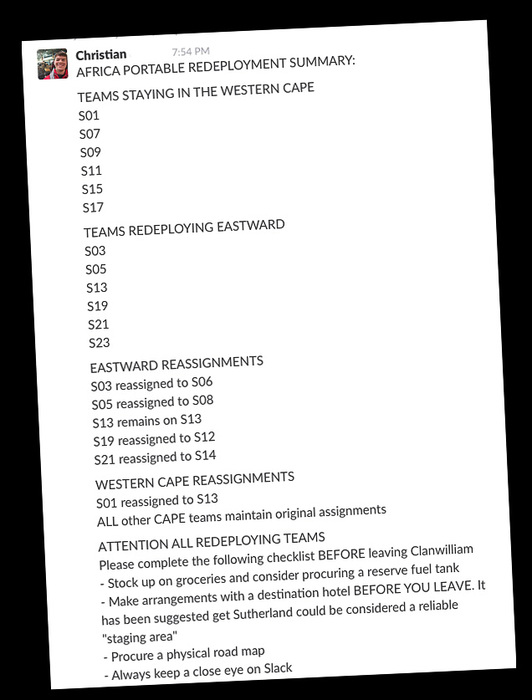
Christian reads out everyone's new assignments!
|
 |
|
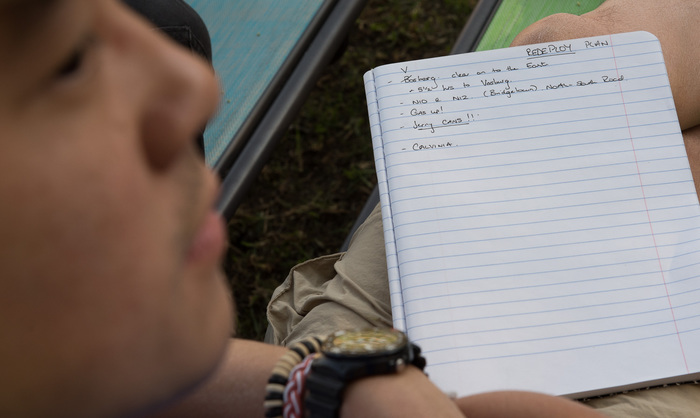 |
Con gets ready to drive: gas up, and buy those jerry cans!
|
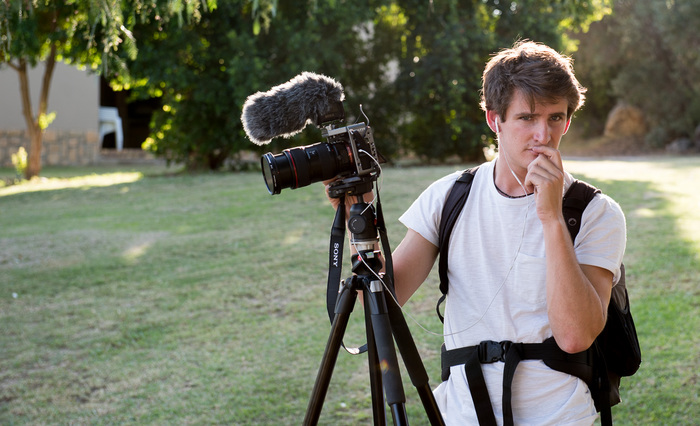 |
Meanwhile, videographer Alistair Daynes has joined us in Clanwilliam. He and Sam Chevallier are Capetonians who have been enlisted to work on the project with Geoff Hanes-Stiles and APL, who are doing documentary of the NH extended mission, including the MU69 occultations.
|
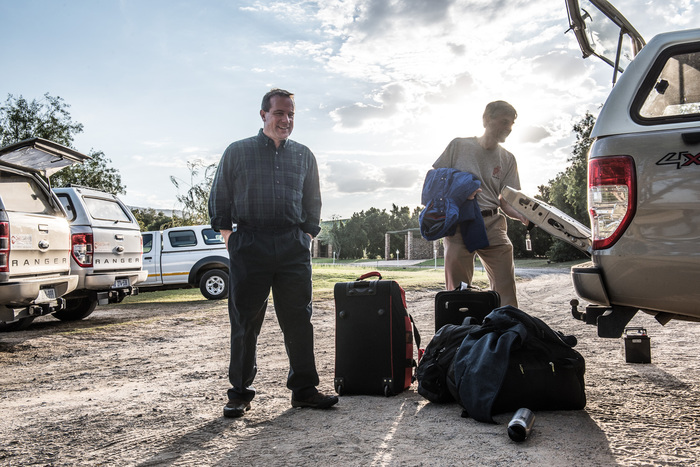 |
Eliot and Mike get ready to pack up.
|
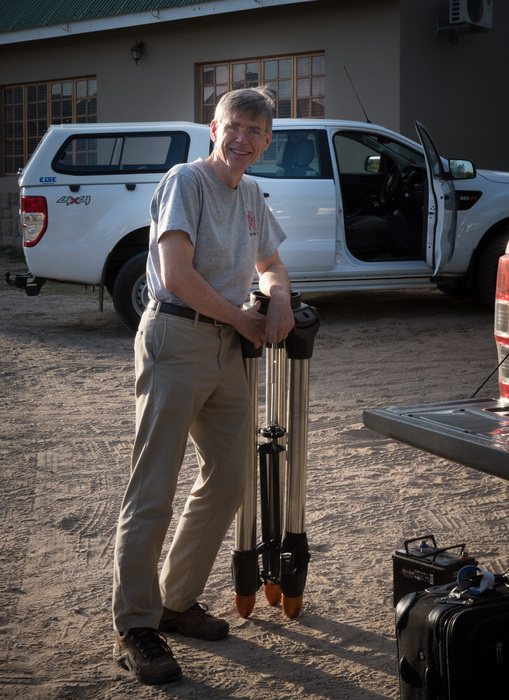 |
Mike Skrutskie put that Celestron tripod to good use.
|
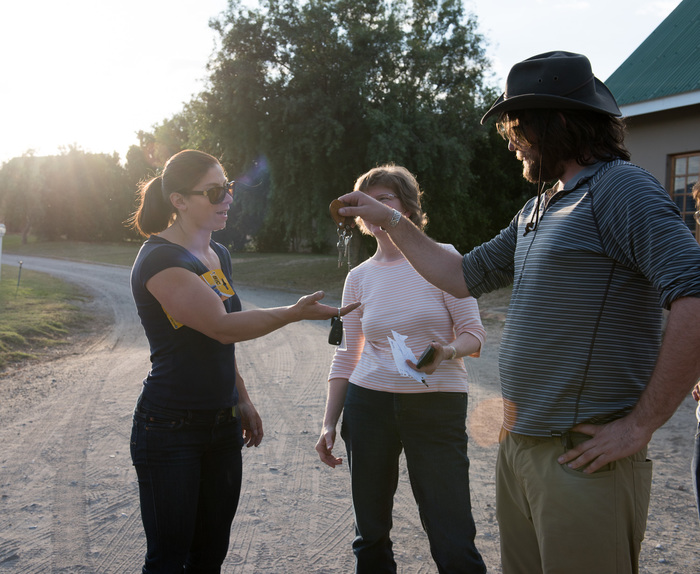 |
Swapping off some keys and drivers!
|
 |
|
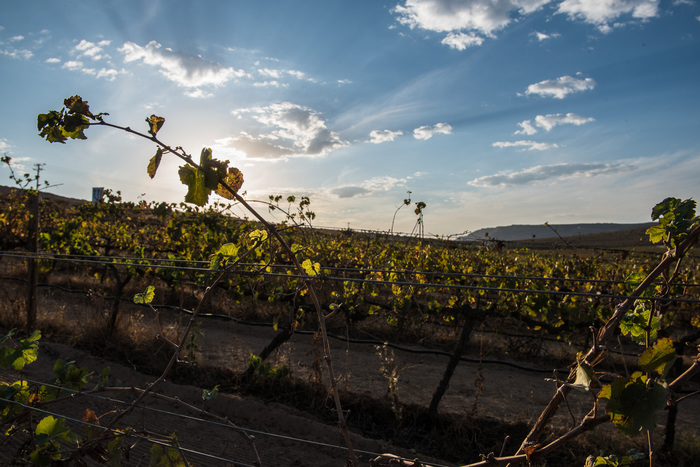 |
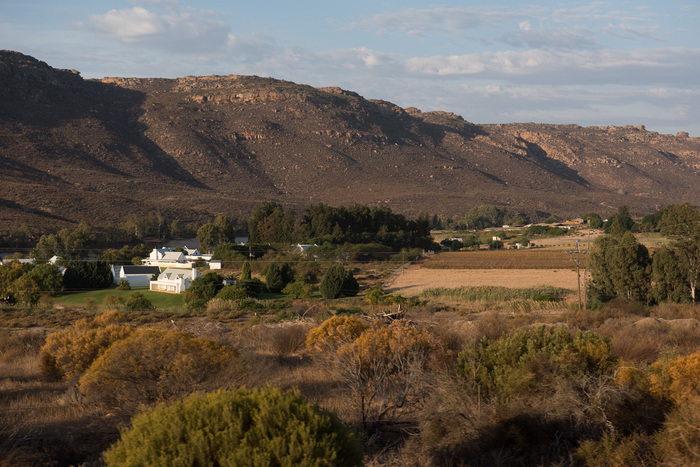
And we head out once again into the beautiful South African countryside. It's sunset, and we're just about to start our 600 km trip.
|
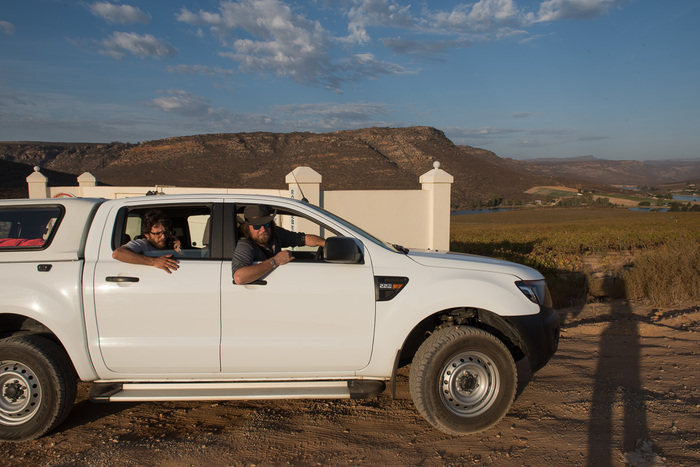 |
Jason Mackie is coming along with us. Originally we had two floaters, but with one telescope out of commission, we're effectively up to four floaters now.
|
 |
|
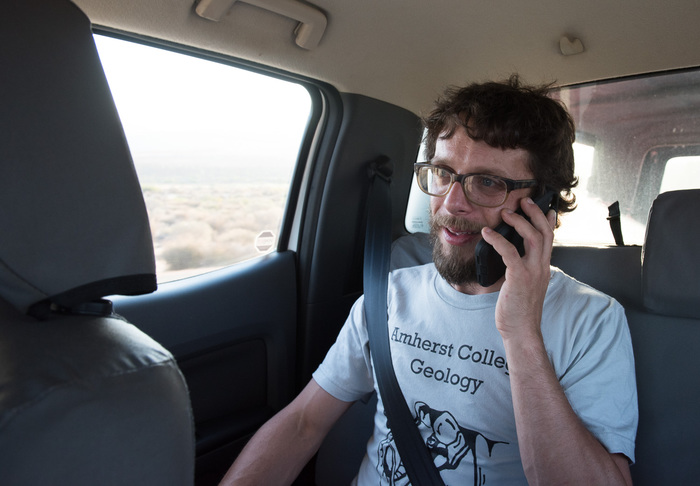 |
Jason calls around to see if he can find us space in a guest house in Vosburg. Success!
|
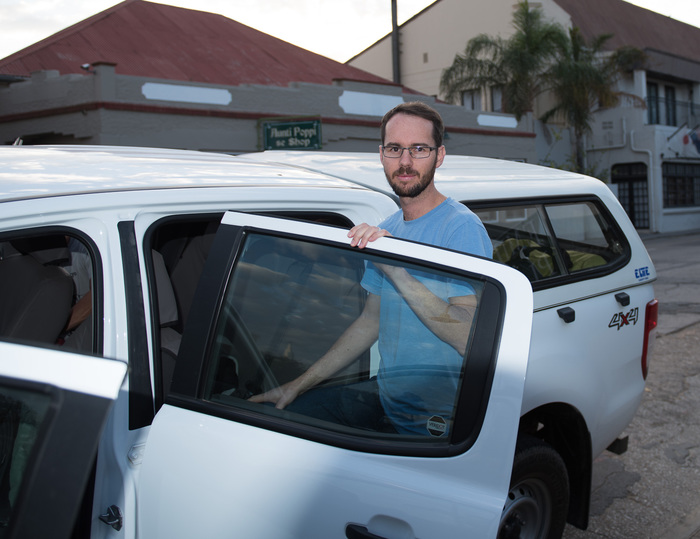 |
We head up with Nic as well.
|
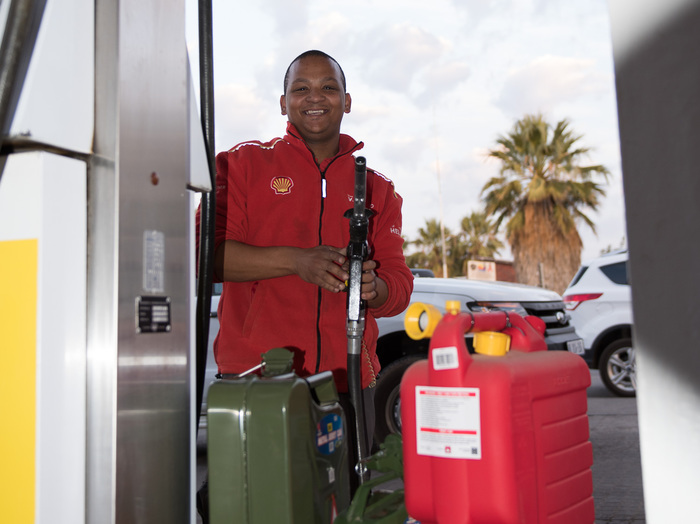 |
Fueling up at our last chance for awhile...
|
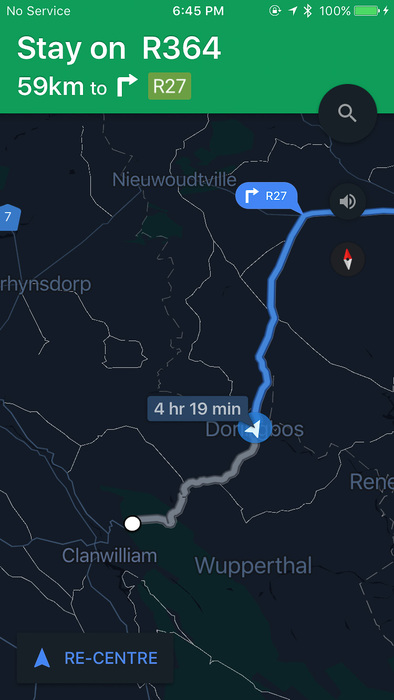 |
Looks like we have about six hours and 600 km ahead of us.
|
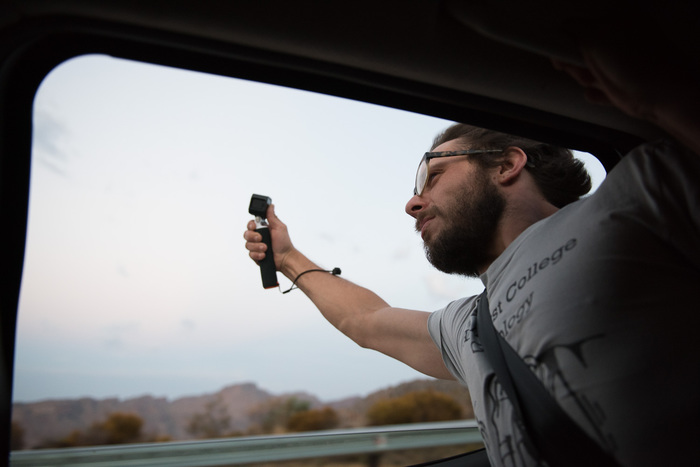 |
I took a lot of photos, but I look forward to seeing Jason's movies -- he filmed a lot on that tiny GoPro.
|
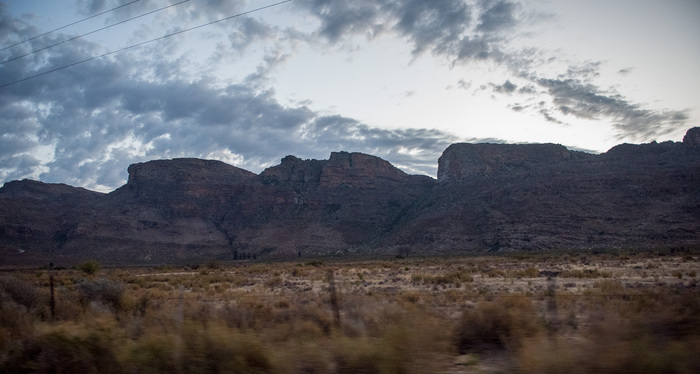 |
What a beautiful country it is...
|
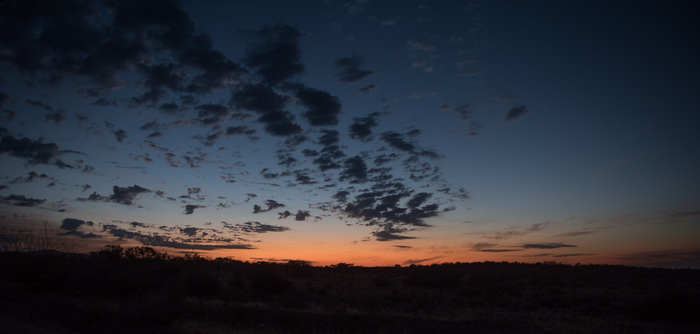 |
What neither the GPS nor the map told us was that 30 km out of town, the road turned dirt! By the time were on it there wasn't much point in turning around. So we plowed through, and after 100 km, got back on the tar road.
|
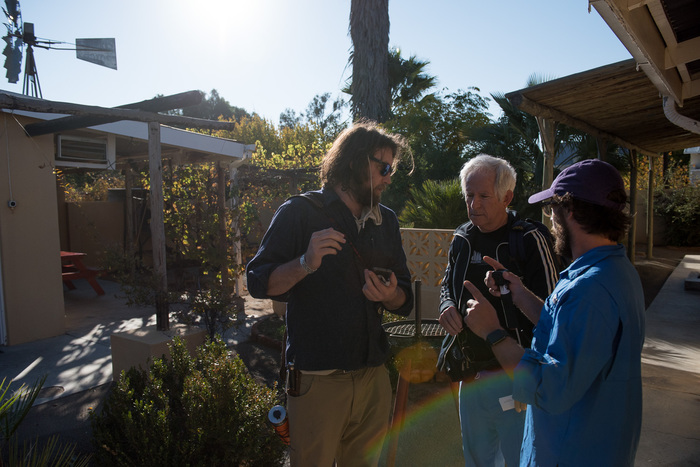 |
We thought we were dragging (took us a long time to get fuel and jerry cans, and we had the long stretch of dirt road). But it turns out we got to the Karoo well ahead of most of the other groups, thanks to Aaron's quality motoring. Our guest house was ready for us around midnight when we showed up. In the morning, we meet up with Paul, who is staying at our place as well.
|
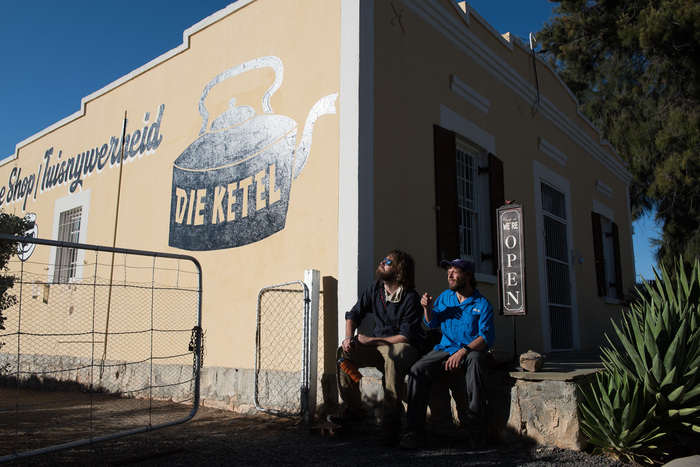 |
Time for a quick breakfast. Well, 'quick' may not be possible in the Karoo... but with only one restaurant in town open, we were happy to partake.
|
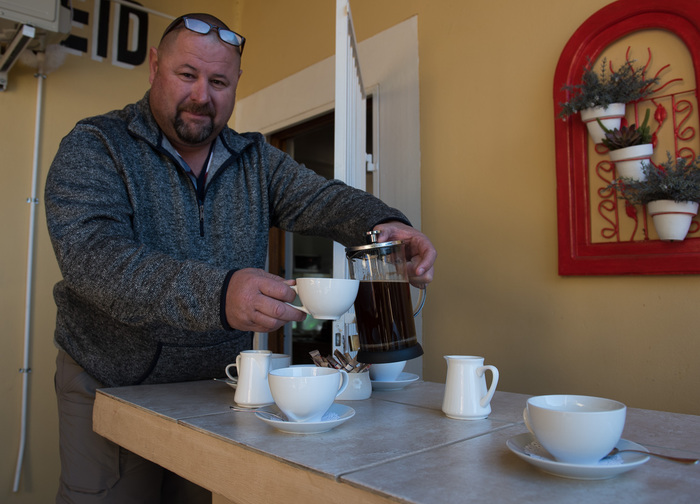 |
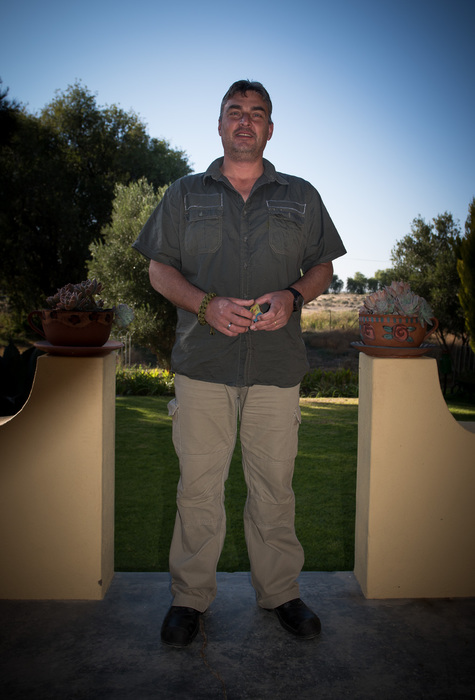
A bit of coffee. During the night we were joined by our two assigned escorts, who'd driven up from Cape Town. This is Eugene. "And I must tell you one thing. We are not security guards. We are personal protection officers. I spent eight years working on oil tankers passing through Somalia, fending off pirates. I've worked in the Middle East, in Iraq, in central Africa, in Angola. Security guards? Those are the guys at shopping malls."
|
 |
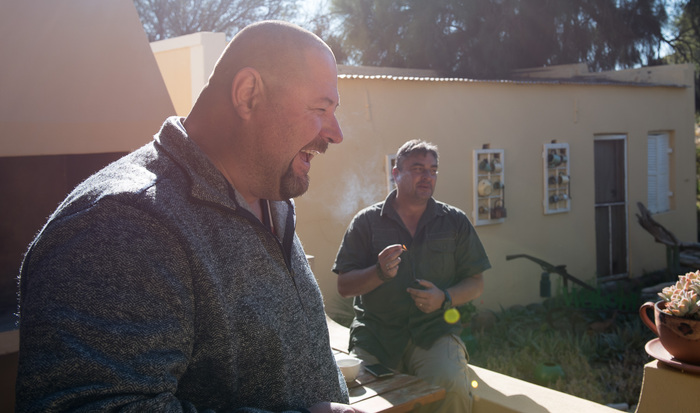
And here is Charl, our other officer. South Africa as a whole is very high for violent crime -- in the top 10 across the world. When we lived in Pretoria, we saw guns pulled several times, I got carjacked once, and our neigbors had home invasions. When I observed with my students in Pretoria, we were required to have security guards along with us from the university. It turns out that the Karoo is quite a bit safer than the cities. We likely would have been fine without the guards. But they were super helpful as translators and for their local knowledge.
|
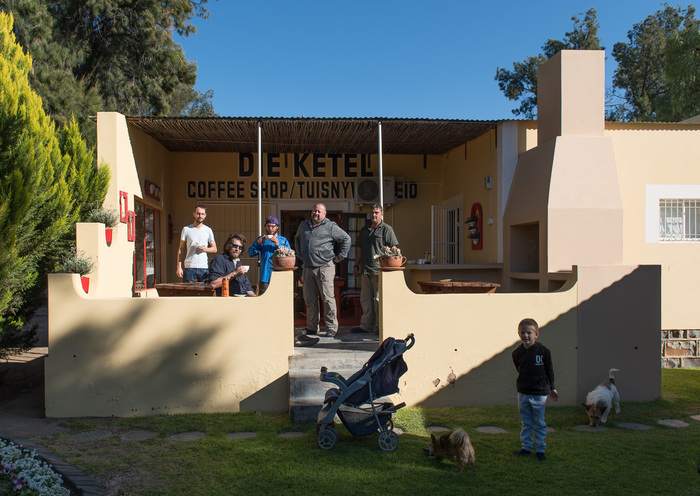 |
And here we all are! That's the proprietor's dogs and 4-year-old below (all of whom run around a lot).
|
 |
|
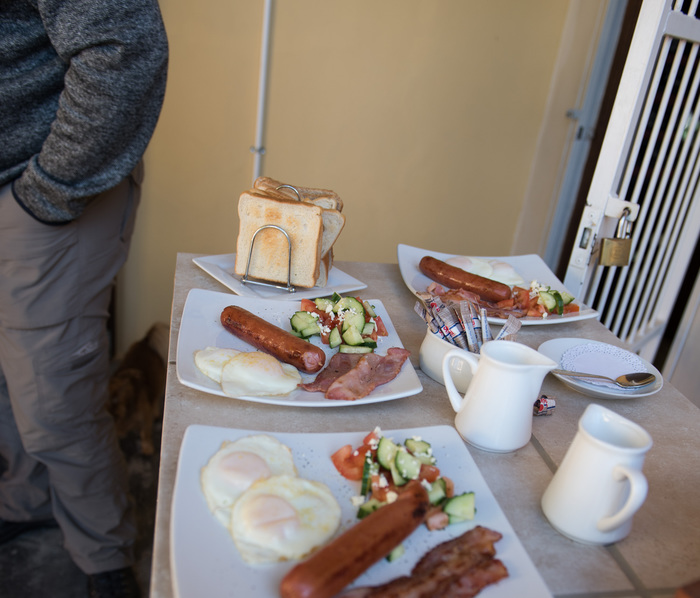 |
It's a South African breakfast: lots of meat!
|
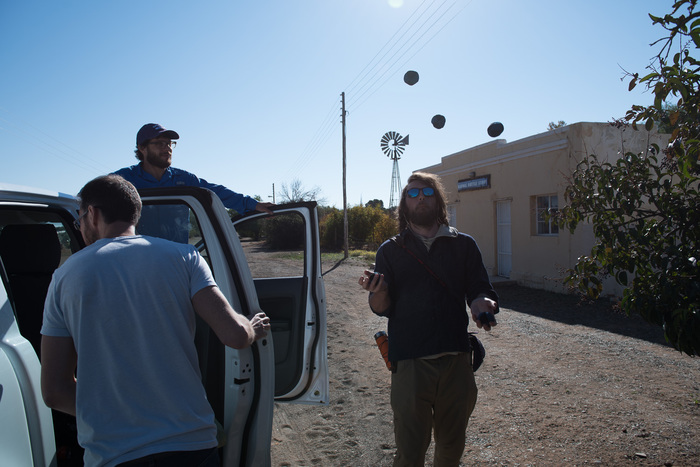 |
We've walked back to our guesthouse, and are about to set out for the day's activity. We essentially have four floaters with us. We could just hang out and wait for an emergency to happen, and then go fix it. But what we've decided to do is scout backup locations for most of the teams (some of whom are still driving from Clanwilliam). We're located along a good dirt road that runs N-S, and we figure we can drive down that road, and stop every 10 km along the designated line, and scout for a site. So, off we go!
|
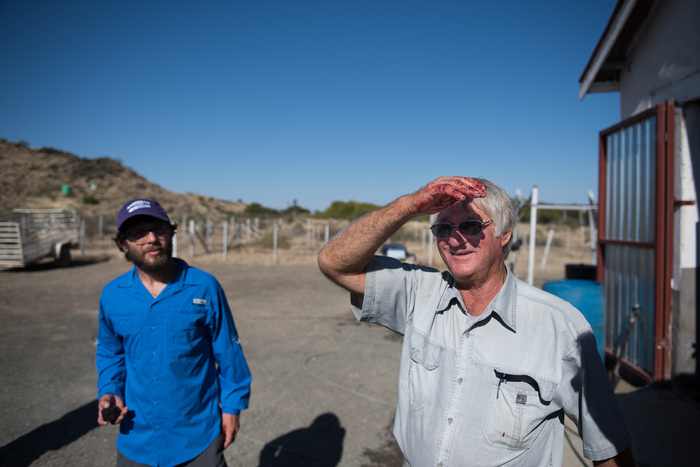 |
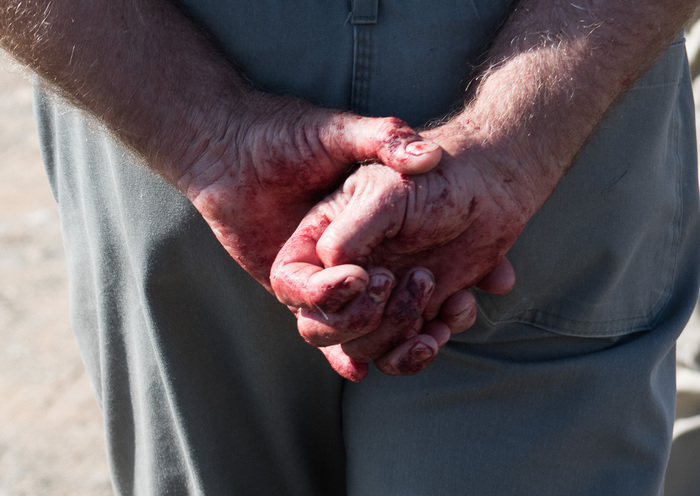
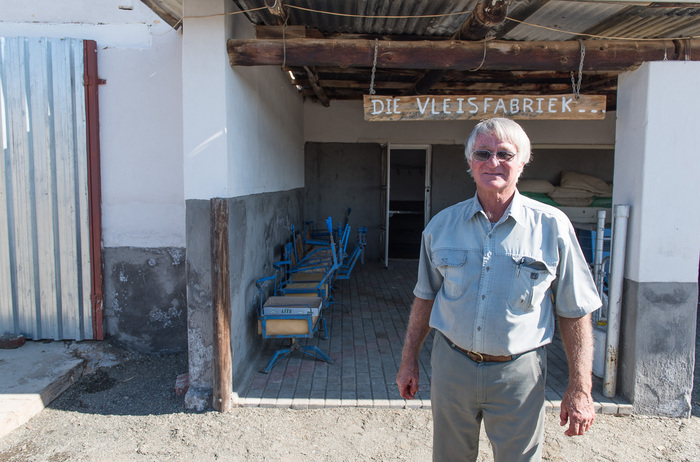
And just a few hundred meters from our first chord, we found a farm. We drove up and the farmhand told us the owner was "sawing the meat." I hunted around, found the meat building, walked past a few hundred pounds of hanging flesh, and then found the owner, running the bandsaw. His hands were covered in dried blood, and he was happy to come out and talk to us.
|
 |
|
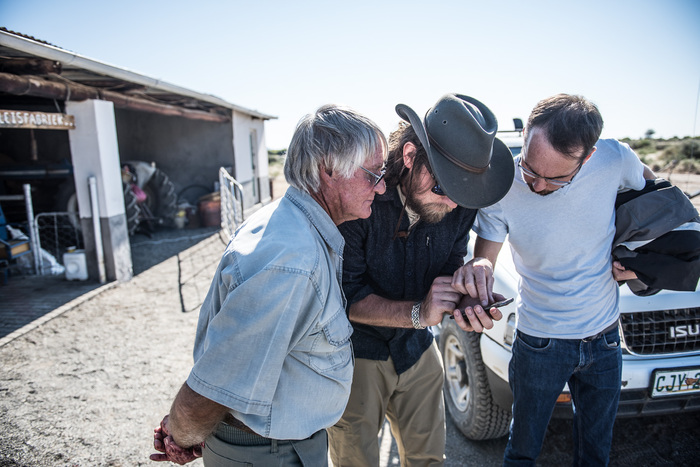 |
Aaron and Nic talked with him, and told him what we were out here doing. We explained the plan, and asked if we could set up a telescope on his ranch, to be used at 5 AM the next morning. He was really intrigued by what we were doing, and wanted to help us out however he could. He arranged that the appropriate gates would be open on our chord, and made sure his animals wouldn't be a problem for us.
|
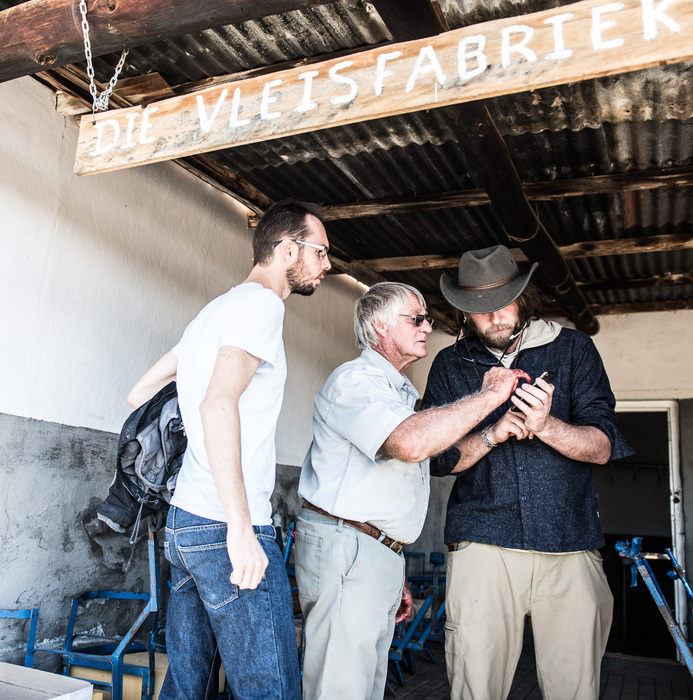 |
And there's the meat building: Die Vleisfabriek = Meat Factory, in Afrikaans.
|
 |
|
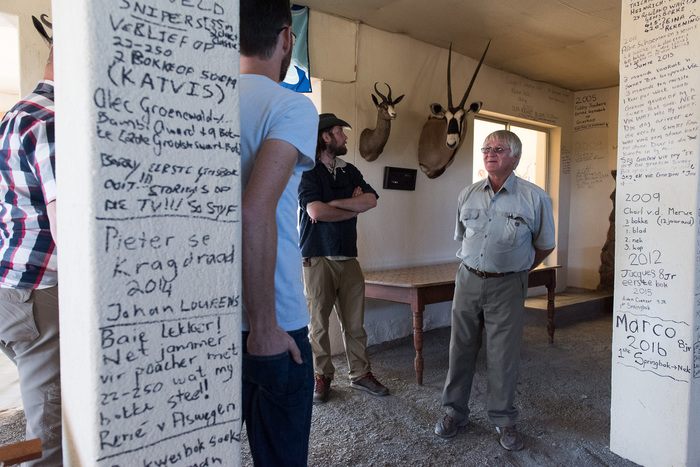 |
Before we left, he wanted to show us his house, and game shop. He runs the ranch, which (like many here) is a sport shooting ranch. He raises springbok, impala (on wall, left), gemsbok (on wall, right), and kudu. "The clients come, and we drive out to the field, and we sit down. They must sit on the chair I've set up. And then I give them a rifle, and I tell them to shoot. Anything they like, they can shoot, as long as they pay for it. It's 600 rand ($50) for the smallest sprinkbok. The large ones can get quite expensive. Most of the guys, they like shooting a lot and cannot quite finish the eating. So I give a lot of meat to my employees."
|
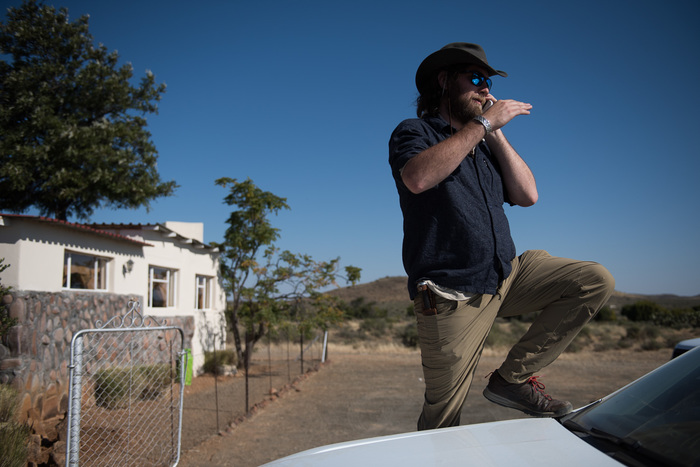 |
Our lines are spaced every 10 km. So we drove down the road, and pulled off at the closest ranch to each line.
|
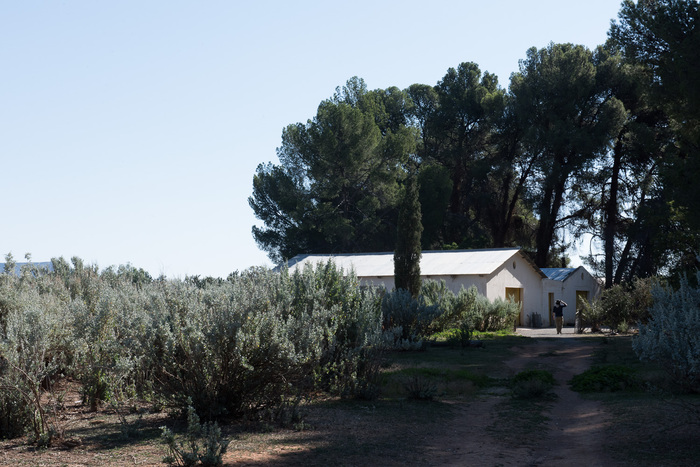 |
This one looked well maintained -- huge trees that we could see from several miles away. I thought they'd love to talk to us. We pulled right up. "They're not going to be here," said our security guy. Me: "Well, maybe we'll just knock on the door anyhow?" Him: "They're not going to be here. If they were, the front door would be open, and the dog would come out the moment we drove up. No dog, no door? They're gone." Yep, sometimes it pays to listen to the locals.
|
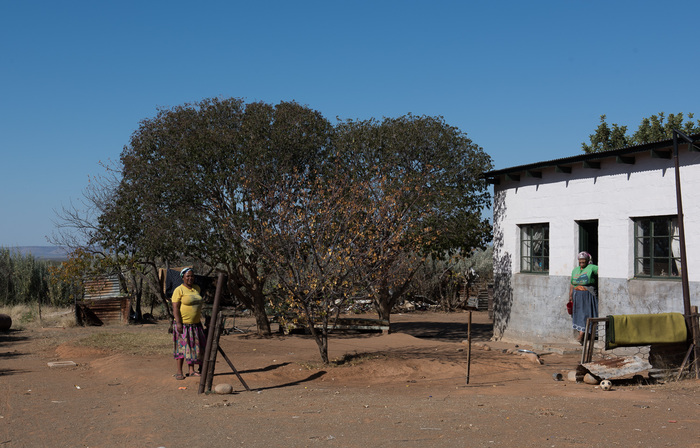 |
Although the owner wasn't around, we did find the families of the farmhands across the road.
|
 |
|
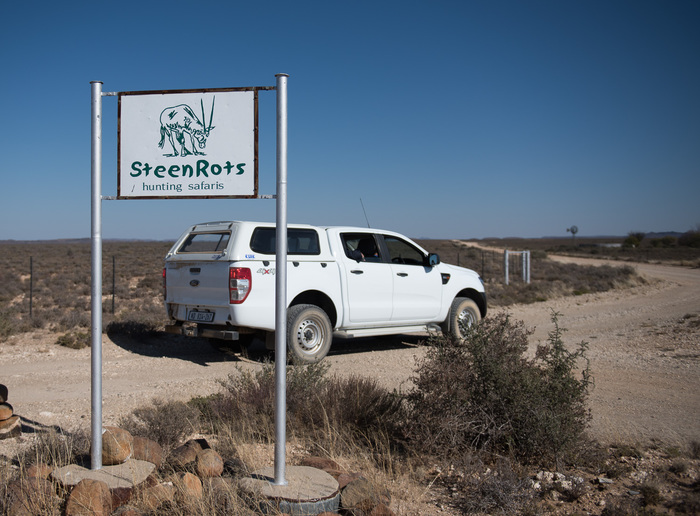 |
And another hunting safari!
Security guy: "It's Friday. It's market day. I bet they've taken all the farmhands into town. They're going to go drinking, and come back late at night. You can wait, but they're not coming back for a long time."
|
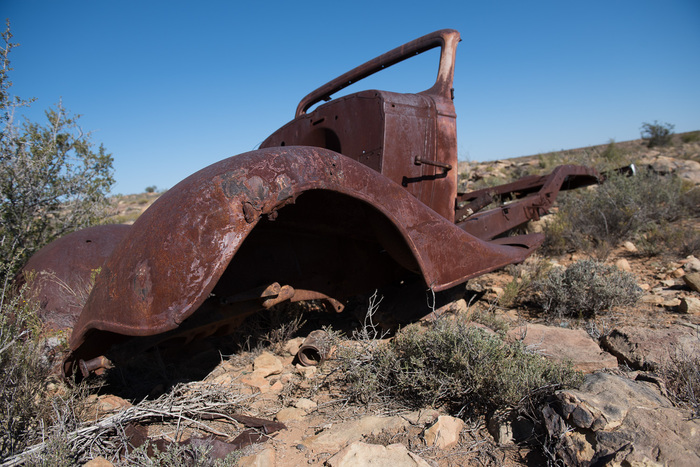 |
So, we struck out on a few, but we continued on. By the side of the road we spied what looked like ruins -- old decayed brick buildings, and a nice rusted out vehicle to the side.
|
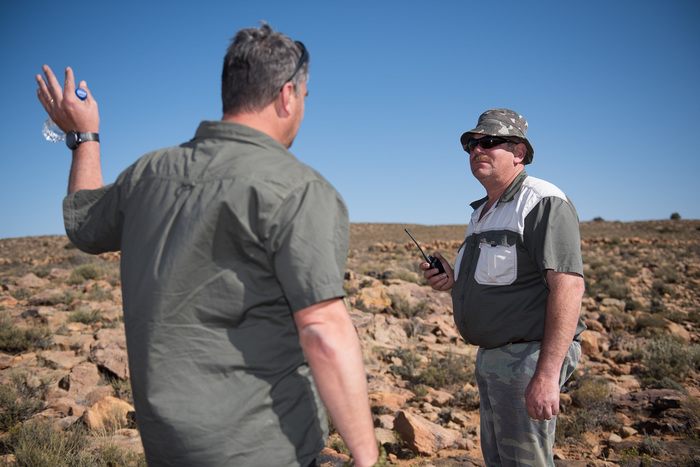 |
We pulled off and found this guy. He had a rifle, and his friend had a horse. They were apparently herding sprinkbok for the owner. The site looked good -- the ruins would give some shelter from any winds.
|
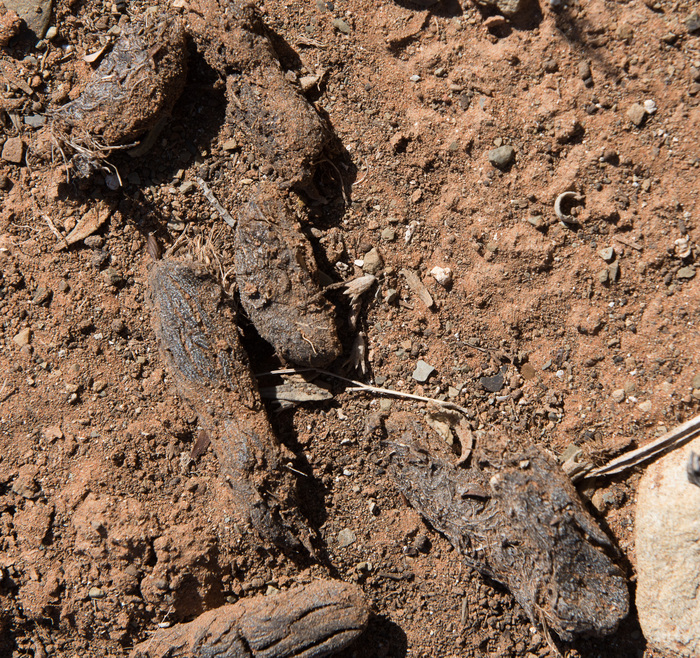 |
"That's from a predator!"
|
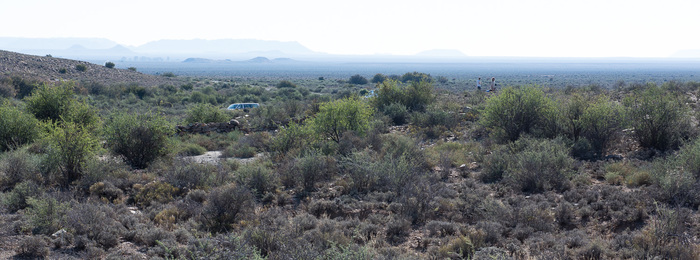 |
We lived in South Africa for three years (2012-2015), but we never spent much time in the Karoo. My main exposure to it was in the pages of Go! -- a really super outdoorsy monthly magazine, sort of Outside but without the marketing and testosterone. Now I see where they get their beautiful photos. It's super dense with scenery and biology, even if there are not very many people.
|
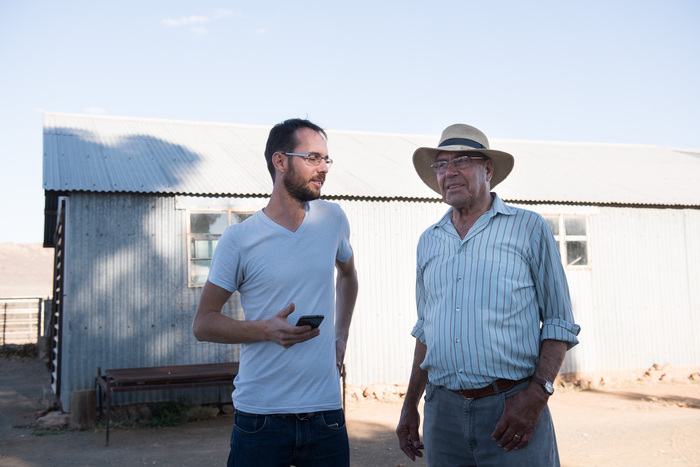 |
Next stop down the road, we saw the characteristic tall trees and a long driveway, and pulled up. He was again super friendly, and invited us to set up shop anywhere on his hundreds of hectares. We were lucky to have Nic along to talk with him -- he had a few words of English but Afrikaans is dominant out here. "But you folks -- you're with NASA? Nothing to do with the SKA, you promise?" I didn't expect it, but I think this backlash against the SKA is because of the radio-quiet zone. The Square Kilometer Array (SKA) is a huge $3B radio telescope array that is being set up centered on Carnarvon, not far from here. By 2025, there will be 5000+ radio dishes. And to keep the skies radio-quiet, the federal government has mandated a huge radio-quiet zone, where cell phone towers, microwave ovens, walkie-talkies, etc. are all removed.
|
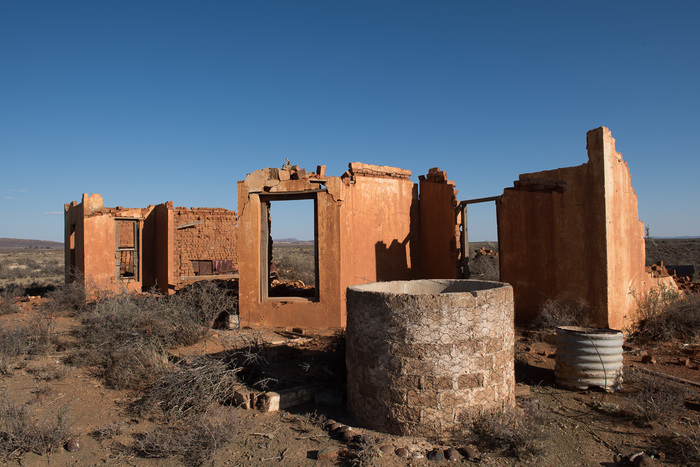 |
Here's the site that he directed us to. It's super: easy access from the road, and a good block from the wind... not to mention some nice scenery.
|
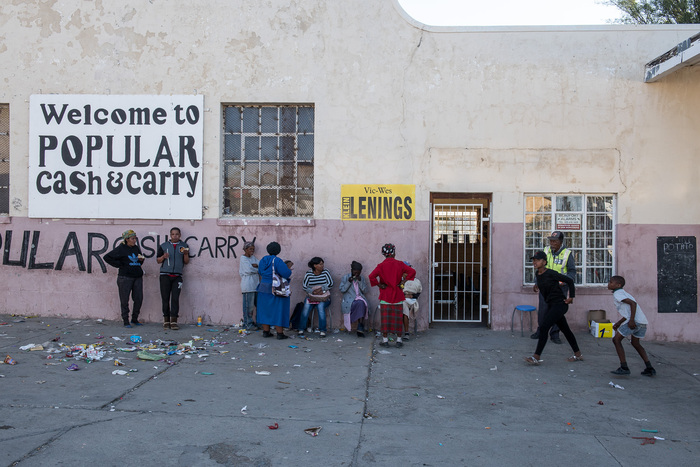 |
We've headed down our entire route, and ended up in Victoria West, which is toward the south end of occultation path. We haven't had anything to eat yet, so our security group suggests we pick up some meat, and they'll cook us up a braai.
|
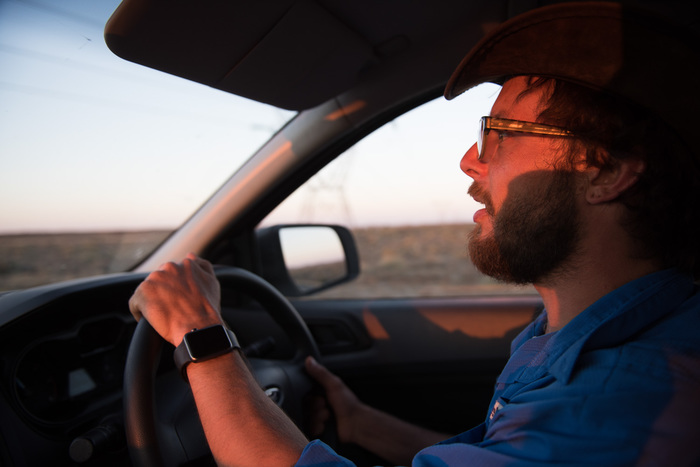 |
Jason is in charge on the way back to Clanwilliam.
|
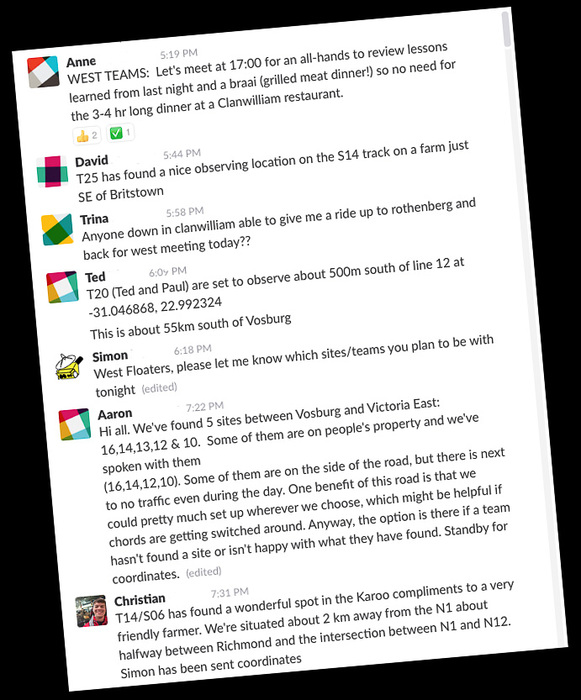 |
Meanwhile, the rest of the teams have done a great job scouting (in cooperation with super friendly locals), so while we have some good backup sites in hand, we aren't going to end up needing them.
|
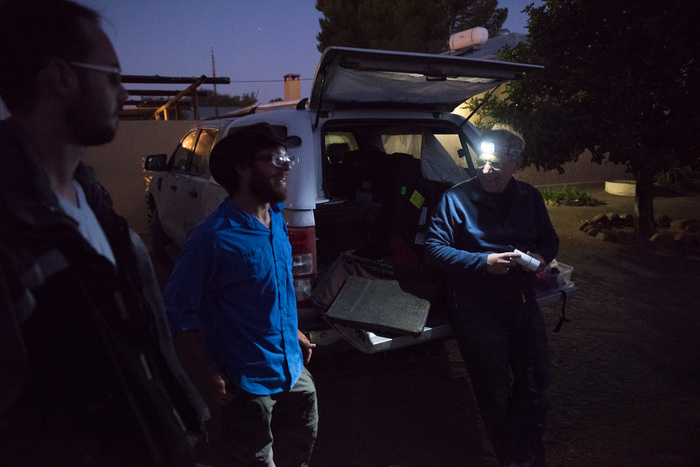 |
We meet back up with Ted and Paul. They've been out scouting as well, and have found a great location for their telescope. They'll set up on an ostrich farm, next to a small church as a windblock.
|
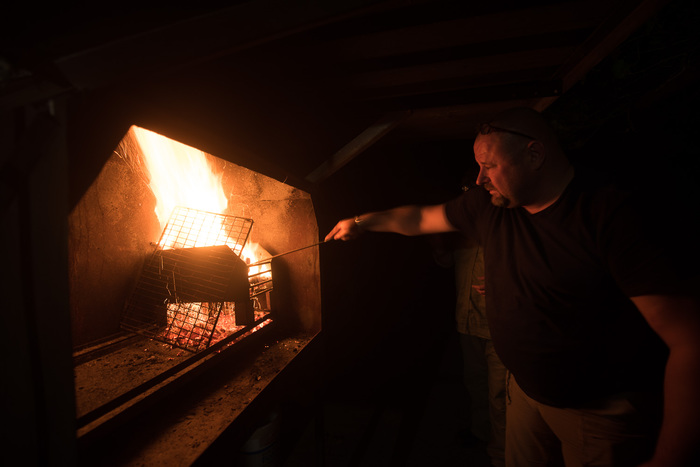 |
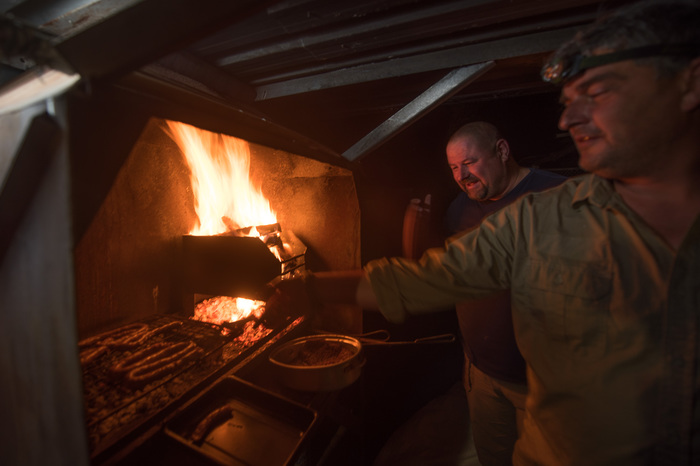
Eugene gets that braai going. How long does it take? "If you want to do it right -- seven hours." We've got about three -- so we talk him into the express version.
|
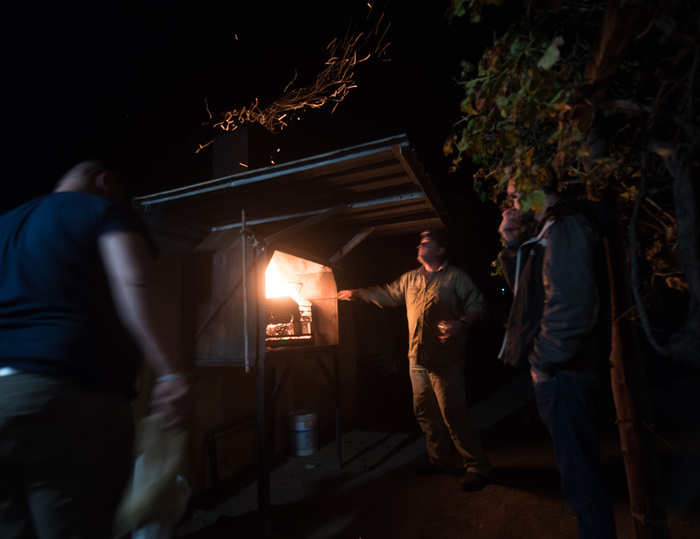 |
Even standing right in front of the braai, it's cold!
|
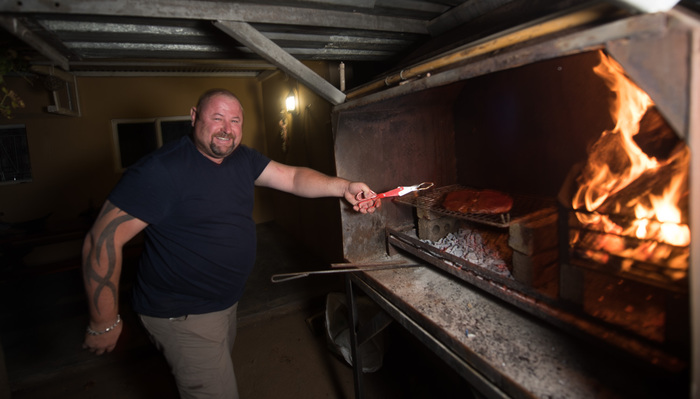 |
Time to toss on that meat! We have some boerewors, some beef *, and some chicken. "Look, you need to know the rules of braai. The first rule of braai is: you don't have vegetable. You want a vegetable? Have a chicken." *In Mumbai where we live, 'beef' is listed on menus occasionally. But what they mean by that is almost always water buffalo.
|
 |
|
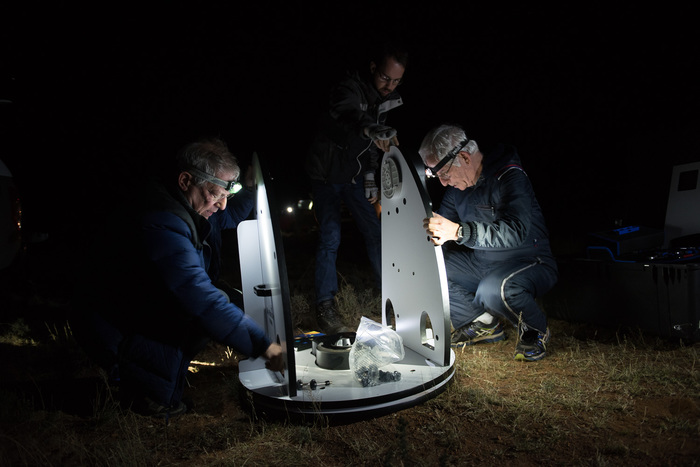 |
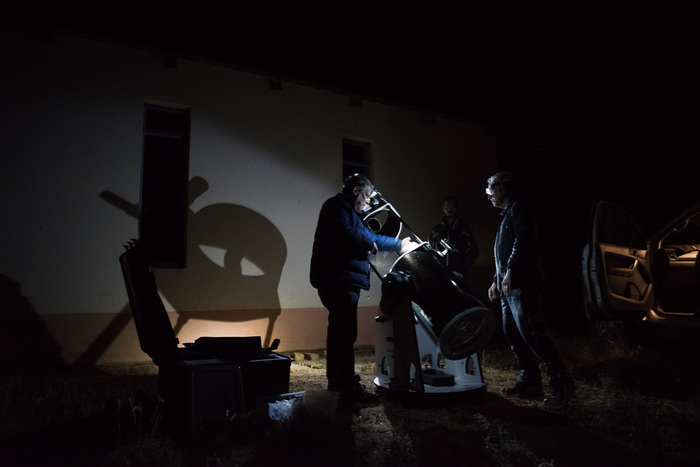
Around 12:30 AM, we packed up and headed out to the ostrich farm with Ted and Paul. Their site was pretty close to the centerline -- meaning that if someone needed floater assistance from us, we'd be in a good spot to go help them out. Nic helps Ted and Paul set up that Dob. These were relatively inexpensive telescopes (about $3500 each), but worked pretty well. They are full GOTO systems -- that is, they have two motors and a handpaddle, so you just enter the coordinates and the scope will slew, and then track as the Earth rotates. In the past, portable occultations have been done a lot with large Celestron / Meade SCT's. For comparison, a 16" Meade SCT runs $16,000, and weighs 318 lbs uncrated. The relatively low weight and cost of these scopes made this trip a lot easier than it would be otherwise. A 16" telescope is big enough to get enough signal:noise on our 15th mag target star, but anything less would be insufficient.
|
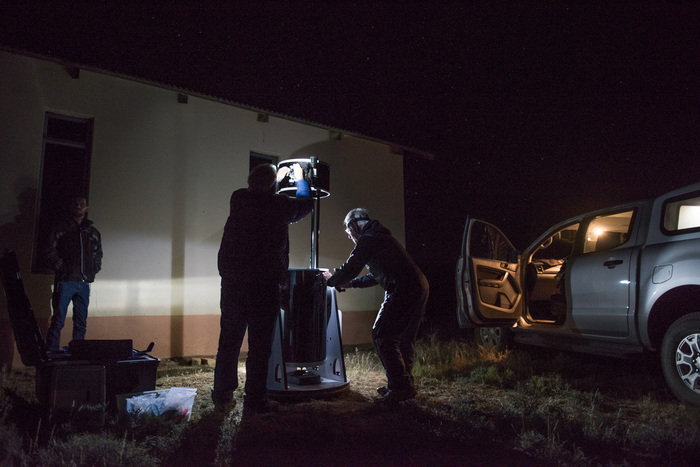 |
Ted pulls up the secondary, and mounts the camera in the eyepice tube. We're using a low noise CCD from QHY.
|
 |
|
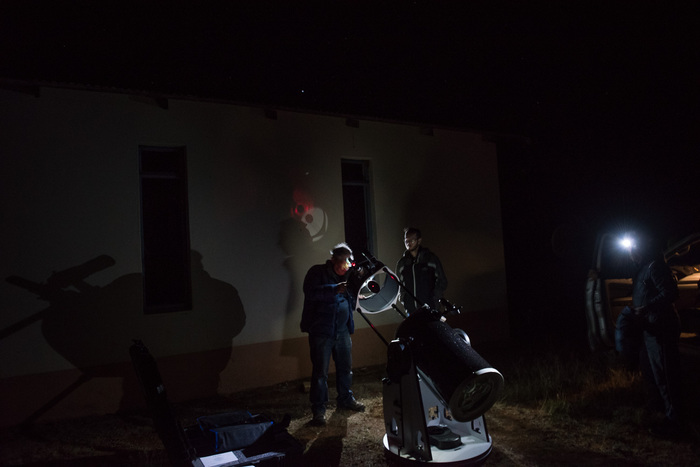 |
Now it's time to collimate: set the mirrors so they are aligned with each other. The laser beam makes that easy.
|
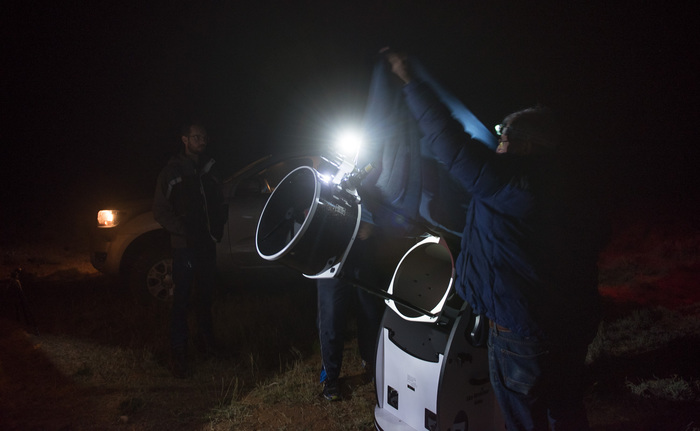 |
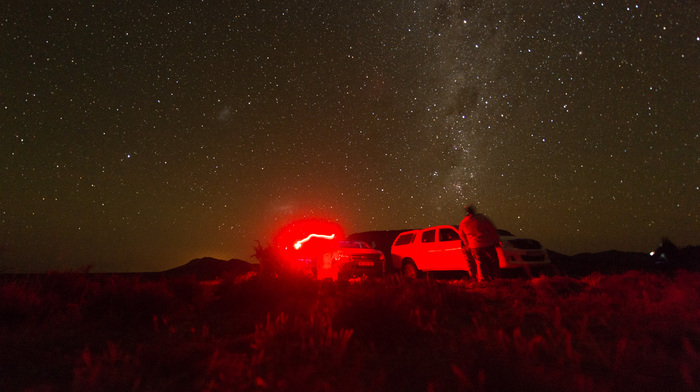
And we're set up and aligned on the sky! It's about 2 AM now, and we have about 2.5 hours until the start of the event. A risk of setting up early is that the optics will cool down, and you'll get condensation on the mirror -- something we definitely don't want. So we lay a tarp over the telescope, to keep it covered.
|
 |
|
 |
|
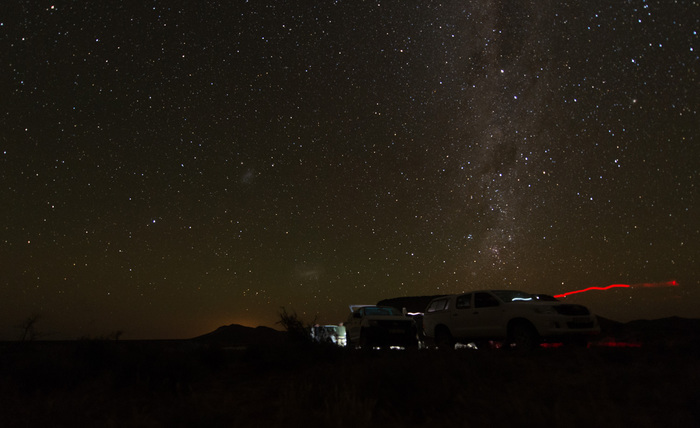 |
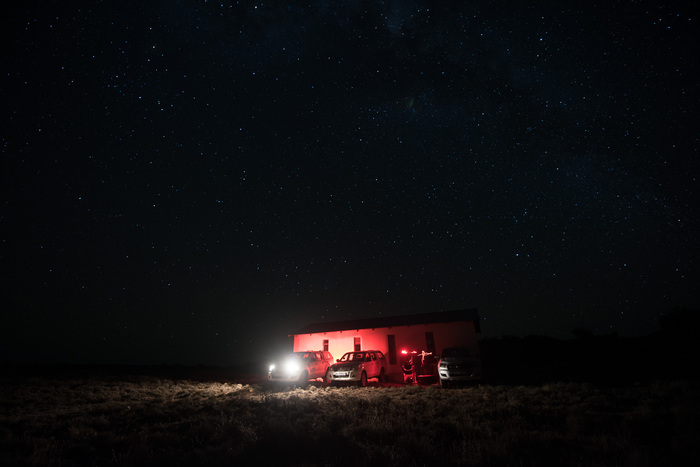
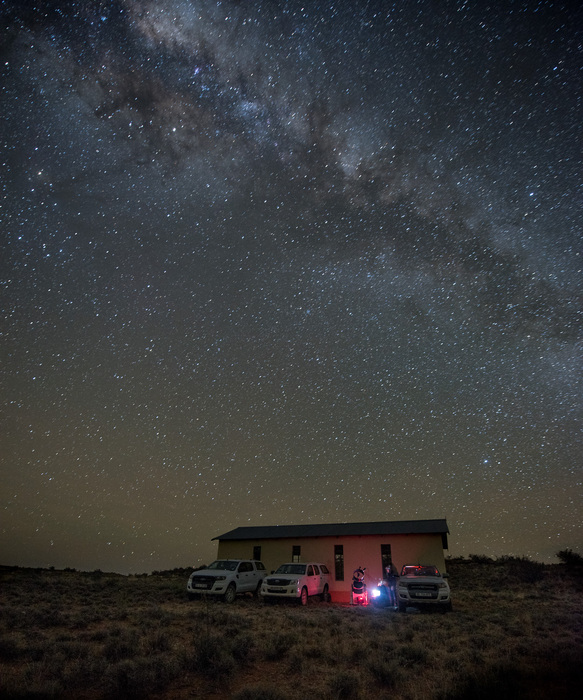
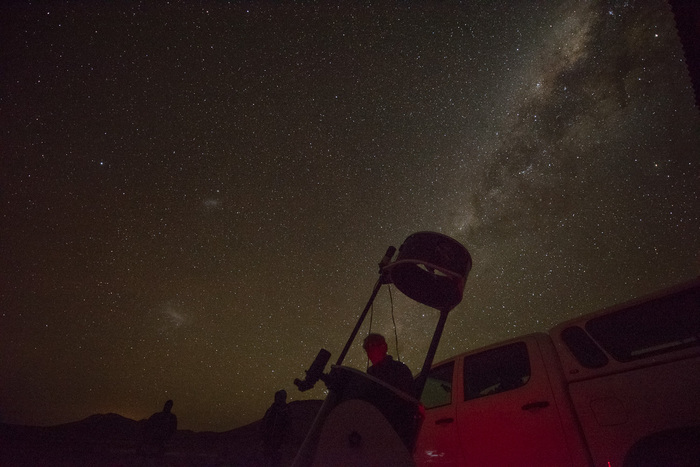
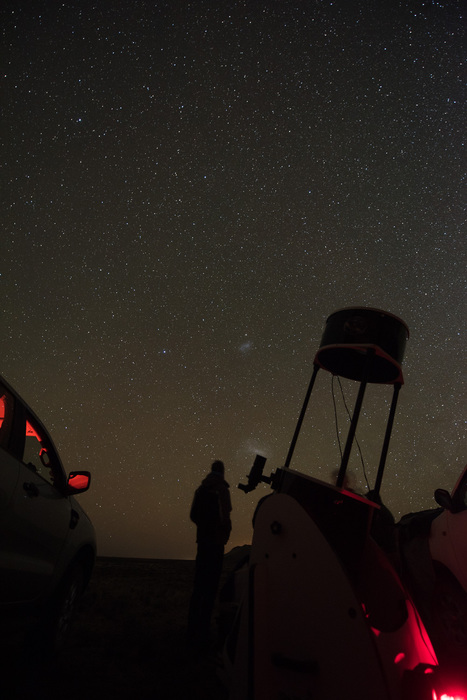
And there's the beautiful southern sky! The Milky Way is running top-to-bottom, and the two clouds to the left are, appropriately, the Small and Large Magellanic clouds. The faint green banding is real: that's airglow of oxygen at 557 nm -- in a way, a very low-level aurora generated in the Earth's upper atmosphere. The glow silhouetting the mountain is from another city maybe 15 km to the south.
|
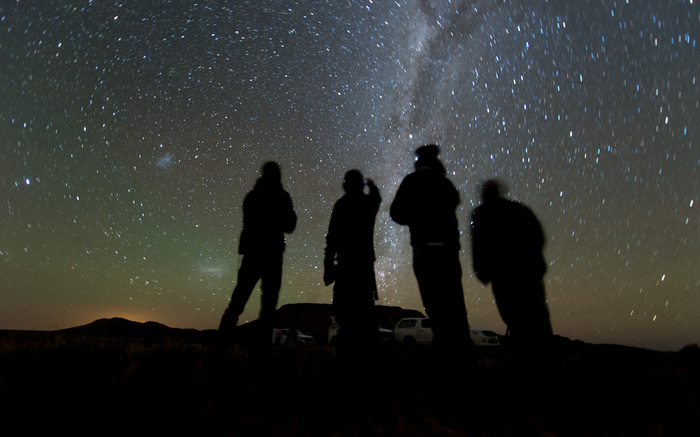 |
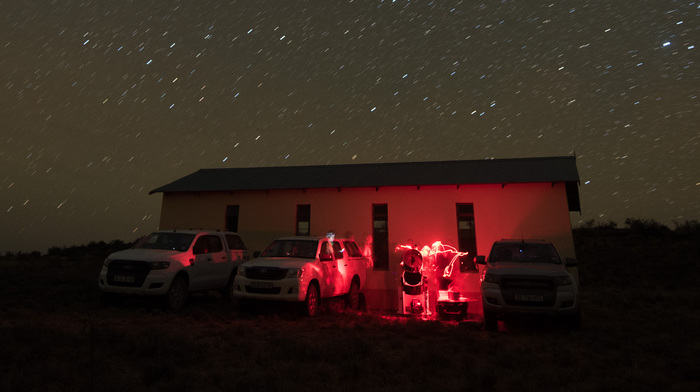
Here's Nic, Jason, Aaron, and Ted. Aaron managed to keep his arm pointed at the Milky Way for the entire 178 seconds! The south celestial pole is obvious -- it's where the star trails turn into static points, a bit left of the center. NB: NASA picked up this photo and for a few weeks used it as the NASA banner photo on their Facebook account, with 6000+ likes. Awesome! (As of today, they've changed it to shot of the ISS + American flag.) What I love about this shot is that while it is 'posed' (in the sense that I told them to hold still!), we're really out there doing science, and this is really what we get to do, and it's great.
|
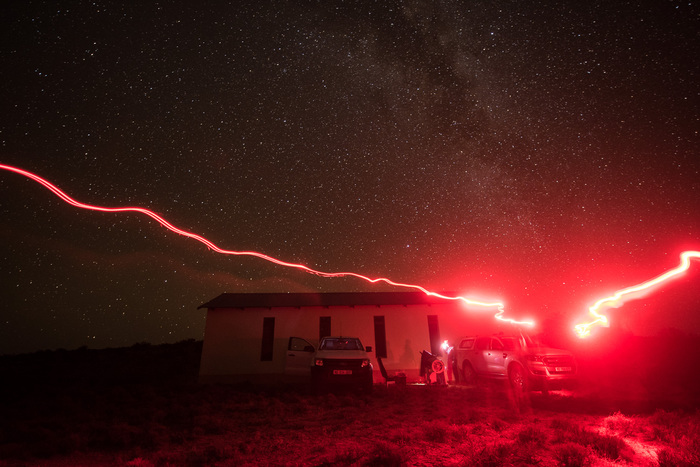 |
An hour to go before the start time, and we get a message: FLOATER NEEDED NOW! Aaron and Jason hop in the bakkie, and take off. Those are their headlamps as they went on either side of me.
|
 |
|
 |
|
 |
|
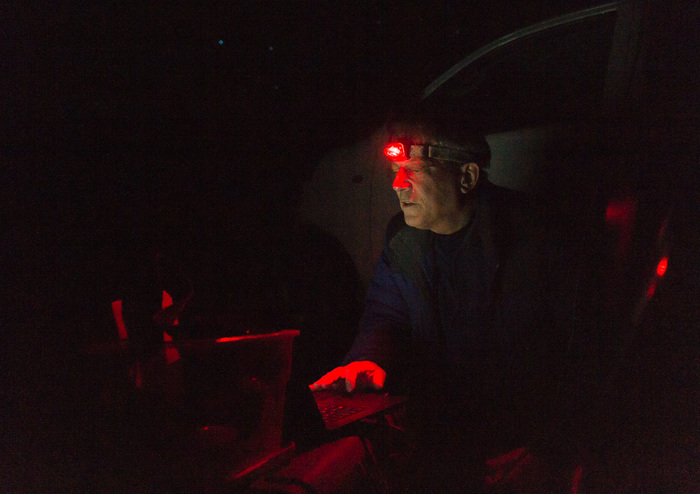 |
We're getting read for the event, with just a few minutes to go. Ted preps the laptop to acquire data. The occultation proper is three seconds long, but we (and the other teams) will be recording data for a full 45 minutes. This is a good idea for a few reasons, among them being that if MU69 is surrounded by a (very) dense ring system, this might give us some chance at seeing it in occultation.
|
 |
|
 |
|
 |
|
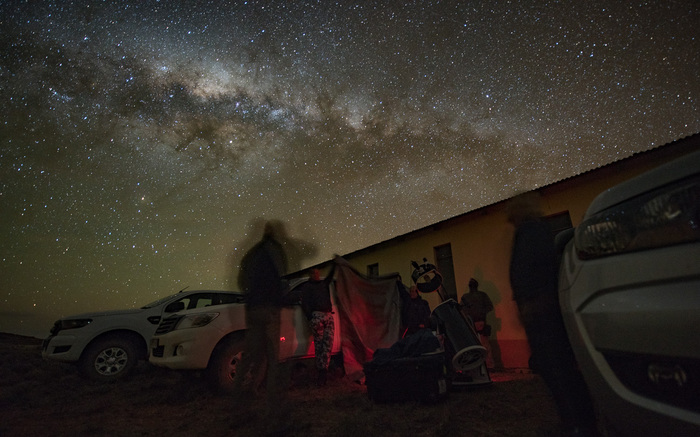 |
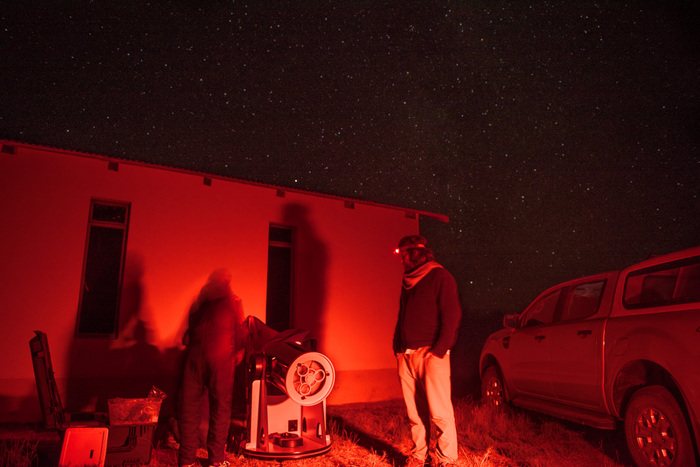
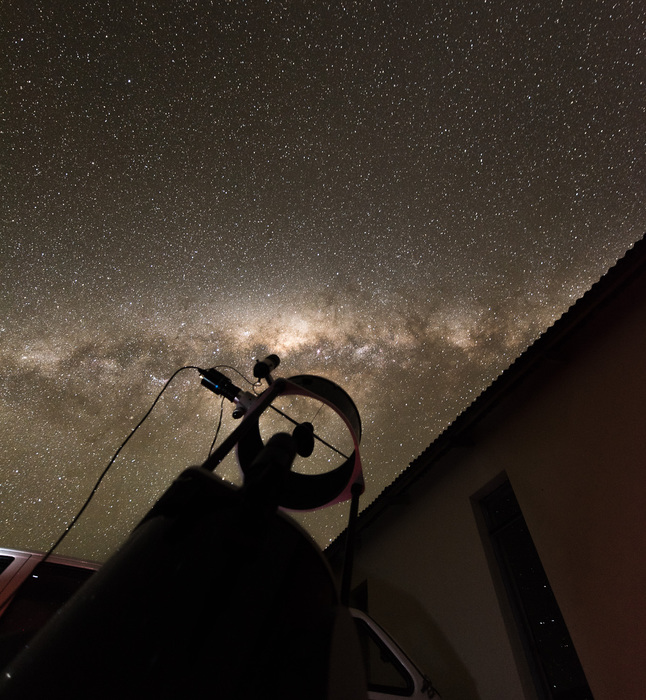
The wind has been going in and out, with some small gusts at times. One disadvantage that these small telescopes have is that they're really easy to blow around in the wind. If we get a gust at the wrong time, it won't blow us off the field, but it will certainly blur the stars. To minimize wind, we've set up close to the building (it's a church), and we've pulled in the bakkies close. Then, for the 45 minutes of the obsevation, we'll take turns holding up a wind tarp in front of the telescope as well. Pretty soon we'll kill all the red headlamps, and cover the laptop screen, to avoid any stray light hitting the telescope. The observation started a few minutes later, and I didn't dare take any photos during that period -- I'd be likely to trip on a cable or fire off a flash.
|
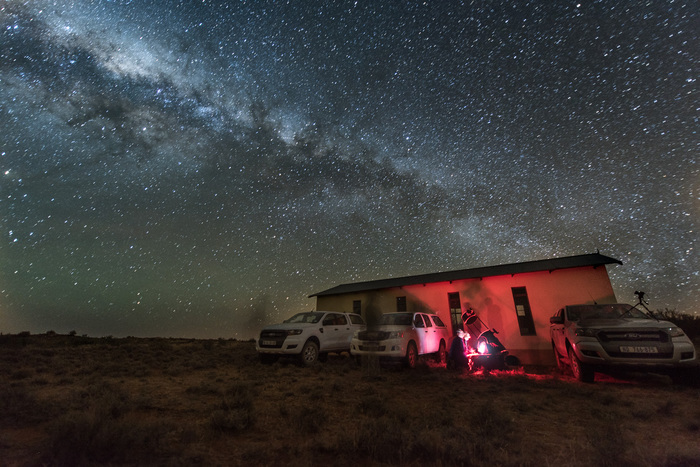 |
And... occultation complete! We recorded a full 5400 frames at 2 Hz. Ted and Paul have turned back on their lights, and are backing up the data from the laptop to an external drive. NASA also used this shot for a press release... it's definitely one of my favorites.
|
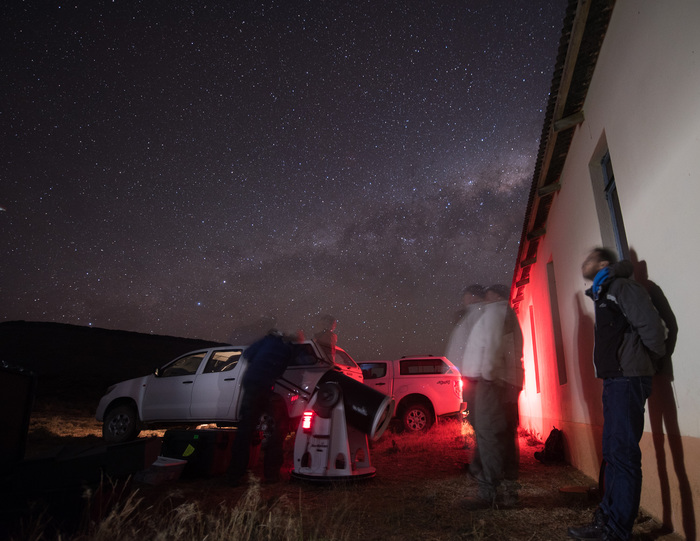 |
And we've moved off the field! It's a clear, still, and moonless night, and we have a great telescope and some huge skies, so let's go observing! We're on the Magellanic Clouds now. Saturn was huge and beautiful. We saw Venus as it was rising, as low as it possibly could be -- probably half a degree from the horizon, and going through a crazy rainbow of colors. (And we knew from experience that if that primary mirror hadn't fallen out yet, it was glued in solidly enough that tilting it to the horizon wasn't an issue...). It's rare to see Mercury, but here, it was bright and easy, about 5 degrees up. Our security group -- all four of them -- got a kick out of seeing everything... they've worked with a lot of groups before, but never astronomers.
|
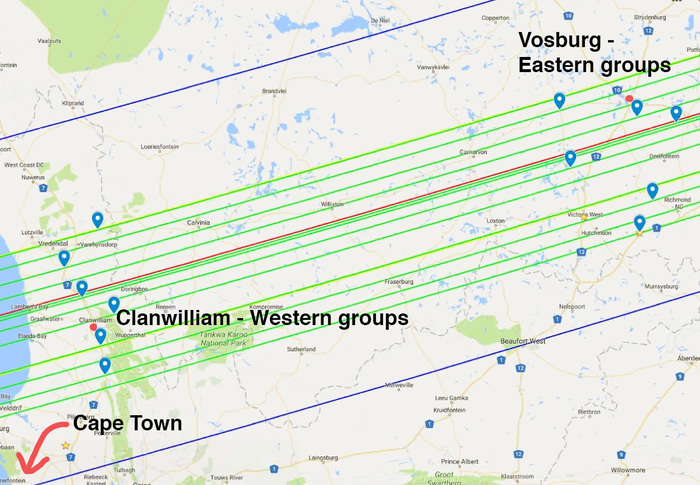 |
And here are where all the teams ended up. We found great sites, and the weather more-or-less held in Clanwilliam, so every team ended up getting usable data.
|
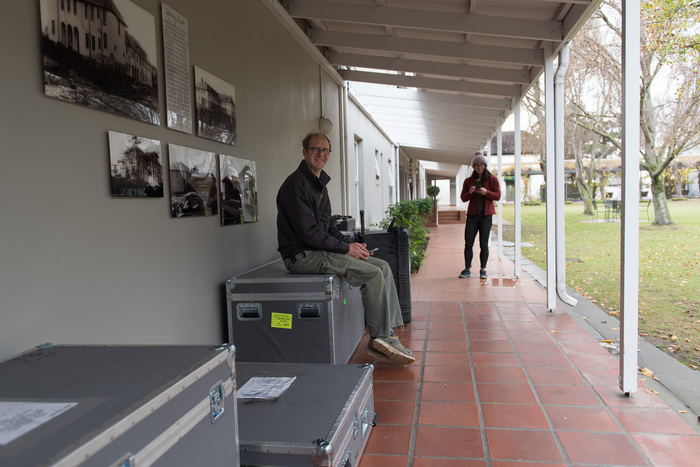 |
We make it back to Cape Town amid a huge rainstorm (and the first one they've had in months). A good sleep, and then in the morning, it's time to pack up some telescopes!
|
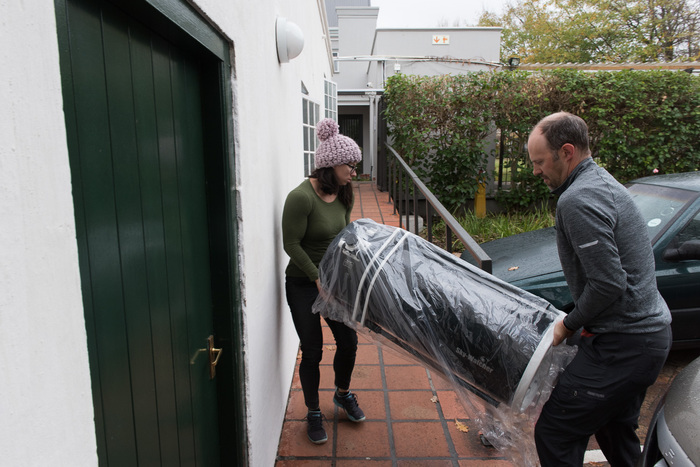 |
Trina and Charles bring in their OTA.
|
 |
The fate of the dislodged primary: I've wrapped it and taped it as best we can, so it can be installed back in the OTA and shipped onward. We had two other hardware failures: one telescope drive motor was unreliable, and one CCD never worked from the start. Fortunately, we had just a single failure of each, so this telescope was the designated spare-parts system.
|
 |
Amanda gets those collimators checked out and packed up for Chile.
|
 |
2000 kg of telescopes! And 2000 kg more to Argentina! It took a 53-foot trailer to get them delivered to Boulder.
|
 |
Amanda: "Dude! So we get to our site, and pull out our OTA, and the primary mirror is flopping around inside! We looked, and it seemed pretty bad. So we called Aaron, and he and Jason came out -- but we got it fixed before they showed up. And then we got on the field, and started taking data. And it was three minutes before the event, but we got it! "Now, do you want to hear about the drive back, and what we had to do to our vehicle to get that spare tire off?"
|
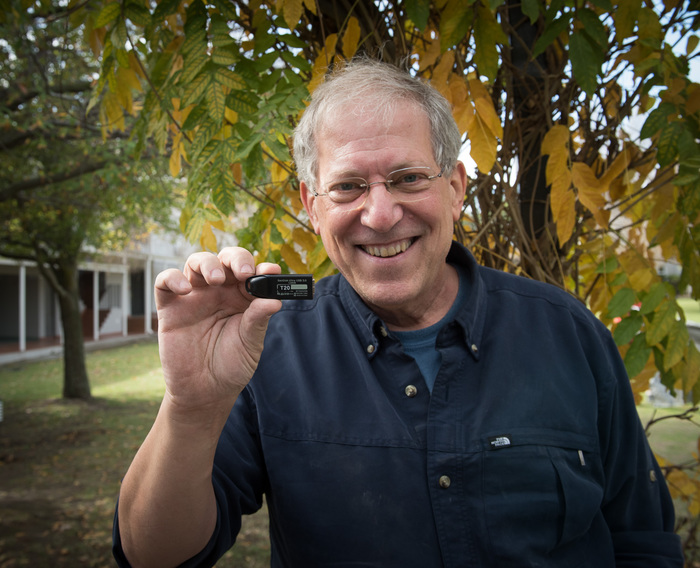 |
Check out those data! Ted is among the first to turn in his USB stick to Simon. That's the whole goal...
|
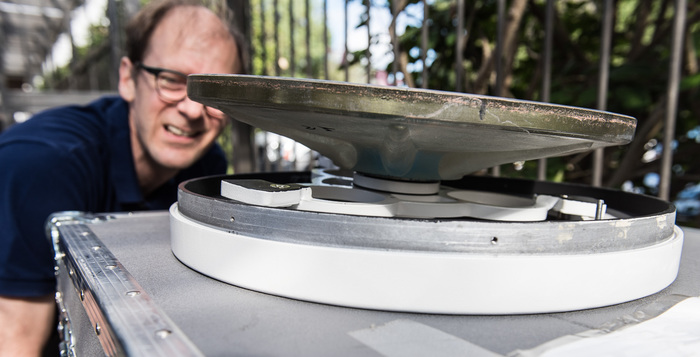 |
Meanwhile, Jeff assesses one more mirror situation. (We've already looked at Amanda's, but now this one fell out as well!)
|
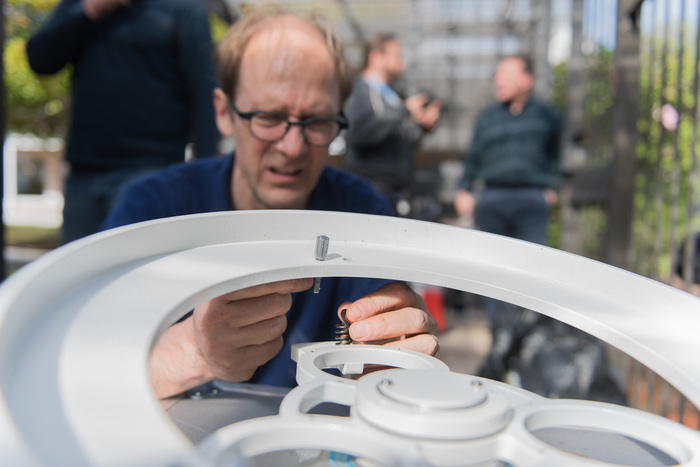 |
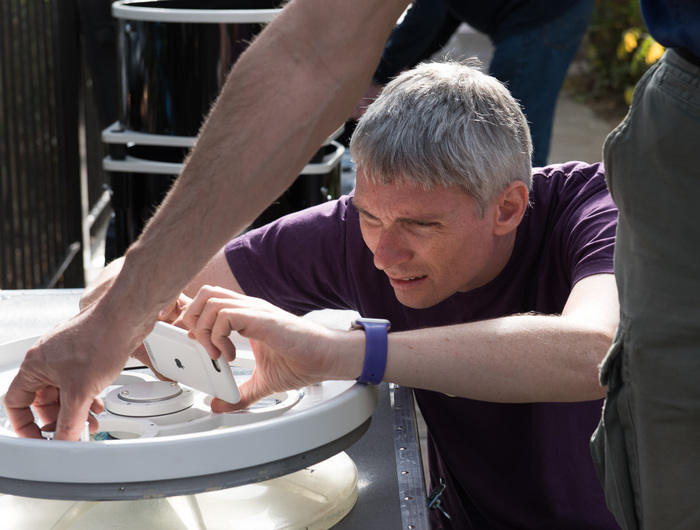
For some reason, the mirror has come loose again, even though all the bolts were apparently tight. It's not the adhesive failing like before, but some situation with self-loosening bolts.
|
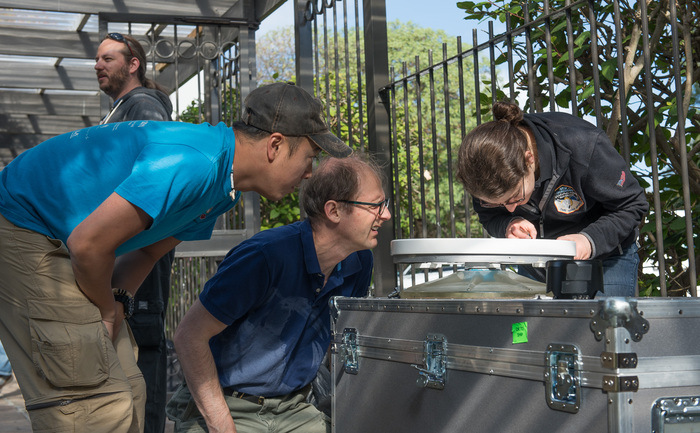 |
We flip it over and do our best to lock things down this time.
|
 |
|
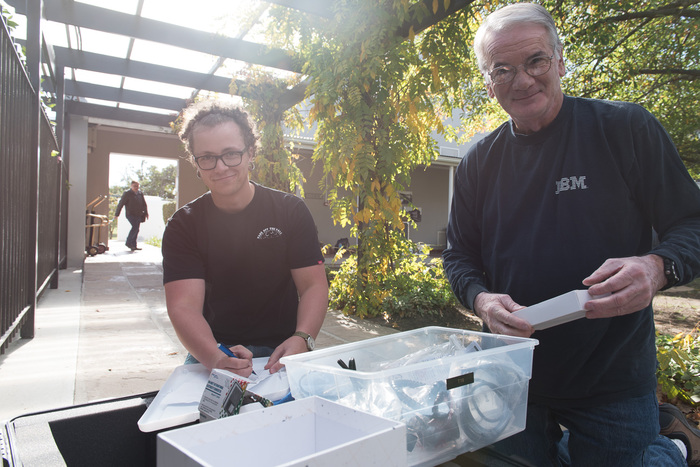 |
Sam and John go through their checklist of cables. These telescopes are headed straight to Argentina for the July 17 event -- so everything must be ready for the next observers.
|
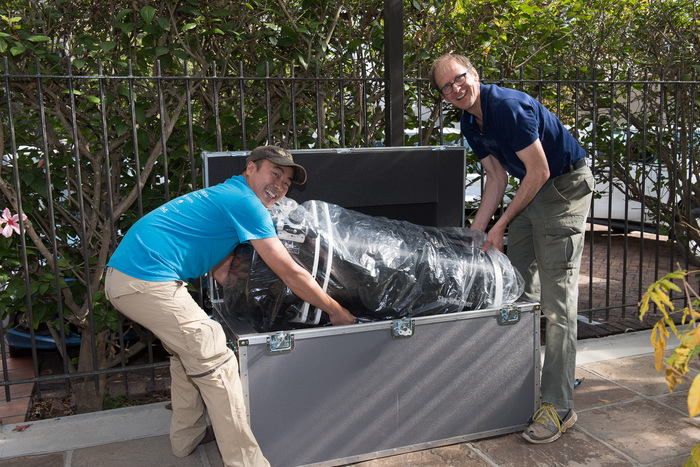 |
Con and Jef pack up that telescope (again).
|
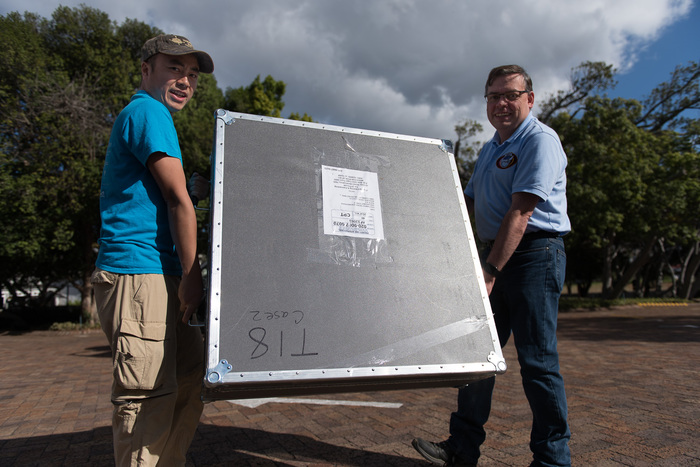 |
Con and Michael haul off those crated side pieces to their vehicle.
|
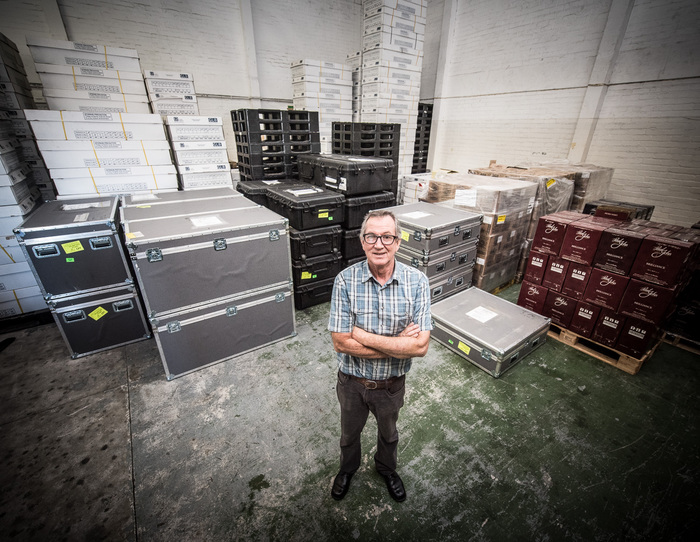 |
We're at Federal Clearing in Cape Town, who handled our import / export. That's the proprietor. About half our telescopes are stacked up here now; the rest are on the way (but parking is limited, so it was a one-by-one queue). "Oh, those white boxes? All balsa wood. Someone is building a yacht, and they're bringing it in, piece by piece." On the far right are 540 bottles of Indian rum (not ours).
|
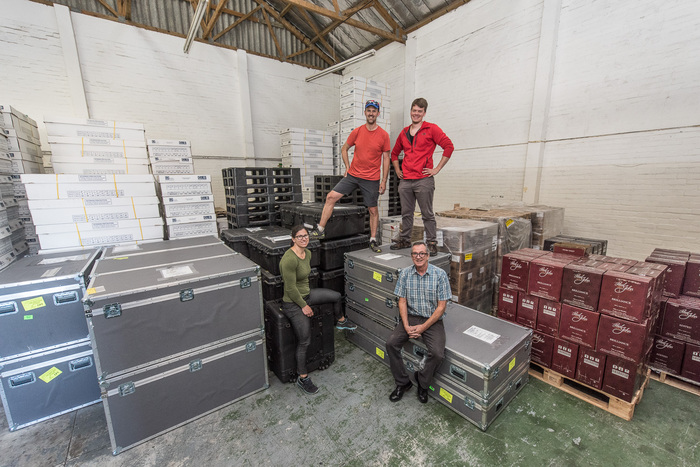 |
"How big a crew do we have? Two guys. Tomorrow afternoon, they're going to carry every single one of your telescopes into the truck, drive to the airport, and drop them off."
|
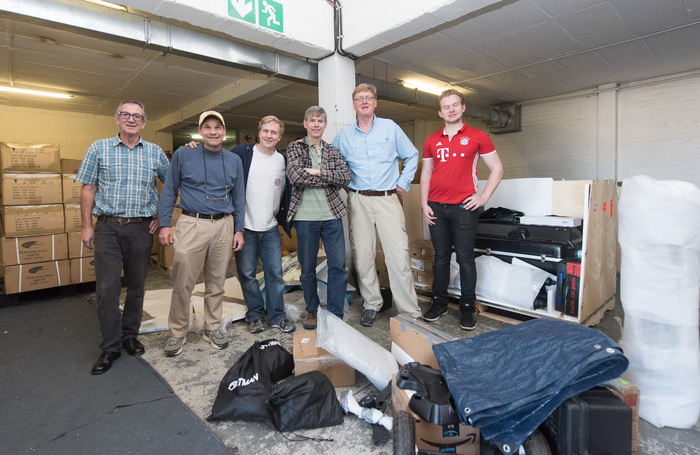 |
The UVA team packs up at Federal Clearing.
|
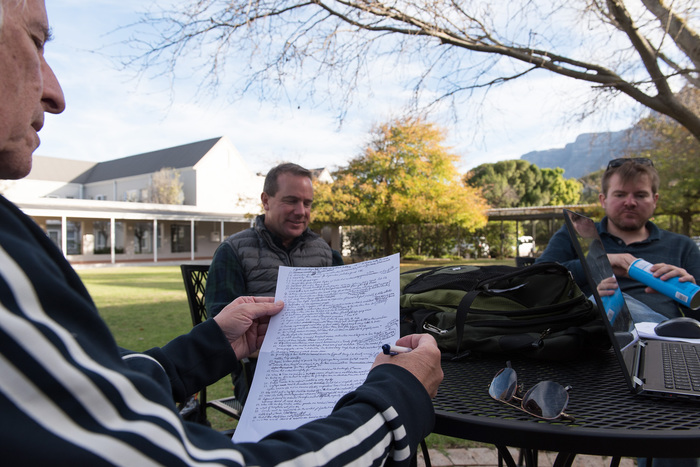 |
Meanwhile, back at the hotel, Eliiot is compiling a list of 'lessons learned' for the next occultation trip. Paul has made a pretty great start with his 50 hand-written suggestions.
|
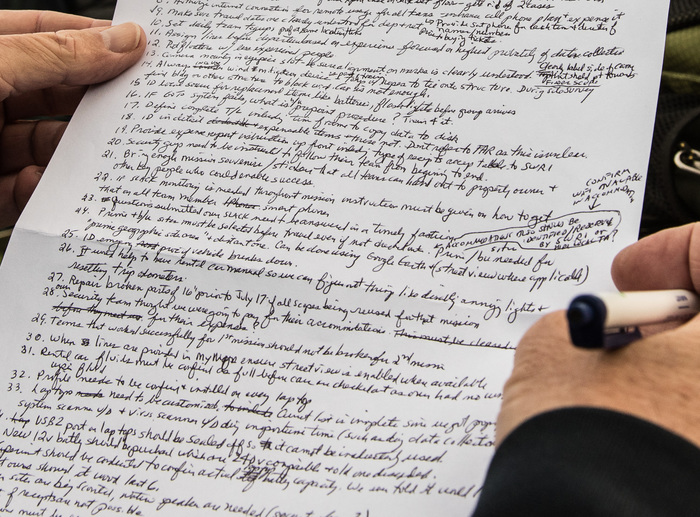 |
Paul is a really experienced observer, and has a ton of useful input.
|
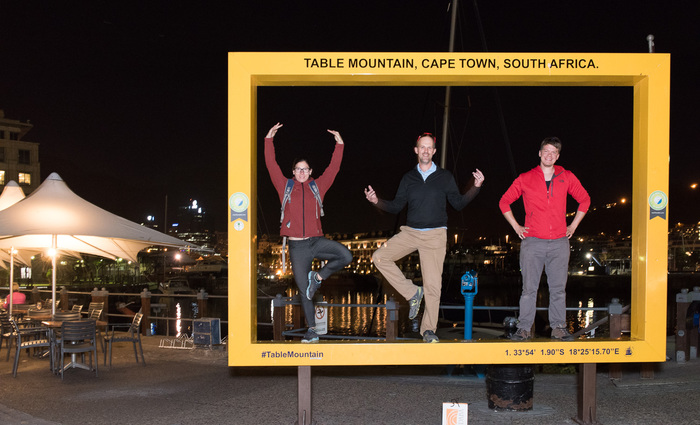 |
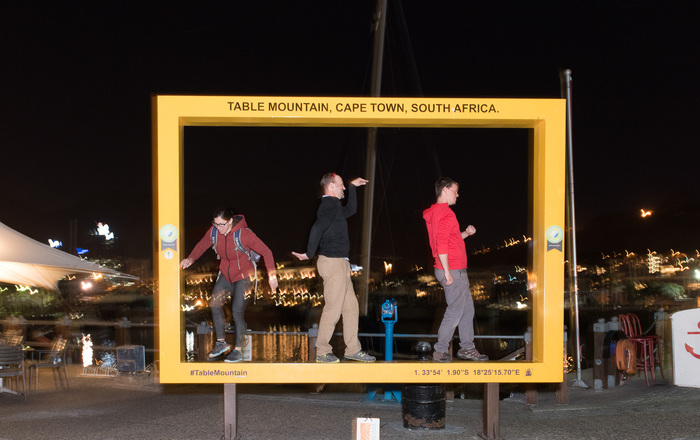
We head down to the Cape Town waterfront for some dinner, and a beatiful picture of Table Mountain.
|
 |
|
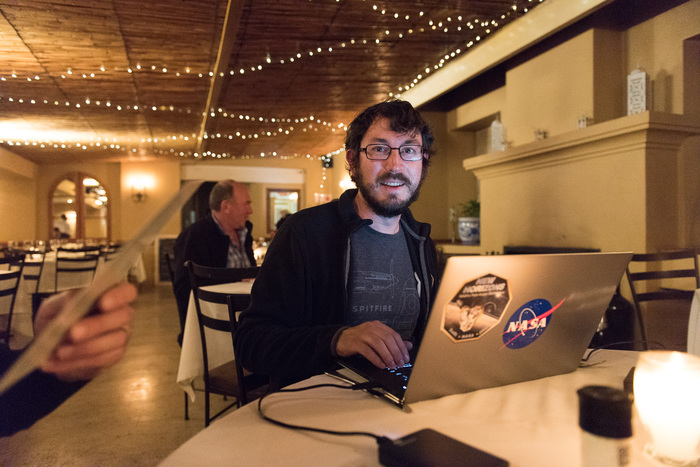 |
Don't bother Simon! While we're eating, he's processing light curves.
|
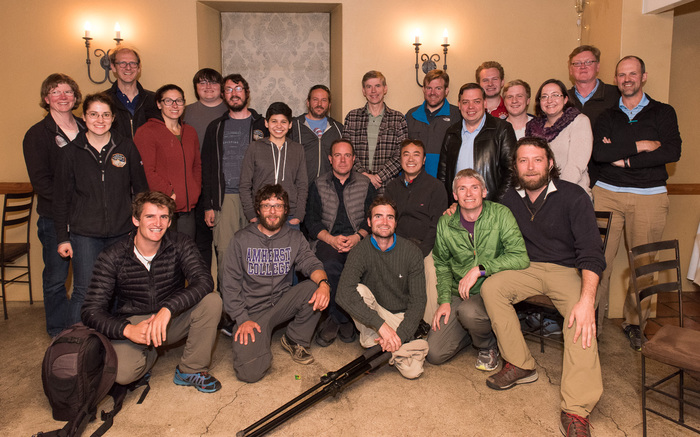 |
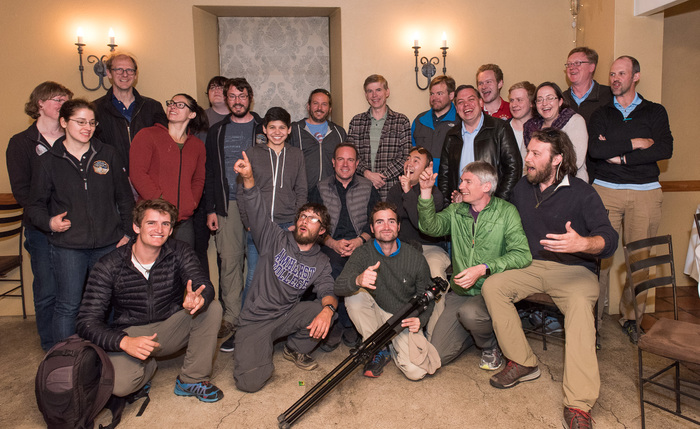
All the telescopes are off! Group shot from the hotel. Anne Verbiscer, Amanda Zangari, Jeff Regester, Ali Daynes , Trina Ruhland, RJ Smith, Simon Porter, Anicia Arredondo, Jason Mackie, Amir Caspi, Eliot Young, Mike Skrutskie, Sam Chevallier, Con Tsang, Alex Rolfmeier, Henry Throop, Michael Person, ___, ___, Aaron Resnick, Emily Kramer, __, Charles Danforth. Missing (and probably eating tasty food): Ted Blank, Paul Maley, John Moore, John Wilson.
|
 |
|
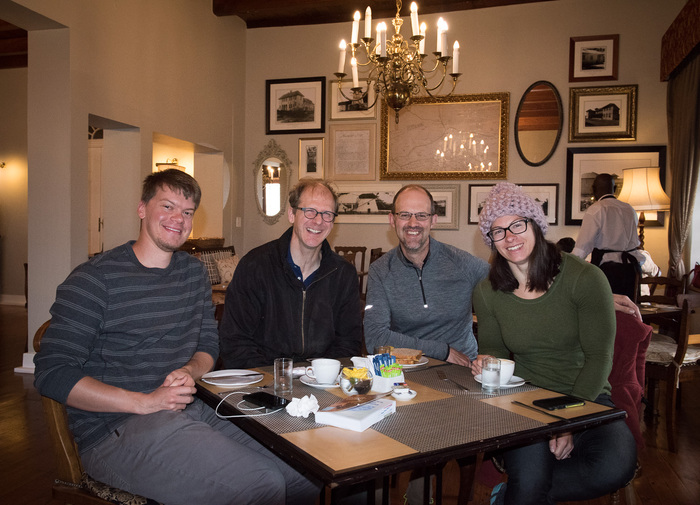 |
We're flying out in the evening, but with the telescopes off, we have most of the day free around Cape Town. Five of us gather at 6 AM for a hike up Table Mountain.
|
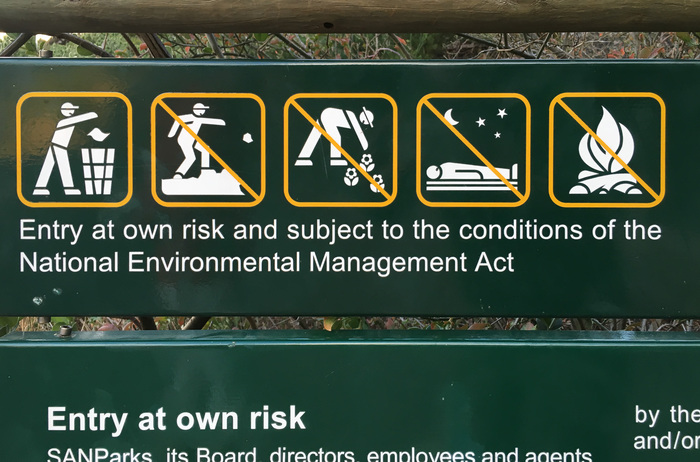 |
No stargazing allowed! We're headed up the Platteklip Gorge trail, which starts just past the cableway, and ends on top (obviously).
|
 |
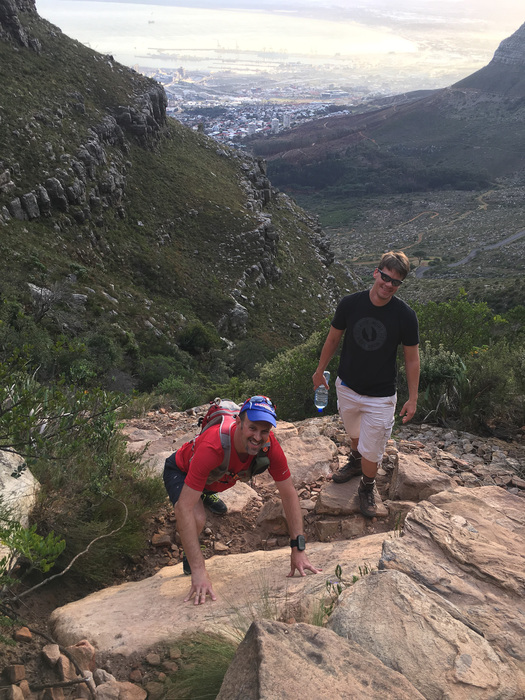
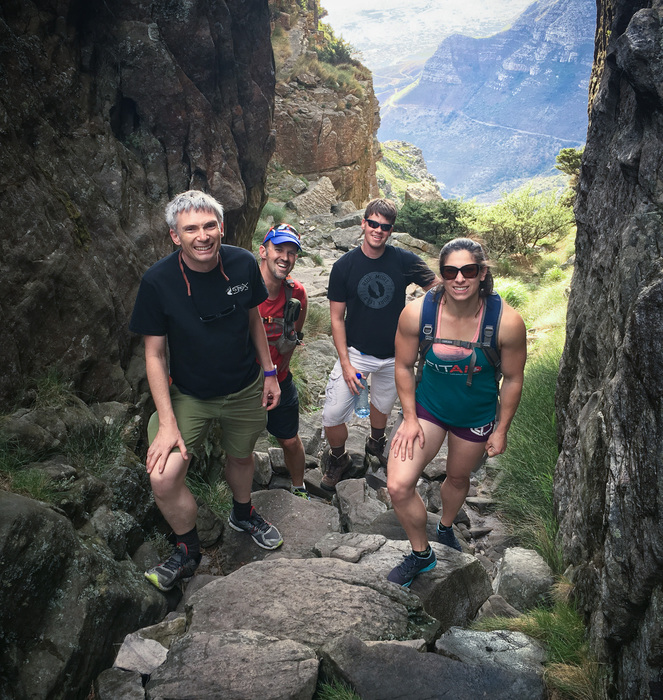
Christian and Charles have set a pretty bruising pace on the way up! This route is 2 km, but with 0.8 km of vertical elevation gain! Looks like Charles is photographing a protea, which is the South African national flower. An amazing fact I read: there is a greater number of plant species on Table Mountain, than in all of the UK. It could well be true: Table Mountain tops out at 1100 meters, which is only slightly lower than the 1300 meters of Ben Nevis, the UK's highest point.
|
 |
|
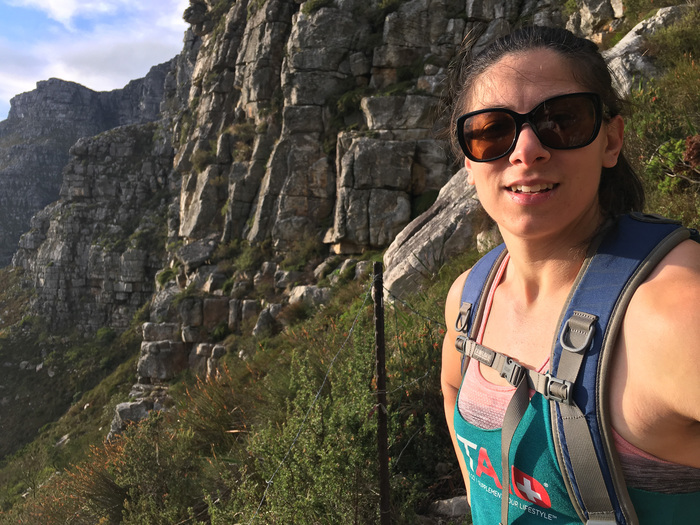 |
Trina was patient with all of us, even feeding me some tasty blueberry bars. I should have done more to slow her down. Trina: "Dude, you didn't bring your camera?!?" Me: "That thing is so heavy!" Trina: "I totally would have carried it for you!!"
|
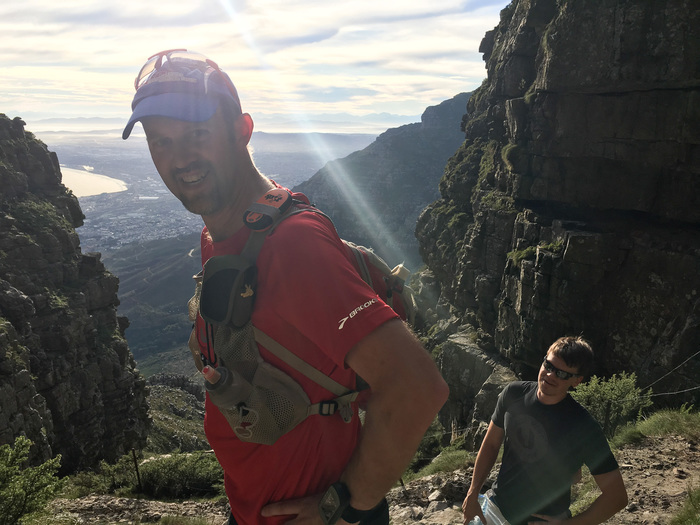 |
NB: Table Mountain is a UNESCO site, and one of the most visited places in the country. I'd been up before, but only on the cableway -- not the trail. The trail was steep, but it was dry and cool, and really beautiful. It took a bit over an hour to get on top.
|
 |
|
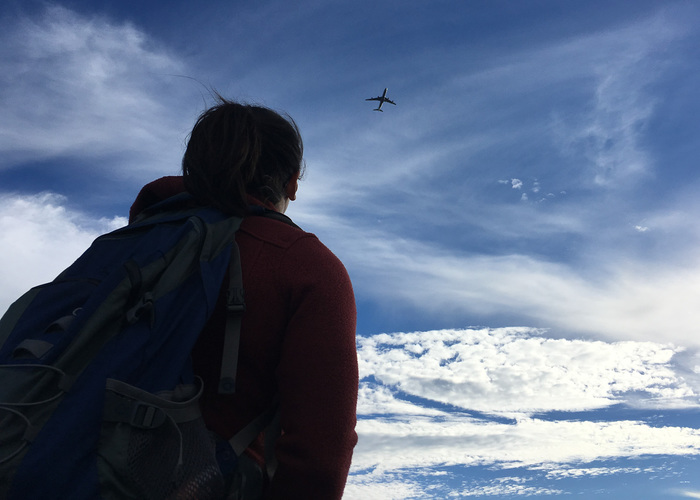 |
Hey, we're 3/4 of a mile higher than the airport...
|
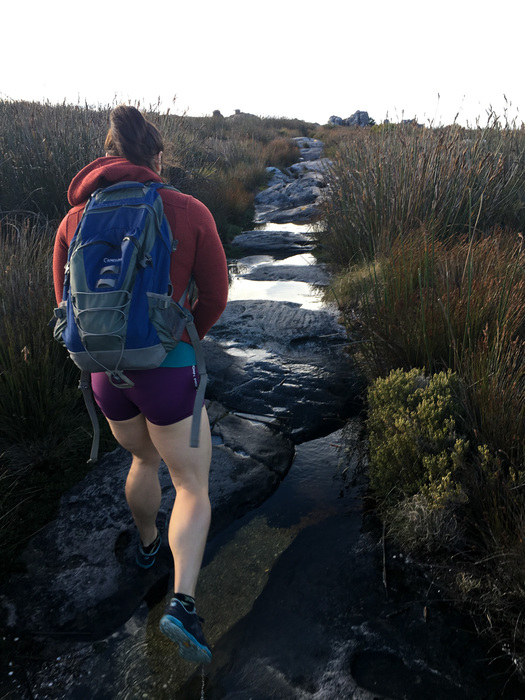 |
On top! Trina walks along a path filled with... frogs. Everywhere, we heard the noise of little tiny frogs talking to each other. It was amazing and totally unexpected. Was it related to the fact that it had rained two days earlier, breaking the drought? Someone knows, but not me!
|
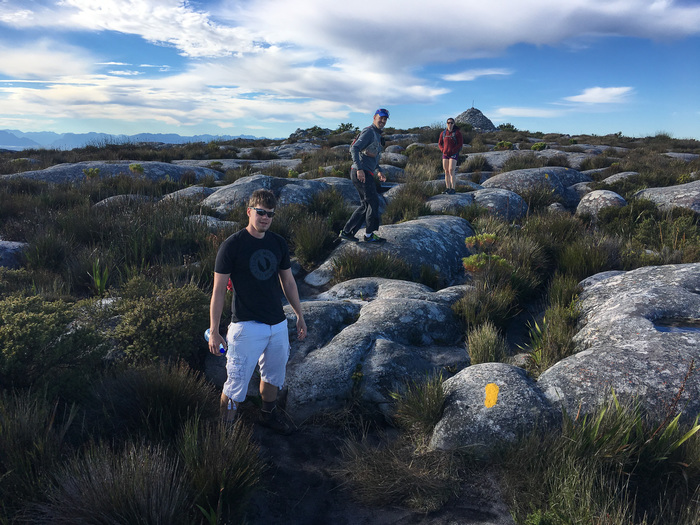 |
Last time I was on Table Mountain, it was a white-out, with visibility of not much more than few meters. Also beautiful, but it was great to be able to see the whole surface. It's really surreal. On the horizon behind us is the real summit (which is on the far end from the cableway). We've almost made it out there. The round trip on top added 2 or 3 km to our escapade.
|
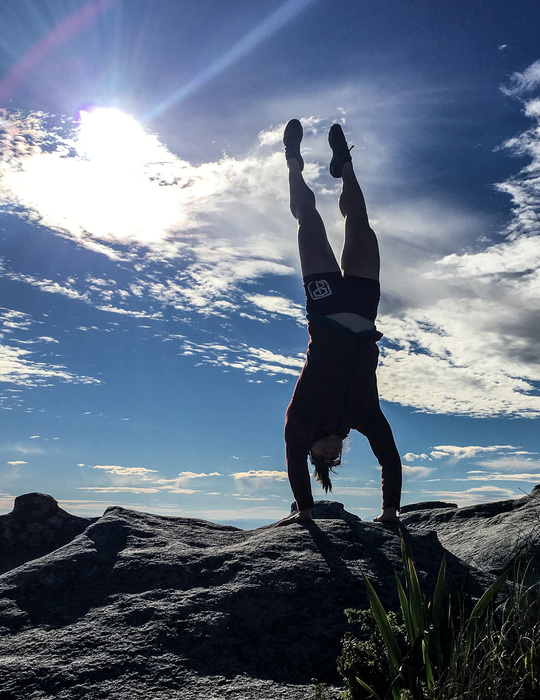 |
For a few brief seconds, Trina no doubt has the highest feet in Cape Town.
|
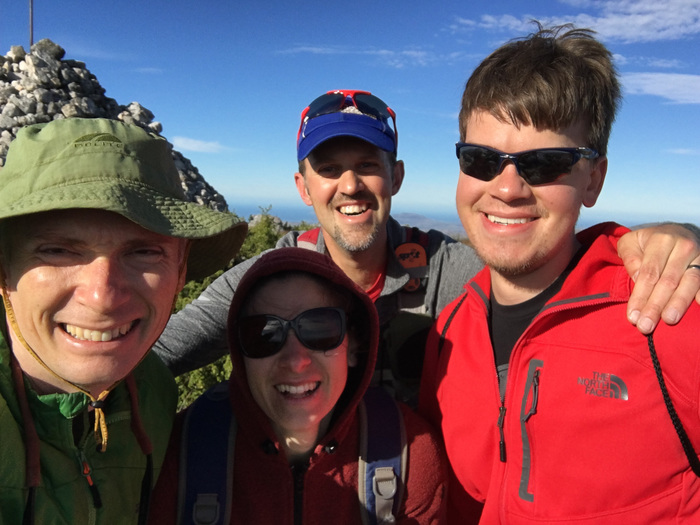 |
Behind us is 'Maclear's Beacon' -- the true high point (16 meters higher than the other end of the plateau!)
|
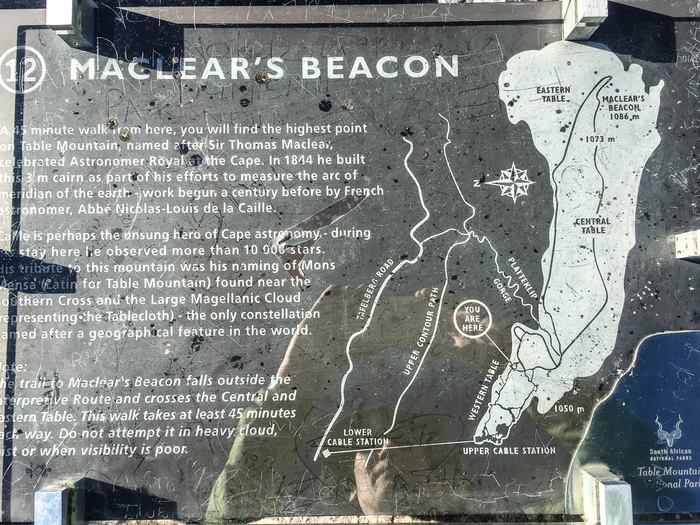 |
This is cool: "His tribute to this mountain was his naming of Mons Mensa (Latin for Table Mountain) -- the only constellation named after a geographical feature in the world."
|
 |
Just about to head down the cableway. You can see the 2010 World Cup soccer stadium just below to the left.
|
 |
Have to talk to the rock hyraxes ('dassies') first! A cute little animal, whose closest relative is the elephant.
|
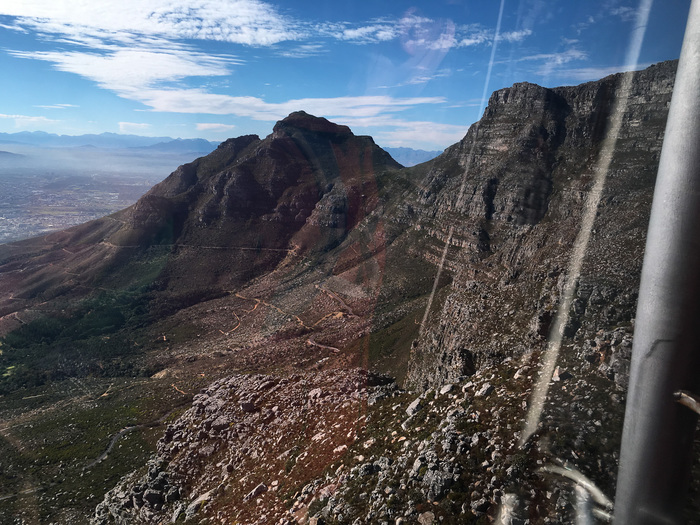 |
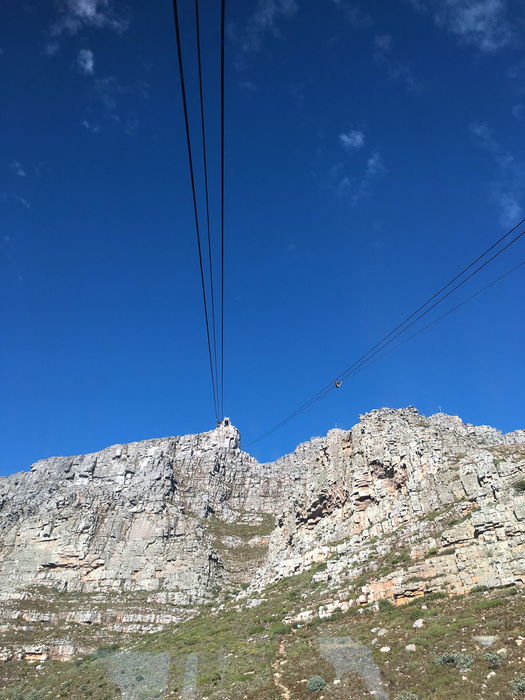
And in the cablecar... 6 minutes and we're down.
|
 |
|
 Subscribe to RSS feed
 Thumbnails
 Return to list of galleries